RIYADH — India’s National Security Adviser Ajit Doval landed in Riyadh on April 19, the same day OFAC General License U expired and closed India’s 30-day window for legal purchases of Iranian crude. He met Saudi Energy Minister Prince Abdulaziz bin Salman, Foreign Minister Prince Faisal bin Farhan, and National Security Adviser Musaed Al-Aiban in a single visit — three counterparts, three portfolios, one day. No Indian official characterised the timing as coincidental. None needed to.
The visit amounts to a structural declaration: India’s Iran oil corridor, briefly reopened after seven years, is shut, and the replacement architecture runs through Saudi Arabia. What Doval carried to Riyadh was not a request for barrels — Saudi crude exports to India already hit a six-year high of 1.0–1.1 million barrels per day in February — but something rarer. He carried New Delhi’s willingness to let its top intelligence official sit across from Prince Abdulaziz bin Salman in a war zone and discuss supply security on camera.
Table of Contents
- The Calendar Is the Message
- What Does India’s NSA Do in Riyadh That a Foreign Minister Cannot?
- What Did India’s Only Iranian Crude Cargo Reveal?
- Saudi Arabia’s India Architecture
- Why Does Chabahar No Longer Protect the Iran Relationship?
- The BRICS Chair Who Won’t Condemn
- Two Indian Tankers Under Fire on the Day of Arrival
- What Does Each Side Gain from the Doval Visit?
- Frequently Asked Questions
The Calendar Is the Message
General License U authorised transactions for Iranian crude loaded on vessels on or before 12:01 AM EDT, March 20, 2026. It ran exactly 30 days. Treasury Secretary Scott Bessent confirmed non-renewal on April 15–16, telling reporters: “We will not be renewing the general license on Russian oil, and we will not be renewing the general license on Iranian oil.” He called the waiver a “stopgap measure” to address “Iran’s attempt to take global energy hostage” and described India as “an essential partner” expected to purchase more American oil instead.
Bessent’s framing contained a quiet coercion. The Russia General License 134A was extended on April 18 — one day before GL U expired — despite Bessent’s blanket denial. Iran was carved out. Russia was not. The asymmetry was the message, and India received it in Washington before Doval received Prince Abdulaziz in Riyadh.
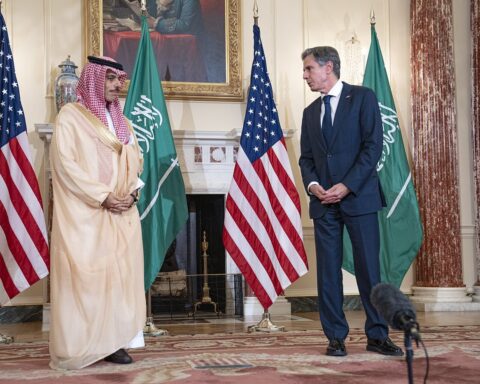
Doval arrived at King Khalid International Airport on April 19. He was received by Indian Ambassador Dr Suhel Khan and Saudi Deputy Minister for Political Affairs Dr Saud Al-Sati. India’s state broadcaster, All India Radio, reported that discussions “focused on strengthening security cooperation between India and Saudi Arabia, and covered ways to ensure stable energy supplies… at a time when concerns related to Iran are affecting the region.” That sentence — stable energy supplies, concerns related to Iran — is the closest New Delhi has come to publicly coupling the two.
Two days earlier, on April 17, Doval had met Ukraine’s Secretary of the National Security and Defence Council Rustem Umerov in New Delhi. The MEA spokesperson said he “reiterated India’s principled position and focus on peaceful resolution through dialogue and diplomacy.” The Ukraine meeting was principled positioning. The Riyadh meeting was operational.
The Middle East briefing 3,000+ readers start their day with.
One email. Every weekday morning. Free.
What Does India’s NSA Do in Riyadh That a Foreign Minister Cannot?
Ajit Kumar Doval is not a diplomat. He is a 33-year Indian Police Service career intelligence officer — 1968 batch, Kerala cadre — who joined the Intelligence Bureau in 1972 and ran its operations wing for over a decade. During a posting at the Indian High Commission in Islamabad from 1983 to 1987, he collected hair samples from Pakistani nuclear scientists through a barber shop contact; the samples tested positive for uranium traces and contributed to exposing Pakistan’s weapons programme. He was the lead negotiator during the IC-814 hijacking in Kandahar in 1999. He received the Kirti Chakra in 1989 — India’s second-highest peacetime gallantry decoration — as the first police officer so honoured.
Doval has served as NSA since May 2014, currently in his third consecutive term with Cabinet Minister rank — the longest-tenured holder of the position in Indian history. He founded the Multi Agency Centre and the Joint Task Force on Intelligence, the two coordinating bodies that link India’s civilian and military intelligence streams.
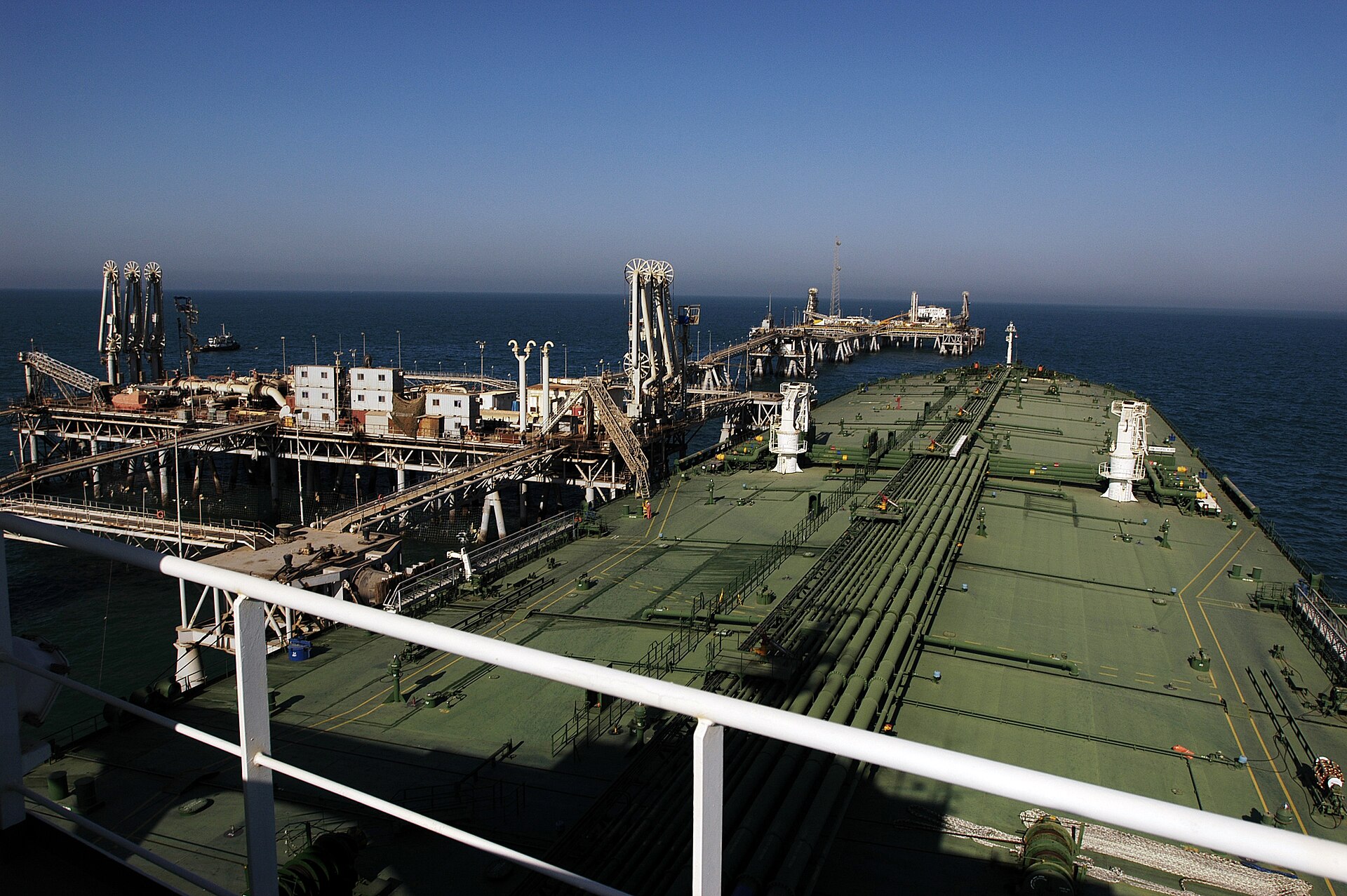
When India sends Doval somewhere, the channel is security, not protocol. External Affairs Minister S. Jaishankar handles the diplomatic track. Commerce Minister Piyush Goyal handles trade. Doval handles the conversations that cannot be attributed, delayed, or conducted through communiqués. His presence in Riyadh sitting across from Prince Abdulaziz bin Salman — an energy minister, not an intelligence counterpart — signals that New Delhi has classified the India-Saudi energy relationship as a national security matter, not a commercial one.
The meeting with Al-Aiban, Saudi Arabia’s own NSA, fits the expected bilateral security template. The meeting with Prince Faisal covers the diplomatic portfolio — Iran, the war, the US naval blockade, Pakistan’s mediation role. But Doval sitting with the energy minister is the anomaly that explains the trip.
What Did India’s Only Iranian Crude Cargo Reveal?
During the 30-day GL U window, Indian Oil Corporation purchased approximately 2 million barrels of Iranian crude aboard the VLCC Jaya — worth roughly $200 million at prevailing prices. It was India’s first Iranian crude purchase in seven years, since imports fell to zero in May 2019 under the first round of Trump-era maximum pressure. Reuters reported, citing four sources, that “Indian refiners are settling payments for rare purchases of Iranian oil in Chinese yuan through ICICI Bank… routing payments in yuan via ICICI Bank’s Shanghai branch to seller accounts also held in the Chinese currency.”
The payment route is the story within the story. India did not use UCO Bank — the state-owned lender that handled Iran rupee settlements during the 2012–2018 sanctions period — or any rupee channel. It used yuan, through a private-sector bank’s Shanghai subsidiary, into Chinese-currency accounts. Iran demanded non-dollar settlement. India’s own banking system provided the pipe but denominated it in Beijing’s currency. The 95% prepayment requirement — described by Reuters as “unusual” — indicated how narrow the compliance corridor had become even with a US waiver in force.
Bloomberg reported that IOC and Bharat Petroleum Corporation Limited “largely stayed on the sidelines” during the window. The 30-day period was insufficient for state companies to obtain documentation and arrange standard credit terms. Reliance Industries rejected at least two Iranian crude cargoes — vessels named Derya and Lenore — on secondary sanctions grounds. Nayara Energy, India’s second-largest private refiner with approximately 400,000 barrels per day of capacity and 49.13% owned by Russia’s Rosneft, faced stacked Russia-nexus and Iran-nexus sanctions exposure that made any Iranian purchase a compliance impossibility.
The net result: roughly 4 million barrels arrived at Indian ports; 4–6 million barrels were in transit at the moment of expiry. Against India’s pre-sanctions Iranian import peak of 620,000 barrels per day — 16.5% of total crude imports in 2018 — the GL U window produced a rounding error. India’s crude basket price surged from $69 per barrel in February to $113 per barrel in March. The window did not reopen the Iran corridor. It demonstrated, under controlled conditions, that the corridor no longer functions.
Saudi Arabia’s India Architecture
The infrastructure for replacing Iranian barrels with Saudi ones was built before the war started. At the Modi-MBS summit in Jeddah on April 22, 2025, Saudi Aramco agreed to acquire 20% stakes in two new Indian refineries — a BPCL facility in Andhra Pradesh and an ONGC facility in Gujarat, each with 12 million tonnes per year of capacity. The two leaders announced a $100 billion deal package spanning energy, manufacturing, digital infrastructure, defence, and cultural exchange. Bilateral trade reached $41.88 billion in FY 2024–25 — Saudi Arabia is India’s fifth-largest trading partner, India is Saudi Arabia’s second-largest.
| Metric | Figure | Source |
|---|---|---|
| Bilateral trade (FY 2024–25) | $41.88 billion | Indian Embassy Riyadh |
| Saudi crude to India (Feb 2026) | 1.0–1.1 million bpd | Bloomberg |
| Saudi crude to India (pre-war avg) | ~780,000 bpd | PPAC India |
| Aramco refinery stakes (2025 deal) | 20% in BPCL + 20% in ONGC facilities | Bloomberg |
| Combined new refinery capacity | 24 million tonnes/year | Bloomberg |
| PIF investment in Reliance Jio | $1.5 billion | Indian Embassy Riyadh |
| PIF investment in Reliance Retail | $1.3 billion | Indian Embassy Riyadh |
| Indian diaspora in Saudi Arabia | ~2.7 million | MEA India |
| Remittances from Saudi Arabia | ~$9.45 billion/year | World Bank est. |
| Saudi investments in India (total) | ~$10 billion | Indian Embassy Riyadh |
| Deal package target (April 2025) | $100 billion | Economy Middle East |
Saudi Arabia’s Public Investment Fund holds $1.5 billion in Reliance Jio Platforms and $1.3 billion in Reliance Retail Ventures — the same Reliance Industries that rejected Iranian cargoes on compliance grounds during GL U. The investment architecture and the sanctions-compliance architecture reinforce each other. Reliance cannot buy Iranian crude without jeopardising PIF’s equity position. PIF cannot invest in Indian energy infrastructure without confidence that India’s refineries will process Saudi, not Iranian, feedstock.
The February 2026 surge in Saudi crude deliveries to India — 1.0–1.1 million barrels per day, narrowing the gap with Russia as India’s top supplier — predated the war by days. Saudi production crashed 30% in March, from 10.4 million to 7.25 million barrels per day after Ras Tanura strikes, and Asian exports fell 38.6% according to Kpler. But the pre-war trajectory is the relevant baseline for Doval’s visit: Saudi Arabia was already winning the India supply race before Hormuz closed.
The Strategic Partnership Council established under Modi and MBS now operates through four ministerial committees — Political and Security, Defence, Economy and Energy, and Tourism and Cultural. The April 2025 summit added a tourism-cultural pillar and initiated feasibility studies for electrical grid interconnection and green hydrogen cooperation. India’s 2.7 million diaspora in the Kingdom accounts for roughly 7% of India’s $135 billion in annual remittances — approximately $9.45 billion per year flowing from Saudi Arabia to Indian households.
Why Does Chabahar No Longer Protect the Iran Relationship?
India has $370 million in financial commitments sunk into Chabahar’s Shahid Beheshti Terminal — $120 million for port equipment and a $250 million credit facility for surrounding infrastructure. A 10-year operational contract was signed in May 2024, giving India Port Global Limited operational control. Since 2018, the port has handled over 90,000 TEUs and 8.4 million metric tonnes of cargo. It is India’s gateway to Afghanistan and the anchor of the 7,200-kilometre International North-South Transport Corridor linking Mumbai to Moscow via Iran and Central Asia.
Trump’s February 2026 executive order (NSPM-2) directed the State Department to “modify or rescind sanctions waivers, particularly those that provide Iran any degree of economic or financial relief, including those related to Iran’s Chabahar port project.” The current conditional waiver expires April 26 — six days after Doval sat in Riyadh.
India’s Ministry of External Affairs told the Rajya Sabha that India has “no further funding obligations” — payment was completed before sanctions were reimposed in late September 2025. MEA spokesperson Randhir Jaiswal said in January: “We remain engaged with the US side in working out this arrangement.” Officials have been evaluating the creation of a new entity to allow continued Indian involvement without direct government exposure. The diplomacy of Chabahar has become the diplomacy of legal architecture — finding structures that satisfy OFAC while preserving operational access to a port that India cannot politically abandon.
But the strategic logic that justified Chabahar has eroded. The port was built as an alternative to Pakistan’s Gwadar — an India-Iran counterweight to the China-Pakistan Economic Corridor. With Iran’s economy under wartime pressure (the Central Bank has internally projected 180% inflation and a 12-year recovery timeline, according to a leaked memo cited in Iranian government reporting), and with IRGC vessels firing on Indian-flagged tankers in the Strait of Hormuz on April 19 — the same day Doval arrived in Riyadh — the proposition that India can maintain a security partnership with Saudi Arabia and an infrastructure partnership with Iran simultaneously is being tested by physics, not by policy.
India-Iran bilateral trade stands at $1.6 billion — $1.2 billion in Indian exports, $400 million in imports. India-Saudi bilateral trade is $41.88 billion. The ratio is 26 to 1.
The BRICS Chair Who Won’t Condemn
India holds the rotating BRICS chairmanship for 2025–2026. The organisation, which admitted Iran as a full member in January 2024, has remained what Bloomberg described as “unusually silent” on the war — because the chair won’t let it speak.
Prime Minister Narendra Modi visited Israel on February 25–26, 2026, and told the Knesset: “India stands with Israel, firmly, with full conviction.” He elevated bilateral ties to a “Special Strategic Partnership” with new defence and artificial intelligence agreements. US and Israeli strikes on Iran began two days later, on February 28.
When the SCO issued a joint statement in June 2025 “strongly condemning the military strikes carried out by Israel” on Iranian territory, calling them “a gross violation of international law,” India refused to sign. The MEA said India “enjoys close and friendly relations with both the countries” and that its “overall position was communicated to other SCO members.” India is the only founding BRICS member that has not condemned the US-Israeli attack on Iran.
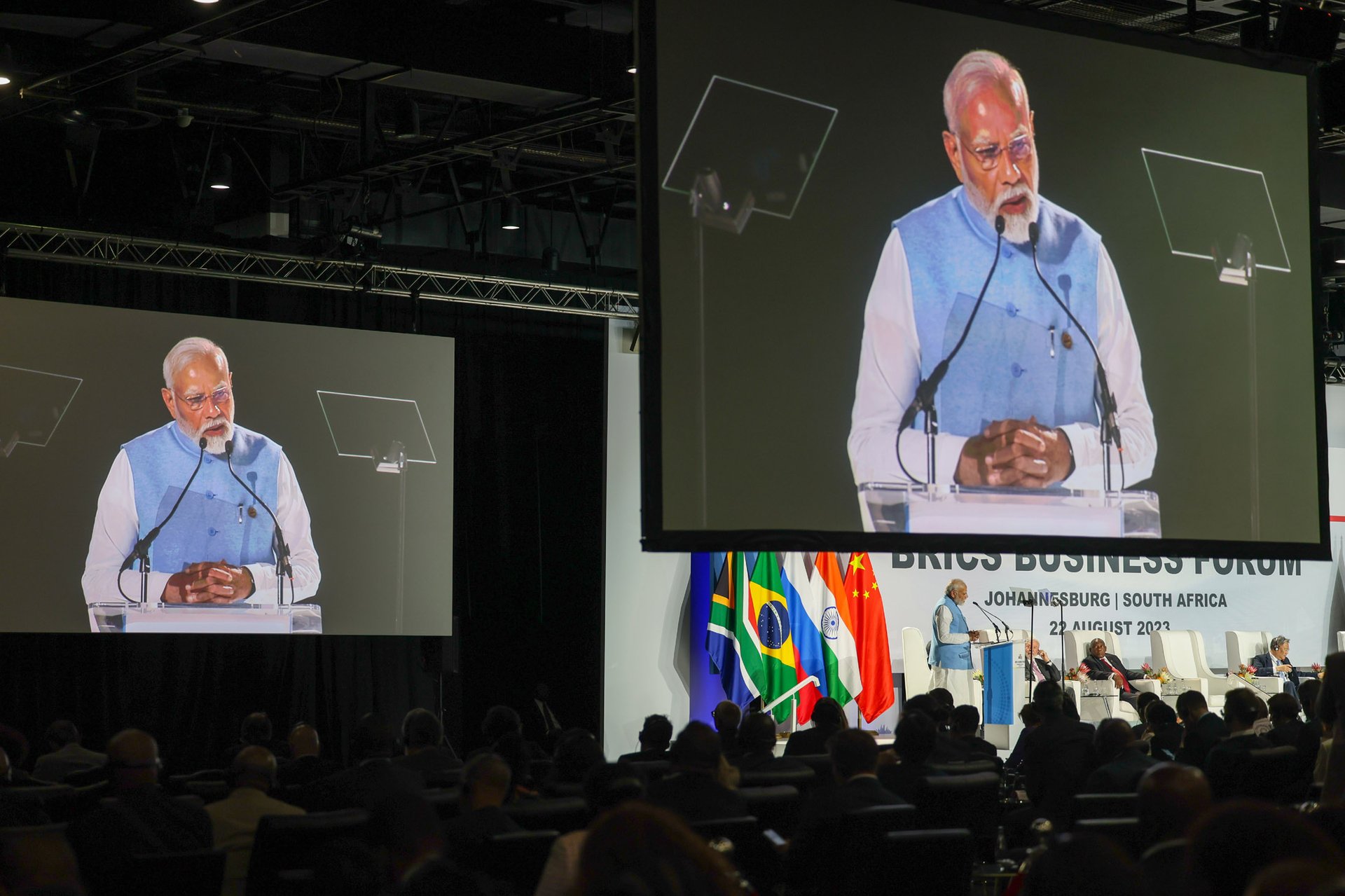
South Africa’s President Ramaphosa said on March 5: “We want a ceasefire, we want this madness to come to an end.” Russia’s Lavrov accused the US and Israel of “premeditated and unprovoked acts of armed aggression.” China’s Wang Yi said Beijing “opposes any military strikes launched by Israel and the US against Iran.” India said nothing equivalent. When Khamenei was killed, Foreign Secretary Misri signed a condolence book but India issued no formal condemnation.
Yet in December 2025, India participated in the Sahand military exercises — the first SCO drills hosted on Iranian soil — sending personnel to train alongside Chinese, Russian, and Iranian forces. India’s domestic opposition, led by the Congress party, has criticised Modi for not condemning US-Israeli strikes and questioned the timing of his Israel visit. India has approximately 200 million Muslim citizens. The political cost of an overt anti-Iran posture exists, even if the strategic cost of maintaining the Iran relationship has become prohibitive.
Doval’s Riyadh visit threads this constraint. It is not a public repudiation of Iran. There is no communiqué, no signed agreement, no press conference. There is an 81-year-old intelligence officer meeting an energy minister on the day a sanctions waiver expires. The signal is legible to Riyadh without being quotable in Tehran.
Two Indian Tankers Under Fire on the Day of Arrival
On April 19, as Doval’s aircraft was en route to or already in Riyadh, IRGC naval vessels fired on two Indian-flagged tankers — the Sanmar Herald and the Bhagya Lakshmi — in the Strait of Hormuz despite both vessels having received prior clearance authorisation. No casualties were reported, but the incident underscored a pattern: Iran’s civilian government grants permissions that its military does not honour.
India’s vulnerability in the Strait is not limited to crude oil. Sixty-seven percent of India’s liquefied petroleum gas imports — the cooking fuel used by hundreds of millions of households — transits Hormuz. LPG prices have risen Rs 60–144 per cylinder since the war began; black market prices in some Indian cities have reached Rs 4,000 for a 14.2-kilogram cylinder, roughly four times the subsidised rate. India’s crude basket price has risen 64% since February.
The tanker firings and the Doval visit occupied the same 24-hour window. Iran fired on Indian ships while India’s senior-most security official was in Riyadh discussing stable energy supplies. The juxtaposition was not planned by either side, but it is the kind of coincidence that policy planners in New Delhi will reference in internal memos for years.
What Does Each Side Gain from the Doval Visit?
India’s calculation is arithmetical before it is strategic. Saudi Arabia supplied 1.0–1.1 million barrels per day to India in February 2026; Iran supplied approximately 130,000 barrels per day — the annualised equivalent of the GL U cargo — before the window closed. India cannot replace Saudi volumes with Iranian ones. It can replace Iranian volumes with Saudi ones. The Aramco refinery stakes embed Saudi crude into Indian processing infrastructure for decades: two facilities, 24 million tonnes per year of new capacity, purpose-built for Saudi feedstock.
Saudi Arabia’s gain is less tangible but equally structural. The Kingdom has fought for two decades to prevent India from diversifying away from Gulf crude toward Iran, Russia, and eventually US shale. The war and sanctions have delivered what pricing never could. India’s largest private refiner, Reliance, rejected Iranian cargoes while sitting on $2.8 billion in PIF equity. India’s state refiners stayed on the sidelines during the only legal window they had to buy Iranian oil. India’s NSA flew to Riyadh on the day the window closed.
What Saudi Arabia gets from the Doval visit is validation from a major non-Western power — a BRICS founder, SCO member, and the world’s third-largest crude importer — that Saudi Arabia’s status as indispensable supplier survived a war that knocked 30% off its production. India does not need to issue a statement. The flight manifest is the statement.
For MBS, the visit fits a pattern. Saudi Arabia has positioned itself as the node that every major power must visit — the US for security architecture, China for petroyuan volumes, Pakistan for ceasefire enforcement, and now India for post-sanctions supply security. Each visitor endorses Saudi centrality without requiring Saudi Arabia to choose between them. Doval’s presence in Riyadh does not force MBS to pick between Washington and Beijing. It demonstrates that he does not have to.
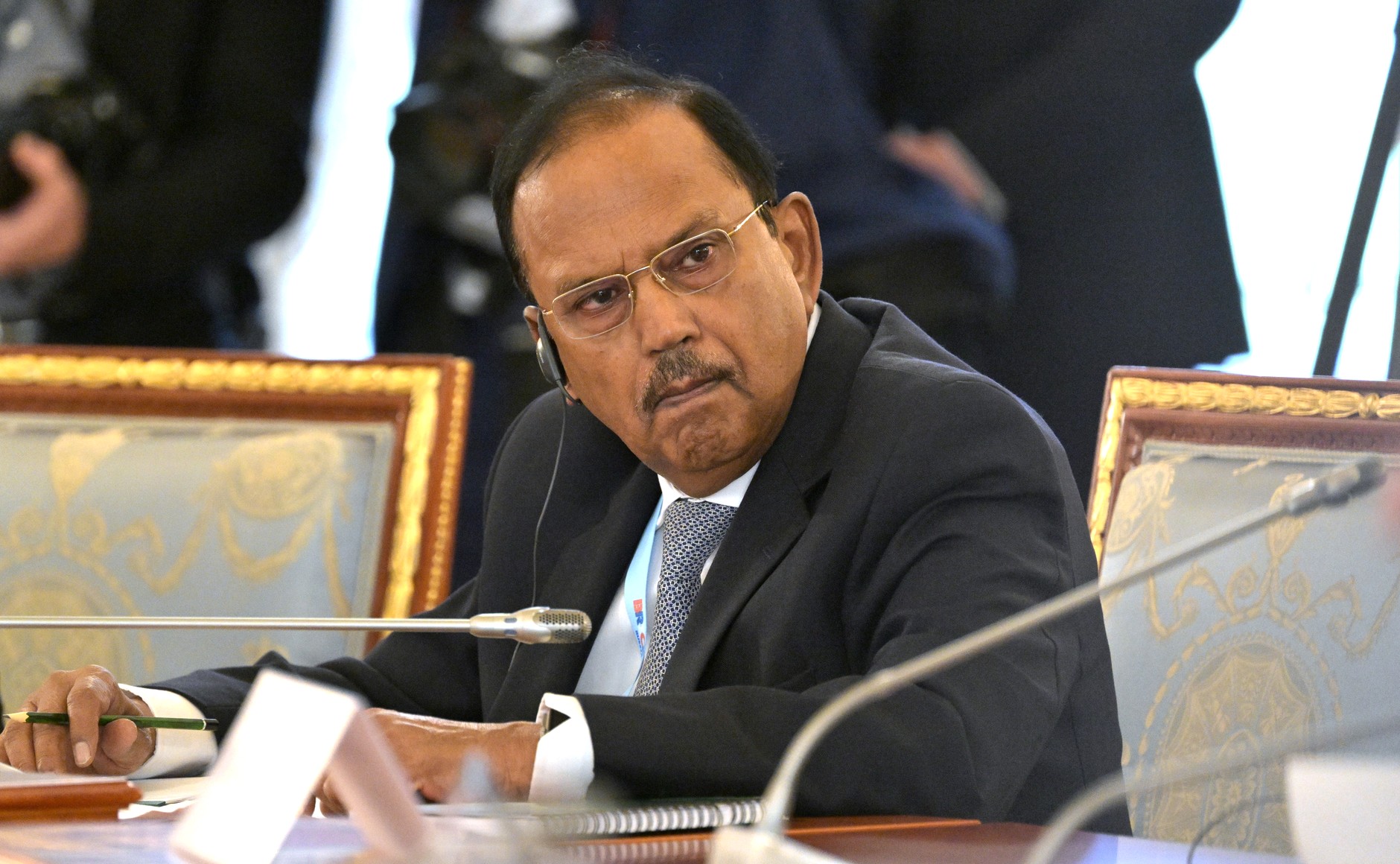
The April 2025 deal package provides the commercial scaffolding. The Doval visit adds a security layer that trade figures alone cannot convey. When an intelligence officer with a Kirti Chakra and Cabinet rank meets an energy minister during a war, the message is that supply disruption is a national security threat, and the response will be managed through security channels, not commodity markets.
India’s Iran policy has not changed on paper. New Delhi still maintains Chabahar, still participates in SCO exercises, still avoids condemning Iran publicly. But the operational reality has shifted. The last legal barrel of Iranian crude entered the Indian system under a 30-day American waiver, paid for in yuan through a Shanghai bank branch. The next barrel of Saudi crude will arrive through a supply chain co-owned by Aramco, processed in a refinery partly financed by PIF, in a country where the Indian diaspora sends home nearly $10 billion per year.
Doval did not announce a pivot. He performed one.
Frequently Asked Questions
Did India and Saudi Arabia sign any agreements during Doval’s April 2026 visit?
No agreements or memoranda of understanding were announced publicly. The visit was structured as consultations, not a signing ceremony. The Indian readout referenced “bilateral relations, the regional situation and other issues of mutual interest” without specifying deliverables. This format is consistent with NSA-level visits, which typically produce classified understandings rather than public documents. The operational significance lies in the counterpart selection — Doval meeting the energy minister — not in any published outcome.
How much Iranian oil did India actually import during the GL U window?
Approximately 4 million barrels arrived at Indian ports, with an additional 4–6 million barrels in transit at the moment of expiry on April 19. The primary identified cargo was Indian Oil Corporation’s 2-million-barrel purchase aboard the VLCC Jaya. By comparison, India imported 620,000 barrels per day from Iran at peak in 2018 — equivalent to roughly 18.6 million barrels per month. The GL U window produced less than two weeks’ worth of India’s former Iranian intake spread across 30 days.
What happens to India’s Chabahar port investment after the waiver expires on April 26?
India has completed its $370 million in financial commitments, so there are no outstanding payment obligations that sanctions could block. The operational question is whether India Port Global Limited can continue managing the Shahid Beheshti Terminal under a modified or rescinded waiver. MEA officials have discussed creating a new legal entity to insulate operations from direct government sanctions exposure. The 7,200-kilometre International North-South Transport Corridor — connecting Mumbai to Moscow via Chabahar — remains India’s only non-Pakistan land route to Central Asia, giving the port a strategic value that exceeds its commercial throughput of 90,000 TEUs since 2018.
Why did Indian refiners pay in Chinese yuan rather than Indian rupees?
Iran rejected rupee settlement. During the 2012–2018 sanctions period, India used UCO Bank to route rupee payments, but Iran accumulated rupee balances it could not easily convert or spend. Yuan settlement through ICICI Bank’s Shanghai branch offered Iran a convertible currency outside the SWIFT dollar system while giving Indian banks plausible distance from direct Iran-facing transactions. The arrangement means India’s rare purchase of Iranian crude was denominated in the currency of Iran’s largest remaining oil customer — China — routing India’s energy sovereignty through Beijing’s financial infrastructure.
Is the Doval visit related to India’s BRICS chairmanship?
Not directly, but the timing creates a diplomatic overlay. India chairs BRICS during 2025–2026 while the organisation includes Iran as a full member (admitted January 2024). India has blocked BRICS from issuing any collective statement on the Iran war, and it is the only founding BRICS member that has not individually condemned the US-Israeli strikes. Doval’s Riyadh visit — to a non-BRICS state that is the target of Iranian missile strikes — reinforces India’s operational alignment with the Gulf while maintaining its procedural role as BRICS chair. Beijing has used this tension: Wang Yi called in March 2026 for stronger BRICS institutional solidarity — a framing that, per CNBC, was read by Indian officials as pressure on New Delhi’s refusal to take a collective position on Iran. That tension will be on display at India’s role as an unplanned convener at the BRICS New Delhi meeting on May 14–15, where India will host Araghchi alongside Saudi and UAE foreign ministers without calling it mediation.