
Trump Called $90 Oil “Peanuts.” Saudi Arabia Is Bleeding $5 Billion a Month to Make It Possible.
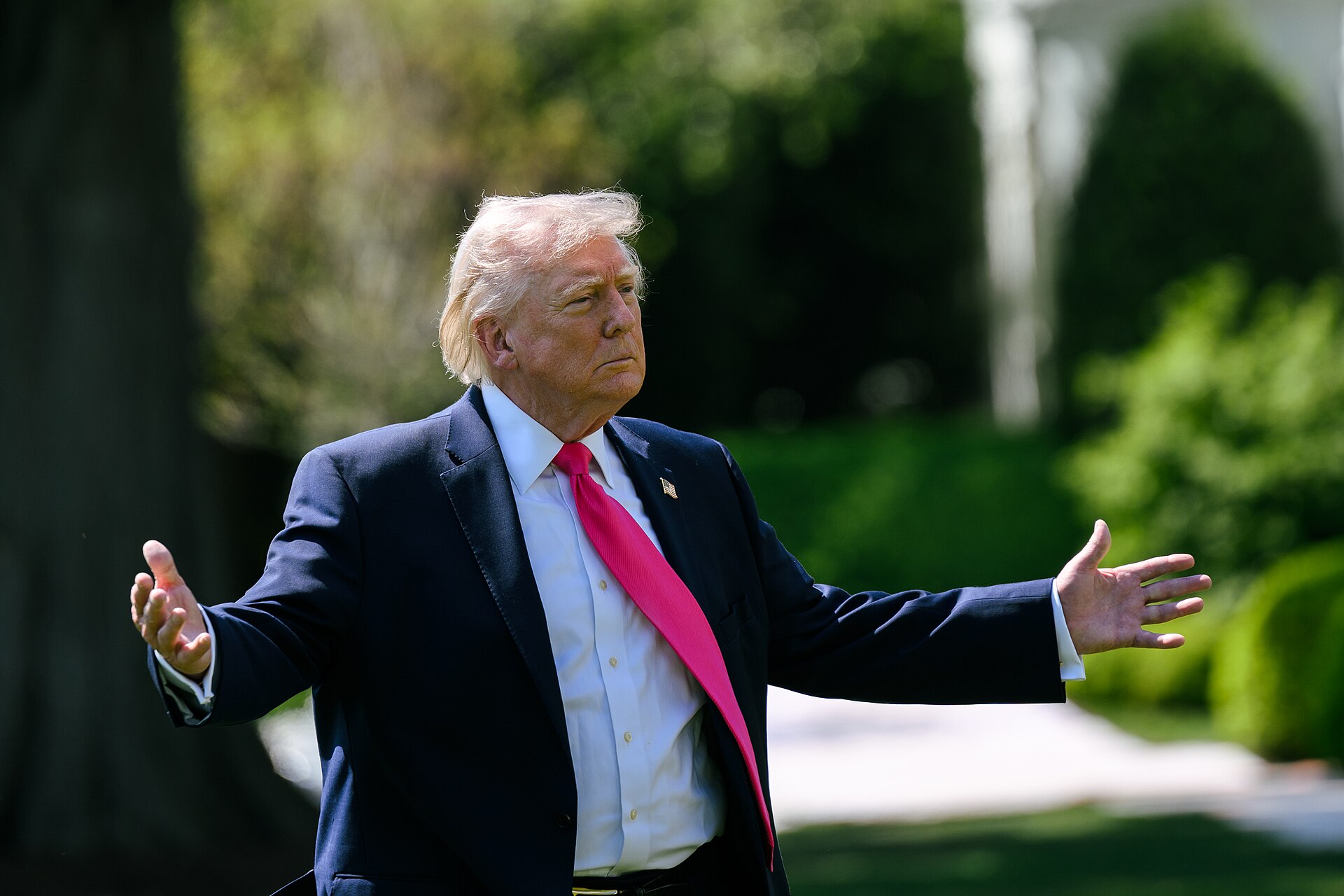
WASHINGTON — Donald Trump told CNBC’s Squawk Box on April 21 that he would have expected oil at $200 a barrel without the ceasefire, and that the current price of $90 was, in his word, “peanuts” — a remark that accidentally exposed the central structural asymmetry of the Iran war. The United States, producing 13.5 million barrels per day with net petroleum import dependency at its lowest since 1985, can absorb $95 Brent crude as a retail irritant; Saudi Arabia, which needs $108–111 per barrel just to fund Vision 2030 through PIF, is haemorrhaging at every price below that line. Trump’s $200 counterfactual, if taken at face value, means the ceasefire is generating roughly $105 per barrel in suppressed price benefit — and almost none of that surplus is flowing to the ally whose territory is absorbing the war’s kinetic cost.
The question is not whether the ceasefire holds past April 22. The question is who has been paying for the 14 days it already lasted, and who pocketed the difference between the oil price the market feared and the oil price it got. The answer involves American refiners running West Texas Intermediate at $89 and selling gasoline at $4.11 a gallon, a Goldman Sachs deficit estimate that doubles the Saudi government’s official figure, and a Pakistani central bank whose forex reserves are 49 percent Saudi deposits — the financial architecture through which Riyadh’s fiscal pain becomes Islamabad’s enforcement problem.
Table of Contents
- Introduction
- Trump’s $200 Counterfactual and the Surplus Nobody Discusses
- Who Captures the $105-Per-Barrel Ceasefire Surplus?
- Why Is Saudi Arabia Losing Money at $95 Oil?
- How Is the US Structurally Insulated from the War It Started?
- The Refiner Supercycle Nobody Voted For
- Pakistan’s Forex Reserves and Saudi Arabia’s Invisible Lever
- Why Iran Doesn’t Care Whether Oil Is $95 or $200
- The 1991 Burden-Sharing Model — Running in Reverse
- What Happens When the Four Clocks Desynchronize?
- Frequently Asked Questions
Trump’s $200 Counterfactual and the Surplus Nobody Discusses
The precise quote, delivered to CNBC’s Andrew Ross Sorkin at approximately 6:30 AM Eastern on April 21, was this: “And if you would have told me that oil is at 90 as opposed to 200 I would be frankly, surprised.” He then added that “boats are finding other sources — they’re going up to Texas and Louisiana, they’re going to Alaska, they’re going to other places,” calling it “an amazing phenomenon.” The framing was revealing: Trump was not discussing the war’s human cost, or the ceasefire’s fragility, or the 9.1 million barrels per day of Gulf production currently shut in according to the EIA’s April Short-Term Energy Outlook — he was celebrating the price. At Brent $95.42 and WTI $89.10 when he spoke, those prices were already baked into the political narrative he wanted to tell: that the war was manageable, that the ceasefire was working, and that America was getting through it just fine.
That celebration contains an implicit admission. If Trump genuinely expected $200 oil without the ceasefire, and Brent closed April 20 at $95.42, then the ceasefire is suppressing approximately $105 per barrel of market-feared premium. On roughly 80 million barrels per day of global consumption, that is $8.4 billion per day in consumer surplus that the ceasefire is generating — a number so large it makes the war’s direct production losses look like a rounding error. The political question Trump did not address, and no interviewer asked, is where that surplus lands.
He also told CNBC that stock markets “would be down 20% or down a very substantial amount” without the deal, and that the ceasefire had been “incredible for the world.” The word “incredible” is doing a lot of work in that sentence, because the ceasefire’s benefits have been distributed with a specificity that tracks national balance sheets, not altruism. The S&P 500 had recovered all of its 2026 war-related losses by the week of April 14 and was fractionally positive year-to-date when he spoke; without the ceasefire, by his own admission, the figure would have been down closer to 20 percent.
Who Captures the $105-Per-Barrel Ceasefire Surplus?
The arithmetic is stark enough to lay out in a table, because the distribution of the ceasefire’s oil-price benefit maps almost perfectly onto the inverse of the war’s physical cost. Every actor in the conflict sits on one side or the other of a ledger that Trump’s CNBC appearance made quantifiable for the first time.
The Middle East briefing 3,000+ readers start their day with.
One email. Every weekday morning. Free.
| Actor | Oil Price Benefit from Ceasefire | War’s Physical / Fiscal Cost | Net Position |
|---|---|---|---|
| US refiners | WTI at $89 vs $200 counterfactual; $6 Brent-WTI spread as pure margin | Minimal domestic infrastructure damage; 27% net import dependency | Large net beneficiary |
| US consumers | $4.11/gal vs estimated $7–9/gal at $200 Brent | Retail price pain, 29.5% YoY increase | Moderate beneficiary (still paying more than pre-war) |
| Saudi Arabia | $95 Brent vs $200 counterfactual — but cannot export at pre-war volumes | 30% production collapse; $13–16/bbl below PIF break-even; $8B PIF write-down | Large net loser |
| China | ~10M bpd imports at $95 vs $200 = ~$1.05B/day saved | Minimal direct war exposure | Largest single-country beneficiary |
| Iran | $0 Hormuz toll revenue collected; grey-market crude at $30–50/bbl discount | $435M/day sanctions damage (FDD); 180% inflation | Large net loser regardless of price level |
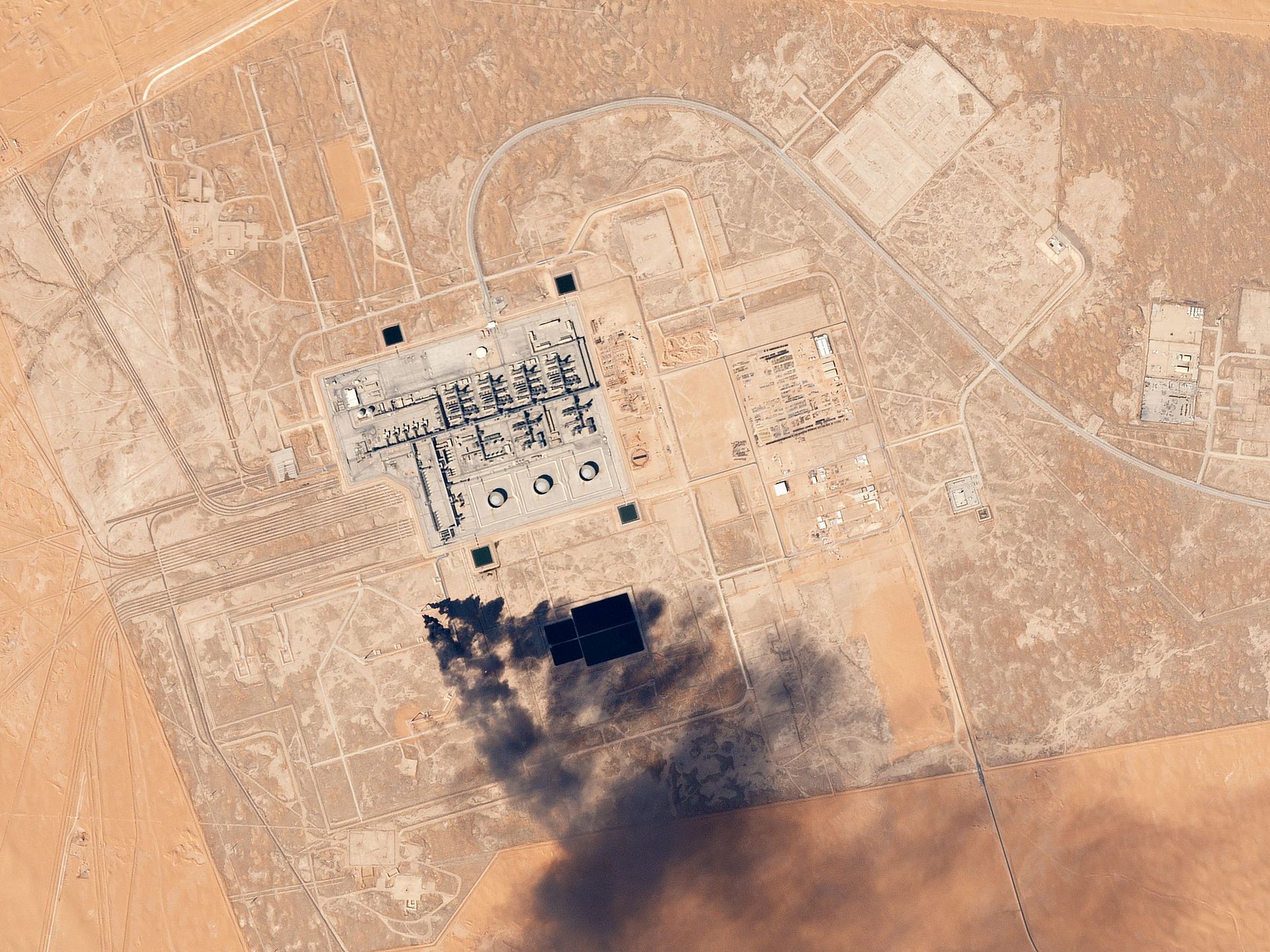
The table reveals the war’s central irony: the country prosecuting the military campaign and the country hosting the battlefield are on opposite sides of the surplus distribution. American downstream capital is running WTI feedstock at $89 into a retail market where gasoline commands $4.11 a gallon, with the $6 Brent-WTI spread functioning as additional refiner rent created entirely by the war’s geography — margins that exist because Hormuz is partially closed and the East-West Pipeline bypass cannot fully compensate for lost Gulf loading capacity.
China, importing roughly 10 million barrels per day, saves approximately $1.05 billion daily at $95 versus the $200 counterfactual — which gives Beijing a structural financial motivation to sustain the ceasefire that has nothing to do with diplomacy and everything to do with manufacturing competitiveness. Saudi Arabia, by contrast, captures almost none of the price benefit because its export volumes have collapsed: at 7.25 million barrels per day of production in March versus 10.4 million pre-war, the kingdom is selling 30 percent fewer barrels at a price that is still $13–16 below fiscal break-even.
Why Is Saudi Arabia Losing Money at $95 Oil?
The answer depends on which break-even you use, and the gap between the two tells the story of Vision 2030’s fiscal exposure. The IMF’s Article IV central government break-even for Saudi Arabia is $86.60 per barrel — meaning that at $95 Brent, the Saudi state is technically above water on its core budget. But Bloomberg’s PIF-inclusive break-even, which captures the megaproject spending routed through the Public Investment Fund rather than the central budget, runs to $108–111 per barrel. The $22–24 gap between those two numbers represents the cost of NEOM, the Red Sea tourism corridor, the entertainment giga-projects, and every other Vision 2030 line item that MBS has staked his domestic legitimacy on.
At $95 Brent, Saudi Arabia is bleeding somewhere between $13 and $16 per barrel on every unit of crude it manages to export — and it is exporting 3.15 million fewer barrels per day than it was in February. Goldman Sachs MENA economist Farouk Soussa estimated the war-adjusted Saudi fiscal deficit at 6.6 percent of GDP, double the official 3.3 percent figure, and his model assumed oil prices above $100. At $95, the trajectory is worse than his base case, because the revenue side is compressed while the expenditure side — wartime air defence replenishment, infrastructure repair, the $7 billion PAC-3 order that won’t arrive until 2028 — is expanding.
The IMF’s April 2026 World Economic Outlook quantified the damage with unusual directness: Saudi GDP growth was revised from 4.5 percent to 3.1 percent, a 1.4 percentage-point cut driven by what the Fund called “a little bit over 3 percentage points” of downgrade in oil-sector GDP. The MENA region aggregate was cut 2.8 points to 1.1 percent. The Fund’s summary line — “the damage is most severe for countries in the Gulf” — could have been written specifically about the kingdom, and probably was.
| Saudi Fiscal Metric | Pre-War (Feb 2026) | Current (April 2026) | Delta |
|---|---|---|---|
| Crude production | 10.4M bpd | 7.25M bpd | −3.15M bpd (−30%) |
| Brent crude price | ~$82/bbl | $95.42/bbl | +$13.42 (+16%) |
| PIF-inclusive break-even | $108–111/bbl | $108–111/bbl | Unchanged |
| Gap to break-even | −$26–29/bbl | −$13–16/bbl | Narrowed but still negative |
| GDP growth forecast (IMF) | 4.5% | 3.1% | −1.4 ppt |
| Fiscal deficit (Goldman, war-adjusted) | ~3.3% official | 6.6% GDP | Doubled |
| Asia crude exports | Baseline | −38.6% (Kpler) | Severe contraction |
PIF Governor Yasir Al-Rumayyan acknowledged the fiscal reality on April 15 when the fund’s 2026–2030 strategy formally shifted from rapid expansion to “sustained value creation,” writing down $8 billion in giga-project valuations, suspending the Sindalah resort indefinitely, and declaring that The Line’s completion by 2030 was “not a must-have.” That language, from the man who runs the kingdom’s $930 billion sovereign wealth fund, is the fiscal equivalent of a field hospital triage: save what can be saved, mark what cannot. The April domestic sukuk issuance — SAR 16.95 billion ($4.52 billion) across five tranches maturing 2031–2039 — was oversubscribed, confirming both that Riyadh can still borrow and that it needs to.
How Is the US Structurally Insulated from the War It Started?
The short answer is shale. The United States produces approximately 13.5 million barrels per day of crude oil, with a shale breakeven between $30 and $40 per barrel, meaning that at $89 WTI every producing basin in the country is profitable — and many are wildly so. Net petroleum import dependency has fallen to 27 percent, the lowest since 1985, compared with roughly 50 percent in 1979 when the Iranian revolution triggered the second oil shock and 35–40 percent during the 1973 Arab embargo. The structural insulation that makes Trump’s “peanuts” framing politically viable is a product of two decades of horizontal drilling and hydraulic fracturing, not of any policy this administration enacted.
Amy Myers Jaffe of NYU’s Center for Global Affairs framed the historical shift cleanly: the lessons absorbed from the 1970s energy shocks — strategic reserves, efficiency mandates, production diversification — have made the American economy fundamentally less vulnerable to oil price disruptions than the Gulf economies that produce the crude. The IMF’s April 17 blog post used the phrase “partially insulated” to describe the US position, noting that energy price shocks now devastate energy-importing nations and Gulf exporters simultaneously while leaving the American macro picture bruised but intact.
But “partially insulated” is not “painless.” The national average gasoline price hit $4.11 per gallon on April 15, up 29.5 percent year-on-year from $3.17 — a number that lands directly on every voter who commutes by car. The EIA’s April Short-Term Energy Outlook projects a peak near $4.30 per gallon in April, with diesel above $5.80 and California already at $5.88. Energy Secretary Chris Wright told reporters that gasoline might not fall below $3 per gallon until 2027; Trump publicly called him “totally wrong,” a contradiction that reveals internal White House tension between the economic team’s forecasts and the political team’s messaging needs.
Quinnipiac polling from April puts 65 percent of US voters blaming Trump “a lot” or “some” for gas prices; Yahoo/YouGov found 66 percent disapproval on his handling of the issue; and his overall approval on the economy has fallen to 38 percent, an all-time second-term low. House Minority Leader Hakeem Jeffries, appearing on CNBC Squawk Box on April 15, called the prices “a direct result of Donald Trump’s reckless war of choice.” The political exposure is real, even if the macroeconomic exposure is not — which is precisely the asymmetry that makes the “peanuts” comment so revealing of the gap between Trump’s structural position and his ally’s.
The Refiner Supercycle Nobody Voted For
The Brent-WTI spread, which sat at roughly $3–4 per barrel before the war, has widened to $6 and occasionally touched $7 during Hormuz closure spikes — and every dollar of that spread is pure margin for US Gulf Coast refiners who buy WTI-linked feedstock and sell into a global products market priced off Brent. Phillips 66, Valero, PBF Energy, HF Sinclair, and Marathon Petroleum are all reporting what industry press has begun calling a “refiner earnings supercycle,” a phrase that captures the structural windfall without acknowledging its origin: the partial closure of the Strait of Hormuz and the physical scarcity of medium-sour crude that Saudi Arabia can no longer ship in pre-war volumes.
The mechanics are worth spelling out because they illuminate who actually benefits from the ceasefire’s price suppression. A US refiner on the Gulf Coast buys West Texas Intermediate at $89, processes it into gasoline selling at $4.11 per gallon (roughly $172 per barrel equivalent), diesel at $5.80 per gallon, and jet fuel at similar premiums. The crack spread — the difference between crude input cost and refined product revenue — is historically elevated because global refining capacity lost access to Gulf medium-sour grades, tightening the product market even as crude supply partially recovered through the Yanbu bypass.
When Trump says $90 oil is “peanuts,” he is speaking from the vantage of an economy where the pain is concentrated at the retail pump and the profit is concentrated in the refining sector — a sector that does not set gasoline prices by arithmetic but by whatever the market will bear in a supply-constrained environment. The refiner windfall is, in economic terms, a transfer payment from American drivers to American shareholders, intermediated by a war being fought on Saudi territory with Saudi air defence ammunition that is 86 percent depleted.
Pakistan’s Forex Reserves and Saudi Arabia’s Invisible Lever
The connection between Saudi Arabia’s fiscal bleeding and Pakistan’s ceasefire enforcement role runs through a single number: $8 billion. That is the approximate value of Saudi deposits sitting in Pakistan’s central bank, representing roughly 49 percent of the State Bank of Pakistan’s total forex reserves of $16.4 billion. The original $5 billion Saudi deposit, which was previously set to mature in June 2026, has been extended to a three-year term maturing in 2028, and Riyadh announced an additional $3 billion in deposits in April 2026 — a move that simultaneously stabilized Pakistan’s reserves and deepened Islamabad’s structural dependency on Saudi financial support.
Pakistan is the ceasefire’s sole enforcement mechanism, a role it assumed overnight on April 8–9 when Field Marshal Asim Munir personally relayed communications between Washington and Tehran. The Strategic Mutual Defense Agreement signed in September 2025 already positioned Pakistan as Saudi Arabia’s treaty ally; Pakistani troops arrived at King Abdulaziz Air Base in the Eastern Sector on April 11. But Pakistan’s 27th Constitutional Amendment concentrates foreign policy authority in the military establishment, meaning that ceasefire diplomacy is Munir’s operation, not the elected government’s — and Munir’s room for manoeuvre is bounded by the fact that nearly half of his country’s forex reserves can be recalled by Riyadh.
The lever is never pulled explicitly; it does not need to be. When Saudi Arabia runs a Goldman-estimated 6.6 percent fiscal deficit and its primary ceasefire enforcer holds $8 billion in Saudi deposits against $16.4 billion in total reserves, the fiscal pressure on Riyadh translates into enforcement pressure on Islamabad through a mechanism that requires no phone calls, no threats, and no diplomatic incidents — only the shared understanding that the money exists, and that it can move. Saudi Arabia blocked Pakistan’s $1.5 billion arms deal with Sudan on April 20, a decision reported by the Daily Pakistan that demonstrated precisely the kind of leverage Riyadh exercises when it needs to signal displeasure without making a public statement.

Why Iran Doesn’t Care Whether Oil Is $95 or $200
Iran’s economic position in this war is defined not by the oil price level but by its ability to sell at any price at all, and on that metric the picture is catastrophic regardless of where Brent trades. The expiry of OFAC General License U on April 19 — with no renewal, while Russia’s GL 134A was quietly extended the same day in a deliberate asymmetric coercive signal — means full maximum-pressure sanctions are now in effect for the first time in this conflict cycle. The Foundation for Defense of Democracies estimates US sanctions are inflicting $435 million per day in economic damage on Iran, and an internal Iran Central Bank memo obtained by Iran International documents 180 percent inflation with a projected 12-year recovery timeline.
Iran’s Hormuz transit toll — the $1-per-barrel fee that was supposed to generate billions in annual revenue — has collected precisely $0 in 36 days of operation, with 60 permits issued, 8 payment requests sent, and zero payments received. The IMO Secretary-General called the toll “illegal”; UNCLOS Article 26 prohibits transit charges; Hapag-Lloyd and Maersk are both avoiding the strait entirely. The theoretical revenue of $1–2 billion per year (estimated by Iranian economist Ali Shokri) remains theoretical, and the programme’s administrator — Ali Zolghadr, the same SNSC figure who blocked the ceasefire in Islamabad — now presides over a dual failure of both diplomacy and revenue extraction.
What this means for the $200 counterfactual is that Iran’s strategic calculus is largely independent of the oil price. At $95 Brent, Iran extracts perhaps $30–50 per barrel from grey-market sales to the remaining buyers willing to risk secondary sanctions; at $200, the grey-market premium might be larger in absolute terms, but the buyer pool would be smaller and the enforcement architecture tighter. Iran’s war aims — survival of the regime, maintenance of IRGC operational autonomy, prevention of a US-imposed enrichment moratorium — are priced in political currency, not in barrels. Trump’s $200 number is a price at which the war becomes expensive for everyone except the country that started it; Iran’s position is that the war is already existentially expensive at any price.
The 1991 Burden-Sharing Model — Running in Reverse
The only genuine historical precedent for the current fiscal architecture is the 1991 Gulf War, and the comparison reveals how completely the burden-sharing model has inverted. In 1991, the US Department of Defense incurred $61 billion in incremental war costs; Saudi Arabia contributed $16.8 billion directly (27 percent of the total) and approximately $64 billion in total war-associated costs by August of that year, according to a GAO audit (NSIAD-92-71). Kuwait, Japan, Germany, and the UAE covered most of the remainder. The American taxpayer’s net exposure was minimal — arguably the only post-World War II precedent for a genuine international split-check on a major US military operation.
In 2026, the flow has reversed. Saudi Arabia is not writing checks to cover US war costs; it is absorbing war costs through production losses ($13–16 per barrel below break-even on 7.25 million barrels per day of reduced output), infrastructure damage (Khurais field at 300,000 bpd offline with no restoration timeline, SAMREF Yanbu struck April 3), air defence depletion (PAC-3 stockpile at 14 percent of pre-war levels), and an $8 billion PIF write-down that formally downgrades the kingdom’s development trajectory. White House officials have reportedly suggested that Arab Gulf states help finance the current US war effort against Iran — a proposal that, if the Daily FT reporting is accurate, would mean the United States is simultaneously prosecuting a war on Saudi soil, capturing the refiner surplus from the war’s oil-market effects, and asking the host country to pay for the privilege.
The 1991 model worked because Saudi Arabia and Kuwait had existential stakes in the outcome (Iraqi annexation of Kuwait, Iraqi forces on the Saudi border) and the US provided a service they could not provide themselves. In 2026, the existential stake is less clear — Saudi Arabia did not invite the US to strike Iran, and MBS’s reported private request to Trump for US ground troops and regime change, first reported by the New York Times citing people briefed by US officials, was precisely the kind of maximalist ask that creates obligation without guarantee. The kingdom is paying the war’s cost without having authored the war’s aims, and the $200 counterfactual Trump cited on CNBC is the price at which that structural injustice would become visible to everyone — because at $200, American consumers would feel the pain that Saudi fiscal planners have been absorbing since February 28.
What Happens When the Four Clocks Desynchronize?
The war is running on four fiscal and political clocks simultaneously, and the danger is not that any single clock runs out but that they are ticking at fundamentally different speeds — creating a situation where the party with the least urgency (the United States) controls the pace of diplomacy, while the party with the most urgency (Saudi Arabia) has no seat at the negotiating table in Islamabad. Trump’s “peanuts” remark is what desynchronization sounds like when the slowest clock speaks on behalf of the fastest.
| Clock | Owner | Pressure Level at $95 Brent | Pressure Level at $200 Brent | Break Point |
|---|---|---|---|---|
| US political | Trump / White House | Moderate (38% economic approval, $4.11 gas) | Extreme (recession-level consumer shock) | ~$130–150/bbl (midterm calculus) |
| Saudi fiscal | MBS / PIF / MOF | Severe ($13–16/bbl below break-even, 6.6% deficit) | Paradoxically better (revenue above break-even if volumes recover) | $86.60/bbl (IMF floor) to $108–111 (PIF ceiling) |
| Pakistan financial | Munir / SBP | Dependent (49% of forex = Saudi deposits) | Same dependency, higher Saudi leverage | Saudi deposit recall or non-renewal |
| Iran attrition | Mojtaba Khamenei / IRGC | Critical ($435M/day damage, 180% inflation) | Critical (same damage, marginally higher grey-market revenue) | Regime social stability threshold |
The US political clock is the slowest. At $95 Brent, the domestic exposure is retail gasoline — painful for commuters, useful for Democratic messaging, but not structurally destabilizing. Trump’s 38 percent economic approval is historically low for a second-term president, but he is not facing a midterm until November 2026, and the ceasefire’s expiry on April 22 will be framed as Iran’s fault regardless of what actually happens in Islamabad. The US can afford to wait. Vice President Vance, Special Envoy Witkoff, and Jared Kushner are in Islamabad with a negotiating position that reflects that patience: they proposed a 20-year enrichment moratorium, a demand so maximalist that it functions less as a diplomatic offer than as a marker for the post-collapse blame game.
The Saudi fiscal clock is the fastest. Every day at $95 Brent and 7.25 million barrels per day of production, the kingdom is running further below its PIF-inclusive break-even. The April $4.52 billion sukuk issuance was oversubscribed by domestic institutions, which suggests market confidence but also confirms that Riyadh is borrowing to bridge the gap. Goldman’s 6.6 percent deficit estimate at oil above $100 means the real number at $95 is higher — perhaps 7–8 percent of GDP, a figure that starts to compress the fiscal space available for both war expenditure and Vision 2030 maintenance. MBS can sustain this for months, not years; the PIF write-down and Al-Rumayyan’s “not a must-have” language about The Line are the first public admissions that the clock is audible.
Pakistan’s clock is derivative of Saudi Arabia’s. As long as Riyadh maintains its deposits in the State Bank of Pakistan, Munir has the financial stability to operate as ceasefire enforcer; if Saudi fiscal pressure eventually forces a rationalisation of overseas financial commitments, Pakistan’s forex position becomes the first casualty. The additional $3 billion deposited in April 2026 bought time, but it also bought deeper dependency — the kind of financial architecture where the enforcer’s solvency depends on the satisfaction of the party he is supposed to be impartially enforcing for.
Iran’s clock is the most uncertain, because the regime’s tolerance for economic pain has historically exceeded every external estimate. Supreme Leader Mojtaba Khamenei has been audio-only for 44 days; the IRGC operates with decentralized autonomy that can sustain military operations even as the civilian economy collapses; and Iran’s war aims are existential in a way that makes price-based coercion structurally ineffective. The $435 million per day in FDD-estimated sanctions damage is real, but the test is whether it translates into political pressure on the decision-makers who matter — and the answer, given that President Pezeshkian publicly accused IRGC commanders Vahidi and Abdollahi of sabotaging the ceasefire without any visible consequence, is that it does not.
The desynchronization risk is this: the US, comfortable at $95, has no urgency to make concessions that would accelerate a deal. Saudi Arabia, bleeding at $95, desperately needs either a deal that reopens Hormuz fully or a price spike that takes Brent above $108 — but a price spike would require the ceasefire to collapse, which would bring the kinetic risk back to Saudi territory during Hajj season with PAC-3 stocks at 14 percent. Iran, indifferent to the price level, is focused on the diplomatic sequencing that determines whether Hormuz sovereignty is conceded in exchange for sanctions relief. And Pakistan, dependent on Saudi money, is enforcing a ceasefire whose continuation serves Washington’s interests more than Riyadh’s — a structural misalignment that will become visible the moment the Islamabad process either succeeds or fails, because in either outcome, the fiscal cost was borne by the party that was not in the room.
Frequently Asked Questions
What did Trump mean by “$200 oil” on CNBC?
Trump told CNBC Squawk Box on April 21, 2026, that he would have expected oil at $200 per barrel without the ceasefire, and that $90 was “peanuts” by comparison. The statement was framed as a defence of the ceasefire’s economic value. What it also revealed was the administration’s internal modelling of a worst-case oil price — a figure consistent with Goldman Sachs and JP Morgan war-premium estimates published in early March, which projected $180–$250 Brent under a full Hormuz closure scenario lasting more than 30 days. IMF modelling from its April 2026 World Economic Outlook estimated that every $10 increase in oil prices above $100 reduces US GDP growth by 0.1 to 0.2 percentage points — meaning the $200 scenario would have implied a GDP hit of 1.0 to 2.0 points, pushing the US economy toward or into recession.
How much revenue is Saudi Arabia losing per day at current oil prices?
At 7.25 million barrels per day of production and $95 Brent, Saudi Arabia generates approximately $689 million per day in gross oil revenue. Against the PIF-inclusive break-even of $108–111, the kingdom needs roughly $784–806 million per day to cover both central government operations and Vision 2030 megaproject spending — a daily shortfall of $95–117 million. Pre-war, at 10.4 million bpd and $82 Brent, daily revenue was approximately $853 million; the net daily revenue loss from the combined production collapse and price shift is therefore approximately $164 million per day, or roughly $5 billion per month in foregone revenue relative to the February baseline, before accounting for infrastructure repair costs or the $8 billion PIF write-down.
Could higher oil prices actually help Saudi Arabia even during the war?
In theory, yes — but only if export volumes recover simultaneously, which requires either a full reopening of Hormuz or a restoration of the damaged production capacity at Khurais (300,000 bpd offline, no timeline announced) and SAMREF Yanbu. At the current 7.25 million bpd, Saudi Arabia would need Brent at approximately $118 per barrel to generate the same gross revenue it earned pre-war at 10.4 million bpd and $82 Brent — a price level that would trigger demand destruction, accelerate the global energy transition, and undermine long-term demand for the commodity on which the entire Vision 2030 funding model depends. The EIA’s April STEO projects global oil demand contraction of 1.2 million bpd for every sustained $30 increase above $100, meaning the cure would carry its own disease.
Why is the Brent-WTI spread relevant to American consumers?
The Brent-WTI spread — currently $6 per barrel, roughly double its pre-war average — measures the price difference between the international crude benchmark and the US domestic benchmark. Because US Gulf Coast refiners buy WTI-linked domestic crude but sell refined products (gasoline, diesel, jet fuel) into a global market priced off Brent, the widened spread increases their input cost advantage. That margin does not automatically translate into lower retail prices; instead, it inflates refiner profits while consumers pay a retail price set by the global product market. Based on AAA April 2026 price data and standard driving assumptions, the average US household paid an estimated $40–55 more per month on gasoline in April 2026 compared to April 2025 — money that flows through the refining system and emerges as earnings for the five major independent refiners reporting record or near-record quarterly results.
What is the risk if Pakistan’s forex reserves are destabilized?
If Saudi Arabia were to recall or decline to renew its $8 billion in deposits at the State Bank of Pakistan, Pakistan’s forex reserves would fall from $16.4 billion to approximately $8.4 billion — barely 1.5 months of import cover, below the IMF’s minimum recommended threshold of three months. The Pakistani rupee, already under pressure from a current-account deficit and rising import costs from the war, would face a devaluation spiral reminiscent of the 2022–2023 crisis, when reserves fell to $4.5 billion and the rupee lost 40 percent of its value against the dollar. Such a scenario would immediately compromise Munir’s ability to maintain the SMDA troop deployment at King Abdulaziz Air Base — because a country in a balance-of-payments crisis cannot sustain an expeditionary military commitment, however small — and would collapse the enforcement architecture that both Washington and Riyadh currently depend on to keep the ceasefire nominally operational.