WASHINGTON — The Pentagon told the House Armed Services Committee on April 22 that clearing Iranian mines from the Strait of Hormuz will take up to six months after the war ends — a timeline that assumes Iran cooperates. Iran’s IRGC Navy commander is dead, his replacement unannounced, mine placement records were kept haphazardly according to US officials, and the civilian government in Tehran has zero constitutional authority over the force that laid them. A signed ceasefire does not clear a minefield. The same structural defect — the authorization ceiling created by Article 110, which reserves IRGC command authority for the Supreme Leader alone — that prevented diplomats from stopping the war now prevents diplomats from physically reopening the waterway. Hormuz is closed not because of a policy decision that can be reversed but because of ordnance in the water that no one fully mapped.
Table of Contents
- The Command Vacuum
- How Many Mines Are in the Strait of Hormuz?
- What Do US Officials Mean by “Haphazard” Mining?
- The Minesweeper Gap
- The Kuwait Benchmark: Six and a Half Months With Charts
- The Authorization Ceiling, Underwater
- Can Iran Clear Its Own Mines?
- Trump’s Shoot-to-Kill Order and the Laying That Continues
- The Commercial Collapse
- Frequently Asked Questions
The Command Vacuum
Alireza Tangsiri commanded the IRGC Navy for six years. An Israeli strike killed him on March 30. More than three weeks later, Iran has not named a successor — the longest leadership vacuum in the force’s history. Israeli Defense Minister Israel Katz called Tangsiri “the man who was directly responsible for the terrorist operation of mining and blocking the Strait of Hormuz to shipping.” The man responsible is dead. The mines remain.
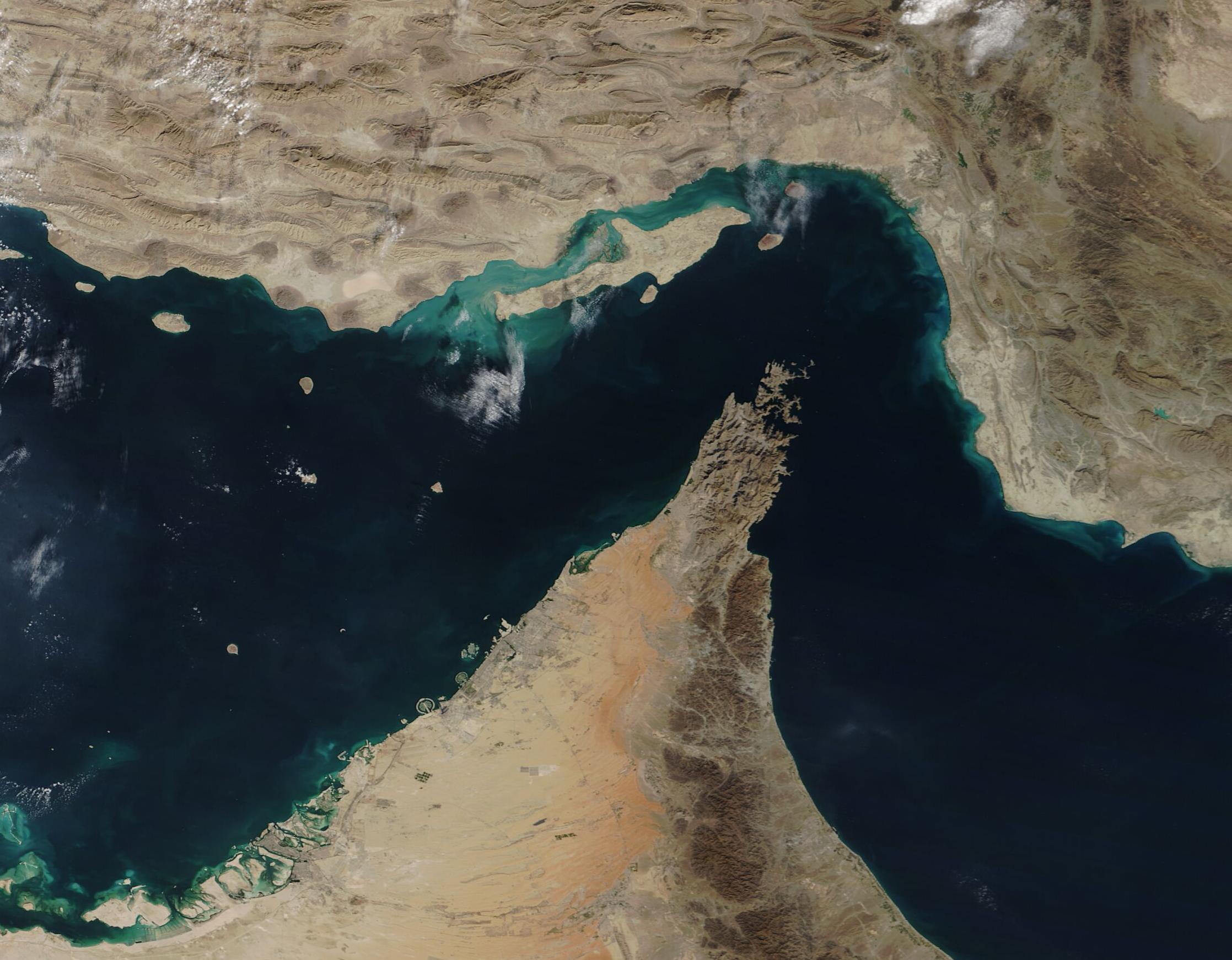
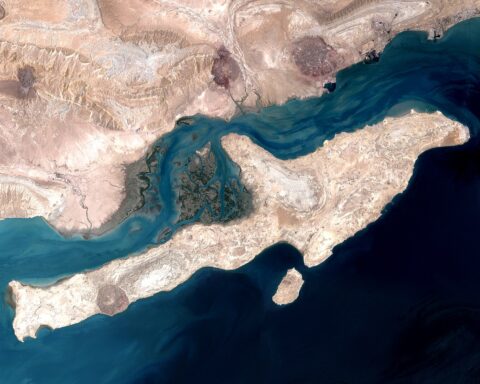
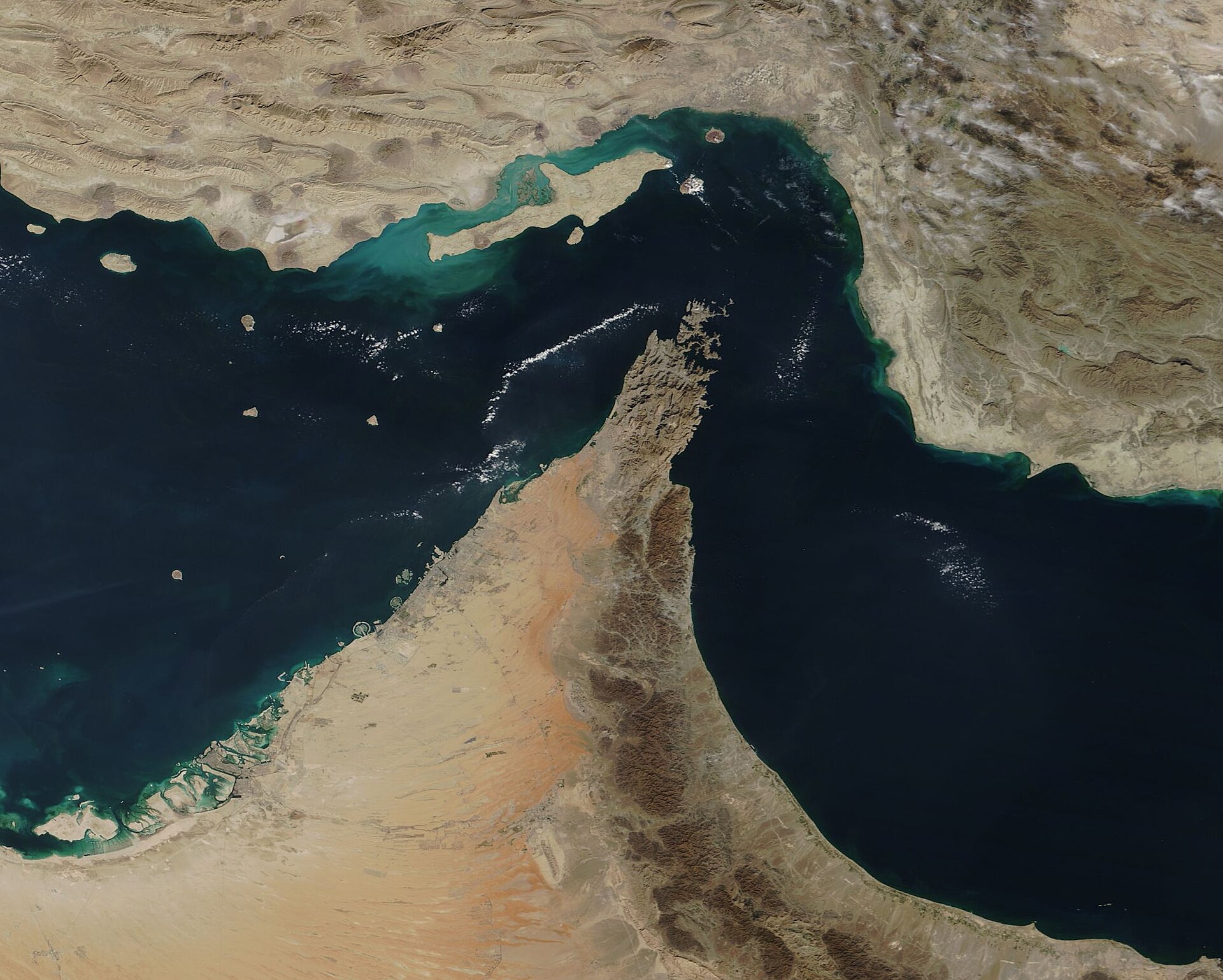
This is not an abstraction. Mine warfare depends on records: coordinates, depths, arming mechanisms, drift calculations. The IRGC Navy published a navigation chart in early April designating the standard Traffic Separation Scheme shipping lanes as a danger zone — the first official Iranian confirmation that mines were in the water — and rerouted vessels through a five-nautical-mile corridor between Qeshm and Larak islands. That chart told the world where not to go. It did not tell anyone where, precisely, the mines are.
US officials told the New York Times on April 11 that Iran “may not know exact locations” of all mines placed, and that the mining operation was conducted “haphazardly” without systematic coordinate recording. Those officials were describing the situation when Tangsiri was alive. He is now dead, his operational staff scattered across multiple IRGC Navy bases from Bandar Abbas to Jask, and the institutional knowledge of where each mine was placed — if it was ever consolidated — has no confirmed custodian.
How Many Mines Are in the Strait of Hormuz?
No one knows with certainty — not CENTCOM, not the IRGC, and not the civilian government in Tehran. Iran’s total mine stockpile is estimated at 2,000 to 6,000 weapons by the Strauss Center and FPRI. The number actually deployed is far smaller — tracking suggests dozens to low hundreds — but even a handful of uncharted mines closes a shipping lane indefinitely.
Two types have been identified in the water. The Maham-3 is a moored contact mine fitted with magnetic and acoustic sensors, a descendant of the M-08 mines Iran used against tanker traffic in 1987-88. It sits at a programmed depth, tethered to the seabed, and waits. The Maham-7 is newer and more dangerous: a seabed-resting weapon designed to defeat sonar detection, a limpet-style mine that does not announce its presence to the sweeping technologies built to find moored weapons floating in the water column.
The Middle East briefing 3,000+ readers start their day with.
One email. Every weekday morning. Free.
The Maham-7 is the harder clearance problem. Traditional mine countermeasures — the sonar tows, the mechanical sweeps — were designed for moored mines. A weapon resting on the seabed in the silty, acoustically cluttered environment of the Hormuz shallows requires different detection methods: synthetic aperture sonar, unmanned underwater vehicles, divers. The US Navy retired four of its five forward-deployed dedicated MCM ships from Bahrain before the war began.
What Do US Officials Mean by “Haphazard” Mining?
The New York Times sourcing on April 11 was precise: Iran “did not systematically track every placement.” This does not mean mines were placed randomly. It means the IRGC Navy’s operations — conducted at night, from small boats in contested waters — did not maintain the geodetic records a post-conflict clearance team would need to work from a definitive chart.
In conventional mine warfare doctrine, the mining force records the exact coordinates of each weapon, its depth setting, its arming delay, and its expected drift over time. These records serve two purposes: they allow the mining force to transit its own minefields safely, and they provide the basis for post-conflict clearance. Iraq maintained such records in 1991 and surrendered them on March 3 of that year. Even with those charts, clearance of the 1,157 Iraqi mines took six and a half months.
Iran has surrendered nothing. The IRGC Navy’s declaration of “full authority” over the strait — issued April 5 and reiterated April 10, while Araghchi was negotiating in Islamabad — made no mention of mine charts, clearance timelines, or cooperation with any international body. The declaration was about control, not accountability.
Foreign Minister Araghchi’s admission that reopening would occur “with due consideration of technical limitations” was interpreted by Western officials as an acknowledgment that Tehran itself cannot quickly locate or clear the mines. The phrase “technical limitations” is diplomatic language for a military reality: the civilian government does not possess the operational data held — if held at all — by IRGC Navy field units whose commander is dead and whose chain of command has a gap that has now lasted over three weeks.
The Minesweeper Gap
The four Avenger-class mine countermeasures ships that had been forward-deployed at Naval Support Activity Bahrain — USS Devastator, Sentry, Dextrous, and Gladiator — were decommissioned on September 25, 2025. Five months before the war began. The wooden-hulled vessels, designed specifically to operate in mined waters without triggering magnetic-influence weapons, were pulled from service as part of the Navy’s transition to the Littoral Combat Ship mine countermeasures mission package.
That transition has failed. The Pentagon’s own operational testing wing published a report on March 13 — two weeks into the war — stating it “could not determine the reliability and effectiveness of the LCS with the MCM mission package” and that the unmanned surface vehicles central to the new concept are “not operationally suitable.” Emma Salisbury, a mine warfare analyst, wrote in March that MCM capability had been “integrated” into broader surface warfare platforms but “in practice, it was marginalized.” The integration was administrative. The capability loss was real.
Two Sasebo-based Avengers — USS Pioneer and USS Chief — departed Singapore on April 10. They are the only dedicated wooden-hull MCM assets en route to the Gulf. Transit time from Singapore to the strait is measured in weeks, not days. When they arrive, two ships will face a clearance task that was barely manageable for a coalition of twelve in 1991 — against a minefield with no charts, in waters where the mining force continued laying new weapons as recently as this week.
| Asset | Status | Availability |
|---|---|---|
| 4 Avenger-class MCM (Bahrain) | Decommissioned Sept. 25, 2025 | None |
| USS Pioneer (MCM-9) | En route from Singapore (departed April 10) | Weeks |
| USS Chief (MCM-14) | En route from Singapore (departed April 10) | Weeks |
| 4 remaining Avengers (Pacific) | Committed to Pacific theater | Unavailable |
| LCS MCM mission package | “Not operationally suitable” (DoD test report, March 13) | Unreliable |
Trump ordered on April 23 that minesweepers be deployed at a “tripled up level.” The arithmetic does not support this. Tripling two ships yields six. The 1991 Kuwait clearance used twelve dedicated MCM vessels plus support ships. The strait is narrower than the Kuwaiti mine belt but deeper in places, with stronger currents, and the Maham-7 seabed mines require capabilities the Avenger class was not designed to counter.
The Kuwait Benchmark: Six and a Half Months With Charts
The 1991 precedent is the only modern benchmark for clearing a Gulf minefield at scale, and every aspect of it was more favorable than what the US Navy faces in Hormuz today.
Iraq deployed 1,157 mines across a roughly 100-mile stretch of Kuwaiti coastal waters. USS Tripoli struck a moored contact mine on February 18, 1991. Four hours later, USS Princeton hit an Italian-made Manta bottom-influence mine. Both ships survived. The strikes occurred on the first day of amphibious operations and demonstrated — as the Samuel B. Roberts had in 1988 — that a weapon costing roughly $1,500 can mission-kill a warship worth hundreds of millions.
Iraq surrendered its mine charts on March 3, 1991. Seven task groups with twelve or more MCM vessels began systematic clearance. The operation ran until September 10, 1991 — six months and seven days after the charts were handed over. Naval mines caused 77 percent of all US ship casualties since 1950, according to the Strauss Center, and Kuwait demonstrated why: they are easy to lay, hard to find, and slow to clear even under cooperative conditions.
The conditions in Hormuz are not cooperative. Iran has not surrendered charts — and may not possess complete ones. The mining force’s commander is dead. The IRGC Navy continued laying additional mines this week, according to Axios, even as ceasefire negotiations were nominally active. The Pentagon’s classified assessment of six months assumes a level of post-conflict cooperation that the authorization-ceiling problem makes structurally unlikely.
The Authorization Ceiling, Underwater
The authorization ceiling — the structural barrier that prevented Iran’s civilian government from delivering a ceasefire because Article 110 of the constitution reserves military command authority for the Supreme Leader — does not disappear when a ceasefire is signed. It extends into every operational requirement that follows.
President Pezeshkian publicly accused SNSC Secretary Vahidi and IRGC commander Abdollahi on April 4 of sabotaging the ceasefire — naming them directly as the actors who deviated from the negotiating delegation’s mandate. That accusation confirmed what the structure of Article 110 already made plain: the president of Iran cannot order the IRGC Navy to do anything. He cannot order mine charts released. He cannot order clearance cooperation. He cannot order the IRGC Navy to stop laying new mines. Araghchi’s commitments in Islamabad, whatever their content, are not binding on the force that controls the minefield.
The authorization ceiling has acquired a new operational dimension: the Pentagon has now named Vahidi as a designated strike target even as Witkoff flies to Islamabad, testing whether removing the man at the top of the ceiling changes anything in a force specifically engineered to survive decapitation.
This is the gap that no diplomatic framework has addressed. Every ceasefire proposal — the Islamabad Accord, the Witkoff 45-day phased framework, Pakistan’s enforcement mechanism — treats Hormuz reopening as a deliverable that Iran’s negotiating team can commit to. But the US blockade and Pakistan’s enforcement architecture operate on a government that does not command the relevant military force. The IRGC Navy’s April 5 declaration was not a negotiating position. It was a statement of constitutional fact.
Khamenei has been absent from public life for over 50 days. Mojtaba Khamenei operates audio-only. The SNSC — the body that could theoretically authorize IRGC cooperation with a mine-clearance regime — is run by Vahidi, who has an INTERPOL Red Notice for the 1994 AMIA bombing and who Pezeshkian named as the man blocking ceasefire implementation. The authorization ceiling is not a metaphor. It is the reason the mines will stay in the water long after any document is signed.
Can Iran Clear Its Own Mines?
Araghchi’s phrase — “technical limitations” — suggests it cannot, at least not quickly. Iran’s mine-clearance capacity is negligible. The IRGC Navy was built to lay mines, not sweep them. Its doctrine, procurement, and training are oriented toward denial, not restoration. The force that mined the strait has no institutional incentive and no command authority empowered to reverse what it has done.
Even if Iran possessed the will and the authority, the operational problem remains. Mines drift. Moored mines shift position as tethers degrade or currents change. Seabed mines like the Maham-7 can be buried by silt movement, rendering them invisible to sonar but still lethal. The longer mines remain in the water, the less reliable any placement records become — and those records were incomplete from the start.
The Tasnim News Agency, the IRGC-aligned outlet that serves as the military’s preferred channel, stated in April that “the strait would not return to pre-war levels of travel” and characterized ceasefire negotiations as “an effort to sow discord within Iran.” This is not the language of a force preparing to cooperate with mine clearance. It is the language of a force that treats the minefield as a permanent strategic asset — one that persists regardless of what the foreign ministry concedes at a negotiating table.
The timeline extends to winter under realistic assumptions. The Pentagon’s six-month estimate begins counting from the end of hostilities and assumes cooperation. Without cooperation, without charts, with only two dedicated MCM vessels en route and an LCS replacement that the Pentagon’s own testers cannot certify, the clearance clock has not started.
Trump’s Shoot-to-Kill Order and the Laying That Continues
Axios reported on April 23 that Iran’s IRGC Navy continued laying additional mines in Hormuz this week — during active ceasefire negotiations. The same day, Trump posted on Truth Social: “I have ordered the United States Navy to shoot and kill any boat, small boats though they may be, that is putting mines in the waters of the Strait of Hormuz. There is to be no hesitation.”
The order addresses the symptom. Iran retains hundreds of small boats capable of mine-laying even after US strikes destroyed 16 Iranian naval vessels. The IRGC’s fast-attack craft and dhow-style vessels operate from distributed bases along Iran’s southern coast — Bandar Abbas, Bandar Lengeh, Jask, Chahbahar — and can deploy mines at night in the confined waters of the strait with minimal signature. Shooting mine-laying boats, if the Navy can identify them in time, stops individual sorties. It does not remove the mines already laid. It does not restore the records that were never kept. And it does not address the command vacuum that means no single Iranian authority can order the mining to stop and be obeyed.
The IRGC’s Khatam al-Anbiya Central Headquarters — the same command that Abdollahi runs, that Pakistan’s Munir visited on April 16, that Pezeshkian publicly accused — responded to recent US boarding operations by calling them “armed piracy” and “violating the ceasefire.” The framing is instructive. The IRGC treats the minefield as sovereign infrastructure and any interference with it as aggression. The mines are not a bargaining chip to be traded. They are, in the IRGC’s operational grammar, the new status quo.
The Commercial Collapse
Commercial shipping transits through Hormuz have collapsed from a pre-war average of more than 130 ships daily to fewer than five to twelve. IEA Executive Director Fatih Birol stated on April 23: “We are facing the biggest energy security threat in history. As of today, we’ve lost 13 million barrels per day of oil … and there are major disruptions in vital commodities.”
Baker Hughes CFO told investors on the company’s Q1 2026 earnings call that its guidance assumes “the strait may not be fully operational until the second half of the year.” That is the private sector’s translation of the Pentagon’s classified six-month timeline into a planning assumption — and Baker Hughes, which operates across the Gulf, has access to operational intelligence that most market participants do not.
Saudi Arabia’s production crashed from 10.4 million barrels per day in February to 7.25 million in March — a 30 percent drop — with the East-West Pipeline to Yanbu providing a bypass ceiling of 4 to 5.9 million barrels per day. The bypass does not solve the problem. It narrows it. And the mines that close the eastern export routes are not subject to diplomatic negotiation because the force that laid them does not answer to the officials doing the negotiating.
| Metric | Pre-War | Current (April 2026) |
|---|---|---|
| Daily ship transits | 130+ | 5–12 |
| Oil throughput | 20–21 mb/d | ~7–8 mb/d (IEA, est.) |
| Saudi production | 10.4 mb/d (Feb.) | 7.25 mb/d (March, IEA) |
| US MCM ships in theater | 4 Avenger-class | 0 (2 en route) |
| IRGC Navy commander | RADM Tangsiri | Vacant |
The numbers describe a strait that is functionally closed. Pre-war Hormuz throughput ran between 20 and 21 million barrels per day — roughly one-fifth of global oil consumption transiting a waterway 21 nautical miles wide at its narrowest navigable point. Birol’s figure of 13 million barrels per day lost reflects the combined disruption across oil, LNG, condensate, and petrochemical shipments; IEA data on crude alone shows throughput near 7 to 8 million barrels per day, down from the pre-war baseline. The handful of vessels still transiting are running the Larak Island corridor under IRGC-designated routes, with transit fees demanded but none collected — $0 in 36 days — and no guarantee that the corridor itself is mine-free.
Hapag-Lloyd and Maersk are avoiding the strait entirely. Insurance premiums for Hormuz transit have risen to levels that make laden tanker passage commercially unviable for most operators even if the military risk could be managed. The mines have achieved what the IRGC’s surface fleet and missile batteries could not: a durable closure that does not require continuous Iranian military action to maintain.
The asymmetric economics are not new. In 1988, a single $1,500 Iranian M-08 contact mine nearly sank the USS Samuel B. Roberts — a guided-missile frigate. Iran’s stockpile of 2,000 to 6,000 mines represents an investment of single-digit millions of dollars. IEA data puts the daily economic cost of the current disruption at well over $1 billion. A weapon that costs $1,500 to manufacture does not need to be recovered to have done its work. It needs only to stay in the water.
Frequently Asked Questions
How long will it take to clear mines from the Strait of Hormuz?
The Pentagon’s classified briefing to the House Armed Services Committee on April 22 estimated up to six months after the war ends, assuming Iranian cooperation. Without cooperation — the likelier scenario given the authorization-ceiling problem — the timeline extends further. Allied MCM capacity from the UK Royal Navy (HMS Cattistock and Middleton, both Hunt-class) and French Marine Nationale (Tripartite-class vessels) could supplement US efforts, but combined Western MCM capacity in the Gulf remains below what was available for the 1991 Kuwait clearance even after allied contributions. While the mine clearance debate continues, the prolonged closure is inflicting a separate category of permanent damage onshore: Iran’s wellhead overflow crisis has now hit its April 26 deadline, triggering forced shut-ins whose reservoir damage no ceasefire timeline can undo.
Why can’t Iran just provide mine location charts as part of a ceasefire?
Three separate obstacles prevent this. First, US officials have assessed that the mining was conducted without systematic coordinate recording, meaning complete charts may not exist. Second, the IRGC Navy commander who oversaw the mining campaign — Tangsiri — was killed on March 30 with no successor named, fragmenting whatever institutional knowledge existed. Third, under Article 110 of Iran’s constitution, the civilian government has no authority to compel the IRGC to release military operational data. Araghchi can promise charts in Islamabad; no constitutional mechanism forces the IRGC Navy to produce them.
What mine types has Iran deployed in Hormuz?
Two variants have been confirmed: the Maham-3, a moored contact mine with magnetic and acoustic influence sensors; and the Maham-7, a seabed-resting weapon designed specifically to evade sonar detection. The Maham-7 poses the greater clearance challenge because it defeats the towed sonar arrays and mechanical sweeps that form the backbone of conventional MCM operations. Iran also retains stocks of the older M-08 moored mine — the weapon that struck the USS Samuel B. Roberts in 1988 and that was used extensively during the 1987-88 Tanker War. The presence of M-08 legacy inventory means clearance teams face three distinct weapon signatures, each requiring different detection protocols.
Has Iran laid mines during ceasefire negotiations?
Yes. Axios reported on April 23 that the IRGC Navy continued deploying mines during the week of April 21-24, while ceasefire talks remained nominally active. This directly mirrors the authorization-ceiling dynamic observed throughout the conflict: IRGC Navy field units continued operations regardless of what the civilian government signaled diplomatically. Trump responded the same day with an order for the Navy to “shoot and kill” mine-laying boats, but the order does not affect mines already in the water — only future laying sorties that can be detected and intercepted in real time.
What is the economic impact of the Hormuz mine closure?
IEA Executive Director Fatih Birol on April 23 called it “the biggest energy security threat in history,” citing 13 million barrels per day of disrupted supply across oil, LNG, condensate, and petrochemicals. Baker Hughes has built its corporate guidance around the assumption that Hormuz “may not be fully operational until the second half of the year.” Hapag-Lloyd and Maersk have withdrawn entirely, rerouting container traffic around the Cape of Good Hope at higher cost and transit time. Insurance War Risk premiums for Hormuz passage, which were near zero pre-war, have reached levels that make most laden tanker transits commercially unviable regardless of the military risk assessment.
The authorization ceiling extends beyond mine warfare. Araghchi’s constitutional incapacity to open Hormuz means that even a signed ceasefire agreement would leave IRGC Navy field units legally unconstrained until Khamenei issues a direct order — and Khamenei has been physically inaccessible for more than 45 days. On April 23, Trump issued a standing shoot-to-kill order targeting precisely those unconstrained units, a directive and its implications covered in Trump Orders Navy to Kill Iranian Mine-Laying Crews in Hormuz. The simultaneous US naval blockade operating outside the strait creates the double blockade mechanism: even if mine clearance proceeds, the US enforcement perimeter prevents Iran from monetising any reopening it authorises.