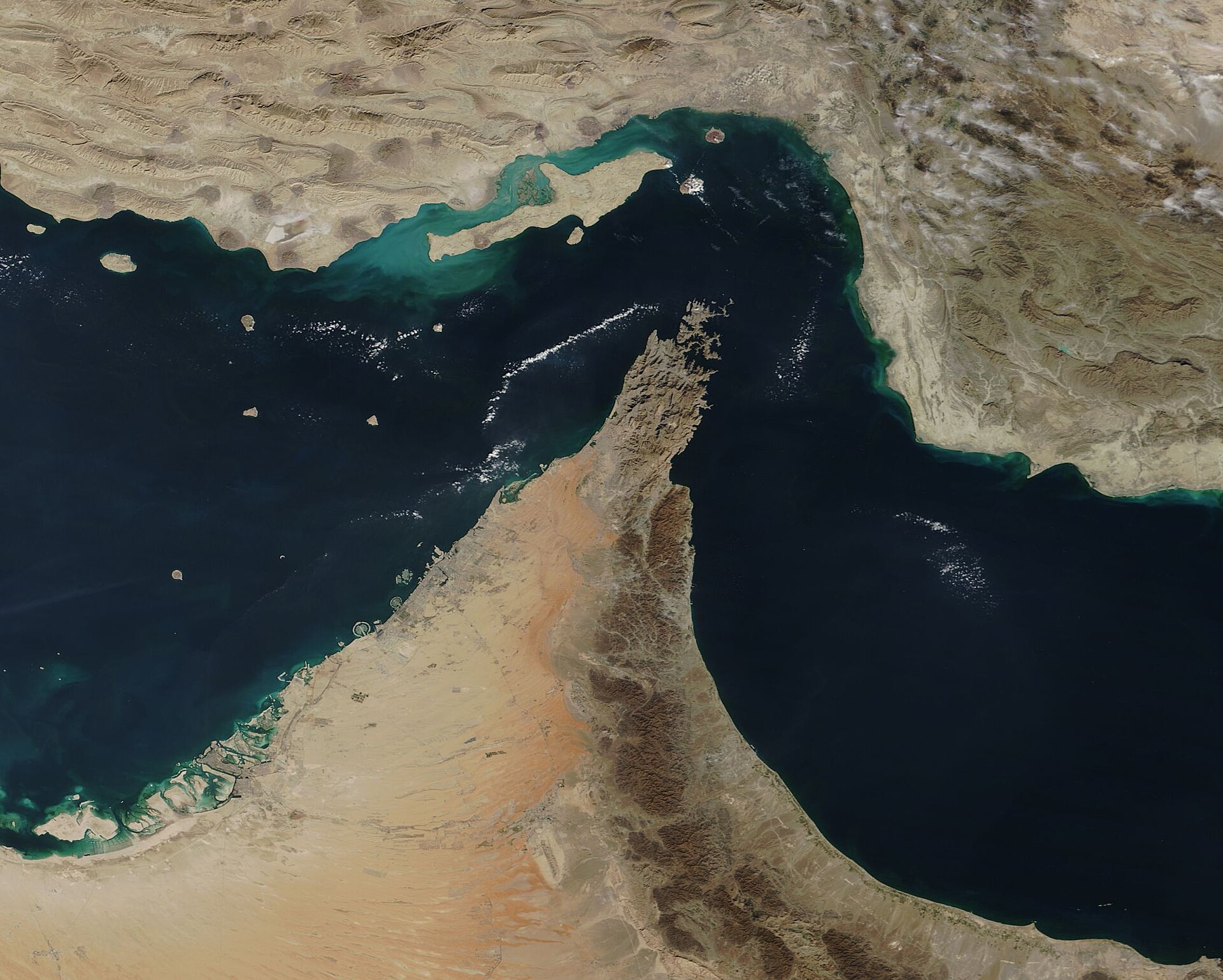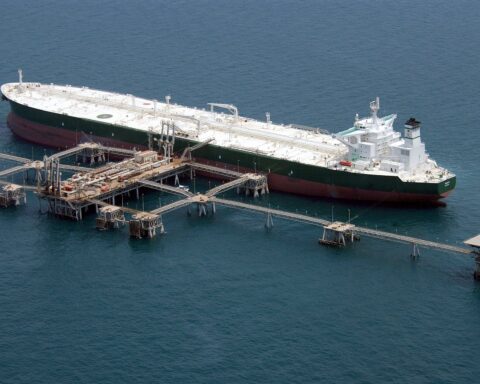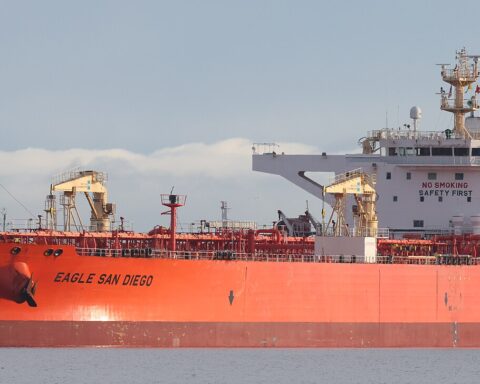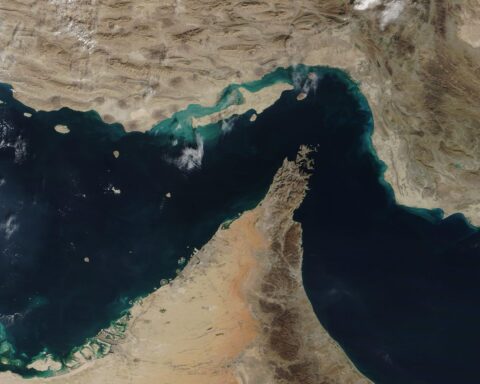

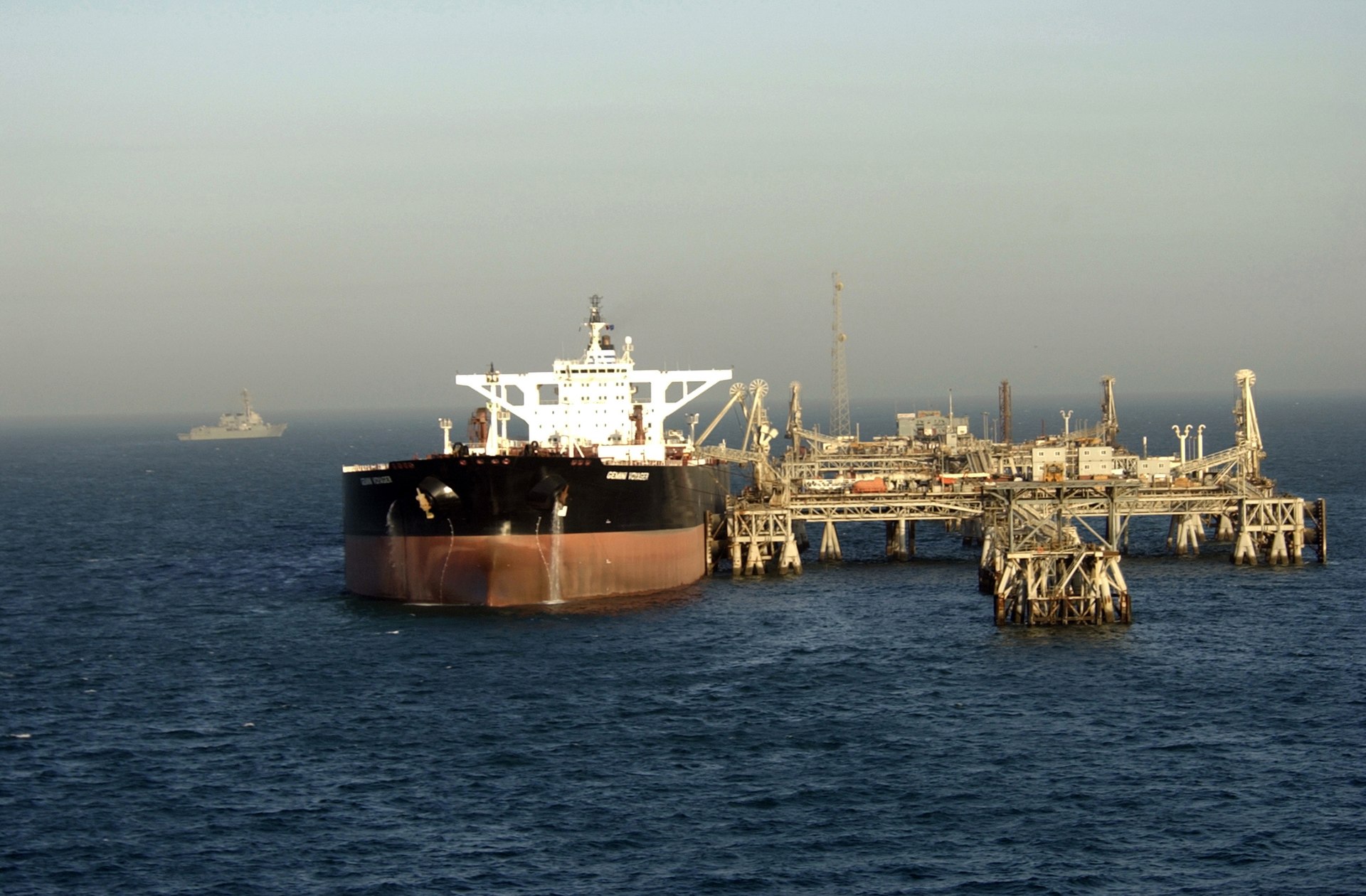
DUBAI — A US-sanctioned supertanker loaded with two million barrels of Iranian crude halted near Larak Island in the Strait of Hormuz on Friday, anchoring inside the Islamic Revolutionary Guard Corps’ designated inspection corridor hours before White House envoys Steve Witkoff and Jared Kushner were due to depart for direct talks with Foreign Minister Abbas Araghchi in Islamabad. The vessel — operating under the name Yuri, formerly COBA and Somerset, permanent IMO 9235737 — was sanctioned by the US Treasury on December 3, 2024, under Executive Order 13902.
Its halt at the exact five-nautical-mile Qeshm-Larak channel that IRGC charts have redesignated as the only authorized transit lane through Hormuz confirms the corridor is operational and Iranian oil is still moving despite the CENTCOM blockade declared April 13 — and it occurred without a named IRGC Navy commander, 25 days after Alireza Tangsiri’s death.
Table of Contents
The vessel and its cargo
The Yuri is a 2002-built very large crude carrier registered to Yurimaguas Ltd, a Marshall Islands shell company incorporated on December 1, 2023 — two days before the original OFAC designation package that would eventually ensnare it. MarineTraffic and VesselTracker records show the hull has operated under at least three names in 18 months: COBA under Curacao flag with MMSI 306408000, Somerset under Panama flag, and now Yuri. Flag-hopping and name-cycling are the defining operational signatures of Iran’s sanctioned shadow fleet.
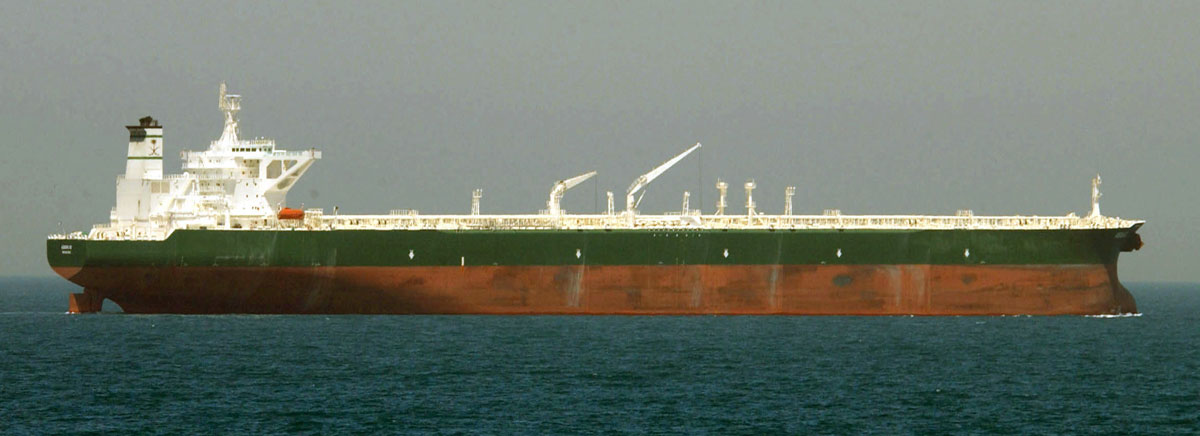
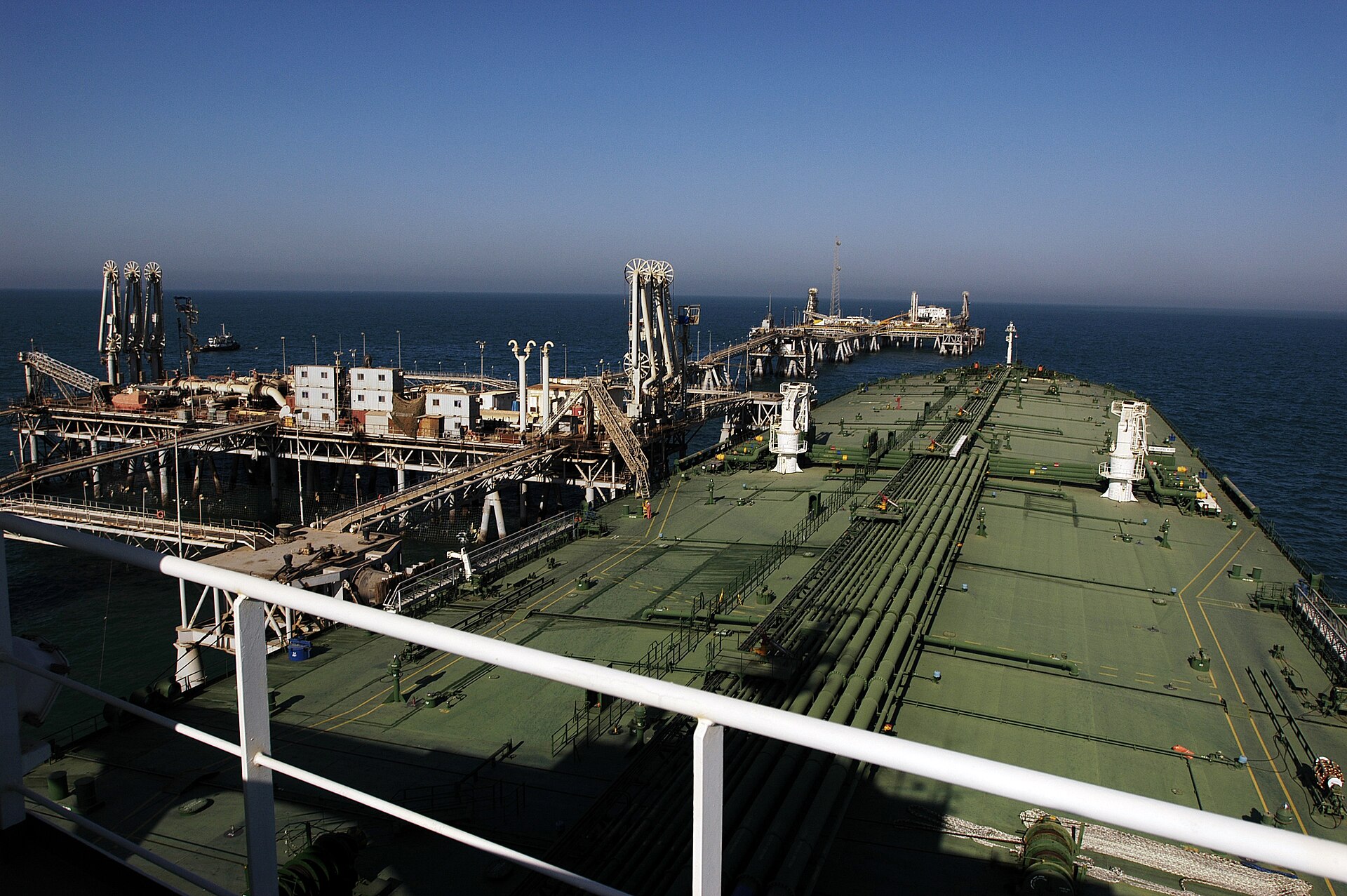
Bloomberg reported the vessel went AIS-dark for an extended period before reappearing off Sirri Island, a known staging point inside Iranian territorial waters where transponders are routinely switched off during loading operations. It then moved to Kharg Island — the terminal that accounts for more than 90 percent of Iranian crude exports — and loaded approximately two million barrels. At Brent settling between $103 and $106 on Thursday’s close, that cargo is worth roughly $206 million to $212 million. By April 24, Brent had crossed $106.80 as a Dallas Federal Reserve survey found 80 per cent of oil executives do not expect normal Hormuz transit volumes to resume until August at earliest — a market and industry consensus that prices the corridor as a feature, not an aberration.
The Yuri began its transit eastward late Thursday. By Friday morning it had come to a halt near Larak Island. Xinhua described the position as “anchored east of Iran’s southern Larak Island.” Bloomberg’s same-day wire characterised the movement as a “halt mid-transit,” with traffic through the waterway otherwise “at a virtual standstill.” Anadolu Agency, citing Hormuz monitoring data as of 0900 GMT, reported only six vessels moving in either direction across the strait in the preceding 24 hours.
Why did the Yuri stop at Larak
The anchoring position is not arbitrary. Since February 28, the IRGC has published and enforced a danger-zone chart covering the internationally recognised Traffic Separation Scheme through Hormuz, redirecting all transits to a five-nautical-mile channel between Qeshm and Larak Islands, both inside Iranian territorial waters. That corridor has been described in Lloyd’s List coverage as “Tehran’s toll booth,” and in CNBC reporting as the mechanism by which a “tiny island” became the enforcement node of the entire strait. Our earlier coverage of the IRGC mine chart and Larak corridor documented the chart’s publication the same day Iran opened Islamabad talks on April 9.
The Middle East briefing 3,000+ readers start their day with.
One email. Every weekday morning. Free.
The anchoring position admits at least three readings from the open-source record, none of them confirmable alone. The IRGC corridor system requires vessels to submit IMO numbers, cargo manifests, ownership records, crew lists, and destination ports to a joint command cell before escorted passage; a halt east of Larak is operationally consistent with a vessel awaiting passcode clearance. As a US-sanctioned hull, the Yuri cannot legally berth at most compliant Asian terminals, and five Chinese teapot refineries in Shandong stopped accepting Iranian cargoes in April following secondary-sanctions pressure documented in our OFAC General License U expiry coverage — which makes the discharge destination itself an open question that ship-to-ship transfer off Malaysia or in the South China Sea would not fully resolve.
The halt also occurred on the same day the White House confirmed the Witkoff-Kushner Islamabad trip. “We have seen some progress from Iran in peace negotiations,” Press Secretary Karoline Leavitt told reporters Friday morning, according to CNN and Axios coverage. A sanctioned supertanker anchoring inside the IRGC toll zone with two million barrels of Iranian crude aboard, on the day US envoys depart to negotiate with the foreign minister of the government that authorised the anchoring, is not neutral optics.
The IRGC toll architecture
The corridor fee is set at $0.50 to $1 per barrel, according to Lloyd’s List and Gulf Business reporting that has held consistent since February. For a fully loaded VLCC of roughly two million barrels, that range produces a toll of $1 million to $2 million per transit. Payment is routed through yuan settlements via CIPS and Kunlun Bank, or in cryptocurrency tracked by TRM Labs. Dollar banking is categorically excluded.
The system applies a five-tier nationality ranking. Vessels with Chinese, Russian, or Venezuelan operational links receive lower rates and faster clearance. Vessels with US or Israeli ownership, crew, or insurance exposure are denied transit outright. This was the framework applied to the Selen in March, a 6,800-deadweight-ton container feeder that Lloyd’s List described as the “first formal administrative rejection” under the corridor system when IRGC controllers turned it back on March 24.
Approaching the Strait of Hormuz will be considered cooperation with the enemy, and any violating vessel will be targeted.
— IRGC statement carried by Tasnim News Agency, April 24
The same Tasnim dispatch described the Yuri as having “transited the Strait before anchoring east of Larak Island.” The dual-track messaging is structural: the Yuri is authorised, everything else in the strait is a target. This is the architecture our earlier reporting on Iran’s Hormuz toll zero-revenue problem documented — sixty permits issued, eight payment requests, zero paid, according to IMO Secretary-General Arsenio Dominguez’s April characterisation of the system as “illegal.”
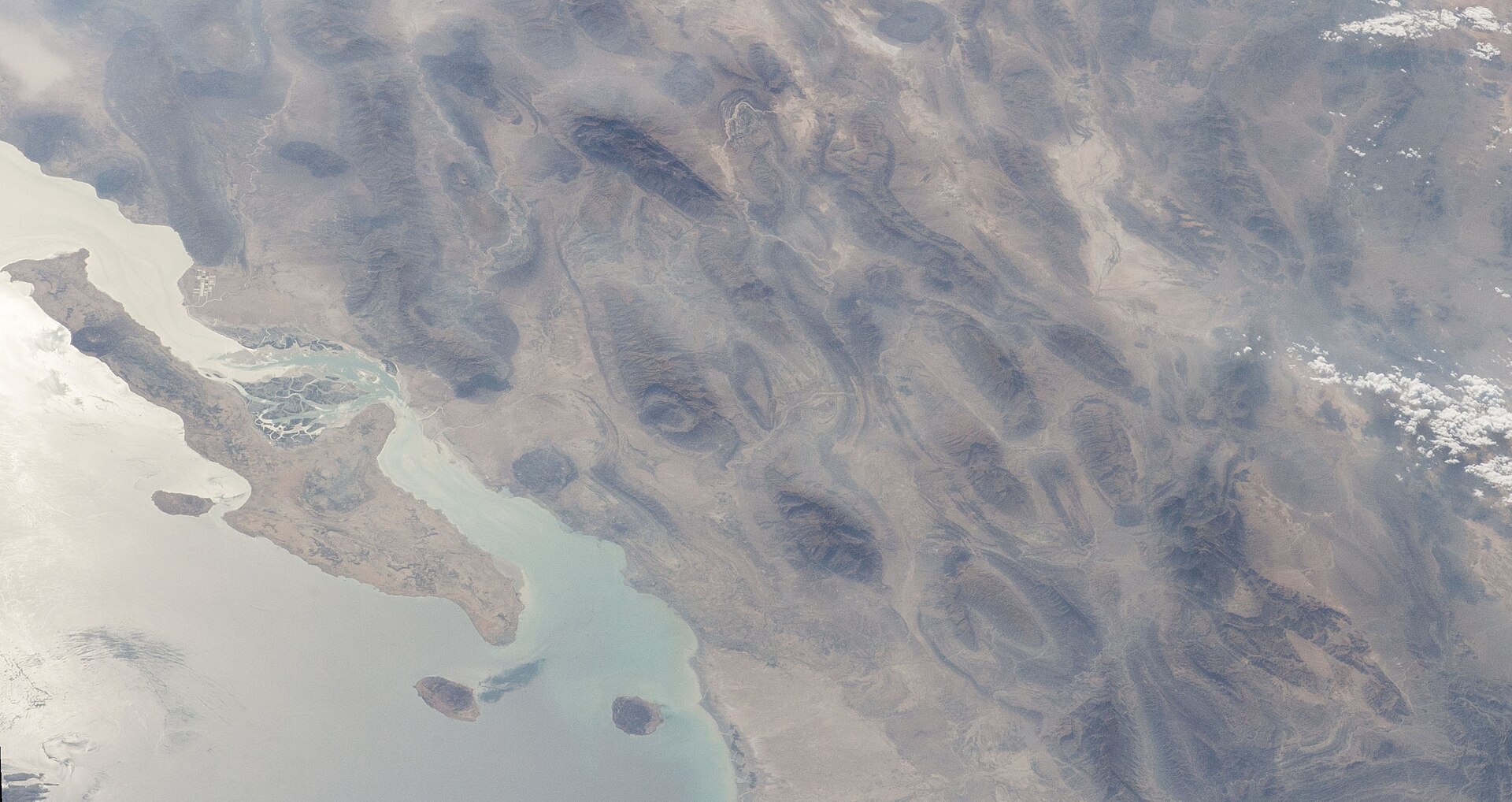
The Yuri’s transit, if completed with payment, would produce the first publicly documented toll collection under the regime.
The OFAC exposure trap
Executive Order 13902, signed in January 2020, authorises Treasury to block any foreign financial institution that knowingly conducts a significant transaction for or on behalf of designated Iranian-sector operators. The Yuri’s December 2024 designation means any terminal that discharges its cargo, any bunker supplier that refuels it, and any bank that processes payment faces secondary-sanctions exposure.
The cargo itself is in a peculiar category. Iranian crude is not contraband under US law; General License U, which had provided a narrow channel for certain Iranian barrels into Indian refineries, expired at 12:01 a.m. EDT on April 19 without renewal. Indian refiners including IOC shifted settlements to yuan via ICICI Bank Shanghai in the weeks preceding the expiry, Reuters reported. Reliance rejected two cargoes on compliance grounds. Sinopec publicly confirmed it had stopped accepting Iranian barrels.
Direct delivery to Chinese strategic reserve terminals, using the same layered documentation architecture that dozens of shadow-fleet VLCCs have relied on through the past year, is the residual path — not fast, and not legally clean for the receiving counterparty.
Why now, and why this vessel
The CENTCOM blockade declared effective April 13 has redirected 33 vessels, according to Middle East Monitor and Fox News coverage of the Pentagon’s Thursday readout. President Trump posted on Truth Social on Wednesday ordering the Navy to “shoot and kill any boat” laying mines in the strait, adding that minesweeping would continue “at a tripled-up level.” The contemporaneous US seizure of two Iranian dark-fleet tankers in the Indo-Pacific and the Majestic X interdiction demonstrated operational reach beyond the strait itself.
Against that posture, the Yuri moved. Iran also moved against other shipping: on April 22, hours after Trump extended the ceasefire deadline, IRGC Navy units boarded MSC Francesca and Epaminondas, taking roughly 40 crew to Bandar Abbas. The IRGC statement said the vessels “had endangered maritime security by operating without the required authorization and by tampering with navigation systems.” Araghchi, the same day, called the US blockade “an act of war.”
Araghchi arrived in Islamabad two days later. Tehran’s concurrent message, carried by the Yuri’s movement, is that oil is moving and the corridor system is functional even as the foreign minister engages Witkoff and Kushner on ceasefire architecture. Iran’s floating inventory, according to Vortexa data cited in Bloomberg’s companion piece and Drop Site News, stands at roughly 160 to 174 million barrels — about 2.5 months of typical Chinese import volume. Roughly 130 million of those barrels are already east of the blockade zone. Kharg’s onshore storage is approaching capacity, which is why the loading continues even as exit rates collapse.
Saudi Arabia’s blockade problem
The Wall Street Journal reported this week that Saudi Arabia has been privately lobbying Washington to end the Hormuz blockade, a diplomatic track covered in our earlier reporting on Riyadh’s campaign to kill the blockade. Riyadh’s exposure is structural: Houthi retaliatory capability against Red Sea shipping expanded sharply in March, and Saudi export continuity depends on the East-West pipeline to Yanbu, which has a loading ceiling several hundred thousand barrels below pre-war Hormuz throughput.
Saudi Arabia is voicing a broader international concern that U.S. blockade is a dangerous escalation. It further closes all trade in the Persian Gulf, could lead to more violent conflict there but also lead to disruption of trade in the Red Sea. It could bring the global economy to its knees.
— Vali Nasr, Johns Hopkins SAIS
A successful Yuri transit, with the toll paid and the cargo discharged, would validate the IRGC corridor regime operationally. That is the last outcome the Saudi position can accommodate: it would make the toll architecture the de facto settlement of any ceasefire, locking in IRGC enforcement authority as the baseline condition of Gulf commerce. Our reporting on the mine-driven winter closure scenario laid out the longer timeline under which corridor enforcement and mine-field persistence converge into a multi-month chokepoint.
Neither the Saudi foreign ministry nor the Energy Ministry has publicly commented on the Yuri specifically.
Background
Alireza Tangsiri, commander of the IRGC Navy since 2018, was struck on March 26 in an incident Iranian state media initially described as a helicopter accident; he was confirmed dead on March 30. No successor has been publicly named 25 days later. Radio Farda reported an internal succession order without an identifiable name, and neither Times of Israel nor Haaretz has independently confirmed a replacement. IRGC Navy operations — including the April 22 MSC Francesca and Epaminondas seizures, the Larak corridor enforcement, and whatever authorisation the Yuri received on Friday — are proceeding under decentralised command authority.
The Selen precedent of March 24 established that the corridor system turns vessels back when authorisation is absent. The Yuri moved further into the corridor rather than being turned back — operational evidence that its paperwork satisfied IRGC controllers, regardless of OFAC status. IRGC vetting is sovereignty-based, not compliance-based.
Insurance conditions compound the picture. Most P&I Clubs — Gard, Skuld, NorthStandard — issued war-risk cancellations effective around March 5, on 72-hour notice for Middle East transits, according to S&P Global and Lloyd’s List. War-risk premiums for vessels that still carry cover have peaked at approximately 1 percent of hull value per 48-hour transit, against a pre-war baseline of 0.2 percent, according to Lloyd’s List and S&P Global market data. The Yuri, as a sanctioned shadow-fleet hull, carries no mainstream P&I coverage and is uninsurable through London or Oslo markets.
Witkoff and Kushner are due in Islamabad on Saturday. Araghchi’s delegation arrived Friday. The ceasefire framework circulating between the parties includes maritime-security provisions, according to the Axios and The National sourcing of the 45-day phased proposal.
FAQ
Who owns the Yuri, and has the beneficial owner been identified? The registered owner is Yurimaguas Ltd, a Marshall Islands entity incorporated on December 1, 2023. OFAC’s December 3, 2024 designation package named the shell but did not identify a beneficial owner behind it. Shadow-fleet ownership structures typically interpose multiple Marshall Islands, Seychelles, or UAE vehicles between the hull and the cargo controller. Bloomberg has linked the broader vessel network to Iranian oil ministry-affiliated trading entities, but no US agency has published a beneficial-owner designation tied specifically to Yurimaguas Ltd.
Can the cargo be discharged at a Chinese strategic reserve terminal? China’s Strategic Petroleum Reserve terminals have historically accepted Iranian barrels through intermediary layers — Malaysia-origin documentation, STS transfers off Singapore, and direct delivery to commercial terminals near Zhanjiang and Qingdao. The question for the Yuri specifically is whether any Chinese port authority will accept a hull under active OFAC designation against the current Treasury secondary-sanctions posture. Three Chinese port authorities were subject to Treasury communications in the first week of April, according to Reuters coverage of “Operation Economic Fury.”
What happens if CENTCOM interdicts the Yuri inside Iranian territorial waters? The vessel is currently inside Iran’s 12-nautical-mile territorial limit at Larak. Under the law of the sea and US maritime doctrine, interdiction inside a sovereign state’s territorial waters constitutes an act of war. CENTCOM’s blockade rules of engagement, as publicly described, apply to vessels in international straits and transit lanes — the IRGC’s redirection of traffic into Iranian waters is partly designed to raise the legal threshold for intercept. A Yuri interdiction would be a different escalation category from the Majestic X or Indo-Pacific seizures, which occurred in international waters.
How does the Yuri transit compare with the 1987 Kuwaiti tanker reflagging operation? Operation Earnest Will reflagged 11 Kuwaiti tankers under US colours and provided Navy escort through Hormuz during the Iran-Iraq tanker war. The current architecture is the inverse: Iran is escorting a sanctioned vessel through the same waters that US destroyers transited on April 11. The 1987 precedent turned on whose flag a hull flew; the 2026 precedent turns on whose designation a hull carries. The flag-of-convenience system that made Earnest Will legally workable is the same system the Yuri uses to cycle through COBA, Somerset, and Yuri identities.
What does “crosses Strait of Hormuz” in Xinhua coverage tell us that Bloomberg’s “halt” framing does not? Xinhua’s Friday headline described the vessel as having completed its crossing, with Larak presented as a destination anchorage rather than a transit pause. The Chinese framing matters because Beijing is the structural beneficiary of any operational corridor regime — through CNPC and Sinopec’s contracted North Field offtake, equity positions in Iranian and Qatari upstream, and yuan-denominated Iranian crude purchases that bypass dollar banking. State media framing of the Yuri as a successful crossing serves Chinese strategic interest in normalising the corridor as an accepted commercial route, regardless of its Treasury status.