Guterres Warns of Global Food Emergency as Saudi Arabia Publicly Accuses Iran at UNSC Hormuz Debate
Table of Contents
- Eighty Nations, One Strait, and a Secretary-General’s Warning
- Why Did Saudi Arabia Shift From Mediation to Public Accusation?
- The Food Emergency Frame and What It Changes
- UAE Reparations Demand and the Legal Architecture Taking Shape
- How Did Iran and Its Backers Respond?
- The April 7 Veto Shadow and the Limits of Chapter VI
- Frequently Asked Questions
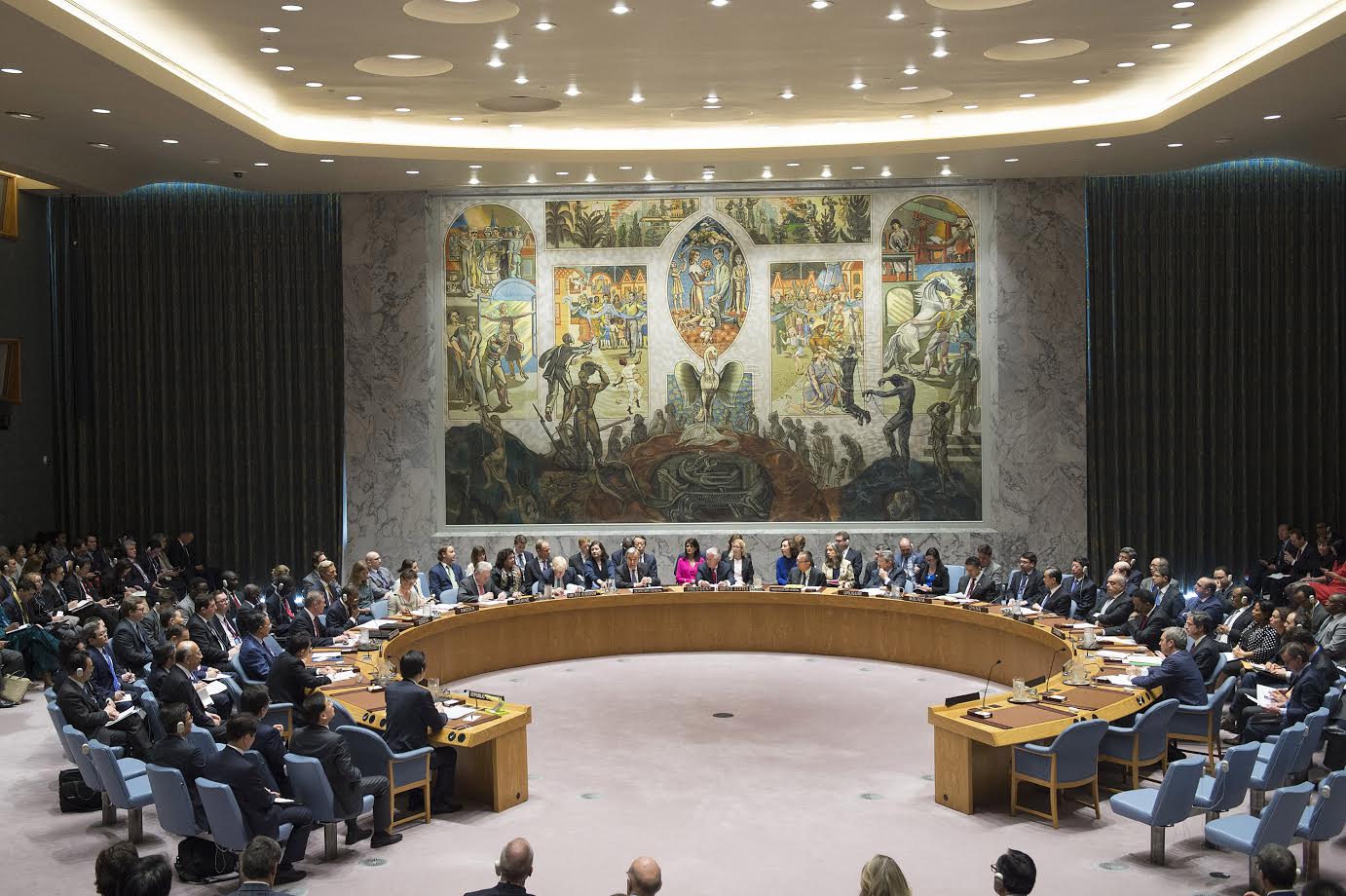
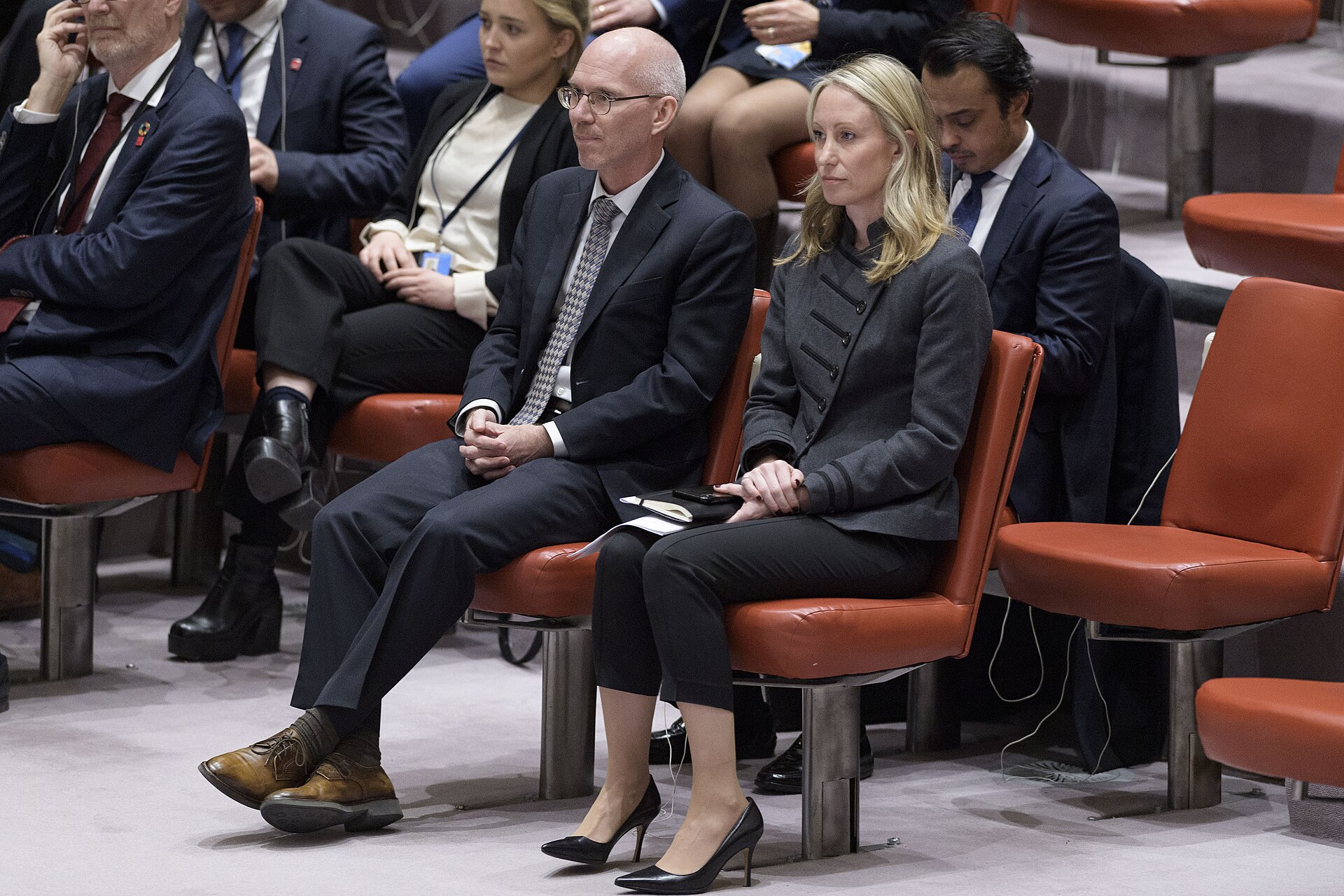
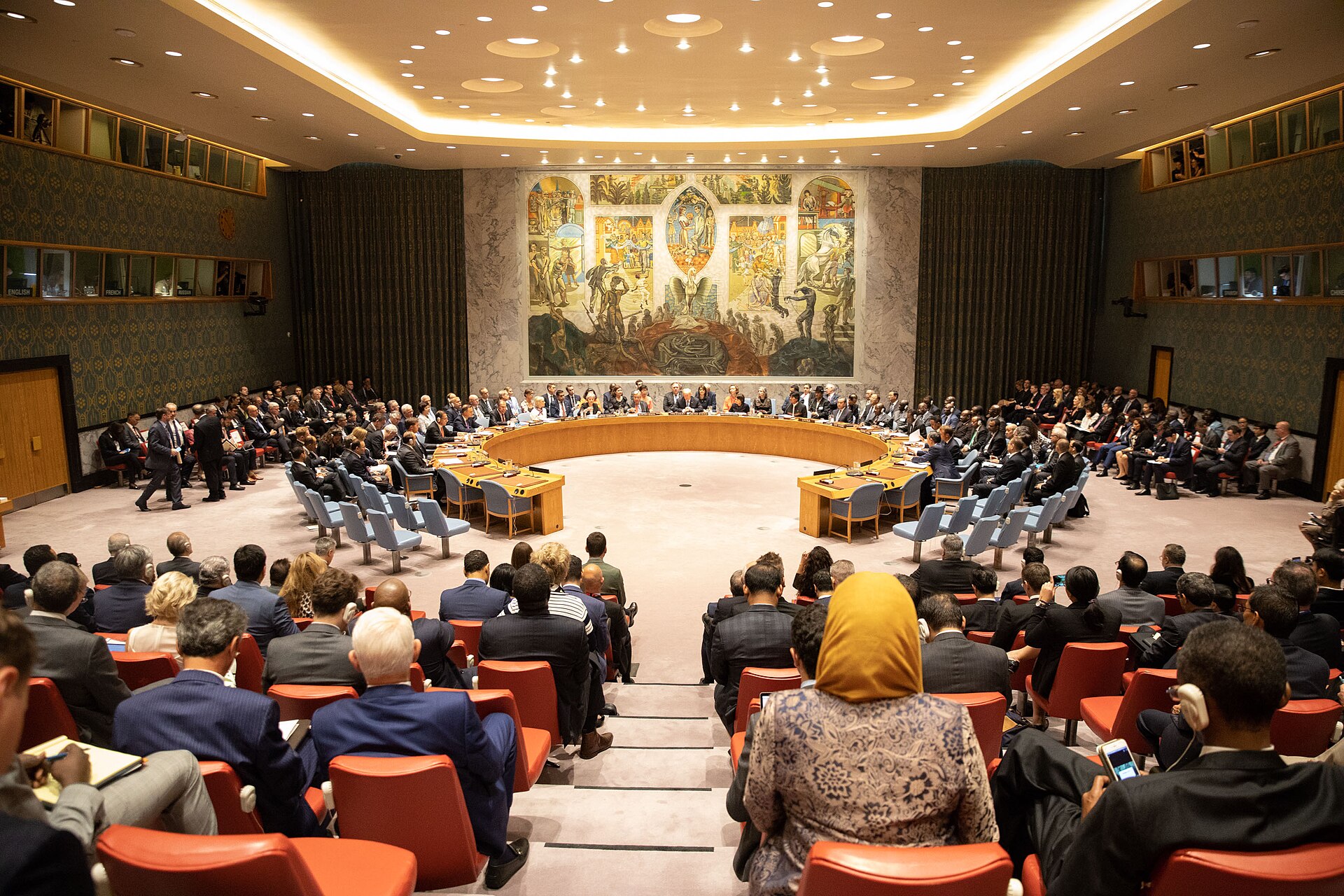
NEW YORK — UN Secretary-General António Guterres warned that the continued closure of the Strait of Hormuz risks triggering a “global food emergency” during a high-level UN Security Council open debate on April 27, 2026, as Saudi Arabia’s permanent representative publicly called on the Council to condemn Iranian attacks on the Kingdom for the first time in a formal multilateral session. The debate, convened by Bahrain as UNSC president for April under the title “The Safety and Protection of Waterways in the Maritime Domain,” drew participation from more than 80 countries and produced a Bahrain-initiated Maritime Security Statement that nearly 100 nations have now joined, condemning Iran’s use of Hormuz as what the statement termed a “political tool and economic resource.”
Guterres’s framing marked a deliberate shift in how the UN Secretariat characterizes the Hormuz crisis. Rather than centering his remarks on energy supply chains or freedom of navigation — the traditional anchors of Western and Gulf diplomacy on the Strait — he placed hunger at the center. “Prolonged disruption risks triggering a global food emergency — pushing millions, especially in Africa and South Asia, into hunger and poverty,” Guterres told the Council. “These pressures are cascading into empty fuel tanks, empty shelves, and empty plates.” One-third of the world’s fertilizer trade transits Hormuz in normal times, and the near-100-nation endorsement of Bahrain’s Maritime Security Statement suggests the food-security reframing is already reshaping the coalition beyond traditional Western-Gulf alignment.
Eighty Nations, One Strait, and a Secretary-General’s Warning
The April 27 session was the largest formal multilateral gathering on Hormuz since the war began on February 28. Bahrain, which holds the rotating UNSC presidency for April 2026, structured the debate as a high-level open session rather than a closed consultation, ensuring that statements would be delivered on camera and entered into the formal UN record. The format was deliberate. Bahrain Foreign Minister Abdullatif bin Rashid Al Zayani opened with a direct warning: “Complacency and inaction in the face of such a situation will have grave consequences for international peace and security.” He added that “silence over Iran’s actions could normalise breaches of international law,” a formulation aimed at China and Russia after their April 7 vetoes of a Gulf-backed resolution to reopen the Strait.
Guterres stayed within a Chapter VI briefing framework, citing Articles 33 and 34 of the UN Charter — the provisions for peaceful settlement and Security Council investigation of disputes. He did not invoke Article 99, the Secretary-General’s independent power to bring threats to international peace before the Council. That restraint was itself a signal: Guterres preserved the open-debate format and avoided a procedural confrontation with Russia and China, both of which would have framed an Article 99 invocation as overreach. His concluding appeal was direct: “Open the Strait. Let ships pass. No tolls. No discrimination. Let trade resume. Let the global economy breathe.”
IMO Secretary-General Arsenio Dominguez, who had briefed the Council earlier in April on the seafarer crisis, confirmed there is “no legal basis” for Iran’s imposition of transit fees on vessels passing through Hormuz. He reported approximately 20,000 seafarers remain trapped in the Gulf, with more than 2,000 ships affected. Transit through the Strait has collapsed to roughly seven ships per day, against a pre-war baseline of 140 — a 95 percent reduction that has produced the most severe maritime disruption since the Second World War.
Why Did Saudi Arabia Shift From Mediation to Public Accusation?
The most consequential intervention for Gulf diplomacy came from Saudi Arabia’s permanent representative to the UN, Abdulaziz Alwasil. He told the Council: “We condemn any acts or threats that seek to obstruct international navigation through the Strait of Hormuz.” Separately, in a passage that marked a clear departure from Riyadh’s earlier diplomatic register, Alwasil urged the Security Council to “explicitly condemn the Iranian attacks that the Kingdom has faced since the onset of the crisis.” This was a direct, on-record accusation of Iran by name in an open UNSC session — language Saudi Arabia had avoided at the April 7 vote and in the immediate post-veto period.
The Middle East briefing 3,000+ readers start their day with.
One email. Every weekday morning. Free.
The shift is not impulsive. At the April 8 GCC post-veto responses, Saudi Arabia avoided the word “reparations” entirely, used the phrase “comprehensive sustainable pacification,” and did not name Iran punitively. By April 27, the Kingdom had moved to explicit attribution. Three developments in the intervening weeks explain the change. First, Iran seized two additional commercial vessels — the MSC Francesca and the Epaminodas — on April 22, even as Foreign Minister Araghchi declared on April 24 that the Strait was “completely open,” a contradiction that reinforced the gap between Iran’s diplomatic posture and IRGC operational behavior. Second, Saudi production data published by the IEA for March showed output had fallen to 7.25 million barrels per day from 10.4 million in February, a 30 percent drop representing the largest single-month disruption to Saudi output on record. Third, the GCC wartime summit in Jeddah produced a coordinated Gulf strategy for the UNSC session, with Bahrain providing the presidency, the UAE delivering the legal payload, and Saudi Arabia supplying the political accusation.
Alwasil’s language carries implications beyond the immediate session. In international dispute resolution, formal on-record accusations at the Security Council constitute evidence for future proceedings at the International Court of Justice or ad hoc tribunals. Saudi Arabia is constructing a legal and reputational archive — a documented trail of Iranian aggression, acknowledged in the UN’s most authoritative forum, that can serve as the foundation for post-war accountability claims, compensation demands, or enforcement of any future peace agreement. The Kingdom has studied the precedent of Kuwait’s post-1991 compensation commission, which relied heavily on contemporaneous UN documentation to quantify Iraqi damages. Riyadh is building that documentary record in real time.
The Food Emergency Frame and What It Changes
Guterres’s decision to center his remarks on food rather than energy was not rhetorical decoration. It represents a strategic reframing that carries consequences for coalition politics at the UN. When Hormuz is characterized as an energy crisis, the affected parties are overwhelmingly Gulf producers and industrialized importers — nations that command limited sympathy in the General Assembly. When it is characterized as a food crisis, the affected parties shift to the African Union, South Asian developing states, and small island nations that form the numerical majority of the UN system and constitute Iran’s traditional diplomatic constituency in the Global South.
The fertilizer dimension makes the reframing credible rather than performative. Guterres established a fertilizer task force on March 27, modeled on the Black Sea Grain Initiative that brokered Ukrainian grain exports during the Russia-Ukraine war. Headed by UNOPS Executive Director Jorge Moreira da Silva, the task force is designed to become operational within seven days of any agreement — but Iran has not approved it. Moreira da Silva told UN News on April 22 that “the disruption of the Strait of Hormuz can push 45 million more people into hunger,” citing planting seasons already underway in Sudan, Somalia, Mozambique, Kenya, and Sri Lanka. Most African planting seasons end in May, meaning the window for intervention is measured in weeks, not months. The disproportionate impact on the world’s poorest nations is now the central humanitarian argument at the Council.
For Iran, the food-security frame creates a problem that the energy frame did not. Tehran has spent decades cultivating relationships with African and South Asian states, positioning itself as a fellow victim of Western sanctions and a champion of non-aligned sovereignty. If the Hormuz closure is understood primarily as an energy dispute between Iran and the Gulf monarchies, that narrative holds. If it is understood as the cause of famine in East Africa, it collapses. The near-100-nation endorsement substantially exceeds the coalition that backed the March Gulf-sponsored UNSC resolution, indicating that the food-security argument has expanded the alignment well beyond traditional Western-Gulf states.
UAE Reparations Demand and the Legal Architecture Taking Shape
While Saudi Arabia delivered the political accusation, the UAE delivered the legal one. UAE Minister of State Khalifa Shaheen Almarar issued the most aggressive statement of the session: “Iran is obliged to provide compensation for all damages resulting from its internationally wrongful actions including the consequences of such behaviour on the sea impacting energy security supply chains and the security of food and fertilisers essential for agriculture, particularly in the countries of the Global South.” He added: “My country holds Iran responsible.” Almarar described Iran’s continuing restrictions as being “in flagrant defiance” of UN resolutions, including the “illegal fees on transiting vessels” and “unlawfully obstructing navigation.”
The UAE statement is structured as a legal claim, not a diplomatic protest. By specifying “internationally wrongful actions” and “compensation for all damages,” Almarar was invoking the vocabulary of the International Law Commission’s Articles on State Responsibility, the standard framework for inter-state reparations claims. The inclusion of “food and fertilisers essential for agriculture, particularly in the countries of the Global South” extends the potential class of claimants far beyond the Gulf states themselves. If pursued, this framework would allow African and South Asian states to join compensation proceedings — a coalition-building mechanism that simultaneously pressures Iran and recruits developing nations into the Gulf diplomatic position. The precedent of the UN Human Rights Council resolution demanding Iranian reparations, adopted earlier in the crisis, provides a parallel track outside the Security Council’s veto constraints.
French Foreign Minister Jean-Noël Barrot reinforced the European position by stating that Iran must make “major concessions” and undergo “a radical change of posture to facilitate peaceful coexistence.” UK Minister of State Stephen Doughty was more direct: “Freedom of navigation means navigation must be free. Iran cannot be allowed to hold the rest of the world to ransom.” US Ambassador to the UN Mike Waltz called the world “paying the price for Iran’s hostage-taking gambit to fulfill its illegal nuclear aspirations” and described Iran as “international criminal pirates of the straits.” The Western statements converged on a common legal position but varied in tone — the European capitals emphasized de-escalation conditions, while Washington emphasized criminality.
How Did Iran and Its Backers Respond?
Iran’s UN Ambassador Amir Saeid Iravani rejected all accusations as “baseless claims lacking any legal foundation and designed solely to divert attention from the criminal actions of the United States and its allies.” He placed responsibility for all maritime disruption on Washington: “Responsibility for any disruption, obstruction or other interference in maritime transport in the Persian Gulf, the Sea of Oman and the Strait of Hormuz lies directly with the aggressors, namely the United States and its supporters.” Iravani described the US naval blockade, imposed April 13, as itself constituting “the crime of piracy” and “acts of aggression under Article 3(c) of General Assembly Resolution 3314.”
Iravani’s most consequential statement concerned Iran’s legal relationship to the maritime order. He confirmed that Iran is “not a party to the 1982 Convention” — UNCLOS, the United Nations Convention on the Law of the Sea — and declared that it is “not bound by its provisions.” He asserted Iran’s status as “the primary coastal state whose territorial sea includes the Strait of Hormuz.” This is a known position, but stating it formally at the Security Council during a crisis session transforms it from a background legal fact into an active claim. Iran is asserting that the entire international framework for freedom of navigation through Hormuz — the transit passage regime codified in UNCLOS Part III — does not apply to it. That leaves only customary international law, which Iran interprets selectively, and bilateral agreements, of which there are none governing Hormuz transit.
Russia’s UN Ambassador Vassily Nebenzia followed a parallel but distinct line. He attributed the crisis to “unprovoked American-Israeli aggression against the Islamic Republic of Iran” and characterized Western invocations of the “rules-based order” as selective and hypocritical. He did not, however, endorse Iran’s Hormuz position or its assertion of coastal-state sovereignty over the Strait. Russia’s posture remains one of political alignment with Tehran’s victimhood narrative without legal endorsement of Tehran’s maritime claims — a distinction that preserves Moscow’s own freedom of navigation interests as an Arctic shipping power. The Araghchi-Putin meeting in St. Petersburg on the same day, with Russian military intelligence chief Admiral Kostyukov present, provided the diplomatic backdrop to Nebenzia’s performance.
China’s position was the most carefully calibrated. Ambassador Fu Cong called US and Israeli actions “illegal military actions” against Iran and described the US naval blockade as “dangerous and irresponsible.” But he declined to endorse Iran’s Hormuz sovereignty claim, instead characterizing Iranian measures as “grounded in its rights and obligations under the law of the sea” — a formulation that acknowledges Iran’s coastal-state status without validating the toll regime or the seizure of commercial vessels. China’s restraint on the Hormuz question reflects Beijing’s own interests: as the world’s largest oil importer, China cannot endorse a precedent that allows a coastal state to unilaterally restrict transit through an international strait. Fu Cong’s call for “dialogue and consultation” was a procedural deflection that avoided committing Beijing to either side’s legal framework.
The April 7 Veto Shadow and the Limits of Chapter VI
The April 27 debate took place under the structural constraint imposed by the April 7 double veto. On that date, China and Russia vetoed a Gulf-state-backed resolution that would have demanded the reopening of Hormuz, with 11 votes in favor, two vetoes, and two abstentions from Colombia and Pakistan. That veto foreclosed Chapter VII enforcement action — the binding, coercive measures that the Security Council can impose, including sanctions, blockades, and authorization of military force. Guterres’s choice to frame his April 27 remarks within Chapter VI, Articles 33 and 34, was an acknowledgment that the Council’s enforcement tools remain blocked.
Chapter VI provides for investigation, mediation, and recommendation — not compulsion. Any resolution emerging from the April 27 debate would be non-binding, a call to action rather than a mandate. The practical effect is that the UNSC session functions as a forum for record-building, coalition-display, and normative pressure rather than operational enforcement. For Saudi Arabia and the UAE, this is sufficient for their immediate purposes. The documentary record being constructed — Alwasil’s accusation, Almarar’s reparations demand, Guterres’s food-emergency warning, Dominguez’s confirmation of transit-fee illegality — exists independently of whether the Council acts. It accrues as evidence, admissible in future legal proceedings, regardless of Russian and Chinese obstruction.
The session also exposed a tension within Iran’s diplomatic coalition that the Hormuz-first proposal Iran filed the same day was designed to paper over. Russia backed Iran’s victimhood narrative but not its maritime claims. China defended Iran’s coastal-state rights but opposed the military escalation those rights are being used to justify. Neither Moscow nor Beijing endorsed the toll system, the vessel seizures, or the assertion that UNCLOS does not apply. Iran entered the session with two Security Council allies and left with two states that agree it was wronged but disagree with what it is doing about it.
For the Gulf states, the diplomatic trajectory is now set. Having exhausted the Council’s enforcement mechanisms on April 7, Riyadh, Abu Dhabi, and Manama are using the open-debate format to build the evidentiary, legal, and coalition infrastructure for the post-war settlement they expect to negotiate from a position of documented grievance. The food-emergency reframing widens the coalition. The reparations language establishes the legal claims. The public accusation creates the attributive record. None of these require a Security Council resolution to function. They require only that the statements were made, on camera, in the Council chamber, with the UN Secretariat’s imprimatur. That happened on April 27.
Frequently Asked Questions
What is Article 99 and why did Guterres not invoke it?
Article 99 of the UN Charter allows the Secretary-General to independently bring a matter to the Security Council’s attention if he believes it constitutes a threat to international peace and security. It has been invoked fewer than ten times in UN history. Guterres chose not to use it on April 27, likely because an Article 99 invocation would have required a formal Council meeting rather than an open debate, potentially triggering a procedural fight with Russia and China over the meeting’s format and mandate. By staying within Chapter VI’s Articles 33 and 34, Guterres preserved the broadest possible participation — 80-plus nations — while avoiding a confrontation that Moscow and Beijing could have used to narrow the session’s scope or block it entirely.
How does the fertilizer task force compare to the Black Sea Grain Initiative?
The UN fertilizer task force, established March 27 and headed by UNOPS Executive Director Jorge Moreira da Silva, is modeled on the Black Sea Grain Initiative that brokered Ukrainian grain exports from 2022 to 2023. The key structural difference is that the Black Sea initiative had Türkiye as a geographic and diplomatic intermediary with access to both Russia and Ukraine, while the Hormuz task force has no equivalent intermediary that Iran trusts. Oman is the closest candidate, but Oman’s transport minister publicly opposed the toll regime in April, diminishing its credibility as a neutral broker in Tehran’s eyes. The task force can become operational within seven days of an agreement but has been dormant since its creation because Iran has not granted approval.
Could the reparations claims actually be enforced against Iran?
Enforcement of reparations against a sovereign state that does not consent to jurisdiction is extraordinarily difficult. The most relevant precedent is the United Nations Compensation Commission established after the 1991 Gulf War, which received approximately $352 billion in claims against Iraq and awarded roughly $52.4 billion — but that commission was backed by Chapter VII authority and funded through Iraqi oil revenues controlled by the UN. Iran’s assets are already heavily sanctioned, and Tehran does not recognize ICJ jurisdiction on maritime matters. The UAE’s strategy may be less about immediate collection than about establishing a legal claim that can be attached to any future sanctions-relief agreement, effectively converting reparations into a negotiating chip that must be addressed before Iran receives economic normalization.
Why did nearly 100 nations sign the Bahrain Maritime Security Statement?
The number exceeded expectations because Bahrain structured the statement around food security and fertilizer access rather than exclusively around energy markets or freedom of navigation. African Union members, Pacific Island states, and South Asian nations that would not typically align with Gulf positions on Iran found themselves unable to oppose a statement framing Hormuz as a hunger issue affecting their own populations. Bangladesh, which imports 60 percent of its fertilizer through supply chains dependent on Hormuz transit, was among the co-signatories. The 100-nation figure also reflects active Gulf diplomatic outreach in the weeks preceding the session, with Saudi, Emirati, and Bahraini envoys conducting bilateral consultations in capitals across Africa and Southeast Asia.
What happens next at the Security Council on Hormuz?
Japan assumes the UNSC presidency in May 2026 and has signaled interest in a follow-up session focused on maritime insurance and shipping lane safety. However, Japan is unlikely to push for a binding resolution given the April 7 veto precedent. The more consequential track may be the General Assembly, where the food-security coalition assembled on April 27 could pursue a non-binding but politically significant resolution under the “Uniting for Peace” procedure, which allows the General Assembly to act when the Security Council is deadlocked. That procedure requires a two-thirds majority — roughly 129 of 193 member states — and the near-100 signatories to the Bahrain statement suggest the votes may be within reach.
Japan’s institutional positioning at the Council table in May takes on additional weight given Tehran’s concurrent bilateral engagement with Tokyo on Hormuz access. Iran’s authorization of the first Japan-linked crude tanker through Hormuz under IRGC license — the Idemitsu Maru, carrying Saudi crude fee-free — creates a structural tension: Japan is simultaneously negotiating maritime access directly with Tehran and preparing to chair the body tasked with overseeing the crisis.
The double veto that followed — cast by Russia and China on April 7 — killed that General Assembly track before it could mature, permanently closing the multilateral instrument Saudi Arabia had invested its diplomatic credibility in building. How the double veto structurally ended the multilateral pressure track on Hormuz is analysed in full.