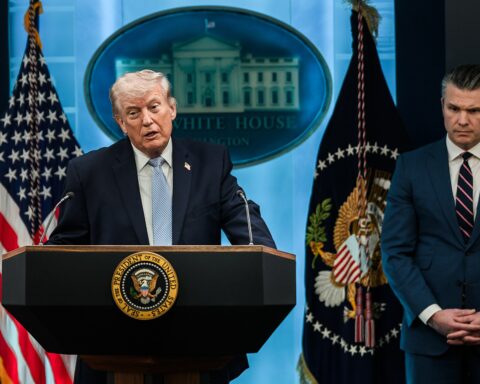
WASHINGTON — On April 27, US Secretary of State Marco Rubio described Iran’s version of an open Strait of Hormuz in nineteen plain words: “yes, the straits are open, as long as you coordinate with Iran, get our permission, or we’ll blow you up and you pay us.” That sentence, delivered hours before the National Security Council convened in the Situation Room, did something Tehran’s Hormuz-first proposal had been engineered to prevent. It collapsed the gap between the IRGC’s published rules and the Iranian foreign ministry’s diplomatic offer, treating them as the same document. Iran’s mediators in Islamabad, Cairo, Ankara and Doha had been delivering a sequence: ceasefire, then Hormuz reopening, then nuclear talks. Rubio responded by refusing to recognise that the second item exists as a concession at all. “Those are international waterways,” he said. “They cannot normalize, nor can we tolerate them trying to normalize, a system in which the Iranians decide who gets to use them.” The interim-deal track, which had been the working assumption of the past three weeks, did not survive the afternoon.
Table of contents
- What Rubio actually said, and why the wording matters
- The IRGC published the evidence three weeks ago
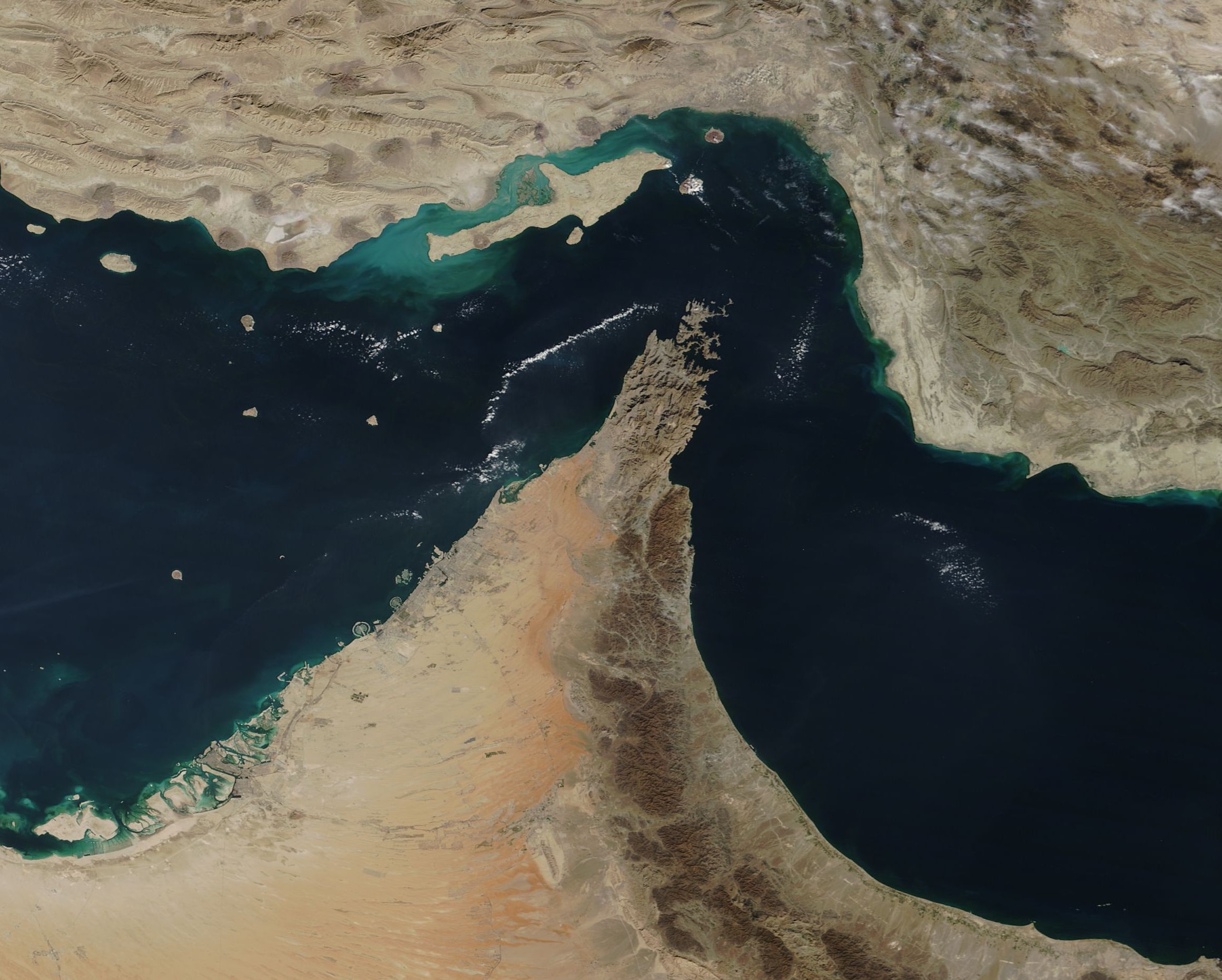
- What does Iran mean by an “open” Strait of Hormuz?
- Why has the Hormuz-first sequencing collapsed?
- The parliamentary bill that converts toll architecture into permanent law
- What changes for Saudi Arabia between now and the Day of Arafah?
- Where does Rubio’s framing sit in international law?
- The authorisation ceiling Iran cannot lift
- What comes after the interim-deal track
- Frequently asked questions
What Rubio actually said, and why the wording matters
Rubio’s sentence has two halves. The first half mimics Tehran’s diplomatic talking point — “yes, the straits are open” — in the cadence the Iranian foreign ministry has used for forty-eight hours. The second half supplies the conditions Iran has been declining to publish in English: “as long as you coordinate with Iran, get our permission, or we’ll blow you up and you pay us.” The construction is not rhetorical. It maps directly onto the three operational conditions IRGC Navy stated on April 17 via Tasnim — commercial vessels only, IRGC-designated routes, mandatory prior IRGC Navy permission with a permit code transmitted on VHF — and onto the toll structure published by the IRGC’s intermediary company, $1 per barrel payable in yuan or stablecoins, roughly $2 million per VLCC.
This is the rhetorical move that ends the interim track. Treasury Secretary Scott Bessent had already used the word “extortion of global energy markets” earlier in April; the phrase carried fiscal weight rather than legal weight, and Tehran had treated it as Treasury rhetoric rather than diplomatic position. The White House spokesperson on April 27 added the narrower line: “The U.S. will not negotiate through the press.” German Chancellor Friedrich Merz the same day described Iran as “humiliating” the United States through failed talks — a statement made from Berlin in the run-up to the Brussels foreign ministers’ meeting. Ursula von der Leyen, on a Brussels podium, called it “too early” to lift sanctions, citing the September 2025 snap-back regime. Rubio’s contribution was specific. He fused the foreign ministry’s offer to the IRGC’s regime, and refused to treat them as separable documents.
Rubio also did something the prior statements had not. He named the mechanism by quoting it. “Coordinate with Iran” maps to the manifest-submission requirement. “Get our permission” maps to the permit-code regime. “We’ll blow you up” maps to the IRGC patrol boat escort and the published seizure record (MSC Francesca, Epaminodas, Selen). “You pay us” maps to the dollar-per-barrel toll. The statement is a four-part description of a regime whose components have been published in Persian and reported in English, but which had not previously been described by the United States as a single integrated mechanism. The integration is what makes it a definitional rejection rather than a sequencing complaint.
That fusion matters because Iran’s sovereignty claim dressed as a peace plan depended on keeping them apart. Abbas Araghchi could tell mediators the strait was “completely open” while the IRGC’s Hormozgan Provincial Command screened submitted manifests. The diplomatic register and the operational register ran on different tracks. Rubio’s line collapses both into one description, and assigns the description a name: extortion.
The Middle East briefing 3,000+ readers start their day with.
One email. Every weekday morning. Free.
“What they mean by opening the straits is, yes, the straits are open, as long as you coordinate with Iran, get our permission, or we’ll blow you up and you pay us. That’s not opening the straits.” — Marco Rubio, US Secretary of State, April 27, 2026
The IRGC published the evidence three weeks ago
The administrative architecture Rubio described as extortion has not been a secret. Tasnim, the IRGC-aligned outlet, ran the conditions on April 17. USNI News and Al Jazeera detailed the operational pipeline: vessels submit ownership details, flag, cargo manifest, destination, crew list and AIS data to an IRGC-linked intermediary company, which routes the submission to the IRGC Navy’s Hormozgan Provincial Command for screening. A permit code is issued. The vessel broadcasts the code on VHF radio at the entry point. A patrol boat escorts it through the IRGC-designated lane.
This is the same pipeline Araghchi was asking the United States to accept as “open.” When he tweeted on April 17 that the strait was “completely open,” Tasnim — inside the same governmental apparatus — attacked the announcement. The IRGC then published the conditions Rubio quoted on April 27. There was no English-language translation. There did not need to be. The mechanism existed and was operating; vessels that complied paid the toll, vessels that did not were turned back. Selen, a 6,800 dwt container feeder, was the first administrative rejection in late March.
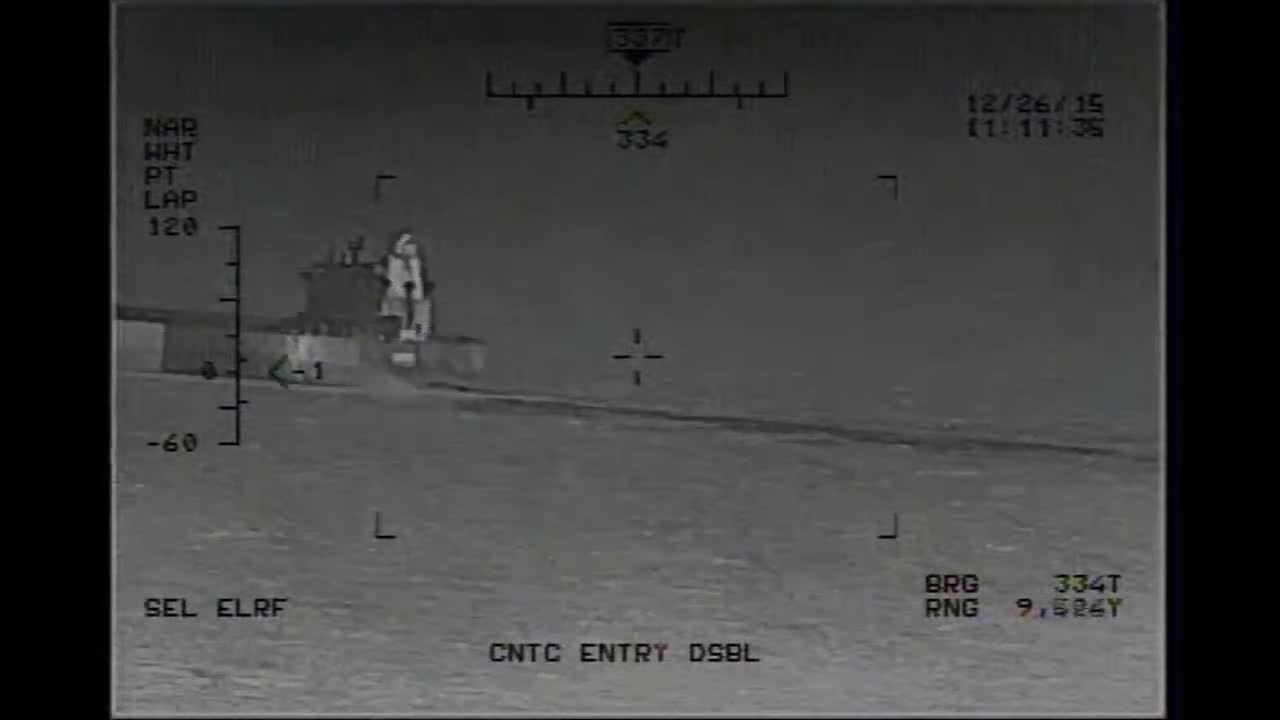
Two seizures on April 22, the day the ceasefire formally expired, removed the last ambiguity. The IRGC took MSC Francesca (11,660 TEU) and Epaminodas (6,690 TEU) inside the same forty-eight-hour window in which Araghchi had been telling mediators that the foreign ministry could not, by itself, deliver the strait. Bloomberg’s count of post-ceasefire transits stands at 45 — the double blockade that has cut Hormuz transits to 3.6% of pre-war levels is now the operating environment, not a transitional one.
The IRGC Navy’s own April 17 statement, in the original Tasnim Persian, said: “The management of the Strait of Hormuz has entered a new stage.” That sentence was paired with the conditions document. Iran International’s English summary noted that the IRGC reading directly contradicted Araghchi’s “completely open” tweet of the same day. Tasnim called it “a bad and incomplete tweet that created misleading ambiguity.” Araghchi never retracted the tweet, but he stopped repeating its language. By April 27, his message to the mediators was the negative confirmation: there is no consensus.
| IRGC requirement (April 17, Tasnim) | Operational mechanism |
|---|---|
| Commercial vessels only; no “hostile country” cargo | Manifest screened by Hormozgan Provincial Command |
| IRGC-designated routes only | Lane assignments via patrol boat escort |
| Movements only with IRGC Navy permission | Permit code transmitted on VHF radio at entry |
| Toll payment | $1 per barrel, ~$2M per VLCC, payable in yuan or stablecoins |
| Submission package | Ownership, flag, cargo manifest, destination, crew list, AIS data |
What does Iran mean by an “open” Strait of Hormuz?
Iran’s foreign ministry uses the word “open” in the sense of “operating on stated rules.” The IRGC uses it in the same sense. The IRGC’s stated rules require prior permission, designated routes, screened manifests and tolls payable in non-dollar currencies. There is no version of the Iranian government’s offer in which the strait is “open” under the meaning Rubio invoked — UNCLOS Article 38’s right of transit passage, which “shall not be impeded” and cannot be made contingent on coastal-state authorisation. Iran’s “open” and Washington’s “open” describe different physical realities. The Hormuz-first proposal was structured to obscure that, by routing the offer through Pakistan and presenting it as a sequencing question. Rubio’s statement removes the sequencing question and substitutes a definitional one.
The forty-word frame, for snippet readers: Iran’s “open” Hormuz means transit conditional on IRGC permission, designated lanes, manifest screening, and per-barrel tolls payable in yuan or stablecoins. Washington’s “open” means UNCLOS Article 38 right of transit passage that cannot be impeded. Rubio’s April 27 statement defines the gap as non-negotiable.
Dina Esfandiary, who leads Bloomberg Economics’ Middle East coverage, put the underlying calculation cleanly earlier in April: “Iran has been a little taken aback by how successful its (Hormuz) strategy has been — by how cheap and how comparatively easy it is to hold the global economy hostage.” That sentence describes the equilibrium the IRGC discovered between March 4 and April 8. The April 27 question is whether the discovery survives Rubio publicly characterising it as extortion in the cadence Tehran has been using to describe an ordinary diplomatic concession.
Why has the Hormuz-first sequencing collapsed?
The Axios report on April 27 framed Iran’s proposal as three sequenced steps: (1) extended or permanent ceasefire; (2) Hormuz reopening and US blockade lifted; (3) nuclear talks deferred to a later stage. The structure depends on the second item being a real concession that the United States can accept in exchange for postponing the third. Rubio’s sentence breaks that structure by treating the second item not as a concession but as a description of the status quo Tehran wants normalised.
The forty-word frame: Iran’s three-step proposal — ceasefire, Hormuz reopening, deferred nuclear talks — depends on Hormuz being a tradeable concession. Rubio’s April 27 statement reframes Hormuz reopening as the legal status quo, which Iran cannot offer because it does not own it.
Araghchi himself supplied the secondary collapse. He told the four mediators — Pakistan, Egypt, Turkey, Qatar — that “there is no consensus inside the Iranian leadership about how to address the U.S. demands.” That sentence is the diplomatic restatement of an Article 110 problem. Pezeshkian publicly named Vahidi and Abdollahi on April 4 as having “acted unilaterally” to wreck the Islamabad track. The sequencing depended on Tehran being able to deliver Hormuz reopening as a unitary state action. Araghchi told the mediators it cannot.
Pezeshkian’s own statement on April 27 — that Tehran “will not engage in imposed negotiations under threats or blockade” — is a presidential talking point produced by an office that has no operational authority over the IRGC’s seizure of the MSC Francesca on April 22. The internal contradiction is the bargaining problem.
The parliamentary bill that converts toll architecture into permanent law
While Araghchi was telling mediators that no consensus existed, Mohammad Reza Rezaei Kouchi, who chairs the Iranian parliamentary commission shepherding the Hormuz sovereignty bill, told Hurriyet Daily News that the legislation “is nearing approval and will significantly strengthen Tehran’s authority over the strait.” The bill has twelve articles. Four conditions structure its central regime: no Israeli-linked cargo; “hostile states” require Supreme National Security Council approval; states that “caused damage to Iran” are denied passage until compensation is paid; transit fees payable in Iranian rial. Revenue split: 30% to military infrastructure, 70% to public welfare.
The first three conditions are categories Tehran determines unilaterally. “Hostile states” is an SNSC designation. “Damage to Iran” is whatever the legislation says it is. The fourth condition — payment in rial — converts the toll into a sanctions evasion mechanism by routing it through a currency that has no legal settlement venue outside Iran. That is the architecture Rubio called extortion. Rezaei Kouchi calls it nearing approval.
The legal problem Rezaei Kouchi dismisses is one UNCLOS made explicit. Article 38 establishes a right of transit passage through international straits that cannot be impeded or suspended. Article 26 prohibits charges on vessels “by reason only of their passage.” Article 44 prohibits suspension of transit passage entirely. The ICJ’s 1949 Corfu Channel ruling established that sovereignty over an international strait does not include “the power to make passage contingent on prior authorization.” The parliamentary bill does precisely what the Corfu standard forbids: it converts an unconditional right into a conditional license, with conditions the licensor determines unilaterally. Iran cannot legislate a permanent permission regime and simultaneously offer the strait as a tradeable concession in talks; the two instruments are constitutionally incompatible with each other and with international customary law.
What changes for Saudi Arabia between now and the Day of Arafah?
Riyadh is inside this collapse without a seat at any of the tables. The Hormuz-first proposal was being mediated by Pakistan, Egypt, Turkey and Qatar; Saudi Arabia was excluded from the April 10 Islamabad bilateral and remained excluded through the April 27 sequencing breakdown. The kingdom carries the consequences in three measurable channels.
First, fiscal arithmetic. Brent on April 27 sat at roughly $108 per barrel — directly inside the Saudi fiscal break-even band Bloomberg calculates at $108-111/bbl on a PIF-inclusive basis. Goldman’s war-adjusted GDP deficit forecast is 6.6% against the official 3.3%. Saudi March production fell to 7.25M bpd from February’s 10.4M bpd, a thirty-percent drop the IEA called “the largest disruption on record.” The Yanbu loading ceiling of 5.9M bpd against pre-war Hormuz throughput of 7-7.5M bpd leaves a 1.1-1.6M bpd structural gap that no bypass infrastructure currently closes.
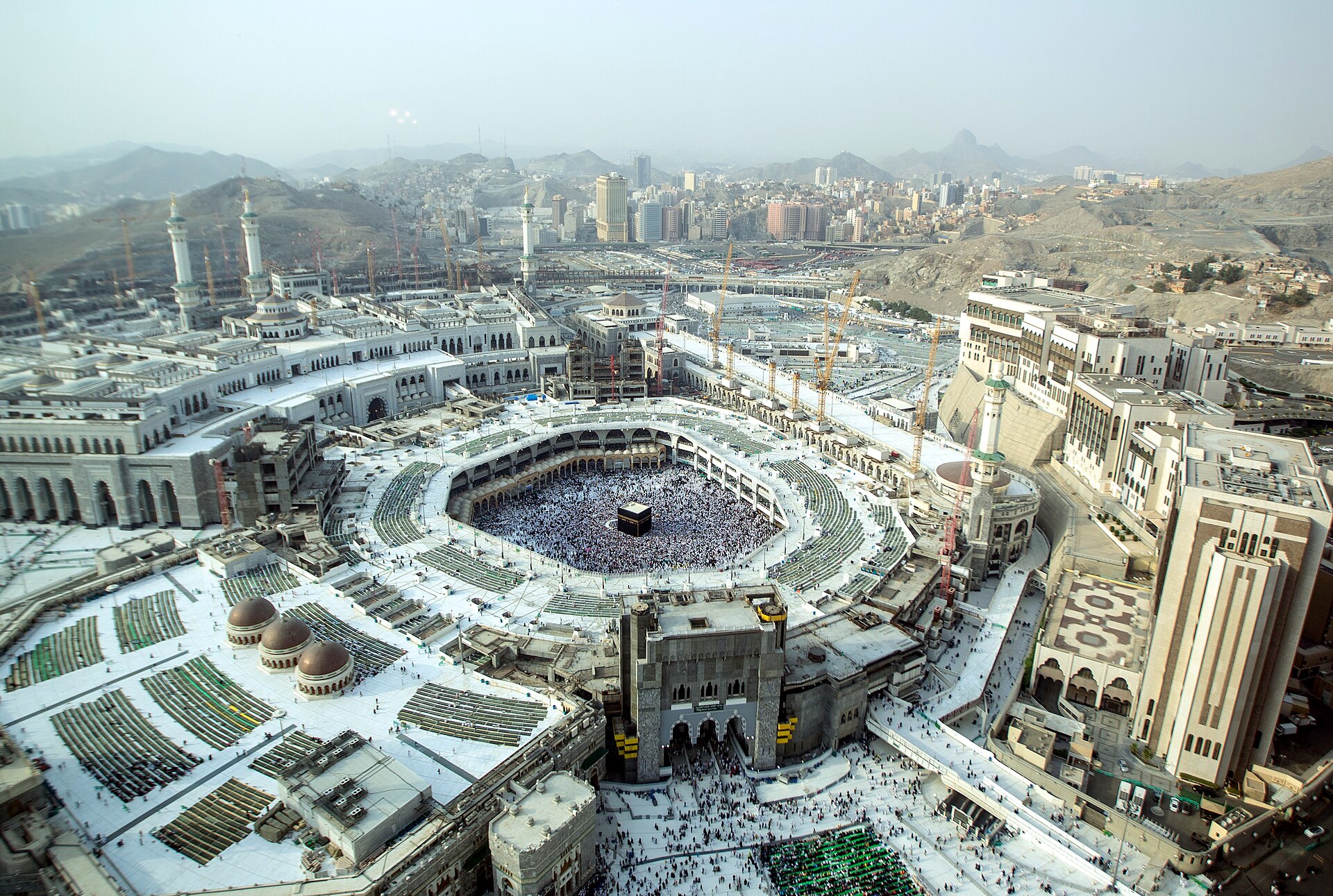
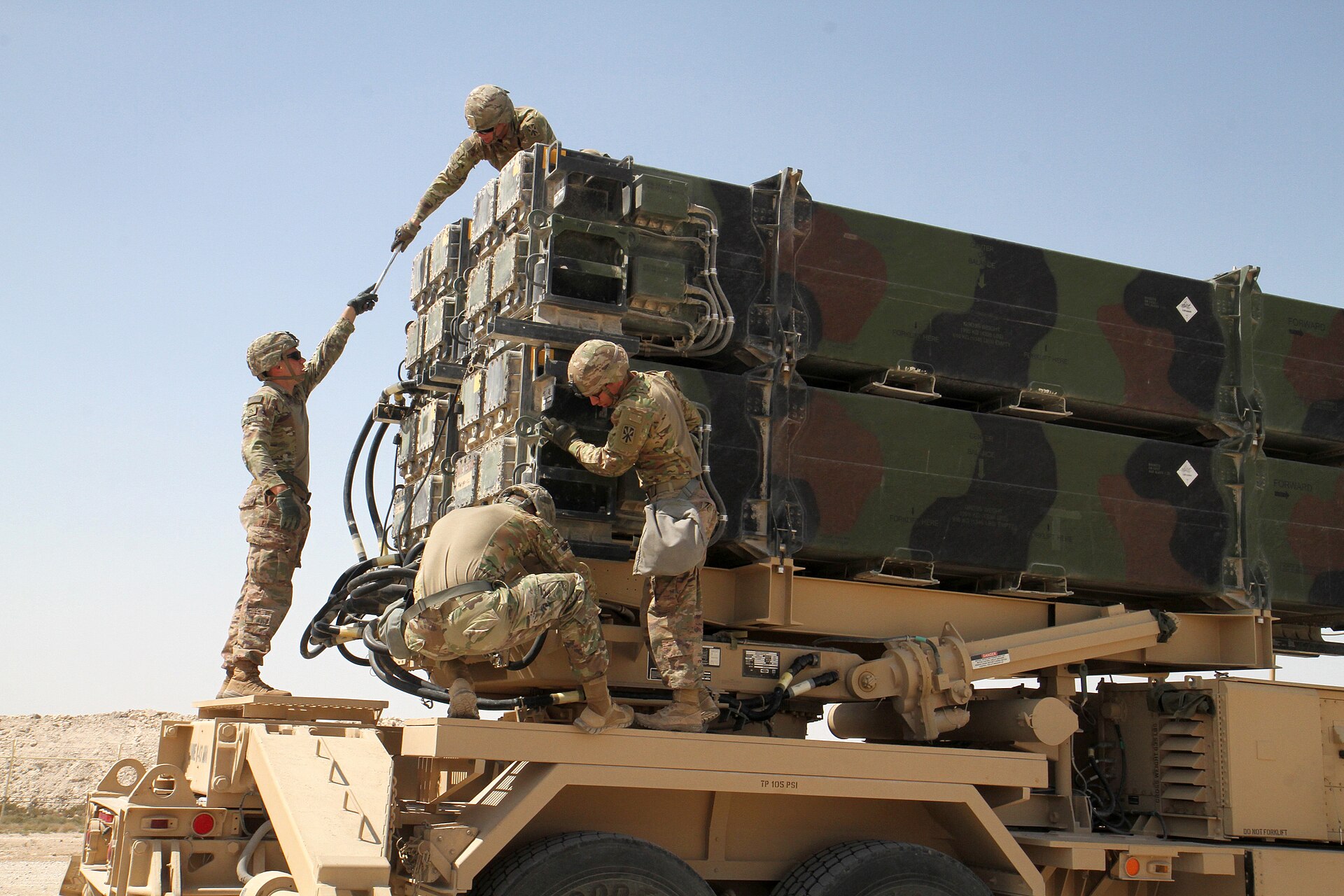
Second, air defence drawdown. Saudi PAC-3 MSE inventory stands at roughly 400 rounds, down from approximately 2,800 at the start of the conflict — an 86% expenditure curve. The Day of Arafah falls on May 26, twenty-nine days from April 27. Indonesia’s first pilgrim cohort of 221,000 departed on April 22, the day the ceasefire formally expired. The United States issued its first-ever Hajj travel advisory in the same window. The interceptor stockpile is being asked to cover the cordon for 1.2 to 1.5 million pilgrims under wartime conditions on the inventory remaining after fourteen weeks of fire.
Third, and least visible: the NSC meeting Trump convened today reviews kinetic options that operate in Saudi airspace and across Saudi-controlled facilities. CNN reported on April 23 that US military planners are developing “dynamic targeting” packages against Iran’s fast attack boats, minelaying vessels and coastal missile batteries. Trump’s April 23 Truth Social post directed the US Navy to “shoot and kill any boat” laying mines and ordered minesweeping operations to continue at “a tripled up level.” Half of Iran’s missile launchers and thousands of attack drones survived the initial bombing, per the same CNN reporting. The kinetic theatre Riyadh sits inside is being designed without Saudi input.
| Saudi exposure variable | April 27 reading | Pre-war benchmark |
|---|---|---|
| Brent crude | ~$108/bbl | Fiscal break-even $108-111/bbl |
| Saudi production (March) | 7.25M bpd | 10.4M bpd (Feb) |
| Yanbu bypass ceiling | 5.9M bpd | Hormuz throughput 7-7.5M bpd |
| PAC-3 MSE rounds | ~400 | ~2,800 at conflict start |
| Days to Day of Arafah | 29 | Ceasefire expired April 22 |
| Goldman war-adjusted deficit | 6.6% GDP | Official 3.3% |
Where does Rubio’s framing sit in international law?
The forty-word frame: Rubio’s characterisation of Iran’s regime invokes UNCLOS Articles 38, 26 and 44, plus the Corfu Channel ICJ judgment of 1949. Together these treat coastal-state permission, toll-collection, and suspension of transit passage through international straits as legally impermissible — irrespective of bilateral negotiations.
UNCLOS Article 38 establishes that the right of transit passage through international straits cannot be impeded or suspended. Article 26 prohibits charges on vessels “by reason only of their passage.” Article 44 prohibits suspension of transit passage. The ICJ’s 1949 Corfu Channel judgment — the foundational authority Rubio’s language invokes without naming — held that sovereignty over an international strait does not include “the power to make passage contingent on prior authorization.” That last phrase is not a paraphrase. It is the operative legal standard, and it tracks Rubio’s “get our permission” line word-for-word.
The Copenhagen Convention precedent of 1857, which abolished Denmark’s Sound Dues, sometimes appears in commentary as a model for negotiating away Iran’s regime. The analogy fails at three points. The Sound Dues had treaty-grounded historical legitimacy stretching to 1429; Iran’s regime is being legislated in 2026 against the immediate objection of every transit user. The Sound Dues were abolished collectively through a multilateral instrument; Iran’s regime requires Iran to extinguish its own legislation. And the Sound Dues were not enforced by ballistic missiles, mines and patrol boats. Rubio’s “we’ll blow you up and you pay us” captures the third point in a register treaty negotiation cannot match.
The 1980s Tanker War supplies a different and more operational comparison. From 1981 to 1988, Iran threatened Hormuz closure but did not follow through, because it needed the sea lanes for its own exports. In 2026, that self-deterrent has been neutralised by the US blockade announced April 13: Iran’s own oil exports run through different routes. The Tanker War disrupted less than 2% of Gulf shipping at its peak. The April 26 Bloomberg figure is 13 million bpd offline, the IEA’s Fatih Birol calling it “the biggest energy security threat in history.” The thing that made Iran restrained in 1987 — its dependence on the sea lanes — has been removed.
The authorisation ceiling Iran cannot lift
Article 110 of Iran’s constitution gives the president no command authority over the IRGC. The Supreme Leader is the IRGC’s commander-in-chief, and the Supreme National Security Council operates as the policy filter. Khamenei has been absent from public view for forty-four days. Mojtaba Khamenei is accessible only by audio, per multiple Tehran-based reporting in mid-April. Vahidi, the functional decision-maker on the IRGC ceasefire posture, holds an INTERPOL red notice issued in connection with the 1994 AMIA bombing in Buenos Aires that killed 85 people. He is the man Pezeshkian publicly accused on April 4 of acting unilaterally to wreck the Islamabad track.
This is the architecture behind Araghchi’s admission of no consensus. It is also what makes the parliamentary bill an instrument of confirmation rather than of innovation. The bill formalises in domestic law the authorisation regime the IRGC already operates de facto. Once it passes, the Iranian foreign ministry’s diplomatic offers about “opening” the strait become legally null inside Iran, regardless of what mediators are told. Rezaei Kouchi’s “nearing approval” sits on the table at the same moment Araghchi’s “no consensus” sits in the four mediators’ notes.
One sentence on what is harder to assess: the public reporting on Khamenei’s condition is sparse and partly contradictory, and the AMIA red-notice is a settled legal artefact rather than a probabilistic indicator of Vahidi’s current posture. The authorisation ceiling is a structural fact; the personalities animating it on any given day are not transparent from the outside.
What comes after the interim-deal track
The NSC meeting Trump convened on April 27 is reviewing options the previous two sessions did not place on the table. CNN’s April 23 reporting catalogued the kinetic ones: dynamic targeting against IRGC fast attack boats, minelaying vessels, coastal missile batteries. Trump’s Truth Social directive ordered minesweeping at a “tripled up level” and authorised the Navy to “shoot and kill” mine-layers. The Navy has four ships to clear a strait that requires roughly 200 square miles of mine-clearance, and only two Avenger-class MCM vessels remain in theatre after September 2025’s Bahrain decommissioning. The kinetic plan is being drawn up against an inventory shortfall it cannot fix in the twenty-nine days remaining before the Day of Arafah.
The diplomatic track, by Rubio’s April 27 framing, no longer has an interim option. The choice is bilateral: a comprehensive settlement that resolves the nuclear file, the Hormuz file and the regional missile architecture together, or no settlement. Iran’s parliamentary bill is moving in the opposite direction. Araghchi has told mediators he cannot deliver consensus on the smaller package. Pezeshkian’s office is producing presidential talking points about resisting “imposed negotiations under threats or blockade” while the IRGC seizes container ships in the same week.
The Saudi position inside this is the position of a state whose fiscal break-even, air defence inventory and Hajj cordon all run on assumptions the Hormuz-first proposal was constructed to preserve. The proposal has now been rejected on definitional, not procedural, grounds. The next assumption to test is whether the kinetic plan being drawn up in the Situation Room treats the kingdom as a base of operations or as a participant in framing them. The first three weeks of April supply no evidence on the second question.
What is observable on April 27: forty-five transits in nineteen days, Brent at $108, four hundred PAC-3 rounds, twenty-nine days to the Day of Arafah, MSC Francesca and Epaminodas held by IRGC Navy, the Iranian parliamentary bill at second reading, the foreign minister telling four mediators there is no consensus, the Secretary of State on a podium in Washington saying that what Iran calls open is what international law calls closed. Add to that ledger: Germany’s Friedrich Merz, speaking the same day, became the first G7 leader to call Iran’s conduct humiliating to the United States — reinforcing the US position from an unexpected European podium and narrowing Tehran’s room to frame the standoff as American aggression.
The week ahead will be measured against three checkable benchmarks. Whether the Rezaei Kouchi bill clears its remaining readings, which would convert the IRGC regime from operational practice to statute. Whether Tehran releases MSC Francesca and Epaminodas, which would supply the first behavioural signal that the foreign ministry has any pull over the IRGC. And whether Brent holds the $108 level, which marks the lower edge of the Saudi fiscal break-even band Bloomberg published earlier in April. All three benchmarks operate independently of the diplomatic vocabulary; they are reported facts that will accumulate or fail to accumulate without reference to what mediators are told.
Frequently asked questions
Does Rubio’s statement formally end the negotiating track, or only the interim-deal version of it?
Rubio’s statement does not formally end the negotiating track in any procedural sense — there is no announcement of broken-off talks, and the four mediators (Pakistan, Egypt, Turkey, Qatar) remain in place. What it forecloses is the conceptual premise that Hormuz reopening is a discrete concession Iran can offer in exchange for deferring nuclear talks. The remaining track is a single comprehensive package or none, which Araghchi told mediators Iran’s leadership cannot agree on internally.
Why does the parliamentary toll bill specify payment in Iranian rial rather than yuan?
The parliamentary bill differs from the IRGC’s de facto regime, which collects in yuan or stablecoins. Specifying rial in legislation forces a settlement currency that has no legal venue outside Iran, converting the toll into a sanctions-evasion mechanism rather than a revenue mechanism. The IRGC will likely operate both regimes in parallel — yuan and stablecoins for accessible counterparties, rial when the legislation passes for jurisdictional purposes.
What is the relationship between the IRGC’s April 17 conditions and the parliamentary bill?
The April 17 IRGC conditions are operational rules issued by the IRGC Navy via Tasnim. The parliamentary bill is domestic legislation that, once passed, would convert those rules into Iranian law and add four further conditions, including SNSC approval for “hostile states” and compensation requirements for states that “caused damage to Iran.” The bill makes the regime statutory, not negotiable; the operational rules remain alterable by IRGC command authority.
How does the 1980s Tanker War self-deterrence collapse change the strategic calculus?
From 1981 to 1988, Iran needed Hormuz transit for its own oil exports and was self-deterred from closure. The April 13 US blockade cuts Iran’s own export traffic, removing the self-deterrent. The IRGC can now sustain the chokepoint indefinitely without bearing the export cost it bore in the 1980s; the strategic equilibrium that ended the Tanker War in 1988 does not exist in 2026.
What specific UNCLOS article would govern a future ICJ case if one were filed?
Article 38 establishes the right of transit passage and is the headline article. Article 44 on non-suspension of transit passage and Article 26 on prohibition of charges by reason only of passage would carry the technical weight. The Corfu Channel ICJ judgment of 1949 supplies the controlling precedent on coastal-state authorisation. No state has yet filed; the political route runs through the UN Security Council, where Russia and China hold veto power over any binding measure.
The closure of the interim-deal track that Rubio effected on April 27 coincides with a change in Iran’s negotiating personnel that compounds the diplomatic narrowing: Saeed Jalili is set to replace Ghalibaf as Iran’s nuclear talks lead — installing the figure whose six-year record as P5+1 negotiator produced zero enrichment pauses and three UN Security Council sanctions resolutions as the man Washington would have to deal with on any remaining framework.
That diplomatic narrowing was made structural in the days before Rubio’s statement: Witkoff and Kushner’s Islamabad trip was cancelled after Araghchi left Pakistan without committing to direct talks — removing the one scenario in which a face-to-face framework could have produced a bridging formula before the May 1 War Powers deadline.
The same afternoon Rubio closed the interim track, Araghchi met Putin at the Boris Yeltsin Presidential Library in St. Petersburg carrying a personal message from Mojtaba Khamenei — the first confirmed direct communication from Iran’s hidden Supreme Leader in 44 days; how that parallel track, and the Saudi Arabia fiscal trap it creates, reframes the diplomatic situation is examined here.