
CHANGED: True
{“content”: “
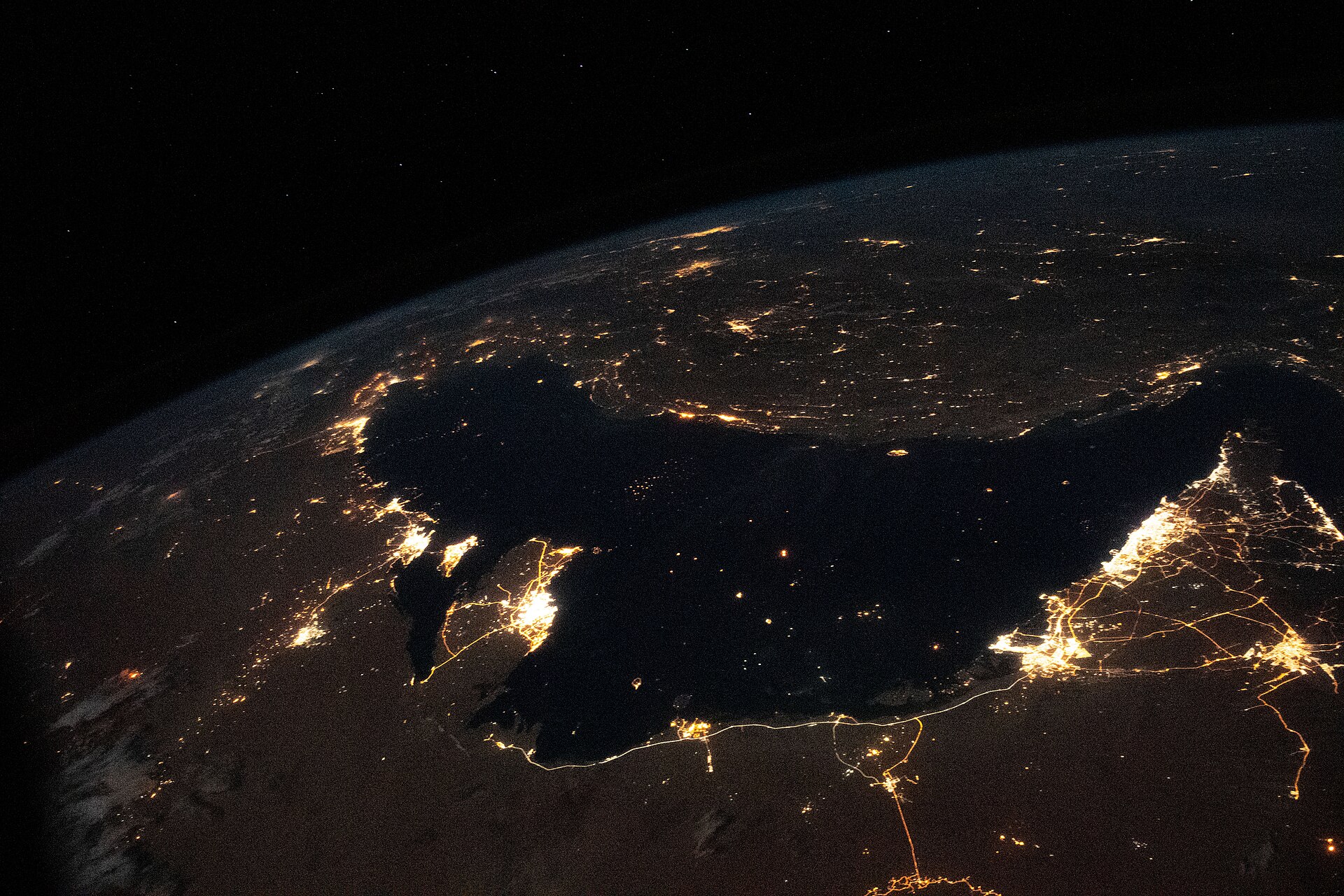
RIYADH u2014 Saudi Arabia spent $6 billion on American missiles the same week it blocked the American operation those missiles were meant to equip, and the contradiction is not confusion but doctrine: buy the weapons, deny the basing, build a parallel security tier that gives Riyadh coercive capacity without requiring it to absorb the downstream consequences of hosting US strike packages. The International Institute for Strategic Studies identified what it called “a new Middle Eastern quadrilateral” in May 2026 u2014 Egypt, Pakistan, Saudi Arabia, and Turkey u2014 describing the four states as “poised to tackle shared security concerns together,” and the Project Freedom veto, Riyadh’s first deliberate suspension of US basing and overflight access since the war began, was its proof of concept.
n
Three foreign minister meetings in a single month, a deputy-minister session in Islamabad, and Faisal bin Farhan’s May 6 bilateral with Erdogan in Ankara gave the quadrilateral a meeting cadence that neither the Arab League nor the Organisation of Islamic Cooperation has sustained for decades. Faisal’s three-capital sprint to London, Ankara, and Doha — concluding with his May 11 bilateral with Foreign Secretary Cooper — was the diplomatic expression of this architecture: Riyadh channeling its Hormuz reopening demand through multilateral voices that carry weight Washington cannot easily dismiss. What binds the four states is not shared ideology or geography but a common calculation that the American security umbrella, as currently priced, generates as much exposure as it eliminates.
n
The Middle East briefing 3,000+ readers start their day with.
One email. Every weekday morning. Free.
Table of Contents
n
- n
- What Is the IISS Quadrilateral?
- The Contradiction the War Revealed
- Why Did Saudi Arabia Veto Project Freedom?
- What Does Pakistan Bring to the Bloc u2014 and What Does It Cost?
- Ankara’s Accelerating Clock
- The SUMED Pipeline and Egypt’s Stake
- How Does Iran Read the Quadrilateral?
- The Cost of a Parallel Security Tier
- Frequently Asked Questions
- n
n
n
n
n
n
n
n
n
n
n
n
n
What Is the IISS Quadrilateral?
n
The IISS quadrilateral is an informal but rapidly institutionalising security alignment among Egypt, Pakistan, Saudi Arabia, and Turkey. The International Institute for Strategic Studies identified it in May 2026 as a nascent bloc “poised to tackle shared security concerns together” u2014 one that held four meetings in six weeks, three at foreign minister level, organised around shared exposure to the Iran conflict rather than a formal treaty or ideological alignment.
n
The language the IISS chose matters as much as the identification itself. The analysis described a “new geopolitical bloc” while explicitly noting the arrangement is “not formalised,” and the avoidance of words like alliance, pact, or treaty captures a structure that is accumulating institutional weight without yet acquiring institutional form. This is not the Arab League’s consensus-paralysis model, which has demanded unanimity across twenty-two members since 1945 and delivered very little with it, nor the OIC’s fifty-seven-member religious framework. The quadrilateral is minilateral by design u2014 four states, each contributing capability the others lack, convening at a speed neither of those older bodies has approached.
n
Deputy ministers met in Islamabad on April 14, three weeks before the IISS published. Foreign ministers had already convened three times in thirty days u2014 Riyadh on March 18, Islamabad on March 29, the Antalya Diplomacy Forum on April 17 u2014 each session hosted by a different member state. The Russian International Affairs Council labelled it “Islamic NATO”; IAR International, an Iranian-adjacent outlet, called it “the Quadrilateral of Containment”; The Conversation and Asia Times preferred “de-escalation coalition.” The meeting cadence answers the framing question better than any of those labels: four states do not rotate foreign minister sessions across three countries in a month unless they expect the architecture to carry operational weight.
n
What sets this apart from every previous Middle Eastern security formation u2014 the Baghdad Pact of 1955, the Arab League’s Joint Defence Council, the GCC’s Peninsula Shield Force u2014 is that the quadrilateral is capability-complementary rather than ideologically unified, and possesses a joint-procurement-and-exercise vector, through Turkish drone production and Pakistan’s nuclear overhang, that none of those predecessors could claim.
n
The Contradiction the War Revealed
n
The Iran conflict exposed a structural fault in the US-Saudi security relationship that no weapons contract can paper over: the United States is simultaneously Saudi Arabia’s primary military supplier, its most capable security partner, and the actor whose combat operations most directly trigger Iranian retaliatory strikes against Saudi energy infrastructure. Every US strike package that launches from Saudi soil or transits Saudi airspace generates downstream targeting exposure for the facilities that fund the Saudi state u2014 Ras Tanura, which absorbed missile fire; the East-West Pipeline, which took a pumping station hit on the first day of the ceasefire; Khurais, which went offline with no restoration timeline u2014 and Riyadh’s leadership understands this targeting arithmetic with a specificity that Washington’s force planners, operating from installations that are not themselves Iranian targets, structurally cannot match.
n
Saudi oil production crashed from 10.4 million barrels per day in February to 7.25 million in March u2014 a 30 percent collapse that the IEA characterised as the largest supply disruption on record u2014 and the retaliatory targeting of Saudi infrastructure by a country that was, on paper, at war with the United States rather than with Saudi Arabia was the primary driver of that decline. The pricing of the US security umbrella, once measured in diplomatic alignment and weapons purchases, had acquired a new variable: Iranian missiles.
n
Saudi Arabia allowed US basing and overflight access for Operation Epic Fury on February 28, the air campaign’s opening salvo, and the decision was consistent with decades of bilateral cooperation. What changed between February and May was not MBS’s view of the United States as a partner but his assessment of what that partnership was costing u2014 the recognition that hosting American strike operations generated retaliatory exposure borne almost entirely by Saudi infrastructure and Saudi fiscal reserves, while the escalation decisions remained under American command. Chatham House had described Riyadh’s operating doctrine as early as March 2025 as “managing multipolarity” and running “Strategic Substitution” u2014 diversifying defence relationships so no single foreign capital holds a veto over Saudi national security u2014 but the war converted that academic framing into an operational programme with a meeting schedule and a procurement pipeline. The acceleration of that programme became unmistakable when Hegseth told Congress on May 12 that PAC-3 shortages were overstated u2014 a statement Saudi Arabia, with roughly 400 interceptors left and no resupply until 2027, was not positioned to accept; the precise gap between what Washington was performing and what Riyadh knew to be true is examined in Hegseth Told Congress Munitions Shortages Are Overstated. Saudi Arabia Stopped Listening and Started Building.
n
n
“The long-running structural logic of the U.S.-Saudi alliance u2014 oil, petrodollar recycling, shared threat perception u2014 has been eroding for years, held together in part by the personal chemistry between Trump and MBS. But chemistry seemingly has its limits.”u2014 NBC News, citing senior US officials
n
n
Those limits turned out to be geographical. The chemistry holds when US operations target over-the-horizon objectives and fractures when the Iranian response lands on Saudi soil, which is where the retaliatory logic of this war has pointed since the IRGC established its co-belligerent doctrine u2014 any state hosting American strike assets becomes an Iranian target u2014 and Saudi Arabia decided in May that it would no longer volunteer for that role.
n
Why Did Saudi Arabia Veto Project Freedom?
n
Saudi Arabia suspended US military base access and overflight rights from May 5 to 7, blocking Trump’s Project Freedom Hormuz escort operation, because the operation’s downstream exposure u2014 Iranian retaliatory targeting of Saudi facilities hosting US strike assets u2014 exceeded Riyadh’s tolerance for absorbing consequences of operations it did not direct. Kuwait joined the suspension simultaneously, and Trump was forced to halt the project to restore access.
n
The veto was calibrated, not categorical. Riyadh had permitted identical basing arrangements for Operation Epic Fury ten weeks earlier, suspended and restored access within seventy-two hours, and approved $6 billion in US weapons sales during the same window. RANE/Stratfor captured the mechanics in its headline u2014 “Riyadh Effectively Vetoed the U.S.’ Project Freedom” u2014 placing the emphasis on the deliberateness of the decision rather than any communications failure, and the restoration of access once the operation was shelved confirmed that the suspension targeted this specific force package, not the basing relationship.
n
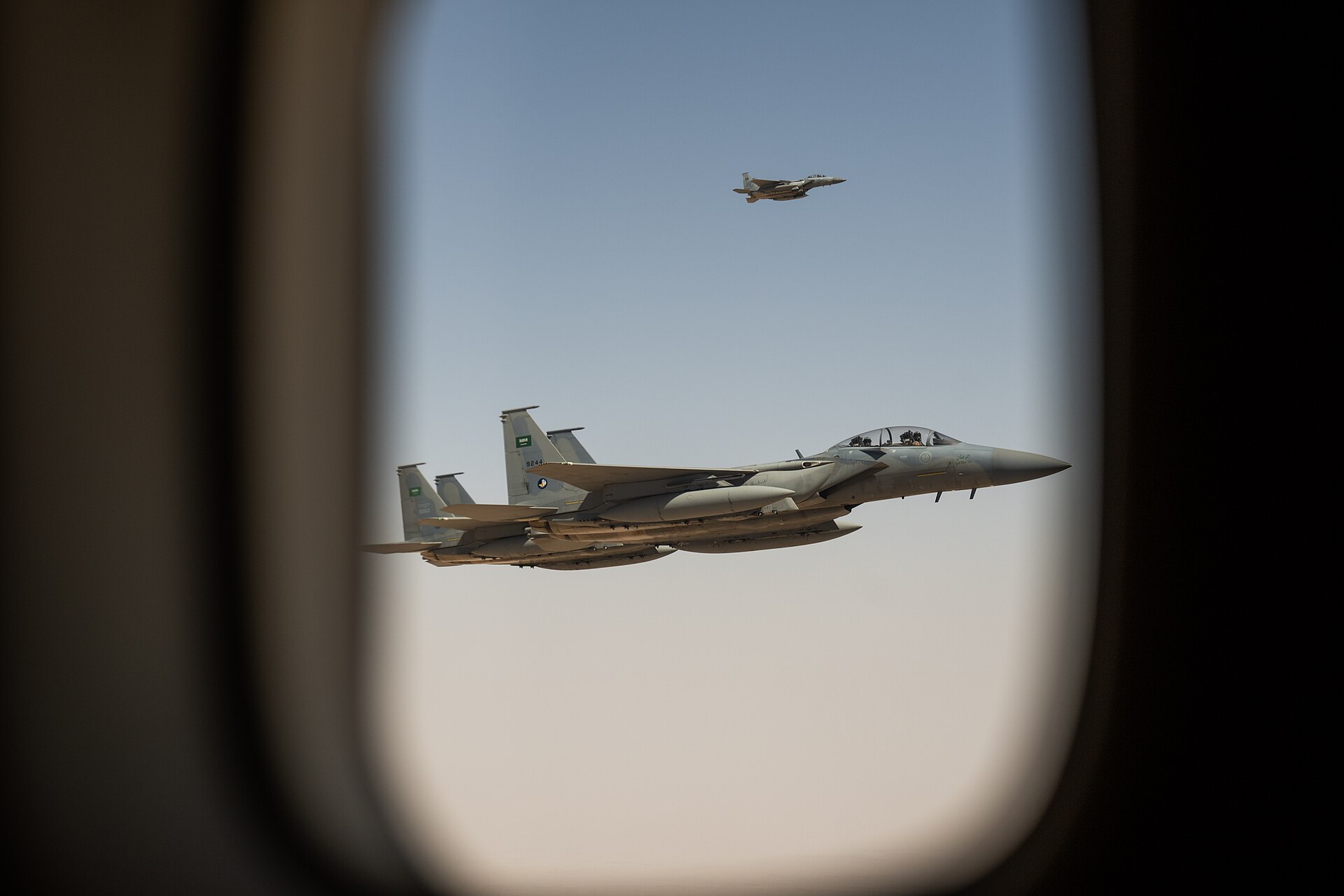
The procurement timeline running alongside the veto is the detail that decodes the doctrine. The Defense Security Cooperation Agency approved $3.5 billion in AIM-120C-8 AMRAAM missiles on May 2 and $2.5 billion in GBU-39 Small Diameter Bombs on May 4 u2014 standard Saudi purchase notifications that were not delayed, conditioned, or suspended during the basing dispute.
n
| Date | Event | Value |
|---|---|---|
| May 2 | DSCA approves AIM-120C-8 AMRAAM sale to Saudi Arabia | $3.5B |
| May 4 | DSCA approves GBU-39 Small Diameter Bomb sale | $2.5B |
| May 5 | Iran launches PGSA; Saudi Arabia suspends US basing access | u2014 |
| May 6 | Saudi-Turkish Coordination Council meets, Ankara | u2014 |
| May 7 | Trump halts Project Freedom; basing access restored | u2014 |
n
n
Saudi Arabia wants American weapons but does not want American command authority exercised from Saudi soil when the retaliatory cost falls on Saudi infrastructure, and the quadrilateral is the institutional expression of that distinction u2014 a parallel command architecture where Riyadh retains operational authority over its own risk exposure, supported by Pakistani ground forces, Turkish drone capability, and Egyptian logistics corridors that do not carry the same co-belligerent targeting logic that US basing does.
n
A granular account of the three-day sequence u2014 what MBS demanded, what Iran learned from the reversal, and what the second Trump-MBS call likely conceded u2014 is in the 72-hour veto that mapped MBS’s red line.
n
n
What Does Pakistan Bring to the Bloc u2014 and What Does It Cost?
n
Pakistan contributes 13,000 troops deployed to King Abdulaziz Air Base in Saudi Arabia’s Eastern Province since April 11, a collective-security treaty that treats Iranian attacks on Saudi Arabia as attacks on Pakistan, nuclear deterrent overhang, and the only functioning mediation channel to Tehran u2014 but its role as Iran’s diplomatic protecting power since 1992 embeds a structural contradiction at the centre of the quadrilateral’s design.
n
Pakistan occupies four roles in this conflict simultaneously, and none is fully compatible with the others. It is a quadrilateral member bound to Saudi Arabia by the Saudi-Pakistani Military Defence Agreement, signed September 17, 2025. It has served as Iran’s de facto protecting power in the United States since 1992 u2014 the longest-running such arrangement Iran maintains anywhere. It deployed approximately 13,000 troops and more than ten fighter jets to the Saudi Eastern Province on April 11, the largest Pakistani expeditionary force since the 1991 Gulf War. And General Asim Munir, whose phone relay on the night of April 8-9 provided the only functional Washington-Tehran channel during the Islamabad ceasefire talks, holds personal authority to activate the SMDA’s collective-security clause without parliamentary approval u2014 a power created by the 27th Constitutional Amendment of November 2025, which installed him as Chief of Defence Forces with a five-year tenure and prosecutorial immunity.
n
n
“Pakistan is legally obligated under the SMDA to treat Iranian attacks on Saudi Arabia as attacks on itself.”u2014 Middle East Institute, 2026
n
n
Munir’s visit to Khatam al-Anbiya headquarters on April 16 u2014 the IRGC construction arm commanded by Abdollahi u2014 illustrates the impossibility of his position with uncomfortable precision. He was appealing to the commanders that Pezeshkian had publicly named on April 4 as the officials who wrecked the ceasefire mandate, while maintaining the protecting-power channel that Tehran considers its most reliable diplomatic lifeline and simultaneously operating as the ceasefire’s sole enforcement mechanism. The Stimson Center described the resulting posture as a structural contradiction that “is not resolvable, only managed,” and the quadrilateral appears designed to absorb that contradiction rather than solve it u2014 giving Pakistan a multilateral framework in which Munir’s impossible dual role becomes an institutional feature rather than a personal liability. CBS News confirmed on May 12 that a third dimension to that contradiction had been operating throughout the ceasefire period: Pakistan was sheltering Iranian military aircraft at PAF Base Nur Khan while simultaneously hosting talks financed by Saudi Arabia — the country those aircraft belonged to a military currently targeting.
n
Ankara’s Accelerating Clock
n
Turkey brings something to the quadrilateral that no other member can: a seat inside NATO. That structural position gives the bloc a diplomatic back-channel into the Western alliance through Ankara’s Article 5 status u2014 a line of access that neither the Arab League, the OIC, nor any previous Middle Eastern security formation could claim u2014 and Turkey has been accelerating its bilateral engagement with Riyadh at a pace that suggests both capitals understand the connector role Ankara plays.
n
The third meeting of the Saudi-Turkish Joint Coordination Council took place in Ankara on May 6, the same day Faisal bin Farhan met Erdogan bilaterally and signed a diplomatic and service passport visa-exemption agreement. The Coordination Council’s frequency tells the institutional story: after an eight-year dormancy following a 2017 session, the council met once in 2025 and twice in the following twelve months, transforming an almost-defunct mechanism into what resembles standing diplomatic infrastructure. Al-Monitor and Daily Sabah reported that Ankara discussions centred on the Hormuz blockade and escalation prevention, placing the bilateral inside the quadrilateral’s security mandate rather than any separate economic track.
n
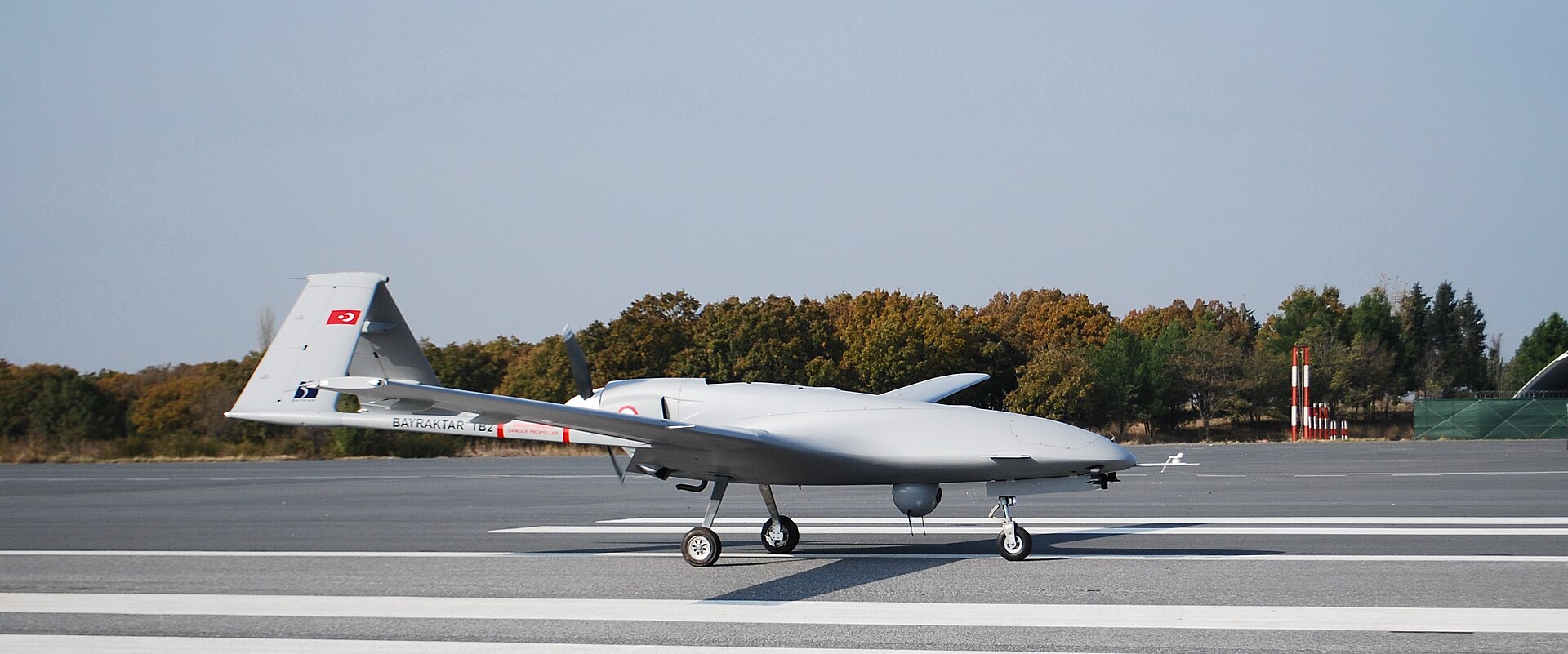
The procurement dimension is harder to overlook. Baykar has delivered Bayraktar TB2 drones across the Gulf u2014 Qatar in 2018, the UAE in 2022, Kuwait in 2023 u2014 and a 2023 deal for sixty Akinci UCAVs for Saudi Arabia includes a joint production line with the Saudi Arabian Military Industries corporation, with deliveries running through 2025 and 2026. The Akinci programme is not an arms sale but an industrial partnership: it gives Saudi Arabia a combat drone capability manufactured partly on Saudi soil, reducing dependency on US supply chains for a weapons class that has proved operationally decisive throughout this conflict.
n
Turkey is the only state that can sit inside a Middle Eastern security bloc and inside the Western alliance simultaneously, and the Coordination Council’s acceleration suggests MBS is willing to absorb the political cost of Turkish proximity u2014 which was considerable before the Khashoggi-era reconciliation u2014 because the quadrilateral’s geometry requires it. For Ankara, the dividend is a defence-industrial relationship with the wealthiest customer in the region, locked in by co-production agreements that outlast any single diplomatic cycle.
n
n
The SUMED Pipeline and Egypt’s Stake
n
Egypt’s role in the quadrilateral is the least visible and the most structurally necessary. The Suez Canal lost approximately $6 billion in foreign-exchange revenue in 2024 from Red Sea disruption alone, and the 2026 Hormuz crisis has compressed transit volumes to roughly one-third of pre-conflict levels u2014 a revenue collapse that makes Cairo’s participation in any regional security architecture not a diplomatic preference but a fiscal requirement.
n
The asset that anchors Egypt’s position is the SUMED pipeline, a 2.5-million-barrel-per-day conduit from the Red Sea coast to the Mediterranean that serves as the only bypass for oil exports moving from Saudi Arabia’s Yanbu terminal to European markets. Flows through SUMED surged 150 percent since the war started, according to the IMF’s April 2026 Regional Economic Outlook, as Riyadh rerouted export capacity through the East-West Pipeline to Yanbu and onward through Egyptian infrastructure to Mediterranean buyers that Hormuz closure had cut off. IEA Director Fatih Birol described the combined disruption to Hormuz and Red Sea shipping lanes as “the biggest energy security threat in history,” and Egypt sits across both arteries u2014 a position that makes its infrastructure indispensable to whatever post-conflict energy order emerges.
n
Egypt is not in the quadrilateral because of its military reach, which is modest relative to Pakistan’s expeditionary deployment or Turkey’s industrial drone programme. It is there because the SUMED corridor handles a growing share of Saudi export flexibility while Hormuz remains functionally restricted, and because the transit revenue that corridor generates gives Cairo a direct fiscal stake in whichever security framework stabilises the region’s two critical maritime chokepoints. For Riyadh, having Egypt inside the quadrilateral means the SUMED bypass u2014 which underwrites what remains of Saudi export capacity to Europe u2014 operates under a framework where Saudi influence is structural, not dependent on bilateral goodwill that any of the external powers competing for Egyptian alignment could disrupt.
n
How Does Iran Read the Quadrilateral?
n
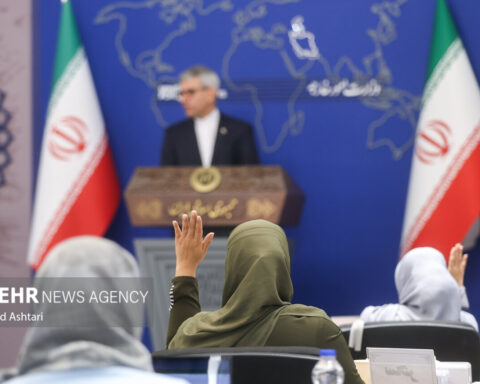
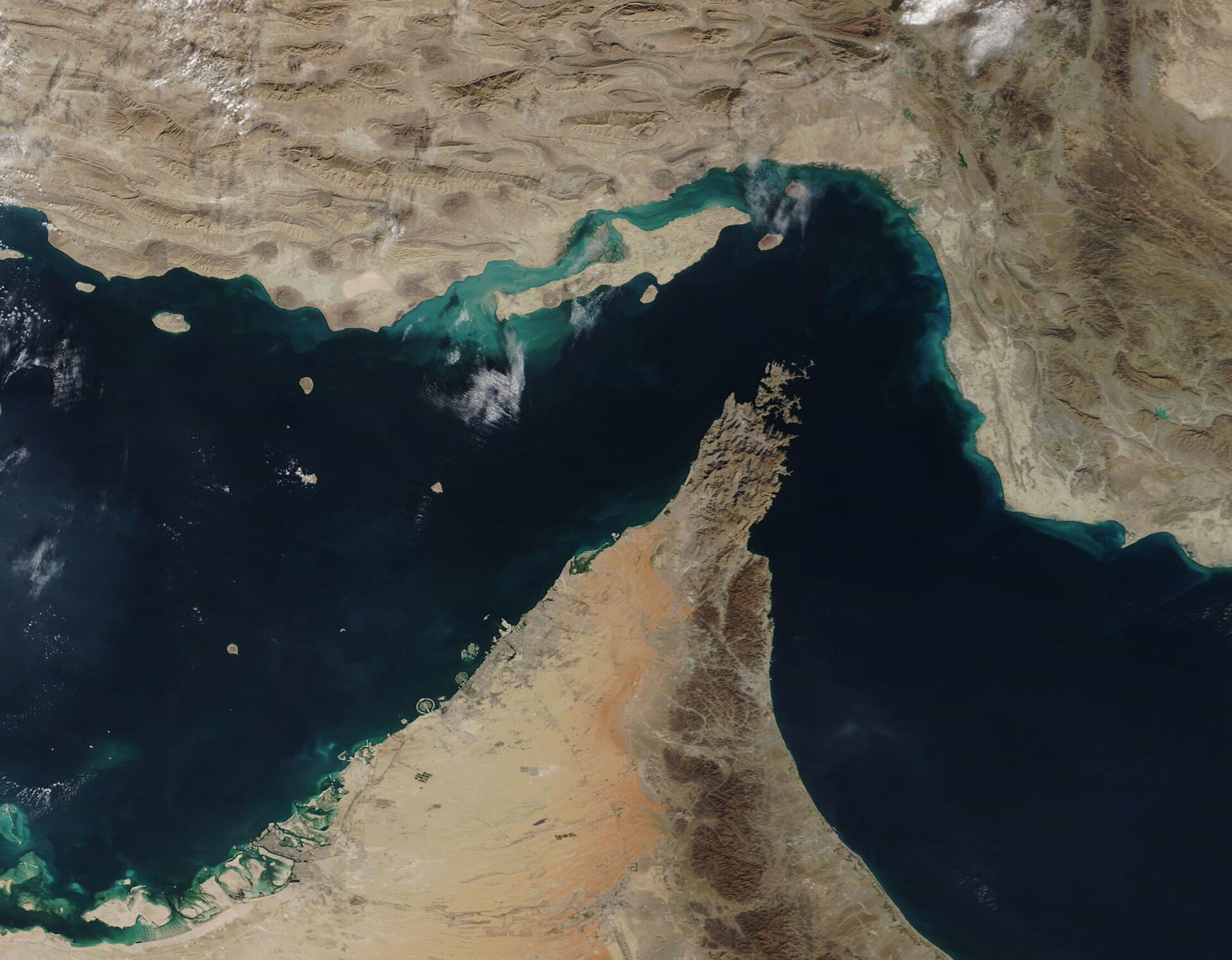
Iran views the quadrilateral as an anti-Iranian containment architecture u2014 IAR International, an Iranian-adjacent analytical outlet, labelled it “the Quadrilateral of Containment” u2014 and launched the Persian Gulf Strait Authority on May 5 as an institutional counter-move designed to ensure that any post-war Hormuz arrangement inherits IRGC bureaucratic control rather than dissolving it.
n
The PGSA’s timing suggests it was calibrated as a direct response to the quadrilateral’s acceleration. The IRGC established a permanent bureaucratic Hormuz-management regime on the same day Riyadh suspended US basing access for Project Freedom u2014 complete with IRGC-designated shipping lanes, permit requirements, and transit tolls u2014 positioning it as non-negotiable institutional inheritance rather than a wartime measure that ceasefire terms could dissolve. If the quadrilateral represents the institutional hardening of Saudi Arabia’s parallel security tier, the PGSA represents the equivalent hardening of Iran’s Hormuz sovereignty claim, and the post-conflict maritime order will be defined by whichever institution survives the war’s resolution in better structural health.
n
MEMRI, monitoring from an Israeli-adjacent analytical position, headlined Turkey’s engagement as “On The Way To An ‘Islamic NATO’” u2014 framing that signals pro-Western concern about a Muslim-majority security bloc operating outside the US alliance system. Tehran’s analytical infrastructure shares the concern from the opposite direction, but Iran’s posture contains an asymmetry that complicates the containment reading: Tehran has not severed the protecting-power relationship with Islamabad despite Pakistan’s deployment of 13,000 troops to Saudi Arabia, suggesting that Iranian strategists calculate Pakistan’s presence inside the bloc moderates Saudi maximalism.
n
The calculus suits Tehran even if it makes for uncomfortable optics. As long as Pakistan mediates and deploys simultaneously, Iran retains a diplomatic channel embedded inside the security architecture it publicly condemns, and the contradiction serves Iranian interests more effectively than a clean break would. Pakistan as a declared adversary would be dangerous; Pakistan as a conflicted Saudi ally with a protecting-power obligation to Tehran is manageable, and Iran appears to have calculated that preserving the ambiguity serves it better than forcing a choice that the SMDA’s collective-security clause and 13,000 deployed troops ensure Pakistan would not resolve in Iran’s favour. The same calculation explains Araghchi’s decision to reverse his stated plan to skip the BRICS New Delhi meeting on May 14–15 — a gathering India insists is not mediation, but where Iran, Saudi Arabia, and the UAE foreign ministers will share proximity for the first time outside a US-brokered format.
n
n
The Cost of a Parallel Security Tier
n
Saudi Arabia’s Q1 2026 budget deficit reached SR 125.7 billion ($33.5 billion), consuming 76 percent of the full-year planned shortfall in a single quarter u2014 the largest on record u2014 and the composition of that spending illuminates the quadrilateral’s fiscal architecture more precisely than any diplomatic communiquu00e9. Military expenditure rose 26 percent year-on-year to SR 64.7 billion; total government spending climbed 20 percent; and Bloomberg Economics estimates Saudi Arabia’s true break-even oil price at $111 per barrel when PIF commitments are included, against a Brent price that has swung between $89 and $109 since the ceasefire.
n
The weapons contracts approved in the first week of May u2014 AMRAAM missiles and Small Diameter Bombs u2014 make procurement sense only inside the quadrilateral framework. Saudi Arabia is buying American precision munitions while constructing a command architecture that does not depend on American basing, which means it is building the conditions under which those weapons can be deployed under Saudi or partner authority. The Akinci co-production line with SAMI operates on the same principle: capability sourced from Turkish engineering, manufactured on Saudi soil, deployable under Saudi decision-making. The procurement pattern is not anti-American; it is post-monopoly.
n
The Saudi-Russian 90-day visa-free agreement that entered force on May 11 u2014 making Russians the first non-GCC citizens with visa-free access to Saudi Arabia u2014 confirms the multi-alignment doctrine in miniature. Riyadh and Moscow co-chair OPEC+, the energy coordination mechanism that has given Saudi Arabia its most consistent leverage over global oil markets, and the visa-free arrangement extends that energy partnership into a broader diplomatic framework where Russian nationals receive access rights that American, European, and Chinese passport holders do not yet possess. Riyadh is not replacing Washington with any single alternative; it is constructing a position where no capital has exclusive leverage, and the quadrilateral is the security expression of a hedging posture that already operates across energy, technology, and sovereign-wealth diversification.
n
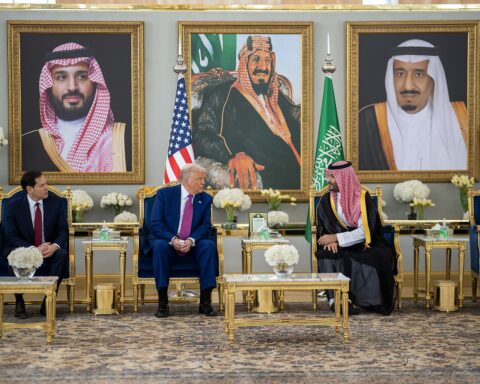
As Trump prepares to fly to Riyadh, the quadrilateral will not appear on any formal agenda u2014 it has no name, no secretariat, no founding document. But its institutional shadow is visible in the meeting cadence, the procurement patterns, and the base-access doctrine that Riyadh tested in the first week of May. Washington will arrive with an alliance that assumed primacy, and Riyadh will receive it having spent $6 billion on American munitions during the same five-day window it demonstrated u2014 for the first time in the history of the bilateral relationship u2014 that American forces do not have an automatic right to operate from Saudi soil.
The denial of Prince Sultan Air Base for Project Freedom operations represents more than a tactical decision — it is the first deliberate use of basing access as a strategic lever in the US-Saudi bilateral. As Trump Wants to Resume the Iran War. The Arsenal Says He Cannot. documents, the leverage is compounded by the Pentagon’s munitions position: the US restrike capacity that might otherwise make Saudi base denial costly has itself been degraded by Operation Epic Fury, giving Riyadh more room to withhold access than at any point in the seventy-year history of the security relationship.
n
The denial of Prince Sultan Air Base for Project Freedom operations represents more than a tactical decision — it is the first deliberate use of basing access as a strategic lever in the US-Saudi bilateral. As Trump Wants to Resume the Iran War. The Arsenal Says He Cannot. documents, the leverage is compounded by the Pentagon’s munitions position: the US restrike capacity that might otherwise make Saudi base denial costly has itself been degraded by Operation Epic Fury, giving Riyadh more room to withhold access than at any point in the seventy-year history of the security relationship.
n
Frequently Asked Questions
n
Is the quadrilateral a formal military alliance?
n
Not yet, and the IISS explicitly noted it is “not formalised.” The binding military commitment exists bilaterally u2014 Pakistan’s SMDA with Saudi Arabia contains a collective-security clause u2014 but no multilateral treaty, joint command structure, or shared rules of engagement connects all four states. The institutional form is closer to a standing consultation mechanism with aligned procurement pipelines than to NATO’s integrated military command, and the absence of formal architecture may be deliberate: it gives each member flexibility to calibrate involvement without triggering treaty obligations that could bind them to escalatory decisions made by another member.
n
Does the quadrilateral carry a nuclear dimension?
n
Pakistan’s nuclear arsenal is the unspoken overhang that distinguishes this formation from every other Middle Eastern security grouping. No public statement from any member has linked the bloc to nuclear deterrence, but the SMDA’s collective-security clause creates an implicit escalation ladder that runs, at its theoretical ceiling, through Islamabad’s nuclear capability. The 27th Constitutional Amendment concentrates SMDA activation authority in General Munir personally, without requiring parliamentary approval, compressing a decision chain that in most nuclear-armed states requires multiple institutional vetoes into a single officer’s judgment.
n
Why is Israel not part of this framework?
n
The Abraham Accords normalisation track, which had been the dominant paradigm for Middle Eastern security realignment before the war, ran through Israel as its institutional anchor and offered Gulf states a direct security relationship with the region’s most capable military power. The quadrilateral’s membership u2014 four Muslim-majority states, none with current Israeli normalisation u2014 represents a different organising principle, built around shared Iran-conflict exposure rather than the normalisation incentive. MEMRI’s alarm at the formation, headlined as progress toward an “Islamic NATO,” reflects the recognition that this architecture operates outside the Israeli security orbit by composition rather than by explicit exclusion.
n
How does the quadrilateral differ from the GCC’s Peninsula Shield Force?
n
The Peninsula Shield Force, established in 1984, is a GCC-internal mechanism among six small, wealthy monarchies with largely similar threat perceptions and limited independent force-projection capability. The quadrilateral draws from four different sub-regions u2014 North Africa, South Asia, the Gulf, and Anatolia u2014 includes a NATO member, includes a nuclear-armed state, and fields a combined active-military strength approaching 1.8 million personnel across four of the largest armed forces in the Muslim world. The capability asymmetry is the design feature: Pakistan provides manpower and nuclear overhang, Turkey provides industrial defence capacity and a Western alliance back-channel, Egypt provides energy-infrastructure corridors, and Saudi Arabia provides the financing and the threat exposure that makes the entire architecture operationally necessary. On why MBS himself holds a structural veto over any Iran deal Trump attempts to close in Riyadh, see Three-Body Veto: Three Men Can Kill Any Iran Deal Trump Signs.
n
The diplomatic consequence of this architecture — how Washington carried MBS’s security bloc to Beijing while leaving Saudi Arabia with no seat at the table that will determine Hormuz’s future — is examined in Trump-Xi Beijing Summit: Saudi Arabia Frozen Out of the Hormuz Endgame. The formal limits of what any arms agreement — including the $142 billion package announced in Riyadh — can actually guarantee are examined in why the $142 billion arms deal does not constitute a security guarantee.
n”}