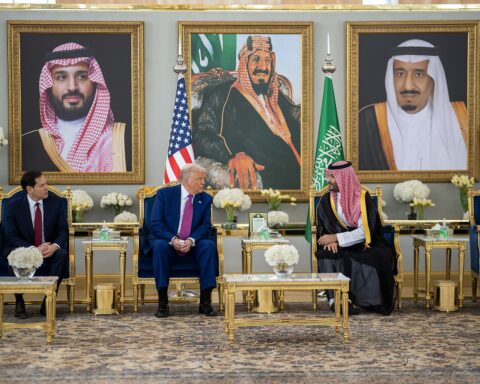
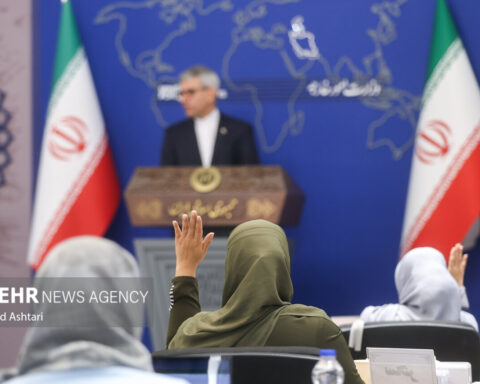
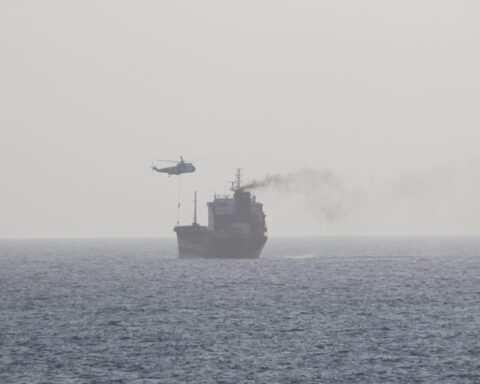
DOHA — Donald Trump landed in Qatar on May 14 carrying $243.5 billion in signed economic deals and a $38 billion commitment to expand Al Udeid Air Base — the facility from which the United States has run every air operation over Iran since February 28. The numbers were designed for headlines; the structure beneath them was designed for something else. Qatar has converted basing dependency — the fact that the Combined Air Operations Center coordinating 17 nations’ air campaigns sits on Qatari soil and has no operational substitute — into a form of leverage that no arms sale can replicate. Saudi Arabia received $142 billion in weapons and Major Non-NATO Ally status during Trump’s Riyadh stop. Qatar received something less photogenic and more consequential: the physical architecture of American power projection, rebuilt and hardened with Qatari money, under Qatari sovereignty.
Table of Contents
- What Al Udeid Actually Does
- Iran Struck Al Udeid. Qatar Kept It Running.
- What Does the $38 Billion Buy?
- The Leverage Math
- What Qatar Did Not Give Up
- Why Did Saudi Arabia Get Weapons While Qatar Got the War Machine?
- The 2017 Precedent Qatar Has Not Forgotten
- How Does Qatar Shape the Ceasefire Timeline?
- Iran’s Split Signal
- Frequently Asked Questions
What Al Udeid Actually Does
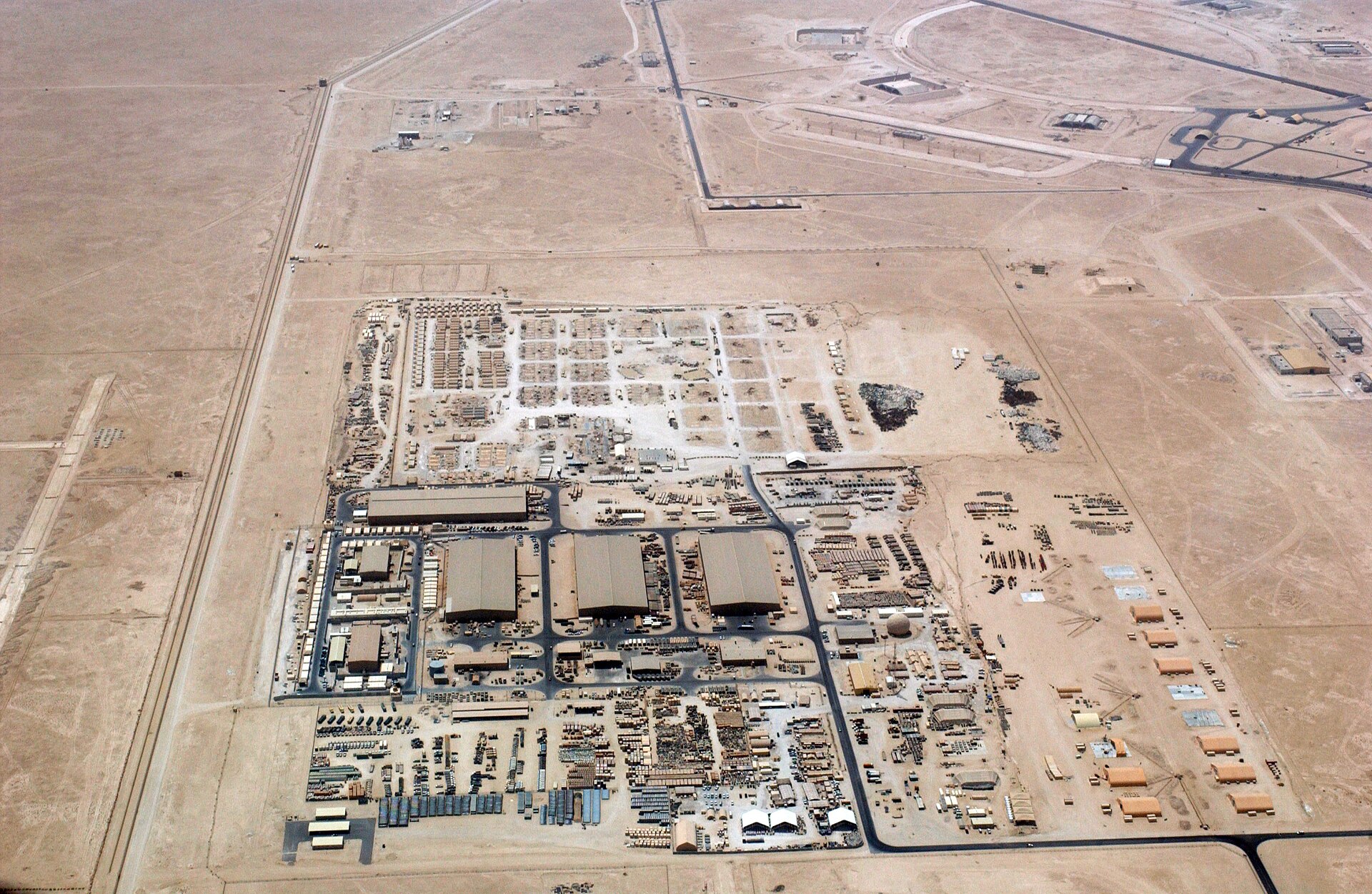
Al Udeid Air Base sits 35 kilometers southwest of Doha in an expanse of flat desert that Qatar began developing in 1996 — five years before the United States showed any interest in it. The US moved in after September 11, and by 2003, when Saudi Arabia asked the Pentagon to vacate Prince Sultan Air Base, Al Udeid had become CENTCOM’s forward headquarters by default. It has remained so for twenty-three years.
The base hosts approximately 10,000 US military personnel and can accommodate up to 120 aircraft. The 379th Air Expeditionary Wing (USAF) and No. 83 Expeditionary Air Group (RAF) operate from its runways. These facts are publicly known. The operationally significant one is the Combined Air Operations Center.
The CAOC is the nerve center through which military air assets are coordinated across the entire Middle East area of responsibility — 17 nations feeding sensor data, targeting packages, and intercept coordination through a single facility. Every sortie flown over Iranian airspace since the war began has been tasked through this room. A redundant CAOC exists at Shaw Air Force Base in South Carolina. It cannot replicate Al Udeid’s proximity to the theater, its real-time sensor integration with regional missile defense networks, or its coalition architecture. Shaw is a backup tape. Al Udeid is the live system.
On January 12, 2026 — six weeks before the Iran war began — CENTCOM stood up the Middle Eastern Air Defense–Combined Defense Operations Cell inside the CAOC. The MEAD-CDOC integrates missile defense operations across those same 17 nations with real-time sensor sharing and intercept coordination. It was built for exactly the war that followed.
Geography enforces the dependency. Al Udeid sits within fighter range of Iranian targets. Diego Garcia, the only other major US installation in the broader region, is 4,800 kilometers from Tehran — useful for bomber staging, useless for the sustained tactical air operations that define this conflict. Incirlik, in southeastern Turkey, falls outside CENTCOM’s area of responsibility and carries its own political complications. There is no equivalent facility offering Al Udeid’s combination of position, integration, and — until March 3 — relative safety.
The Middle East briefing 3,000+ readers start their day with.
One email. Every weekday morning. Free.
Iran Struck Al Udeid. Qatar Kept It Running.
On March 3, 2026, an Iranian ballistic missile hit Al Udeid. Two missiles were launched; Qatar’s Ministry of Defense confirmed one was intercepted and one struck, damaging the AN/FPS-132 early-warning radar at the Umm Dahal site near the base. The AN/FPS-132 is a $1.1 billion US-built phased-array system designed to detect ballistic missiles at ranges up to 5,000 kilometers. It feeds tracking data to THAAD and Patriot batteries across the Gulf. Its degradation did not merely affect Al Udeid — it created a gap in the regional missile defense sensor chain that took weeks to patch with space-based and naval alternatives.
No casualties were reported. Troops dispersed to hotels and improvised command nodes across the Doha metropolitan area. The CAOC continued to function — the building was not hit, and its systems had been designed with exactly this contingency in mind. But the strike demonstrated something Tehran wanted demonstrated: Qatar’s neutrality aspirations do not protect it from the consequences of hosting the war’s operational brain.
Thirteen days later, on March 16, the IRGC announced its 56th wave of retaliation — “Operation True Promise-4” — and listed Al Udeid among its named targets alongside Israeli and Saudi military infrastructure. PressTV framed Qatar’s hosting of the base as a co-belligerent act, not a neutral basing arrangement. Tehran’s message was direct: the base makes you a party to this war.
Qatar absorbed the strike, confirmed it publicly, did not ask the Americans to leave, and did not reduce operations or demand a lower profile. Instead, it began negotiating the $38 billion expansion.
What Does the $38 Billion Buy?
The $38 billion Al Udeid investment was first signed as a statement of intent in May 2025 — before the war — and reaffirmed at the Seventh US-Qatar Strategic Dialogue in December 2025, two months before the first Iranian missiles hit. The framework operates under Strategic Master Plan 2040, which AFCENT describes as “a portfolio of over 170 Qatar-funded projects worth $10 billion that will be carried out from the first quarter of 2026 until 2040.” The remaining $28 billion covers additional air defense and maritime security capabilities that have not been publicly itemized.
In March 2026, the US Army Corps of Engineers solicited vendors for hardened underground facilities at Al Udeid — including a “hardened, underground, secure Combat Center Building” and squadron operations buildings designed to shelter bombers, fighters, and ISR platforms. The War Zone reported that construction is not expected to begin until 2028, meaning the facilities are being designed for the war after this one, or for the permanent posture that follows a ceasefire.
Qatar is paying for all of it. The term used in the December 2025 joint statement was “burden-sharing,” but the financial flow runs in one direction: Qatar funds the construction, the hardening, the expansion, while the United States provides the aircraft, the personnel, and the mission. The country writing the checks owns the building. The country flying the missions is a tenant.
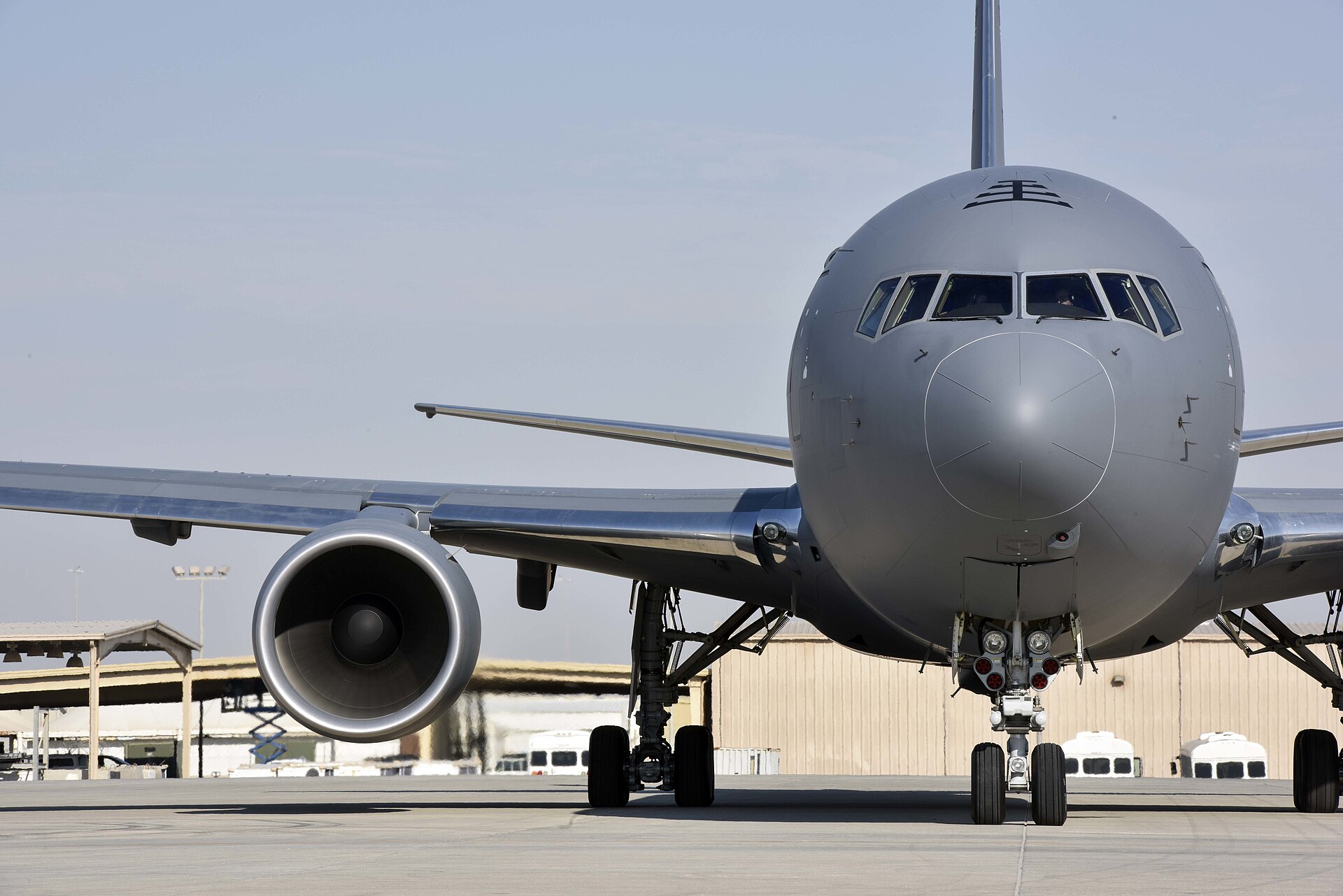
The $38 billion base investment was embedded within a $243.5 billion package that included Qatar Airways’ $96 billion order for up to 210 Boeing 787 Dreamliner and 777X aircraft — Boeing’s largest-ever widebody order, supporting an estimated 154,000 American jobs. The commercial and military components were announced together, in the same room, on the same day — not as separate transactions but as a single relationship.
The Leverage Math
Leverage in a basing relationship does not come from the base itself. It comes from the absence of alternatives.
The United States has moved its regional air command headquarters exactly once in three decades — from Prince Sultan Air Base in Saudi Arabia to Al Udeid in Qatar, between 2001 and 2003. The move happened because Saudi Arabia, under domestic political pressure after September 11, signaled that the American presence had become a liability. The Pentagon relocated not because Al Udeid was better, but because Saudi Arabia was no longer willing. It took two years.
There is nowhere to move now. The Iran war has made the question academic. CENTCOM cannot relocate its CAOC in the middle of a conflict. It cannot rebuild 17-nation sensor integration on a new timeline. It cannot reproduce the MEAD-CDOC’s intercept coordination architecture in a facility that does not yet exist. The dependency is operational, immediate, and — for the duration of hostilities — absolute.
Qatar’s $38 billion deepens this dependency by design. Every dollar spent hardening Al Udeid’s underground facilities makes the base more survivable, more capable, and more expensive to replicate elsewhere. SMP2040’s 170-plus projects create fourteen years of construction, integration, and institutional entanglement. By 2040, the sunk costs — financial, operational, and political — will make any discussion of alternatives a theoretical exercise.
Qatar is not buying protection. It is buying irreplaceability.
What Qatar Did Not Give Up
The $243.5 billion in deals came with no publicly reported political conditions.
Qatar expelled Hamas political bureau leaders in March 2026, after the group refused to condemn Iranian strikes on Qatari soil — including the Al Udeid radar hit. Senior leadership relocated to Turkey. But Qatar confirmed the Doha office was “not closed permanently.” The expulsion was a response to Hamas’s refusal to condemn an attack on Qatar, not a concession to Washington. The distinction is fine and intentional. The channel remains available if the political situation changes.
Qatar’s Iran mediation channel — the one that Doha has operated for months while Pakistan holds the formal mediator title — was not curtailed. On May 9, five days before Trump landed, Secretary of State Marco Rubio and Special Envoy Steve Witkoff flew to Miami to meet Qatar’s Prime Minister Mohammed bin Abdulrahman Al Thani directly to discuss the Iran war ceasefire framework. US officials told Axios that the Qataris were “especially effective in negotiations with Iran” — more so than Pakistan, which holds the official mediator designation. The Miami meeting was not disclosed in advance. It was disclosed afterward, and only to Axios. The sequencing — five days before the Trump visit — suggests the ceasefire framework, not the commercial deals, was the real agenda.
Two days before Trump arrived, on May 12, Prime Minister Al Thani stood beside Turkish Foreign Minister Hakan Fidan at a Doha press conference and warned Iran directly: “Iran should not use this strait as a weapon to pressure or to blackmail the Gulf countries.” Fidan reinforced the message: “Preventing the Strait of Hormuz from being used as a weapon is extremely important not only for regional security and stability but also for the global economy.” The statement gave Trump political cover — Qatar criticizing Iran on Hormuz before hosting the US president — without committing Qatar to any military formation, any coalition, or any operational role beyond the one it already fills.
Qatar did not join the US naval blockade that has restricted Iranian port access since April 13. It did not contribute ships, overflight clearance for strike missions, or public endorsement of kinetic operations. It did not sign the joint statement that accompanied Saudi Arabia’s MNNA designation. It hosts the war machine and mediates the peace. Both at once. On the same day.
Why Did Saudi Arabia Get Weapons While Qatar Got the War Machine?
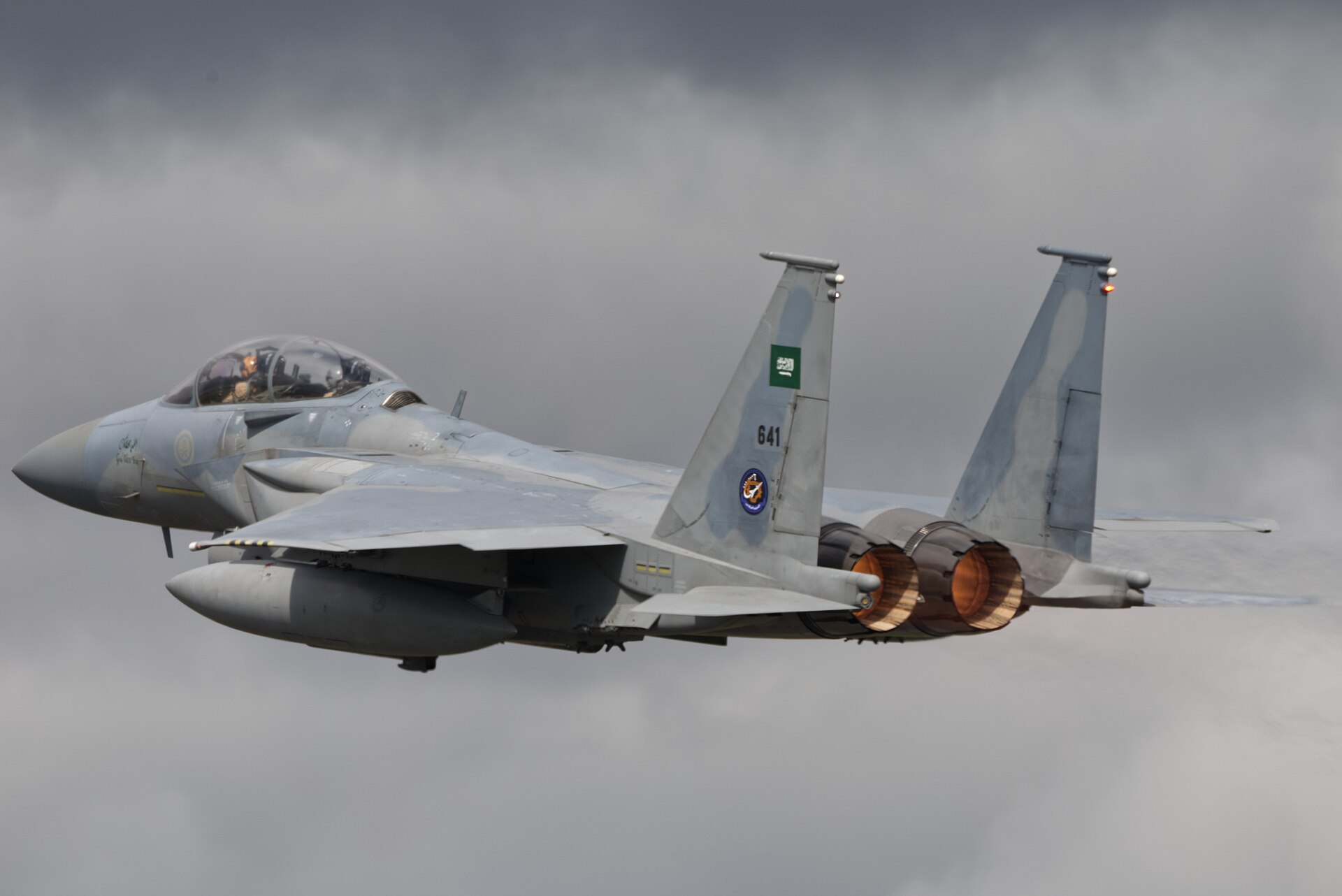
Saudi Arabia’s haul from the Trump Gulf tour was larger in dollar terms and louder in diplomatic staging. The $142 billion defense package — confirmed as the largest in US history — included advanced fighter aircraft, missile defense systems, and naval platforms. MNNA status, granted in November 2025, gives Saudi Arabia access to surplus US defense equipment, cooperative research programs, and expedited arms sales. MBS’s Washington team, according to Middle East Eye, explicitly framed the Saudi ask as “Qatar-plus” — a full defense guarantee exceeding what Qatar already receives.
The framing reveals the asymmetry it is meant to obscure. Saudi Arabia is asking for what Qatar already has. Not the legal designation — MNNA is a title — but the operational reality: the CAOC, the MEAD-CDOC, and the 17-nation air coordination architecture all sit in Qatar. Saudi Arabia received $142 billion in future capability. Qatar already provides present operational capacity.
Weapons require years to deliver, integrate, train on, and deploy. The first F-35s, if included in the Saudi package, will not reach operational readiness before 2030 at the earliest. PAC-3 interceptors, after the depletion documented during the war’s first ten weeks, need replenishment before they can be expanded. The Saudi defense architecture is a promissory note. Al Udeid is a functioning building with people inside it running a war right now.
There is a second asymmetry. Saudi Arabia needs the weapons because it has been hit — Ras Tanura, the East-West Pipeline pumping stations, Khurais, SAMREF Yanbu. Saudi production dropped from 10.4 million barrels per day in February to 7.25 million in March, a 30 percent decline the IEA called “the largest disruption on record.” Saudi Arabia is buying weapons to recover from a war being managed from Qatari soil. The dependency runs through Doha in both directions.
Bloomberg reported on May 13 that Pakistan signaled Turkey and Qatar may join the Saudi defense pact — suggesting the US-Saudi-centered security architecture is expanding to include Qatar on new terms. If Qatar joins, it does so not as a supplicant but as the landlord.
The 2017 Precedent Qatar Has Not Forgotten
On June 5, 2017, Saudi Arabia, the UAE, Bahrain, and Egypt severed diplomatic relations with Qatar, closed their airspace and borders, and imposed a naval blockade. The stated grievances included Qatar’s support for the Muslim Brotherhood, its hosting of Hamas, its relationship with Iran, and its funding of Al Jazeera. The unstated objective was to force Qatar to choose between its independent foreign policy and its security relationship with the United States.
Qatar chose both.
The Pentagon publicly confirmed within days that Al Udeid would remain open and operational. CENTCOM denied what it called “false reports” of any plan to leave the base. No alternative basing arrangement was publicly discussed, proposed, or developed. For three and a half years, Qatar maintained the most important US military installation in the Middle East while under economic siege by the country that had hosted the previous one.
The blockade taught Qatar two things. First, the base is not a vulnerability. Saudi Arabia assumed that threatening Qatar’s regional position would force concessions because Qatar’s security depended on Gulf solidarity. It did not. Qatar’s security depended on the 10,000 American personnel sitting on its territory, and those personnel were not leaving. Second, the United States will not choose between a base and an ally’s regional grievances. When forced to pick, the Pentagon picked the base.
Saudi Arabia lifted the blockade in January 2021, at the Al-Ula summit, having achieved none of its thirteen demands. Qatar had not closed Al Jazeera, downgraded its relationship with Iran, expelled Hamas, severed ties with Turkey, or paid reparations. Saudi Arabia’s coercive campaign failed, and the base — the reason it failed — remained.
The $38 billion expansion is the institutional memory of that lesson. Qatar is investing in the asset that saved it.
How Does Qatar Shape the Ceasefire Timeline?
The Iran war ceasefire is being negotiated on multiple tracks. Pakistan holds the formal mediator designation and hosted the Islamabad talks. The United States imposed a naval blockade on April 13 to apply coercive pressure. Saudi Arabia, despite its own air campaign against Iran, has maintained a parallel diplomatic channel through its foreign minister. Iran’s authorization ceiling — the gap between what President Pezeshkian can agree to and what the IRGC will accept — remains the structural obstacle.
Qatar operates behind all of these. Its Prime Minister met Rubio and Witkoff privately in Miami on May 9 to discuss the ceasefire framework. Qatar’s Emir spoke with Trump by phone on April 24, “stressing the need for de-escalation” and “affirming that Qatar would continue to support mediation efforts.”
Qatar does not need to threaten to close the base — the threat would not be credible, since Qatar needs Al Udeid as much as Washington does. The dependency runs in both directions. But Qatar can shape the diplomatic environment in which the base is used. If the ceasefire collapses after the April 22 expiration, if the IRGC’s Hormuz posture hardens, if the US escalates beyond the current blockade — every additional sortie, every missile defense intercept, every intelligence fusion product flows through Al Udeid. Qatar can accelerate or slow mediation. It can open or narrow the Iran channel. It can provide political cover for a deal, or withhold it.
A former Qatari prime minister told Al Jazeera on May 11 that “Netanyahu is using the Iran war to reshape the Middle East.” The framing was not accidental. Qatar’s position is that the war’s prolongation serves Israeli, not American, interests — and that a ceasefire serves everyone except those who benefit from regional destabilization. This framing gives Qatar diplomatic space to push for a faster timeline without appearing to side with Iran.
The expanding instability across the Gulf — from Kuwait’s Bubiyan infiltration incident to the ongoing Hormuz restrictions — reinforces Qatar’s argument that delay is its own form of escalation. Every week without a ceasefire framework is a week in which the conflict’s geographic scope can widen.
Iran’s Split Signal
Tehran’s treatment of Qatar reveals the compartmentalization that defines Iran’s war posture. The IRGC struck Al Udeid’s early-warning radar on March 3. PressTV listed the base as a named target in the 56th wave announcement on March 16. Iranian state media framed Qatar as a co-belligerent. At the doctrinal level, Iran treats Al Udeid as an enemy installation.
At the operational level, Iran treats Qatar’s economy as separately negotiable. QatarEnergy declared force majeure on LNG contracts after Iranian attacks damaged Ras Laffan in late March, knocking out an estimated two of fourteen LNG trains — roughly 14 percent of export capacity — with industry analysts estimating annualized revenue loss at roughly $20 billion. The damage was severe but selective. Iran did not target Qatar’s desalination infrastructure, its financial district, or its civilian population centers. The Ras Laffan strikes hit export capacity, not survival capacity.
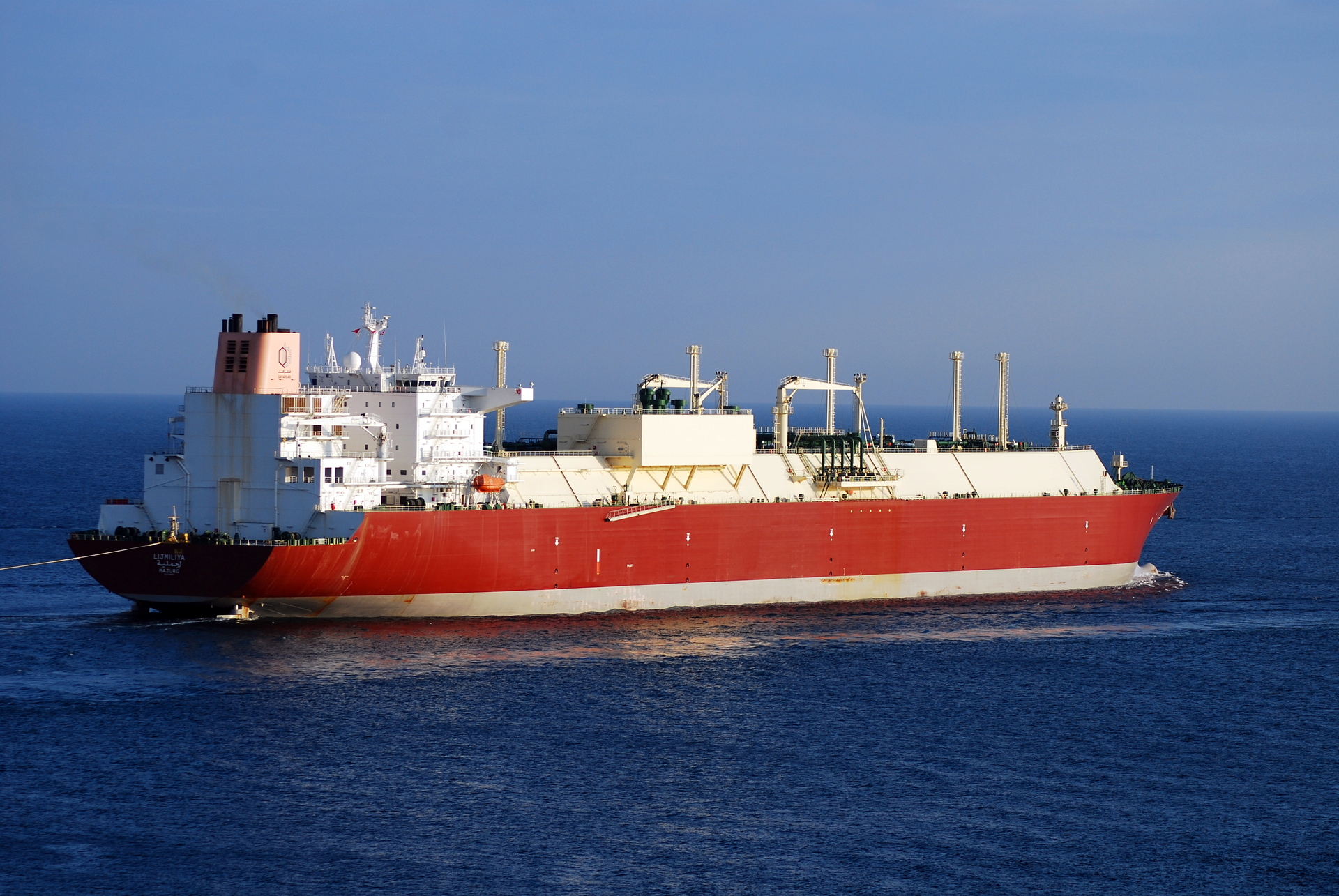
Around May 10, four days before Trump’s arrival, an Iranian-approved Qatari LNG tanker transited the Strait of Hormuz — the first laden Qatari passage in weeks. The transit was reported as a confidence-building gesture toward Qatar and Pakistan, both active mediators. Iran controls the choke point. It chose to open it for Qatar. The gesture cost Iran nothing operationally and signaled everything diplomatically: Doha’s mediation role has economic value that Tehran is willing to price.
The split signal — military strikes on the base, selective economic relief on the strait — is Iran’s way of maintaining pressure on the US military presence while preserving the diplomatic channel that runs through the same capital. It is incoherent only if you assume Iran has a single decision-maker. It is perfectly coherent if you understand that the IRGC targets Al Udeid because it is a military facility, and the Foreign Ministry approves LNG transits because Qatar’s mediation is the closest thing Iran has to a diplomatic exit.
Ynet News published an op-ed framing this duality as a scandal — “Iran crippled Al Udeid Radar on Qatari Soil — same Qatar that hosts Hamas leaders, funds war on Israel.” The Israeli frustration is that Qatar suffers no consequence for occupying both positions simultaneously. Qatar has structured its position so that the contradiction is, for everyone who matters, a feature.
Frequently Asked Questions
Could the US move its operations from Al Udeid to another base?
Theoretically, yes — the US relocated from Prince Sultan Air Base in Saudi Arabia to Al Udeid between 2001 and 2003, a process that took two years during peacetime. During an active conflict, the timeline would stretch far beyond that. The CAOC’s 17-nation sensor integration, the MEAD-CDOC’s missile defense coordination cell (stood up January 2026), and the physical infrastructure — including the AN/FPS-132 radar network and hardened aircraft shelters — represent decades of accumulated integration that cannot be replicated by moving equipment to a new location. The US Army Corps of Engineers’ March 2026 solicitation for underground hardened facilities at Al Udeid, with construction not expected until 2028, signals that the Pentagon is planning for permanence, not contingency relocation.
What is Qatar’s relationship with Iran given the North Field/South Pars shared gas reservoir?
Qatar and Iran share the world’s largest natural gas field — called North Field on the Qatari side and South Pars on the Iranian side. This geological fact creates a structural economic interdependence that has no parallel in any other Gulf state’s relationship with Tehran. Qatar’s LNG industry, which generates the revenue funding the Al Udeid expansion, depends on a reservoir that Iran can access from its side of the maritime boundary. This shared resource is one reason Qatar has historically maintained diplomatic channels with Iran even when other Gulf states severed theirs, and why Iran’s May 10, 2026 decision to approve a Qatari LNG tanker transit carried weight beyond the single cargo — it signaled that Iran views Qatar’s resource interests as distinct from the military operations hosted on Qatari soil.
How does the $96 billion Boeing order relate to Qatar’s strategic positioning?
Qatar Airways’ order for up to 210 Boeing widebody aircraft — the largest 787 order and largest widebody order in Boeing’s history — was announced alongside the Al Udeid expansion as a single $243.5 billion package. The 154,000 American jobs the order supports create a domestic political constituency in the United States that is directly invested in the US-Qatar relationship’s stability. Boeing’s commercial division has struggled with production delays and safety scrutiny since 2019; a $96 billion lifeline from a Gulf ally reinforces Qatar’s position not just with the Pentagon but with Congress, labor unions, and the manufacturing states where those jobs are located. The commercial order functions as political insurance for the military relationship.
Did Qatar make any political concessions during the Trump visit?
No publicly reported political conditions accompanied the deal package. Qatar did not join the US naval blockade of Iranian ports, did not contribute forces to any coalition military formation, and did not sign the joint statement accompanying Saudi Arabia’s MNNA designation. Qatar continued operating its Iran mediation channel through and after the visit. The comparison point is instructive: the 2017 Saudi-led blockade lasted three and a half years and ended with Qatar conceding none of thirteen demands. Qatar entered the Trump visit with the same institutional memory and the same leverage logic — the base is worth more than any demand placed on its host.
What happened to Al Udeid during the 2017 Qatar blockade?
When Saudi Arabia, the UAE, Bahrain, and Egypt severed relations with Qatar on June 5, 2017, the Pentagon confirmed within days that Al Udeid would remain fully operational. CENTCOM denied reports of any relocation plan. For three and a half years, Qatar maintained the most important US military installation in the Middle East while under economic siege from the country that had previously hosted it. The episode produced a notable legal outcome: the US-Qatar Defense Cooperation Agreement, originally signed in 1992 and expanded in 2013, was never invoked or renegotiated despite the blockade — demonstrating that the basing relationship operates independently of Gulf political dynamics. Saudi Arabia’s thirteen demands included closing Al Jazeera, severing ties with Turkey, and downgrading relations with Iran. Qatar declined all of them. The base stayed.