WASHINGTON — The United States fired more than 850 Tomahawk cruise missiles during Operation Epic Fury, burned through roughly 80 percent of its global JASSM-ER inventory, and expended up to 80 percent of its THAAD interceptors — and now Donald Trump is publicly deliberating whether to resume major combat against Iran. The arsenal that made the first campaign possible no longer exists in the quantities required to repeat it, a fact the Pentagon’s own leadership has acknowledged under oath and then attempted to deny in the same news cycle.
Trump declared on May 11 that the ceasefire is on “massive life support” and called Iran’s latest proposal a “piece of garbage.” CNN reported the following day that his aides say he is “more seriously considering” resumption of major combat operations. But the coercive architecture behind that threat rests on two foundations that have both cracked in the past week: munitions stockpiles that senior US senators describe as “depleted,” and Saudi basing access that Riyadh withdrew in early May after Trump announced Project Freedom on social media without coordinating with his hosts. The question that matters is not whether Trump wants to strike Iran again — it is whether the IRGC believes he materially can.
Table of Contents
- What Did Epic Fury Actually Cost the US Arsenal?
- The Williams International Problem
- Does Iran Believe the Threat Is Executable?
- Saudi Arabia’s Repeatable Veto
- How Long Would Replenishment Actually Take?
- The Carrier-Only Problem
- Hegseth’s Two Sentences
- What Does the IRGC See When It Looks at the Stockpile?
- The 30 Percent That Remains
- Frequently Asked Questions
What Did Epic Fury Actually Cost the US Arsenal?
Operation Epic Fury launched on February 28, 2026, and ran for 66 days before Secretary of State Marco Rubio declared it terminated on May 5. In the first 96 hours alone, the US and Israel fired over 5,000 munitions. The Pentagon spent approximately $24 to $25 billion worth of major munitions in the first seven weeks — a burn rate that no production line in the US defense industrial base was designed to sustain, and that none can now reverse on any timeline shorter than years.
The CSIS International Security Program, in its April 24 assessment “Last Rounds? Status of Key Munitions at the Iran War Ceasefire,” laid out the damage in granular detail. The US expended at least 45 percent of its Precision Strike Missiles, at least 50 percent of its THAAD interceptors, and nearly 50 percent of its Patriot interceptors. Roughly 80 percent of the extended-range JASSM-ER variant was gone, alongside more than 20 percent of the shorter-range base JASSM. Mark Cancian, the senior CSIS adviser who co-authored the report, was direct about the implication: the number of critical munitions remaining “is no longer sufficient to confront a near-peer adversary, like China.”
That assessment was published three weeks ago. Since then, nothing has been replenished — because nothing can be, at the production rates that currently exist. The 400 Tomahawks fired in the first 71 hours of Epic Fury alone exceed what Raytheon Technologies produced in an entire year before the war. The roughly 1,100 JASSM-ERs expended represent nearly four years of output at the pre-war production rate. These are not numbers that surge contracts and emergency appropriations can fix on a timeline relevant to Trump’s current deliberation.
| Munition | Estimated Expended | % of Pre-War Stock | Current Production/Year | Years to Replace (at current rate) |
|---|---|---|---|---|
| Tomahawk (TLAM) | 850+ | ~30% | ~450 | 1.9+ |
| JASSM-ER | ~1,100 | ~80% | ~1,000 (target) | 1.1+ (at target rate) |
| THAAD Interceptors | 198–290 | 55–80%+ | 96 | 2.1–3.0 |
| PAC-3 (Patriot) | 402+ | ~50% | 600 | 0.7+ (replacement only) |
| PrSM | Classified | 45%+ | Limited (new program) | Unknown |
The Williams International Problem
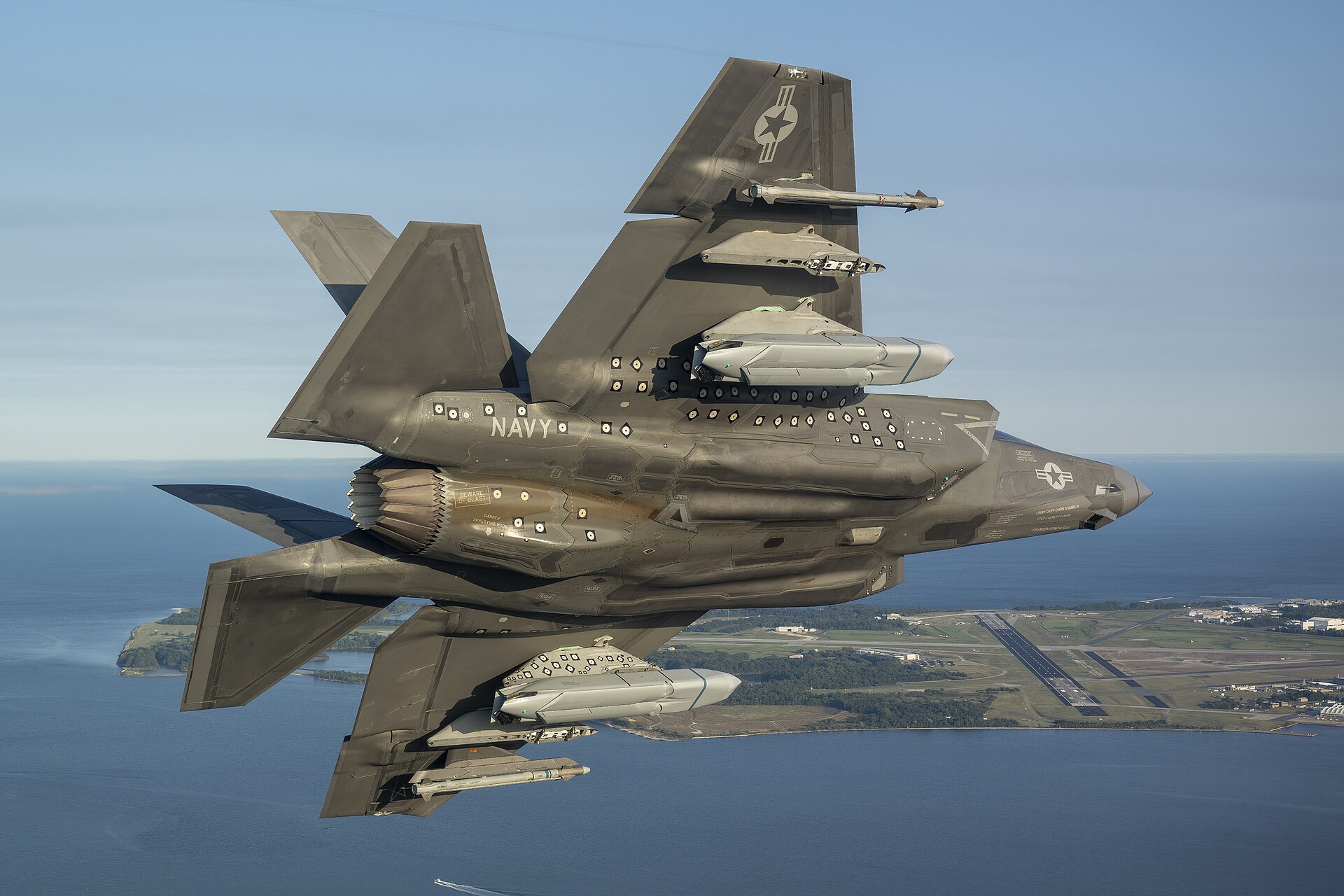
The production constraint that binds every offensive timeline is not money or political will — it is a single factory in Pontiac, Michigan. Williams International is the sole-source supplier of the F107 turbofan engine family that powers four of the most critical weapons in the US precision-strike arsenal simultaneously: the Tomahawk, JASSM, JASSM-ER, and LRASM. Every one of those missiles runs on some variant of the same engine built by the same workforce in the same facility. The Department of Defense awarded Williams a $253.7 million sole-source contract to ramp production, but the operative word is sole-source — there is no second supplier, no parallel line, and no rapid path to creating one.
The Middle East briefing 3,000+ readers start their day with.
One email. Every weekday morning. Free.
Even after the planned expansion, JASSM production is projected at approximately 1,000 units per year — roughly 19 per week. The Air Force has ordered 4,300 new JASSMs post-war to begin reconstituting its stockpile; at 1,000 per year, fulfilling that single order takes more than four years. The Air Force’s stated total requirement is approximately 11,000 JASSMs. The current global inventory across all users stands at roughly 425 rounds — about 4 percent of the stated need. When Trump’s aides discuss resumed combat, they are discussing it against an industrial reality in which the weapon that did the most damage during Epic Fury is available in quantities that would be exhausted in days, not weeks.
Japan has already learned what the bottleneck means in practice. Tokyo contracted for 400 Tomahawks before the war; it has been told those deliveries may be delayed indefinitely because the same production capacity must now prioritize US replenishment. The diplomatic consequences of the shortfall are already materializing before any second round of combat begins — allies who bet on US munitions availability are discovering that the commitment was denominated in production slots that no longer exist on any near-term schedule.
Does Iran Believe the Threat Is Executable?
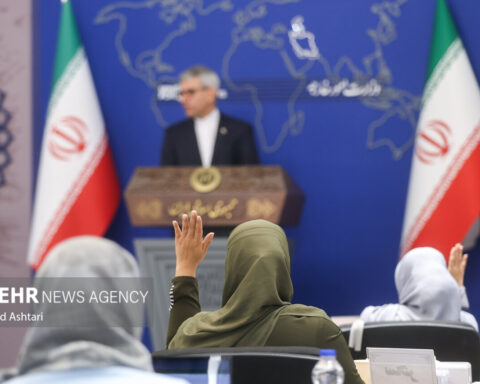
The load-bearing question in any coercive framework is not whether the threat is intended but whether the target believes it can be carried out. On May 11 — the same day Trump called the ceasefire “massive life support” — Iran’s Parliament Speaker Mohammad Bagher Ghalibaf said publicly that Iran is “prepared for every option” and that the country’s armed forces are ready to deliver a “lesson-teaching” response to any aggression, adding: “They will be surprised.” The statement contained no defensive hedging, no diplomatic softening, and no reference to concern about US capabilities. It was the language of a military establishment that has done its arithmetic and likes the answer.
Ghalibaf’s confidence echoes a pattern that has hardened since the ceasefire. Mohsen Rezaei, a senior IRGC figure on the Expediency Discernment Council, declared in April that Trump was “ultimately forced to accept Iran’s 10-point plan as the basis for negotiations.” The Armed Forces General Staff, operating through the three-man veto on any Iran deal at Khatam al-Anbiya Central Headquarters, announced publicly that they “remain hand on the trigger” following what they described as the “defeat” of US and Israeli forces. This is the posture of victors granting a pause — not a defeated party seeking relief.
The critical tell is what is absent from the Iranian messaging. Historically, when Tehran’s military establishment genuinely fears a specific US capability, public statements telegraph that anxiety through either deterrence threats calibrated to the system in question or diplomatic signals designed to forestall its use. Neither is present. The IRGC’s creation of the Persian Gulf Strait Authority on May 5 — institutionalizing Hormuz tolls as permanent post-conflict infrastructure through maritime rules designed to outlast the MOU — is not the behavior of an organization bracing for a second round of strikes. It is the behavior of one that has concluded the second round is not coming, or that if it does, it will be a diminished version of the first.
Saudi Arabia’s Repeatable Veto
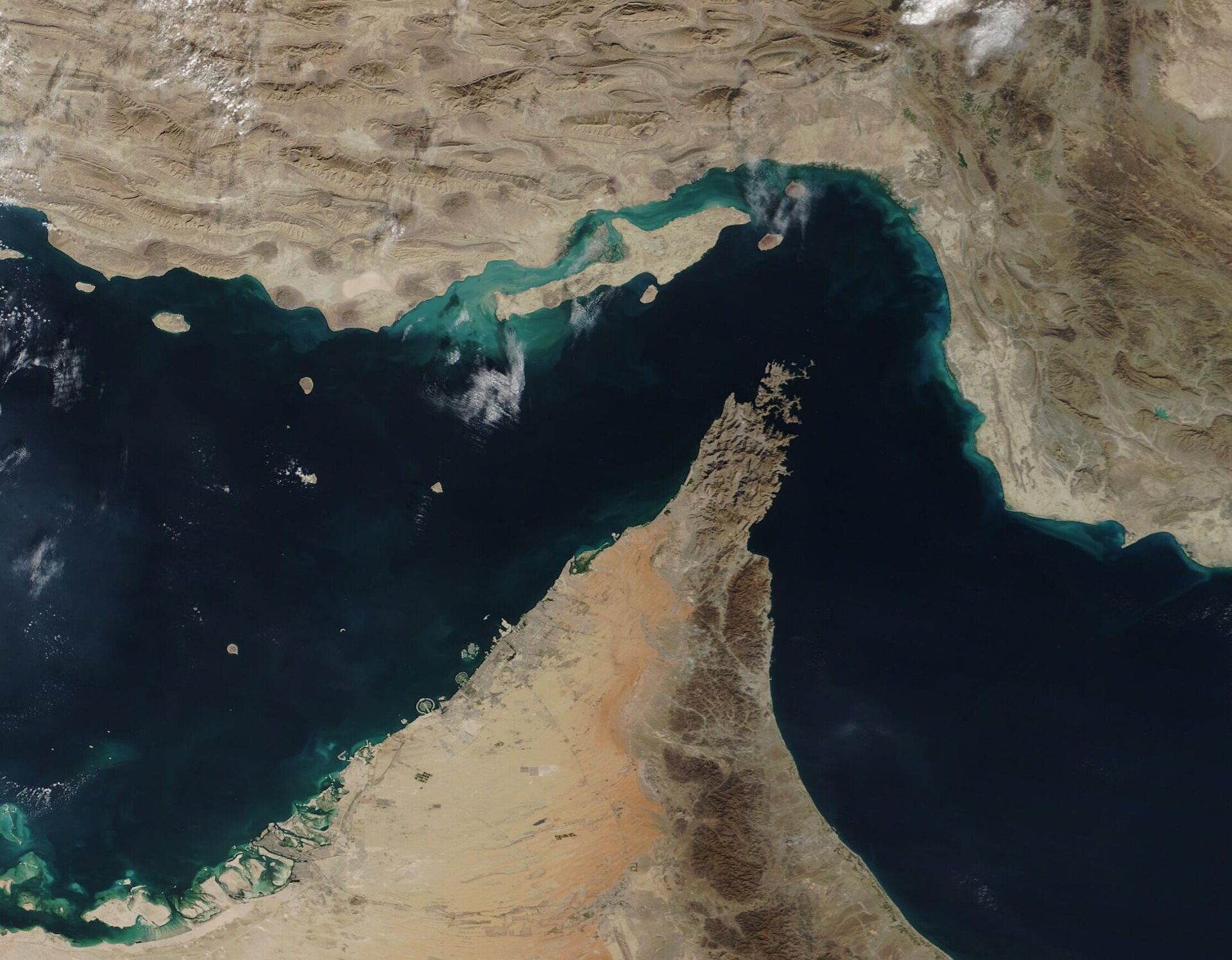
On May 5 through 7, Saudi Arabia denied the United States use of Prince Sultan Air Base and Saudi airspace for Project Freedom — the Hormuz escort operation Trump announced on social media. Kuwait simultaneously withdrew overflight rights. Project Freedom collapsed not from Iranian firepower but from Gulf partner withdrawal, and the mechanism that killed it is now a demonstrated, repeatable veto that Tehran has watched execute in real time.
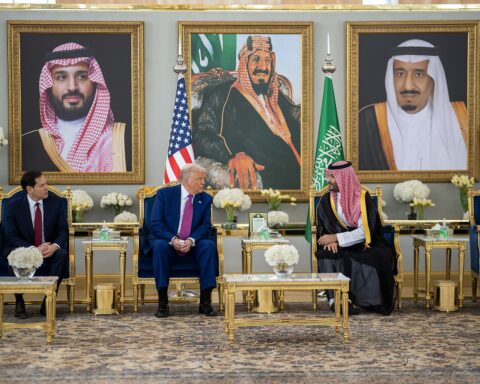
The sequence is worth reconstructing because it reveals a structural dependency the US cannot route around. Trump announced the operation publicly without advance coordination with Riyadh, per NBC News reporting. The announcement created an immediate Iranian retaliation risk against any host facility. Saudi Arabia, whose Prince Sultan Air Base had already been struck by Iranian ballistic missiles on March 27-28 — damaging KC-135 tankers and injuring at least 15 US personnel — withdrew access to protect infrastructure that was already degraded.
One US official told NBC News that “Saudi and Jordanian basing, Kuwaiti overflight rights and Omani naval logistics are operationally irreplaceable for Gulf operations.” A Saudi source told the same outlet that the Kingdom was “very supportive of the diplomatic efforts” by Pakistan — a polite way of saying it had chosen Islamabad’s mediation track over Washington’s military one.
The base denial did more than ground Project Freedom. It exposed a geometric reality: without land-based tanker support from Prince Sultan, carrier-based F/A-18s operating from the Gulf of Oman face severely constrained combat radius. The satellite imagery that confirmed at least 13 KC-135 tankers at Prince Sultan before the war also confirmed that those tankers were the combat radius extenders for any Gulf operation. The Red Sea has become Saudi Arabia’s front door — and Riyadh is not opening it for US strike operations that Tehran will punish. The security architecture MBS is building around Washington serves Saudi strategic autonomy, not American operational convenience.
“Saudi and Jordanian basing, Kuwaiti overflight rights and Omani naval logistics are operationally irreplaceable for Gulf operations.”— US official, NBC News, May 2026
How Long Would Replenishment Actually Take?
Mark Cancian’s CSIS assessment is the most authoritative public accounting of the replenishment timeline, and the numbers are unambiguous. “It will take one to four years to replenish these inventories and several years after that to expand them to where they need to be,” Cancian wrote. The range is wide because it depends on which munition you are counting and whether production-rate expansion targets are met — targets that assume supply chains, workforces, and subcontractor networks that do not currently exist at the required scale.
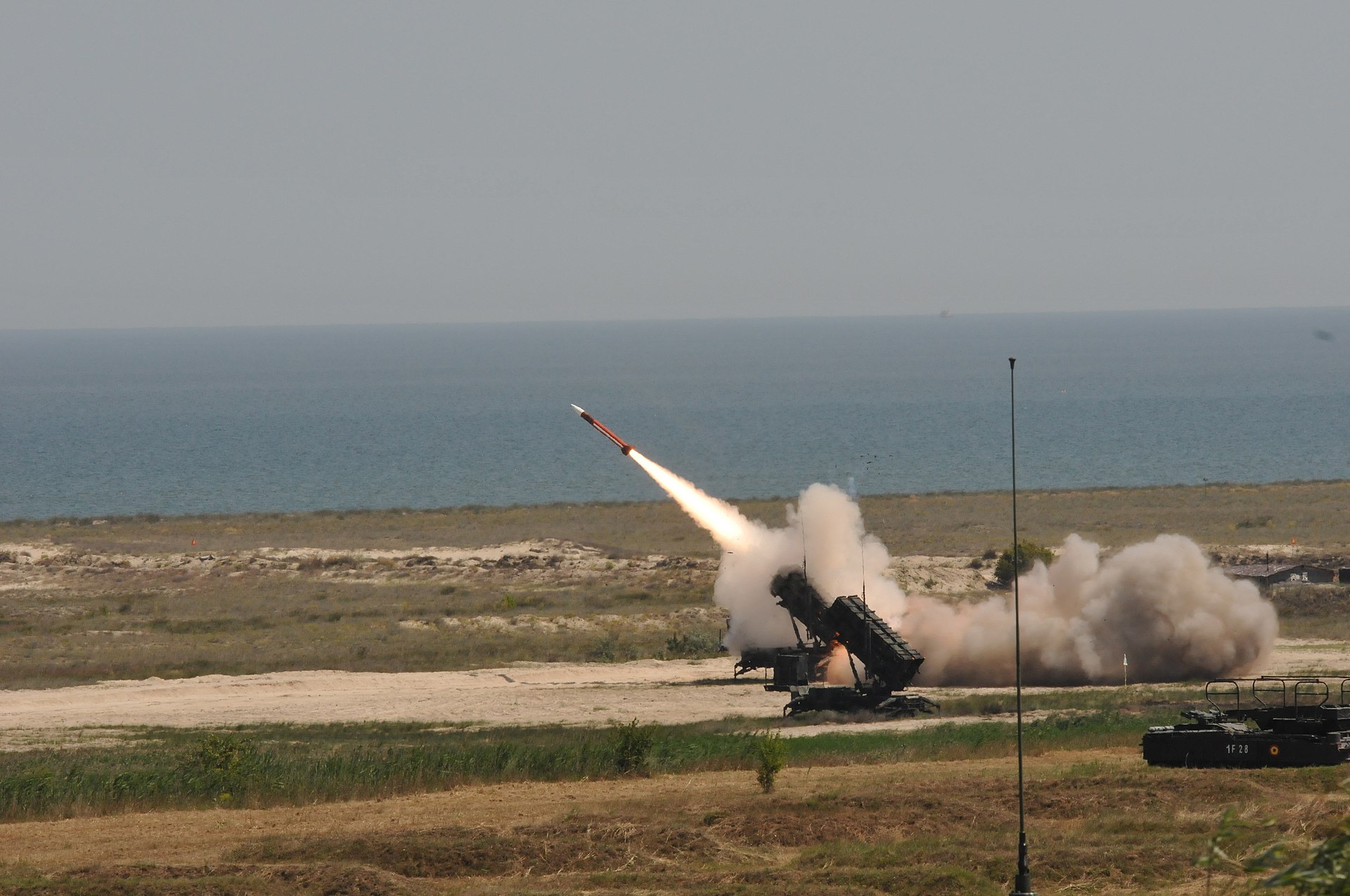
Take THAAD interceptors, the system that defended US and allied positions against Iranian ballistic missiles throughout the campaign. The Payne Institute estimates the US fired 198 in the first 16 days alone; CSIS’s upper bound is that as many as 290 of an estimated 360 pre-war interceptors may have been expended — potentially exceeding 80 percent of the inventory. Lockheed Martin’s current production rate is approximately 96 interceptors per year. A planned expansion to 400 per year exists on paper under a new DOD framework agreement, but at the current actual rate, replacing even the low-end estimate of 198 expended rounds takes over two years. At the high-end estimate, the math is three years before the US returns to where it started on the day the first missile was fired.
RTX has committed to increasing annual Tomahawk production to more than 1,000 units under a Trump administration framework agreement, up from the pre-war rate of approximately 450. But framework agreements are aspirational documents, not production lines. The Patriot situation is marginally better — current production runs at 600 PAC-3 interceptors per year, with a target of 2,000 per year in seven years. The first new DSCA tranche of 730 rounds has an earliest delivery date of mid-2027. Seven years from now, the production base might be adequate. Seven weeks from now — the timeline on which Trump is deliberating — it is what it is.
The Carrier-Only Problem
With Saudi basing denied and Prince Sultan degraded, the US force posture for any resumed campaign collapses to a carrier-centric model. As of May 11, satellite imagery and open-source tracking confirmed that only two carrier strike groups remain enforcing the blockade — down from three. The War Zone reported the pull-back after the Hormuz gunboat incident on May 7, and the reduction is itself a signal, whether intended as one or not.
Two carriers can project considerable force, but they cannot replicate what a combined land-and-sea architecture delivered during Epic Fury. Carrier-based F/A-18 Super Hornets operating without KC-135 tanker support from Prince Sultan have a combat radius roughly half of what they achieved during the first campaign. The sorties are shorter, the loiter time is compressed, and the weapons load per sortie drops because fuel eats into payload. The Quwa defense analysis published in April made the structural argument explicitly: carrier-only strike packages burn through naval precision-strike inventory faster because each sortie delivers less ordnance per cycle, requiring more cycles to achieve the same effect — cycles that consume munitions the fleet does not have in surplus.
The IRGC does not need classified satellite imagery to reach this conclusion. The carrier pull-back is visible on commercial tracking platforms. The Saudi base denial was reported by NBC News and the Algemeiner. The Williams International bottleneck has been covered by Aviation Week and Army Recognition. The CSIS report is public. Every element of the US stockpile constraint is available to any Iranian analyst with a browser and a spreadsheet, and the IRGC’s intelligence apparatus has access to considerably more than that.
Hegseth’s Two Sentences
Defense Secretary Pete Hegseth produced a remarkable piece of political semaphore during Senate testimony on May 11. He told the Armed Services Committee that it could take “months and years” to replace US munitions used in the Iran war — an acknowledgment, under oath, that the arsenal is not combat-ready for a second campaign. He then publicly denied that the munitions situation is “shocking” and called for a Pentagon investigation of Senator Mark Kelly for discussing what Hegseth himself had just confirmed.
Kelly, a Democrat from Arizona and a member of the Senate Armed Services Committee briefed on classified stockpile data, had stated bluntly: “Munitions are depleted.” He added that when it comes to replenishment, “we’re talking about years.” Hegseth’s response — investigate the senator for saying out loud what the secretary said under oath — tells you everything about the administration’s relationship to its own stockpile reality. The threat is real, but the weapon behind it is not, and the people responsible for maintaining the fiction are turning on each other over who said it first. The deeper strategic consequence — how Riyadh read Hegseth’s May 12 testimony and what it means for Saudi Arabia’s independent defence build — is examined in detail in Hegseth Told Congress Munitions Shortages Are Overstated. Saudi Arabia Stopped Listening and Started Building.
PolitiFact had already fact-checked Trump’s claim from early March 2026 that the US has a “virtually unlimited supply” of munitions — rating it false, with defense analysts confirming production constraints even then, before Epic Fury had consumed the bulk of the inventory. The American Enterprise Institute published “Running on Empty: America’s Depleted Weapons Stocks in the Iran War Are a Strategic Red Flag” on May 11, the same day Trump called the ceasefire “massive life support.” The Small Wars Journal ran “The U.S. Munitions Problem (Part 1)” on the same date. The analytical consensus is not a debate — it is a pile-on, with think tanks across the ideological spectrum reaching identical conclusions about a stockpile situation the administration simultaneously acknowledges and denies.
“Munitions are depleted. When it comes to replenishment, we’re talking about years.”— Senator Mark Kelly (D-AZ), Senate Armed Services Committee, May 10, 2026
What Does the IRGC See When It Looks at the Stockpile?
The IRGC
The IRGC’s post-ceasefire behavior is the most reliable indicator of its internal threat assessment, and that behavior is uniformly consistent with an organization that has priced in the US munitions ceiling. The creation of the Persian Gulf Strait Authority on May 5 — the same week Saudi Arabia denied Prince Sultan to the US — institutionalizes Hormuz tolls as permanent sovereign infrastructure. You do not build permanent bureaucracies around assets you expect to lose in a second round of bombing. Iran has effectively declared Hormuz its nuclear deterrent — a strategic asset whose value increases precisely because the US capacity to reverse it by force has diminished.
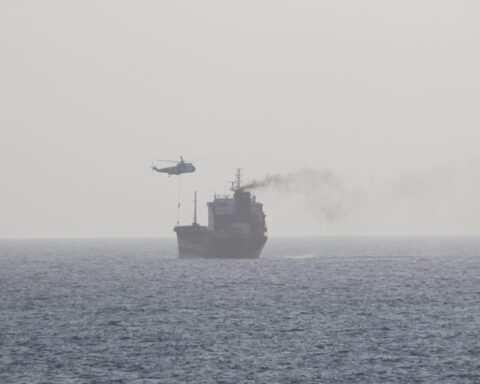
#8217;s post-ceasefire behavior is the most reliable indicator of its internal threat assessment, and that behavior is uniformly consistent with an organization that has priced in the US munitions ceiling. The creation of the Persian Gulf Strait Authority on May 5 — the same week Saudi Arabia denied Prince Sultan to the US — institutionalizes Hormuz tolls as permanent sovereign infrastructure. You do not build permanent bureaucracies around assets you expect to lose in a second round of bombing. Iran has effectively declared Hormuz its nuclear deterrent — a strategic asset whose value increases precisely because the US capacity to reverse it by force has diminished. On May 14, the IRGC demonstrated that posture operationally: Iranian forces seized a vessel 38 nautical miles from Fujairah while Trump and Xi were simultaneously declaring in Beijing that Hormuz
The IRGC’s post-ceasefire behavior is the most reliable indicator of its internal threat assessment, and that behavior is uniformly consistent with an organization that has priced in the US munitions ceiling. The creation of the Persian Gulf Strait Authority on May 5 — the same week Saudi Arabia denied Prince Sultan to the US — institutionalizes Hormuz tolls as permanent sovereign infrastructure. You do not build permanent bureaucracies around assets you expect to lose in a second round of bombing. Iran has effectively declared Hormuz its nuclear deterrent — a strategic asset whose value increases precisely because the US capacity to reverse it by force has diminished.
#8220;must remain open
The IRGC’s post-ceasefire behavior is the most reliable indicator of its internal threat assessment, and that behavior is uniformly consistent with an organization that has priced in the US munitions ceiling. The creation of the Persian Gulf Strait Authority on May 5 — the same week Saudi Arabia denied Prince Sultan to the US — institutionalizes Hormuz tolls as permanent sovereign infrastructure. You do not build permanent bureaucracies around assets you expect to lose in a second round of bombing. Iran has effectively declared Hormuz its nuclear deterrent — a strategic asset whose value increases precisely because the US capacity to reverse it by force has diminished.
#8221; — a direct and timed rebuttal to the summit
The IRGC’s post-ceasefire behavior is the most reliable indicator of its internal threat assessment, and that behavior is uniformly consistent with an organization that has priced in the US munitions ceiling. The creation of the Persian Gulf Strait Authority on May 5 — the same week Saudi Arabia denied Prince Sultan to the US — institutionalizes Hormuz tolls as permanent sovereign infrastructure. You do not build permanent bureaucracies around assets you expect to lose in a second round of bombing. Iran has effectively declared Hormuz its nuclear deterrent — a strategic asset whose value increases precisely because the US capacity to reverse it by force has diminished.
#8217;s central claim.
How Saudi Arabia and the UAE executed their own independent strikes on Iranian territory during the same ceasefire window — while Riyadh simultaneously blocked US military operations — is documented in Operation Epic Fury: Saudi Arabia Was Bombing Iran While Calling for Peace.
Reuters reported in late April that the IRGC has effectively seized power in Iran following Khamenei’s severe burn injuries, with Euronews confirming the “IRGC tightens grip on power as civilian leadership sidelined.” This is not a military establishment retreating into defensive posture under threat of renewed US strikes. It is one consolidating domestic political control on the assumption that the external military threat has peaked and is now declining. The institutional confidence required to marginalize the civilian government — and to do so openly, in the middle of what Trump insists is an active conflict — only makes sense if the IRGC’s assessment is that the second strike, if it comes, will be materially weaker than the first.
Trump himself provided the IRGC’s best evidence when he estimated that “roughly 70 percent of America’s targets inside the Islamic Republic had been hit.” The remaining 30 percent are the hardest targets — the ones that survived 66 days and the campaign’s full munitions expenditure precisely because they are the most deeply buried, most heavily defended, or most difficult to reach. US intelligence assessed, per Military Times, that resumed combat operations would do “little additional damage” to Iran’s nuclear program because the roughly 440 kilograms of 60 percent-enriched uranium Iran holds sits in underground facilities US munitions cannot reach. The IRGC does not need to guess about the ceiling — Washington’s own intelligence community has named it.
The 30 Percent That Remains
The arithmetic of resumed combat is worse than the stockpile numbers alone suggest, because the operational conditions have deteriorated on every axis simultaneously. The munitions are depleted, the Saudi basing denied, the carrier force reduced, and the tanker fleet degraded — while the targets that remain are precisely those that resisted 66 days of the most intensive US air campaign since the 2003 invasion of Iraq. The production bottleneck is structural and sole-sourced.
Trump’s deliberation is real — CNN’s sourcing on the “more seriously considering” framing comes from aides, plural, suggesting a genuine policy discussion rather than a trial balloon. But the coercive value of the deliberation depends entirely on whether Tehran believes the threat is backed by capability, and every public data point available to the IRGC says it is not. The Algemeiner captured the Saudi dimension precisely: “Saudi Arabia Decided Washington Isn’t Worth the Risk.” That decision was not a one-time event — it was the revelation of a structural veto that exists as long as Iranian ballistic missiles can reach Saudi infrastructure, which is to say permanently.
The IRGC’s confidence may prove to be miscalculated — the US retains substantial naval and air power even in a depleted state, and Trump’s unpredictability is itself a form of deterrence that defies rational-actor modeling. But the entire coercive architecture of “resumed combat” as a negotiating lever requires the target to believe the lever works. Hegseth told the Senate it would take months and years. Cancian told CSIS it would take one to four years. Kelly told Washington it is depleted. The IRGC heard all three, and its behavior since — seizing domestic power, institutionalizing Hormuz, and speaking in the language of victors — suggests it reached its conclusion before any of them said a word.
| Capability | Epic Fury (Feb–May 2026) | Current (May 12, 2026) | Operational Impact |
|---|---|---|---|
| Carrier Strike Groups | 3 | 2 | ~33% reduction in sortie generation |
| Prince Sultan Air Base | Operational (degraded from March 28) | Access denied by Saudi Arabia | No land-based tanker/fighter support |
| KC-135 Tanker Support | 13+ at PSAB | Unavailable (base denied) | F/A-18 combat radius cut ~50% |
| Kuwait Overflight | Available | Withdrawn | Northern approach routes closed |
| JASSM-ER Global Stock | ~1,500+ | ~425 | Days of intensive use, not weeks |
| THAAD Interceptors | ~360 | 70–162 (est.) | Defensive umbrella severely thinned |
Frequently Asked Questions
Why can’t the US simply surge munitions production to close the gap before resuming combat?
Surge production requires workforce expansion, subcontractor ramp-up, and supply chain scaling that take 18 to 36 months even under emergency procurement authorities. The Williams International bottleneck is particularly binding because the same engine family powers four different critical weapons systems — Tomahawk, JASSM, JASSM-ER, and LRASM — meaning any increase in one comes at the expense of the others unless total engine output rises first. The $253.7 million sole-source contract awarded to Williams is a down payment on expansion that will not deliver meaningful additional capacity until 2028 at the earliest, according to Aviation Week reporting on the firm’s own workforce and facility constraints.
Could the US use B-2 stealth bombers from Diego Garcia or CONUS to bypass the Saudi basing problem?
B-2s flying from Whiteman Air Force Base in Missouri or Diego Garcia can reach Iranian targets without Saudi overflight, but the sortie generation rate for 20 airframes — of which typically 12 to 16 are mission-capable at any given time — cannot substitute for the volume that carrier-based and land-based tactical aviation provided during Epic Fury. B-2 missions from CONUS require 30-plus-hour round trips with multiple aerial refueling cycles, each of which consumes tanker capacity that is itself constrained. The B-2 is a scalpel; Epic Fury required a sledgehammer.
Has the IRGC’s own arsenal been similarly depleted by the war?
Iran’s ballistic missile and drone inventory was heavily drawn down during the conflict — CSIS estimated Iran fired over 2,800 systems at UAE targets alone — but Tehran’s replenishment calculus is structurally different. Iranian missiles and drones are produced domestically at costs one to two orders of magnitude below US equivalents, using supply chains that are not dependent on a single sole-source Western subcontractor. The Shahid Bagheri Industrial Group, which produces the Fateh and Emad missile families, operates multiple dispersed production facilities that were specifically designed to survive air attack. Iran’s per-unit replacement cost for a Shahed-136 drone is estimated at $20,000 to $50,000; a single Tomahawk costs approximately $2 million.
What is the China dimension of the US munitions shortfall?
Fortune reported on April 30 that several critical munitions components depend on rare-earth materials and specialty alloys sourced from or processed in China, creating what the headline called a requirement for “Beijing’s permission to reload.” CSIS’s Cancian was explicit that the stockpile depletion has “created a window of increased vulnerability in the western Pacific” — meaning the Iran war has directly weakened US deterrence posture against China in the Taiwan Strait. Any munitions allocated to a resumed Iran campaign would deepen the Pacific deficit further, a trade-off that the Pentagon’s own planning documents identify as strategically unacceptable.
Is there precedent for the US fighting a major campaign with a depleted stockpile?
The closest parallel is the 2011 Libya intervention, when NATO allies exhausted their precision-guided munition stocks within weeks and had to be resupplied by the United States. The US itself has not fought a sustained air campaign from a position of acknowledged depletion since the Korean War’s early months, when Far East Air Forces flew interdiction missions with World War II-era munitions because jet-age stocks had not been procured in sufficient quantities. The difference now is that the depletion is public knowledge — confirmed by CSIS, the AEI, the Senate Armed Services Committee, and the Secretary of Defense himself — and the adversary has access to the same open-source reporting.
An ISW assessment published May 13, 2026 adds a further dimension to the arsenal constraint: Iran has already priced in the economic damage and restored 30 of its 33 Hormuz missile sites during the ceasefire period, indicating Tehran perceives it holds the upper hand in resumed-hostilities scenarios — making the coercive logic of additional strikes even harder to sustain against an adversary that believes it is winning.