KUWAIT CITY — Kuwait summoned Iran’s ambassador on May 13 to deliver a formal protest over the armed infiltration of Bubiyan Island by six IRGC Navy officers, invoking Article 51 of the UN Charter and UN Security Council Resolution 2817 — but chose a bilateral diplomatic channel rather than convening a GCC emergency session or escalating to a multilateral crisis framework.
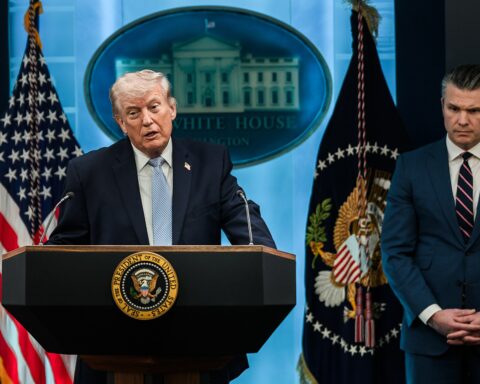
Deputy Foreign Minister Hamad Suleiman Al Mashaan handed Iranian Ambassador Mohammad Toutounji the protest note at the Ministry of Foreign Affairs, condemning the May 1 operation as a “flagrant violation” of Kuwaiti sovereignty and a “grave breach” of international law. The summons landed on the same day President Donald Trump arrived in Beijing for his summit with Chinese President Xi Jinping, where Iran dominates the agenda — and where Beijing has said nothing about an IRGC operation targeting an island that hosts a $4.1 billion Chinese-built port.
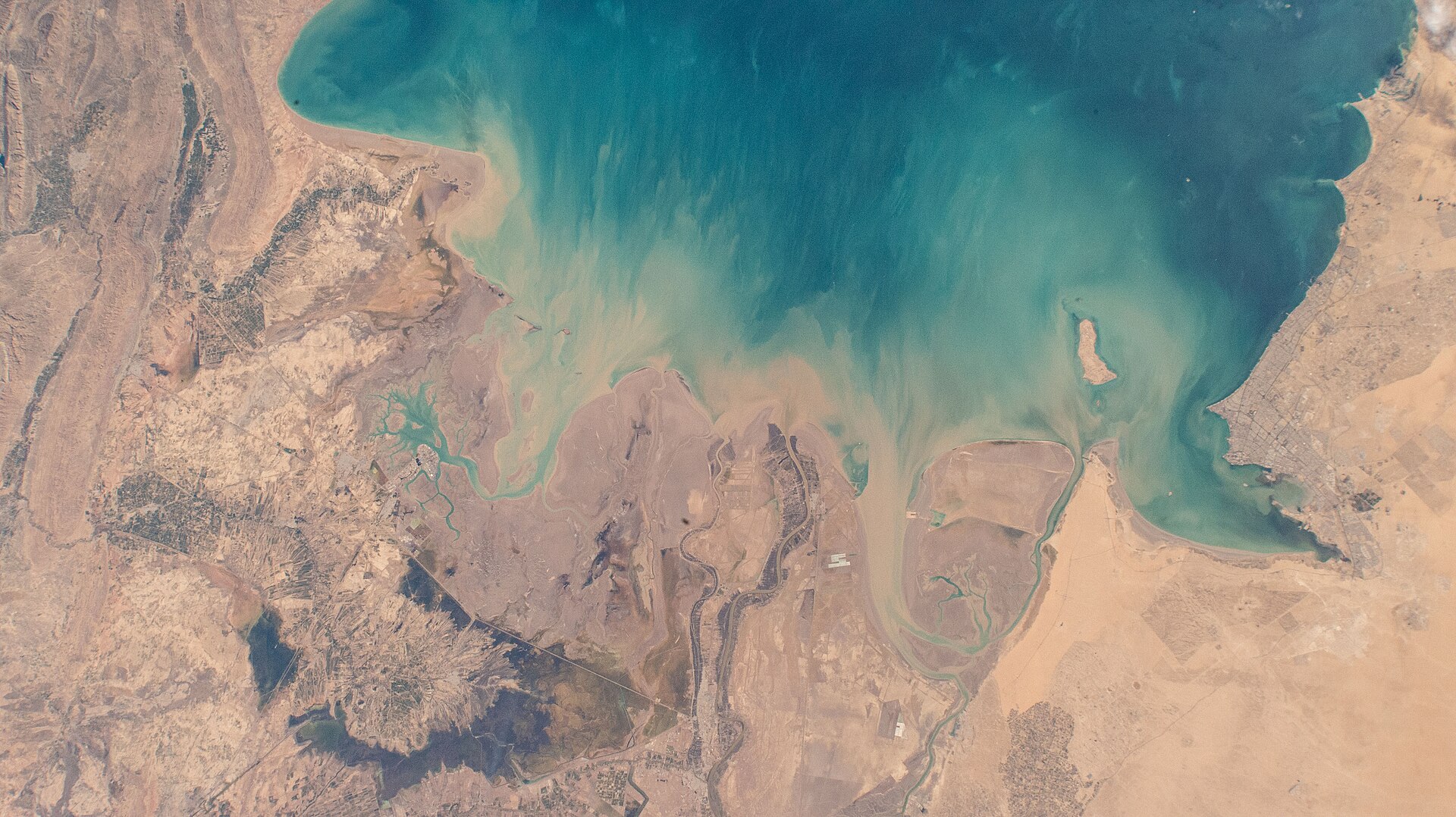
Table of Contents
What Happened on Bubiyan Island
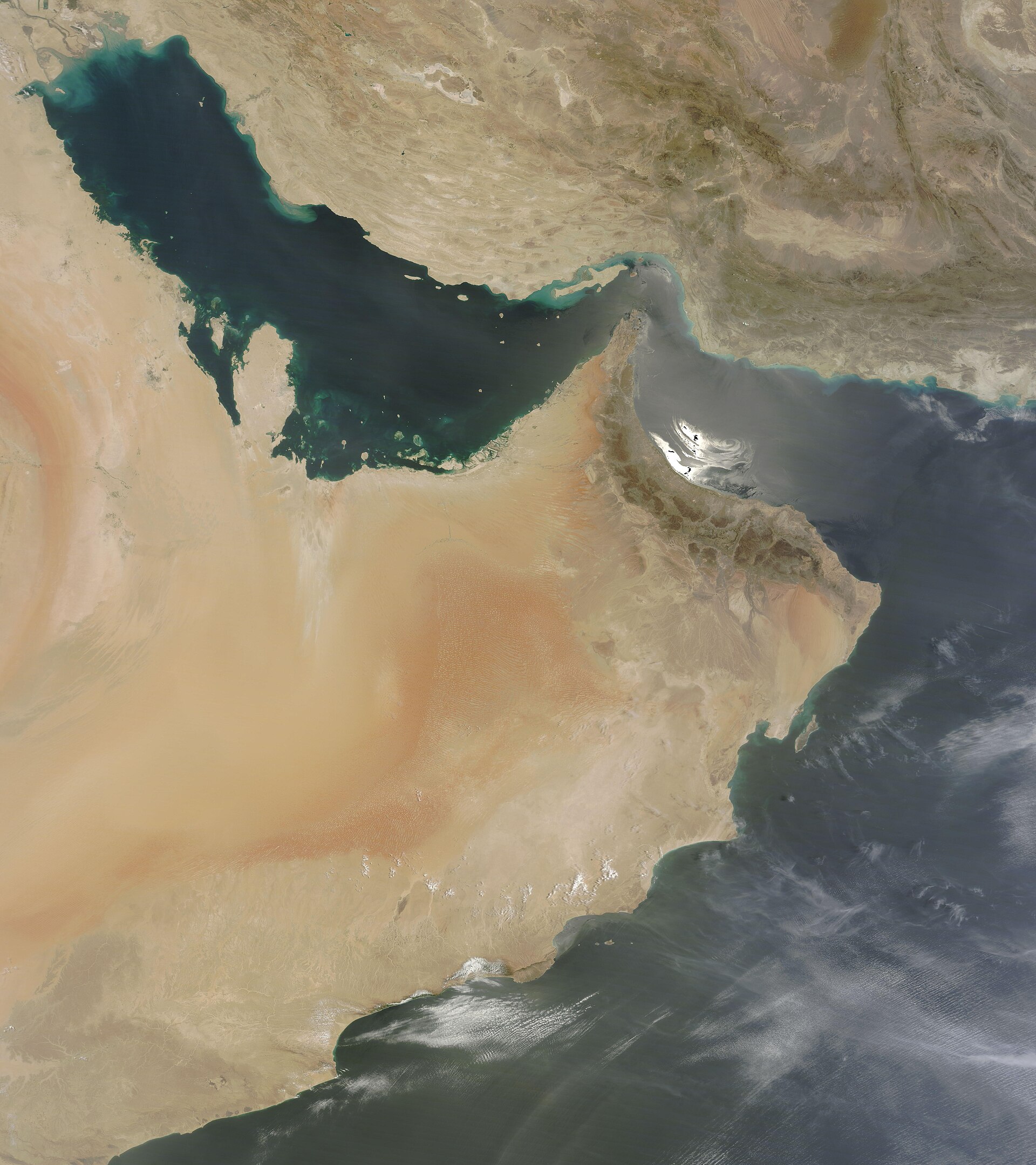
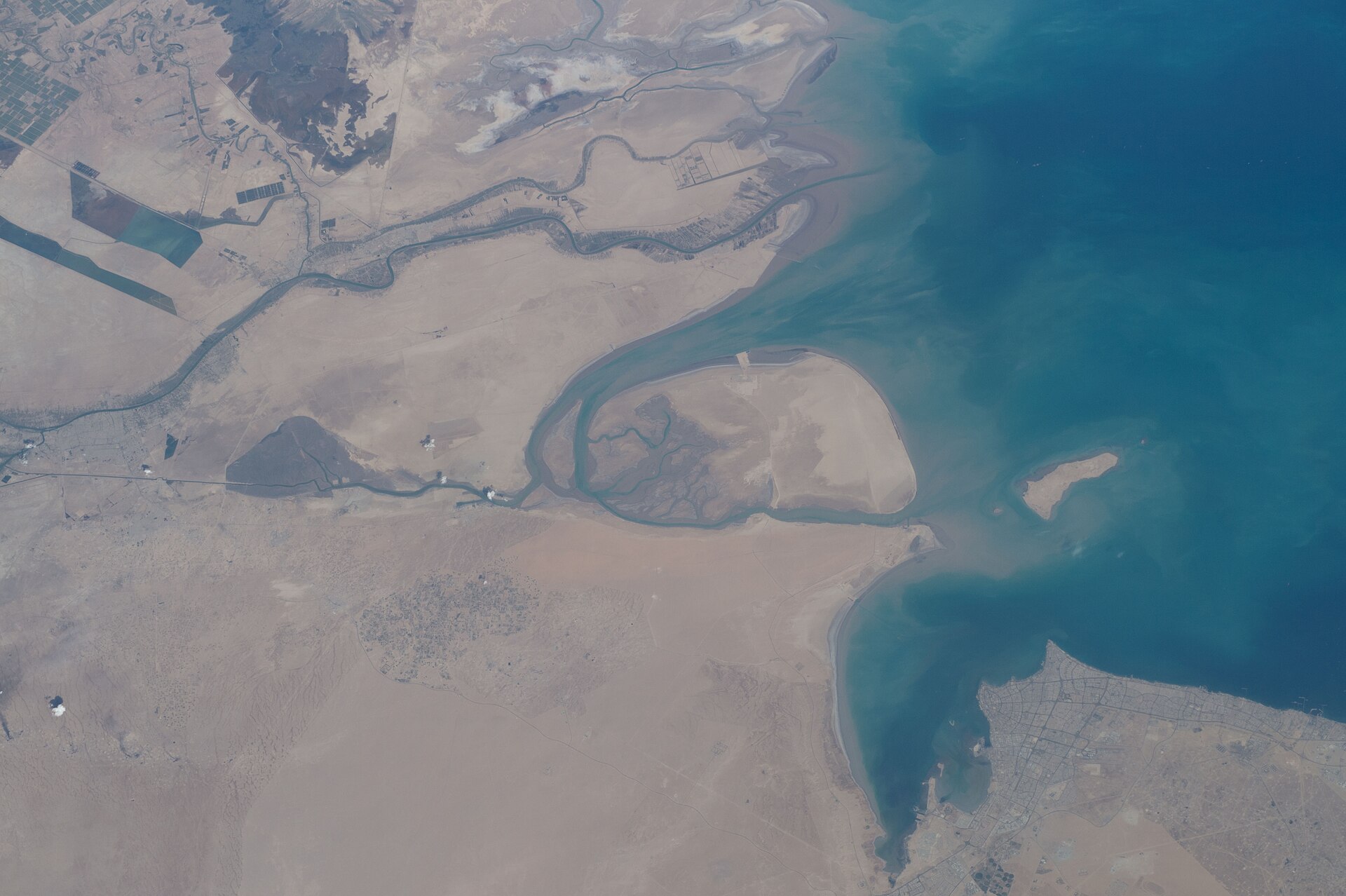
On May 1, six armed individuals entered Kuwaiti territorial waters aboard a fishing boat that Kuwait’s Ministry of Interior described as “specifically chartered to carry out hostile acts against Kuwait.” The group landed on Bubiyan Island, Kuwait’s largest island, located in the northern Gulf near the Iraqi and Iranian borders. Kuwaiti security forces engaged the infiltrators on May 3, arresting four and wounding one Kuwaiti service member in the clash. Two suspects escaped, according to Al Jazeera’s May 12 report.
The four detained men were identified by Kuwait’s Ministry of Interior as uniformed IRGC Navy officers: Colonels Amir Hussein Abd Mohammed Zara’i and Abdulsamad Yadallah Qanwati; Captain Ahmed Jamshid Gholam Reza Zulfiqari; and First Lieutenant Mohammed Hussein Sehrab Faroughi Rad. The two fugitives were named as navy Captain Mansour Qambari and boat captain Abdulali Kazem Siamari, per The National.
All four arrested officers confessed to IRGC affiliation and confirmed the operation’s hostile intent, according to Kuwait’s Ministry of Interior statement. This marks the first known attempted military infiltration by Iran onto sovereign GCC territory during the broader war that has seen Iran strike Qatar, Kuwait, and the UAE with missiles and drones. Previous Iranian operations against Kuwait — including the February 28 strikes on Kuwait International Airport and military facilities — were aerial. A covert ground infiltration by uniformed officers is a different category of operation.
The Summons: Article 51 Language Without Article 51 Action
Kuwait’s formal protest, delivered by Al Mashaan on May 13, used language calibrated to preserve escalation options without exercising them. The deputy foreign minister told Toutounji that Kuwait “strongly condemned” the incursion as a “hostile act,” held Tehran “fully responsible,” and demanded Iran “immediately and unconditionally halt such unlawful hostile acts,” according to the Arab Times.
The Middle East briefing 3,000+ readers start their day with.
One email. Every weekday morning. Free.
The legally significant element was the invocation of Article 51 of the UN Charter — the self-defense provision — with Kuwait reserving its “full right to defend itself…including taking whatever measures it deems appropriate.” Al Mashaan also cited UN Security Council Resolution 2817, adopted March 11, 2026, by a 13-0-2 vote with China and Russia abstaining. That resolution condemned Iran’s attacks on Gulf states and “threatening interference with maritime trade,” per UN records.
The citation of UNSCR 2817 is a deliberate legal framing. Kuwait placed a bilateral infiltration within an existing multilateral condemnation architecture — but stopped short of triggering any mechanism within that architecture. Kuwait did not request a UN Security Council session. It did not invoke GCC collective defense provisions. It did not recall its ambassador from Tehran. It reserved the right to act and then, for now, did not act.
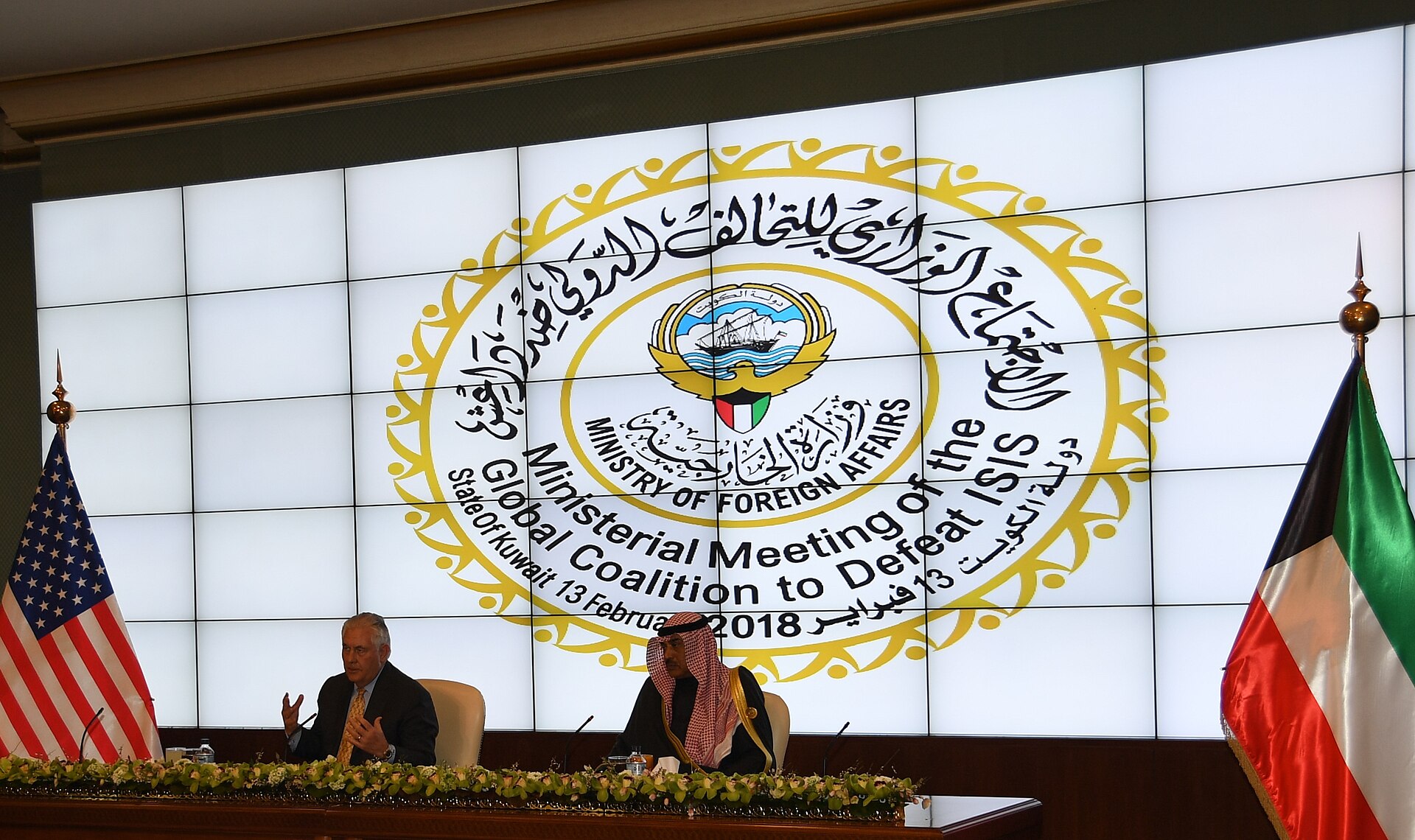
The Emir set this template in March. After Iran struck Kuwait International Airport and military facilities on February 28, Emir Mishal Al-Ahmad Al-Jaber Al-Sabah said in a televised address: “Our country has been subjected to a brutal attack by a neighbouring Muslim country, which we consider a friend, even though we have not permitted the use of our land, airspace, or coasts for any military action against it, and we have repeatedly informed them of this through our diplomatic channels.” That formulation — acknowledging the attack while reaffirming Kuwait’s non-combatant posture — defined the range of available responses. The Bubiyan summons operates within it.
What Does Iran’s Navigation-Failure Defense Actually Claim?
Iran’s Foreign Ministry rejected Kuwait’s account on May 13, calling the allegations “completely baseless and unacceptable,” according to PressTV and Asianet Newsable. Tehran’s official position is that the arrested personnel were conducting “a routine maritime patrol mission” and entered Kuwaiti waters due to a navigation system malfunction. Iran demanded their immediate release and accused Kuwait of “improper political and propaganda exploitation” of the incident.
The denial has structural problems that Tehran has not addressed. The four detained personnel hold the ranks of two colonels, one captain, and one lieutenant — a command-heavy roster for a routine patrol. Kuwait says they were aboard a privately chartered fishing boat, not a military vessel. Iran has not explained why two colonels would be conducting a “routine patrol” in a rented fishing boat, or why the mission required six personnel including officers at the colonel rank.
Iran also urged Kuwait to avoid “hasty statements” and proposed resolving the matter through official diplomatic channels, according to The National. Kuwait’s response was itself a diplomatic channel — a summons, not a tribunal — which means Tehran’s preferred resolution framework and Kuwait’s chosen instrument are formally aligned, even as the factual claims remain opposed.
Iran’s escalation did not stop at the Foreign Ministry level. On May 13, Foreign Minister Araghchi posted on X calling the four detained officers “citizens,” labelling the incident “Kuwait’s unlawful attack on an Iranian boat,” and reserving “the right to respond” — a systematic rhetorical inversion of Kuwait’s own legal framing. The substitution of “citizens” for military ranks, and the deployment of Article 51 vocabulary against a country that had just invoked Article 51, is analysed in detail in Araghchi Calls Captured IRGC Colonels “Citizens”: Iran’s Bubiyan Hostage Frame.
Why Did the GCC Condemn but Not Convene?
Every GCC member state responded individually. Saudi Arabia’s Foreign Ministry denounced the infiltration as a violation of Kuwait’s sovereignty. The UAE’s Foreign Minister Sheikh Abdullah bin Zayed condemned the incident “in the strongest terms” and expressed “full support for all measures taken by Kuwait’s security authorities.” Qatar’s Ministry of Foreign Affairs called it “a blatant violation of Kuwait’s sovereignty and a dangerous escalation threatening the security and stability of the region.” GCC Secretary General Jasem Mohamed Albudaiwi said the operation reflected “a systematic attempt” by Iran to destabilize the region and stressed that “the security of Kuwait is integral to the security of all GCC member states,” per Asharq Al-Awsat.
What did not happen is as revealing as what did. No extraordinary GCC ministerial session was convened. No collective action was announced. The GCC’s previous condemnation cycle — the seventh time the body called Iran “treacherous” — had already established the pattern: strong language, individual statements, no institutional follow-through. The Bubiyan infiltration did not break that pattern. — but it did trigger a GCC interior ministers’ emergency session the following day, and within 24 hours, King Salman issued seven royal decrees restructuring Saudi Arabia’s wartime command hierarchy. King Salman’s Seven Decrees Were One Decision traces the fourteen-day chain from Bubiyan to the royal court.
This is partly structural. The GCC has no binding collective defense treaty equivalent to NATO’s Article 5. Its Peninsula Shield Force, deployed once to Bahrain in 2011 during the Arab Spring, has not been activated during the Iran war. The Gulf International Forum noted in 2026 that Kuwait has pursued “a measured strategy, prioritizing both national security and regional stability, emphasizing alignment with the U.S.-led security framework as the most effective avenue for deterrence.”
Qatar’s individual statement carried additional weight. In March 2026, Qatar arrested its own IRGC cell members, straining Qatar-Iran relations at a moment when Doha was simultaneously mediating ceasefire talks. Qatar condemned the Bubiyan infiltration without conditioning its statement on the broader diplomatic process — a separation of the mediation role from the security response.
The $4.1 Billion Port Beijing Cannot Discuss
Bubiyan Island is not only Kuwait’s largest island. It is the site of Mubarak Al Kabeer Port, a $4.1 billion Phase 1 project contracted to China Communications Construction Company (CCCC), scheduled to become fully operational by the end of 2026. Phase 1 includes a 1,200-metre container terminal with annual capacity of 2.7 million twenty-foot equivalent units (TEUs). Full build-out across three phases targets more than 8 million TEU capacity. Kuwait’s cabinet separately approved China State Construction Engineering Corporation for operations management, according to project records and Arab News.
The port anchors a broader investment architecture. Kuwait was the first GCC state to sign onto China’s Belt and Road Initiative, doing so in June 2014, with a second cooperation agreement following in November 2018. The wider Silk City / Madinat Al Hareer project, of which the port is a component, spans 250 square kilometers with a projected total cost exceeding $132 billion over a 25-year timeline to 2040.
Beijing has issued no public statement on the Bubiyan infiltration. This silence is structurally significant. China is the primary commercial stakeholder in the asset the IRGC targeted. China abstained on UNSCR 2817 — the resolution Kuwait explicitly cited in its summons — meaning Beijing declined to endorse the legal framework Kuwait now relies on for its own sovereignty protection. And China remains Iran’s largest oil customer, purchasing more than 80 percent of Iran’s shipped crude exports, according to CNBC.
The timing compounds the problem. Trump arrived in Beijing on May 13 — the same day as Kuwait’s summons — for a summit where, as analysts have noted, Iran is the primary agenda item. Washington wants Beijing to use its influence over Tehran. The Bubiyan operation gave Trump a concrete example: Iran’s IRGC sent armed officers to an island where China has $4.1 billion in infrastructure investment, and Beijing said nothing. Whether Trump raises this in the Xi meeting is unknown, but the structural contradiction is available to him.
The Abdali Playbook
Kuwait’s response to the Bubiyan infiltration follows a template established in 2015. In August of that year, Kuwaiti authorities discovered a weapons cache at a farm in Abdali containing what analysts described as enough munitions “for a small army.” Twenty-five Kuwaiti citizens — all Shi’a — and one Iranian were charged with working for the IRGC and Lebanese Hezbollah to carry out “hostile acts” against Kuwait, according to Gulf State Analytics.
Kuwait expelled 15 Iranian diplomats and submitted a formal protest to Lebanon’s government. It did not sever diplomatic relations with Iran. The Abdali affair established Kuwait’s playbook: formal protest, limited expulsions, then controlled de-escalation. Diplomatic ties were maintained throughout.
The Bubiyan summons follows this playbook with one notable addition: the legal escalation framing. In 2015, Kuwait did not invoke Article 51 or cite a UN Security Council resolution. The 2026 summons does both, creating a documented legal record that Kuwait can activate later without having to generate it under pressure. Kuwait indicated that referring the case to the UN Security Council “remains open,” per The National.
Kuwait’s domestic composition constrains its response ceiling. An estimated 30 percent of Kuwait’s Muslim population is Shi’a, and approximately 4 percent of the total population is of Iranian origin, according to Gulf State Analytics and published demographic assessments of Kuwait’s communal composition. Maximalist responses — severing ties, activating military pacts, joining the U.S.-led security architecture in an offensive posture — carry domestic sectarian risks that aerial strikes, processed through a national-unity frame, did not.
Background
Kuwait occupies the most exposed geographic position of any GCC state relative to Iran. The country maintained a “no alliance, no confrontation” posture toward Tehran for decades, a stance shaped by competing pressures: Kuwait sided with Iraq during the 1980-88 Iran-Iraq War, damaging relations with Tehran, but Iran’s condemnation of Iraq’s 1990 invasion of Kuwait created a basis for gradual normalization.
The February 28, 2026 Iranian strikes on Kuwait — targeting Kuwait International Airport and military facilities — shattered the operational premise of non-involvement. Yet the Emir’s public framing has consistently emphasized that Kuwait did not permit its territory to be used for military action against Iran, positioning the country as an attacked non-combatant rather than a belligerent.
The Bubiyan infiltration is closer to the intelligence operations Iran has historically conducted through proxy networks — the Abdali cell model, not the IRGC missile model — which is why Kuwait’s legal response borrowed from 2015 rather than from the post-February 28 aerial-strike framework.
The 12-day gap between the operation (May 1) and its public disclosure (May 12) suggests Kuwait used the interval for interrogation and evidence collection before making its case. The summons followed one day later, on May 13, timed to the Trump-Xi summit in Beijing — a coincidence Kuwait has not acknowledged but that placed the incident in the international news cycle at the moment of maximum relevance to the China-Iran relationship.
FAQ
Has Kuwait expelled any Iranian diplomats over the Bubiyan infiltration?
Not as of May 13, 2026. Kuwait’s response so far has been limited to the formal summons and protest note. In the 2015 Abdali affair, Kuwait expelled 15 Iranian diplomats, but that action came after a longer investigative and judicial process. Kuwait’s statement reserved the right to take additional measures, leaving open the possibility of expulsions, a Security Council referral, or other steps.
What was the IRGC’s likely objective on Bubiyan Island?
Kuwait described the mission as “hostile acts” without specifying the operational target. Bubiyan hosts military installations, the Mubarak Al Kabeer Port construction site, and sits near Kuwait’s northern oilfields. The National’s analysis noted that for Tehran or actors linked to it, “Bubiyan would represent a high-value pressure point: close to US military assets, critical to Kuwait’s economic ambitions, and increasingly tied to Chinese trade interests.” The specific target has not been publicly disclosed.
How does UNSCR 2817 apply to a ground infiltration?
Resolution 2817, adopted March 11, 2026, condemned Iran’s attacks on Gulf states and “threatening interference with maritime trade.” Its language was drafted primarily to address aerial strikes and Hormuz disruptions. Kuwait’s citation of the resolution in connection with a covert ground operation extends its application beyond the original drafting context — a legal stretch that establishes precedent if unchallenged, but that neither China (which abstained) nor Russia (which also abstained) endorsed.
What is the status of the two IRGC officers who escaped?
Kuwait identified the two fugitives as navy Captain Mansour Qambari and boat captain Abdulali Kazem Siamari. Their current whereabouts have not been publicly disclosed. Given Bubiyan’s proximity to both Iraqi and Iranian waters, the most likely escape route is maritime. Kuwait has not announced an international warrant or Interpol request for either individual.
Could the Arab League or UN Security Council take action on this incident?
The Arab League issued a condemnation statement on May 12, according to the Qatar News Agency. Kuwait stated that the option of referring the case to the UN Security Council remains open. However, any UNSC action beyond a statement would face the same structural obstacle as previous Gulf-related resolutions: China and Russia’s willingness to abstain rather than support, as demonstrated in the 13-0-2 vote on UNSCR 2817. A separate Hormuz resolution was vetoed outright by Russia and China.