RIYADH — Saudi Arabia conducted covert airstrikes on Iranian territory in late March 2026 as a confirmed participant in Operation Epic Fury, the US-led coalition campaign against Iran, according to Reuters reporting citing two Western and two Iranian officials. The kingdom was bombing Iran while its foreign ministry publicly called for “de-escalation” and “self-restraint” — a contradiction that held for seven weeks until someone, on the same day Donald Trump landed in Beijing to negotiate over Iran and Washington signed a $142 billion arms deal with Riyadh, decided the world should know.
The timing is architecture, not coincidence. Three days of calibrated disclosures — the Wall Street Journal naming the UAE’s Lavan Island strike on May 11, Reuters confirming Saudi strikes on May 12, Reuters identifying both kingdoms as named Operation Epic Fury coalition partners on May 13 — collapsed Saudi Arabia’s carefully maintained posture as a mediating party rather than a belligerent. The question is not whether Riyadh bombed Iran but who authorised the acknowledgment, and what they expected Tehran and Beijing to do with the information.
Table of Contents
- What Did Saudi Arabia Strike Inside Iran?
- The 76 Percent Drop
- Why Was the Disclosure Timed for May 13?
- How Can Riyadh Be Both Combatant and Mediator?
- The $142 Billion Receipt
- The UAE Hit Lavan Island — and Tehran Held the Name
- What Does the Disclosure Signal to Beijing?
- The Veto After the Bombs
- Frequently Asked Questions
What Did Saudi Arabia Strike Inside Iran?
Reuters could not confirm specific targets, and neither Riyadh nor Tehran has volunteered details — a symmetry of silence that itself constitutes evidence of a bilateral understanding reached in the weeks after the strikes occurred. A Western official described the operations only as “tit-for-tat strikes in retaliation for when Saudi [Arabia] was hit,” language that frames the sorties as punitive and proportional rather than strategic.
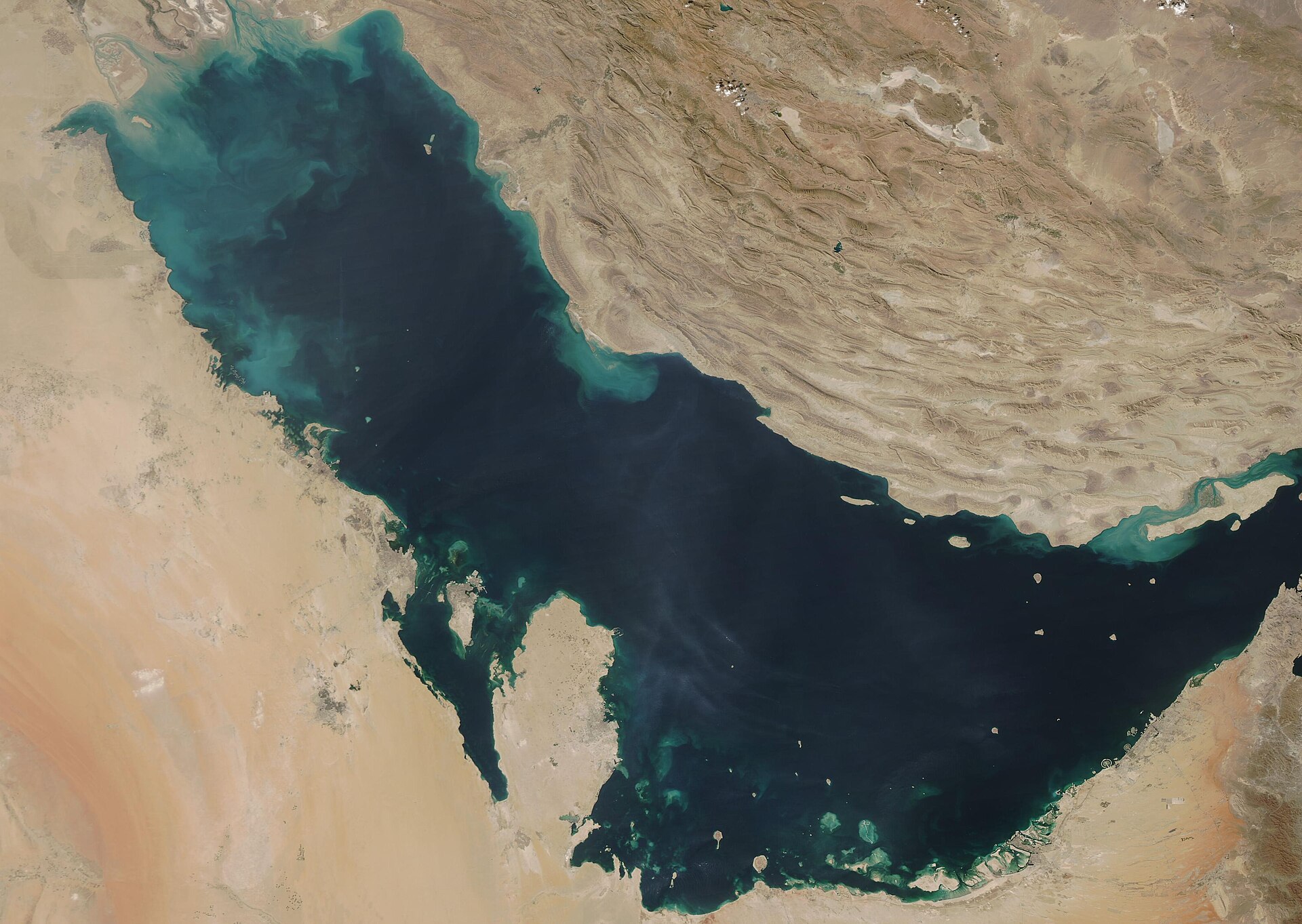
In the week of March 25–31, Iran launched more than 105 drone and missile attacks against Saudi targets — refineries, pipeline infrastructure, military airfields — in the heaviest sustained bombardment the kingdom had absorbed since the war began on February 28. Saudi Foreign Minister Prince Faisal bin Farhan had telegraphed the response six days earlier, stating on March 19 that Riyadh “reserved the right to take military actions if deemed necessary.” Three days after that statement, Saudi Arabia expelled Iran’s military attaché and four embassy staff — a step that in diplomatic grammar sits one rung below a formal declaration of war.
The strikes came in the final days of March, making Saudi Arabia a direct combatant on Iranian soil for the first time in the 94-year history of the modern kingdom — a state that has fought proxy wars against Tehran across four countries and four decades without once sending its own aircraft across the border. Riyadh disclosed the strikes to Tehran through backchannels and threatened further retaliation, and Iran’s weekly attacks on Saudi territory dropped from more than 105 to approximately 25. An Iranian official told Reuters the resulting understanding aimed to “cease hostilities, safeguard mutual interests, and prevent the escalation of tensions.”
That bilateral de-escalation preceded the formal US-Iran ceasefire of April 7 by five to six days — achieved without a signed agreement, a UN resolution, or any public acknowledgment that Saudi jets had been inside Iranian airspace at all. The backchannel worked precisely because it remained a backchannel, and the public posture of restraint never broke — until May 12. Trump’s subsequent disavowal of the ceasefire as a personal favour to Pakistan stripped that framework of its remaining political cover at the precise moment Saudi Arabia’s co-belligerent record became public.
The Middle East briefing 3,000+ readers start their day with.
One email. Every weekday morning. Free.
The 76 Percent Drop
The most telling number in the Reuters disclosure is not a weapons count or a sortie figure but a reduction: Iranian attacks on Saudi targets dropped 76 percent in the week following the covert strikes, from more than 105 in the week of March 25–31 to approximately 25 in the week of April 1–6. That decline happened before the April 7 ceasefire, before the Islamabad talks, before the US naval blockade, and before any international mediator had extracted a formal commitment from Tehran to stand down.
The implication is uncomfortable for anyone invested in the idea that diplomacy alone delivered the de-escalation. Saudi Arabia’s strikes — conducted in secret, acknowledged only through backchannels — produced a measurable behavioural change in Iranian targeting patterns that no public diplomatic effort had managed in the preceding four weeks. Gregory Brew, Eurasia Group’s senior Iran analyst, called it “significant that Saudis struck Iran repeatedly while neither side publicized attacks,” a formulation that captures the operational logic: secrecy was not a failure of transparency but a condition of the strikes’ effectiveness.
The 76 percent figure matters beyond this article’s frame: it is the same behavioural evidence that explains why Saudi Arabia trusted its own intelligence assessment over CENTCOM’s public testimony when it vetoed Project Freedom in early May — Saudi Arabia’s confirmed airspace denial is documented in a companion analysis, and the full argument is developed in Iran Kept 70% of Its Missiles. CENTCOM Told Congress 85% Was Destroyed. What the 76 percent figure does not reveal is which Iranian institution decided to reduce attacks, or whether the IRGC joint command — which has operated independently of the civilian government throughout the war — concurred with the de-escalation or was simply overtaken by events. Rear Admiral Ali Reza Tangsiri, the IRGC Navy commander who controlled much of the strait and the Iranian naval forces capable of striking Saudi targets, was killed on March 30, and no named successor has been announced. The IRGC Navy has operated without a confirmed commanding officer for 44 days, and in the absence of authoritative Iranian sourcing on internal command decisions, the 76 percent drop remains an outcome with no confirmed author.
Why Was the Disclosure Timed for May 13?
The Reuters reports cited four sources — two Western officials and two Iranian officials — confirming the same covert operations from opposite sides of the conflict. When adversaries simultaneously confirm covert strikes to the same news agency within a 48-hour window, the word for that is not a leak but a coordinated disclosure. Someone in Washington or Riyadh decided the world should know by May 12, and someone in Tehran decided not to deny them.
The sequencing across three days was precise in a way that precludes accident. On May 11, the Wall Street Journal broke the UAE’s strike on Iran’s Lavan Island oil refinery. On May 12, Reuters confirmed Saudi covert strikes in late March. On May 13 — the day Trump arrived in Beijing and the $142 billion arms deal was signed — Reuters named both Saudi Arabia and the UAE as participants in Operation Epic Fury, the US codename for the joint campaign that began on February 28. Each disclosure built on the previous day’s, widening the frame from a single nation’s retaliation to a formal Gulf Arab combat role inside a named American-Israeli military operation. On the same day, Iran responded in kind on the water: Windward AI recorded 342 IRGC fast-attack boats deployed across five Hormuz monitoring zones, the largest small-craft concentration of the conflict, while Vance told reporters negotiations were “very sensitive.”
| Date | Outlet | Disclosure | Concurrent Event |
|---|---|---|---|
| May 11 | Wall Street Journal | UAE struck Iran’s Lavan Island refinery, coordinated with Israel | Trump describes ceasefire as on “massive life support” |
| May 12 | Reuters | Saudi Arabia struck Iran in late March; bilateral de-escalation followed | FDD publishes Saudi Q1 deficit analysis ($34B record) |
| May 13 | Reuters | Saudi and UAE formally named as Operation Epic Fury coalition partners | Trump arrives in Beijing; $142B US-Saudi arms deal signed |
Mona Yacoubian, the CSIS Middle East Program Director, described the Saudi action as reflecting “the acuteness of threat perceived from Iran” and as “setting a red line and trying to enforce that line.” That framing fits the strikes themselves but not the disclosure of the strikes seven weeks later. A red line communicated secretly through backchannels has already been set and already been enforced — the 76 percent drop is the evidence. Telling the world about it on the day the American president landed in Beijing to negotiate with Xi Jinping over Iran serves a purpose that has nothing to do with deterrence and everything to do with positioning.
Four officials from opposing sides of a war do not simultaneously confirm the same covert operation to reporters unless at least two governments have decided it is time. The data does not tell us which two, and the range of possibilities — Washington and Riyadh coordinating to box Beijing, Riyadh and Tehran coordinating to formalise their bilateral understanding before a US-China deal cuts them out, or all three acting independently but arriving at the same conclusion about timing — produces different readings of what the disclosure is meant to achieve. What is not in dispute is that the timing was chosen, not accidental.
How Can Riyadh Be Both Combatant and Mediator?
On May 13, the same day Reuters confirmed Saudi Arabia’s combat role in Operation Epic Fury, the Saudi Foreign Ministry issued a statement “reaffirm[ing] Saudi Arabia’s consistent position advocating de-escalation, self-restraint.” It mentioned neither the strikes nor the $142 billion arms deal signed the same morning — a document that said nothing disprovable and nothing true.
“We reaffirm Saudi Arabia’s consistent position advocating de-escalation, self-restraint.”
Saudi Foreign Ministry statement, May 13, 2026 — issued the same day Reuters confirmed Saudi airstrikes inside Iran under Operation Epic Fury
The kingdom took Iranian Foreign Minister Araghchi’s phone call on April 8 — the day the US naval blockade of Iranian ports went into effect — making Riyadh the only Gulf state to pick up the line. That call came approximately ten days after Saudi jets had struck Iranian territory. Saudi Arabia was simultaneously a coalition combatant inside Iranian airspace and the only Gulf capital still taking Tehran’s calls, a duality that would be incoherent if it were not so plainly deliberate. Riyadh co-sponsored a UNSC Hormuz resolution it knew would fail in the same period, banking the diplomatic record of having tried while the military record accumulated in classified briefings.
Hussain Abdul-Hussain of the Foundation for Defense of Democracies offered the sharpest critique of this duality: Riyadh has chosen “scapegoats,” he argued, blaming Israel and the UAE for “sowing chaos and discord” as “a convenient distraction from homegrown shortcomings.” The Saudi posture, in his formulation, amounts to “beating one’s chest at external enemies to mask domestic weakness, but only enemies you know will not come after you, like Israel.” The covert strikes complicate that reading — Saudi Arabia hit an enemy that very much came after it, absorbing 105 attacks in a single week before retaliating — but the Q1 2026 budget deficit of $34 billion, a national record, suggests the domestic shortcomings Abdul-Hussain identified are not entirely imaginary.
The operational answer to the dual-posture question is that it worked, at least until May 12. The strikes produced the 76 percent drop in Iranian attacks; the diplomacy kept backchannel lines open; the secrecy prevented either side from being locked into an escalatory public narrative that domestic audiences would demand be honoured. Saudi Arabia’s problem is not that the strategy failed but that the strategy has now been disclosed, and every future Saudi claim of neutrality will be read against the Reuters dateline — in Tehran, in Beijing, in Islamabad, and in every multilateral forum where Riyadh presents itself as a mediating party rather than a combatant. The legal consequences of Saudi Arabia’s confirmed co-belligerent status — including the classification of Abqaiq, Yanbu, and other economic infrastructure as lawful military targets under IHL — are now the central question for every party to the conflict.
The $142 Billion Receipt
The $142 billion defence sales agreement signed on May 13 is the largest in US history, and its announcement on the same day as the Operation Epic Fury disclosure is the kind of coincidence that only governments produce. The deal covers advanced fighter aircraft, missile defence systems, naval platforms, and ammunition — the full spectrum of what a country needs to fight a war it is already fighting, replenish stocks it has already depleted, and prepare for a conflict whose ceasefire Trump himself described two days earlier as being on “massive life support.”
| Metric | Figure | Context |
|---|---|---|
| Pre-conflict oil output | 10.3–10.4M bpd | February 2026 baseline |
| Current exports (Yanbu only) | ~4M bpd (Arab Light) | ~60% decline from pre-war |
| Q1 2026 budget deficit | $34 billion | Record (FDD / Saudi public accounts) |
| Anti-missile defence spend | ~$50 billion | Since February 28 |
| PAC-3 interceptor stocks | ~14% of pre-war levels | Depleted across 10+ weeks of combat |
| US arms deal (May 13) | $142 billion | Largest in US history |
Saudi Arabia has spent an estimated $50 billion on anti-missile defences since February 28, burning through PAC-3 interceptors at a rate that has reduced available stocks to approximately 14 percent of pre-war levels. Current oil exports run at approximately 4 million barrels per day via the Yanbu bypass — less than 40 percent of the kingdom’s pre-conflict output — and the fiscal arithmetic of a prolonged air-defence campaign combined with a 60 percent revenue collapse has a trajectory that no sovereign wealth fund can sustain indefinitely. The $142 billion deal arrives at the precise moment when Saudi Arabia’s existing inventory is most depleted and its ability to pay from current revenue is most constrained. King Salman’s response to that fiscal arithmetic arrived on May 15 — seven royal decrees that simultaneously restructured the National Guard, elevated the G20 Sherpa to Finance Deputy, and formalized SDAIA’s AI leadership in the same batch. The full wartime command logic is laid out in King Salman’s Seven Decrees Were One Decision.
On the same day the arms deal was signed, Saudi Arabia secured a nuclear cooperation agreement granting Riyadh enrichment rights that Washington demands Iran destroy — a detail that will not be lost on Tehran’s negotiators when they sit down to discuss the Islamic Republic’s own nuclear programme, and one that Iranian state media had already begun citing by the evening of May 13.
The UAE Hit Lavan Island — and Tehran Held the Name
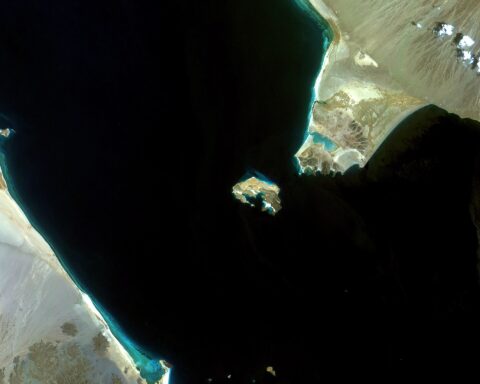
The Wall Street Journal reported on May 11 that the UAE struck Iran’s Lavan Island oil refinery in early April, in an operation described as “coordinated” with Israel and “silently welcomed” by the United States. The attack was retaliation for Iran’s April 5 strike on the Emirati Borouge petrochemicals site, and it marks the first confirmed Emirati combat operation against Iranian territory — a threshold Abu Dhabi crossed with even less public discussion than Riyadh, and with no pretence of a mediating posture to protect.
What makes the disclosure sequence telling is not that the UAE struck Iran but that Tehran identified the Emirati aircraft type — Mirage 2000-9 fighters — before any Western outlet confirmed the operation. Iranian state media attributed the Lavan Island strike to the UAE while Western governments maintained studied silence, publishing the identification and holding it in reserve for weeks rather than retaliating immediately with disproportionate force. Tehran’s decision to treat the knowledge of who struck them as a separate instrument, distinct from the military response, produced a delayed disclosure that Iranian media deployed on its own timeline — weeks before Reuters confirmed UAE participation in Operation Epic Fury on May 13.
The IRGC joint command warned the UAE against becoming “the den of Americans and Zionists” and threatened “a crushing and regret-inducing response.” An Iranian parliamentary security commission member was more specific: “Our label of ‘neighbours’ with the Emirates has for now been lifted, and the label of ‘hostile base’ has been set.” Since February 28, the UAE has absorbed approximately 2,800 Iranian strikes — including 563 ballistic missiles, 2,256 drones, and 26 cruise missiles per available tallies — and the “hostile base” redesignation, if operationalised, would remove whatever residual restraint Tehran had exercised in its targeting of Emirati civilian infrastructure.
Bilal Saab, a Pentagon adviser and TRENDS US senior managing director, noted that the UAE’s alignment with the US and Israel had “no friendly return on something like this” — meaning Abu Dhabi accepted the risk of larger Iranian retaliation as a cost of demonstrating combat credibility to Washington. Alex Gray of the Atlantic Council framed it as proof the UAE is “capable and strategically aligned,” representing a shift from years when Abu Dhabi explored closer ties with Beijing. The UAE’s Lavan strike and Saudi Arabia’s late-March operations are structurally different — Abu Dhabi coordinated with Israel while Riyadh operated through backchannels with Tehran — but the Reuters framing on May 13 collapsed both into the same coalition designation under Operation Epic Fury.
What Does the Disclosure Signal to Beijing?
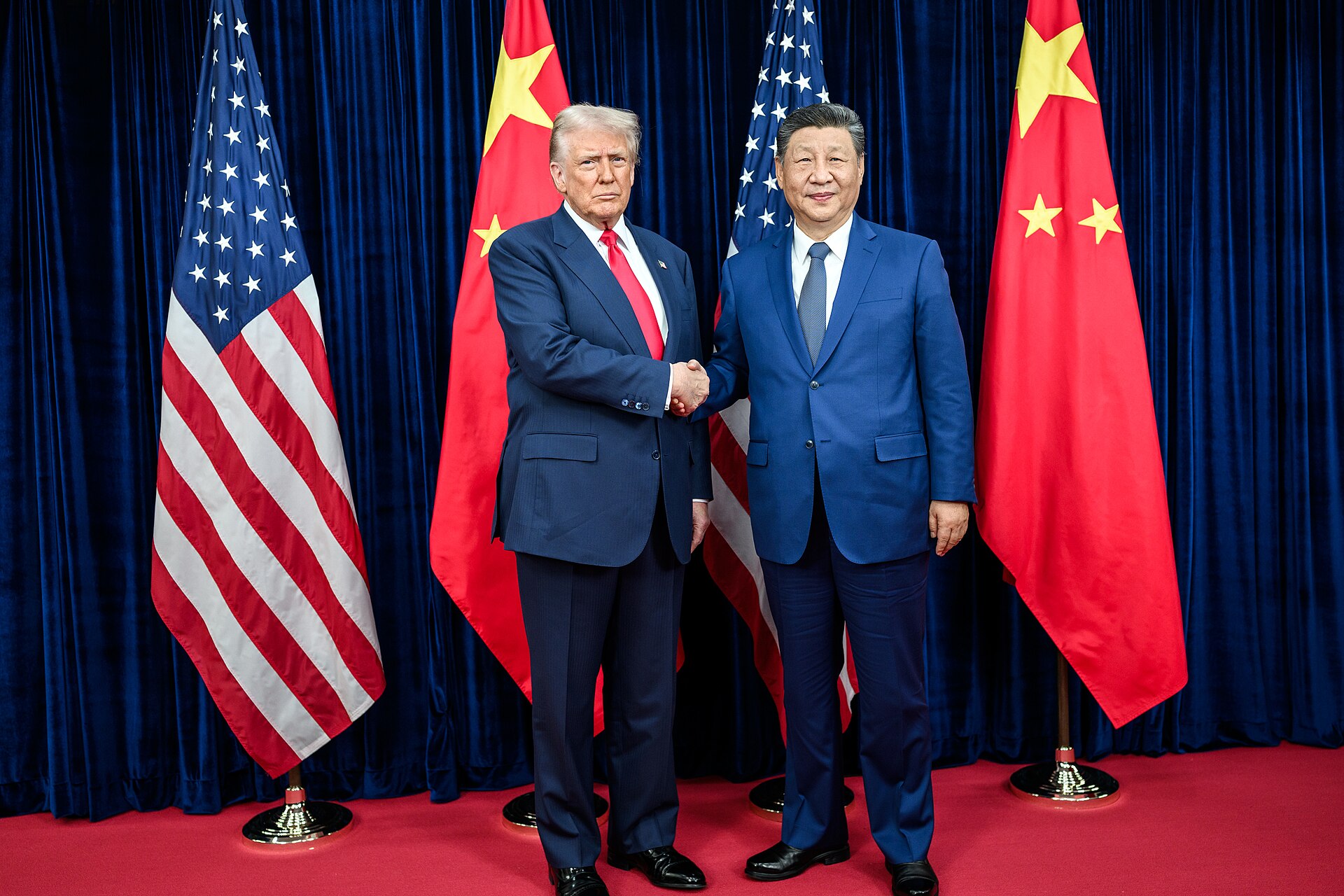
Trump arrived in Beijing on May 13 to press Xi Jinping toward pushing Tehran on a Hormuz settlement. The disclosure of Saudi and Emirati combat roles that same day hands him a specific card: the Gulf states America has been defending are not neutral parties seeking protection but active coalition combatants who struck Iranian soil, and any Chinese framing of the conflict as US-Israeli aggression against a defensive Iran must now account for Saudi and Emirati fighter jets inside Iranian airspace.
Xi Jinping called MBS on April 20, pressing for an immediate ceasefire, at a time when Saudi Arabia had already struck Iran and was quietly supporting ongoing US operations — a context Xi may or may not have known. Beijing has been frozen out of the Hormuz endgame despite being the world’s largest oil importer and Iran’s most consequential remaining economic partner, and the May 13 disclosure compounds that exclusion by formalising the Gulf states as members of an American-led military coalition rather than potential partners in a Chinese-brokered alternative. Whatever deal emerges from the Beijing summit will be shaped by the fact that Riyadh and Abu Dhabi are now publicly recorded as combatants in a US-codename operation, not as the non-aligned mediators Beijing’s preferred framework requires.
PressTV, Iran’s English-language state outlet, has already framed the Reuters disclosure as evidence that Saudi Arabia participated in “US-Israeli aggression” — language designed to collapse any distinction between the coalition’s American architects and its Gulf Arab participants. Tehran’s formulation, delivered through state media: “Tehran would strongly advise those states against contributing to the aggression, and note how hosting enemy outposts had resulted in their insecurity rather than serving their interests.” The advisory was published on the same day its intended audience was signing a $142 billion arms deal with the country Iran holds responsible for the war — a coincidence of timing that Tehran, like everyone else in the disclosure sequence, would have been able to observe in real time.
The Veto After the Bombs
Within weeks of conducting its own strikes on Iranian soil, Saudi Arabia vetoed “Project Freedom” — the US plan to reopen the Strait of Hormuz by force — by denying Washington access to Prince Sultan Air Base southeast of Riyadh and Saudi airspace. Trump paused the operation roughly 36 hours after it began. The kingdom that had just bombed Iran on its own initiative refused to serve as a platform for an American escalation it had not authorised, a sequence that only makes sense if Riyadh views its own military actions and American military actions as operating under fundamentally different rules of engagement. Under the laws of armed conflict, Saudi Arabia’s hosting posture has since absorbed a more explicit test: on May 17, the legal implications of Saudi Arabia’s hosting posture were laid bare when Khatam al-Anbiya’s Zolfaghari publicly declared all US Gulf bases will be “deactivated” — and Riyadh responded with total silence.
Saudi Arabia’s simultaneous veto of US operations from its own territory — including the precise role of Prince Sultan Air Base, the geography that made the veto decisive, and the terms extracted in the two Trump phone calls — is examined in Prince Sultan Air Base and the Price of American Access.
The distinction, to the extent it can be reconstructed from the public record, is between punitive retaliation and open-ended confrontation. The late-March strikes were calibrated to produce de-escalation, communicated through backchannels, and validated by the 76 percent drop. Project Freedom was a different proposition: a US-led convoy escort operation through the Strait of Hormuz that would have used Saudi territory as a staging ground for indefinite American power projection, embedding Riyadh in an open-ended naval confrontation with Iran over freedom of navigation rather than a discrete retaliatory exchange. The kingdom wanted to hit back, not to host a permanent forward operating base for someone else’s maritime doctrine. The decision to act alone rather than jointly was not improvised: Bloomberg’s reconstruction of the founding MBS-MBZ exchange shows MBS had already told MBZ the war was “not our war” before the late-March strikes — then conducted them without informing Abu Dhabi.
Ali Vaez of the International Crisis Group observed that “uncontrolled escalation carries unacceptable costs.” Riyadh’s actions since late March amount to a practical application of that principle: the kingdom conducted strikes calibrated to produce de-escalation, then vetoed an American operation it assessed as escalatory beyond its control. The Reuters disclosure of May 13 now places both facts — the strikes and the veto — in the same public record, naming Saudi Arabia as a member of a codename-bearing coalition with the United States and Israel while the NBC reporting on the Project Freedom veto names the same country as the ally that shut Washington’s operation down.
The April 7 ceasefire is technically in force, though Trump says it is on “massive life support” and Iran’s deputy FM Gharibabadi has declared that “one cannot speak of a ceasefire while continuing the siege.” Saudi Arabia says it wants de-escalation and self-restraint. The actor with the most direct structural purchase over the ceasefire’s next phase is not Riyadh but Doha: Qatar’s $38 billion Al Udeid expansion, signed the same week as the Epic Fury disclosures, makes the base’s political future an active Qatari investment. The Reuters disclosure has not changed the military situation — the strikes happened in March, the de-escalation held, the ceasefire persists in name if not in substance — but it has permanently altered the evidentiary record: on May 12 and 13, two Western and two Iranian officials confirmed the same covert operation to the same news agency from opposite sides of a war, and the American president landed in Beijing to discuss peace with Iran on the same day his newest $142 billion arms customer reaffirmed, in writing, its consistent position advocating self-restraint.
Frequently Asked Questions
What is Operation Epic Fury and when did it begin?
Operation Epic Fury is the US codename — Israel’s parallel designation is Operation Roaring Lion — for the joint military campaign against Iran that began on February 28, 2026. The opening phase delivered approximately 900 strikes in the first 12 hours, targeting Iranian leadership compounds, missile production facilities, and air defence networks, and the coalition had struck more than 3,000 targets by Day 10. Saudi and Emirati combat operations were layered into this existing campaign structure in late March and early April respectively, though the exact dates of first Saudi and Emirati sorties and their specific targets remain unconfirmed by any named official.
Has Saudi Arabia ever struck Iranian territory before March 2026?
No direct Saudi military action on Iranian soil has been documented before the late-March 2026 operations confirmed by Reuters. Saudi Arabia and Iran have fought extensive proxy wars — in Yemen from 2015, in Lebanon through Hezbollah, in Iraq through Shia militias, and across Syria’s civil war — and the two states severed diplomatic relations from 2016 to 2023 following the storming of the Saudi embassy in Tehran after Riyadh executed Shia cleric Nimr al-Nimr. The March 2026 strikes represent the first known instance of Saudi sovereign military force applied directly to Iranian territory in the 94-year history of the modern Saudi state.
What aircraft did Saudi Arabia likely use in the strikes?
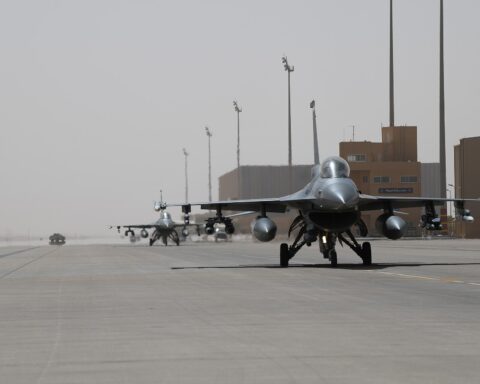
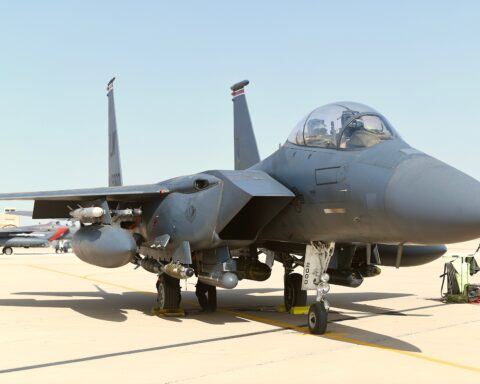
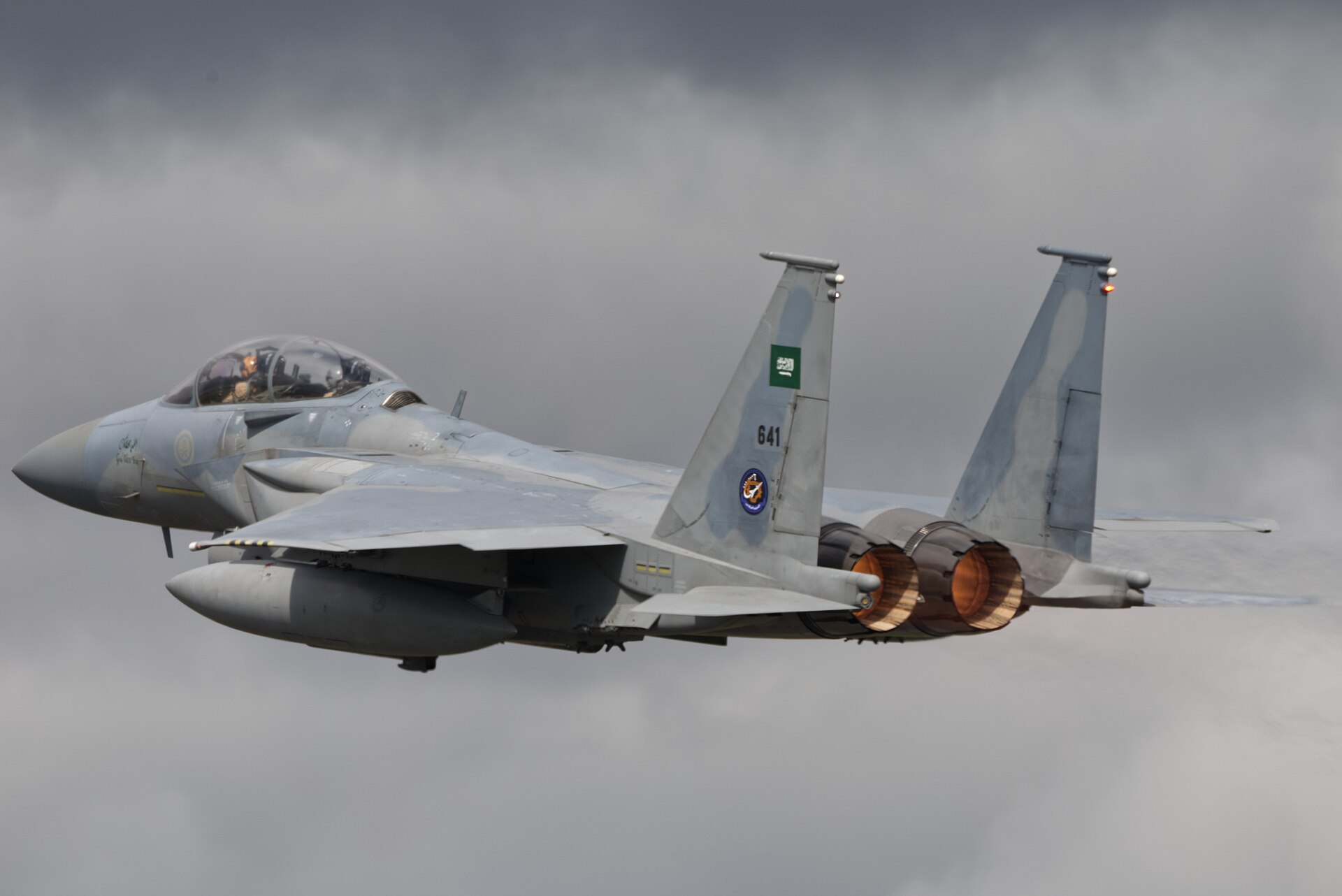
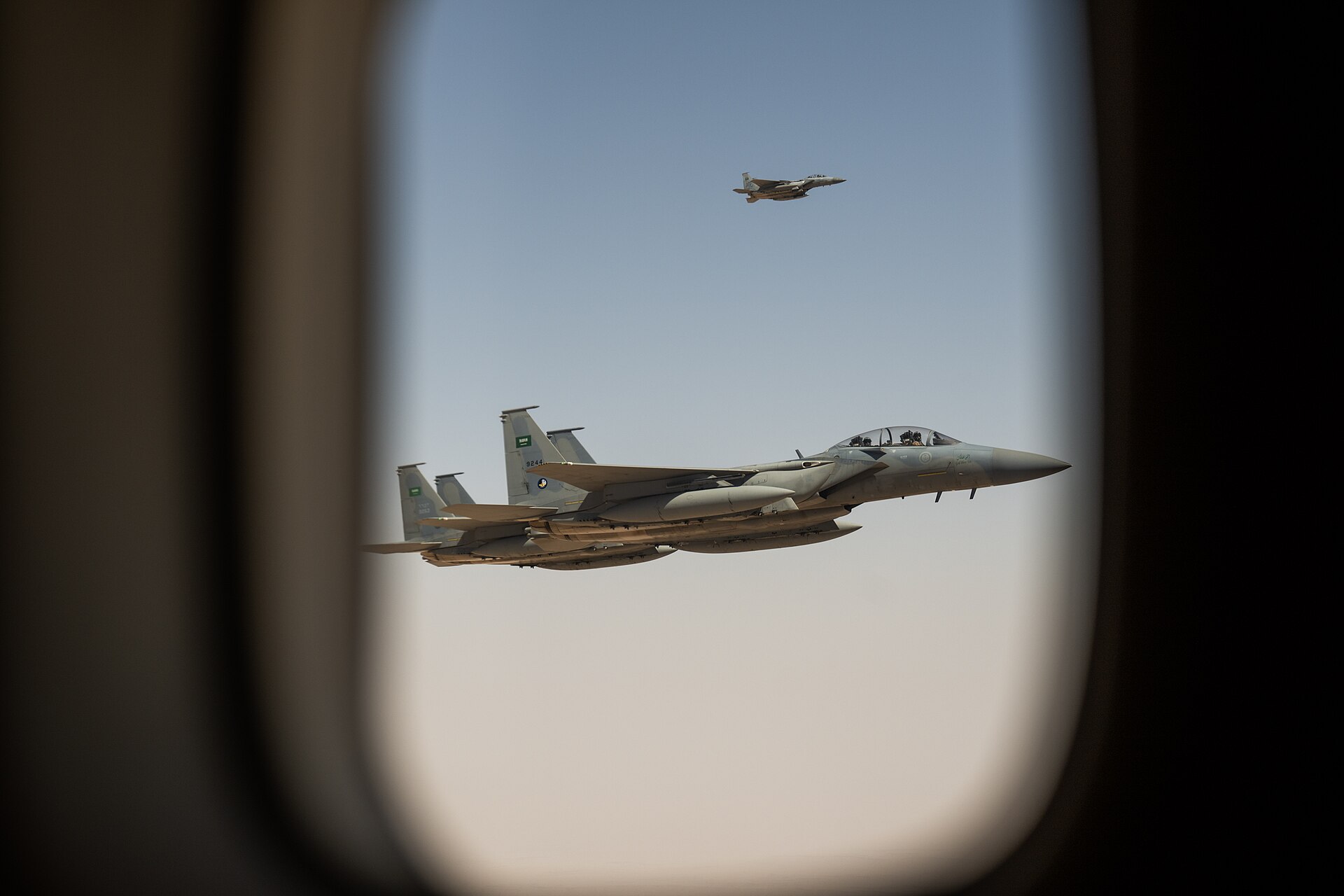
Reuters did not specify the platforms employed, and no official source has confirmed aircraft types. The Royal Saudi Air Force’s primary deep-strike platforms are the Boeing F-15SA Strike Eagle — the most advanced F-15 variant in operational service globally, equipped with conformal fuel tanks and AN/APG-63(V)3 AESA radar — and the Eurofighter Typhoon. Saudi Arabia operates approximately 84 F-15SAs delivered from 2017 onward and 72 Typhoons; either platform is capable of the retaliatory operations Reuters described, though the F-15SA’s superior range and payload capacity make it the more probable choice for strikes deep inside Iranian territory.
Why does Tehran’s identification of the Mirage 2000-9 fighters matter strategically?
Tehran’s decision to publicly name the Mirage 2000-9 — rather than simply attributing the strike to “hostile aircraft” — was a deliberate act of naming: it forced the UAE’s combat role into the record on Iran’s terms and timeline, weeks before Reuters confirmed Emirati participation in Operation Epic Fury on May 13. The identification also carried implicit deterrence signalling, establishing that Iran knew the precise platforms involved in the Lavan strike — relevant context for any calculation Abu Dhabi makes about a second operation. Tehran’s choice to hold the identification rather than retaliate immediately treated the information itself as an instrument of pressure, distinct from the military response.
What does the nuclear cooperation agreement signed May 13 mean for the broader talks?
The US-Saudi civilian nuclear agreement — signed the same day as the $142 billion arms deal and the Operation Epic Fury disclosure — grants Saudi Arabia enrichment rights that Washington is simultaneously demanding Iran surrender as a precondition for any comprehensive deal. Iran’s FM spokesperson Esmail Baghaei told IRNA that Tehran was not paying attention to “deadlines,” but Iranian state media cited the enrichment asymmetry within hours of the May 13 signing, deploying it as evidence that the US applies a different standard to its Gulf partners than to Iran. The practical consequence is that any post-ceasefire nuclear framework will have to address Saudi enrichment rights alongside Iranian restrictions — a complication that did not formally exist in the negotiating record until May 13. The same contradiction now surfaces in Saudi Arabia’s latest diplomatic overture: Riyadh is floating a Helsinki-style non-aggression pact with Iran that offers Tehran territorial recognition while those same Saudi-co-sponsored strikes on Iranian soil remain unacknowledged in any proposed framework.
How the interceptor depletion from that same ceasefire period leaves the Hejaz exposed for Hajj 2026 — including why 80 to 150 PAC-3 rounds covering Mecca is not enough against a Jubail-scale salvo — is the subject of 1.8 Million Pilgrims and 400 Missiles. The same targeting logic now extends to civilian nuclear infrastructure: Iran’s drone strike on Barakah Nuclear Power Plant on May 17 marks the first time an operational Gulf atomic facility has been struck, raising the question of what Saudi covert operations — and any future Epic Fury round — will invite in return.