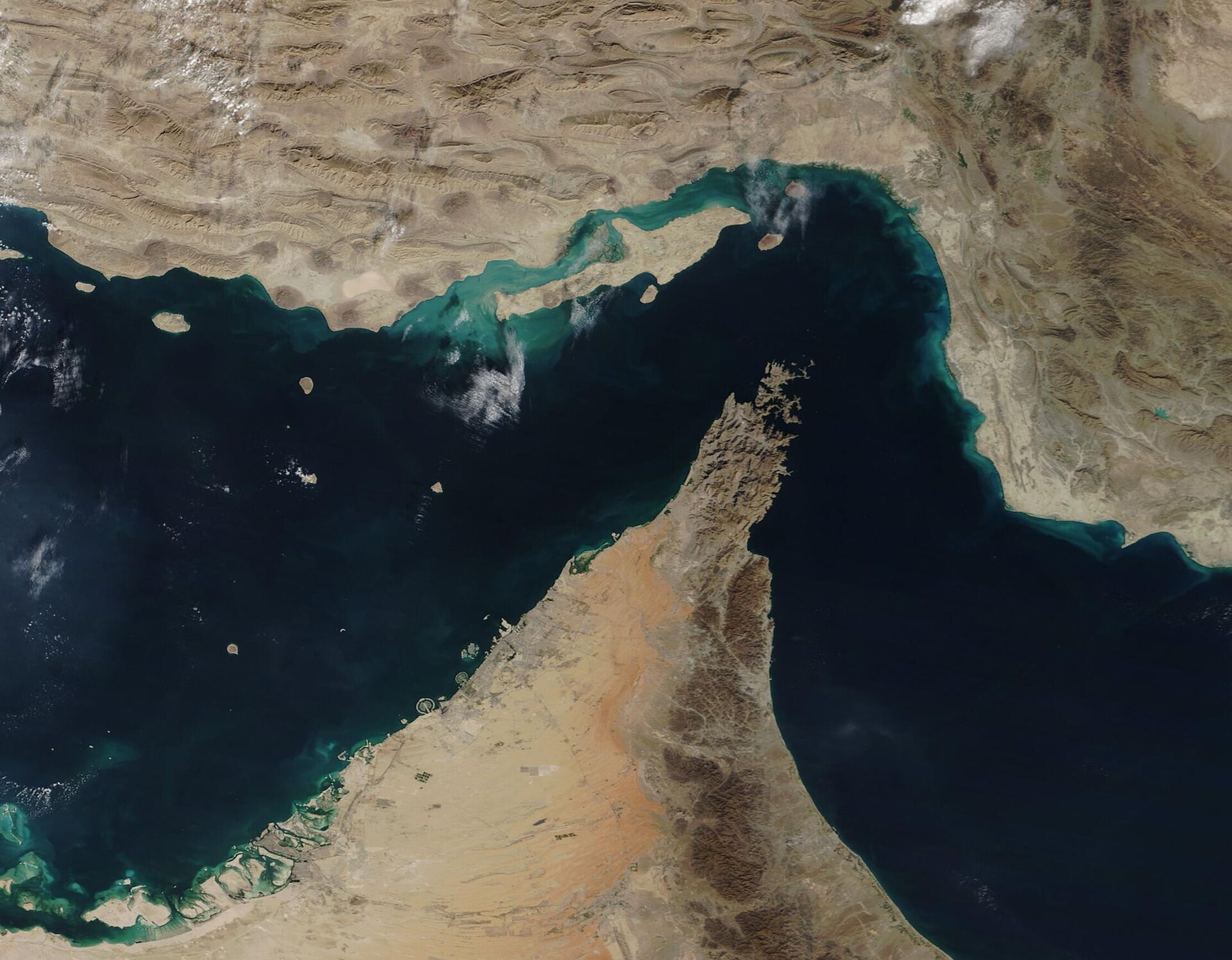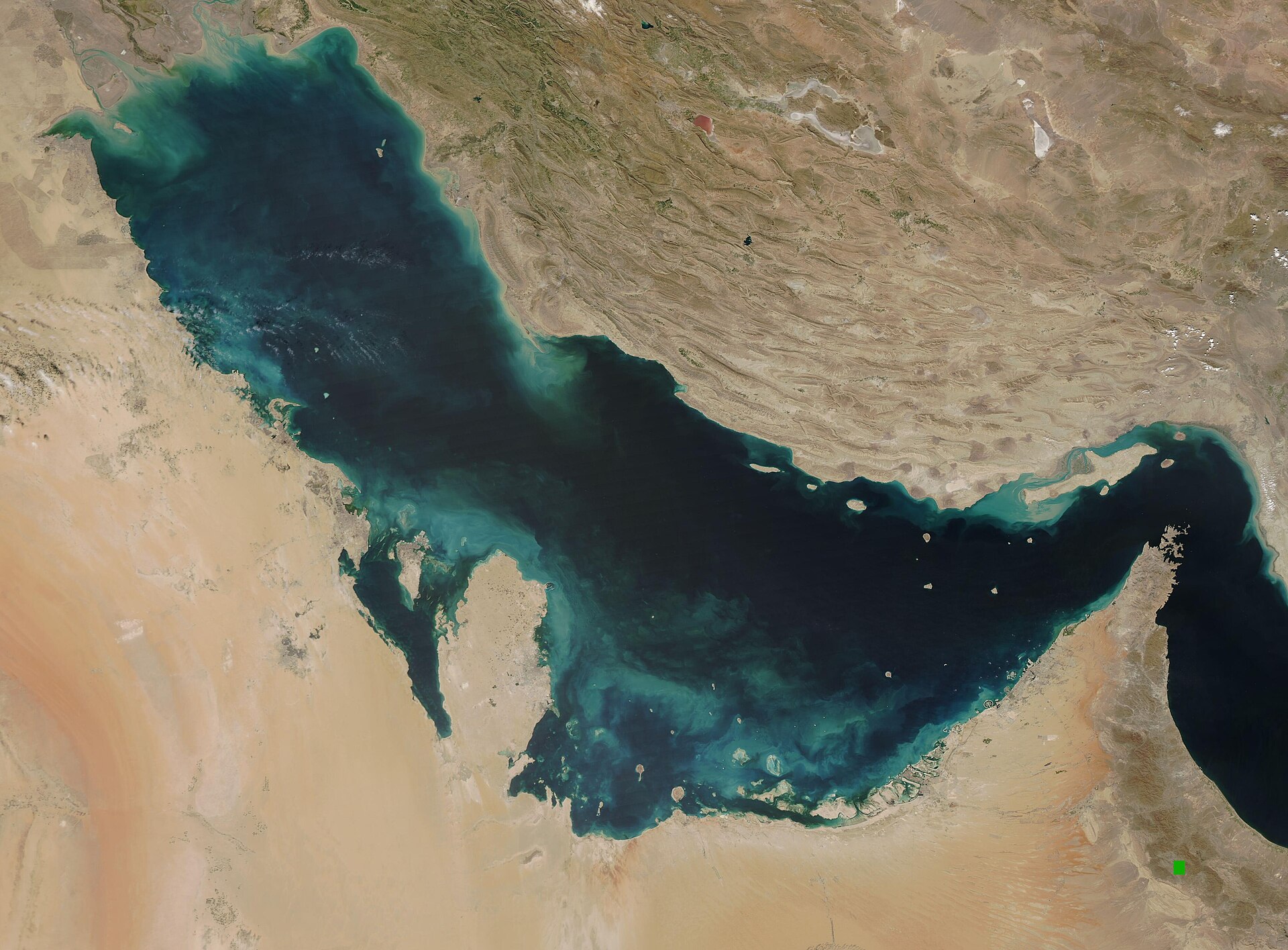

DUBAI — Brent crude hit $111.04 a barrel at 8:45 AM Eastern on Thursday as markets priced in what the Trump-Xi Beijing summit’s language could not conceal: the IRGC did not pause its maritime operations in Hormuz while the two presidents were declaring the strait “must remain open.” Hours after the summit concluded, Iran’s senior vice president Mohammadreza Aref appeared on state television to announce that the strait “has always been our property,” Treasury Secretary Scott Bessent conceded that China would work “to the extent anyone has any say over the Iranian leadership,” and the BRICS foreign ministers’ meeting in New Delhi ended without a joint statement.
The $111 price tag lands at the top of Saudi Arabia’s PIF-inclusive fiscal breakeven of $108–111 per barrel, according to Bloomberg Economics — territory where every cent of movement carries budget-year consequences for Riyadh. It is also a market verdict on a summit that produced agricultural trade commitments and a Taiwan communication channel but left the question that moves oil prices exactly where it was before Air Force One landed in Beijing: subject to IRGC operational decisions that neither Washington nor Beijing demonstrably controls. The events of the past 48 hours — the seizure of the Hui Chuan off Fujairah, the sinking of the MSV Haji Ali off Oman’s coast, and a toll-free corridor for approximately 30 Chinese tankers — did not arrive as a coordinated diplomatic message, and that incoherence is the story. That vulnerability was illustrated on May 18, when a single Tasnim report of an unconfirmed US oil sanctions waiver drove Brent $4 lower to $107.78 — below the Bloomberg breakeven — before the claim was walked back by the absence of any US official confirmation.
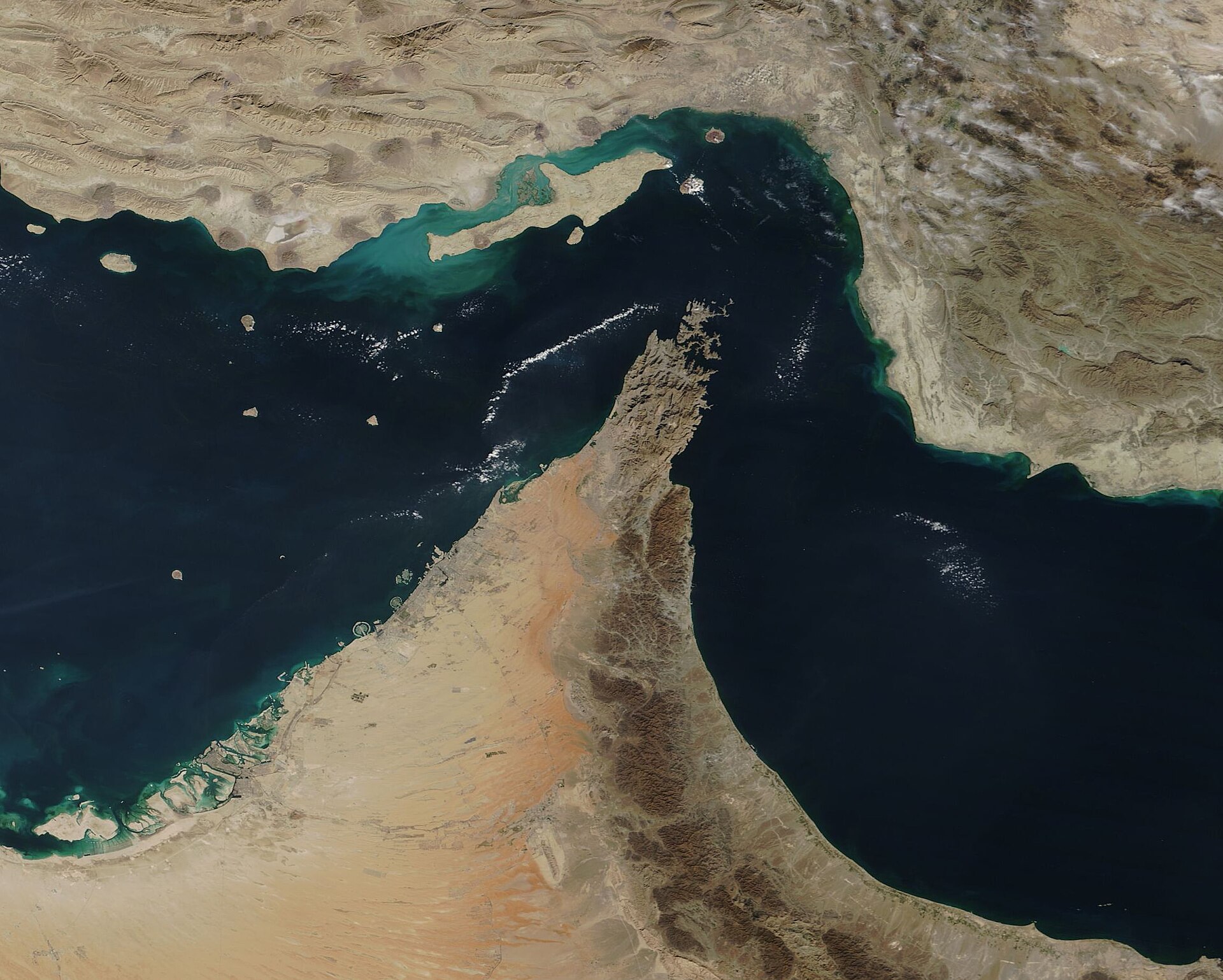
Table of Contents
What Did the Summit Produce on Hormuz?
The White House readout said Trump and Xi “agreed the Strait of Hormuz must remain open to support the free flow of energy,” according to CNN. That sentence contains no treaty framework, no monitoring body, no verification mechanism, and no specified consequence for non-compliance — it is an expression of shared preference, not an operational commitment. Secretary of State Marco Rubio, briefing reporters after the summit, said “the Chinese side said they are not in favor of militarizing the Straits of Hormuz, and they’re not in favor of a tolling system, and that’s our position,” per NBC News — language that describes what both sides oppose without specifying what either will do about it.
China’s Xinhua readout was more revealing in what it omitted. The state news agency reported that Xi and Trump “exchanged views on major international and regional issues including the Middle East situation,” according to Xinhua — Iran was not mentioned by name, the IRGC was not referenced, Hormuz appeared nowhere in the Chinese text. Beijing’s summit preparation had been oriented around avoiding an on-record Hormuz commitment that the IRGC could publicly reject, and the Xinhua readout achieved exactly that objective. The gap between the White House’s “agreed the Strait must remain open” and Xinhua’s silence on the subject is not a translation discrepancy — it is two governments describing the same meeting for two different audiences, with the Chinese version calibrated for Tehran.
Trump, asked directly about Iran as he departed Beijing, told reporters: “We may have to do a little cleanup work,” per CNN and Fox News. Xi pledged not to send military equipment to Iran, according to Time and Fox News — a commitment that addresses arms transfers but has no bearing on the IRGC’s existing naval capability, its mine inventory, or its ability to board, seize, and divert commercial vessels using fast-attack craft already in theater. The summit’s Hormuz output amounts to a shared diagnosis without a prescription, delivered the morning after the patient’s condition worsened on live television.
Thirty Tankers Toll-Free, One Vessel Seized
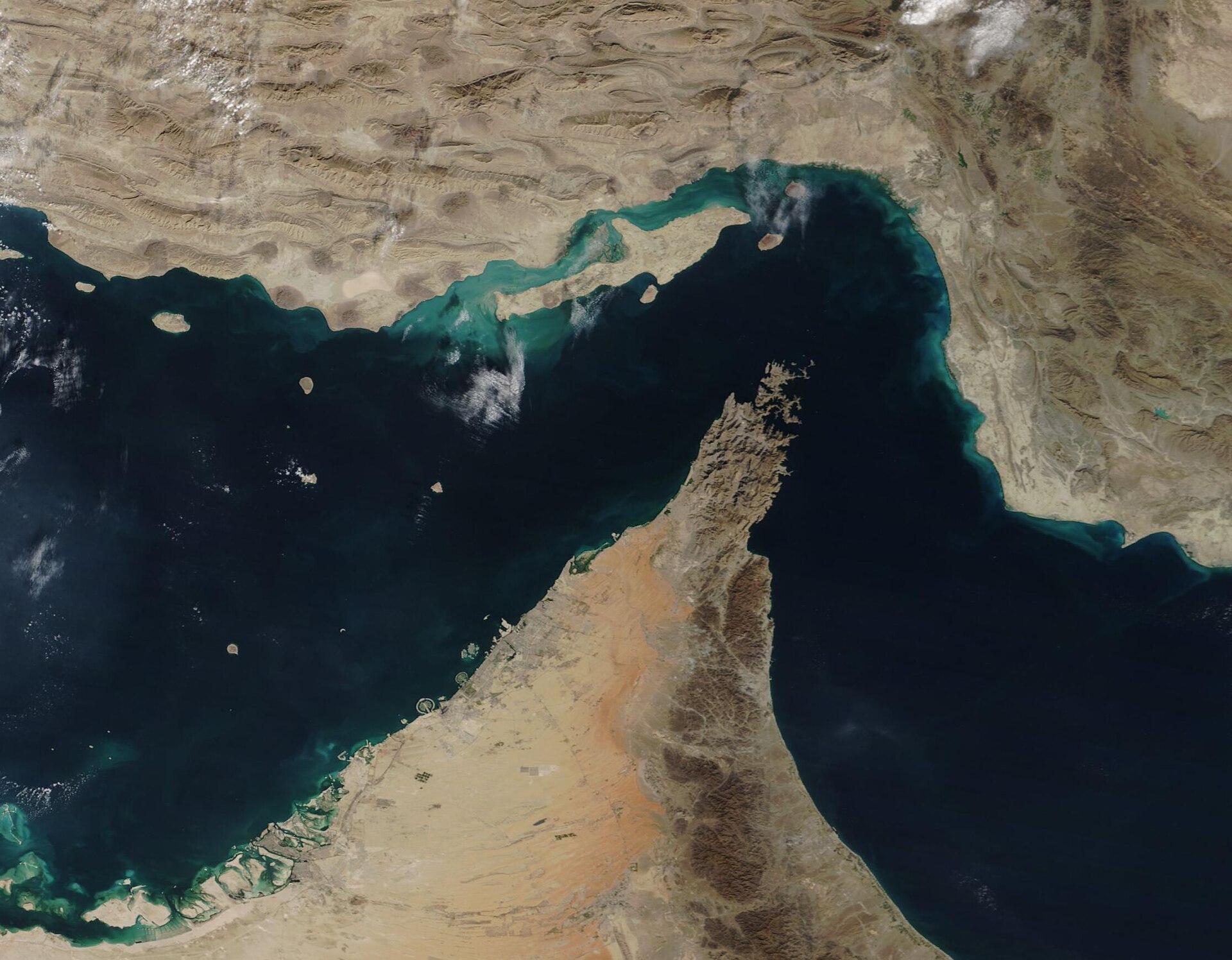
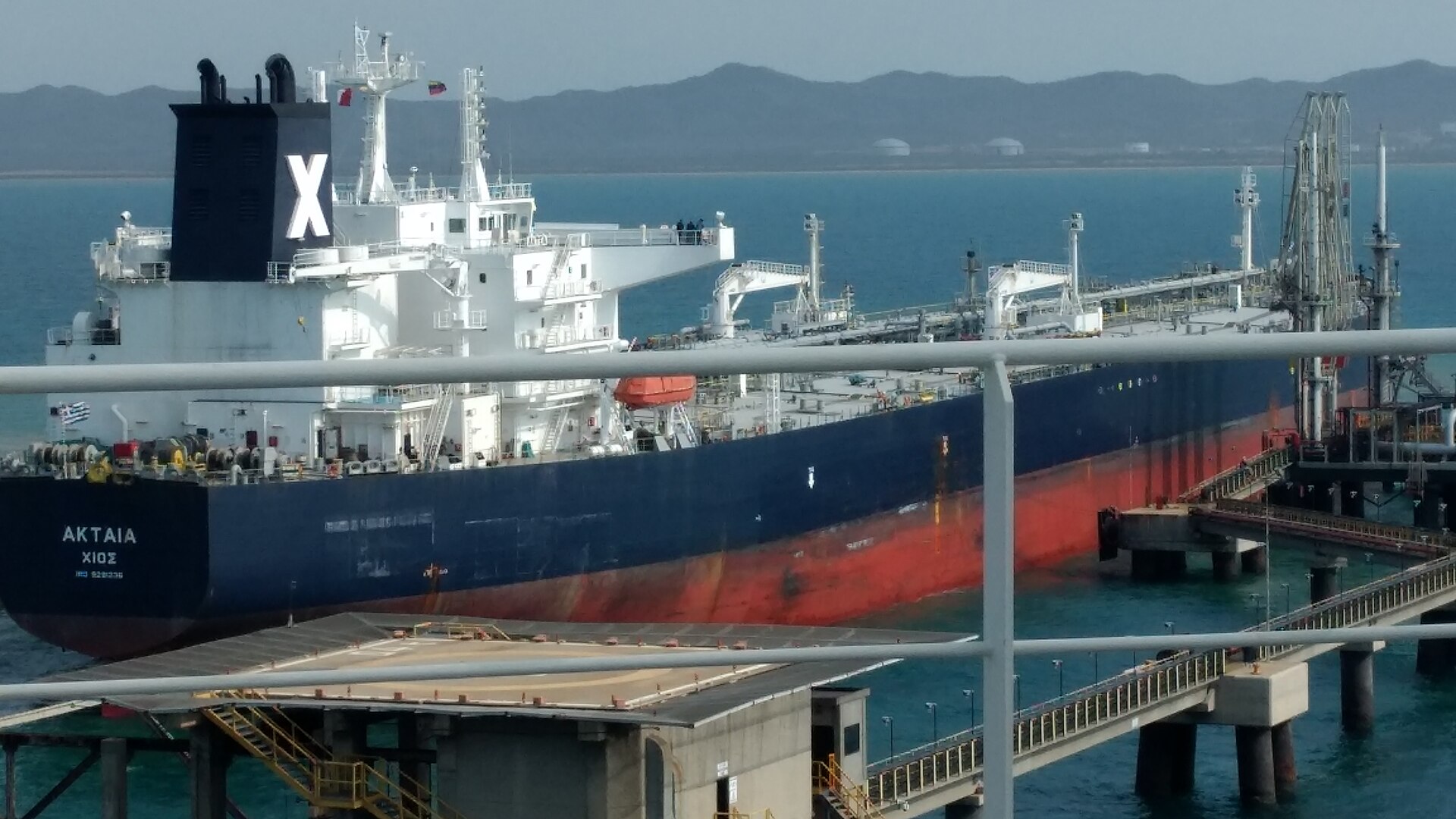
Iran’s state broadcaster IRIB reported that approximately 30 Chinese-linked commercial vessels transited the Strait of Hormuz toll-free overnight on May 13–14, according to Al Jazeera — a concession that coincided with the summit’s opening day and was broadcast as evidence of Iran’s orderly stewardship of the waterway. Under the IRGC’s Persian Gulf Security Authority tolling regime, which expanded its transit zone tenfold on May 7 to cover approximately 200–300 nautical miles from Jask to Siri Island per CNN and PBS, commercial vessels face an average toll of $2 million per transit according to ship broker estimates reported by ZeroHedge. The toll exemption for 30 vessels represents roughly $60 million in waived fees — a tangible gift to Beijing timed to coincide with the summit, and evidence that Iran’s government can, when the commercial incentive aligns, direct IRGC maritime behavior.
The Middle East briefing 3,000+ readers start their day with.
One email. Every weekday morning. Free.
The same night, an IRGC boarding team seized the Honduras-flagged Hui Chuan, a 754-gross-ton floating armory operated by SG Navigation of the Marshall Islands, at anchor 38 nautical miles northeast of Fujairah, according to UKMTO and Riviera Maritime Media. The vessel’s AIS transponder was deactivated after boarding, and it was diverted toward Iranian territorial waters. Floating armories are legal maritime security mechanisms — offshore platforms that store weapons for privately contracted armed security personnel protecting commercial vessels against piracy — but Iran has consistently framed them as illegal weapons caches, and the Hui Chuan’s seizure followed the pattern of IRGC operations that accelerate during diplomatic moments rather than pause for them.
The MSV Haji Ali, an Indian-flagged wooden cargo vessel carrying approximately 4,000 sheep and goats, had already sunk off Limah on Oman’s northern coast after an explosion and fire at approximately 03:30 local time on May 13, per India Shipping News and Bloomberg. All 14 Indian crew were rescued by the Omani Coast Guard and taken to Dibba port, according to Business Standard, but the cargo was a total loss. No claim of responsibility has been made for either incident, NPR reported on May 15 — but the operational pattern, a seizure and a sinking within hours of each other inside the expanded PGSA zone during a summit whose stated purpose included Hormuz, speaks to an IRGC command structure that does not synchronize its operations with Beijing’s diplomatic calendar.
Can Beijing Compel the IRGC to Stand Down?
Bessent’s qualifier — “to the extent anyone has any say over the Iranian leadership” — is the phrase the summit will be remembered by in energy markets, because it concedes the structural problem that the joint statement’s aspirational language was designed to paper over. Speaking to CNBC on May 14, Bessent said “China has a much bigger interest in reopening the strait than the U.S. does” and predicted that “China will be working behind the scenes” — language that delegates the operational challenge to Beijing while acknowledging, in the same breath, that Beijing’s ability to deliver is an open question. Defense Secretary Pete Hegseth has previously testified that China has “a lot of leverage” over Iran because it purchases roughly 90 percent of Iran’s crude oil exports, but the influence thesis assumes a unified Iranian decision-making structure that the evidence of the past 76 days does not support.
“China will be working behind the scenes to the extent anyone has any say over the Iranian leadership.”
— Scott Bessent, US Treasury Secretary, CNBC, May 14, 2026
China accounts for approximately 90 percent of Iran’s crude exports and roughly 13 percent of China’s own total oil imports, according to the Foundation for Defense of Democracies — a dependency that produces an estimated 45 percent of Iran’s total government budget, per FDD and AJC analysis. That commercial relationship gives Beijing influence over the Iranian government’s fiscal position, but the IRGC does not run on the government budget. The Guards operate a parallel economy through the Khatam al-Anbiya Construction Headquarters, and their naval operations in Hormuz derive authority from Article 110 of Iran’s constitution, which requires Supreme Leader ratification — ratification that has been functionally unavailable since Khamenei retreated to an undisclosed location and has been absent or audio-only for over 70 days, per Fox News and Time.
The toll-free passage of approximately 30 Chinese tankers demonstrates that Beijing can buy selective treatment for its commercial fleet — but it cannot prevent the IRGC from seizing non-Chinese vessels on the same night, or from expanding its claimed jurisdiction tenfold the week before a bilateral summit with the United States. Drew Thompson, an analyst, told Al Jazeera on May 15 that Washington and Beijing “remain deeply distrustful after years of unmet expectations, with both sides accusing the other of breaking promises” — a dynamic that makes sustained Chinese enforcement of IRGC compliance even less plausible. Two Chinese firms, MizarVision and Empostate, have allegedly provided the IRGC with high-definition commercial satellite imagery of US military assets, according to FDD and Small Wars Journal — an intelligence relationship that complicates Beijing’s posture as a neutral mediator capable of restraining Iranian behavior.
Iran’s Five Conditions and the BRICS Dead End
Iran’s senior vice president Aref did not merely assert sovereignty over the strait — he outlined five preconditions for Iran to enter negotiations with the United States, according to NPR’s May 15 report: reparations for war damage, recognition of Iranian sovereignty over Hormuz, lifting of the US naval blockade, withdrawal of American forces from the region, and cessation of strikes against Iranian territory. Each condition would individually be a non-starter in Washington; collectively, they function as a broadcast declaration that Iran does not intend to negotiate on terms the summit envisioned. Aref’s phrasing — “it has always been our property” — directly contradicts UNCLOS Article 38’s transit passage provisions and the joint statement’s “must remain open” language, and it was delivered on state television, meaning it was not a leaked diplomatic position but a chosen public stance.
The BRICS foreign ministers’ meeting in New Delhi, which concluded on May 15, offered Iran’s foreign minister Abbas Araghchi a multilateral stage to press Tehran’s case — and it produced nothing actionable. Araghchi called on BRICS members to condemn the US-Israeli military campaign, but UAE resistance blocked any joint position, and the meeting ended with an explicit acknowledgment of “differing views” rather than a joint statement, Al Jazeera reported. Araghchi separately told reporters that Tehran would “never bow to any pressure,” per Al Jazeera — a formulation consistent with Aref’s five conditions and with the pre-summit assessment that Beijing would not deliver Iranian concessions at the table. The two forums most likely to produce a multilateral framework — a US-China bilateral and a BRICS ministerial — both concluded within 24 hours of each other, and neither generated an enforceable commitment on the strait.
Saudi Arabia at the Breakeven Line
At $111.04 per barrel, Brent sits at the top of the $108–111 range that Bloomberg Economics calculates as Saudi Arabia’s PIF-inclusive fiscal breakeven — the price at which the Kingdom’s budget, including sovereign wealth fund obligations, operates at zero margin. That figure already reflects a production environment in which Saudi March output fell to 7.25 million barrels per day, according to the IEA, down from 10.4 million bpd in February — a 30 percent collapse driven by the loss of Eastern Province facilities and the physical constraints of the East-West Pipeline bypass to Yanbu, which has an export ceiling of 4–5.9 million bpd against a 7 million bpd pipeline design capacity.
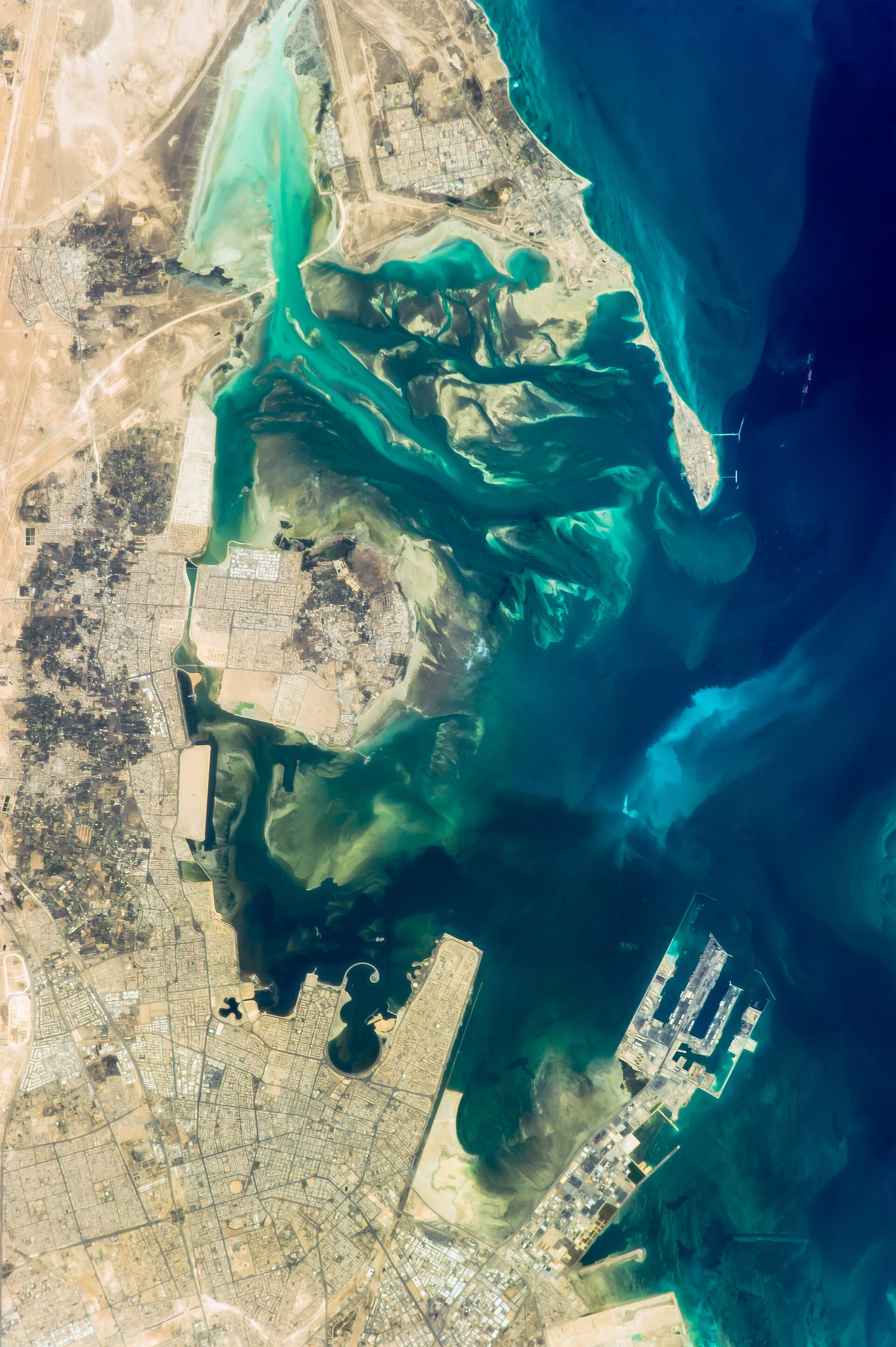
The arithmetic is unforgiving at any oil price below the breakeven, and only marginally better above it. Saudi Arabia’s pre-war export model was built on Hormuz access — Eastern Province terminals at Ras Tanura and Ju’aymah handled the majority of Asian-bound crude — and the Yanbu bypass, while operational, cannot replicate that throughput. Goldman Sachs has estimated a 6.6 percent GDP war-adjusted deficit for Saudi Arabia, roughly double the official 3.3 percent projection, and the gap between those figures is largely a function of Hormuz remaining under IRGC control. Every day the strait operates under PGSA tolling rules rather than UNCLOS transit passage norms, Riyadh absorbs the spread between what it can export through Yanbu and what it could export if Hormuz were open — a differential measured in millions of barrels per day and billions of dollars per quarter.
Background
The IRGC established the Persian Gulf Security Authority in early March 2026, initially claiming jurisdiction over a 20–30 nautical mile zone in the Strait of Hormuz, before expanding that zone tenfold on May 7 to cover approximately 200–300 nautical miles from Jask to Siri Island, according to CNN and PBS. The PGSA’s tolling system charges commercial vessels per transit, with selective exemptions — Chinese commercial tankers receive priority access, while floating armories, vessels with US military connections, and ships refusing to coordinate with the IRGC Navy face seizure or diversion. IRIB has framed the system as orderly management, declaring that the “best, fastest and easiest way to pass through this very important and strategic waterway is only through coordination with the IRGC Navy.”
The US imposed a naval blockade on Iranian ports effective April 13, creating what Bloomberg described as a “double blockade” — the US controlling Arabian Sea entry and the IRGC controlling Gulf of Oman exit, meaning vessels require both parties’ approval for transit. Since the April 8 ceasefire, only approximately 45 transits have occurred, representing 3.6 percent of the pre-war baseline. Throughout the conflict, the IRGC has shown a consistent pattern of stepping up operations precisely when diplomacy creates an expectation of restraint: it seized the MSC Francesca and the Epaminondas on April 22 — the day Ghalibaf formally linked Hormuz reopening to US blockade removal — and struck an East-West Pipeline pumping station on April 8, the day the ceasefire took nominal effect.
The Trump-Xi Beijing summit was the first face-to-face meeting between the two leaders since the Iran conflict began on February 28, 2026, preceded by a Vance-Ghalibaf meeting in Islamabad on April 11 — the first direct US-Iran talks since 1979. China’s role as a potential intermediary rests on its position as Iran’s dominant oil customer, but its commercial intelligence relationships with the IRGC complicate any neutrality claim. The $111 Brent close on Thursday, up approximately $46 from a year ago according to Fortune, is a market judgment that neither Beijing’s economic leverage over Tehran nor Washington’s naval presence in the Arabian Sea has yet changed what the IRGC does in the strait.
The fiscal cost of that impasse to Saudi Arabia is now on the record. The fiscal arithmetic now constraining Riyadh’s options includes a Q1 2026 deficit of $33.5 billion — running at $11.2 billion per month against a revenue base the production collapse has made structurally insufficient regardless of where Brent trades.
Frequently Asked Questions
What is a floating armory and why was the Hui Chuan seized?
Floating armories are vessels anchored in international waters that store weapons for privately contracted armed security personnel who board commercial ships to protect them from piracy in high-risk areas such as the Gulf of Oman and the Indian Ocean. The practice is legal under international maritime law and regulated by flag state authorities. The Hui Chuan, a 754-gross-ton Honduras-flagged vessel operated by SG Navigation of the Marshall Islands (IMO 8316895), was one such armory, anchored 38 nautical miles northeast of Fujairah. Iran has systematically framed floating armories as illegal weapons caches, and their seizure serves a dual purpose: it eliminates armed security aboard commercial vessels transiting IRGC-controlled waters, making them more vulnerable to boarding, and it provides propaganda material about alleged weapons smuggling near Iranian waters.
How does China pay Iran for its oil purchases — and does that matter for leverage?
China settles the vast majority of its Iranian crude purchases in yuan through Kunlun Bank, a Chinese state-linked institution that operates outside the SWIFT network and was specifically established to process Iran-related transactions after US sanctions closed dollar channels, according to Reuters and Bloomberg. That payment architecture makes China’s oil purchases sanction-proof from the US side, but it also means Washington cannot threaten to disrupt the payment channel as a coercive tool without sanctioning a Chinese state bank — a step that would trigger a broader financial confrontation. From Beijing’s perspective, the yuan-denominated channel is an asset to protect, not a lever to pull: any public pressure on Iran that jeopardised Iranian willingness to accept yuan settlement would undermine China’s broader effort to internationalise its currency in commodity markets.
Has China publicly criticized IRGC seizures of vessels?
Beijing has not publicly objected to IRGC seizures during the conflict, even when Chinese commercial interests were affected. Earlier in the war, the IRGC blocked Chinese vessels despite official Iranian passage guarantees, and Beijing did not publicly voice displeasure, according to Al Jazeera and GIS Reports. This pattern — commercial accommodation through toll-free passage for Chinese tankers, combined with silence on non-Chinese seizures — suggests Beijing has accepted a transactional arrangement with the IRGC rather than seeking systemic change to the tolling regime. The Xinhua readout’s omission of Iran by name from the summit communiqué is consistent with this posture: Beijing avoids public positions that would require enforcement.
What are Iran’s five conditions for resuming negotiations with the US?
Senior Vice President Aref outlined five preconditions on state television on May 15, per NPR: reparations for war damage, formal recognition of Iranian sovereignty over the Strait of Hormuz, lifting of the US naval blockade of Iranian ports, withdrawal of American military forces from the region, and a complete cessation of strikes against Iranian territory. Iran has a documented history of maximalist opening positions in negotiations — the 2015 JCPOA talks began with Iranian demands including the immediate lifting of all sanctions and no limitation on advanced centrifuge development, both of which were eventually compromised — but the conditions Aref named on Thursday carry structural weight that prior opening bids did not: two of the five (sovereignty recognition and force withdrawal) require the US to reverse positions it has not signalled any willingness to revisit, rather than simply offering concessions in a phased framework.
What happens if Brent crude falls below Saudi Arabia’s fiscal breakeven?
Saudi Arabia’s PIF-inclusive fiscal breakeven — the oil price at which the government budget, including Public Investment Fund commitments, balances — sits at $108–111 per barrel, according to Bloomberg Economics. Below that range, Riyadh would need to either draw down reserves, reduce PIF investment commitments funding Vision 2030 megaprojects including NEOM, The Line, and the Red Sea tourism corridor, or increase sovereign debt issuance. Goldman Sachs has estimated a war-adjusted deficit of 6.6 percent of GDP, roughly double the official 3.3 percent projection, suggesting the Kingdom is already operating below its effective breakeven when infrastructure damage and production losses from the loss of Eastern Province export terminals are factored in.
Trump’s return from Beijing without a deal closes the diplomatic window that briefly suppressed oil prices. Saudi Arabia’s structural limits in a second round examines how Riyadh is positioned to absorb renewed escalation with PAC-3 stocks at 14%, production at 7.25 million bpd, and the Yanbu pipeline at capacity.