WASHINGTON — The Pentagon’s “Operation Sledgehammer” exists primarily as a legal device. According to NBC News reporting confirmed May 12, the rename from “Epic Fury” is explicitly designed to allow the White House to argue that a fresh 60-day War Powers Resolution clock starts the moment Sledgehammer begins — same forces, same conflict, same theatre commander, new operation name, new clock.
The argument is circular. It is also unfalsifiable in a federal courtroom, which is the point. Kosovo 1999 ran 78 days past authorisation. Libya 2011 ran longer. No court has ever enforced the War Powers Resolution against a sitting president, and the Trump administration’s lawyers know it.
What they cannot rename is the runway. Sledgehammer’s intensified bombing campaign and Special Operations raids to seize Iranian nuclear material — Kharg Island is on the target list — require Prince Sultan Air Base, Saudi airspace, and Saudi tanker support. On May 4, when Trump launched “Project Freedom” without notifying Riyadh, Mohammed bin Salman suspended all three within hours. The operation was paused inside 36 hours. The first Trump–MBS call to restore basing failed. The second succeeded on terms that remain officially undisclosed.
The ceasefire formally expires today.
Table of Contents
- Sledgehammer as a Clock-Reset Mechanism
- What is Operation Sledgehammer?
- The Hegseth Doctrine: “Pauses or Stops”
- Kosovo, Libya, and the Non-Justiciable Loophole
- Did Trump Bypass the War Powers Resolution on May 1?
- Prince Sultan Air Base and the MBS Veto
- Project Freedom as Dress Rehearsal
- What Does MBS Actually Want from Sledgehammer?
- Iran’s Restoration During the Ceasefire
- PAC-3 Stockpile and the Saudi Defensive Floor
- What Happens If MBS Vetoes Again?
- Frequently Asked Questions
Sledgehammer as a Clock-Reset Mechanism
NBC News reported May 12 that internal Pentagon planning discussions have surfaced “Operation Sledgehammer” as the proposed name for any resumption of major combat operations against Iran. The reason offered by officials briefed on the planning is not strategic. It is statutory. A new operational designation, the administration’s lawyers intend to argue, constitutes a new use of armed forces under the War Powers Resolution — and therefore a fresh 60-day window before Congress must vote.
The 1973 statute reads that within 60 days of notifying Congress of armed forces “introduced into hostilities or into situations where imminent involvement in hostilities is clearly indicated by the circumstances,” the president must obtain authorisation or withdraw. The text contains no provision for pausing the clock during a ceasefire. It contains no provision for restarting it via operational renaming. Both arguments are administrative innovations the Trump legal team is preparing to deploy in sequence.
The Middle East briefing 3,000+ readers start their day with.
One email. Every weekday morning. Free.
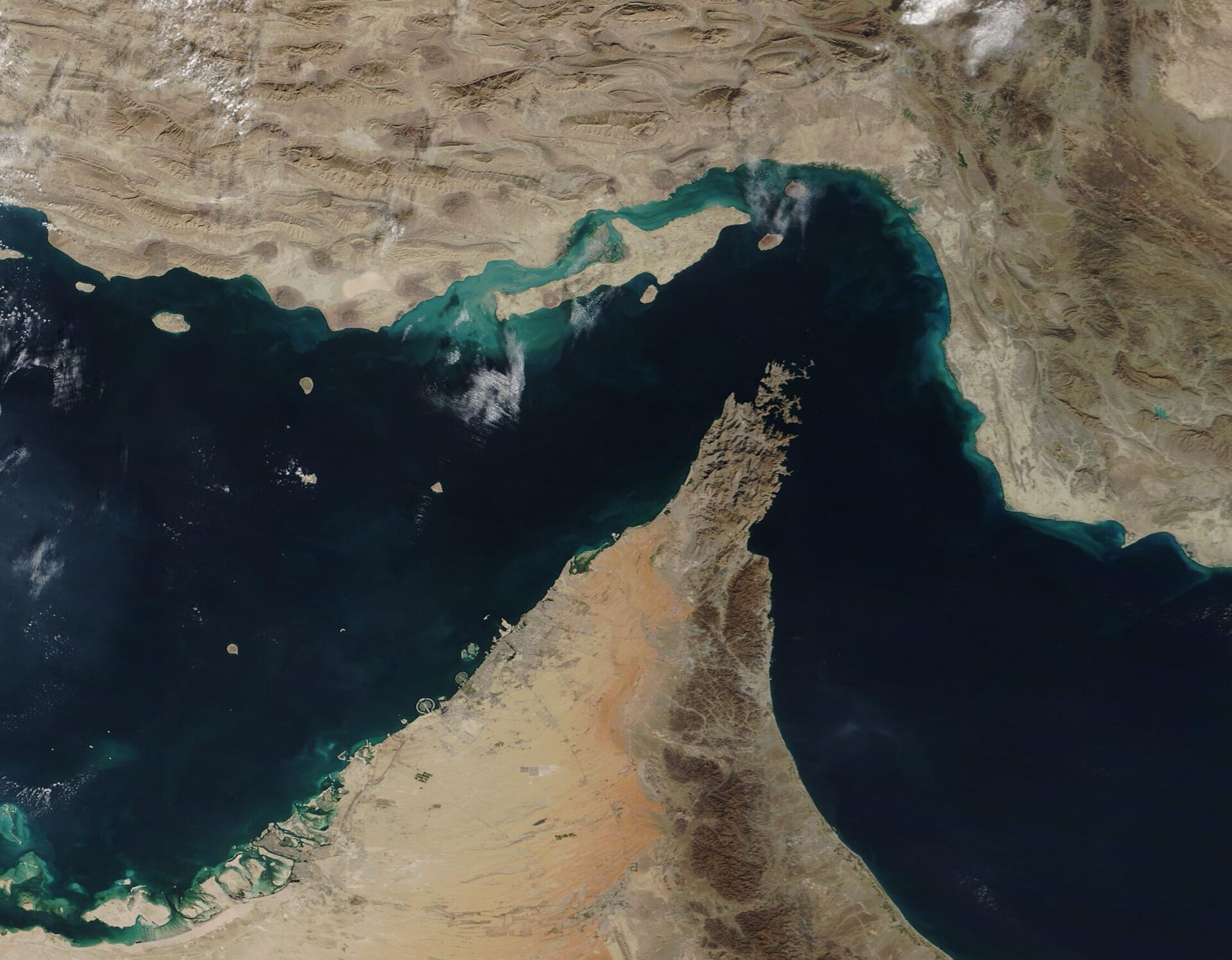
Curtis Bradley, a leading scholar of presidential war powers, told the Daily Caller on May 1 that the threshold question has already been answered. “The issue is whether the United States is still using the U.S. armed forces in connection with the conflict,” Bradley said. “Given that the U.S. military is imposing a blockade on the Strait of Hormuz, it seems to me that the armed forces are still being used in the conflict.”
The CENTCOM order of battle in theatre as of mid-May supports Bradley’s reading: 15,000 service members, more than 100 aircraft, two carrier strike groups (one added since Epic Fury began), guided-missile destroyers conducting interdiction patrols in the Gulf of Oman. A US official quoted by NBC News stated: “We are in a better spot now than on February 27. We have more firepower and capability.”
What is Operation Sledgehammer?
Sledgehammer, per the NBC News reporting and corroborating accounts from Republic World on May 16, comprises two primary tracks. The first is an intensified bombing campaign targeting Iranian military infrastructure that survived the February–April phase of Epic Fury. The second is a Special Operations raid component to seize Iranian nuclear material directly — a contingency PressTV invoked Tabas 1980 against within hours of the NBC story breaking, referencing Carter’s failed hostage rescue as a warning against in-country SOF operations.
The named target list includes Kharg Island, which handles more than 90 percent of Iran’s crude exports. Kharg was held off the Epic Fury target deck in February in deference to Chinese off-take continuity. Its appearance in Sledgehammer planning suggests the Treasury–State coordination that protected it has been overridden — or that the planners are no longer required to consult Treasury at all.
Featured-snippet answer: Operation Sledgehammer is the proposed Pentagon contingency to replace Operation Epic Fury if the Iran ceasefire collapses. It combines an intensified air campaign with Special Operations raids targeting nuclear material and Iran’s Kharg Island oil terminal. The rename is designed to argue a new 60-day War Powers Resolution clock.
Gen. Dan Caine, Chairman of the Joint Chiefs, told the Senate Appropriations Committee on May 12 that Iran has conducted attacks on nine commercial vessels, seized two container ships, and made more than ten attempts targeting US forces during the ceasefire period. Caine assessed all of them “below the threshold of restarting major combat operations” — a phrase that is itself a War Powers artefact, structured to keep the existing clock from resuming rather than to characterise the actual operational tempo.
The Hegseth Doctrine: “Pauses or Stops”
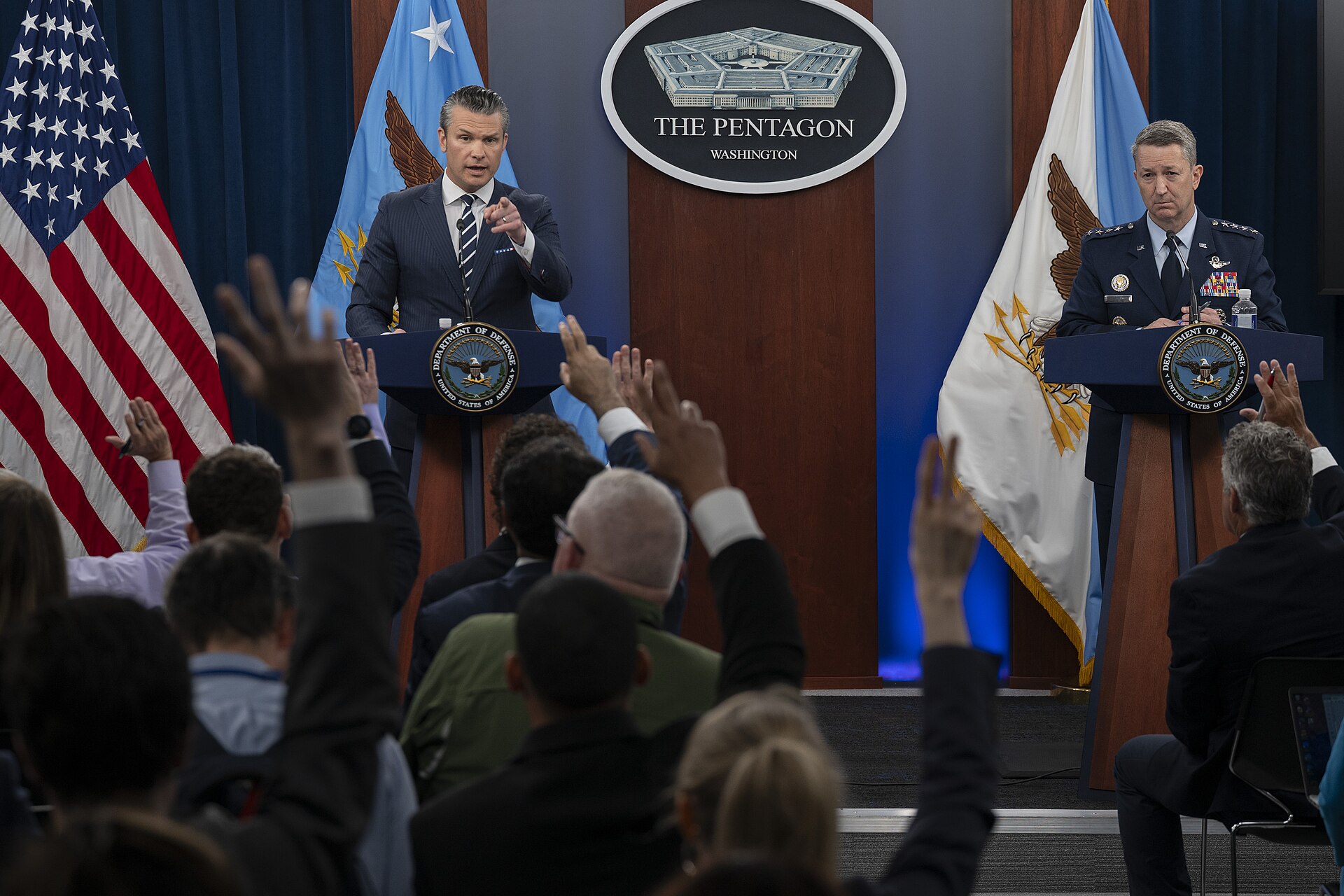
Defense Secretary Pete Hegseth introduced the administration’s affirmative legal position before the same Senate Appropriations Committee on May 12. “We are in a ceasefire right now, which our understanding means the 60-day clock pauses or stops,” Hegseth told the committee. He added: “Our view is that he has all the authorities he needs under Article 2.”
The first sentence is a statutory claim with no statutory text behind it. The 1973 Resolution contains no pause mechanism. The second sentence is the Article II constitutional argument every administration since Nixon has held in reserve — that the commander-in-chief power renders the War Powers Resolution itself unconstitutional. Marco Rubio articulated the same position more bluntly: “We don’t acknowledge the law as constitutional; nonetheless, we comply with elements of it for purposes of maintaining good relations with Congress.”
Republican Senator Susan Collins crossed party lines on a measure requiring congressional approval for future Iran military action. “The Constitution gives Congress an essential role in decisions of war and peace, and the War Powers Act establishes a clear 60-day deadline for Congress to either authorize or end U.S. involvement in foreign hostilities,” Collins said in her floor statement.
The issue is whether the United States is still using the U.S. armed forces in connection with the conflict. Given that the U.S. military is imposing a blockade on the Strait of Hormuz, it seems to me that the armed forces are still being used in the conflict.Curtis Bradley, war powers scholar
Trump’s own framing of the ceasefire’s durability cuts against Hegseth’s pause argument. “I would say the ceasefire is on massive life support, where the doctor walks in and says, ‘Sir, your loved one has approximately a 1% chance of living,’” Trump told reporters earlier this month. If the ceasefire is functionally inoperative, the predicate for the Hegseth pause collapses. If the ceasefire is operative, the predicate for Sledgehammer collapses. The administration is asserting both simultaneously, which is the standard posture for legally indefensible positions in the early stages of their deployment.
Kosovo, Libya, and the Non-Justiciable Loophole
The legal argument the Sledgehammer planners are constructing has two parents. The first is Campbell v. Clinton (1999), in which a group of House members sued the Clinton administration over the Kosovo air campaign after it ran past the 60-day deadline. The federal district court dismissed the case on June 8, 1999, holding the question non-justiciable — meaning no federal court would adjudicate it. Clinton’s bombing continued for another 18 days. Total duration: 78 days, none of them congressionally authorised.
The second is Harold Koh’s June 28, 2011 testimony before the Senate Foreign Relations Committee defending the Obama administration’s argument that Libya operations did not constitute “hostilities.” Koh, then the State Department Legal Adviser, argued that because there were no “significant armed confrontations” with US forces and the US played a “constrained and supporting role,” the threshold for War Powers Resolution coverage was not met. Legal scholars across the political spectrum rejected the argument. Courts declined to rule on it.
| Precedent | Operation | Duration without authorisation | Outcome |
|---|---|---|---|
| Campbell v. Clinton (1999) | Kosovo air campaign | 78 days | Dismissed as non-justiciable |
| Koh Libya doctrine (2011) | Operation Unified Protector | ~7 months | “Not hostilities”; no judicial ruling |
| Trump Yemen strikes (2017–2020) | Multiple named operations | Continuous | WPR resolutions vetoed |
| Biden Yemen strikes (2024–2025) | Operation Poseidon Archer | 14+ months | No authorisation sought |
| Trump Iran (2026) | Epic Fury → Sledgehammer (proposed) | Day 78 today | Rename–reset argument staged |
The Sledgehammer rename is a third innovation built on the first two. Campbell establishes that courts will not enforce the deadline. Koh establishes that the executive can redefine “hostilities” to exclude its own conduct. Sledgehammer combines both: the operation is renamed so a fresh clock can be claimed, and even if the clock claim fails, the courts have already refused jurisdiction over the question.
The legal-academic consensus, surveyed by CNN on April 25 and Al Jazeera on May 1, is that neither argument has textual support. The statute does not contemplate clock-pausing during ceasefires and does not contemplate clock-resetting via operational rebranding. The consensus does not matter. The non-justiciability holding from 1999 means the administration can lose every academic argument and still prevail in every federal court that hears the case.
Did Trump Bypass the War Powers Resolution on May 1?
The 60-day clock that began February 28 expired on the night of April 29 or, depending on the notification-date count, May 1. The administration’s response was a one-paragraph letter from Trump to Congress dated May 1: “There has been no exchange of fire between United States Forces and Iran since 7 April, 2026. The hostilities that began on 28 February, 2026, have terminated.”
Featured-snippet answer: The Trump administration argues the War Powers Resolution clock terminated on April 7, 2026, the last confirmed exchange of fire with Iran, allowing the May 1 deadline to lapse without congressional action. Legal scholars including Curtis Bradley dispute this, citing the continuing US naval blockade of the Strait of Hormuz as ongoing use of armed forces in connection with the conflict.
The 22-day gap between April 7 and May 1 is the administration’s entire affirmative case. It is also the gap during which Iran restored access to 30 of its 33 Strait of Hormuz missile sites, conducted attacks on nine commercial vessels, seized two container ships, and made more than ten attempts targeting US forces — none of which generated US return fire, by design. The ceasefire’s value to the administration was always primarily statutory. Combat restraint generated the temporal predicate for the “hostilities have terminated” letter.
The same logic explains why Project Freedom on May 4 was structurally catastrophic for the administration’s legal position. The moment US forces resumed kinetic operations against Iran-aligned targets, the April 7 baseline collapsed. Sledgehammer’s rename mechanism is the contingency for that collapse: if the April 7 baseline cannot hold, a new operational name creates a new baseline, and the clock starts fresh from whatever date the administration chooses to characterise as the start of “Sledgehammer.”
Prince Sultan Air Base and the MBS Veto
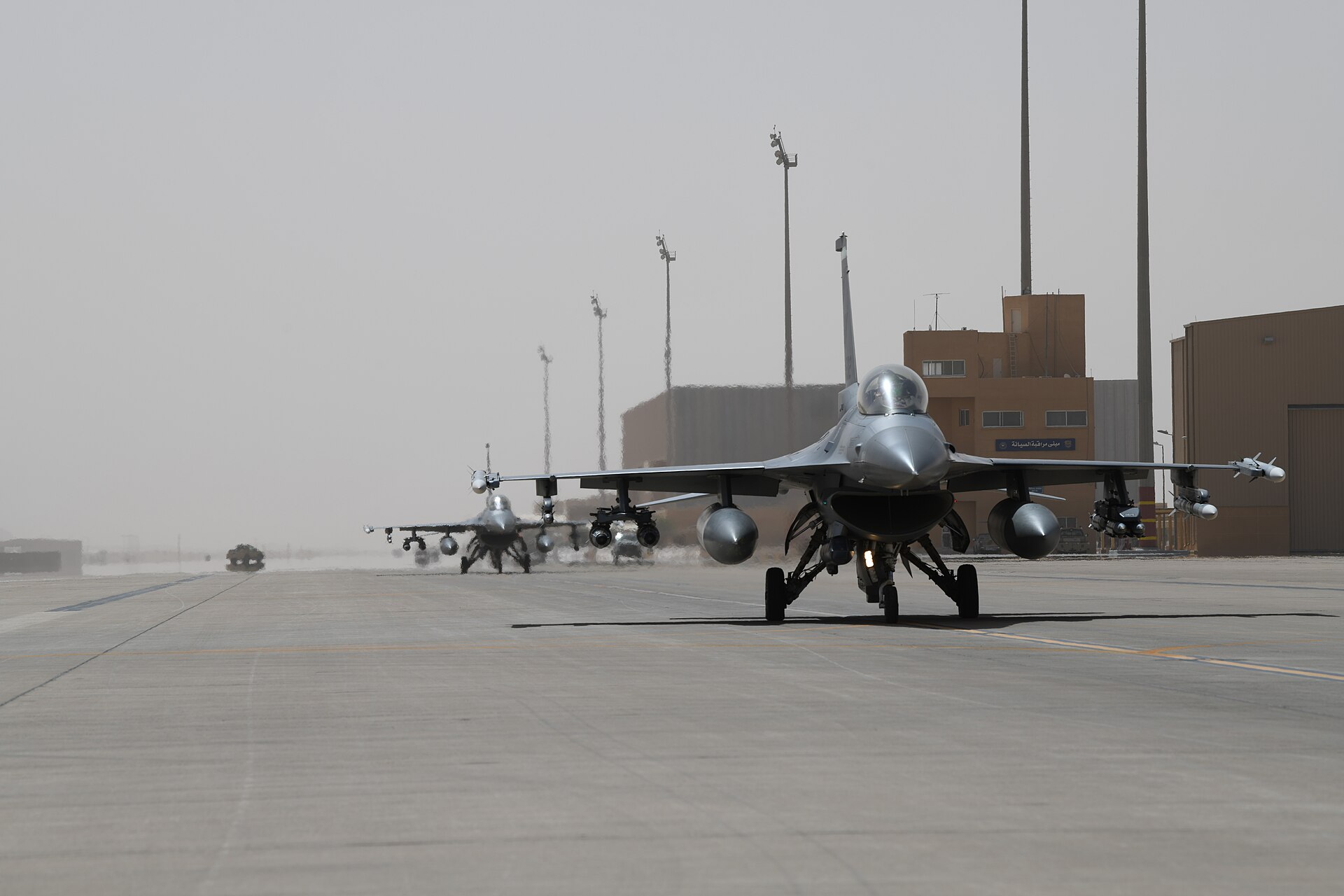
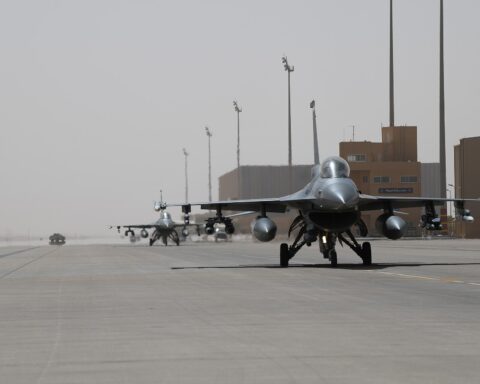
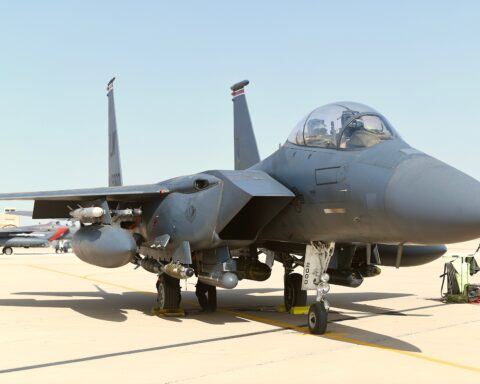
The operational architecture of Sledgehammer is structurally identical to Epic Fury. The bombing campaign runs from forward-deployed strike packages staged out of Prince Sultan Air Base southeast of Riyadh — the consolidated CENTCOM Combined Air Operations Center hub since the 2003 Doha relocation. The Special Operations raid component requires Saudi overflight, Saudi tanker support, and Saudi search-and-rescue corridors. Without any of those, Sledgehammer is a sortie list on a Tampa wall.
For the long-form analysis of why basing access has become the binding constraint, see Prince Sultan Air Base and the Price of American Access. The structural argument is that PSAB hosts the regional air-tasking order generation cell, meaning denial of access does not merely remove a runway — it removes the integration node through which CENTCOM’s regional strike packages are coordinated. Al Udeid in Qatar can absorb some of the load. It cannot absorb all of it, and Qatar has its own basing-denial posture from the November 2025 cycle that has not been retracted.
The Saudi veto first became operationally visible on May 4. Trump announced Project Freedom — a renewed strike package targeting Iranian command nodes and Hormuz mining infrastructure — without prior notification to Riyadh, Kuwait City, or any Gulf ally. Within hours, MBS suspended US access to Prince Sultan AB and Saudi airspace. Kuwait followed within the same news cycle. NBC News, Middle East Eye, and Ynet News all confirmed the suspension; the framing across all three was that the Gulf had moved as a bloc.
The pause came within approximately 36 hours. It was not a strategic reassessment. It was a basing denial. Saudi Arabia’s actual exercise of that veto — the full sequence from Trump’s announcement to the two presidential phone calls — is reconstructed in a companion analysis.
Project Freedom as Dress Rehearsal
The most important factual element of the May 4–6 sequence is the structure of the recovery. A first Trump–MBS phone call failed to restore basing access. A second call succeeded. The Saudi position was set out in the first call by MBS himself, per sources briefed on its contents: “This is a historic opportunity — we must finish the job and weaken the Iranian regime once and for all.”
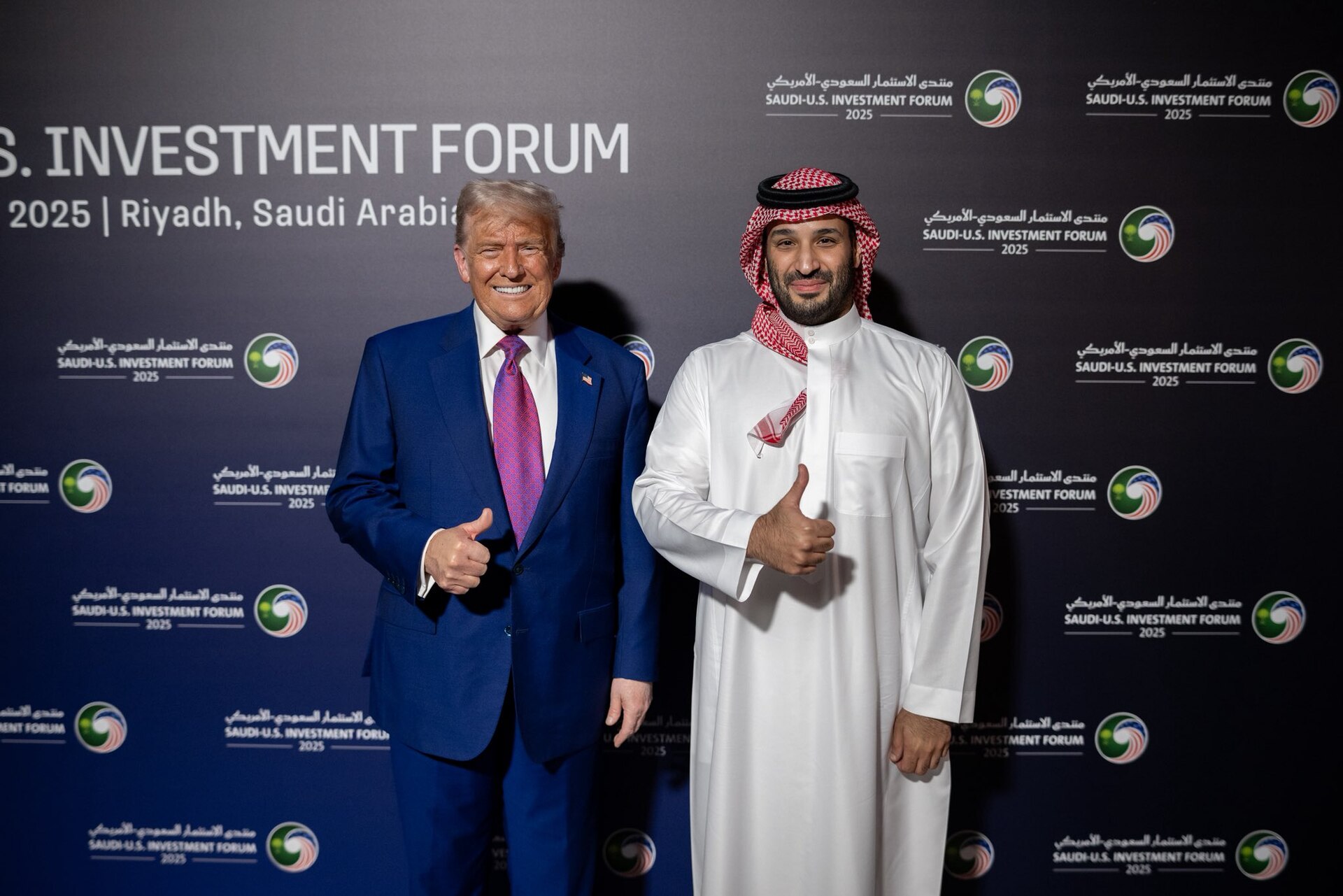
That sentence, properly read, is not an objection to Sledgehammer. It is a demand for Sledgehammer plus terms. The package MBS reportedly offered alongside it included $100 billion to finance war costs, full Israel normalisation contingent on regime change in Tehran, and a direct Saudi-to-Ashdod pipeline as part of post-conflict reconstruction. The veto MBS exercised on May 4 was not a refusal to participate. It was a refusal to participate without being consulted.
The doctrinal asymmetry is laid out at length in Saudi Arabia’s Reverse Co-Belligerent Trap: The Veto MBS Won’t Get Twice. The core finding is that Saudi Arabia spent approximately $6 billion on US weapons systems in the same week it vetoed US basing — buying the hardware to maintain alliance optics while denying the basing to exercise coercive capacity. The two actions are not contradictory. They are the doctrine.
This is a historic opportunity — we must finish the job and weaken the Iranian regime once and for all.Mohammed bin Salman, per sources briefed on May 6 phone call with Trump
The dress-rehearsal reading of Project Freedom is straightforward. The operation tested two propositions: whether Trump would launch without Saudi consultation (he would), and whether Saudi Arabia would impose costs sufficient to force renegotiation (it did). Both answers are now in the record. Sledgehammer planners must assume MBS will exercise the same veto again if the operation launches under the same procedural conditions, and they must build the operation around terms acceptable to Riyadh before the first sortie generates.
What Does MBS Actually Want from Sledgehammer?
Featured-snippet answer: MBS supports US strikes on Iran in principle but conditions Saudi basing access on three terms: prior consultation on target selection, US security guarantees against Iranian retaliation, and a defined post-conflict architecture. The $100 billion war-cost offer reported in the May 6 phone call signals Saudi willingness to fund the operation if those terms are met.
The published Saudi position since November 2025 has been calibrated. Riyadh has supported Iranian nuclear containment, opposed kinetic operations conducted without Gulf consultation, and refused to commit basing to operations whose scope and termination conditions it has not pre-approved. The position is internally consistent. It is also the strongest negotiating posture any Gulf state has held against a US administration since 1990.
The three operational demands embedded in the MBS package — covered in detail in Iran’s Two Governments Gave Two Answers to Trump’s Nuclear Terms — are structurally aligned with regime-change rather than coercive-diplomacy. A pipeline to Ashdod is a post-war reconstruction artefact. Full Israel normalisation contingent on regime change in Tehran is an end-state condition, not a tactical objective. The $100 billion war-cost offer is the financial architecture for an extended campaign, not a punitive strike package.
The Sledgehammer planners face a choice the Epic Fury planners did not. Epic Fury could proceed as US-led coercion of Iran with Saudi acquiescence. Sledgehammer can only proceed as a US–Saudi joint campaign with Riyadh as procedural co-author. The first model is what Hegseth and Rubio are politically prepared to defend. The second is what MBS will require before reopening basing.
Iran’s Restoration During the Ceasefire
While the administration was building its statutory argument, Iran was rebuilding its arsenal. CIA assessments reported by the New York Times via Times of Israel on May 12–13 estimate Iran has restored operational access to 30 of its 33 missile sites along the Strait of Hormuz. The agency assesses Iran retains approximately 75 percent of its prewar mobile launcher inventory and approximately 70 percent of its missile stockpiles.
The 70 percent stockpile figure is the operationally meaningful one. CENTCOM briefed Congress in March that Epic Fury had destroyed approximately 85 percent of Iran’s missile inventory — implying roughly 15 percent should remain operational. The CIA now assesses 70 percent retained. The gap between those figures is examined in detail in Iran Kept 70% of Its Missiles. CENTCOM Told Congress 85% Was Destroyed. It represents either initial overclaiming, rapid Iranian reconstitution, or some combination of both.
| Iranian capability | Pre-war baseline | Current assessment | Source |
|---|---|---|---|
| Hormuz missile sites operational | 33 | 30 | CIA via NYT, May 12–13 |
| Mobile launcher inventory | 100% | ~75% | CIA via NYT |
| Missile stockpile | 100% | ~70% | CIA via NYT |
| Commercial vessels attacked during ceasefire | 0 | 9 | Gen. Caine, Senate testimony |
| Container ships seized during ceasefire | 0 | 2 | Gen. Caine, Senate testimony |
| Attempts on US forces during ceasefire | 0 | 10+ | Gen. Caine, Senate testimony |
The IRGC’s operational lesson from Epic Fury appears to have been the standard one. Hardened, dispersed, mobile assets survived. Fixed surface infrastructure did not. The ceasefire period was used to rebuild mobile launcher capability and to push restoration of the Hormuz missile architecture detailed in Iran’s IRGC Declares 500-Kilometer ‘Operational Crescent’ From Jask to Siri Island. The Institute for the Study of War assessed on May 13 that Iran is “likely preparing for resumed hostilities.”
An IRGC general threatened during the same period to hit “all economic hubs in the Middle East” if US operations resumed — language that names the threat without committing to specific targets. The threat is rhetorically calibrated and operationally credible. Iran’s parallel construction of the Hormuz administrative apparatus during the same period, documented in Iran Built a Hormuz Customs Agency While the World Negotiated, suggests Tehran is preparing both the kinetic and the bureaucratic infrastructure for an extended contest. The War Powers clock context for these developments — and how the seizure plan that has already done diplomatic damage before authorization fits into the Sledgehammer sequencing — is examined in a companion analysis.
PAC-3 Stockpile and the Saudi Defensive Floor
The variable that makes the Saudi veto credible rather than performative is the PAC-3 MSE interceptor stockpile. Pre-war Saudi MSE inventory was approximately 2,800 rounds. Current levels are approximately 400, or roughly 14 percent of the pre-war floor. Replenishment lead times from Lockheed Martin’s Camden facility run to 18 months minimum. The Pentagon has not indicated any willingness to surge production at the expense of Indo-Pacific commitments.
The implication is that any Sledgehammer-scale Iranian retaliation against Saudi territory would exhaust the residual Saudi MSE stockpile within the first 72 to 96 hours. The Saudi air defence umbrella beyond that point depends on THAAD batteries (limited inventory, US-controlled), KM-SAM mid-range systems (Korean supply chain, no surge capacity), and the residual French and German point-defence systems Saudi Arabia has been quietly stockpiling since 2024.
Featured-snippet answer: Saudi Arabia’s PAC-3 MSE interceptor stockpile stands at approximately 400 rounds, around 14 percent of pre-war levels. Without rapid US resupply, Saudi missile defense would be exhausted within 72 to 96 hours of any Iranian large-scale retaliation. This stockpile constraint is the operational reason MBS retains effective veto power over US strike operations launched from Saudi soil.
The veto is not rhetorical. MBS controls the basing because Iran can credibly threaten Saudi territory and the Saudi missile defence floor cannot absorb that threat without US resupply that is not currently scheduled. Any US operation launched from Prince Sultan without prior MBS approval transfers retaliation risk to Riyadh without compensating defence. The Saudi response to that arithmetic on May 4 was the only rational one. Withdraw the basing. Force the US back to the table. Set the terms.
What Happens If MBS Vetoes Again?
The Trump administration retains theoretical alternatives to PSAB. Al Udeid in Qatar is the obvious one, but Doha’s basing posture since the November 2025 cycle remains restrictive and Qatar has its own North Field exposure to Iranian retaliation. Al Dhafra in the UAE is operationally usable but politically constrained — the UAE OPEC+ exit on May 1 was not coordinated with Riyadh, but the Emirati posture on basing US strikes against Iran has tracked Saudi for the past 18 months.
The remaining options are sea-based — carrier-launched strikes from the additional strike group recently positioned — and bomber missions from Diego Garcia or CONUS. Both are operationally feasible. Both increase sortie generation times, decrease loiter, and reduce munition selection flexibility. Neither replaces the integrated air-tasking-order cell at PSAB. Bradley Bowman of the Foundation for Defense of Democracies has been quoted across multiple outlets characterising the loss of PSAB integration as “operationally survivable but tactically degrading by roughly 40 percent.” The figure is contested but directionally credible.
The MBS calculation for a second veto will turn on three variables. Whether the Sledgehammer target list includes Kharg (which exposes Saudi exports to Chinese retaliation through off-take disruption); whether the operation is structured as discrete strike packages (recoverable) or sustained campaign (open-ended); and whether the administration commits in writing to the post-conflict architecture MBS sketched in the May 6 call. The first variable is closest to being resolved. The second and third are not resolved at all.
For the broader pattern of Iranian nuclear-side movement, including the Tehran response to the Trump nuclear proposal delivered through the third Iranian security chief in four months, see Trump Sends Nuclear Proposal to Iran’s Third Security Chief in Four Months. The nuclear track and the kinetic track are running in parallel and the administration has yet to resolve which is its primary instrument.
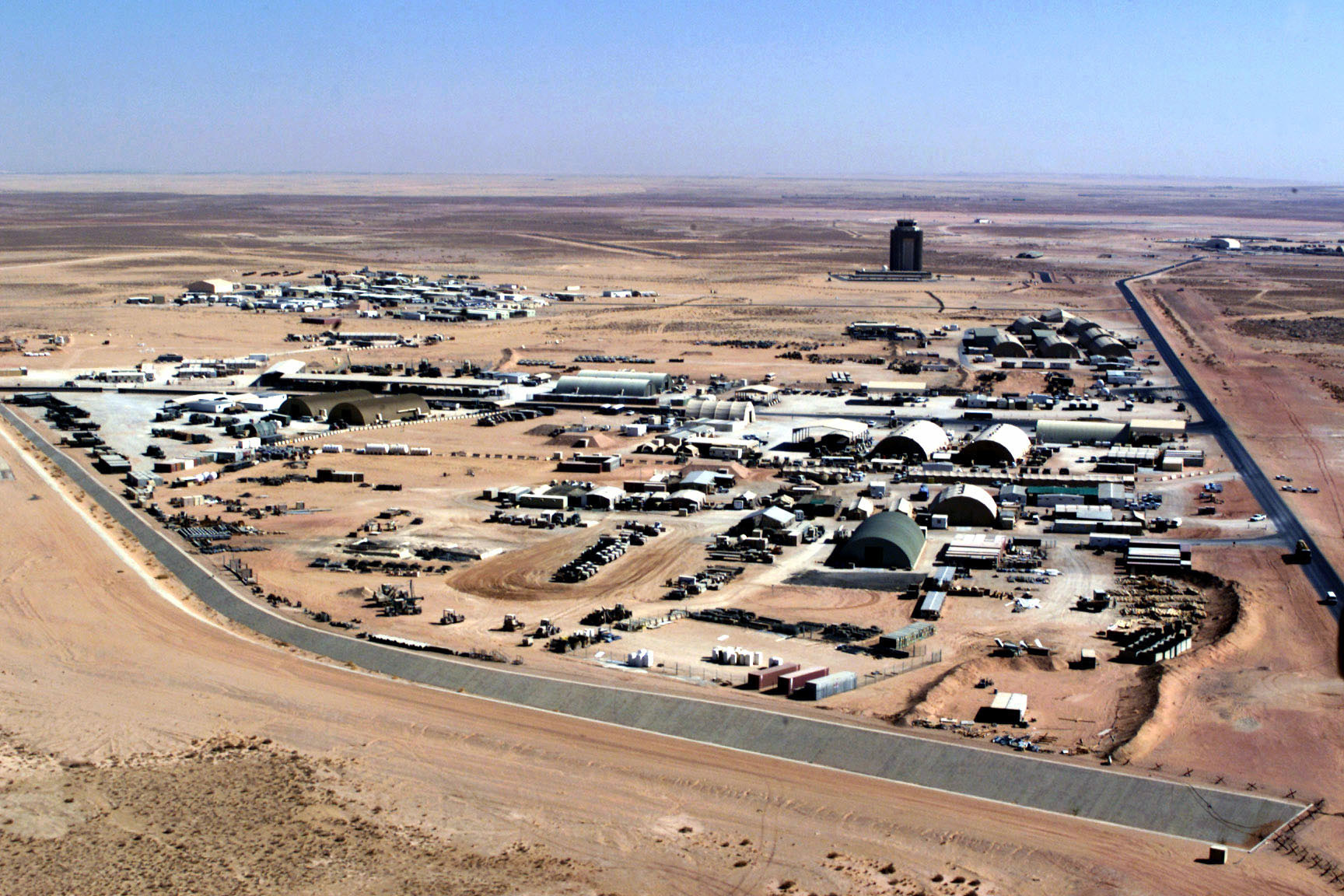
The ceasefire formally expires today. The clock the administration claims is already restarted, or already paused, or already terminated, depending on which official is speaking and which committee they are speaking to. The runway in central Saudi Arabia is the only one of those variables MBS controls outright. The decision he makes in the next 72 hours will determine whether Sledgehammer is an operation or a memo.
Frequently Asked Questions
Why is the Pentagon renaming Operation Epic Fury?
The name change to “Sledgehammer” is intended to support a legal argument that the renamed operation constitutes a new use of armed forces under the War Powers Resolution, triggering a fresh 60-day clock for congressional authorisation. The argument has no statutory basis but cannot be litigated because of the 1999 Campbell v. Clinton precedent establishing War Powers Resolution disputes as non-justiciable. Contingency planning is being run out of CENTCOM’s MacDill headquarters rather than the Joint Staff, per NBC News — preserving operational deniability for any White House claim that no formal planning has begun.
Can Congress force Trump to withdraw from Iran operations?
In theory yes, in practice no. Congress can pass a War Powers Resolution requiring withdrawal, but Trump would veto it and a two-thirds override is not achievable given current Senate composition (52 Republicans, with Murkowski and Collins the only reliable crossover votes on Iran). The 1973 Resolution has never been successfully used to force termination of hostilities against a sitting president’s will. Susan Collins’s May vote signalled the limit of Republican defection rather than a path to override.
What is Saudi Arabia’s official position on Sledgehammer?
Saudi Arabia has not publicly acknowledged Sledgehammer as an operation. Foreign Ministry statements since May 6 have referenced “the importance of full consultation among allies on regional security architecture” without naming the operation. Internal Saudi MOD planning, per sources familiar with the discussions, treats Sledgehammer as a category of contingency rather than a specific operation, with basing access conditioned on case-by-case approval of target packages. No standing approval has been granted.
What is Iran’s most likely first response to Sledgehammer?
Per the ISW assessment of May 13 and corroborating Israeli intelligence appraisals, Iran’s first-tranche response would target US naval assets in the Gulf of Oman with anti-ship cruise missile salvos from the Jask–Siri operational crescent, combined with renewed mining of the Strait of Hormuz approaches. The IRGC has telegraphed a secondary tier targeting “economic hubs,” which intelligence services read as Dubai’s Jebel Ali port complex and Saudi East-West pipeline pumping stations. Iranian mine-laying capability in the Strait has not been degraded by Epic Fury; US Avenger-class mine countermeasure ships in-theatre number two, against a post-war requirement ISW estimates at eight to twelve.
Has any US president successfully used the War Powers Resolution operation-rename mechanism before?
Not as an explicit strategy. The closest precedent is the Obama administration’s transition from “Operation Odyssey Dawn” to “Operation Unified Protector” in Libya on March 31, 2011 — a NATO rebranding that allowed the administration to argue US forces were in a “supporting role” rather than direct hostilities. The Koh testimony three months later codified that argument. Sledgehammer differs by combining the rename mechanism with an explicit clock-reset claim, which Obama lawyers never asserted. For the May 15 NYT reporting on the May 18-22 strike window and Saudi Arabia’s position as both launch platform and target — with 860,000 pilgrims in country — see the May 17 news analysis. When the NSC vote arrived, it was preempted: MBS, MBZ, and Tamim issued a joint stand-down request that stopped the strike before Sledgehammer could run — the divergent Gulf risk calculations behind that intervention are examined in the three-leader Gulf veto that halted Trump’s scheduled May 19 Iran strike.