
RIYADH — Gulf officials told the Wall Street Journal on May 19 that they had no idea a US strike on Iran was scheduled for that day, directly contradicting Donald Trump’s Truth Social claim a few hours earlier that the Emir of Qatar, Crown Prince Mohammed bin Salman, and UAE President Mohammed bin Zayed had personally telephoned him to call it off. The three leaders Trump credited with stopping the war say they were never told there was a war to stop.
That gap matters because it determines whether Saudi Arabia actually holds veto power over US military action in the Gulf, or whether it holds only the appearance of that power. The answer changes how every regional capital prices the Saudi-American alliance, how Tehran reads the deterrent value of MBS’s phone line, and how Riyadh judges what its diplomacy can and cannot buy.
Table of Contents
What Trump said, and what Trump also said
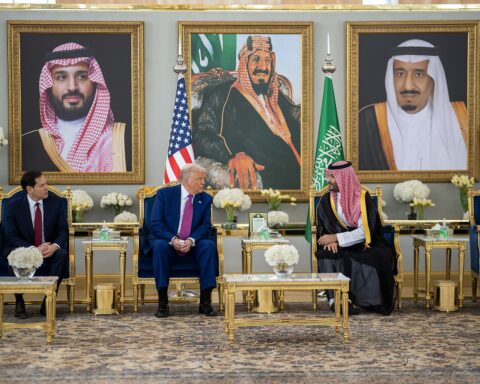
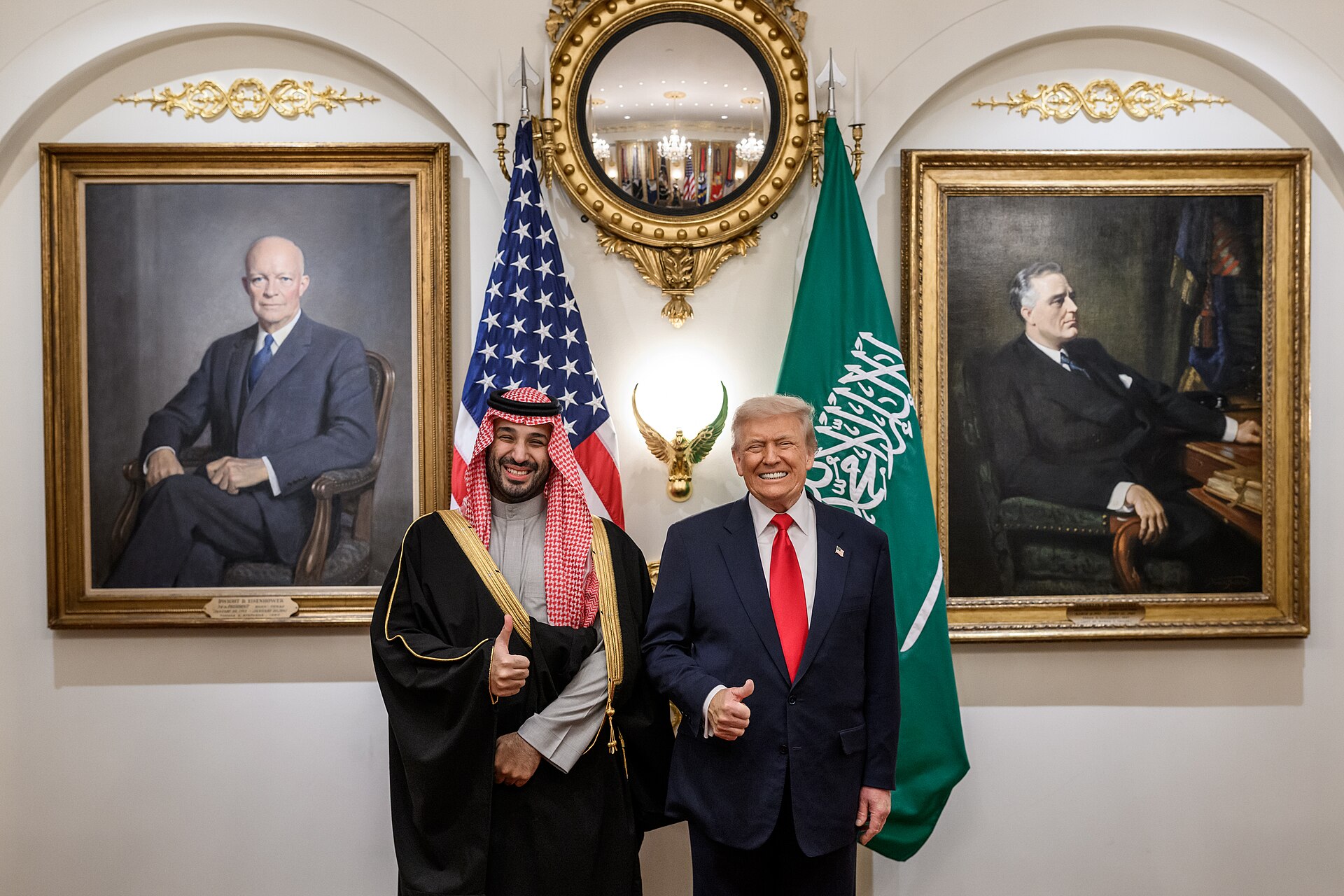
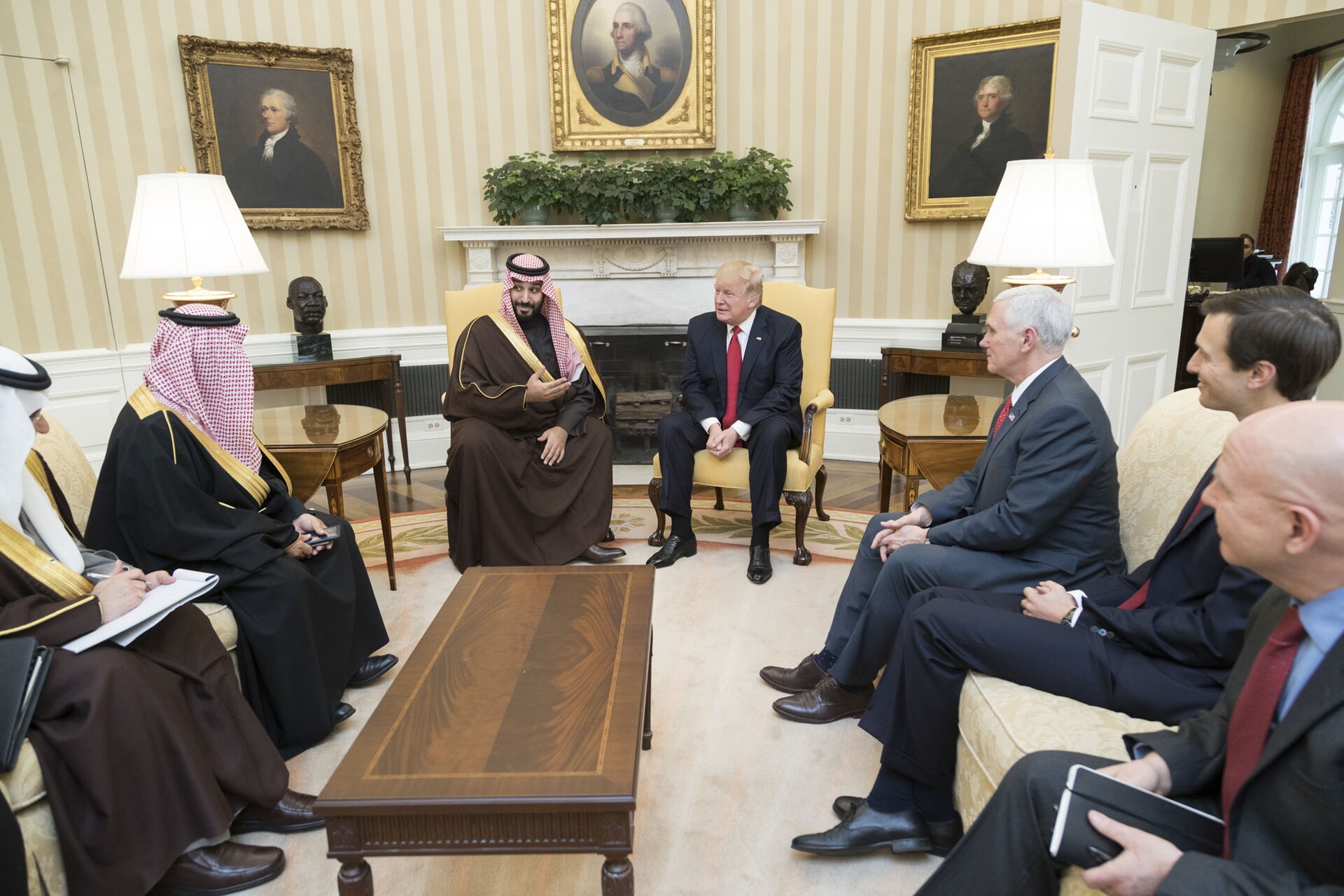
Trump’s May 18 Truth Social post named three callers: the Emir of Qatar, MBS, and MBZ. It said they had asked him “to hold off on our planned Military attack of the Islamic Republic of Iran, which was scheduled for tomorrow, in that serious negotiations are now taking place.” CNBC reported the same evening that he had ordered Defense Secretary Pete Hegseth and Gen. Dan Caine to stand down, while keeping the US military ready for “a full, large scale assault of Iran, on a moment’s notice” if talks collapsed.
The same post contained a sentence that did most of the damage to its own credibility. Trump wrote that the strike was something “nobody knew, or certainly not [anyone] in the public” — an odd thing to say about an operation three heads of state had supposedly just rung him about. The Daily Beast led with that line, headlining its coverage “TACO Trump Calls Off ‘Planned Military Attack’ Nobody Knew About,” a reference to what the paper and Slate have catalogued as Trump’s “Threatens and Calls Off” pattern dating back to March 23, 2026.
Trump also told reporters his pause would last “for about two or three days.” The Washington Post pulled a quieter quote from the same cycle: “If we can do that without bombing the hell out of them, I’d be very happy.” Both formulations describe a president looking for an exit, not one being talked off a ledge by foreign capitals.

The contradiction the Wall Street Journal couldn’t ignore
The Wall Street Journal published its rebuttal within hours. Officials from the same Gulf states Trump had thanked said they were not aware of any imminent planned strike on Iran at the moment Trump announced he had postponed it. The New York Times went further, reporting that US officials had floated a third possibility: the whole strike announcement may have been a deception operation aimed at Tehran rather than a genuine military plan stopped by genuine phone calls.
The Middle East briefing 3,000+ readers start their day with.
One email. Every weekday morning. Free.
That leaves three working theories, all sourced to US and Gulf officials speaking to the WSJ and NYT. The strike was never actually scheduled, and the postponement was theater. Gulf states were approached after Trump’s decision and asked to provide retroactive public cover. Or the entire episode was a psychological operation designed to test Iran’s response and signal escalation capacity without committing to it.
None of those readings is flattering to the “Gulf veto” frame that dominated the first news cycle. The minimum claim consistent with the WSJ reporting is that whatever happened on the evening of May 18, it was not three Gulf leaders making urgent calls to a president who needed convincing. It was something else — and the people best positioned to know are the ones Trump named.
Where was the real Saudi veto, then?
The May 18 phone story is contested. The May 4-7 base denial is not. NBC News, Jewish Insider, Middle East Eye, and Ynet reported across early May that Saudi Arabia refused the United States the use of Prince Sultan Airbase and Saudi airspace for Project Freedom, Trump’s Strait of Hormuz safe-passage operation. A direct Trump-MBS call did not break the standoff. Kuwait suspended US access in parallel, producing what NBC described as a coordinated Gulf pushback that forced Washington to abandon the initiative.
That was a veto with engineering. The aircraft could not take off; the operation was scrapped. It is the only recent episode in which a Gulf state has visibly constrained a US president’s stated military intentions and held the line through a direct head-of-state appeal. Everything Riyadh now claims about its influence over Washington traces back to those four days, not to a phone call neither side can confirm.
Just as the United States initiated the conflict without consulting Saudi Arabia or its other Gulf partners, it could also declare victory and go home, leaving Saudi Arabia and others to deal with the fallout from Iran after having joined in offensive action.CSIS, “How Does Saudi Arabia See the War with Iran?”, 2026
Reuters added a second piece of physical evidence on May 12. Saudi Arabia, the wire reported, had conducted covert strikes on Iranian soil in late March, the first known direct Saudi military action inside Iran. Riyadh informed Tehran in advance, and the operation was followed by intensive bilateral diplomacy. Neither government has officially acknowledged it. The disclosure means MBS owns a back-channel to Tehran that does not run through Washington — and that any “veto call” he places on Iran’s behalf may reflect coordination with Iran rather than constraint on the United States.
Who benefits from the phone-call story?
Both sides do, which is the simplest explanation for why neither has spent much energy correcting it. Saudi Arabia gains the international perception that it can dial Washington and stop a war — useful at a moment when Carnegie and CSIS analysts are publicly questioning the durability of US-Gulf ties. The Iran war, Carnegie wrote in March, “is uncovering the weakness in U.S.-Gulf ties.” A phone-call veto, real or constructed, papers over that exposure.
Trump gains something more immediate. The MAGA-sphere has been campaigning against expanded Iran strikes since early May, with Tucker Carlson warning on his show that Trump was “leaning toward nuclear war” and urging military officers to refuse the orders, according to The Daily Beast. Senator Richard Blumenthal told PBS News there is “no pause button in the Constitution, or the War Powers Act. We’ve been at war for 60 days. The blockade alone is a continuing act of war.” Representative Adam Smith, ranking Democrat on House Armed Services, told the AP he had no expectation the Trump administration would follow the law on Iran. Trump’s letter to Speaker Johnson the same week claimed hostilities “have terminated” — even as he announced a military standby posture.
A foreign-leader veto offers Trump an off-ramp domestic critics cannot easily attack. It is harder to accuse a president of weakness when the framing is that he was talked down by Sunni allies than when the framing is that his own party’s commentariat and a third of his caucus pushed him to stand down. The Times of Israel reported separately that MBS had privately urged Trump to strike Iran, describing the moment as a “historic opportunity.” Saudi officials denied the report. Both versions cannot be true; both serve different audiences.
How Tehran is reading the same evidence
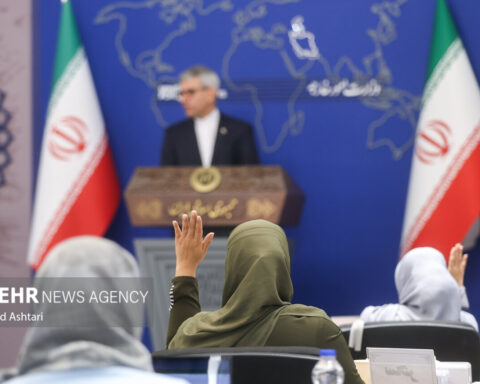
Iran’s official response ignored the Gulf-veto frame entirely. Foreign ministry spokesman Esmaeil Baghaei told reporters May 19 that exchanges were “continuing through the Pakistani mediator” and that “our concerns were conveyed to the American side.” Pakistan, not Riyadh or Doha or Abu Dhabi, got the credit. That choice tells you what Tehran wants its public to believe about who brokered the pause.
The military message was less restrained. IRGC General Ali Abdollahi, commander of Khatam al-Anbiya Central Headquarters, warned on May 18-19 that US and “Zionist forces have repeatedly tested Iran’s resolve to no avail. Any further mistakes would face a response far more powerful than previous military confrontations.” Iran’s armed forces, he said, were “more prepared and stronger than before, with their hands on the trigger to respond to any renewed aggression.”
Tasnim, the IRGC-aligned outlet, framed the pause differently again. It attributed Trump’s delay to a US commitment to freeze sanctions on Iranian oil during ongoing nuclear talks. In Tasnim’s telling, the Gulf states played no decisive role; Washington blinked because Iran’s economic pressure on oil markets worked. Three Iranian framings, three different villains and saviors — and none of them name MBS as the man with his finger on Trump’s stop button.
Iran’s simultaneous announcement on May 19 that nuclear talks are off the table for this stage reveals the structural problem the phone calls could not solve: Iran’s deliberate sequencing of ceasefire ahead of nuclear talks means the Gulf veto purchased time for a process Iran has already publicly refused to run.
Background: Six weeks of Gulf-Washington friction
The May 18 episode arrived after a sustained run of public friction between Riyadh and Washington. Project Freedom’s collapse on May 4-7 was the most visible rupture, but it followed weeks of CSIS and Soufan Center analysis describing what one CSIS researcher called Saudi fury at the decision to attack Iran. The kingdom, the researcher said, was “infuriated” and “did everything they could to avoid the situation.” CSIS’s own institutional assessment was blunter: “Given the relative ease with which Iran could expand its attacks on the Saudi economy, Iranians clearly have escalation dominance.”
Soufan Center analysts described widening Gulf fissures during the same period. The UAE has pushed hardest for an expanded US ground role; Saudi Arabia has pressed for de-escalation; Qatar has held a neutral line. The image of a “unified GCC veto” papers over those disagreements — and makes it easier to sell a phone-call story that all three capitals can publicly own.
The fiscal backdrop tightens the constraint. House of Saud has reported that the kingdom spent its annual deficit in ninety days, with Brent prices and bypass throughput nowhere near the levels that would sustain Vision 2030 commitments. Pakistani troops deployed to Saudi soil under the September 2025 mutual defense agreement, and prior coverage of why MBS, MBZ, and Tamim stopped a strike they may need later documented Riyadh’s calculation that an Iran defeat now would foreclose the cease-fire architecture it needs to refinance the war.
The May 18 phone story, true or constructed, fits a pattern in which Saudi Arabia’s veto looks loudest precisely when its fiscal position is weakest. The kingdom that can stop Washington’s war is also the kingdom that cannot afford to keep fighting it. Earlier coverage of MBS owning the clock after asking Trump to stand down lays out the same trade-off from the Saudi side.
Hours after the pause was confirmed, the Saudi Cabinet formalized the other side of that trade-off: Saudi Arabia’s formal deterrence statement issued that same day declared “all measures deemed necessary” to protect the Kingdom’s security — a unilateral institutional commitment issued without GCC co-signatories, positioning Riyadh as its own security guarantor whether or not the phone calls that preceded it were real.
Frequently asked questions
What is the War Powers Act and why does it matter here? The 1973 War Powers Resolution requires the president to notify Congress within 48 hours of committing US forces to hostilities and limits engagement to 60 days without congressional authorization. Senator Blumenthal’s reference to “60 days” tracks that statutory window. Representative Adam Smith’s comment to the AP — that he does not expect the Trump administration to follow the law — flags that the executive branch has not treated the resolution as binding. The legal question hangs in the background of every Trump escalation-or-pause cycle.
Why is Pakistan the mediator and not a Gulf state? Pakistan has been Iran’s protecting power in the United States since 1992 and is bound to Saudi Arabia by the September 2025 Strategic Mutual Defense Agreement. That gives Islamabad simultaneous credibility with both sides in a way no Gulf capital can match. Iran’s choice to credit Pakistan rather than Doha or Riyadh in the May 18 framing also avoids any acknowledgment that Gulf states have influence over Tehran’s diplomatic schedule.
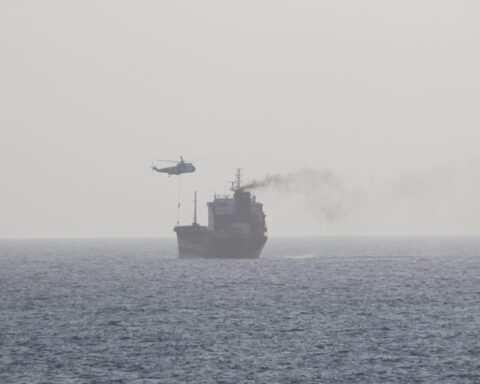
What was Project Freedom? Project Freedom was the Trump administration’s plan to use US military assets to escort commercial shipping through the Strait of Hormuz in response to Iran’s tanker-control regime. Saudi Arabia’s refusal to allow Prince Sultan Airbase or Saudi airspace to be used for the operation, coordinated with a parallel Kuwaiti denial, forced Washington to abandon it between May 4 and May 7. Project Freedom’s failure is the most documented case of Gulf base denial constraining a Trump-era military initiative.
What is the “TACO” pattern? Daily Beast and Slate coined “TACO” — Trump Always Calls Off — to label a sequence they say has repeated at least four times since March 23, 2026: public strike announcement, dramatic pause, foreign-leader or negotiating-track credit for the cancellation. The pattern matters here because if cancellations are behavioral rather than diplomatic, Gulf capitals have less leverage over Washington than the phone-call story implies — and Tehran has less reason to fear the next announcement.
Have Saudi Arabia and Iran spoken directly during the war? Reuters reported May 12 that Saudi Arabia conducted unpublicized strikes on Iranian territory in late March and notified Tehran in advance — a communication architecture that implies an active backchannel, not just proximity. That channel has no public record of what was discussed, no US participation, and no congressional or IAEA reporting requirement. It means MBS holds a line to Tehran that Washington does not monitor and cannot veto. On May 20, the channel went public: Faisal bin Farhan issued the sharpest named Saudi diplomatic intervention since the war began, publicly urging Iran to use the remaining hours of the window while the IRGC simultaneously threatened a response “far more powerful than previous military confrontations.”
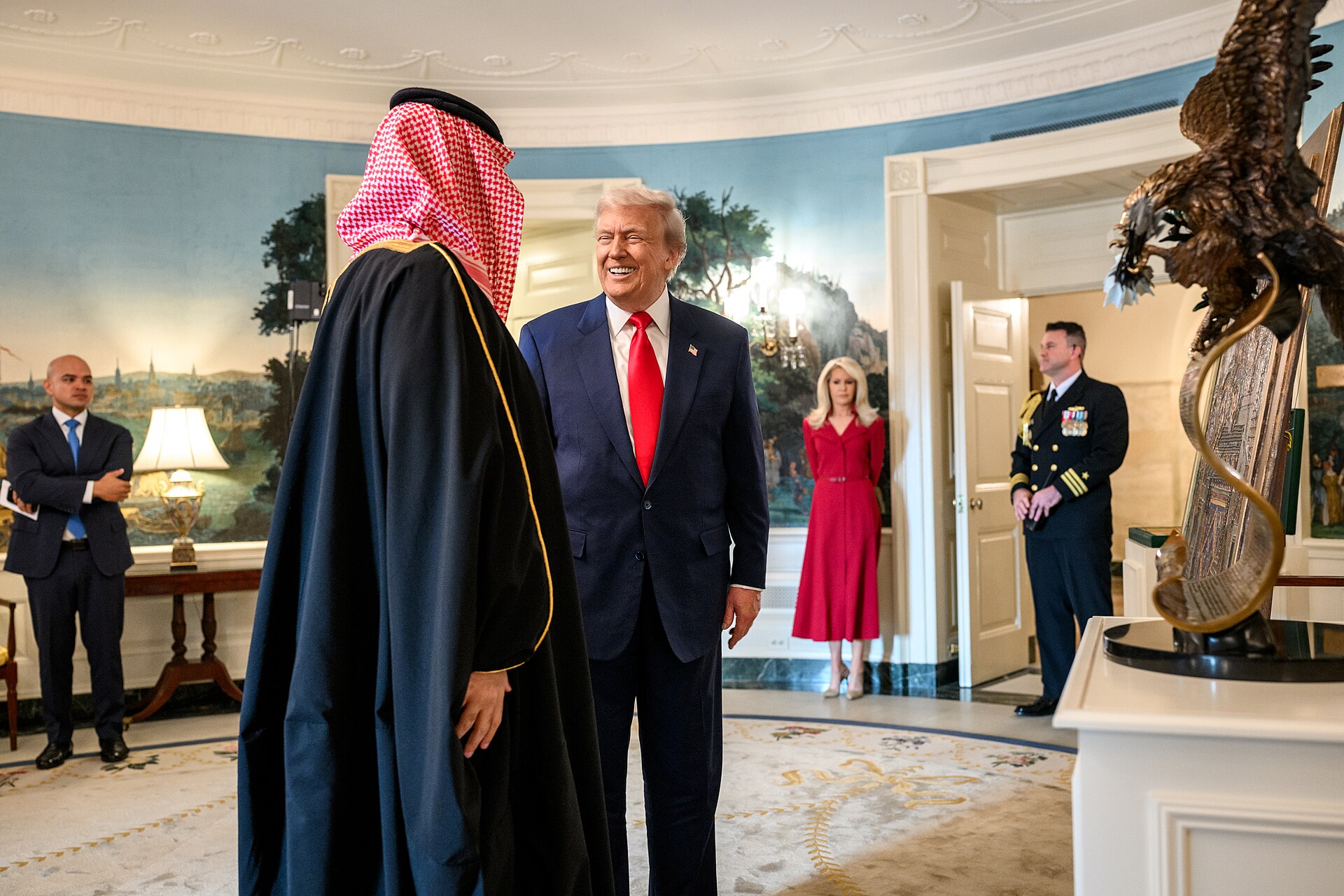
What the Wall Street Journal reported on May 19 is not that Trump lied. It is that the people he named cannot, or will not, corroborate the story he told. Riyadh’s real veto is the one with hardware behind it — the airbase that stayed shut between May 4 and May 7, the strikes Reuters surfaced from late March, the deficit spent in ninety days. The phone call that may not have happened is the one everyone agreed to remember.