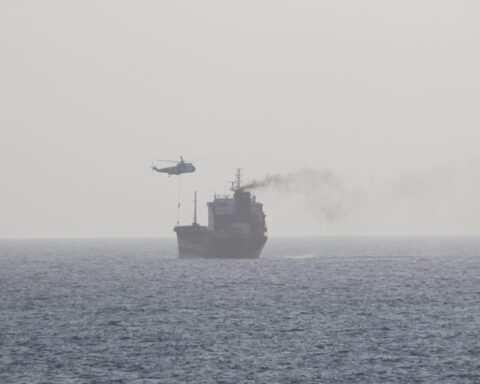
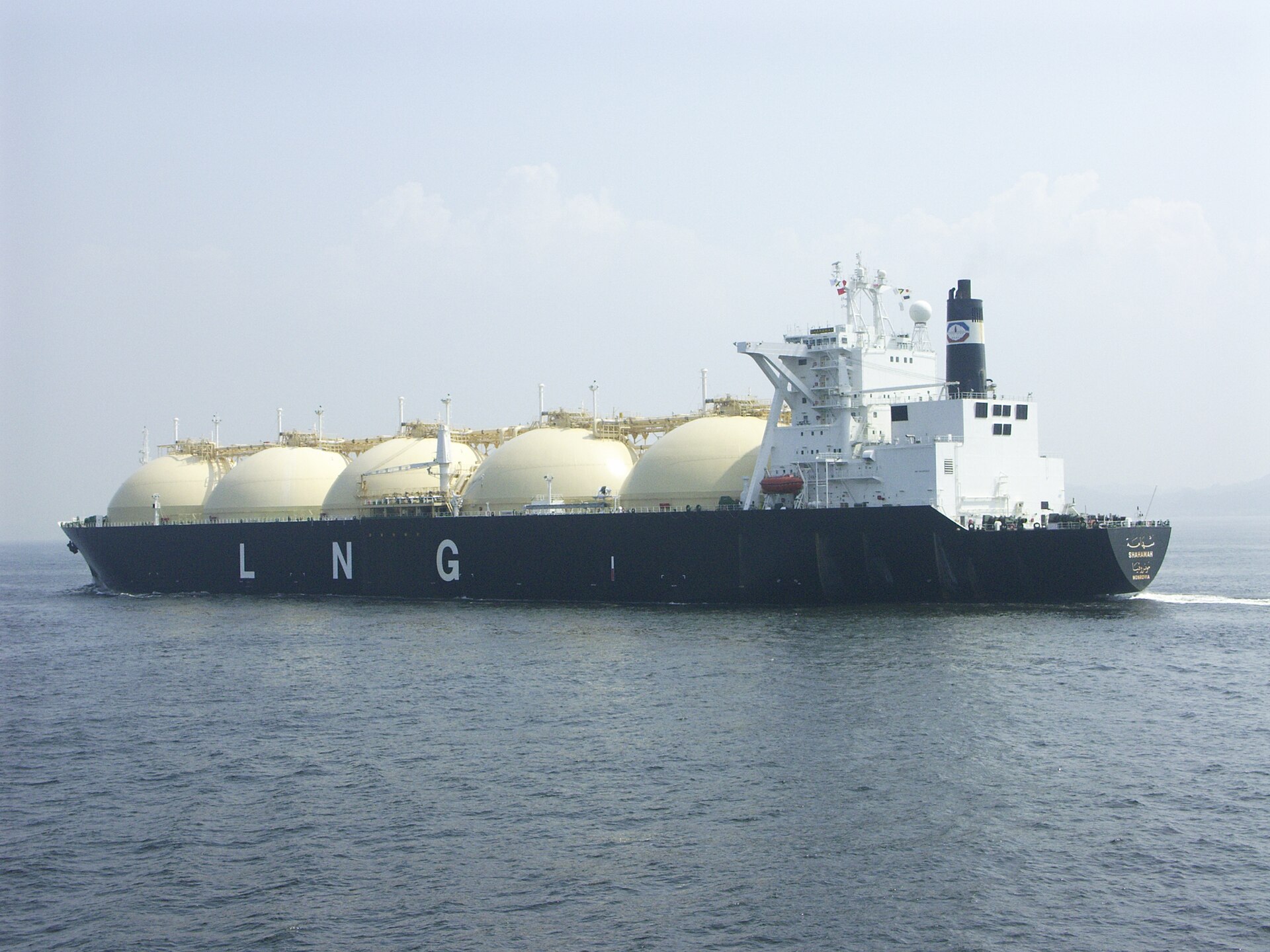
DOHA — On May 10, the Qatari LNG carrier Al Kharaitiyat — 211,986 cubic metres of liquefied natural gas, Marshall Islands-flagged, operated by Nakilat Shipping Qatar Ltd — became the first Qatari gas tanker to clear the Strait of Hormuz since Iran sealed it on February 28. Thirty-four days earlier, her sister ship Rasheeda, same flag state, same operator, same cargo type, same beneficial owner, had been ordered to hold position by the Islamic Revolutionary Guard Corps and has not moved since — anchored at 25.47°N/52.18°E, a coordinate that is becoming less a location than a statement of terms.
The difference between the two vessels is not mechanical, legal, or commercial. It is diplomatic. Al Kharaitiyat cleared because Pakistan brokered a government-to-government deal with Iran on Qatar’s behalf; Rasheeda remains held because no equivalent arrangement exists for her cargo or her destination. Iran is not running a toll booth at Hormuz. It is running a permissions desk, and the price of a permit is not money — it is alignment.
That distinction carries consequences well beyond two tankers. It means the Persian Gulf Security Authority, Iran’s unilateral maritime administration established on May 5, operates not as a regulatory body but as a diplomatic instrument calibrated vessel by vessel, cargo by cargo, relationship by relationship. It means Qatar, the world’s largest LNG exporter with zero pipeline bypass and 82 per cent of its sales routed to Asian buyers through the strait, is structurally hostage to a clearance regime it cannot challenge without losing the mediation role that earns it clearance in the first place. And it means Saudi Arabia, which exports almost no LNG through Hormuz and maintains no bilateral channel with Tehran outside Oman, is excluded from this dynamic entirely — unable to be coerced through it, but equally unable to shape it.
Table of Contents
- Two Ships, One Operator, Two Outcomes
- What Is the PGSA Actually Doing at Hormuz?
- Why Is Qatar Uniquely Trapped in This Architecture?
- The Price of Clearance
- Where Does Saudi Arabia Sit in a Regime Built on LNG Hostages?
- The GCC Solidarity Problem
- Al Sahla and the China Question
- What Does “Opening Hormuz” Actually Mean Now?
- Frequently Asked Questions
Two Ships, One Operator, Two Outcomes
The factual record is precise enough to eliminate every explanation except the political one. Rasheeda (IMO: 9443413) aborted her Hormuz crossing on April 6 after the IRGC warned of “danger” and instructed vessels to hold position. She has been stationary ever since — nearly seven weeks anchored in the same patch of Gulf water, her cargo warming, her charter rate accruing, her contractual delivery windows expiring one by one. Al Kharaitiyat, built to the same Q-Max specification, flagged in the same Marshall Islands registry, managed by the same Nakilat subsidiary in Doha, carrying the same commodity from the same Ras Laffan terminal, cleared the strait on May 10 bound for Port Qasim, Pakistan.
The clearance was not a PGSA toll payment. Reuters, Bloomberg, and gCaptain all confirmed it was the product of a government-to-government arrangement between Islamabad and Tehran, brokered outside the PGSA’s published fee structure, approved by Iran to build confidence with both Pakistan and Qatar simultaneously. A second tanker, Mihzem, followed on May 11, also Pakistan-bound. A third, Al Sahla — 211,842 cubic metres — transited shortly afterwards en route to China’s Tianjin LNG terminal, expected to arrive on June 14, described by MarineLink as the first purely commercial Qatari cargo to clear Hormuz since the war began.
Three vessels cleared. Ten remain unable to transit, according to Qatar’s foreign ministry spokesperson Dr Majed al-Ansari, who called the blockage “the most significant operational challenge Qatar faces from the ongoing closure of the Strait of Hormuz.” The arithmetic is not complicated: three out of thirteen is a 23 per cent clearance rate, but the number matters less than the mechanism. Each vessel was individually assessed, individually approved or denied, its clearance contingent on who brokered the deal, where the cargo was going, and what political concession — implicit or explicit — accompanied the request.
The Middle East briefing 3,000+ readers start their day with.
One email. Every weekday morning. Free.
Iranian Army spokesperson Mohammad Akraminia told Tasnim that “vessels from countries that comply with US sanctions against Iran would face difficulties crossing the Strait of Hormuz.” That statement, framed as a general principle, is operationally a menu: nations that sanction Iran pay one price, nations that don’t pay another, and nations willing to mediate on Iran’s terms pay the least of all.
What Is the PGSA Actually Doing at Hormuz?
The Persian Gulf Security Authority was established on May 5, 2026, although its operational predecessor — a system of vessel vetting, IRGC interdiction warnings, and selective passage denial — had been functioning since approximately March 13. Its published framework requires transiting vessels to disclose ownership, insurance, crew manifests, cargo declarations, and intended routing before a permit is issued. Applications go to info@PGSA.ir. The fee structure reaches up to $2 million per VLCC for non-exempted commercial vessels, payable in currencies that include yuan and cryptocurrency. On paper, it looks like a regulatory body administering maritime transit.
On paper is where the resemblance to regulation ends. The PGSA operates a five-tier flag-state classification system, documented by the maritime intelligence firm Windward: Russia, China, India, Iraq, and Pakistan occupy the top tier — exempted or favoured, their vessels processed with minimal friction. Western-flagged vessels and anything associated with the United States or Israel occupy the bottom — denied or subjected to conditions that amount to denial. Everyone else falls somewhere in between, their position on the spectrum determined not by published criteria but by the diplomatic temperature between their government and Tehran on any given week.
“The Strait of Hormuz is now being governed administratively, with bilateral carve-outs for selected partners and coercive interdiction held in reserve for everyone else.”Windward maritime intelligence analysis, May 2026
The distinction between a tariff regime and a permission regime is not semantic. A tariff regime is predictable: you pay the fee, you transit. A permission regime is discretionary: you apply, you wait, and the answer depends on who you are and what you’ve done for the gatekeeper lately. Iran’s PGSA is the second kind, dressed in the administrative language of the first. The IRGC claimed on May 20 to have “coordinated crossing of 26 vessels out of the Strait of Hormuz” in 24 hours — presenting selective coercion as routine maritime governance, as though choosing which ships may pass and which must anchor is the same thing as keeping a shipping lane open.
Six India-flagged vessels transited inbound on May 18 as a coordinated cluster, following bilateral engagement between New Delhi and Tehran — a G2G model demonstrably replicable at Iran’s discretion, expandable or contractible depending on the political relationship. The Iran-Oman governance mechanism being drafted in Muscat would formalise this architecture into something resembling permanent international law, but the operational reality already functions without it. Windward’s assessment was blunt: Iran has demonstrated it “could selectively permit or deny access based on a vessel’s flag state, cargo type, and the diplomatic alignment of its associated nation.”
Why Is Qatar Uniquely Trapped in This Architecture?
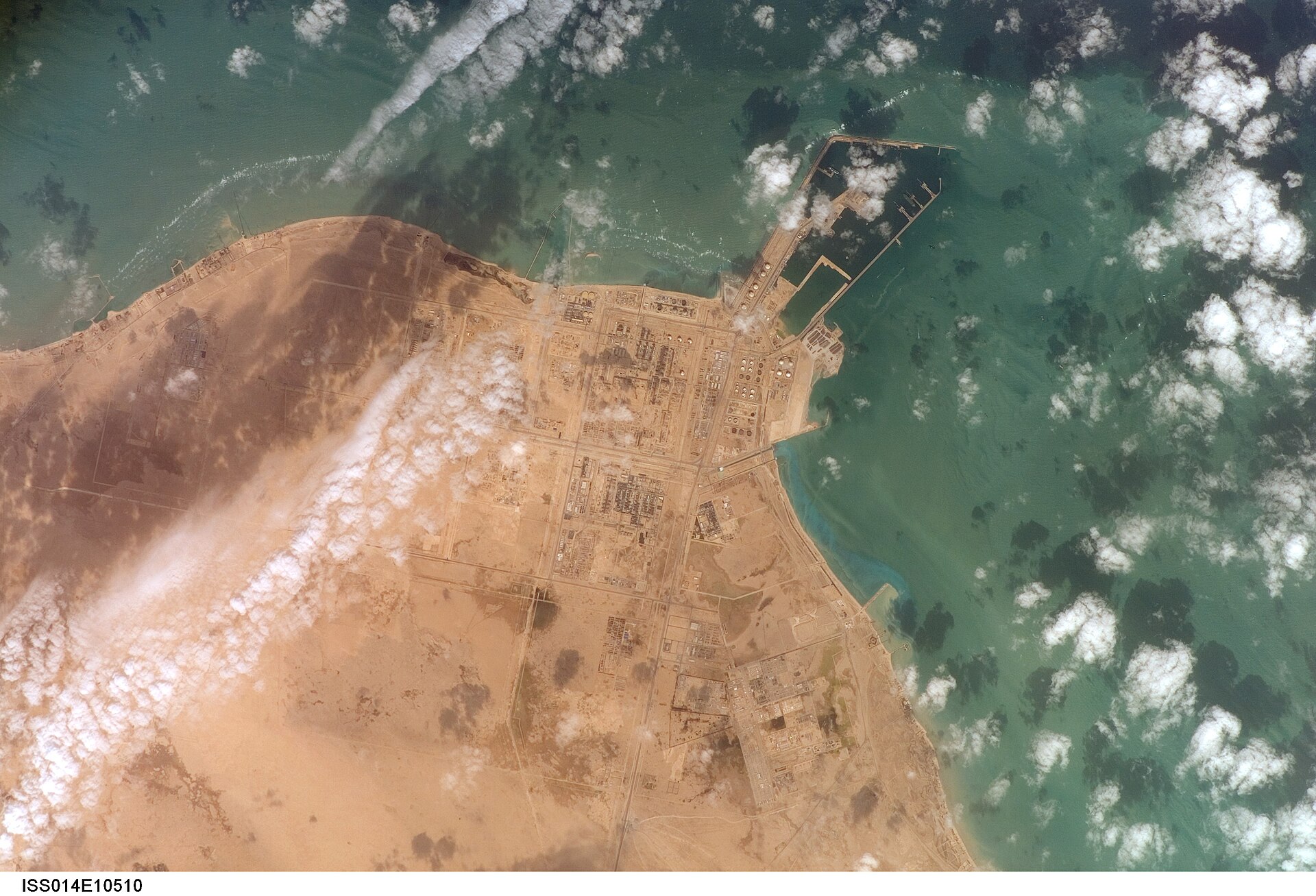
Qatar produces approximately 18.5 billion cubic feet of natural gas per day from the North Dome field — its side of the geological formation that Iran calls South Pars, the largest single natural gas reservoir on earth, a shared resource that makes the two countries simultaneously competitors and co-dependents. Every cubic foot Qatar liquefies at Ras Laffan and loads onto a Q-Max tanker must transit the Strait of Hormuz to reach a buyer — there is no pipeline bypass, no alternative terminal, no overland route. Qatar supplies approximately 20 per cent of global LNG, and 82 per cent of QatarEnergy’s sales go to Asian markets — Japan, South Korea, China, Pakistan, India — all of which require Hormuz passage.
Iran struck Ras Laffan’s facilities in March 2026, destroying approximately 17 per cent of Qatar’s LNG export capacity — roughly 12.8 million tonnes per annum, according to QatarEnergy CEO Saad al-Kaabi, who confirmed that full production resumption would take “at least three years, possibly five.” Qatar is therefore operating with both diminished supply and constricted transit simultaneously: less gas to sell, and fewer ways to deliver what remains. The cumulative global LNG supply loss from Hormuz closure is estimated at 120 billion cubic metres over 2026-2030, approximately 15 per cent of expected global supply, delaying market rebalancing by at least two years according to Global LNG Hub projections.
The structural paradox is that Iran has both the capacity and the incentive to manage Qatar’s exports rather than eliminate them. Destroying Ras Laffan entirely would remove 20 per cent of global LNG supply overnight, trigger price spikes that would accelerate European and Asian diversification away from gas, and eliminate the revenue stream that funds Qatar’s diplomatic apparatus — the same apparatus Iran currently needs for mediation. Holding individual vessels, clearing others selectively, and calibrating the flow month by month accomplishes something more sophisticated: it keeps Qatar dependent, keeps Qatar mediating, and keeps Qatar’s alignment visible to every other Gulf state watching the pattern.
Qatar’s Emir Sheikh Tamim has explicitly framed Qatar as “an energy provider and peace facilitator,” according to the Christian Science Monitor — but those two roles are now structurally opposed. The energy provision requires Hormuz access that only Iran can grant. The peace facilitation requires a posture toward Tehran that Iran can reward or punish through that same access. The trap is elegant because it does not require Qatar to do anything dramatic — only to keep doing what it is already doing, which is mediating without challenging Iran’s core nuclear positions, while Iran decides tanker by tanker whether Qatar’s mediation posture has earned another clearance.
The Price of Clearance
Al Kharaitiyat cleared Hormuz on May 10. Twelve days earlier, on April 28, Dr al-Ansari described his country’s position as that of a “punching bag” — absorbing strikes, absorbing blockade costs, absorbing the reputational damage of impotence, while continuing to mediate. By May 22, Qatar had a negotiating team in Tehran, arriving “in coordination with the United States” on the same day that five GCC states filed a protest letter with the International Maritime Organisation demanding Iran cease its Hormuz restrictions. Qatar co-signed that letter and dispatched negotiators to the country it was protesting against on the same calendar day.
The sequencing is the argument. Pakistan’s G2G deal that cleared Al Kharaitiyat was not a one-off humanitarian gesture — Bloomberg reported on May 10 that Pakistan was in active talks with Iran to allow “more” Qatari LNG shipments through Hormuz, confirming the channel was explicitly understood as expandable or contractible at Iran’s discretion. Pakistan itself had reduced LNG imports by approximately 48 per cent in the first four months of 2026 compared to the same period the prior year, a contraction severe enough to explain Islamabad’s willingness to serve as intermediary: Pakistan needed the gas, Iran needed the diplomatic cover, and Qatar needed the transit. Each party paid in a different currency, none of it financial.
The Washington Institute for Near East Policy has assessed that Iran views Hormuz control “not as a temporary wartime tactic but as a permanent strategic asset to be institutionalised in any future diplomatic settlement.” If that assessment is correct — and the PGSA’s 12-article statute, currently moving through Iran’s legislative process, suggests it is — then the clearance pattern visible in the Al Kharaitiyat/Rasheeda split is not a wartime improvisation but a prototype for how Iran intends to manage Gulf energy flows permanently. Qatar’s mediation value to Tehran is not incidental to this system; it is the system’s organising logic, at least for LNG.
Qatar’s Prime Minister and Foreign Minister Sheikh Mohammed bin Abdulrahman bin Jassim Al Thani was direct about the stakes: “In the past few weeks, we have seen the Strait of Hormuz being used as a weapon in this war. It’s an international water corridor that should be always protected and should be always safeguarded.” That statement, correct in principle, collides with the operational reality that Qatar is simultaneously the loudest voice calling for Hormuz protection and the nation most willing to negotiate bilaterally with the power that closed it — because it has no alternative.
Where Does Saudi Arabia Sit in a Regime Built on LNG Hostages?
Saudi Arabia exports crude oil, not LNG, and almost entirely through pipelines and Red Sea terminals that bypass Hormuz altogether. The Yanbu terminal on the Red Sea handles the bulk of Saudi exports that cannot transit the strait, with a capacity ceiling of approximately 5 million barrels per day — a bottleneck, certainly, but a bottleneck on Saudi Arabia’s side of the chokepoint, not Iran’s. Saudi Arabia has no LNG fleet transiting Hormuz. It has no Q-Max tankers anchored at coordinates chosen by the IRGC. It has no equivalent of the Rasheeda sitting in diplomatic purgatory, its position a daily reminder of who controls what.
This means Saudi Arabia cannot be coerced through the vessel-clearance mechanism that Iran is using to manage Qatar. There is no Saudi tanker to hold, no Saudi LNG contract to threaten, no Saudi cargo to selectively clear as a reward for diplomatic cooperation. In a permission regime built on hostage assets, Saudi Arabia has nothing at stake in the hostage pool — which sounds like an advantage until you realise it also means Saudi Arabia has no entry point into the bilateral relationships being constructed around clearance. Iran grants Qatar passage for mediation posture, Pakistan for intermediary services, India for sanctions non-compliance, China as a matter of strategic partnership — and Saudi Arabia is offered none of these transactions because it has nothing Iran can hold or release.
The kingdom’s only channel to Tehran runs through Muscat, where Oman is co-drafting a permanent Hormuz governance mechanism with Iran — a process from which Saudi Arabia is excluded, as the Chatham House assessment confirmed there is no bilateral Saudi-Iran Hormuz channel outside Oman. Saudi Arabia co-sponsored a UNSC resolution that Russia and China vetoed on April 7, endorsed a diplomatic framework it cannot shape through five rounds of US-Iran talks where it has no seat, and signed an IMO protest letter that two of its GCC partners are actively undermining through bilateral engagement with Iran.
The structural exclusion is not temporary. If the PGSA’s permission architecture becomes the permanent framework for Hormuz transit — formalised through the Iran-Oman Muscat mechanism, codified in Iranian domestic law, and accepted by enough transiting nations to function as a de facto regime — Saudi Arabia will inhabit a Gulf security order whose central chokepoint is governed by an institution it has no relationship with, no leverage over, and no seat within. The Q1 2026 fiscal deficit of $33.5 billion, already at 194 per cent of the full-year target, compounds the problem: Saudi Arabia needs oil revenue that depends on global energy prices that Hormuz instability inflates, but it cannot influence the mechanism that determines whether Hormuz is open, closed, or — as Iran is now demonstrating — selectively permeable.
The GCC Solidarity Problem
Five GCC member states — Bahrain, Kuwait, Qatar, Saudi Arabia, and the United Arab Emirates — filed a joint protest letter with the International Maritime Organisation demanding Iran cease its Hormuz restrictions. Oman, the sixth GCC member, was absent from the signatories, because Oman is not protesting the PGSA — it is negotiating a permanent toll system with Tehran, leveraging its 1974 maritime boundary treaty with Iran that gives it jurisdiction over the inbound shipping lane. Bloomberg reported on May 21 that Iran and Oman are actively negotiating what would amount to a permanent bilateral governance framework for the strait.
Qatar’s position is more contorted still. Qatar co-signed the IMO protest and dispatched a negotiating team to Tehran on the same day — a compartmentalisation that the Istituto per gli Studi di Politica Internazionale (ISPI) would classify as one of four distinct Gulf postures toward Iran, but which in practice means Qatar endorsed a collective demand for Hormuz freedom while simultaneously pursuing bilateral arrangements that reward Iran’s restriction of it. The Al Kharaitiyat clearance, earned through Pakistan’s G2G deal, is the material proof that bilateral engagement with Iran yields results that collective protest does not.
| GCC State | IMO Protest | Bilateral Iran Channel | Hormuz Dependency | Vessels Cleared/Held |
|---|---|---|---|---|
| Saudi Arabia | Co-signed | None (via Oman only) | Low (pipeline/Red Sea exports) | N/A — no LNG fleet |
| Qatar | Co-signed | Active (Tehran team May 22) | Total (zero pipeline bypass) | 3 cleared / 10 held |
| Oman | Absent | Co-drafting governance mechanism | Moderate | Negotiating permanent terms |
| UAE | Co-signed | Limited | High (Fujairah inside PGSA zone) | Restricted |
| Kuwait | Co-signed | None confirmed | High (all exports through Hormuz) | Restricted |
| Bahrain | Co-signed | None confirmed | High | Restricted |
Saudi Arabia co-signed a protest that two of its GCC partners are actively undermining — Oman by negotiating the very regime being protested, Qatar by accepting bilateral clearances that validate it. The Carnegie Endowment’s assessment that the “GCC is unlikely to unify on Iran” is not a prediction at this point; it is a description of observable behaviour. The IMO protest letter, filed at LEG 113, is non-binding; the UNSC resolution was vetoed; the NATO Maritime Freedom Construct announced at Helsingborg on May 21 proceeded without GCC participation. US Secretary of State Marco Rubio called the PGSA fees “unfeasible” on May 21, then acknowledged the talks were “not there yet” at Helsingborg on May 22 — an admission that the international community’s response to Iran’s permission regime consists, so far, of describing it as unacceptable while watching it operate.
Al Sahla and the China Question
The third Qatari tanker to clear Hormuz, Al Sahla, is carrying 211,842 cubic metres of LNG to Tianjin — China’s largest LNG import terminal. Her expected arrival on June 14 would make this the first purely commercial Qatari cargo to reach a non-G2G buyer since the war began, and the choice of destination is not incidental. China occupies the top tier of the PGSA’s flag-state classification alongside Russia, India, Iraq, and Pakistan. Chinese-bound cargoes transit with minimal friction not because China brokered a special arrangement but because China’s strategic alignment with Iran earns its trade permanent preferential status.
The Al Sahla transit reveals a second layer to the permission architecture: the G2G model used for Pakistan (political concession in exchange for clearance) coexists with a strategic-partner model for China (permanent preferential status requiring no per-shipment negotiation). Qatar’s European customers — who depend on Qatar for 12 to 14 per cent of their LNG supply through Hormuz — occupy neither category. The Washington Times reported in April that European buyers face a “scramble for years” to replace Qatari volumes, but the operational question is sharper than supply arithmetic: even if Ras Laffan had full capacity, European-bound cargoes would require clearance from a regime that classifies Western-flagged and Western-allied vessels in its lowest tiers.
The market is already pricing the discrimination. Qatar has declared force majeure on contracts it cannot fulfil — not because the gas doesn’t exist but because the transit permission hasn’t been granted. Asian buyers with access to the G2G or strategic-partner clearance channels receive cargo; European buyers without such channels do not. Iran is not blocking global LNG trade — it is redirecting it, vessel by vessel, toward buyers whose governments maintain relationships Tehran values and away from those whose governments participate in sanctions. The 120 billion cubic metres of cumulative LNG supply loss projected over 2026-2030 will fall disproportionately on buyers whose flag states sit in the PGSA’s lower tiers.
What Does “Opening Hormuz” Actually Mean Now?
The US-Iran framework being negotiated through five rounds of talks from Islamabad to Rome includes, by all accounts, a Hormuz reopening provision — the FT reported a 60-day ceasefire with gradual reopening, the Al-Arabiya “final draft” listed freedom of navigation among its eight points, and Trump described the deal as “largely negotiated, subject to finalization.” But the Al Kharaitiyat/Rasheeda split defines what “opening” means in practice, and it is not what the word implies.
If Hormuz “opens” while the PGSA permission architecture remains intact — its five-tier classification operative, its vessel-by-vessel vetting in place, its bilateral carve-outs for favoured nations unchanged — then opening is not freedom of navigation. It is the formalisation of a permission regime with diplomatic cover. Iran would be granting more permits, clearing more vessels, reducing the visible queue of anchored tankers — but retaining the institutional capacity to restrict, deny, or selectively delay any vessel at any time. The Rasheeda would sail, eventually, but the coordinate where she sat for weeks would remain available for the next vessel Iran chose to hold.
Iranian state media — IRNA, Tasnim, the Middle East Monitor — already frame the PGSA as legitimate sovereign regulation, not political instrument. The PGSA’s published framework does not name Qatar as either exempted or blocked; clearance decisions are communicated through individual vessel vetting, not public policy. Iran has not publicly acknowledged a differential clearance policy for Qatari LNG. The IRGC’s claim to have “coordinated crossing of 26 vessels” in 24 hours presents selective permission as universal compliance — as though the system is open and functioning normally, with minor administrative processing, rather than operating as a diplomatic switchboard where each call is answered or ignored depending on the caller.
The Iran-Oman Muscat mechanism would give the PGSA a veneer of bilateral governance — but the operational precedents are hardening faster than any law. G2G clearances for Pakistan, strategic-partner status for China, selective clearance for Qatar contingent on mediation posture: every vessel that transits through the permission system validates the architecture, every nation that negotiates bilaterally concedes that Iran has the right to grant or withhold passage. Al Kharaitiyat’s 211,986 cubic metres of LNG reached Port Qasim, but the clearance that delivered them established something more durable than any single cargo — the working proof that Hormuz transit is now a concession granted in Tehran, priced in alignment rather than dollars. The PGSA continued operating through the unsigned MOU deadline on May 24; Iran then announced a Hormuz suspension citing Israeli strikes on Lebanon, filling the legal vacuum the unratified framework left behind.
Frequently Asked Questions
Why is the Rasheeda still held if Al Kharaitiyat was cleared by the same operator?
The clearance was not operator-level — it was cargo-destination-level. Al Kharaitiyat was cleared because Pakistan brokered a G2G deal with Iran specifically for that shipment to Port Qasim; Rasheeda’s intended destination and cargo buyer did not have an equivalent bilateral arrangement in place. Iran’s PGSA assesses each vessel individually based on ownership, flag state, destination, and the diplomatic relationship between Iran and the receiving nation — without a G2G sponsor or strategic-partner destination, a vessel remains in the queue regardless of who operates it. Nakilat has publicly stated it is working with Qatari authorities to resolve the remaining holds, but resolution requires a diplomatic channel, not a shipping contract.
Could Qatar build a pipeline to bypass Hormuz?
Geographically, a pipeline from Qatar’s North Dome field could theoretically route overland through Saudi Arabia to the Red Sea — but this would require Saudi consent, Saudi transit fees, and a construction timeline measured in years, during a period when Qatar and Saudi Arabia have only recently normalised relations after the 2017-2021 blockade. A subsea pipeline to Oman and then to the Indian Ocean has been studied intermittently since the 1990s (the defunct Dolphin expansion proposals), but the engineering challenges of deep-water Gulf construction in a war zone, combined with Oman’s current role as Iran’s Hormuz governance partner, make this route politically impractical in the medium term. Qatar’s LNG export model — liquefy at Ras Laffan, load onto tankers, transit Hormuz — was designed for a world where the strait was permanently open. That assumption has been invalidated.
What happens to Qatar’s long-term LNG contracts if vessels keep being held?
QatarEnergy has already declared force majeure on contracts it cannot fulfil due to Hormuz closure, and prolonged holds risk triggering renegotiation provisions — particularly with Japanese and South Korean buyers who have begun sourcing emergency spot cargoes from the United States, Australia, and Mozambique. Long-term LNG supply agreements typically include destination flexibility clauses, but these assume the exporter can physically deliver; the reputational damage of sustained non-delivery may outlast the crisis itself. QatarEnergy’s North Field Expansion — designed to increase capacity from 77 to 126 million tonnes per annum by 2027 — was predicated on assured Hormuz access, and every additional tonne of capacity it brings online becomes another hostage to Iran’s permission regime. Qatar’s value proposition as the world’s most reliable long-term LNG supplier depends on transit certainty that, as of May 2026, no longer exists.
Has Iran ever publicly acknowledged treating Qatari vessels differently from others?
No — and the closest Tehran has come is a general statement from Iranian Army spokesperson Mohammad Akraminia, who told Tasnim that “vessels from countries that comply with US sanctions against Iran would face difficulties crossing the Strait of Hormuz.” Qatar does not formally sanction Iran, so Akraminia’s framing technically excludes it while functionally calibrating treatment by sanctions alignment. Iran’s published PGSA framework does not name Qatar as either favoured or restricted; clearance decisions are communicated through individual vessel vetting — each ship assessed on ownership, insurance, crew manifest, cargo declaration, and routing — rather than through any public national-level policy. The differential treatment is observable through vessel-tracking platforms such as Windward and MarineTraffic, which document the gap between IRGC claims of routine maritime coordination and the operational reality of tankers anchored for weeks at fixed coordinates. Tehran’s position is that all nations complying with PGSA requirements can transit; the requirements themselves are opaque enough to permit any outcome Iran chooses.
Why did China receive the first purely commercial Qatari LNG cargo?
China sits in the top tier of the PGSA’s five-tier flag-state classification alongside Russia, India, Iraq, and Pakistan. Unlike the Pakistan-brokered G2G deal for Al Kharaitiyat, Chinese-bound cargoes benefit from permanent preferential status that does not require per-shipment negotiation — a reflection of China’s strategic alignment with Iran, including its veto of UNSC Hormuz resolutions and its exemption from Iran-related trade sanctions. The Al Sahla’s Tianjin destination also serves Iran’s interest in demonstrating that Hormuz is “open” — but open preferentially, to partners rather than adversaries. Japan and South Korea, which together account for roughly one-third of global LNG demand and depend on Qatar for a substantial share of long-term contracted supply, do not have equivalent access channels — Tokyo and Seoul maintain sanctions regimes aligned with US policy on Iran, placing their flag-state relationships with Tehran in the PGSA’s lower tiers. European buyers face the same structural restriction.