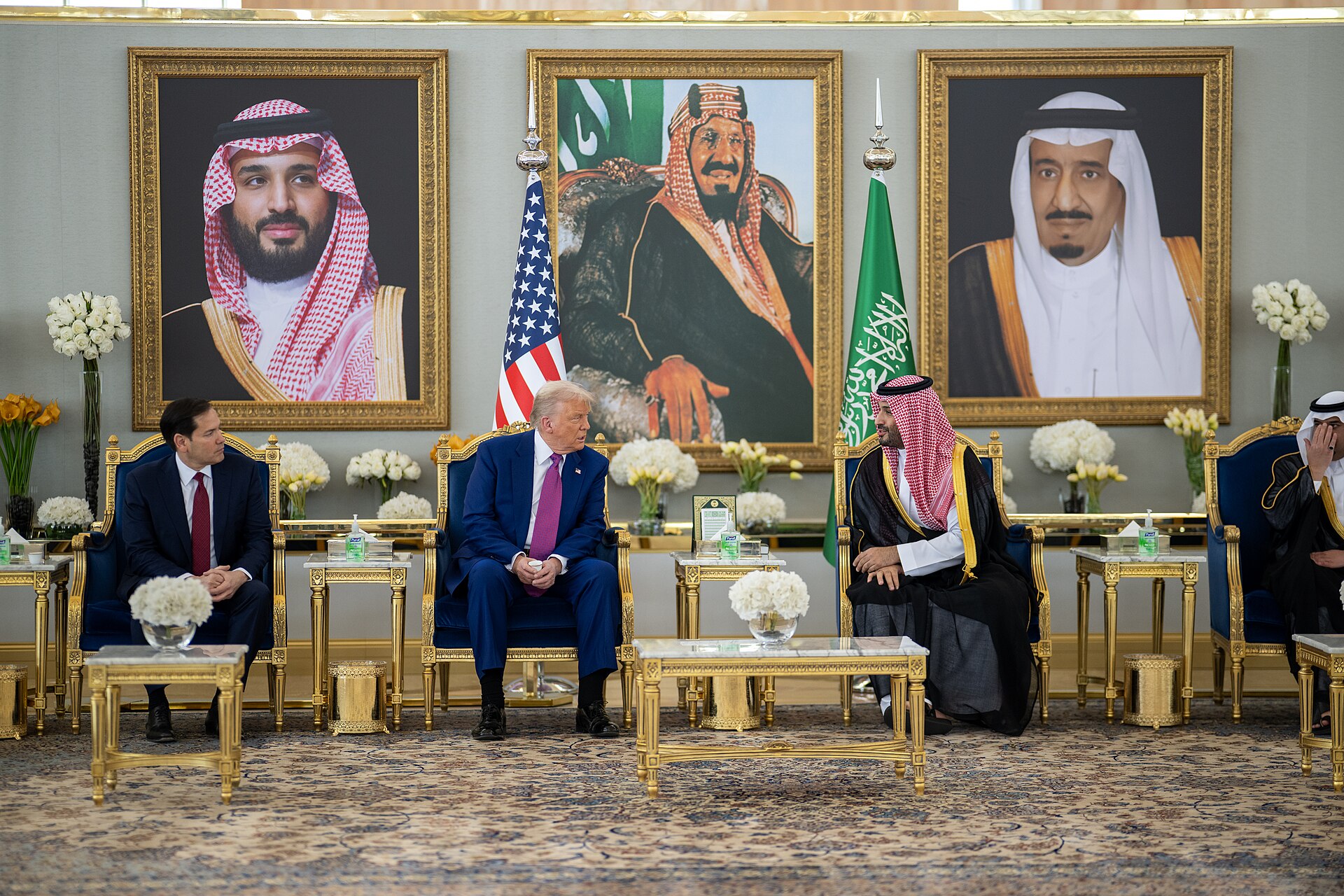

WASHINGTON — The United States signed a civil nuclear cooperation agreement with Saudi Arabia on July 22 that is expected to run thirty years, could lead to a uranium enrichment facility in the kingdom according to two sources cited by the Associated Press, and reportedly makes no mention of normalization with Israel. The signed text, as reported, set aside the Biden-era bargain — years of shuttle diplomacy in which Saudi nuclear access was held hostage to a peace deal. A day later, Trump put that condition back, posting that the deal “is totally subject to Saudi Arabia joining the very respected and successful Abraham Accords” and that “There will be no enrichment of material!”
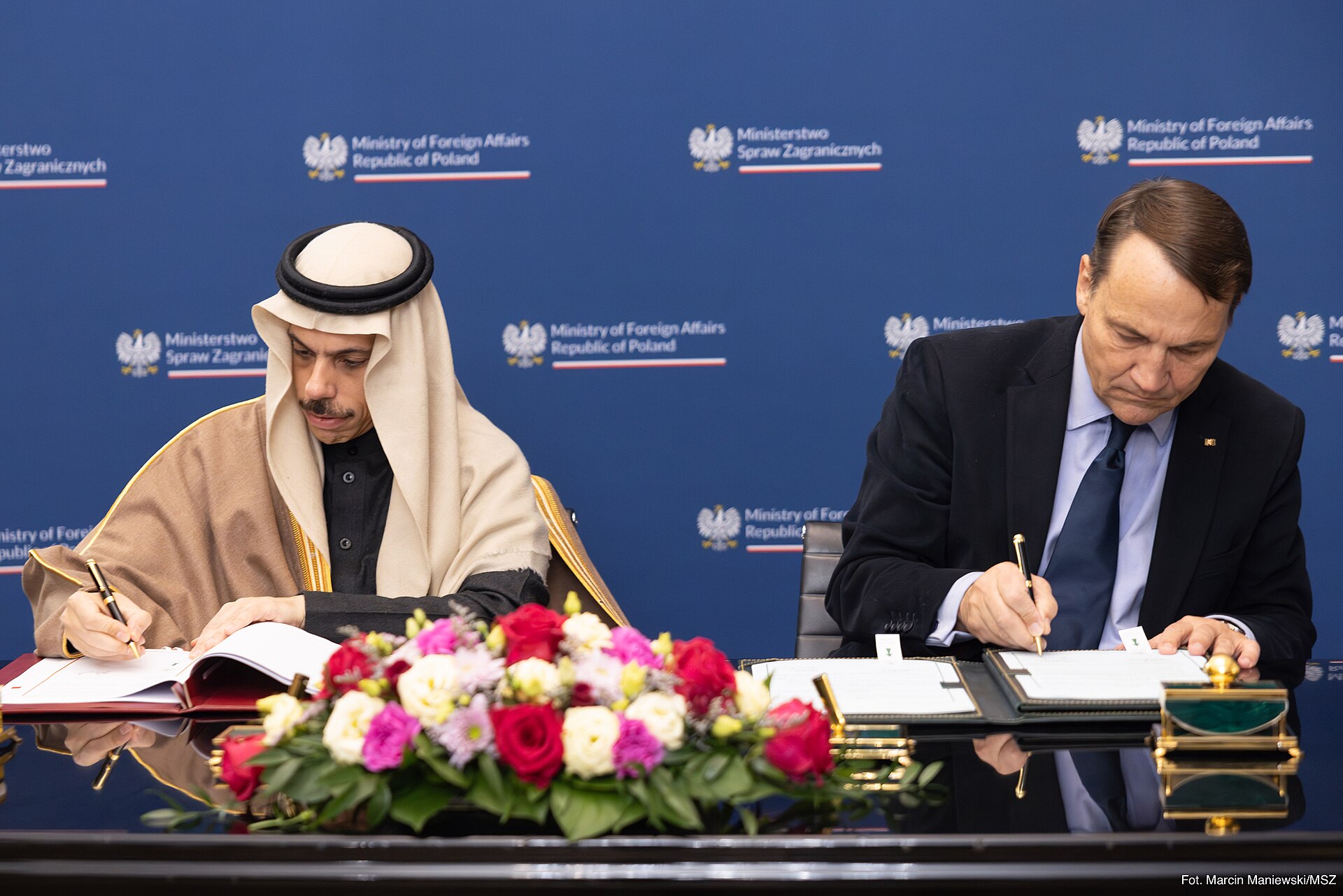
Energy Secretary Chris Wright and Saudi Energy Minister Prince Abdulaziz bin Salman signed the 123 agreement, which the Energy Department described as “a peaceful nuclear cooperation agreement for a decades-long, multi-billion-dollar partnership,” alongside a bilateral safeguards agreement. According to the Associated Press, the framework paves the way for an enrichment facility in Saudi Arabia after a joint US-Saudi study, and one source said it does not include the IAEA’s Additional Protocol. Dan Shapiro, a distinguished fellow at the Atlantic Council’s Scowcroft Middle East Security Initiative, wrote that “the agreement has been de-linked from Saudi normalization with Israel.”
Table of Contents
- What Did the 123 Agreement Actually Sign Away?
- The Gold Standard and What Replaced It
- Why Was the Nuclear Deal Linked to Normalization?
- What Did Israel Lose on July 22?
- The Black Box on Saudi Soil
- Does Congress Have the Votes to Block It?
- The Charge That Writes Itself
- The Prize Without the Price
- Frequently Asked Questions
What Did the 123 Agreement Actually Sign Away?
The 123 agreement — named for Section 123 of the Atomic Energy Act, which governs US nuclear cooperation with foreign states — gives Saudi Arabia a framework for civilian nuclear cooperation expected to last thirty years and to involve US firms in developing the program. According to two sources cited by the Associated Press, it paves the way for a uranium enrichment facility in Saudi Arabia after a joint US-Saudi study, which Atlantic Council analysts described as a two-year study.
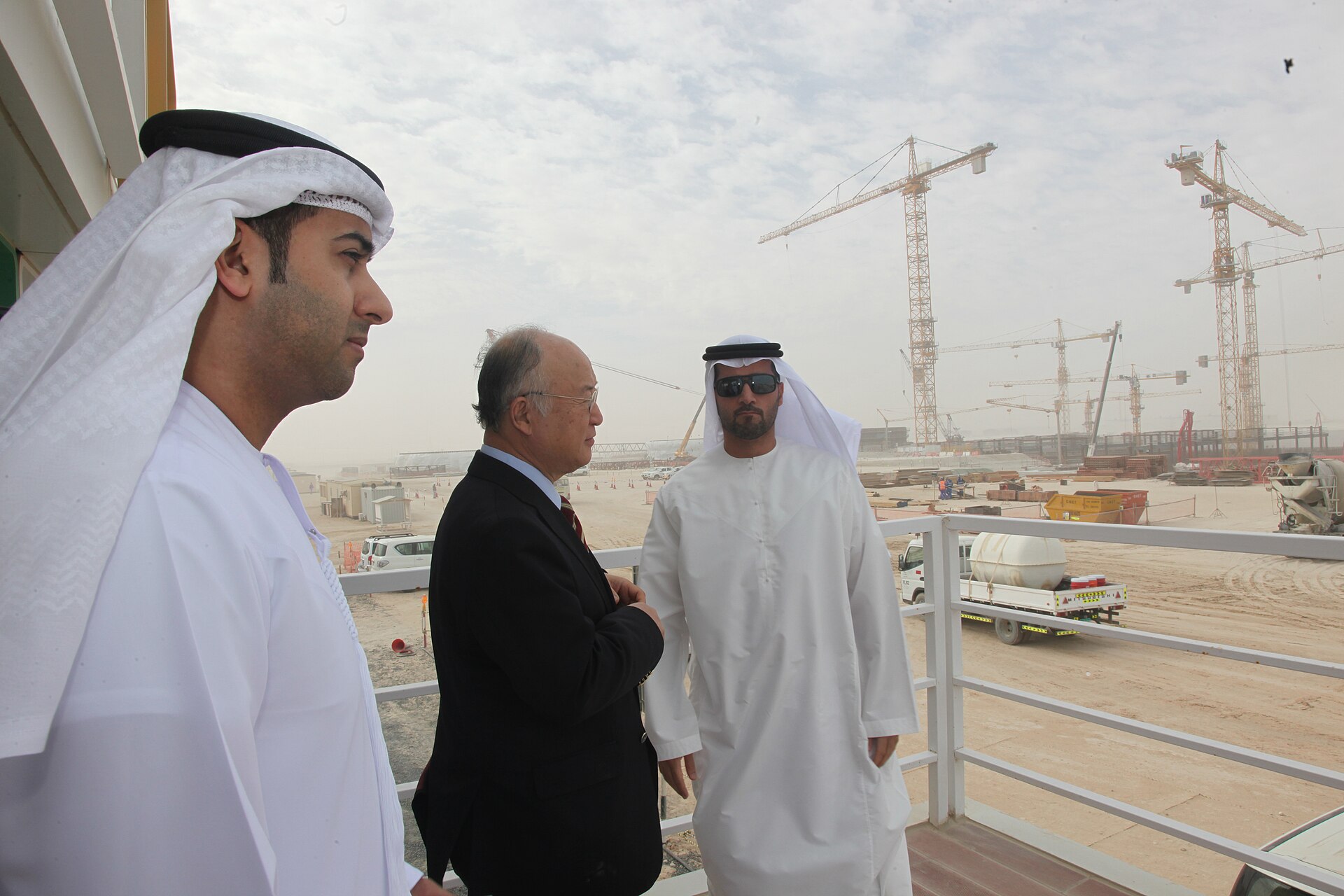
What the agreement does not contain is at least as consequential as what it does. The Jerusalem Post, citing The New York Times, reported that the deal does not include normalization with Israel — the condition that Biden-era negotiations had bundled with it. The benchmark it is measured against is the UAE’s 2009 agreement for its Barakah plant, which did not seek enrichment, a model experts call the Gold Standard.
Wright said the agreements “uphold the highest standards of nuclear safety and nonproliferation,” a claim that is defensible only if you define the standard as whatever this particular agreement contains. The text has not been published, and in place of the Additional Protocol there is a bilateral US-Saudi safeguards agreement whose terms have not been made public.
Before the agreement was signed, Saudi Arabia was building toward a nuclear ceiling it could not independently set. The signed deal answers that question: the ceiling is now established, and the kingdom did not have to concede anything beyond what it was already prepared to give.
The Middle East briefing 3,000+ readers start their day with.
One email. Every weekday morning. Free.
The Gold Standard and What Replaced It
In 2009, the United Arab Emirates concluded a 123 agreement for its Barakah nuclear plant without seeking domestic uranium enrichment. That model became what the nonproliferation community calls the Gold Standard, the benchmark against which later US nuclear cooperation agreements have been measured.
The significance of the Gold Standard was never merely technical. When Abu Dhabi forwent enrichment, it sent a political signal that civilian nuclear programs in the Gulf could operate within constraints that made weapons development structurally difficult — not merely prohibited by treaty language, but materially blocked by the absence of enrichment infrastructure. Saudi Arabia did not accept the Gold Standard in this deal, and the 123 agreement as signed represents Washington’s decision to stop insisting.
As reported, the Saudi agreement departs from that standard. Two sources told the Associated Press it paves the way for an enrichment facility after a joint study, and one said it does not include the IAEA Additional Protocol, which allows wider inspections. Its bilateral safeguards agreement has not been published. Representative Brad Sherman argued that the deal gives Riyadh a green light to reprocess and enrich.
The Atlantic Council’s response on July 22 captured how cleanly the deal splits expert opinion. Matthew Kroenig, of the council’s Scowcroft Center for Strategy and Security, drew the line: “It would be a mistake, therefore, to allow enrichment in Saudi Arabia as part of any deal.” His colleague Jennifer Gordon, who directs the council’s Nuclear Energy Policy Initiative, headed her contribution “A win for the United States over Russia and China.” Both assessments appeared on the same page, on the same day, from the same institution.
The divide tracks a fault line running through the entire American foreign policy establishment: whether it is more dangerous to give Saudi Arabia enrichment access or to let Russian and Chinese competitors fill the vacuum. The 123 agreement answers that question by choosing commercial advantage over nonproliferation constraint, and the consequences of that choice will unfold over the thirty-year life of the deal.
Why Was the Nuclear Deal Linked to Normalization?
The linkage was Biden’s deliberate policy choice, not a legal requirement of the Atomic Energy Act. Section 123 mandates nonproliferation commitments in any cooperation agreement; it does not mandate bundling the deal with a peace treaty. But the Biden administration treated Saudi nuclear cooperation as a high-value inducement inside a larger diplomatic package that required Mohammed bin Salman to normalize relations with Israel. If the kingdom wanted American nuclear technology, it would have to deliver something Washington valued even more: a Saudi-Israeli recognition deal that would redraw the regional map.
The Hamas attack on October 7, 2023 collapsed the timetable and the political conditions beneath it. By the time the diplomatic wreckage was cleared, Saudi Arabia was insisting on a clear path to a Palestinian state, a condition Netanyahu would not accept and Biden could not deliver. The nuclear-for-normalization framework froze in place and never thawed.
The framework’s collapse was not merely a scheduling casualty. After October 7, Saudi Arabia’s insistence on Palestinian statehood carried different weight: it functioned as a structural refusal to normalize under Israeli military operations in Gaza, consistent with the Arab Peace Initiative but newly rigid in its application. The nuclear deal, tethered to normalization, was held in suspended animation by a condition neither Washington nor Jerusalem could satisfy. Biden’s leverage, which had seemed formidable enough to generate White House confidence in 2023, turned out to depend entirely on conditions the administration could not control.
Trump’s approach was not to rebuild the framework but to dismantle it. By signing the 123 agreement without, as reported, a normalization requirement or Gold Standard safeguards, the administration removed both the nuclear price and the diplomatic cost simultaneously. On paper, Saudi Arabia no longer needed to recognize Israel to access enrichment — until Trump said a day later that it did. The deal Senator Lindsey Graham spent years trying to close was signed by a different president, on different terms, with different consequences.
Shapiro put the cost plainly: “the United States has played a valuable card that could have been held back.” The leverage was the nuclear deal, and as signed that leverage was spent on an agreement that served the kingdom’s nuclear ambitions without purchasing any of the diplomatic outcomes Washington had spent years trying to secure.
What Did Israel Lose on July 22?
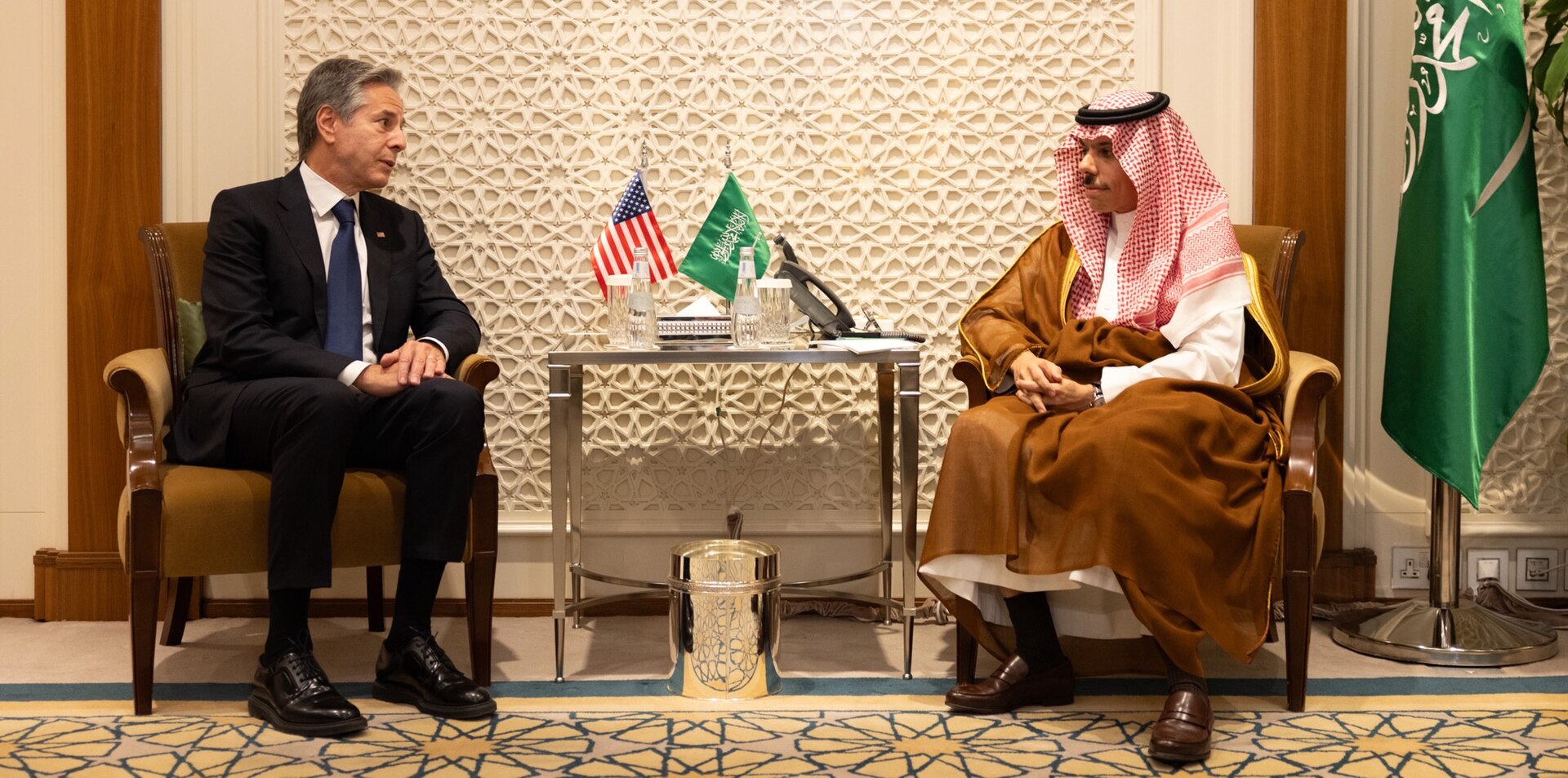
Israel lost the price tag. Under Biden, the cost of Saudi nuclear access was normalization — Israeli interests were structurally embedded in the deal’s terms even without Israel being a party to the agreement. In the text signed on July 22, as reported, that cost was removed, and the kingdom gained a path to enrichment without recognizing Israel, without conceding anything on Palestinian statehood, and without any commitment to the diplomatic framework that Biden and Blinken had spent years constructing.
Former Prime Minister Naftali Bennett warned that enriching nuclear material on Saudi territory “could prompt a nuclear race in the region.”
The practical consequence extends beyond the nuclear question itself. The Biden framework had linked three American interests — nuclear nonproliferation, Israeli-Arab peace, and Saudi strategic partnership — into a single transaction where progress on one required progress on all. The July 22 signing decoupled them. On July 23, Trump moved to restore the link, saying the deal was “totally subject” to Saudi Arabia joining the Abraham Accords; Riyadh did not immediately respond.
The Black Box on Saudi Soil
As reported, the enrichment provision would keep the capability on Saudi soil under a framework involving US firms. Construction would depend on a joint US-Saudi study, which Atlantic Council analysts described as a two-year study, meaning enrichment capability is a structural possibility embedded in a signed agreement rather than an imminent operational reality — and Trump has since said there will be no enrichment.
The bilateral safeguards agreement signed in place of the IAEA Additional Protocol is the least understood element of the deal and the most consequential for nonproliferation enforcement. The Additional Protocol gives IAEA inspectors wider access, including to undeclared locations. Under the bilateral arrangement, inspection and verification rights are defined by US-Saudi terms that have not been publicly disclosed. The distinction between multilateral inspection and bilateral trust may prove decisive over a thirty-year agreement, and its implications cannot be assessed until the bilateral terms are released.
The question that hangs over the black box is what happens to a US-linked facility on Saudi soil if the bilateral relationship deteriorates over a thirty-year window. Saudi Arabia’s recent exclusion from multiple regional diplomatic tracks and the broader realignment of Gulf alliances are reminders that no bilateral arrangement, however carefully drafted, is immune to the forces that reshape relationships over decades. A facility that operates as an American safeguard in 2028 may operate as something quite different by 2050.
Does Congress Have the Votes to Block It?
Once the signed agreement is formally submitted to Congress, a ninety-day review clock begins under the Atomic Energy Act. During that window, Congress can pass a joint resolution of disapproval, but the structure is pass-unless-disapproved — 123 agreements typically take effect unless veto-proof majorities pass joint resolutions of disapproval, and the procedural burden falls entirely on opponents.
Senator Ed Markey of Massachusetts said the deal was “selling out national security.” Democrats reintroduced in March a 2018 bipartisan bill, which Marco Rubio had backed, requiring congressional approval of any Saudi 123 agreement — flipping the congressional default by requiring affirmative approval rather than passive acquiescence. The bill has not become law.
In the House, Representative Brad Sherman criticised the deal, arguing it gives Riyadh a green light to reprocess and enrich. Blocking it would require veto-proof majorities in both chambers, a high bar for opponents.
The political arithmetic is further shaped by the commercial dimension. Sherman predicted the deal would benefit Westinghouse, which builds the large light-water reactors Saudi Arabia is seeking, and the deal’s defenders argue that without it Saudi Arabia could turn to Russia or China. Wright’s description of the agreement as “delivering prosperity at home and security to our allies abroad” was aimed at members of Congress who might otherwise have nonproliferation concerns but are reluctant to vote against domestic industrial interests. The congressional process is real, but the pass-unless-disapproved default places the burden on opponents. A detailed examination of Israel’s opposition to the Saudi enrichment deal and the structural contradiction it exposes — Rubio defending an agreement his own earlier legislation was designed to block — is available in a separate analysis.
The Charge That Writes Itself
The charge circulates without needing Tehran to articulate it: the United States is conducting an aerial bombing campaign against Iranian nuclear infrastructure while simultaneously granting a path to enrichment to Iran’s principal regional adversary. Sherman made the point directly, saying the United States is “bombing Iran because they insist upon enriching and reprocessing.” The juxtaposition is difficult to rebut because it is not a matter of interpretation — it is a description of what happened.
The argument that Washington enforces nonproliferation selectively — destroying one country’s enrichment program while building another’s — is now supported by the sequence of events. Iranian officials who invoke diplomacy in the morning while directing strikes by afternoon are not known for rhetorical restraint, and the 123 agreement hands them an argument that does not require exaggeration.
Lawmakers and nonproliferation groups have warned that the deal could incentivise Iran, particularly as Tehran watches its chief regional rival gain a path to the enrichment Iran has been denied and bombed for seeking.
If Saudi Arabia can access enrichment under American supervision, and if Iran cannot access enrichment without American bombs, then the incentive to reach breakout capability before the Saudi facility becomes operational grows stronger — not because of ideology, but because of timing. The broader regional conflict that now threatens both of Saudi Arabia’s maritime trade corridors is the backdrop against which any Iranian nuclear acceleration would occur, and it is not a stable one.
The Prize Without the Price
Mohammed bin Salman has suggested Saudi Arabia could pursue a weapons program if Tehran obtains a bomb, according to the Associated Press. That is the context in which his energy minister signed the July 22 agreement, and the 123 deal, as reported, provides a legal framework for the civil side of that ambition.
The signing optics reinforced the message. The agreement was signed by the energy minister rather than the foreign minister, presenting enrichment as an energy decision rather than a security one. Saudi Arabia’s broader effort to build security relationships across the region is carefully insulated from the nuclear question, and the ministerial routing of the signature ensures it stays that way.
The 123 agreement also creates a tension with one of its own justifications. The commercial argument for signing was that Saudi Arabia would pursue nuclear technology with or without American cooperation, and that US involvement would provide oversight and constraints that Russian or Chinese partnerships would not. The enrichment provision tests that argument directly, granting a capability that the oversight mechanisms — bilateral rather than multilateral, unpublished rather than transparent — may not be strong enough to constrain across a thirty-year timeline.
Hamas attacked on October 7, 2023, and the normalization timetable collapsed. Years of subsequent diplomacy never revived it. On July 22, 2026, the kingdom signed the nuclear agreement without, as reported, the peace deal that was supposed to be the price — and a day later Trump said the price still applied.
Frequently Asked Questions
Can Saudi Arabia build a nuclear weapon under this agreement?
The 123 agreement does not authorize weapons development, and the reported enrichment provision would involve US firms. However, the agreement does not follow the Gold Standard model the UAE accepted, and MBS has suggested the kingdom could pursue a weapons program if Iran obtained a bomb. The path from civilian enrichment infrastructure to weapons-grade material is long but not foreclosed, and the bilateral safeguards agreement signed in place of the IAEA Additional Protocol remains unpublished — meaning independent assessment of its constraints is currently impossible.
What happens if Saudi Arabia violates the agreement’s terms?
In principle, the United States can withdraw nuclear cooperation if a partner state violates nonproliferation commitments. In practice, terminating a signed agreement with a major oil-producing ally during an active regional war would carry enormous economic and strategic costs that no administration would absorb lightly. The bilateral safeguards framework concentrates both the detection and enforcement burdens within the US-Saudi relationship, creating an inherent tension between the role of inspector and the role of ally that the multilateral IAEA system was specifically designed to avoid.
Could Russia or China have won the Saudi nuclear contract instead?
That was the argument made for the deal. Jennifer Gordon of the Atlantic Council framed the question as whether Saudi Arabia would partner with the United States and its allies or “turn to Russia or China” for its civil nuclear program. As signed, the agreement is expected to involve US firms for thirty years, which would make it harder for Russian or Chinese suppliers to take the lead in the program even if future political conditions change.
Can Congress still block the deal?
The 2018 bipartisan bill that Democrats reintroduced in March 2026 would require affirmative congressional approval for any US-Saudi nuclear cooperation agreement, flipping the current pass-unless-disapproved default. It has not become law. Even if it passed, it would face a likely presidential veto requiring a two-thirds override in both chambers. The legislation would need to be enacted before the ninety-day review clock expires.
Has the normalization track with Israel been permanently closed?
Not formally, and Trump reopened it a day after the signing by saying the deal is “totally subject to Saudi Arabia joining the very respected and successful Abraham Accords.” White House press secretary Karoline Leavitt said that without that step “the deal is off.” Riyadh did not immediately respond. If the condition holds, the nuclear deal becomes the inducement for recognition again; if it does not, Washington will need to identify new leverage that Saudi Arabia actually wants. The kingdom’s conditions since October 7 have also grown structurally harder: a clear path to a Palestinian state as a condition for normalization is a demand that no plausible Israeli governing coalition currently appears willing to meet, and Saudi Arabia’s exclusion from active ceasefire and mediation tracks gives Riyadh little immediate incentive to offer concessions on Israeli recognition while it cannot secure a seat in the negotiations it considers more urgent.
The foreign ministry’s diplomacy ran on a separate track from the nuclear file: Athens Got the Call the Red Sea Could Not shows how the FM was pressing freedom-of-navigation guarantees through bilateral calls.
Editor’s note, October 12, 2026: An earlier version of this article said the July 22 US-Saudi nuclear agreement had formally ended the link between Saudi nuclear access and normalization with Israel, and that it was the first such deal to offer enrichment to an Arab state. On July 23 President Trump said the agreement “is totally subject to Saudi Arabia joining the very respected and successful Abraham Accords” and that “There will be no enrichment of material!”, and the White House press secretary said that without that step “the deal is off”; the enrichment provision was reported by anonymous sources and the “first” claim could not be sourced. The earlier version also attributed to Dan Shapiro two quotations that do not appear in his published Atlantic Council comment, spliced a quotation attributed to Matthew Kroenig, misdescribed Secretary Blinken’s October 2023 visit to Riyadh, and included quotations from Naftali Bennett, Ehud Barak and Senator Ed Markey, details of the UAE’s 2009 commitments, a Saudi nuclear capacity target, and an account of the Saudi foreign minister’s movements on July 22 that we could not verify. Those passages have been corrected or removed.