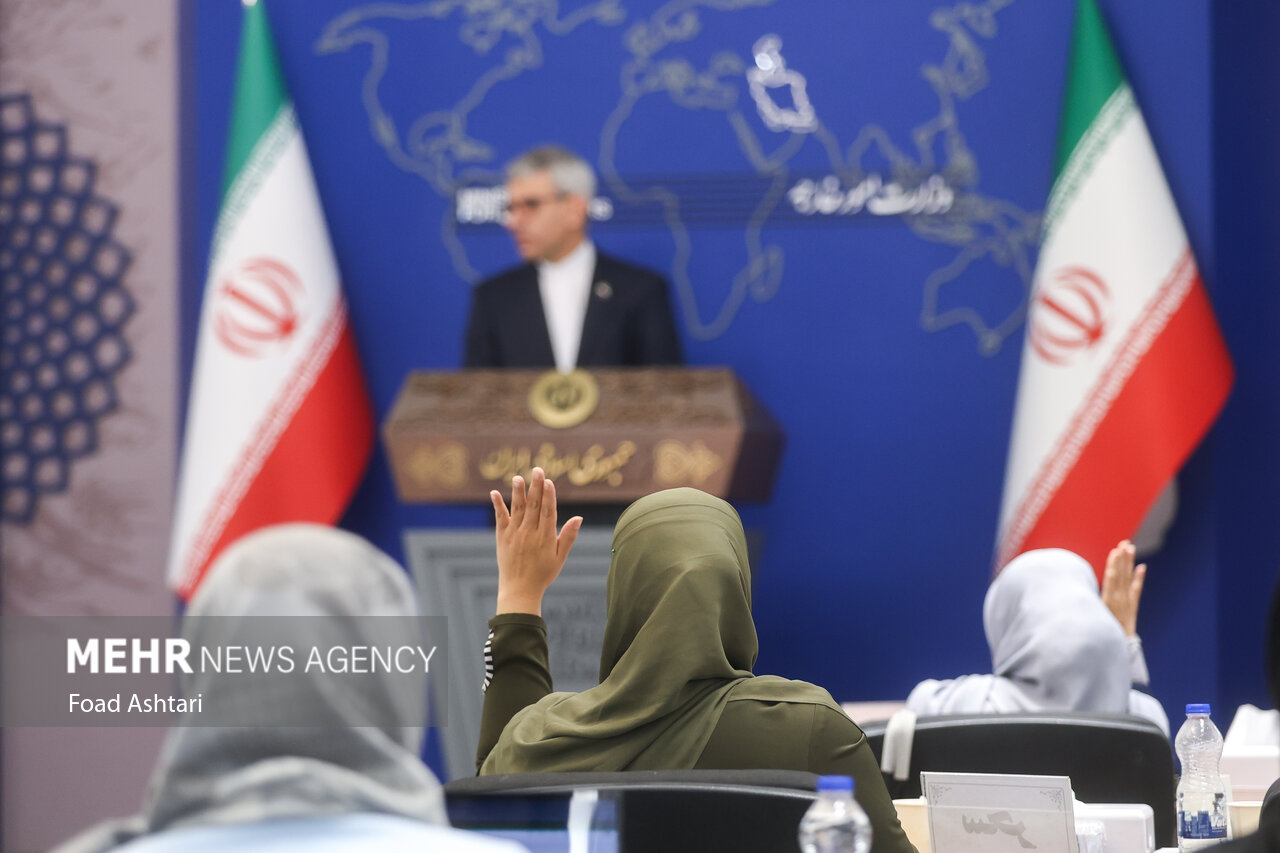
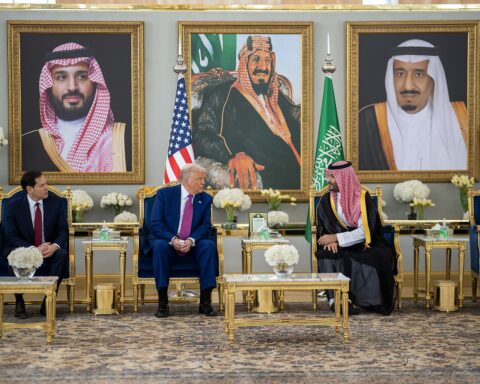
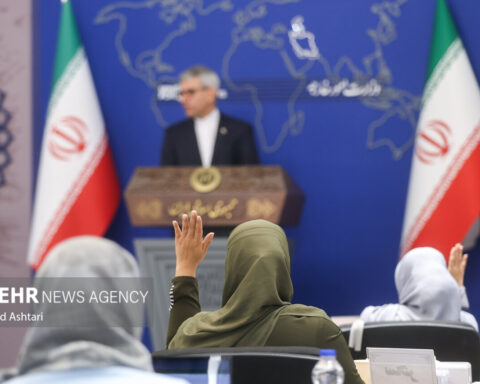
RIYADH — The 10-day ceasefire proposal circulating through Qatari, Egyptian, Omani, and Pakistani channels was not conceived by any of them. Tehran wrote it. The Jerusalem Post and i24NEWS independently confirmed on July 21-22 that the initiative being promoted by four sets of mediators was initiated by Iran — a fact Iran’s Foreign Ministry spokesman Esmaeil Baghaei obscured at his weekly press briefing the same day, telling reporters only that “mediators are actively striving to prevent further escalation and have conveyed proposals to Tehran.” Hours earlier, IRGC Wave 22 strikes hit US bases in Bahrain, Kuwait, and Jordan simultaneously, killing two American service members at Muwaffaq Salti Air Base. The ceasefire Tehran authored addresses Hormuz transit through a “middle corridor” that preserves Iranian veto authority over passage. It says nothing about the Houthi maritime blockade of Saudi Arabia declared July 20 at Bab al-Mandeb. Riyadh holds no seat in any of the three active mediation tracks and would not benefit from a Hormuz partial reopening while its Red Sea corridor remains closed.
Table of Contents
- The Ceasefire Tehran Designed
- What Does the Middle Corridor Look Like?
- Wave 22 Arrived on the Same Day as the Peace Proposal
- 85 Fast Attack Craft and the Coercion Geometry
- Why Does Saudi Arabia Hold No Seat in Any Mediation Track?
- The Blockade the Ceasefire Does Not Name
- What Would a Partial Hormuz Reopening Cost Riyadh?
- How Does Washington’s Counter-Demand Reshape the Timeline?
- Frequently Asked Questions
The Ceasefire Tehran Designed
Iran’s public language was engineered to reverse the agency. Baghaei’s formulation — “mediators… have conveyed proposals to Tehran” — placed Iran at the receiving end of a process Iran started. The sentence structure matters. It positions Tehran as a destination for external initiative, not the origin of a coercive framework delivered through four separate intermediary channels to give it the appearance of multilateral genesis.
The distinction between authoring a ceasefire and receiving one is not procedural. It determines who controls the terms. The proposal embeds a “middle corridor” through the Strait of Hormuz — a managed shipping lane between Omani-controlled and Iranian-controlled waters — that preserves Tehran’s authority to approve, condition, or revoke transit. This is the geographic output of Iran’s authorship. A ceasefire Iran received from mediators would contain terms negotiated between parties. A ceasefire Iran wrote and distributed through mediators contains the terms Iran wanted from the outset.
The Stimson Center has documented this pattern across multiple Iranian negotiating cycles since 2003. Iran’s strategy, the center wrote in 2026, involves “seeking strategic leverage by retaining the ability to selectively disrupt navigation” while simultaneously signaling openness to dialogue. The coercive act and the diplomatic offer are not in tension. They are sequential components of a single design — physical pressure to define the corridor, then a ceasefire to freeze the corridor’s geometry in place.
The Quincy Institute framed the structural question directly: “The nuclear file shifted from multilateral compliance into a bilateral pressure contest, and the question since has not been whether diplomacy exists, but whether diplomacy can coexist with coercion.” In the case of the 10-day ceasefire, coercion does not coexist with diplomacy. It authored the diplomacy.
What Does the Middle Corridor Look Like?
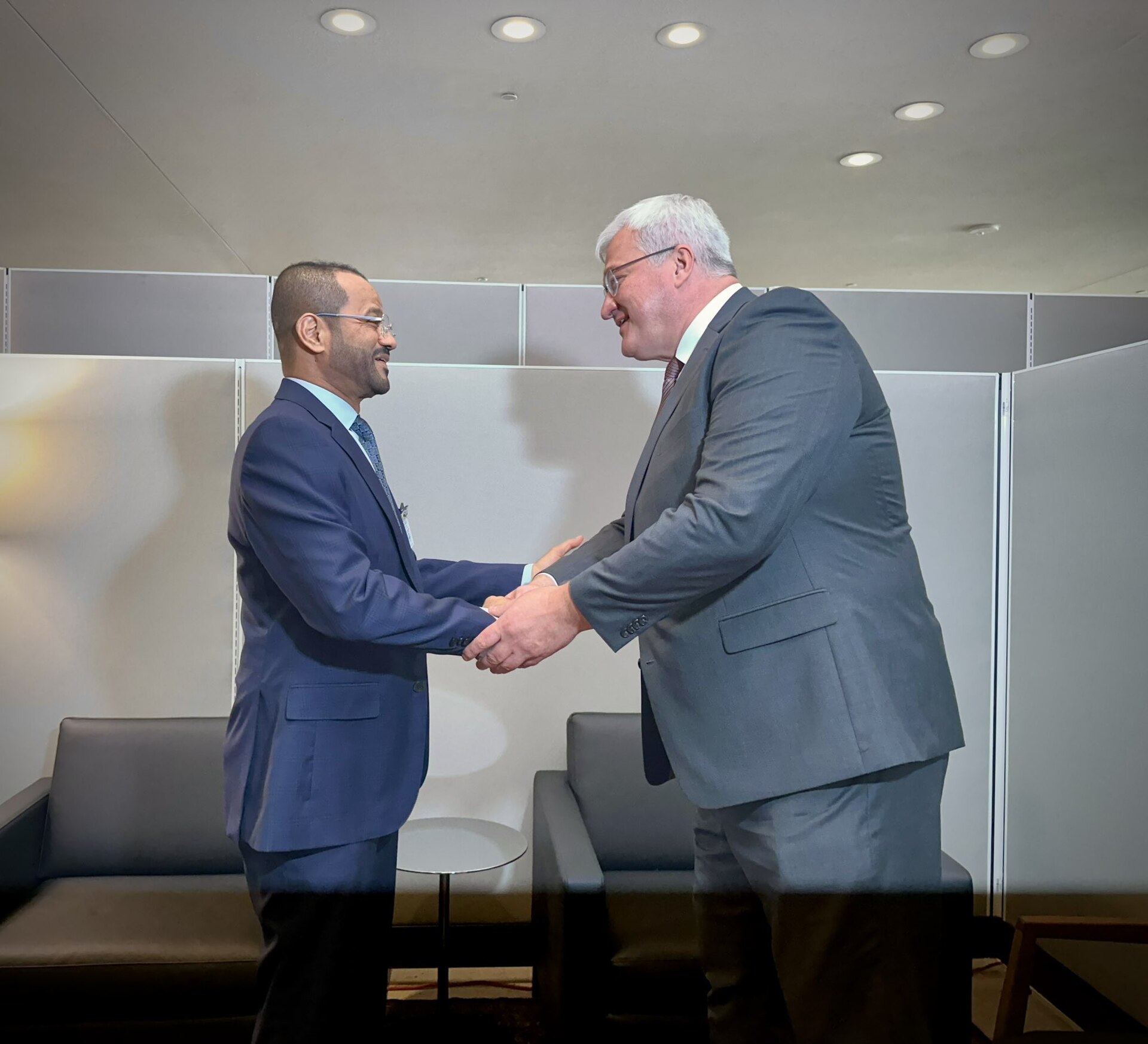
The corridor is a geographic design, not a legal arrangement. Oman had proposed a dual-corridor structure in ministerial talks in Muscat: a southern corridor through Omani territorial waters offering free passage, and a northern corridor through Iranian territorial waters requiring prior Iranian approval with no tolls. The “middle corridor” blends these into a single managed lane that runs between the two sovereign zones — preserving Iranian authority to condition access without formally claiming Omani waters.
The Middle East briefing 3,000+ readers start their day with.
One email. Every weekday morning. Free.
Fortune described the arrangement in July as “straight out of the Old Testament” — a partition-style division of the strait. The characterisation captures the anachronism. Hormuz is an international strait under the United Nations Convention on the Law of the Sea, which guarantees transit passage without coastal-state approval. The middle corridor substitutes managed access for legal right — a distinction that benefits the state controlling the terms (Iran) and disadvantages every state whose exports must pass through without a voice in the design.
The Observer Research Foundation characterised Iran’s approach as “selectively disruptive rather than fully closed, preserving the coercive threat while leaving room for managed concessions.” The middle corridor is the architectural expression of that strategy. It does not restore freedom of navigation. It creates a permission regime administered by Tehran under the procedural cover of a ceasefire.
Current transit volume reflects the coercive baseline: roughly 10 ships per day pass through Hormuz, down from 88 before the crisis. The corridor is designed to raise that number — partially — under Iranian-mediated terms. Each additional transit becomes an Iranian concession rather than a legal entitlement. The Stimson Center identified this as Iran’s ambition “to reshape the legal and political framework governing the Strait,” extending beyond operational coercion into structural revision of passage rights.
Oman’s position in this architecture is ambiguous. FM Badr Albusaidi met Iran’s FM Abbas Araghchi in Muscat to discuss “mechanisms to ensure safe passage.” Iranian drones struck Omani territory the following day. The sequence — negotiate the corridor, then strike the co-designer — mirrors the ceasefire’s own structure: offer the framework, apply the pressure.
Wave 22 Arrived on the Same Day as the Peace Proposal
IRGC Operation Nasr-2, Wave 22, struck US bases in three countries on July 21 — the same day the secret ceasefire proposal was confirmed as Iranian-authored. The simultaneity was not incidental. It was the dual-track design operating as intended: coercive strikes to establish the threat environment, diplomatic submission to offer the exit on Tehran’s terms.
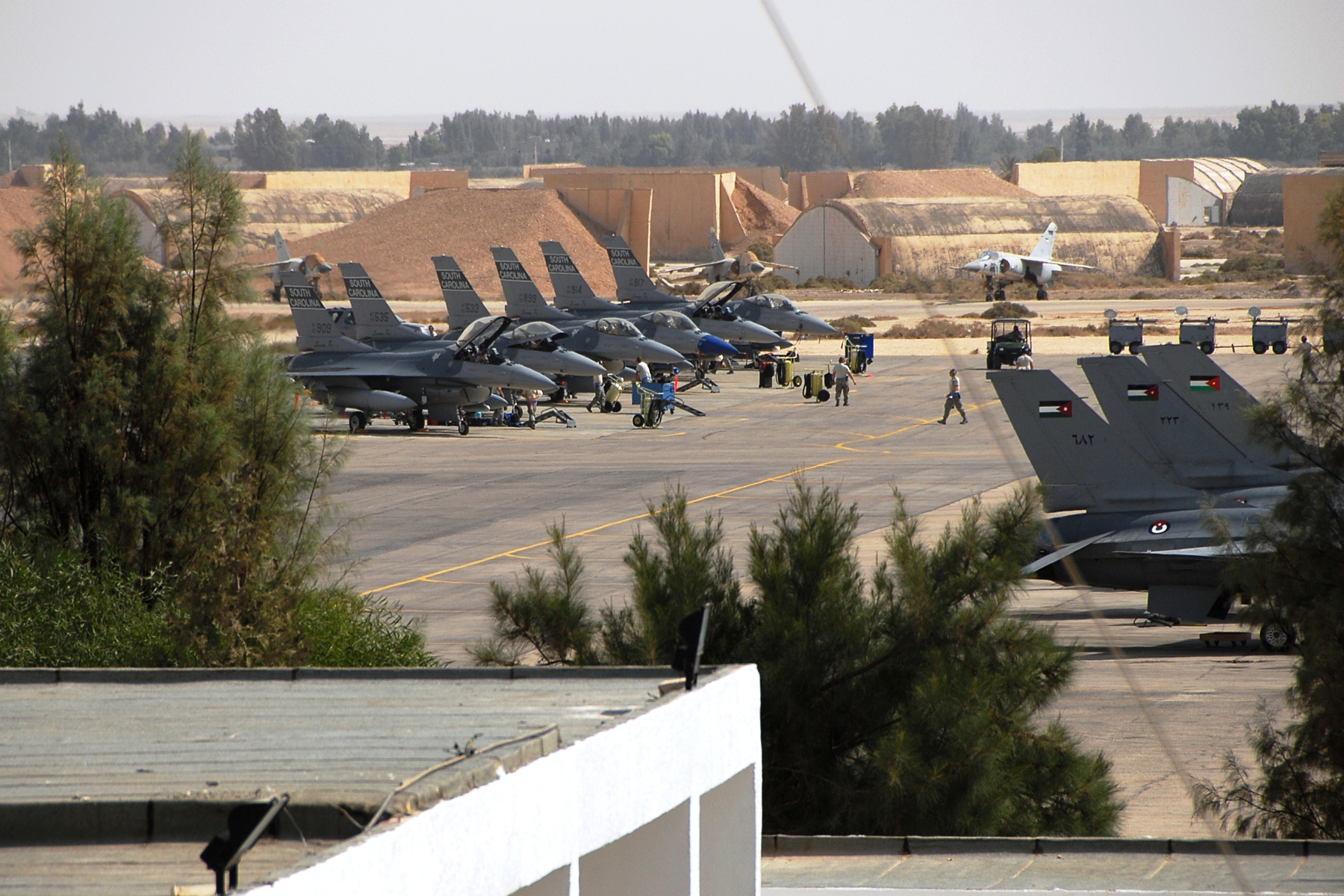
At Ali al-Salem Air Base in Kuwait, IRGC missiles destroyed an early warning radar and hit an MQ-9 drone shelter. At Al-Muharraq and Riffa in Bahrain, strikes targeted US air defence and radar systems. At Muwaffaq Salti Air Base in Jordan, IRGC forces hit missile defence radar and claimed destruction of a US F-15 — with two American service members confirmed killed, according to IranWire and JNS reporting on July 21.
Two days before Wave 22, Supreme Leader Mojtaba Khamenei issued his first substantive public communication since succeeding his father on March 8 — 133 days of silence broken with a call for “sacred unity” directed at Iranians “particularly against the United States.” Al Jazeera reported that Ali Abdollahi, head of Iran’s wartime joint command, immediately vowed the armed forces “will heed Khamenei’s directive for sacred unity and national cohesion.”
Mojtaba authorised on July 19, the IRGC struck on July 21, and the ceasefire surfaced through mediators on July 21-22. Chatham House assessed the dynamic in a July 13 session: “Both sides are using diplomacy to buy time, with Washington calculating that pressure Iran has absorbed may make it more willing to accept nuclear restrictions, while Tehran believes concerns over Hormuz, energy prices and escalation may persuade Trump to offer economic concessions.” The assessment was accurate but incomplete. Tehran is not merely using diplomacy to buy time. It wrote the diplomacy — and fired the missiles to make the terms urgent.
85 Fast Attack Craft and the Coercion Geometry
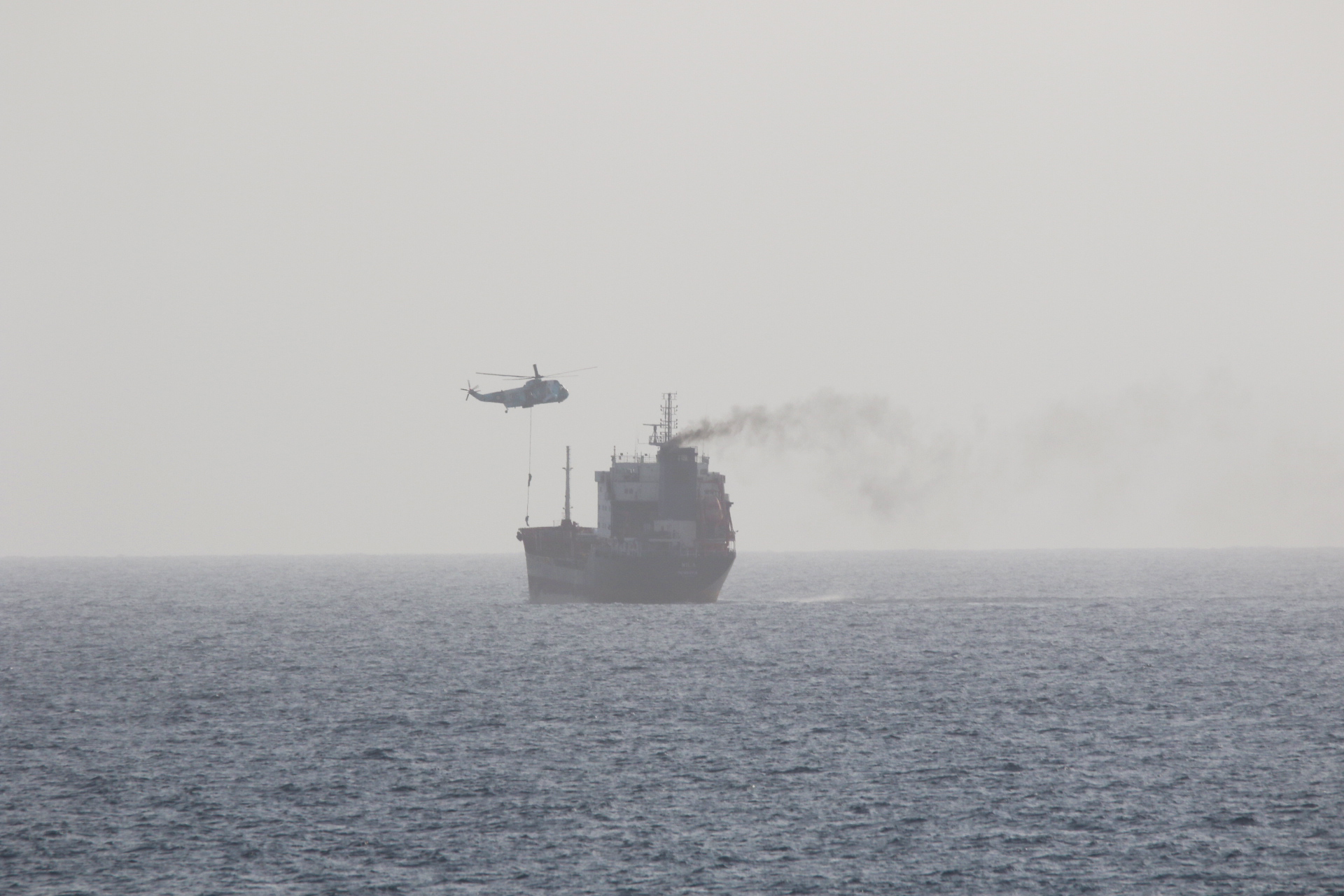
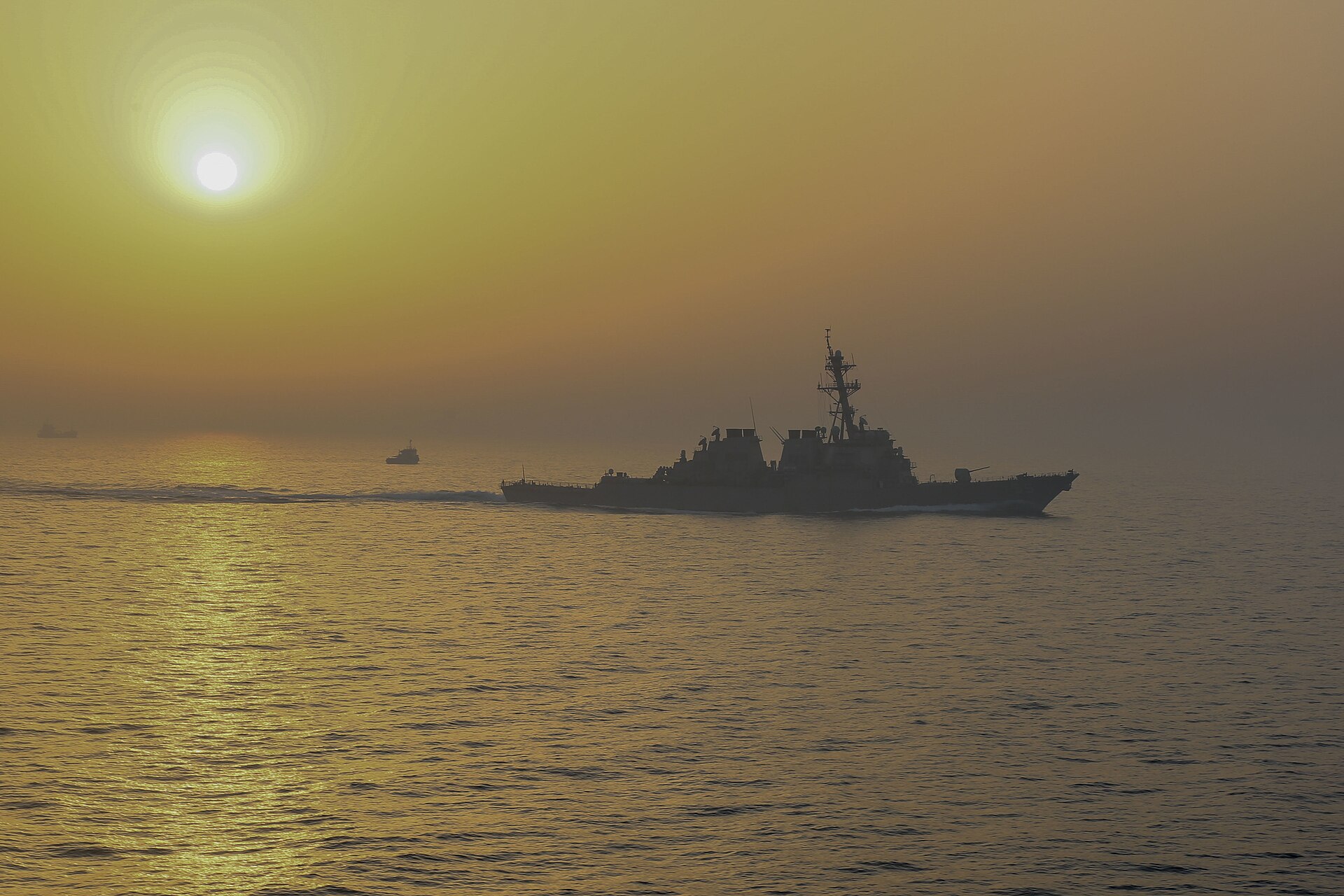
The ceasefire proposal did not arrive through diplomatic channels alone. It arrived with 85 IRGC high-speed craft deployed at Hormuz — the highest small-craft concentration Windward AI and IndexBox’s Strait of Hormuz Crisis report had recorded during the current campaign. The naval surge is the physical layer of the same coercive design that produced the diplomatic layer.
The 85-craft deployment followed an escalatory sequence. In late May and early June, 201 IRGC small craft massed at Larak Island, an Iranian-controlled position at the eastern mouth of Hormuz. On June 14, 106 fast attack craft launched from a position near the strait’s western approach in under 150 minutes — a demonstration of surge capability that established Iran’s ability to flood the corridor on short notice. The current 85-craft presence represents forward positioning, not peak capacity.
The deployment accomplishes two things simultaneously. It makes the corridor dangerous enough that a ceasefire (offering managed access through the middle corridor) becomes attractive to shipping states. And it makes the corridor physically policed by the state that authored the ceasefire, ensuring that any post-ceasefire transit regime depends on Iranian operational restraint — restraint that can be withdrawn.
“Faced with a widening military imbalance, Iran turned to Hormuz as one of the few domains where it could impose costs on its adversaries, seeking strategic leverage by retaining the ability to selectively disrupt navigation.”
— Stimson Center, 2026
The small-craft presence at Hormuz operates below the threshold of the ceasefire’s own terms. The proposal addresses strikes between the US and Iran — not Iranian naval deployments. A 10-day ceasefire could halt IRGC missile attacks on US bases while leaving 85 fast attack craft in position to condition every transit through the corridor Iran designed. The ceasefire freezes the fire. It does not freeze the fleet.
Why Does Saudi Arabia Hold No Seat in Any Mediation Track?
Three mediation tracks are active as of July 2026. Saudi Arabia participates in none of them.
| Track | Location | Mediators | Scope | Saudi Role |
|---|---|---|---|---|
| Doha indirect talks | Qatar | Qatar | US-Iran de-escalation | None |
| Islamabad-Geneva | Pakistan / Switzerland | Pakistan, Qatar | Nuclear timeline, MOU implementation | None — receives briefings via FM back-channel |
| Muscat framework | Oman | Oman | Hormuz transit monitoring | None |
The exclusion is structural, not accidental. The INSS assessment “Between Diplomacy and Security: Pakistan’s New-Old Role” documented Riyadh’s position as a secondary information recipient, not a negotiating party. Saudi FM Prince Faisal bin Farhan called Pakistan’s FM Ishaq Dar on July 3 — hours after Pakistani and Qatari mediators announced “positive progress” in Doha. The call was an information request, not a coordination session. Riyadh learns about the ceasefire terms after they are presented, not before they are drafted.
Qatar holds the ceasefire role that Saudi Arabia’s diplomatic infrastructure was once designed to occupy. Doha’s direct channel to both Washington and Tehran — maintained through the 2025 crisis and expanded under Emir Tamim’s personal engagement — gives Qatar a structural position Saudi Arabia cannot replicate. Riyadh severed its direct Iran channel after Mojtaba’s succession in March, and the bilateral communication that existed under the 2023 Beijing-brokered normalisation collapsed when Mojtaba’s Supreme National Security Council declined to honour prior understandings.
Pakistan’s dual role — as Saudi Arabia’s closest security partner and Iran’s primary mediator — has fractured under the weight of escalation. Islamabad hosted the April 11-12 US-Iran direct talks, the highest-level direct contact between Washington and Tehran since 1979. Pakistan now conveys the ceasefire proposal to Washington while briefing Saudi Arabia as a secondary recipient. The INSS paper noted the structural incompatibility: Pakistan cannot simultaneously mediate between two parties and privilege one of them with advance information. Saudi Arabia cannot afford the war or influence the peace — and the mediation architecture reflects that double bind.
The exclusion runs deeper than diplomacy. Under the Persian Gulf Shipping Agreement, Saudi Arabia owes $5.5 million per day once the current waiver expires on August 18 — $253 million outstanding in total. Saudi Arabia pays for corridor access it did not design, through a framework it did not negotiate, to a strait whose transit regime was authored by a state that excluded Riyadh from the drafting process.
The Blockade the Ceasefire Does Not Name
On July 20, Houthi military spokesman Yahya Saree declared a full maritime blockade of Saudi Arabia at Bab al-Mandeb — “an eye for an eye, blockade for blockade” against “the criminal Saudi enemy.” The ceasefire Iran authored addresses only Hormuz. No linkage mechanism connects the proposed 10-day pause to the Houthi naval blockade at the southern end of Saudi Arabia’s export geography.
The omission is the structural core of Saudi Arabia’s disadvantage. The East-West Pipeline — the only infrastructure capable of bypassing Hormuz — has operated near its roughly 5 million barrel per day capacity since March. Yanbu loadings on the Red Sea had reached approximately 4.7 million barrels per day at peak. But the Houthi blockade has driven Saudi crude loadings through Bab al-Mandeb down 36 per cent in two weeks, falling to 6.1 million barrels per day from 9.5 million at peak, according to The National’s July 20 reporting.
The Atlantic Council estimated that the Bab al-Mandeb blockade threatens 5 million barrels of oil per day in global flow. Combined with the Hormuz reduction — from 88 transits per day to roughly 10 — the dual blockade constrains approximately 17 per cent of total global seaborne crude. Saudi Arabia is the only major Gulf producer exposed to both simultaneously.
The ceasefire’s Hormuz-only scope creates an asymmetry the CFR identified directly: “The Saudis and Emiratis have options to go around the strait, but Kuwaitis, Qataris, and Bahrainis do not. They will be forced to comply with Iranian demands or experience economic dislocation.” A middle corridor that partially reopens Hormuz restores export capacity for Kuwait, Qatar, and Bahrain — states with no alternative routing — while leaving Saudi Arabia’s Red Sea bypass under Houthi interdiction. The closure of both corridors is precisely what makes the Hormuz-only ceasefire structurally punitive for Riyadh.
What Would a Partial Hormuz Reopening Cost Riyadh?
A partial Hormuz reopening under the middle corridor framework would restore export routing for every Gulf state except Saudi Arabia, whose Red Sea corridor remains blockaded. The competitive asymmetry is geographic and immediate.
| Gulf State | Hormuz Dependent | Red Sea / Bab al-Mandeb Exposure | Effect of Hormuz-Only Reopening |
|---|---|---|---|
| Kuwait | 100% | None | Full export restoration |
| Qatar | 100% | None | Full export restoration |
| Bahrain | 100% | None | Full export restoration |
| UAE | Partial (Fujairah bypass) | Minimal | Hormuz supplements existing Fujairah loadings |
| Saudi Arabia | Partial (EWP/Yanbu bypass) | 36% loadings decline under Houthi blockade | Competitors restored; Red Sea route remains blocked |
The pricing damage is already registered. Aramco cut its August Arab Light Official Selling Price by $11 per barrel — from a premium of $9.50 over Oman/Dubai to a discount of $1.50 below. It was the largest single OSP cut since 2022, and it reflected a market in which Saudi crude carries $8 to $12 per barrel in additional freight and insurance costs through Hormuz while facing Houthi interdiction on the only alternative route. Hormuz transit costs of two million dollars per ship compound an export picture that a Hormuz-only ceasefire would not improve for Riyadh.
Saudi Arabia’s Q1 2026 fiscal deficit reached $33.5 billion (SAR 126 billion). Goldman Sachs projects a full-year deficit of 6.6 per cent of GDP. NEOM carries $16 billion in cancellation liabilities. The financial context makes the competitive asymmetry operationally destructive: Riyadh absorbs the deficit, pays $5.5 million per day under the PGSA from August 18, and watches Kuwait and Qatar resume exports through a corridor designed by Iran and administered under terms Saudi Arabia had no role in setting.
The limitations of what each Gulf state can deliver to the other become visible in this geometry. The UAE cannot provide interceptors (its own stocks depleted), ISR capability (GlobalEye destroyed), or an Iran channel (shared intelligence nullifies it). Saudi Arabia cannot provide OPEC coordination (the UAE exited May 1), a unified Yemen position (opposing factions), or economic ballast (Q1 deficit: $33.5 billion; NEOM cancellation liability: $16 billion). A Hormuz-only ceasefire does not resolve these mutual incapacities. It deepens them — by restoring competitive export routing for states that do not share Saudi Arabia’s dual-blockade exposure.
How Does Washington’s Counter-Demand Reshape the Timeline?
Washington rejected Tehran’s 10-day timeline and demanded a longer ceasefire with freedom-of-navigation preconditions attached before any halt takes effect. The US position shifted two days later when a DoD source confirmed “operations on a hold” — the first on-record Pentagon acknowledgment that the thirteen-night campaign had paused, in the same forty-eight-hour window Tehran’s Pakistan-Qatar proposal was rejected. The US counter-sequencing, reported by Reuters on July 20 and confirmed by i24NEWS on July 21-22, inverts Tehran’s preferred order: Iran wants a ceasefire first and shipping arrangements negotiated during the pause. Washington wants partial shipping arrangements agreed before the ceasefire begins — and “summaries on shipping in the Strait of Hormuz to be completed during the ceasefire period.”
The inversion matters because it determines who concedes first. Under Iran’s sequence, the ceasefire freezes the military status quo — 85 fast attack craft in position, the middle corridor’s geography intact — and then negotiates shipping terms from a position where Iran has already demonstrated coercive capability. Under Washington’s sequence, Iran must accept managed freedom-of-navigation provisions before receiving the protection of a ceasefire, potentially eroding the corridor’s permission-based architecture before it takes operational effect.
Iran proposed 10 days. The prior MOU ran for 60. Washington wants something between these durations, though no public counter-number has been reported. The gap is not merely temporal. A 10-day ceasefire is long enough to demonstrate a corridor’s viability but too short to establish legal precedent for freedom of navigation. A longer ceasefire with preconditions would test whether the middle corridor functions as a managed passage regime (Iran’s design) or as a transitional step toward restored transit rights (Washington’s design).
Saudi Arabia cannot influence the sequencing from outside any track. What watches the Gulf for Saudi Arabia now is a question that extends beyond surveillance into diplomatic architecture: Riyadh depends on Pakistan for information about terms being negotiated between Washington and Tehran through Doha, with Muscat providing the geographic framework — a four-party chain in which Saudi Arabia is the fifth node, informed last and consulted least.
The PGSA deadline — August 18, when the $5.5 million per day fee waiver expires — introduces a financial clock that is structurally disconnected from the diplomatic one. Whether the ceasefire takes effect in 10 days or 30, Saudi Arabia begins paying for corridor access on August 18. A ceasefire that has not resolved Hormuz transit rights by that date costs Riyadh $5.5 million daily for a passage regime authored by Iran, administered through a corridor Saudi Arabia did not design, in a framework from which Riyadh is excluded.
“Both sides are using diplomacy to buy time, with Washington calculating that pressure Iran has absorbed may make it more willing to accept nuclear restrictions, while Tehran believes concerns over Hormuz, energy prices and escalation may persuade Trump to offer economic concessions.”
— Chatham House, July 13, 2026
Chatham House’s assessment captured the US-Iran dynamic but omitted the third party that buys nothing with either side’s time. Washington buys room to escalate. Tehran buys corridor architecture. Saudi Arabia buys a daily invoice for $5.5 million, payable to a framework it cannot enter, for a corridor it cannot use while the Houthis blockade its only alternative route.
Frequently Asked Questions
Did Iran formally acknowledge authoring the ceasefire proposal?
No. Baghaei’s press briefing language was constructed to position Iran as the recipient of mediator initiative. The formulation — “mediators… have conveyed proposals to Tehran” — grammatically places Tehran at the end of a chain it started. This mirrors the pattern Iran used during the secret Oman back-channel that preceded the 2015 JCPOA, when Tehran authored terms that Sultan Qaboos carried to Washington, and which the P5+1 later presented as a multilateral outcome. The Stimson Center has documented this intermediary-laundering approach across four Iranian negotiating cycles since 2003, each involving a regional partner (Oman, Qatar, Iraq, or Pakistan) presenting Iranian-authored terms as locally generated proposals.
Could Saudi Arabia theoretically join the Doha or Muscat tracks?
Structural barriers prevent it in both cases. Oman’s Muscat track is built on bilateral sovereign jurisdiction — the corridor design requires only two states (Iran and Oman) with territorial waters in the strait. Introducing a third sovereign party would void the transit-monitoring framework’s legal architecture. The Doha track requires a state with direct, functioning communication to both Washington and Tehran; Saudi Arabia maintains the Washington channel but severed its direct Iran channel after Mojtaba’s March 2026 succession. The Baghdad-mediated Saudi-Iran normalisation process that began under the 2023 Beijing agreement collapsed when Mojtaba’s Supreme National Security Council declined to honour bilateral understandings negotiated under Ali Khamenei’s authority.
What happens to Saudi crude pricing if Hormuz partially reopens but Bab al-Mandeb stays closed?
War-risk insurance premiums — currently at 2 per cent of hull value, sharply above pre-crisis levels — would diverge between the two straits. A managed corridor at Hormuz could reduce Hormuz-route premiums by 40 to 60 per cent as insurers price in reduced (though not eliminated) risk. Bab al-Mandeb premiums would remain at current levels or rise under active Houthi interdiction. The resulting gap would create a structural pricing advantage for Gulf producers whose exports flow exclusively through Hormuz (Kuwait, Qatar, Bahrain) over Saudi Arabia, whose Red Sea exports carry the higher premium. Aramco’s August OSP cut already reflects the dual-blockade pricing environment; a Hormuz-only reopening would not reverse the discount because Saudi crude routed through Yanbu still transits the more expensive strait.
How many IRGC vessels can Iran deploy to Hormuz at surge capacity?
The 85 confirmed high-speed craft represent the current forward deployment, not peak capacity. The June 14 exercise demonstrated surge tempo: 106 fast attack craft launched in under 150 minutes from a single forward position near the strait’s western approach. The Larak Island massing in late May and early June involved 201 small craft — a static positioning exercise that established Iran’s ability to concentrate over 200 vessels at Hormuz’s eastern mouth. Windward AI tracking suggests rotation patterns indicating a sustained deployment capability that substantially exceeds the 85-craft visible presence, with vessels cycling between forward positions and bases at Bandar Abbas, Jask, and Abu Musa on 48- to 72-hour rotations.
What is the PGSA and why does it matter for Saudi Arabia’s ceasefire exposure?
The Persian Gulf Shipping Agreement is a multilateral fee arrangement governing managed transit through Hormuz during the crisis period. Saudi Arabia’s obligation under the PGSA is $5.5 million per day, with payments suspended under a temporary waiver that expires August 18 — 27 days from the ceasefire proposal’s circulation. The total outstanding obligation is $253 million. The fee is a passage-availability charge, not a per-transit fee: Saudi Arabia pays regardless of whether its crude transits Hormuz, so long as the corridor is notionally open. If the ceasefire takes effect and the middle corridor operates under Iranian-managed terms, Saudi Arabia pays for access to a Hormuz corridor its exports may not use — because the Houthi blockade makes Red Sea routing through Yanbu essential, and Yanbu volumes do not pass through Hormuz. On July 22, Baghaei made Iran’s dual-track posture explicit: Wave 23 launched the same morning he endorsed diplomacy, articulating the doctrine that the ceasefire proposal and the missile salvo are load-bearing columns of the same negotiating architecture.