
RIYADH — A senior White House official told CBS News on Saturday that Iran had “agreed in principle to dispose of highly enriched uranium,” a claim that — if true — would represent the single most consequential Iranian nuclear concession since the JCPOA was signed in Vienna eleven years ago. Within hours, Iran’s IRGC-adjacent Tasnim News Agency issued an all-capitals denial (“IRAN UNDER NO CIRCUMSTANCES TRADES WAR END FOR NUCLEAR”), the official state broadcaster carried President Masoud Pezeshkian saying Iran was “ready to assure the world that we are not seeking nuclear weapons” while immediately routing that assurance through Supreme Leader Mojtaba Khamenei’s veto via the Supreme National Security Council, and Secretary of State Marco Rubio — speaking from New Delhi, not Washington — offered only that “significant progress, although not final progress, has been made,” without once using the phrase “HEU disposal.”
The result is not ambiguity — it is a system. Tehran is running two signals simultaneously — one from the presidency, one from the IRGC-adjacent press — and the architecture is designed so that whichever outcome materialises, Iran will have been publicly on record predicting it. For Saudi Arabia, excluded from all five rounds of US-Iran negotiations and from the Track 2 nuclear discussions that would govern any HEU mechanism, the problem is not which signal to believe. The problem is that Riyadh has no independent channel through which to verify either one — and must price in both simultaneously while managing a Q1 fiscal deficit that has already consumed 194% of its full-year target.
Table of Contents
What the White House Actually Claimed
The CBS News report, published Saturday afternoon, attributed the HEU-disposal claim to a single unnamed “senior Trump administration official” — no second named official confirmed the characterisation publicly on May 24, and the language itself was carefully bounded. Iran had agreed “in principle” to “disposing of highly enriched uranium” as part of resolving “nuclear issues,” the official said, adding that the administration believed the supreme leader had already “approved the template for a deal” while acknowledging that “officials were still working through details of the mechanism.” That final clause is doing enormous work: disposal without a mechanism is an aspiration, not a commitment, and the distinction matters because the IAEA — the only international body with the mandate to verify nuclear material movements — has had zero access to Iranian facilities since February 28, 2026.
The framing was also notable for what it excluded. The official described the prospective arrangement as superior to the 2015 JCPOA, which “permitted enrichment to a ceiling” — implying the new framework would go further. But the JCPOA’s enrichment provisions and its HEU provisions were fundamentally different instruments: the 2015 deal required Iran to dilute 96% of its low- and medium-enriched stockpile, not to remove HEU from Iranian soil (Iran held no weapons-grade material at the time). What the Trump administration is now describing — HEU leaving Iran entirely — was never part of the JCPOA framework. It is a categorically different ask, directed at a categorically different stockpile (440.9 kg at 60% enrichment, sufficient for approximately ten nuclear weapons if enriched to 90%, per the Center for Arms Control and Non-Proliferation).
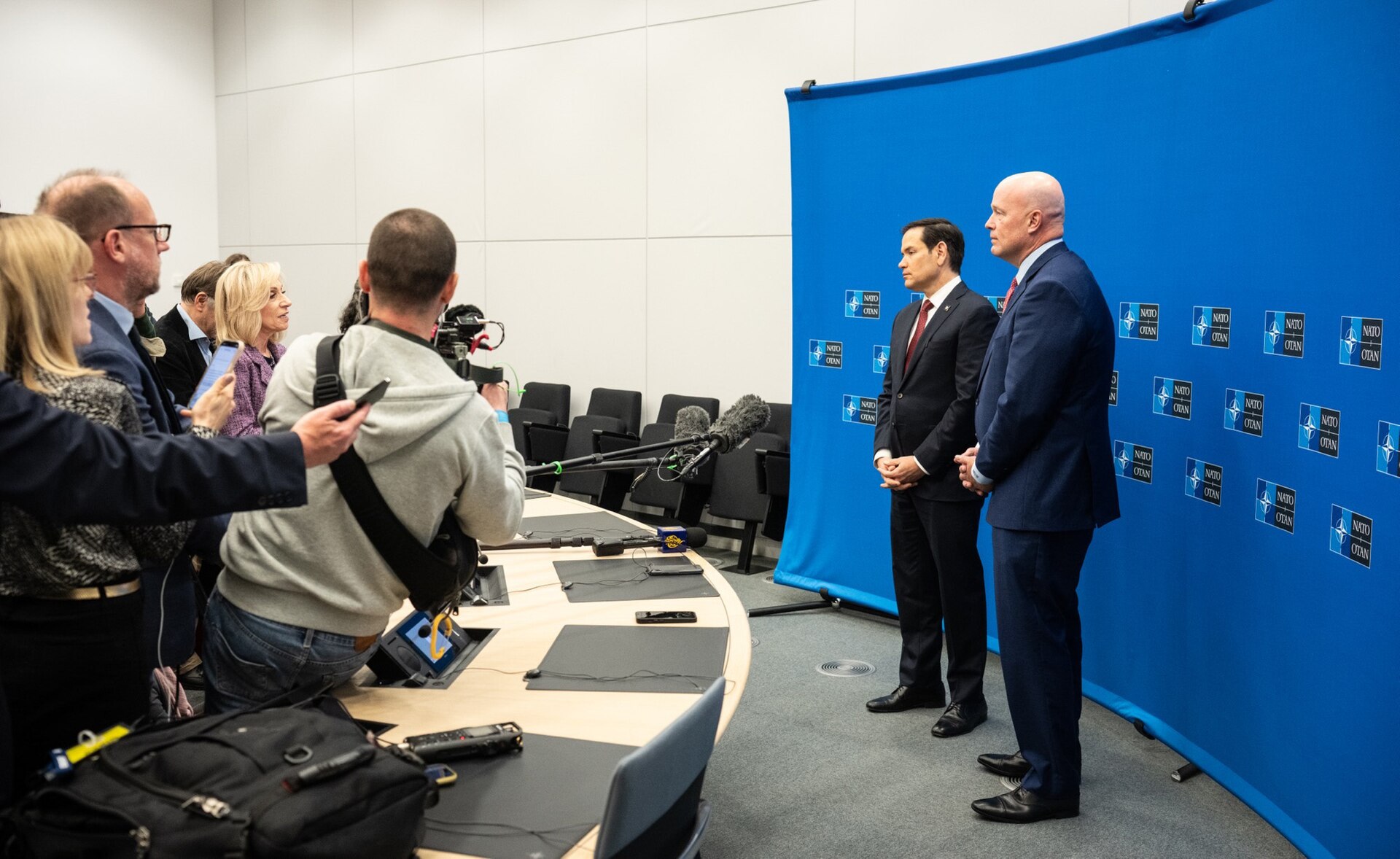
Rubio’s own language from New Delhi tracked a perceptibly lower register. “The world would no longer need to fear Iran getting a nuclear weapon,” he said — a construction built around fear rather than fact, around future tense rather than present commitment. He did not say Iran had agreed to dispose of anything. He did not mention HEU. The gap between what the unnamed official told CBS and what the secretary of state said on camera is not a contradiction in the formal sense — Rubio could simply have been speaking more cautiously — but it is precisely the kind of gap that foreign ministries notice, and that Tehran can exploit.
The Middle East briefing 3,000+ readers start their day with.
One email. Every weekday morning. Free.
Tasnim’s Denial Covers More Than HEU
Tasnim’s response was not a careful diplomatic qualification. It was a wall. The agency — which functions as the IRGC’s English-language news arm and has historically previewed Khamenei-aligned positions before they become formal policy — issued two distinct statements on May 24. The first: “IRAN UNDER NO CIRCUMSTANCES TRADES WAR END FOR NUCLEAR.” The second: Iran “has not accepted any actions in the nuclear domain at the current juncture.” The scope of these denials extends well beyond the specific CBS claim about HEU disposal; they reject the entire framing in which nuclear concessions form any part of the current negotiations.
This matters because the Axios MOU framework — the most detailed of the three deal documents currently in circulation — explicitly sequences nuclear issues into a 60-day Track 2 window that opens only after the initial military-and-Hormuz Track 1 is signed. If Tasnim is stating the hardline position accurately, then nuclear discussions have not merely stalled; they have not begun, because the precondition for their commencement (a signed Track 1 agreement) has not been met. The CBS report’s characterisation of an “in principle” agreement on HEU would require either that nuclear issues were discussed outside the sequenced framework — which would contradict Iran’s own stated red line about not trading “war end for nuclear” — or that the White House official was describing an aspiration as a commitment.
IRNA, Iran’s official state news agency, reinforced the Tasnim line through a different channel: the foreign ministry spokesman was quoted saying “nuclear issues were not being discussed” at this stage, and that “a conclusion would not be reached if the US sought to delve into details about highly enriched uranium.” Fars News Agency, which on May 24 had already disputed Trump’s “largely negotiated” characterisation as “incomplete and inconsistent with reality,” maintained that Hormuz would “remain under Iranian management.” Across all three IRGC-adjacent and hardliner outlets, the position is identical: no nuclear concessions have been offered, and any suggestion otherwise originates from Washington, not Tehran.
What Does Pezeshkian’s ‘Assurance’ Actually Commit To?
The presidential signal, delivered through state broadcaster IRIB, operated on an entirely different frequency. Pezeshkian said Iran was “ready to assure the world that we are not seeking nuclear weapons” — a statement that Western headline desks could (and did) run as evidence of flexibility, but that contains no operational commitment whatsoever. It is a goals-framing statement: Iran’s intent is not to build weapons. It says nothing about the 440.9 kg of 60%-enriched uranium sitting in an underground tunnel complex at Isfahan. It says nothing about enrichment levels, moratorium durations, or disposal mechanisms. It says nothing about IAEA access.
Foreign Minister Abbas Araghchi, departing for Rome the previous day, had already drawn the line with clinical precision on his own X account: “Zero nuclear weapons = we DO have a deal. Zero enrichment = we do NOT have a deal.” The SNSC caveat that Pezeshkian attached — “no decision is made outside the framework of the Supreme National Security Council, and without the coordination and approval of Iranian Supreme Leader Mojtaba Khamenei” — is the load-bearing element. It structurally routes any “assurance” back to the same authority whose directive, per two senior Iranian sources cited by Reuters, is that “the stockpile of enriched uranium should not leave the country.” Pezeshkian’s statement is not a softening of Khamenei’s position; it is a restatement of Khamenei’s veto authority wrapped in language that sounds like flexibility.
This dual-track architecture is not new. During the JCPOA negotiations between 2013 and 2015, the Rouhani presidency signalled openness through government press and state television while the IRGC-adjacent outlets maintained maximalist positions — and the final deal landed closer to the hardline position on every enrichment-related provision than to the diplomatic signals the presidency had been emitting. The institutional design is identical in 2026: the presidency provides the international community with evidence that “moderates” exist and are worth negotiating with, while the SNSC and supreme leader retain unilateral authority over every substantive decision. For any external actor trying to read Iranian intent — and Saudi Arabia is the external actor with the most at stake and the least visibility — the correct inference is not “which signal is real” but “both signals are real, because they serve different institutional functions.”
The IAEA Cannot Verify Any of This
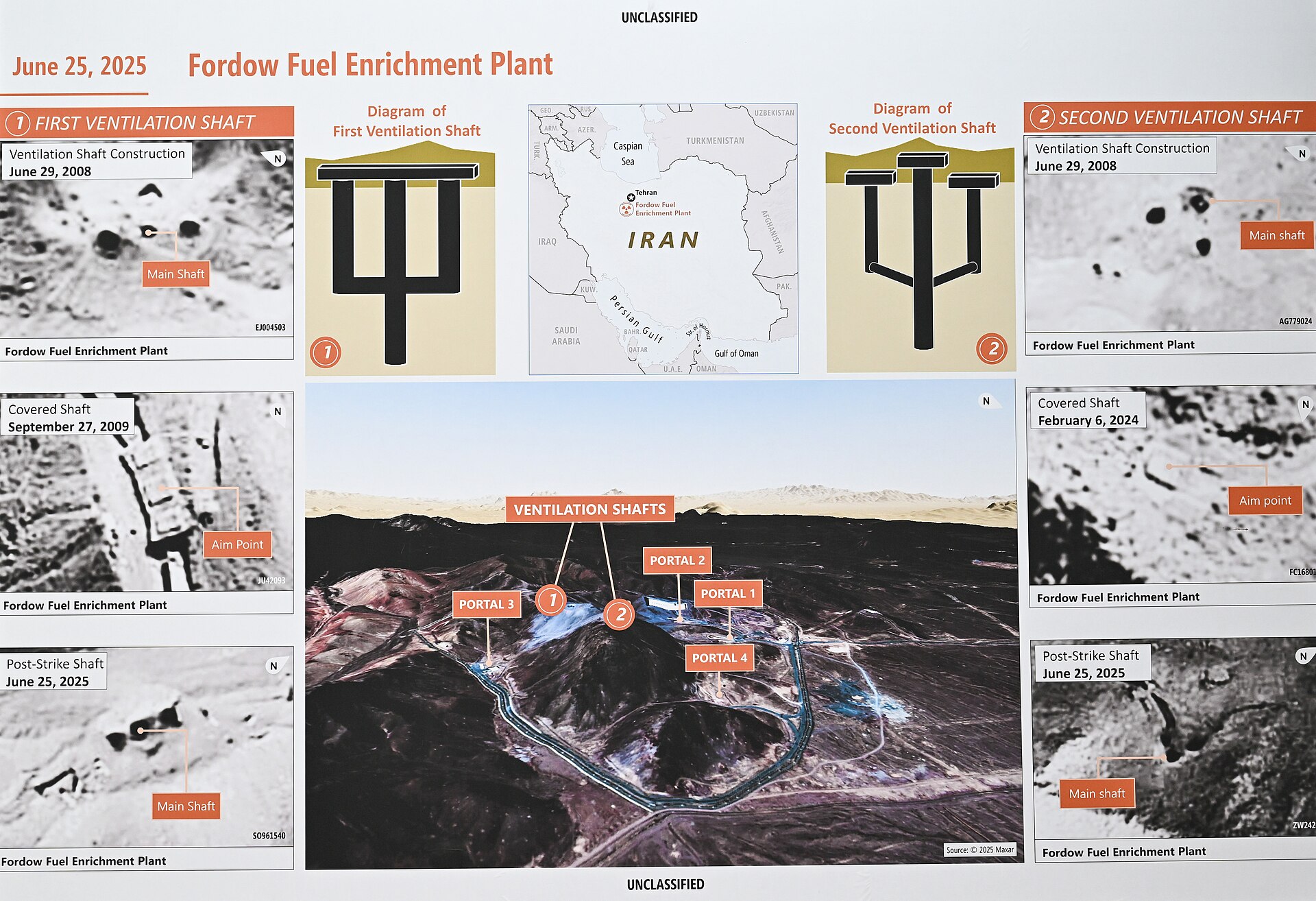
Even if one accepts the CBS characterisation at face value — that Iran has agreed in principle to dispose of HEU — the agreement is unverifiable. Iran terminated all IAEA verification access on February 28, 2026, removed monitoring cameras, broke seals, and expelled inspectors. IAEA Director General Rafael Grossi told the Associated Press in late April that he could neither confirm nor deny the location of Iran’s enriched material: “We haven’t been able to inspect or to reject that the material is there.” Grossi specified that the 60%-enriched stockpile “likely is still at the Isfahan site,” with “slightly more than 200 kg” believed to be inside the underground tunnel complex specifically — but the remainder’s location is, in his word, unverified.
The verification blackout transforms any “in principle” agreement from a diplomatic milestone into a promissory note drawn on a bank that no auditor can enter. The Axios MOU framework envisions a 30-day Hormuz/military implementation window followed by a 60-day Track 2 nuclear negotiation period — meaning that even under the most optimistic timeline, substantive HEU discussions would not begin for a month after a Track 1 signing that has not occurred, and verification arrangements would follow those discussions. The gap between the CBS headline (“Iran agrees in principle”) and operational reality (no inspectors, no cameras, no seals, no access, no signed Track 1 agreement, no mechanism) is not a gap that can be bridged by optimism. It is a gap that can only be bridged by Iranian decisions that Khamenei has publicly foreclosed.
Iranian officials have argued, per Reuters, that exporting the material would leave Iran vulnerable to future US or Israeli strikes — a security rationale that directly contradicts any “disposal” commitment. Netanyahu, whose security cabinet convened on Saturday, told Trump he expected him to “thwart Iran’s nuclear programme,” while Israeli officials characterised the emerging framework as one that “gives Iran time and money” with nuclear activities “only up for discussion later.” The Israeli read, whatever its diplomatic motivations, aligns with the sequencing visible in every available document: nuclear concessions are deferred, not agreed.
Why Can’t Riyadh Tell Which Signal Is Real?
Saudi Arabia’s information deficit on the nuclear dimension of the US-Iran talks is structural, not incidental. Riyadh was excluded from all five negotiating rounds — Doha, Geneva, Muscat, Istanbul, Rome — and from the Track 2 nuclear discussions that the Axios framework establishes as a separate channel. The Kingdom has no bilateral Hormuz or nuclear back-channel with Tehran outside the Oman-mediated mechanism, and Oman is itself operating in a dual capacity (co-drafting a permanent Hormuz toll governance framework with Iran while nominally mediating between Washington and Tehran). The Saudi Ministry of Foreign Affairs issued no statement on May 24 regarding the HEU contradiction — a silence that is partly attributable to the Hajj calendar (Tarwiyah Day on May 24-25, Arafah on May 26, Eid on May 27, creating a 96-hour no-escalation buffer) but that also reflects a deeper absence: Riyadh has nothing to say because Riyadh has nothing to know.
The Carnegie Endowment’s Rachel Leber and Alexia Worby wrote in April 2026 that the GCC “has no seat at the table” in US-Iran negotiations, a formulation that has only become more precise as the talks have progressed. The CSIS assessment, authored by Michael Ratney, noted that Mohammed bin Salman secured AI chips, F-35 access, and Major Non-NATO Ally designation from the May presidential visit — but no consultative role on Iran’s nuclear future. Saudi Arabia’s 123 nuclear cooperation agreement with the United States, signed in the same fortnight that Washington was demanding Iran abandon enrichment entirely, creates an asymmetry that both Tehran and Riyadh’s domestic critics can see: the Kingdom is being offered civilian nuclear access precisely because it has no enrichment capability, while Iran is being asked to surrender enrichment precisely because it does.
The practical consequence for Saudi fiscal and energy planning is severe. If the CBS claim reflects reality and Iran genuinely moves toward HEU disposal, the path to Hormuz reopening accelerates — and with it, the return of Iranian barrels to an already oversupplied market, downward pressure on Brent (which closed at $103.94 on May 22), and further erosion of the revenue base underpinning Vision 2030. If the Tasnim denial reflects reality and no nuclear progress has been made, the PGSA toll regime hardens, Hormuz remains functionally closed to non-exempt traffic (two verified transits per day versus 95 pre-crisis), and Saudi Arabia’s export constraints through the Yanbu bypass continue to suppress output below capacity. Either scenario damages Saudi interests; neither scenario was shaped by Saudi input; and as of Saturday evening, Riyadh cannot determine which scenario to plan for.
Three Documents, No Agreement
The HEU contradiction sits atop a broader documentary confusion that has characterised the US-Iran negotiation process since early May. Three separate framework documents are currently in circulation, none of them signed, each describing a different version of what has been discussed. The Axios 14-point MOU framework includes a 12-to-15-year enrichment moratorium, a 3.67% enrichment cap, and HEU removal — the most detailed and the most demanding. The Al-Arabiya 8-point document, published May 22 after the Saudi-owned network retracted a premature “deal reached” headline, contains ceasefire provisions and freedom-of-navigation language but zero nuclear specifics. The Pakistan-brokered Munir letter of intent, characterised by Axios as exactly that — a letter of intent, not a final framework — remains with Tehran for review after Munir’s planned trip was called off.
The moratorium gap alone illustrates the distance remaining. Iran’s publicly stated position is five years. The Axios framework describes 12 to 15 years. The Washington Times, citing US officials, reported “at least 12 years, possibly 15.” Fifty-two US senators and 177 House members have demanded zero enrichment — a position that no Iranian faction, hardline or reformist, has shown any willingness to entertain. Araghchi’s formula — “zero enrichment = we do NOT have a deal” — was not a negotiating position; it was a statement of the boundary beyond which negotiation does not occur. The CBS report’s HEU-disposal claim does not resolve this gap. Disposal of existing stockpile and future enrichment rights are separate issues, and Iran has signalled flexibility on neither.
What emerged on Saturday was not a deal, or the outline of a deal, or even agreement on what a deal would contain. It was a set of competing claims about what had been discussed, issued by parties with structurally different incentives to characterise progress. The White House needs a deal before the 60-day framework window becomes a political liability. Iran’s presidency needs to signal that diplomacy is producing results while the SNSC ensures that no irreversible concession is made. And Saudi Arabia — running a fiscal deficit of $33.5 billion in Q1 alone, with Hajj pilgrims moving toward Mina and the OPEC+ JMMC meeting approaching on June 7 — needs clarity that no one in Washington or Tehran has any incentive to provide.
Background
The US-Iran negotiation process began in Doha in February 2026 and has proceeded through five rounds across five countries over 106 days without producing a signed agreement. The current framework sequences military and Hormuz issues into a 30-day Track 1 window, with nuclear issues deferred to a 60-day Track 2 period. Iran’s Persian Gulf Sovereignty Authority (PGSA), operational since May 18, imposes a $2 million transit toll on commercial vessels transiting Hormuz, with exemptions for Russia, China, India, Iraq, and Pakistan.
Iran terminated all IAEA verification access on February 28, 2026. The agency’s last confirmed assessment of Iran’s 60%-enriched uranium stockpile was 440.9 kg, with approximately 200 kg believed to be in an underground tunnel complex at Isfahan; no independent verification has been possible since. The JCPOA, signed in 2015 and abandoned by the Trump administration in 2018, required dilution of enriched uranium but never mandated removal of HEU from Iranian territory — making the current US demand historically unprecedented.
Frequently Asked Questions
What is the difference between “disposing” of HEU and “diluting” it, and why does it matter?
Under the 2015 JCPOA, Iran agreed to dilute its enriched uranium — blending it down to lower enrichment levels while keeping the material inside Iran. The CBS-reported White House position describes disposal, which implies removing the material from Iranian territory entirely (either shipping it to a third country, as Iran did with low-enriched uranium to Russia under the JCPOA, or converting it into a form that cannot be re-enriched). Disposal is a more demanding concession because it eliminates Iran’s ability to re-enrich the material in a breakout scenario. It is also the concession that Khamenei has explicitly foreclosed: Reuters reported that his directive, confirmed by two senior Iranian sources, is that “the stockpile of enriched uranium should not leave the country.” The distinction between dilution and disposal is the distance between what Iran agreed to in 2015 and what the US is asking for in 2026.
Has Iran ever transferred enriched uranium out of the country before?
Yes, once. In December 2015, as part of JCPOA implementation, Iran shipped approximately 8.5 tonnes of low-enriched uranium (enriched to 3.67%, not weapons-relevant levels) to Russia in exchange for 137 tonnes of natural uranium yellowcake. That transfer was of low-enriched material with no weapons-grade pathway in its existing form. The current stockpile — at 60% enrichment, four technical steps from weapons grade — is qualitatively different. Iran has never transferred highly enriched uranium out of the country, and the IRGC has publicly framed the stockpile as a strategic deterrent asset whose removal would leave Iran vulnerable to US or Israeli military action.
What role does Pakistan play in the HEU discussion specifically?
Pakistan’s National Security Adviser, Munir, brokered a separate letter of intent between Washington and Tehran that Axios described as distinct from the 14-point MOU framework. A planned Munir trip to Tehran was called off the week of May 22 (The Week India), and the letter of intent remains with Iranian authorities for review. Pakistan’s structural position is complicated by the September 2025 Saudi-Pakistan Mutual Defence Assistance agreement (SMDA), which treaty-binds Islamabad to defend Saudi Arabia — creating a conflict of interest when Pakistan simultaneously mediates between Washington and the country whose nuclear programme most directly threatens Saudi security. Pakistan is also exempt from the PGSA Hormuz toll, alongside Russia, China, India, and Iraq — a status that further complicates its neutrality as mediator.
Could the IAEA resume inspections quickly if a deal were signed?
Not immediately. Iran did not merely suspend IAEA access on February 28, 2026 — it dismantled the monitoring infrastructure. Cameras were removed, seals were broken, and inspectors were expelled. Restoring verification capability would require negotiating a new safeguards arrangement (or restoring the previous Additional Protocol, which Iran suspended in 2023), physically reinstalling monitoring equipment, recalibrating measurement systems, and re-establishing baseline inventories of nuclear material across multiple facilities. Under the JCPOA, the gap between agreement and full implementation of monitoring took approximately six months (July 2015 agreement to January 2016 Implementation Day). Current conditions — with more facilities, higher enrichment levels, and a more adversarial relationship between Tehran and the IAEA — suggest a comparable or longer timeline.
What happens to the HEU question if no deal is signed by the end of the 60-day framework?
The Axios MOU framework’s 60-day Track 2 window is not self-enforcing — there is no penalty clause for expiration and no mechanism to compel either party to continue negotiations beyond it. If the window closes without agreement on HEU (or enrichment moratorium terms, or IAEA access), the status quo reasserts: Iran retains its stockpile, the PGSA continues operating, Hormuz remains functionally restricted, and the US faces a choice between accepting Iran’s nuclear status, imposing new sanctions on an economy already under maximum pressure, or returning to the military options that the current negotiation process was designed to avoid. For Saudi Arabia, an expired Track 2 window would mean the fiscal and energy constraints imposed by the Hormuz closure persist indefinitely — with no diplomatic channel through which Riyadh can influence the outcome.
That structural gap deepened on May 25, when White House officials told CBS News that Iran had provided “assurances — verbal and in writing — that any subsequent permanent deal will include the ‘disposal’ of all enriched uranium.” Iran’s Supreme National Security Council secretariat denied any such commitment existed. The contradiction — a written document one party affirms and the other denies — is examined in detail in the written-assurances contradiction at the core of the deal.