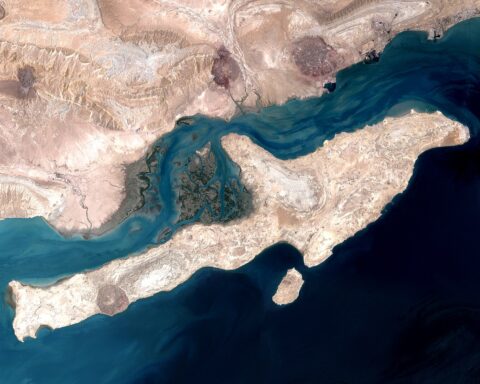
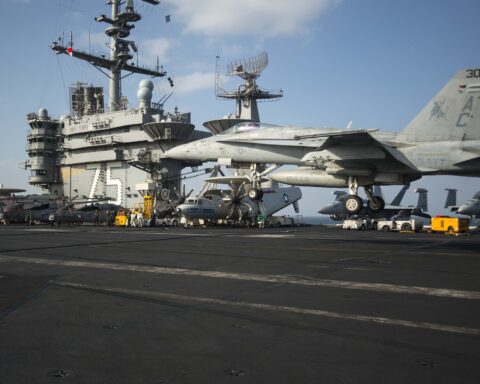
WASHINGTON — CENTCOM struck Iranian maritime capabilities, coastal surveillance sites, missile and drone storage facilities, and air defence assets on the night of July 22–23, the thirteenth consecutive night of the campaign and the first time Washington publicly designated sea-lane targets as its primary objective. Explosions were confirmed Thursday morning local time in Sirik, Bushehr, and near Ahwaz in Khuzestan province, according to the Jerusalem Post and Iran’s Khuzestan deputy governor, speaking to the Mehr News Agency.
The target language is the development. For twelve nights, CENTCOM described its objectives in broad operational terms — military operations centres, logistics infrastructure, aircraft hangars — listing “maritime capabilities” as one category among several without isolating the waterway those assets exist to control. Night Thirteen’s target set leads with maritime capabilities and coastal surveillance, and the accompanying statement said the mission would “further degrade Iran’s ability to threaten civilian mariners and commercial vessels transiting regional waters,” according to ANI News and CENTCOM’s own release — a formulation that names the fight Washington has been waging but not declaring since July 6.
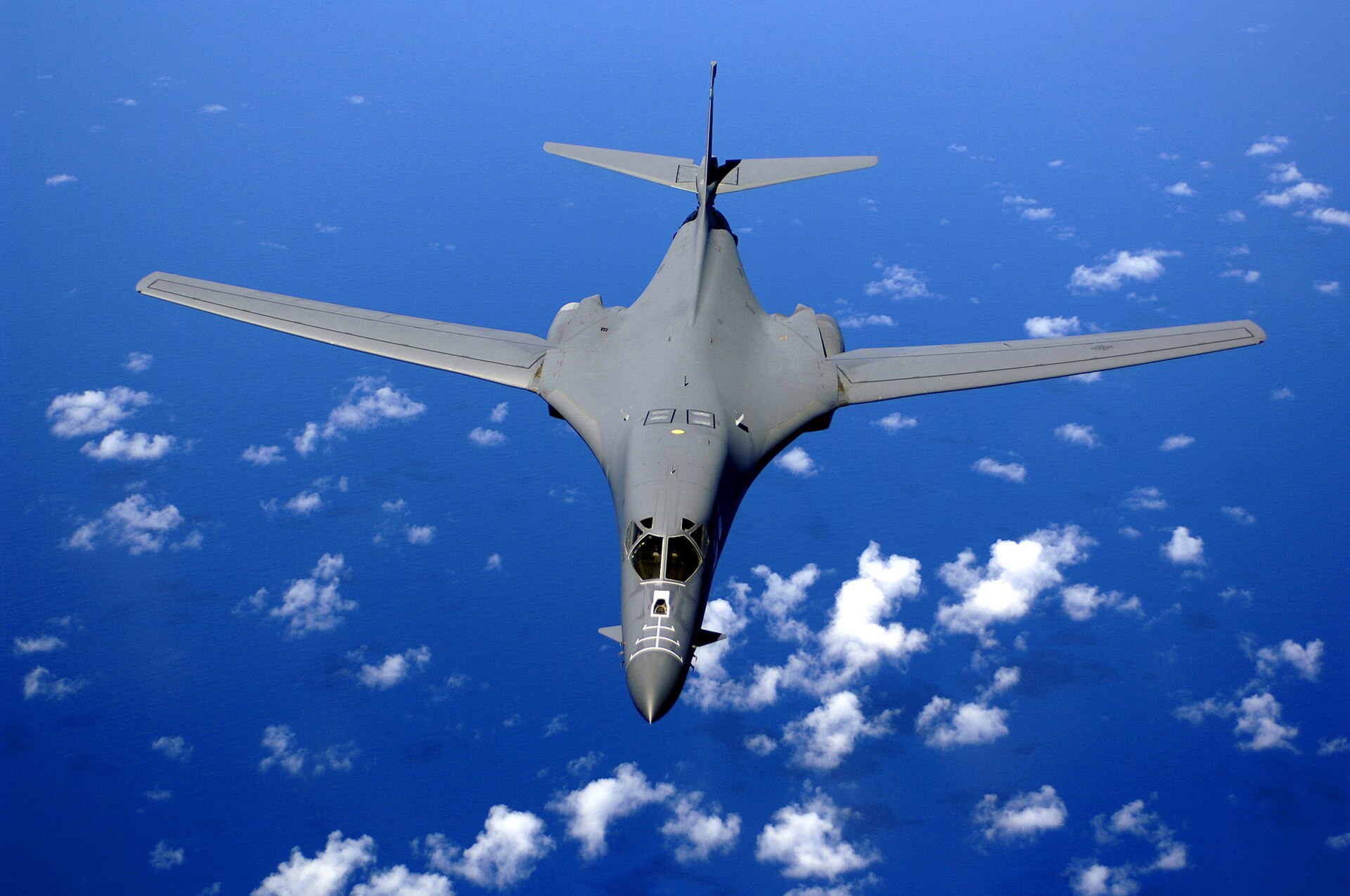
Table of Contents
The Night Thirteen Target Set
CENTCOM announced the strikes at 5:30 p.m. ET on July 22, listing maritime capabilities, missile and drone storage, coastal surveillance sites, and air defence assets as Night Thirteen’s targets, according to ANI News and CENTCOM’s social media release. The categories were narrower and more maritime-focused than any prior night in the campaign — three of four target types directly related to sea-lane control.
Sirik, where explosions were confirmed Thursday morning, is an IRGC naval base opened specifically for “surface and aerial control over the Strait of Hormuz,” according to Army Recognition. The installation sits on the Makran coast east of the strait and serves as a command node for Iran’s coastal defence network, including Noor anti-ship cruise missiles — a C-802 derivative with a range of 120 to 300 kilometres — and deployments of the Ghadir-class midget submarine fleet, up to 23 of which are believed operational, according to the Washington Institute. Striking Sirik is not a general-purpose degradation exercise but a specific attempt to blind and disarm the infrastructure that monitors, threatens, and conditionally permits commercial passage through Hormuz.
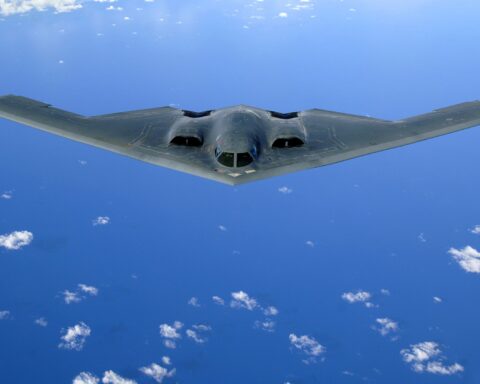
A B-1B Lancer, tail number 86-0108 and callsign “HEINZ23,” departed RAF Fairford on July 22 — the first heavy bomber use since fighting resumed twelve days ago, according to Itamilradar and The Aviationist. The B-1B carries up to 75,000 pounds across three internal weapons bays, the largest payload of any US bomber per 19FortyFive and Army Recognition, and its deployment signals a shift from precision strikes against point targets to heavier ordnance loads against distributed coastal installations. The War Zone has reported that GBU-31 munitions fitted with BLU-109 penetrator warheads require overflight rather than stand-off delivery, suggesting the aircraft entered Iranian airspace — though CENTCOM has not confirmed the specific delivery profile.
Iran has attacked more than 30 commercial vessels since the campaign began on July 6, per a CENTCOM background statement. CENTCOM has struck more than 2,000 targets in return, according to Gulf News. The ratio captures the campaign’s asymmetry but not its effectiveness — the number of targets destroyed tells you nothing about how many ships are still getting through.
The Middle East briefing 3,000+ readers start their day with.
One email. Every weekday morning. Free.
Why Did Washington Name the Maritime Fight?
The shift from generic military targets to a maritime-dominated target set is not a tactical escalation so much as a declaratory one — but in a campaign where Washington’s public framing has been calibrated night by night, the declaration is policy. CENTCOM’s Night 11 release, reported by Al Jazeera, listed “Iranian military operations centres, maritime capabilities, aircraft hangars, drone storage facilities, and military logistics infrastructure” as targets, with the stated purpose of degrading “Iran’s ability to threaten commercial shipping in the Strait of Hormuz.” Maritime capabilities were one item in a five-category list, and the accompanying target language gave equal weight to aircraft hangars and logistics nodes. Two nights later, maritime capabilities and coastal surveillance lead the set, and the hangars and operations centres have dropped off.
This follows an operational precedent Washington established on July 12–13, when CENTCOM deployed Corsair unmanned surface vessels — one-way attack sea drones operated by Task Force 59 — in their first combat use, striking a submarine and ship maintenance facility at Bandar Abbas Naval Base with three Corsairs. The Corsair deployment was an operational innovation; Night Thirteen’s target language is a declaratory one, making explicit in CENTCOM’s public communications what the sea drones demonstrated in practice.
Last night’s strikes degraded Iran’s ability to continue attacking commercial shipping.
— CENTCOM statement on the Corsair attack at Bandar Abbas, July 13, 2026
The reframing matters for Riyadh. Saudi crude production sits roughly 31 percent below its pre-war baseline, and Aramco’s August Arab Light official selling price was cut by six dollars per barrel — the largest single-month reduction since 2000, according to Aramco pricing circulars. Saudi Arabia’s wartime fiscal position depends on whether enough crude reaches Asian and European buyers to avoid a further revenue collapse, and that depends on whether Hormuz remains navigable. Washington naming the maritime fight tells Tehran, the market, and Riyadh what the US is now prioritising — but Riyadh, which must maintain its non-belligerent posture, cannot publicly acknowledge that the American strike campaign is being waged in defence of Saudi export infrastructure.
Eight Ships and Seventy Percent Dark
Commercial shipping through the Strait of Hormuz fell to eight vessel transits on July 22–23, down from fifteen the previous day, according to the tracking platform straits.live — a three-week low for a waterway that carried roughly eighty-eight commercial passages per day before the campaign began. The deeper structural collapse is visible in weekly figures compiled by Lloyd’s List: non-Iranian-linked transits fell from 108 to 25 in the week ending July 13, a reduction of 77 percent, and traffic has not recovered since.
What remains is increasingly invisible. Lloyd’s List Intelligence reported on July 21 that 70 percent of observed tanker transits through Hormuz were conducted “dark,” with AIS transponders switched off, up from 55 percent the previous week. Dark running defeats real-time tracking by commercial analytics platforms but not by military sensors, which means commercial insurers and market-data providers are operating blind while navies — American and Iranian — can see what is moving and where. The analytics firm Windward, which provides maritime intelligence to insurers and governments, described the current situation as “the most significant escalation of the conflict since its opening phase,” according to CNBC.
Brent crude traded at approximately $96 per barrel on July 23, up 2 to 2.5 percent, according to Bloomberg and CNBC. The price reflects a market that has priced in disruption but not closure — a distinction that matters because Iran’s Khatam al-Anbiya headquarters has vowed to shut Hormuz entirely under specific conditions, and the question of how far Washington can degrade Iran’s maritime infrastructure before Tehran decides the line has been crossed is now the campaign’s central escalation risk.
What Has Tehran Threatened?
Iran’s declared red line on Hormuz is explicit but conditional. The Khatam al-Anbiya Air Defence Headquarters vowed to “totally prevent global oil transit through the Strait of Hormuz” if US strikes target Iranian bridges or power plants, according to PressTV reporting on July 22–23. Tasnim, citing an unnamed military source, added that such strikes would trigger retaliation against “infrastructure and bridges across the region, including energy facilities in which the United States has interests,” per CBS News.
If the US attacks Iranian bridges or power plants, Iran will strike infrastructure and bridges across the region, including energy facilities in which the United States has interests.
— Iranian military source, via Tasnim News Agency / CBS News, July 22–23, 2026
The conditionality is carrying real weight. Night Nine hit eight Iranian cities and CENTCOM struck the perimeter of the Bushehr nuclear power plant on an earlier night, but civilian bridges and power stations have not been targeted, and Tehran has not followed through on its total-closure threat. Instead, the IRGC has imposed a conditional-transit regime in which ships may pass through Hormuz “if coordinated with Iran and conducted within the framework of Iran’s regulations,” per CBS News — a toll regime that asserts Iranian sovereignty over international waters and requires commercial shipping to accept Iranian authority as the price of passage, rather than a full blockade.
The human cost is accumulating. Iran’s Health Ministry, cited by Tasnim, reported 53 Iranians killed and approximately 600 injured from US strikes since July 6 — figures that have not been independently verified and likely undercount military casualties, as the IRGC does not release its own numbers. Tehran has responded with its own escalation: IRGC strikes on US bases across four countries, including Wave 23 targeting Al-Sakhir drone hangars in Bahrain, Port Salman’s Task Force 59 facility in Kuwait, and Camp Arifjan. The IRGC claimed on July 22 to have struck King Faisal Air Base in Ma’an and Prince Hassan Air Base in Mafraq, Jordan, destroying “an F-15 fighter jet preparation hangar” and “eight MQ-9 drones,” according to the Jerusalem Post and CGTN — claims unverified by CENTCOM or the Jordanian government.
Both Chokepoints Under Fire
The Hormuz transit collapse is only half the chokepoint problem. On the same day CENTCOM struck Iranian maritime targets, Houthi forces hit the Saudi-linked tanker Encelia approximately 70 nautical miles southwest of Al Shuqaiq, triggering a fire and a VHF distress call, according to Al Jazeera and Reuters. A Houthi spokesman said the Encelia and the VLCC Layla, a Bahri-owned tanker also claimed struck, had “violated the blockade in the Red Sea.” The Houthi maritime blockade of Saudi Arabia, declared on July 20, has now produced kinetic enforcement within 48 hours — and 2.7 million barrels of Saudi crude were stranded at sea on the blockade’s first day alone.
Saudi Arabia’s two maritime export corridors — Hormuz in the east and Bab al-Mandeb in the west — are both under simultaneous attack for the first time in history. The Red Sea corridor Saudi Arabia built to bypass Hormuz runs from the East-West Pipeline’s Yanbu terminal through Bab al-Mandeb to reach Asian and European buyers, but Houthi enforcement has reduced Saudi crude flows via Bab al-Mandeb by 36 percent — from 9.5 million barrels per day to 6.1 million — even before the formal blockade declaration. With Saudi production and pricing already in wartime deterioration, the fiscal arithmetic is unforgiving. The dual-track pressure the 123 deal creates — Washington granting Saudi enrichment access while bombing Iran for the same capability — is the subject of a separate analysis on how Washington’s nuclear concession weakens its Iran position.
Night Thirteen’s strikes on Iranian maritime infrastructure represent Washington’s attempt to reopen one of the two corridors, but the campaign has no mechanism for the other. The Houthi threat to Bab al-Mandeb sits outside the ceasefire track Saudi Arabia cannot enter, and CENTCOM’s Iran-focused strikes do nothing to address it. The market, watching $96 Brent and eight ships through the strait, is pricing the prospect that neither corridor reopens soon.
The Praying Mantis Precedent
The last time the US Navy fought to keep the Strait of Hormuz open was April 18, 1988, during Operation Praying Mantis — the largest American naval surface action since World War II, launched in retaliation for the mining of the USS Samuel B. Roberts, according to the Naval History and Heritage Command. The US destroyed two Iranian oil platforms, Sassan and Sirri, which Tehran had been using as maritime attack command centres to direct strikes against Gulf shipping, and sank the frigate Sahand alongside several smaller combatants in a single afternoon.
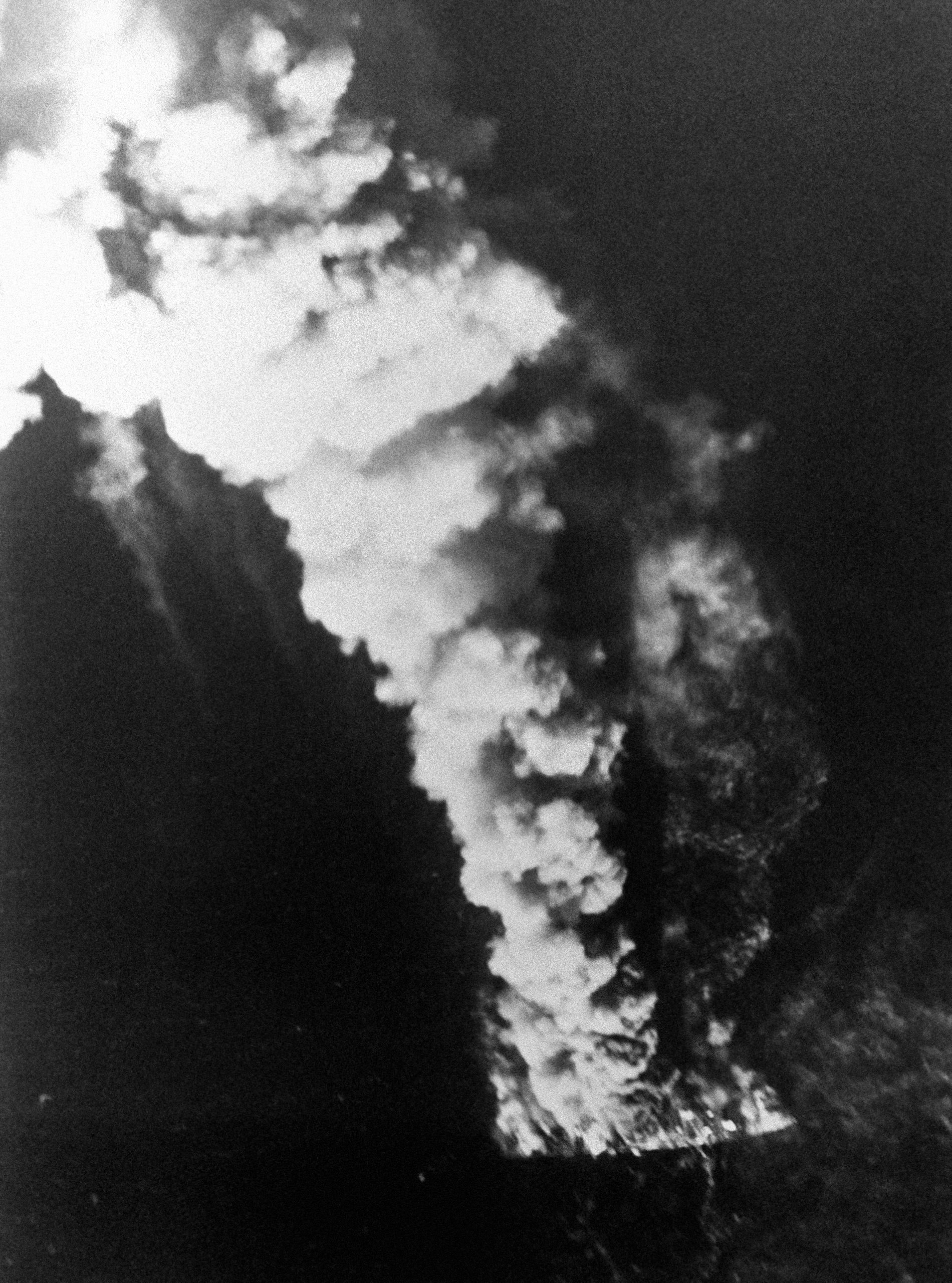
The operational parallel to Night Thirteen is precise in one dimension and radically different in another. In 1988, Washington identified the physical infrastructure Iran was using to threaten commercial shipping — the Sassan and Sirri platforms — and destroyed it in an afternoon. In 2026, CENTCOM is identifying the equivalent infrastructure — Sirik’s coastal surveillance network, the Ghadir submarine pens, the Noor missile batteries — and degrading it through sustained air strikes rather than naval surface action. Praying Mantis was a one-day engagement against two platforms and a handful of combatants; Night Thirteen is one instalment in a campaign entering its third week with no declared end state.
The difference that matters is the end state. Praying Mantis ended when the platforms burned and the Sahand sank, and within weeks the Iran-Iraq War moved toward a ceasefire. The 2026 campaign has no declared stopping point, no public definition of what “degraded” looks like when it is achieved, and no visible connection between the nightly strike packages and the diplomatic tracks running through Doha, Islamabad, and Muscat. A heavy bomber flying from Fairford to Iranian airspace and back with a full penetrator loadout is not an operation that resolves in a single afternoon — and the eight ships that made the strait on July 22–23 are the measure of whether it is working.
Frequently Asked Questions
What is the Corsair unmanned surface vessel and how was it used against Iran?
The Corsair is a one-way attack unmanned surface vessel operated by Task Force 59, the US Navy’s unmanned systems unit under Naval Forces Central Command. On July 12–13, three Corsairs struck a submarine and ship maintenance facility at Bandar Abbas Naval Base — the first time American forces employed sea drones in combat operations, according to CENTCOM and USNI News. The Corsair is designed for expendable strike missions against maritime and coastal targets, and its deployment at Bandar Abbas demonstrated the US Navy’s ability to hit Iranian port facilities without risking manned vessels in the confined waters near the strait.
What is the Persian Gulf Security Agreement and why does its August deadline matter?
The Persian Gulf Security Agreement, or PGSA, governs the financial and operational terms of the US military presence in the Gulf. The agreement carries an outstanding balance of approximately $253 million, accruing at $5.5 million per day, with an August 18 deadline — roughly 26 days from Night Thirteen. The deadline creates a structural clock on the US military posture in the region: if the agreement is not renewed or renegotiated, the financial framework underpinning the US presence at installations like Prince Sultan Air Base and other Gulf facilities becomes uncertain at the same moment the campaign to reopen Hormuz is intensifying.
Has Iran ever fully closed the Strait of Hormuz?
Iran has never executed a complete closure of the Strait of Hormuz, despite threats in 2008, 2012, and 2018. The current conditional-transit regime — in which the IRGC requires coordination and compliance with Iranian regulations — is the most restrictive posture Tehran has imposed on the waterway, but it falls short of the total closure the Khatam al-Anbiya headquarters has threatened. In 2019, Iran seized the British-flagged Stena Impero and harassed several tankers in the strait, but commercial traffic continued at reduced levels. In each previous crisis, Iran stepped back from full closure because it imports gasoline and industrial goods through the same waterway it threatens to shut — a structural dependency that has historically constrained its most extreme options even when the rhetoric has not.
How does Iran’s Sirik naval base fit into its Hormuz defence network?
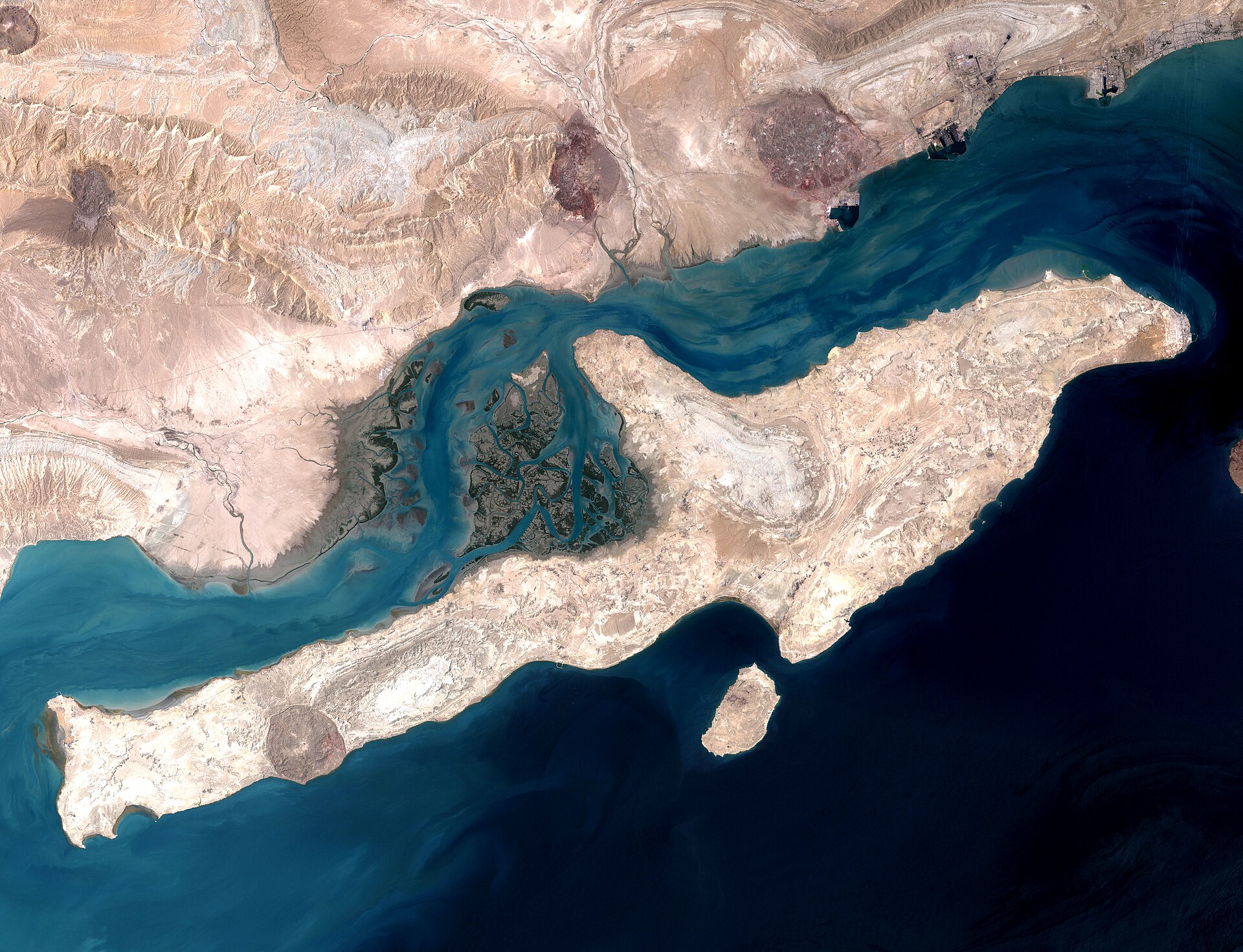
Sirik was purpose-built as the IRGC Navy’s forward base for controlling the eastern approaches to the Strait of Hormuz, according to Army Recognition. It is one node in a layered defence architecture that extends from Jask in the east to the islands of Qeshm, Larak, and Abu Musa in the central strait, with each installation covering overlapping sectors of the waterway. Sirik’s position on the Makran coast gives it line-of-sight radar coverage of the eastern shipping lanes and positions its fast attack craft within sprint distance of the transit corridor. The base’s destruction or degradation would create a gap in Iran’s surveillance coverage that commercial shipping could exploit.
As Night Thirteen closed, Saudi FM Faisal bin Farhan was placing calls to Athens, Doha, and Amman about freedom of navigation — the diplomatic circuit documented in Athens Got the Call the Red Sea Could Not, which ran parallel to the military pressure the Strait was absorbing. The two-night hold that followed — the first departure from thirteen consecutive nights of strikes — did not alter the IRGC’s Hormuz enforcement posture.