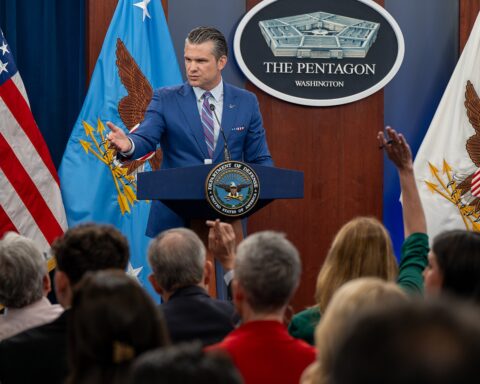

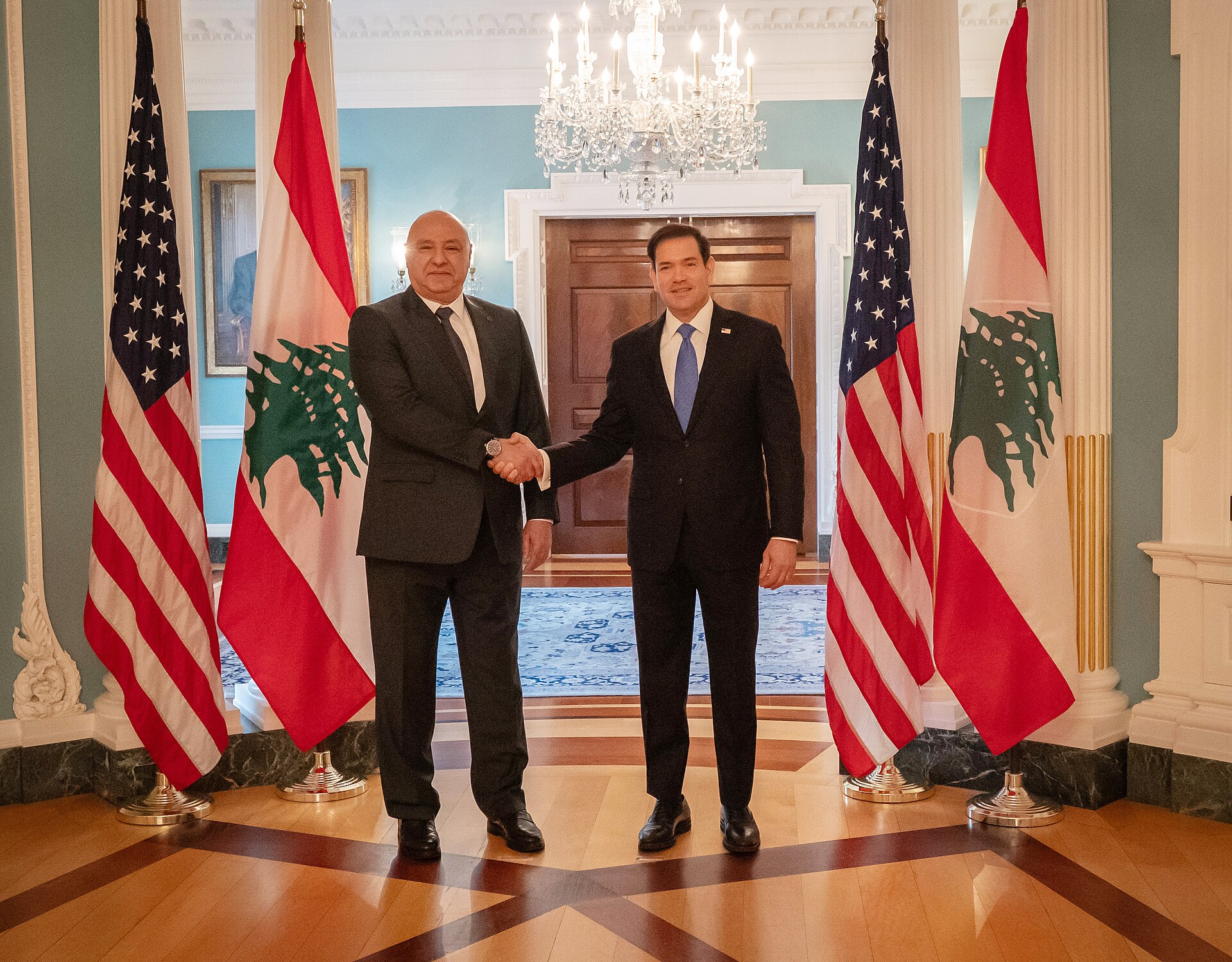
RIYADH — President Trump told reporters on July 21 that the United States would strike Iran’s Pickaxe Mountain nuclear reconstitution site “pretty soon, and very heavily,” during a press availability with Lebanese President Joseph Aoun. Saudi Arabia was not mentioned. No Saudi official was in the room, and if the February precedent holds — when Washington launched Operation Midnight Hammer against Fordow and Natanz without notifying Riyadh in advance — none will be consulted before the order. The kingdom sits 34 days into a suspended Islamabad MOU it cannot restart, with 400 PAC-3 interceptors remaining from a pre-war stockpile of 2,800, and no publicly reaffirmed US mutual defence guarantee since Saudi Arabia’s Operation Project Freedom grounded 43 American warplanes at Prince Sultan Air Base in May. The US-Saudi 123 civil nuclear cooperation agreement — formalised on May 13 alongside a $142 billion arms package — has not yet been submitted to Congress. Three days ago, Iranian ballistic missiles struck PSAB and wounded twelve US service members, two critically.
Table of Contents
- The Mountain Iran Built to Survive America’s Best Weapon
- What Can a GBU-57 Actually Penetrate?
- Who Told Saudi Arabia About the February Strikes?
- Day 34 of a Suspended Diplomacy
- 400 Interceptors for a Country on the Firing Line
- Does the 123 Agreement Give Saudi Arabia a Nuclear Option?
- Friendly Proliferation and Its Contradictions
- What Happens to Saudi Arabia When the Bombs Fall?
- Frequently Asked Questions
The Mountain Iran Built to Survive America’s Best Weapon
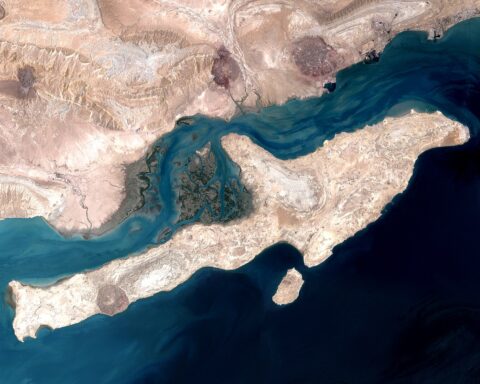
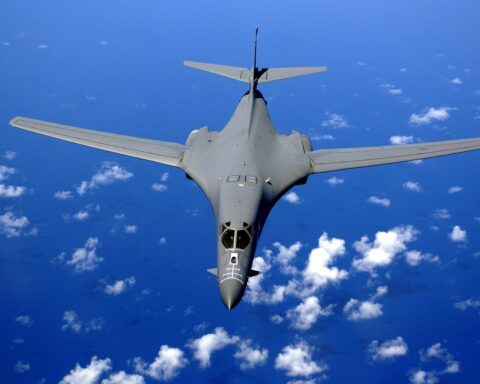
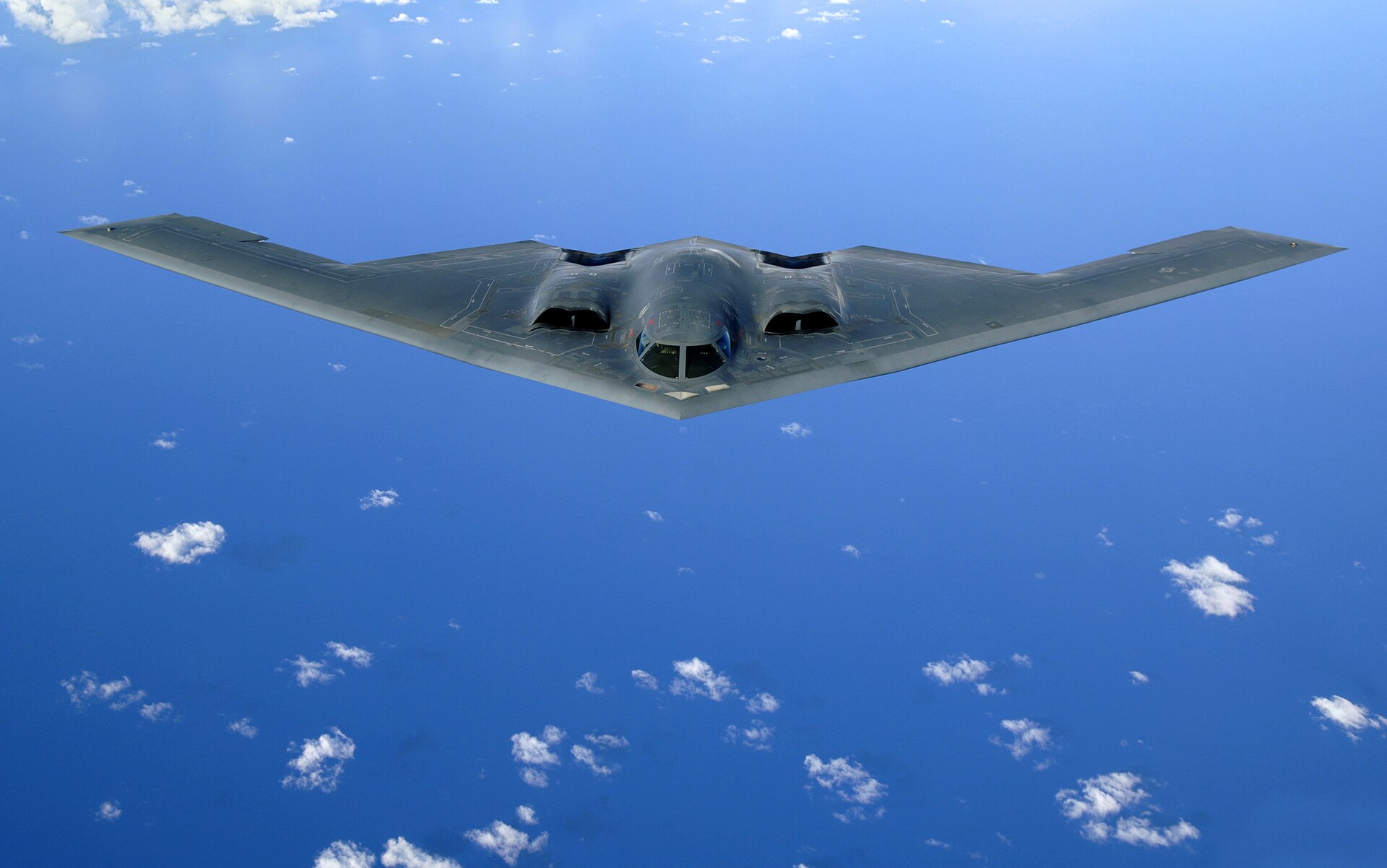
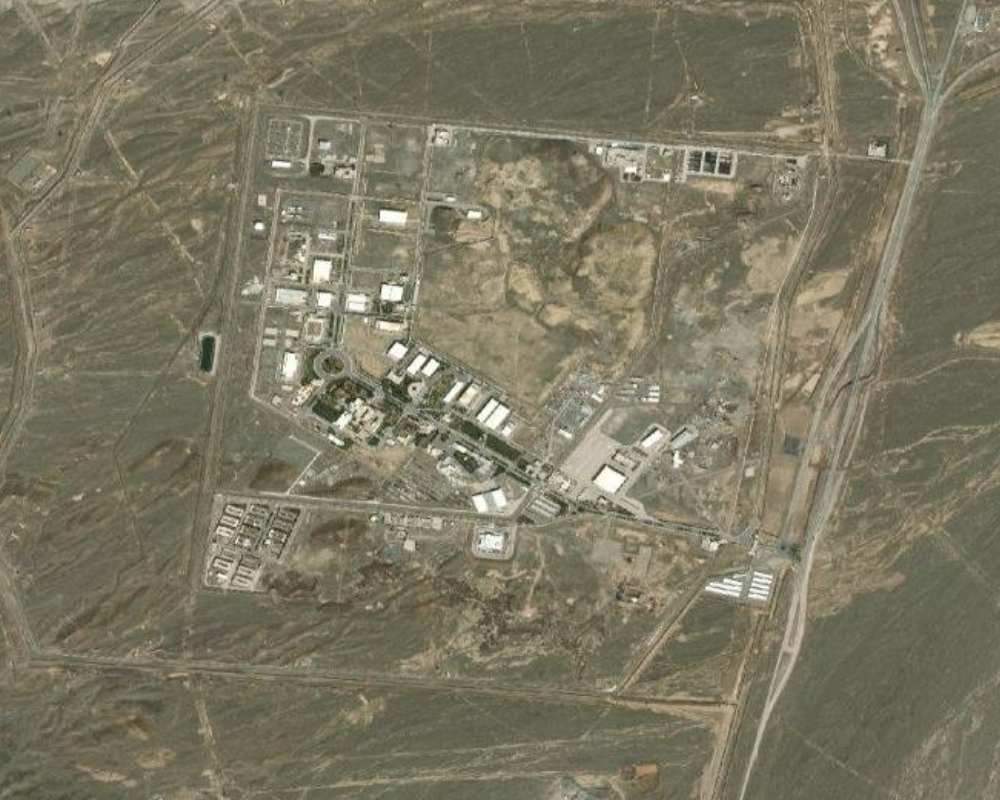
Kuh-e Kolang Gaz La — the formal name rarely used in Washington’s public signalling — sits approximately 220 kilometres south of Tehran and two kilometres from the Natanz nuclear complex in Isfahan Province. In June 2025, B-2 bombers dropped fourteen GBU-57 Massive Ordnance Penetrators during Operation Midnight Hammer — twelve at Fordow, two at Natanz — and destroyed both enrichment complexes. Pickaxe Mountain is what Iran built afterward.
The facility occupies an estimated 80 to 100 metres below the surface, carved into granite, with two western and two eastern tunnel portals. Late-June 2026 satellite imagery analysed by the Foundation for Defense of Democracies showed continued vehicle activity at the western portals and concluded that “construction inside the tunnel complex, as well as hardening of the tunnel entrance, are ongoing.” This construction proceeded in direct violation of the Islamabad MOU — which required Iran to halt nuclear-related infrastructure work — weeks before Iran’s Deputy Foreign Minister Kazem Gharibabadi formally suspended all commitments on July 18.
Iran describes the facility as a centrifuge manufacturing plant. Western intelligence assessments, cited by FDD in its July 2026 analyses, indicate Iran is also constructing an undeclared enrichment plant inside the mountain. David Albright, president of the Institute for Science and International Security, noted in mid-2026 that it “remains unclear when the facility could be operational based on assessing satellite imagery.” What is clear from the design: Iran’s engineers studied the debris at Fordow, measured the penetration depth of the weapon that destroyed it, and built deeper.
Trump first named the target publicly on July 13 during the Hugh Hewitt Show: “We’re going to take out Pickaxe Mountain. Tell the Iranians to be ready.” Eight days later, seated beside Lebanese President Aoun in the Oval Office, he escalated the language. “We’ll be hitting that area pretty soon, and very heavily,” he told reporters. “There’s not a thing they can do about it.”
He then added a caveat that received less coverage. Asked about reports that Iran had moved centrifuges into the mountain, Trump responded: “It doesn’t mean anything unless they have the [nuclear] material.”
The Middle East briefing 3,000+ readers start their day with.
One email. Every weekday morning. Free.
The material exists. The IAEA last verified 440.9 kilograms of uranium enriched to 60 percent in Iran’s possession as of September 2025. Director General Rafael Grossi has stated that quantity is “enough to produce more than 10 nuclear warheads” if further enriched to weapons grade. Iran suspended IAEA access approximately 121 days ago. No international inspector has verified where those 440.9 kilograms now sit.
What Can a GBU-57 Actually Penetrate?
The GBU-57 Massive Ordnance Penetrator can reach approximately 60 metres into hard rock — roughly 20 to 40 metres short of Pickaxe Mountain’s estimated depth of 80 to 100 metres. The weapon that destroyed Fordow and Natanz in June 2025 cannot reliably reach the reconstitution facility Iran built to replace them, according to both The War Zone’s technical analysis and FDD’s July 20, 2026 assessment.
Operation Midnight Hammer established the MOP’s credentials. Fourteen penetrators destroyed two hardened enrichment complexes. Iran’s nuclear engineers studied what worked and what survived. Pickaxe Mountain was the response — built at depths calibrated specifically to the GBU-57’s demonstrated performance. The FDD’s July 20 analysis stated that the facility “was engineered to survive even America’s Massive Ordnance Penetrator bunker-busters.”
The arithmetic leaves no ambiguity. Even if the Air Force repeated the fourteen-bomb package used at Fordow — targeting each MOP at the same entry point in sequence — each penetrator would exhaust its kinetic energy 20 to 40 metres above the facility floor. Tandem penetration — dropping successive MOPs into the same crater to progressively deepen the shaft — has been theorised in unclassified studies but never operationally validated against a facility at this depth and granite composition. No result from field testing has been declassified.
The only weapons in the US conventional arsenal with greater penetration potential are conceptual. A nuclear earth-penetrator could theoretically reach the facility, but its employment would constitute the first American nuclear weapon use since 1945 — against a site the US has not publicly proven contains fissile material. Trump himself seemed to acknowledge the gap between centrifuge housing and weapons-grade enrichment when he noted on July 21 that centrifuges alone “don’t mean anything.”
Trump spoke on July 21 as if the outcome were settled. The GBU-57’s published penetration depth is 60 metres. The facility sits at 80 to 100. The Pentagon has not disclosed a weapon in its conventional inventory capable of bridging the difference.
Who Told Saudi Arabia About the February Strikes?
No one. When the United States and Israel struck Iran’s Fordow and Natanz enrichment facilities on February 28, 2026, in Operation Midnight Hammer, Saudi Arabia — the country most exposed to Iranian retaliation among US partners in the Gulf — was not briefed in advance. Riyadh’s Foreign Ministry subsequently condemned the strikes as a violation of Iranian sovereignty, aligning Saudi Arabia with the country being bombed rather than the ally doing the bombing.
The February precedent is the one that governs Pickaxe Mountain. Saudi Arabia’s Foreign Ministry “affirmed its condemnation and denunciation of violating the sovereignty of the Islamic Republic of Iran” — language drafted in a ministry that simultaneously depended on US interceptors to defend the kingdom from the retaliation those strikes provoked. Saudi Arabia also initially barred the US from using its airspace or bases for any follow-on strikes against Iran, a position Riyadh maintained until Washington withheld interceptor deliveries.
That coercion took a specific form. In May 2026, Washington withheld PAC-3 and THAAD interceptor deliveries until Riyadh reversed PSAB’s airspace closure. Saudi Arabia relented. The interceptors were delivered after US operating authority was restored.
Gulf states more broadly “privately faulted the US” for launching war against Iran without coordination and without any plan for the Hormuz closure that followed. Those countries, compiled Gulf diplomatic reporting noted, “have since found themselves bearing the brunt of Iran’s retaliatory strikes.” The Gulf states had explicitly opposed a military strike on Iran’s nuclear programme during Trump’s May 2025 Gulf visit. The strikes proceeded regardless and have escalated since.
No mechanism has been established since February to ensure Saudi advance notification of future strikes. No mutual defence guarantee has been publicly reaffirmed since Operation Project Freedom — when Saudi Arabia grounded all 43 US warplanes at PSAB for four days and suspended US military operating authority. Trump is telegraphing the next strike on camera. No new US-Saudi consultation framework has been disclosed.
Day 34 of a Suspended Diplomacy
The Islamabad MOU, signed June 17, was the only diplomatic framework in 2026 that addressed Iran’s nuclear programme in any form. It was never comprehensive — nuclear stockpile issues were explicitly deferred to future talks — but it existed. On July 18, Gharibabadi suspended all Iranian commitments, citing “breach of obligations by the US” and framing Iran’s ongoing military operations against Gulf targets as “self-defence.” Day 34 of the sixty-day framework falls on July 21 — the same day Trump threatened Pickaxe Mountain from the Oval Office.
Saudi Arabia holds no position in the Islamabad process. The kingdom was excluded from the ceasefire track Qatar has been managing and absent from the Pakistan-led negotiations where the MOU was actually drafted. Pakistan holds the mediating role Riyadh might once have expected to fill. When the MOU was signed, it was Islamabad and Doha — not Riyadh — at the table.
The MOU’s internal architecture compounds the exclusion. Mojtaba Khamenei’s conditional approval of the MOU — “I, as a matter of principle, held a different view,” he stated, while granting permission — functions as a structural veto that no external party can verify, challenge, or lift. Iran’s Supreme National Security Council subcommittee handles MOU decisions “on the spot,” but Mojtaba’s conditionality remains open-ended. Iran’s own Foreign Minister acknowledged publicly that he has “not seen Mr. Mojtaba so far, and I don’t think anyone else has seen him in the current era, except for a few people.”
On April 30, Mojtaba was more direct. Iran, he stated, would not give up “nuclear and missile capabilities.” The FDD’s July 8 and July 20 satellite analyses showed Pickaxe Mountain construction accelerating in violation of MOU commitments even before Gharibabadi formally suspended them — vehicle activity at the western tunnel portals, hardening of entrances, continued work inside the complex. The IAEA has been unable to verify any aspect of Iran’s nuclear programme for approximately 121 days. The last independent measurement of Iran’s enriched uranium stockpile dates to September 2025.
For Saudi Arabia, the collapse removes even a theoretical framework. The kingdom cannot afford the war or influence the peace. The two active mediation tracks — Doha and Islamabad — run through Qatar and Pakistan. Neither has offered Riyadh a seat.
400 Interceptors for a Country on the Firing Line
Saudi Arabia began the current conflict with approximately 2,800 PAC-3 interceptor rounds. As of July 21, roughly 400 remain — an 86 percent depletion rate across five months of Iranian missile and drone salvos. No Lockheed Martin delivery is projected before 2028. The kingdom is absorbing Iranian strikes with an interceptor stockpile that a single sustained engagement could exhaust.
| Metric | Figure |
|---|---|
| Pre-war PAC-3 stockpile | 2,800 rounds |
| Current PAC-3 remaining | ~400 rounds |
| Depletion rate | 86% |
| Next projected Lockheed Martin delivery | Not before 2028 |
| Total US air defence expenditure (Saudi theatre) | $9.4 billion |
| PGSA outstanding balance | $253 million |
| PGSA daily surcharge (from August 18) | $5.5 million/day |
| US warplanes grounded at PSAB | 43 |
| US service members wounded at PSAB, July 18 | 12 (2 critical) |
On July 18, Iran struck Prince Sultan Air Base with ballistic missiles, wounding twelve American service members — two critically — and damaging KC-135 refuelling aircraft. PSAB was the facility Saudi Arabia’s Operation Project Freedom had effectively neutralised as a US combat platform two months earlier by grounding all 43 American warplanes and suspending US military operating authority. Iran struck a base whose offensive capability Saudi Arabia had already curtailed.
The coercive dimension of the PAC-3 relationship predates Pickaxe Mountain. In May 2026, Washington withheld interceptor deliveries to coerce Riyadh into reversing PSAB’s airspace closure. The interceptors arrived after Saudi Arabia complied and restored full US operating authority.
The PGSA — the Pentagon’s cost-sharing mechanism for the US force presence — carries an outstanding balance of $253 million, with a surcharge of $5.5 million per day beginning August 18. That deadline sits 28 days from July 21. Neither government has disclosed a negotiation timeline. What watches the Gulf for Saudi Arabia after August 18, if the surcharge is accruing and the interceptor count has dropped further, has not been publicly addressed by Washington or Riyadh.
Does the 123 Agreement Give Saudi Arabia a Nuclear Option?
The US-Saudi 123 civil nuclear cooperation agreement, formalised on May 13, 2026, drops what nonproliferation experts call the “gold standard” — it contains no ban on uranium enrichment, no ban on spent-fuel reprocessing, and no requirement for the IAEA Additional Protocol. The Arms Control Association called it a “gilded sweetheart deal” that abandons “every nonproliferation standard Washington spent seventeen years building.”
Crown Prince Mohammed bin Salman’s nuclear position has been consistent since at least 2018. In an interview with 60 Minutes that year, he stated that if Iran developed a nuclear bomb, Saudi Arabia would “follow suit as soon as possible” — language he has reinforced publicly in 2023 and since, as documented by Iran International and the Carnegie and Stimson centres. The 123 Agreement formalised during Trump’s May 13 Riyadh visit was designed, in theory, to channel that ambition into a civilian energy programme.
In practice, the agreement removed the safeguards that would have constrained a military option. It drops the enrichment ban. It drops the reprocessing ban. It drops the Additional Protocol requirement. These three elements — the trifecta that defined every prior US nuclear cooperation agreement — were the mechanisms that would have kept Saudi enrichment under international verification. Their absence means Saudi Arabia possesses, on paper, enrichment rights identical in kind to those Iran exercised before Operation Midnight Hammer destroyed Fordow.
The date compounds the optics. May 13, 2026, was the same day the IAEA declared Iran in NPT non-compliance for the first time in twenty years. The $142 billion arms package signed alongside the 123 Agreement was announced while the IAEA’s non-compliance finding was still being briefed to member states. The Arms Control Association flagged the juxtaposition directly.
As of July 21, the agreement has not been submitted to Congress for the legally required review period. Whether the delay is procedural, political, or strategic remains unstated. The Stimson Center’s assessment of Saudi Arabia’s actual nuclear capability — “ones and twos” on a five-point weapons-relevant scale — suggests the gap between permission and capacity is measured in years. The Stimson Center estimates a full Saudi fuel-cycle capability would require 10 to 15 years to develop. The 123 Agreement was formalised 69 days ago. It has not reached Congress. The congressional opposition it will face — and the paradox that the 123 agreement’s Congressional opponents include the same Rubio who is now its chief defender — is examined in detail in a separate analysis.
Friendly Proliferation and Its Contradictions
The term “friendly proliferation” — used by both FDD and Stimson Center analysts in 2026 — describes the structural outcome of US policy: permitting Saudi Arabia to enrich uranium under the 123 Agreement while treating the identical capability in Iranian hands as justification for a bombing campaign now in its fifth month.
Iran’s stated purpose for Pickaxe Mountain is centrifuge manufacturing. Western intelligence says the facility also contains an undeclared enrichment plant. The 123 Agreement grants Saudi Arabia the right to enrich. Iran’s enrichment programme is the reason the US dropped fourteen MOPs on Fordow in June 2025. The legal distinction between the two programmes rests on NPT compliance, IAEA safeguards, and American strategic preference. It does not rest on any difference in the underlying physics or the industrial processes involved.
MBS’s 2018 formulation — “if Iran gets one, we get one” — presupposes that Iran is the trigger and Saudi Arabia the response. The 123 Agreement inverts the sequence. Saudi Arabia now holds enrichment permission before Iran has crossed the weapons threshold, and before the kingdom possesses any of the infrastructure to exercise that permission. Iran’s 440.9 kilograms of 60-percent-enriched uranium — sufficient for more than 10 warheads, per IAEA Director Grossi — exists in physical form. Saudi Arabia’s enrichment programme exists as a document the White House has not yet forwarded to Capitol Hill.
Mojtaba Khamenei stated on April 30 that Iran would not give up “nuclear and missile capabilities.” The 123 Agreement states that Saudi Arabia may enrich. One programme sits under a mountain in Isfahan Province, 80 to 100 metres below the surface, engineered to survive American penetrators. The other sits in a filing cabinet somewhere between the White House counsel’s office and the Senate Foreign Relations Committee.
On July 22, 2026, that filing-cabinet status changed. The 123 nuclear cooperation agreement was formally signed by Energy Secretary Chris Wright and Prince Abdulaziz bin Salman, delivering Saudi Arabia enrichment access without the Gold Standard safeguards, without Israeli consent, and without normalization — the outcome that had been withheld across three years of Biden-era shuttle diplomacy.
What Happens to Saudi Arabia When the Bombs Fall?
Iran has already demonstrated the ability and willingness to strike Saudi territory with ballistic missiles, hitting Prince Sultan Air Base on July 18 and wounding twelve US service members. A strike on Pickaxe Mountain would likely trigger retaliatory operations using capabilities Iran has already deployed and pre-authorised — including potential closure of Bab al-Mandeb, which would reduce global oil supply by approximately 7 percent.
The retaliation template already exists. Iran struck PSAB on July 18 — before any action on Pickaxe Mountain — damaging KC-135 refuelling aircraft on the ground. The IRGC warned afterward that “other bases will not be spared.” Iran has struck US bases in four countries — Bahrain, Kuwait, Qatar, and Jordan — within a single twenty-four-hour window during the current conflict, targeting facilities across the Arabian Peninsula and the Levant.
FDD’s analysis of intercepted Iranian communications, published July 17, reported that Iran told the Houthis to prepare to close Bab al-Mandeb if the US struck Iran’s power grid. A strike on Pickaxe Mountain — targeting Iran’s nuclear reconstitution capacity, not a power plant — would exceed the threshold that triggered the Houthi preparation order. The Houthi maritime blockade declared on July 20 has already stranded 2.7 million barrels of Saudi crude at sea. Full Bab al-Mandeb closure, combined with the existing Hormuz disruption, would affect approximately 25 percent of global oil and gas transit.
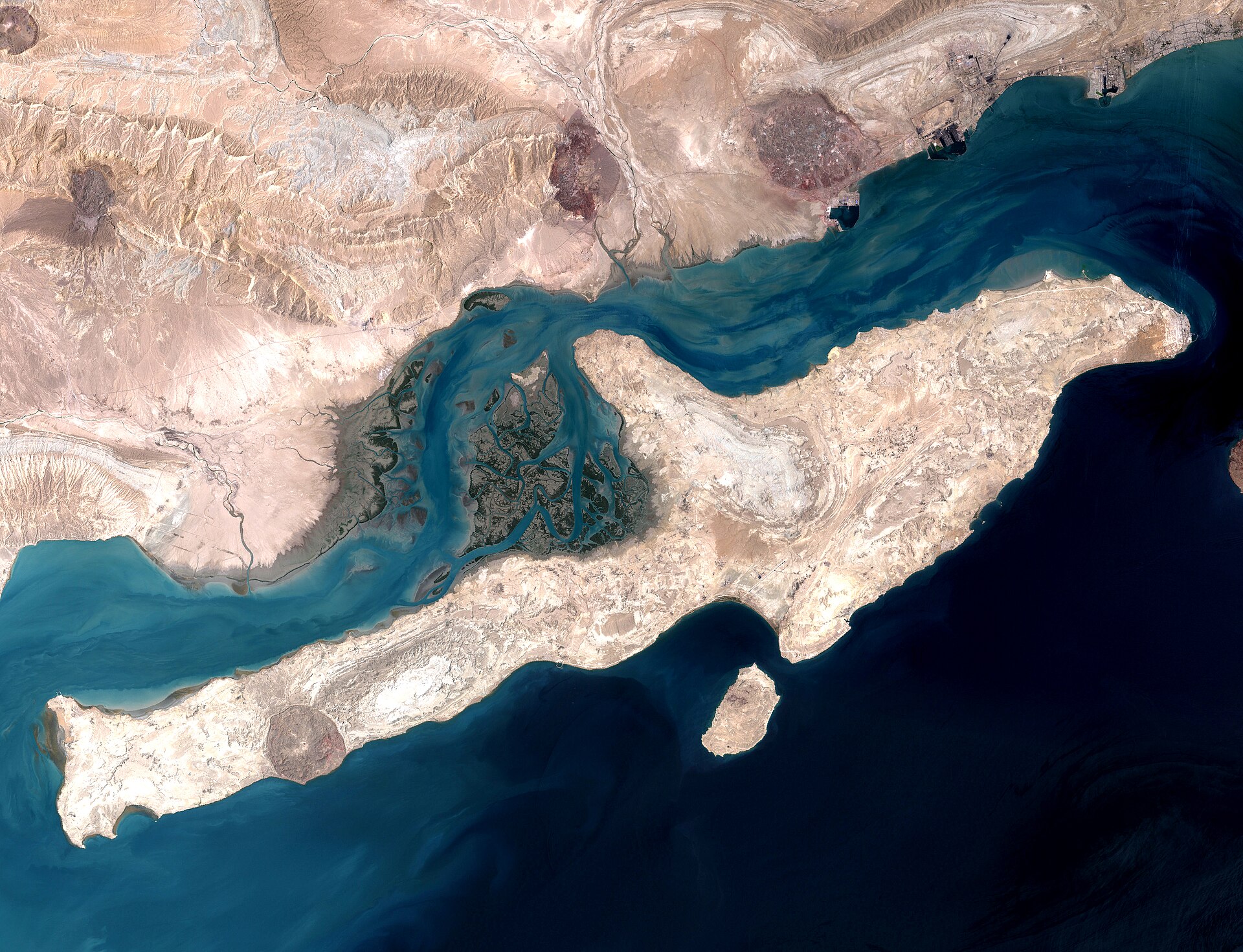
Saudi Arabia absorbs this across multiple registers simultaneously. The East-West pipeline Riyadh built to bypass Hormuz reaches a Red Sea coast now under Houthi interdiction. Aramco’s free cash flow ratio sits at 0.85x as of mid-2026.
Iran’s posture on July 21 is two-track. Tehran is publicly escalating — the Nasr-24 missile system deployment signals continued offensive intent — while reportedly submitting a 10-day ceasefire proposal through mediators, according to diplomatic reporting, who are floating a “Hormuz middle corridor” concept. Saudi Arabia is party to neither track. The escalation proceeds without Riyadh’s input. The ceasefire, if it materialises, would proceed without Riyadh’s signature. When the call came, Riyadh did not get the seat. Two months on, Trump rejected Iran’s seven-day Hormuz plan and set a post-midterms bombing timeline — the corridor concept abandoned, the calendar now fixed, and Saudi Arabia still outside both tracks.
The 43 US warplanes grounded at PSAB since Operation Project Freedom have not been cleared for operations. When Abha took six missiles in an earlier salvo, Riyadh said nothing. Twelve Americans were wounded on Saudi soil on July 18, at a base Saudi Arabia itself had restricted. The IRGC’s warning — “other bases will not be spared” — was issued to an audience that includes every facility on the Arabian Peninsula housing US personnel, equipment, or the interceptors that 36 million Saudi civilians depend on.
Frequently Asked Questions
Has the United States ever attempted to strike a facility at Pickaxe Mountain’s depth?
No. The deepest confirmed conventional strike in US military history was Operation Midnight Hammer’s attack on Fordow in June 2025, where twelve GBU-57 MOPs penetrated a facility estimated at 60 to 80 metres below the surface. Pickaxe Mountain sits 80 to 100 metres underground in granite, placing it beyond the GBU-57’s demonstrated penetration range. The B61-12 nuclear gravity bomb in its earth-penetrating configuration could theoretically reach deeper, but its employment would constitute the first American nuclear weapon use since Nagasaki in August 1945. No president has authorised or publicly contemplated such use against a facility the US has not conclusively proven to contain fissile material.
What air defence systems does Saudi Arabia operate beyond PAC-3?
Saudi Arabia also operates the South Korean-manufactured M-SAM-II (Cheongung II) system, but it has demonstrated altitude gaps against Iranian Zolfaghar ballistic missiles during their terminal descent phase. US THAAD batteries deployed on Saudi soil remain under American operational control — Saudi Arabia does not operate THAAD independently. The kingdom’s indigenous drone defence capability was rated insufficient against Iranian UAV swarms in mid-2026 assessments. Combined, these gaps mean the PAC-3 stockpile bears disproportionate weight in Saudi Arabia’s missile defence posture, making the 86 percent depletion rate a national-level vulnerability rather than a single-system shortfall.
Could Iran close both the Strait of Hormuz and Bab al-Mandeb simultaneously?
Iran has pre-authorised Houthi preparation for Bab al-Mandeb closure, per FDD analysis of intercepted Iranian communications from July 17. Hormuz transit has already been severely disrupted, with daily ship transits dropping from a baseline of 84 to 27 during the conflict. Combined full closure of both straits would affect approximately 25 percent of global oil and gas transit, with Time estimating a 7 percent reduction in global oil supply from Bab al-Mandeb closure alone. The Houthi maritime blockade declared on July 20 — which has already stranded Saudi-loaded tankers — represents the initial phase of this dual-chokepoint scenario.
What is the PGSA and why does its August 18 deadline matter?
The Petroleum Government Services Agreement is the cost-sharing mechanism through which Saudi Arabia reimburses the Pentagon for the US military force presence and air defence operations on Saudi territory. The outstanding balance stands at $253 million. A surcharge of $5.5 million per day — $38.5 million per week — activates on August 18, 2026, just 28 days from July 21. If unresolved, the surcharge would accumulate against a kingdom already absorbing $9.4 billion in US air defence costs, while the operational value of the US force presence has been degraded by the continued grounding of 43 warplanes at Prince Sultan Air Base. No public negotiation timeline has been disclosed by either government.
How long would it take Saudi Arabia to build a nuclear weapon?
The Stimson Center rates Saudi Arabia’s nuclear weapons-relevant capability at “ones and twos” on a five-point scale and estimates that achieving a full fuel cycle — the prerequisite for weapons-grade enrichment — would take 10 to 15 years. Saudi Arabia currently possesses no enrichment facilities, no reprocessing infrastructure, and no weapons-design programme in the public record. The 123 Agreement removes legal barriers to enrichment but does not provide the centrifuges, technical expertise, or fissile material supply chain required to operationalise the permission. MBS’s stated intent to match Iran’s nuclear capability, if acted upon, would face a timeline measured in decades against Iran’s programme, which already possesses 440.9 kilograms of 60-percent-enriched uranium.