
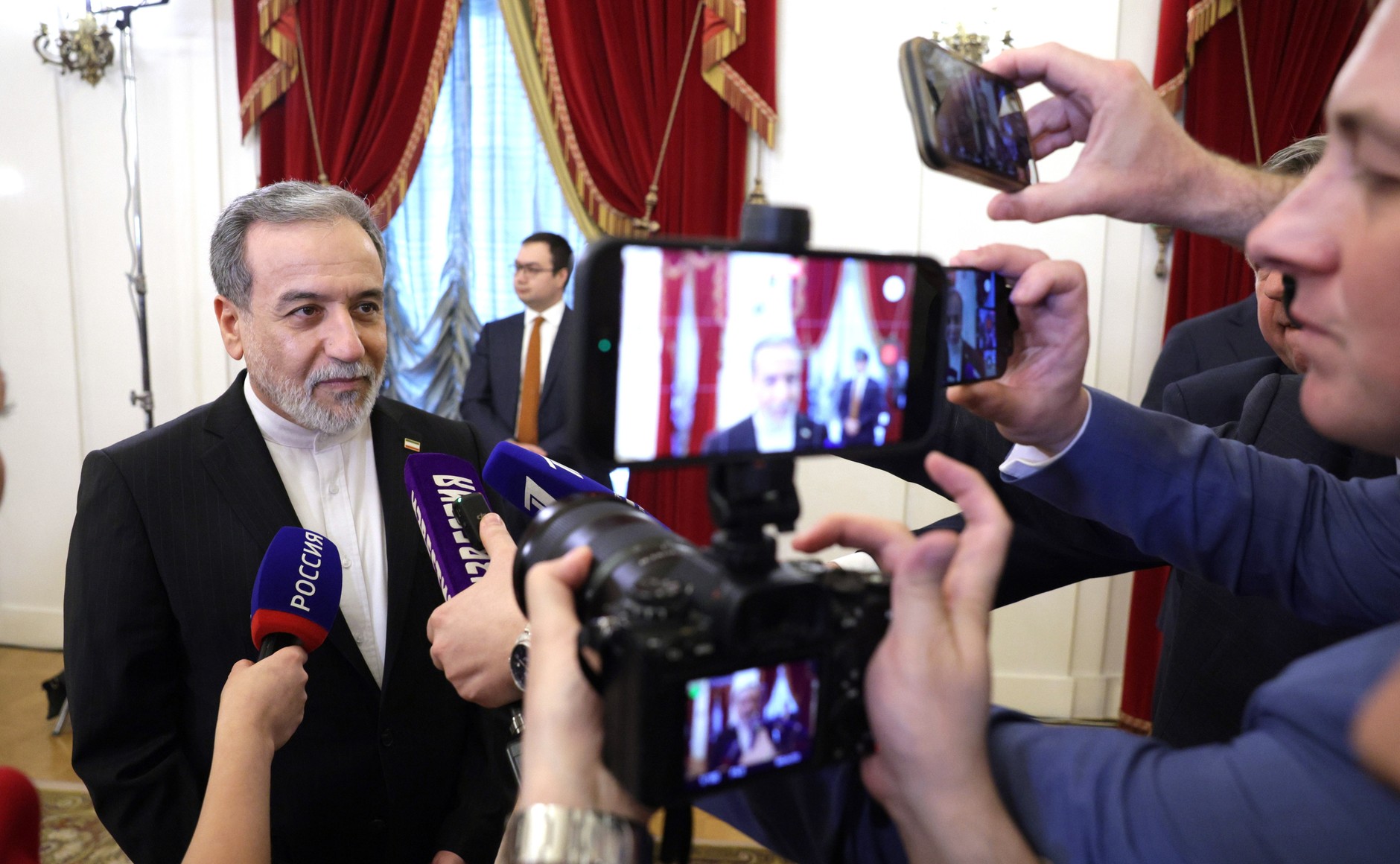
WASHINGTON — US Secretary of State Marco Rubio said from New Delhi on May 23 that Iran could accept a deal to end the 86-day war “as soon as today,” hours after Pakistan’s Field Marshal Asim Munir departed Tehran following overnight talks with Iranian President Masoud Pezeshkian, Parliament Speaker Mohammad Bagher Ghalibaf, and Foreign Minister Abbas Araghchi. Araghchi, speaking to reporters the same day, declared that “no enrichment would mean we do not have a deal,” according to PBS NewsHour.
The statements arrived from three cities — New Delhi, Tehran, and Rome — within a single 12-hour window, three days before the Day of Arafah on May 26. Saudi Arabia, listed as a formal mediating party alongside Pakistan, Qatar, Egypt, and Turkey, has been excluded from all five direct US-Iran negotiating rounds and has issued no foreign ministry statement on any of the active diplomatic channels. The cost of that exclusion — measured against the enrichment terms now described as “largely negotiated” — is analysed here.
The Lebanon clause in the emerging MOU framework — requiring an end to the war in Lebanon as a condition of the deal — has since emerged as a second deadlock front that Saudi Arabia cannot influence. Netanyahu raised his objection directly with Trump on May 24; Riyadh has no channel to either Netanyahu or Hezbollah, and the clause has no dedicated resolution track.
Table of Contents
Three Cities, Three Messages, One Day
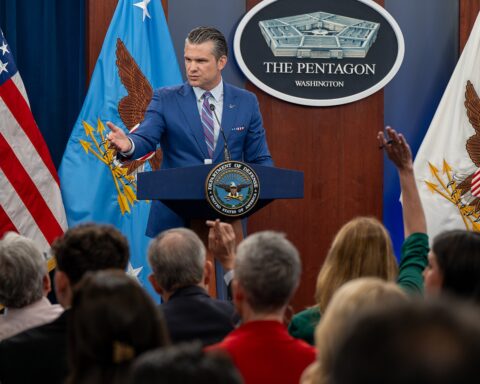
Rubio, on the first day of a four-day visit to India, told reporters that there was “a chance that, whether it’s later today, tomorrow, in a couple of days, we may have something to say” on the Iran file, according to the Times of Israel. He added: “This problem will be solved, as the president’s made clear, one way or the other.”
He told Indian Prime Minister Narendra Modi that Washington would “never allow Iran to hold the global energy market hostage,” according to India TV News. Rubio reiterated that Iran must hand over its highly enriched uranium and that the Hormuz tolls imposed by Tehran’s Persian Gulf Security Authority are “not acceptable.”
In Tehran, Iran’s semiofficial ISNA news agency reported that Munir’s overnight visit was aimed at “reaching the point of officially announcing acceptance of the memorandum of understanding,” according to NBC News. Munir met Pezeshkian, Ghalibaf, Araghchi, and Interior Minister Momeni during the stay, according to the Times of Israel.
The Middle East briefing 3,000+ readers start their day with.
One email. Every weekday morning. Free.
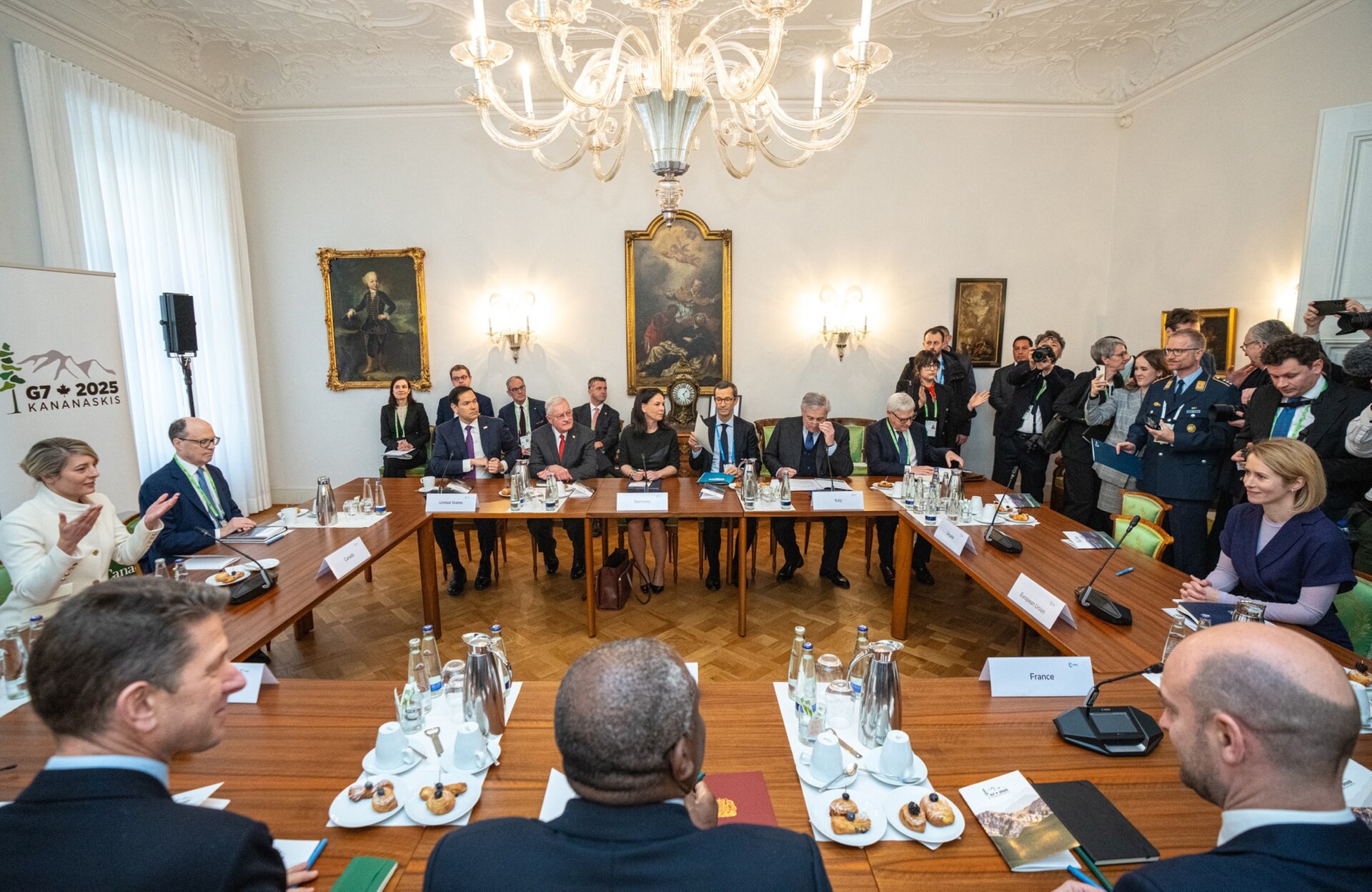
At Rome’s Omani Embassy, Round 5 of direct US-Iran talks concluded after approximately 2.5 hours. Omani Foreign Minister Badr al-Busaidi confirmed “some but not conclusive progress,” with both sides agreeing to continue, according to Axios. Brent crude closed at $103.94 on May 22, up 1.33 percent on cautious optimism, according to Bloomberg.
What Did Munir Carry Back From Tehran?
Araghchi told Munir directly that the United States “was not an honest party in negotiations” and that Iran “would not compromise on its national rights,” according to NBC News. The meeting was Munir’s second Tehran trip in three weeks.
ISNA’s description of the visit as aimed at “officially announcing acceptance” framed Munir’s role as a courier for a decision Iran had already reached — not a negotiator refining terms. The Pakistan-mediated draft, reported as a 14-point document by NBC News and 24NewsHD, is considered by Tehran to be “the main framework.” But even a finalised framework faces a structural delay: Iran’s Supreme Leader is reachable only through a physical courier network, and US officials confirmed to Axios that approval would take “days to filter through their system” regardless of what the negotiators agree.
The Axios-reported 14-point MOU — which calls for an enrichment moratorium of 12-15 years, a 3.67 percent enrichment cap, HEU removal, and IAEA inspections — has not been publicly reconciled with the document Iran describes as its framework. Whether the two texts are versions of the same draft or substantively different documents remains unclear in all available sourcing.
Munir arrived in Tehran carrying the diplomatic weight of the Pakistan-Saudi Mutual Defence Agreement, signed September 17, 2025 — a treaty that binds Islamabad to defend Saudi Arabia while simultaneously positioning Pakistan as Washington’s primary back-channel to Tehran. ISNA’s coverage of the visit made no mention of the SMDA or of Saudi interests.
“There is a chance that, whether it’s later today, tomorrow, in a couple of days, we may have something to say.”
— Marco Rubio, US Secretary of State, New Delhi, May 23, 2026
The Enrichment Deadlock
Araghchi told reporters on May 23 that Iran and the United States had reached “almost a deadlock” on enriched material and that the topic was being “postponed” to later stages of talks, according to WION and Tribune India. “No enrichment would mean we do NOT have a deal,” he told PBS NewsHour.
Khamenei’s standing directive — that Iran’s approximately 440 kilograms of uranium enriched to 60 percent must remain inside the country — was reported this week by Indian Defence News and the Times of Israel. Araghchi previously confirmed that Russia had offered to store Iran’s enriched uranium; the Supreme Leader’s order against foreign transfer closes that route, according to Al Jazeera reporting on May 22.
Araghchi described the US enrichment-dismantlement demand as tied to Iran’s “national rights” — language that echoes Khamenei’s characterisation of enrichment as a sovereign, non-negotiable capability. He told CNBC on May 23 that “Tehran will not compromise in talks with the US.”
Rubio’s language on Saturday — telling CBS News that Iran had “agreed in principle to dispose of highly enriched uranium” — extended the same gap by a different method: asserting a concession Iran immediately and publicly rejected. ‘Under No Circumstances’: Iran Denies HEU Agreement the White House Says Already Exists examines the White House claim and Tasnim’s all-caps denial, and what the discrepancy reveals about where the enrichment track actually stands.
The enrichment moratorium gap spans 15 years at its widest: Iran proposes five years, the Axios MOU framework specifies 12-15 years, and the original US demand was 20 years, according to Bloomberg and Axios. The MOU’s 60-day Hormuz suspension — which ties permanent reopening to the nuclear Track 2 Iran has already declared it will not yield on — creates a double sequencing trap for Saudi Arabia’s oil revenues and deficit outlook.
Rubio reiterated from New Delhi that Iran must hand over its HEU. “This problem will be solved, as the president’s made clear, one way or the other,” he said, according to the Times of Israel. Fifty-two US senators and 177 House members have written to President Trump demanding he reject any deal permitting continued enrichment, according to Bloomberg. When the Sunday deadline passed unsigned, Rubio acknowledged only “significant progress, although not final progress” — what happened when that deadline lapsed and Iran announced a Hormuz suspension is documented here.
Does Saudi Arabia Have Any Input on the Deal?
Saudi Arabia has been excluded from all five direct US-Iran negotiating rounds — Doha, Islamabad, Oman, Singapore, and Rome. Andrew Leber and Sam Worby of the Carnegie Endowment wrote in April that “the GCC has no seat at the table, despite its entreaties, for negotiations that will shape the bloc’s economic and security environment for years to come.”
The kingdom’s foreign ministry has issued no statement on the Munir channel, the Rome round, or the emerging MOU framework. The last public Saudi diplomatic signal on the Iran file came on May 20, when Foreign Minister Prince Faisal bin Farhan endorsed Trump’s firmness on Iran — five days after Trump had softened his HEU demand in a May 14 Hannity interview, telling the host that full dismantlement was “not necessary except public relations.”
On May 23, MBS joined a seven-nation call urging Trump to accept a deal whose terms include enrichment rights Riyadh does not possess and a Hormuz reopening timeline Riyadh does not control. What Saudi Arabia actually gains from the deal it is lobbying for is the question that call made unavoidable.
The 123 Agreement between the United States and Saudi Arabia, formalised on May 13, contains no prohibition on Saudi uranium enrichment — the structural inverse of the “gold standard” UAE deal of 2009 and the moratorium Washington is simultaneously demanding from Iran, according to the Arms Control Association. Both instruments were active US policy in the same fortnight. Congressional hawks pressing Trump to hold the zero-enrichment line on Iran have cited the Saudi carve-out as evidence that the norm has already eroded, according to Bloomberg.
Rubio’s statement was delivered from New Delhi, to an Indian prime minister whose country imports roughly 80 percent of its crude oil and has its own Hormuz exposure. Pakistan, the active mediator, is treaty-bound to Saudi defence under the SMDA. Neither diplomatic channel runs through Riyadh or Jeddah.
Can the MOU Bridge a 15-Year Enrichment Gap?
At least three distinct MOU documents are now in circulation. The Axios-reported 14-point framework, first disclosed May 6, calls for an enrichment moratorium, sanctions relief, Hormuz toll removal, and IAEA inspections. Al-Arabiya published an eight-point “final draft” on May 22 that omitted every nuclear provision — no moratorium, no enrichment cap, no HEU removal timeline. The Munir-carried document, described by NBC News as the text Iran considers “the main framework,” has not been published.
Al-Arabiya’s publication followed a pattern: the Saudi-owned network retracted a “deal reached” headline on May 21, then published the eight-point “final draft” on May 22 — a second attempt within 24 hours. The Times of Israel labelled the document “not yet approved.”
The US-proposed MOU was designed as a one-page document that would open a 30-day period for detailed negotiations on Hormuz, nuclear limits, and sanctions, according to Time and The Hill. Araghchi’s “postponement” of enrichment to “later stages” is structurally compatible with this design — Iran could sign a one-page MOU that defers enrichment to the 30-day negotiation window.
Rubio’s stated requirements — HEU handover and an enrichment moratorium — and Araghchi’s stated red line — enrichment as non-negotiable — can coexist in a single document only if that document defers the core dispute. ISNA described Munir’s visit as aimed at “officially announcing acceptance,” according to NBC News.
The Hajj Window
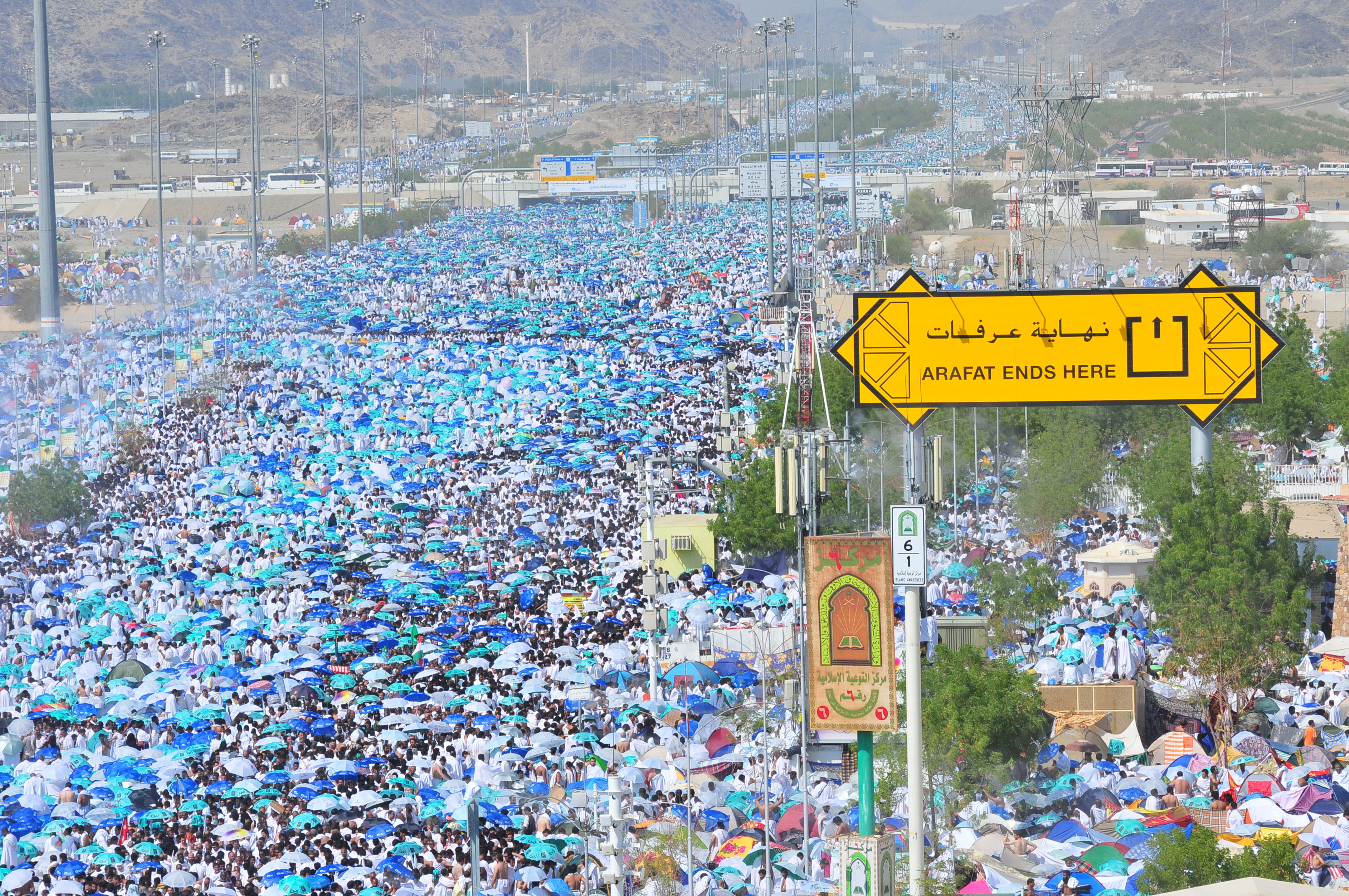
The Day of Arafah falls on May 26 — three days from Rubio’s statement. Approximately 1.5 million pilgrims are converging on the Hejaz corridor, roughly 40 percent below the 2019 peak of 2.49 million. The days preceding Arafah represent the highest-constraint diplomatic window for Riyadh: public objection to a US-Iran deal during Hajj peak would risk politicising the pilgrimage by a kingdom whose legitimacy rests on custodianship of the two holy mosques.
The last major security incident during Hajj — the 1987 massacre in which 402 people were killed during a confrontation between Iranian pilgrims and Saudi security forces — severed Saudi-Iranian diplomatic relations for four years.
Ghalibaf, speaking on May 23, warned that if Trump “commits another act of folly,” the response “will certainly be more crushing and bitter for the United States than on the first day of the war,” according to France24 and CGTN. The threat arrived the same day as Rubio’s optimism — Tehran escalating its language at the precise moment Washington was signalling proximity to a deal.
The Iran-Oman Hormuz governance mechanism, the PGSA toll regime operational since May 18, and the enrichment moratorium terms were all negotiated across five rounds without Saudi participation. Islamabad is under consideration for Round 6, to be held after the Hajj peak, according to Shafaqna Pakistan — a report that remains unconfirmed.
“No enrichment would mean we do NOT have a deal.”
— Abbas Araghchi, Iranian Foreign Minister, May 23, 2026
Background
The US-Iran war entered its 86th day on May 23. The Strait of Hormuz remains under Iran’s Persian Gulf Security Authority toll regime, operational since May 18, with approximately two transits per day compared to 95 pre-crisis. Russia, China, India, Iraq, and Pakistan are exempt from the approximately $2 million per VLCC toll.
Five rounds of direct US-Iran talks have taken place since the war began: Doha, Islamabad (April 11-12, collapsed after 21 hours when Iran refused all five US red lines), Oman, Singapore, and Rome. Saudi Arabia has been listed as a formal mediating party but has not participated in any direct session. The US imposed a naval blockade on April 13, one day after the Islamabad collapse.
The Axios 14-point MOU framework emerged from subsequent back-channel work, primarily through the Munir shuttle. The framework was first reported on May 6 and calls for an enrichment moratorium, IAEA inspections, sanctions relief, and Hormuz toll removal, according to Axios. Saudi Arabia’s Q1 2026 fiscal deficit reached $33.5 billion — 194 percent of its full-year budget target — with Goldman Sachs estimating the actual 2026 deficit at $80-90 billion.
Frequently Asked Questions
What is the PGSA and who is exempt from Hormuz tolls?
The Persian Gulf Security Authority is an Iranian domestic institution established under a 12-article law. It operates a toll system for commercial vessels transiting the Strait of Hormuz, charging approximately $2 million per VLCC. Russia, China, India, Iraq, and Pakistan are exempt — a list that maps onto the countries that vetoed or abstained from the April 7 UN Security Council resolution on Hormuz freedom of navigation, which was defeated 11-2-2. The PGSA became operational on May 18, five days before the Rome round.
What happens if Iran signs the MOU?
The US-proposed MOU is a one-page document designed to open a 30-day window for detailed negotiations across three tracks: Hormuz toll removal, nuclear enrichment limits, and sanctions relief, according to Time and The Hill. Signing does not end the war, reopen the strait, or resolve enrichment. It creates a structured negotiation period — and the open question is which of the at least three circulating MOU versions Iran’s “acceptance” would apply to, and whether the version Iran signs contains the enrichment provisions Rubio described as non-negotiable from New Delhi.
What is the Day of Arafah and why does it constrain Saudi diplomacy?
The Day of Arafah, falling on May 26 in 2026, is the most sacred day of the Hajj pilgrimage, when pilgrims gather on the plain of Arafat near Mecca. Saudi Arabia’s political legitimacy is anchored in the king’s title as Custodian of the Two Holy Mosques. The 1987 Hajj massacre — in which 402 people were killed during a confrontation between Iranian pilgrims and Saudi security forces — severed diplomatic relations between Riyadh and Tehran for four years and remains the defining precedent for political disruption during the pilgrimage season.
What role has Oman played in the negotiations?
Oman has served as host and co-mediator across the US-Iran negotiating rounds, with Foreign Minister Badr al-Busaidi present at Rome as a formal mediator. Oman is simultaneously co-drafting a permanent Hormuz governance mechanism with Iran, according to Bloomberg reporting on May 21 — a dual role that positions Muscat as both mediator of the US-Iran talks and partner in the Iranian-led toll framework. Oman was the only GCC state absent from the five-nation IMO protest letter against Iran’s Hormuz tolls filed by Bahrain, Kuwait, Qatar, Saudi Arabia, and the UAE. The 1974 Iran-Oman maritime boundary treaty grants Oman jurisdiction over the inbound shipping lane at the Strait of Hormuz.
Why is Pakistan mediating between the US and Iran?
Pakistan’s Field Marshal Asim Munir has emerged as Washington’s primary back-channel to Tehran, conducting at least two shuttle visits to Iran since the war began. Pakistan’s mediating role creates a structural conflict of interest: the Pakistan-Saudi Mutual Defence Agreement, signed September 17, 2025, treaty-binds Islamabad to defend Saudi Arabia — the same kingdom excluded from the negotiations Pakistan is facilitating. Pakistan deployed HQ-9 air-defence systems on April 11, the same day as the Vance-Ghalibaf talks in Islamabad — a convergence of military and diplomatic timelines that no other mediating party replicates.
Austria’s DSN intelligence service, whose headquarters share a city with the IAEA, concluded during the same negotiating period that the enrichment deadlock is structural rather than textual: Iran’s programme is assessed as “well advanced” for weapons acquisition, with ballistic missiles configured to carry nuclear warheads. If that assessment is accurate, Araghchi’s “no enrichment, no deal” formulation is not a negotiating posture but a programme requirement. The DSN finding and its implications for the MOU framework are examined in Austria Sees an Iranian Bomb. The Deal Sees a Bargaining Chip.