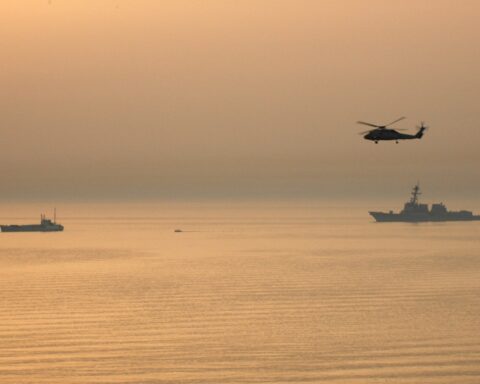
LONDON — Chevron Chairman and CEO Mike Wirth told Bloomberg Surveillance on May 29 that ships were attacked in the Strait of Hormuz this week, including incidents not publicly reported. “There still has been kinetic activity this week, some of which has been reported in the media — some of which has not,” Wirth said, describing the risks for shipowners in the Persian Gulf as “very real” regardless of whether a peace accord is signed.
The disclosure arrived on a morning when Brent crude was posting its worst monthly decline since the COVID-19 pandemic — down approximately 19 percent from its May 4 peak, according to CNBC. That decline has been driven almost entirely by investor optimism over a U.S.-Iran deal that Vice President JD Vance described hours earlier as stuck on “a couple of language points.”
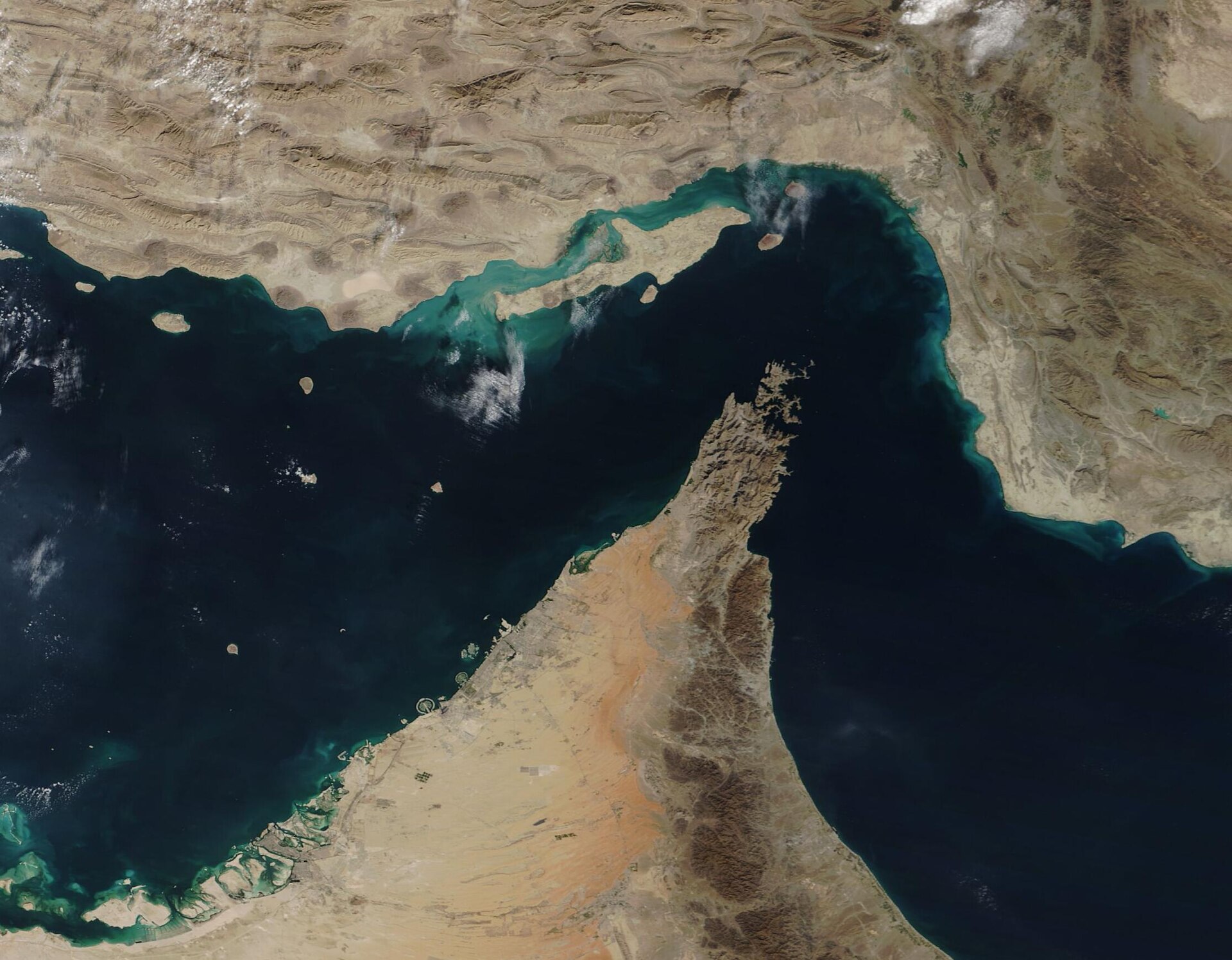
Table of Contents
What Wirth Said — and What He Left Unsaid
Wirth did not identify the vessels involved, the nature of the attacks, or the flag states of the ships. He did not say whether Chevron-operated or Chevron-chartered vessels were among those targeted. He did not say how many incidents occurred.
What he did say was specific enough to constitute a disclosure by the head of a publicly traded company with SEC reporting obligations. Chevron’s Q1 2026 10-Q filing already acknowledged that “production in the first quarter of 2026 was affected by curtailments in the Middle East (Israel and the Partitioned Zone between Saudi Arabia and Kuwait).” Wirth’s Bloomberg appearance extended that risk assessment from production to transit — from what happens at the wellhead to what happens in the shipping lane.
Bloomberg published two video segments and a text article under the headline “Ships Attacked in Strait of Hormuz This Week, Chevron CEO Says.” CNBC, covering the same oil market on the same morning, led with deal optimism: “Oil drops 20% from 2026 peak on optimism over U.S.-Iran ceasefire talks.” The two headlines, published within hours of each other, describe the same market from opposite ends of the information chain.
Brent’s Worst Month Since COVID and the Information It’s Missing
Brent crude has fallen from its 2026 peak of $114.97 on May 4 to $92.56 as of 11:18 a.m. London time on May 29, according to CNBC — the benchmark’s worst monthly performance since the pandemic-era collapse. CNBC attributed the move to deal optimism: “Global oil prices have tumbled by around 20% from 2026 highs as investors have grown increasingly optimistic on prospects for a long-lasting ceasefire deal.”
The Middle East briefing 3,000+ readers start their day with.
One email. Every weekday morning. Free.
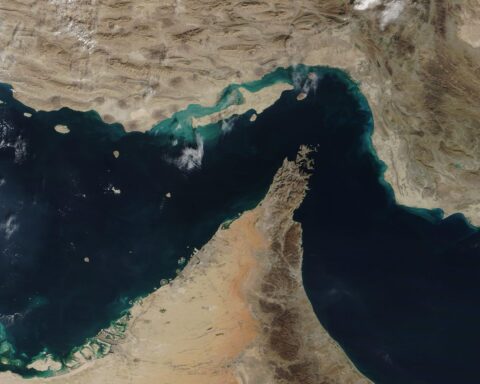
The physical market tells a different story. Shipping traffic through the Strait of Hormuz has been approximately 95 percent blocked since February 28, according to Windward AI. QatarEnergy declared force majeure on all LNG shipments on March 4. Only three of thirteen Qatari LNG tankers have cleared Hormuz since the war began — each individually approved by the IRGC-operated Persian Gulf Strait Authority based on destination diplomacy, not operator identity, according to Windward AI and IndexBox data. Two Qatar-linked LNG tankers remain idled near Qatari waters.
Hapag-Lloyd has stated the crisis costs the company $60 million per week, according to PBS NewsHour. Maersk, MSC, CMA CGM, and Hapag-Lloyd have all suspended Hormuz transits.
The price decline has already opened a fiscal gap for producers dependent on high Brent. Saudi Arabia’s PIF-inclusive fiscal breakeven sits at $108–111 per barrel, according to Bloomberg Economics — $16–19 above where Brent traded on the morning Wirth spoke. The kingdom posted a Q1 deficit of $33.5 billion, 194 percent of its full-year target.
The Axios-reported MOU draft, published May 28, calls for “unrestricted navigation” through Hormuz as a central condition. Trump had not approved the text as of the morning of May 29, according to Axios. The delay in signing means each day without a signature is another day the PGSA collects transit fees and the insurance market accumulates incident data.
Can the Insurance Market Forget?
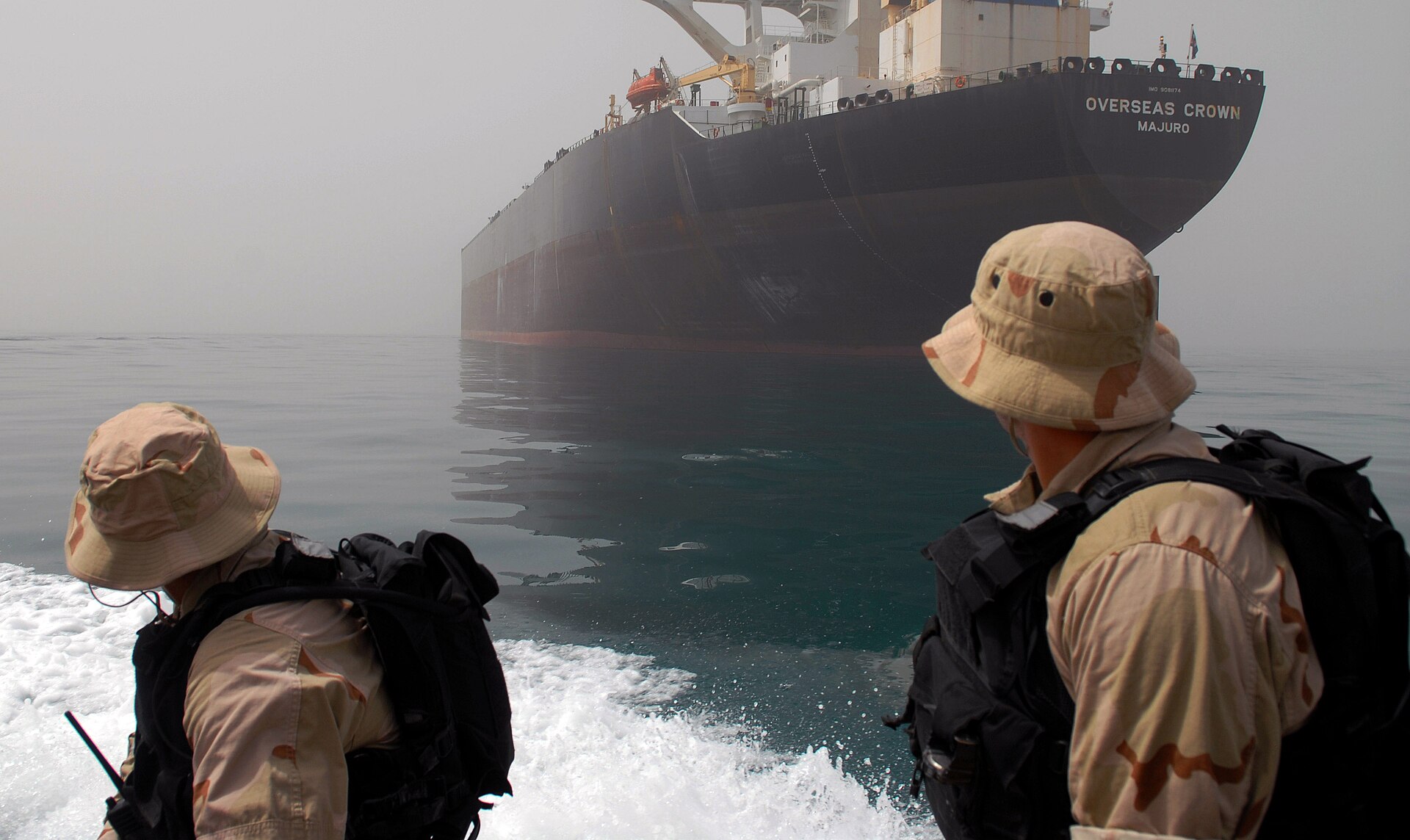
War-risk additional premiums for Gulf tanker transits have risen from approximately 0.2 percent of hull and machinery value to over 1.0 percent — roughly a fivefold increase from pre-war levels, according to Insurance Journal and the Albany Antree market update. Baseline transit premiums rose from 0.125 percent to 0.2–0.4 percent per transit, an increase of 60 to 220 percent.
The structural shift runs deeper than price. Major P&I clubs — Gard, Skuld, NorthStandard — issued formal cancellation notices for the Persian Gulf as of March 1, 2026, covering liabilities arising in Iranian waters, the Gulf, and the Gulf of Oman, according to Property Casualty 360 and Eagle Intel Mari. Multiple International Group clubs issued voyage exclusions with “war, terrorism, civil unrest” carve-outs, shifting full loss exposure to vessel owners and time-charterers.
Howden Re’s April 1, 2026 assessment documented what the reinsurer described as a permanent market restructuring: “annual cover removed, Gulf cover moving voyage-by-voyage, and pre-existing covers honored but not renewed at old terms,” according to the Albany Antree market update citing the reinsurer.
The U.S. government has been forced to begin backstopping war-risk insurance for Hormuz transits in response to private market withdrawal, according to a World Economic Forum analysis from April 2026.
This is the insurance-memory problem: P&I exclusions plus force majeure declarations created a distributed Hormuz closure without a formal blockade order. Even if an MOU is signed tomorrow, the underwriting market’s institutional memory of 2026 will anchor repricing for years. The 2019 Fujairah tanker attacks still appear in Lloyd’s Market Association war-risk committee discussions seven years later. Every incident that enters the actuarial record — reported or not, confirmed or not — extends that timeline. The record gained a confirmed entry on May 30 when Oman’s Maritime Security Centre issued a mine alert for the Hormuz inbound lane — the first publicly confirmed mine sighting by Omani authorities in their own territorial waters since the conflict began.
The PGSA After OFAC
The PGSA — the IRGC-administered toll regime operating at Hormuz — was formally designated by OFAC on May 28 under Executive Order 13224, on grounds of material support to the IRGC, a designated Foreign Terrorist Organization. The designation followed Treasury Secretary Bessent’s earlier warning that PGSA payers risked sanctions exposure.
The Treasury Department’s language left no ambiguity: “Anyone cooperating with the so-called strait authority may be providing support to and receiving services from the IRGC, which ultimately benefits from this attempted extortion, and may therefore be exposed to sanctions risk.”
PGSA fees have been reported at up to $2 million per transit, payable in Chinese yuan or via Bitcoin to IRGC-linked wallets, according to the Maritime Executive and The Week India.
The SDN designation sharpened a compliance binary. Any operator paying PGSA tolls now faces potential OFAC sanctions — material support to a designated FTO. Any operator refusing to pay faces IRGC interdiction risk — the kind of “kinetic activity” Wirth described but did not detail. Pay the toll and face Washington. Refuse the toll and face the IRGC Navy.
Saudi Arabia’s own exposure to this binary is structural. The kingdom produces approximately 7.76 million barrels per day. The Petroline (East-West Pipeline) carries roughly 5 million b/d to Yanbu on the Red Sea. The remaining approximately 2.5 million b/d remains Hormuz-dependent — volume that must either transit a strait with unreported attacks this week or not move at all.
What Does Iran Say Happened on May 28?
PressTV, the IRGC-affiliated English-language outlet, reported on May 28 that the IRGC “forced back” a tanker attempting to transit Hormuz with its tracking system switched off, after “warning fire directed towards the vessel.” PressTV described the vessel as a “trespassing US tanker” — framing non-compliance with PGSA coordination as a legal violation rather than an act of interdiction.
Separately, PressTV reported that the IRGC oversaw “safe passage” of 26 vessels in 24 hours “under its coordination,” warning that any attempt to disrupt Hormuz traffic “will be met with our decisive response.”
Neither claim has been independently confirmed by Western sources or the Pentagon. The IRGC opened fire on four vessels near Hormuz at 12:35 a.m. local time on May 28 — an incident reported separately through Western channels. Whether Wirth’s reference to unreported kinetic activity encompasses the PressTV incidents, the separately reported IRGC firing, additional events, or all of them is not clear from his Bloomberg remarks.
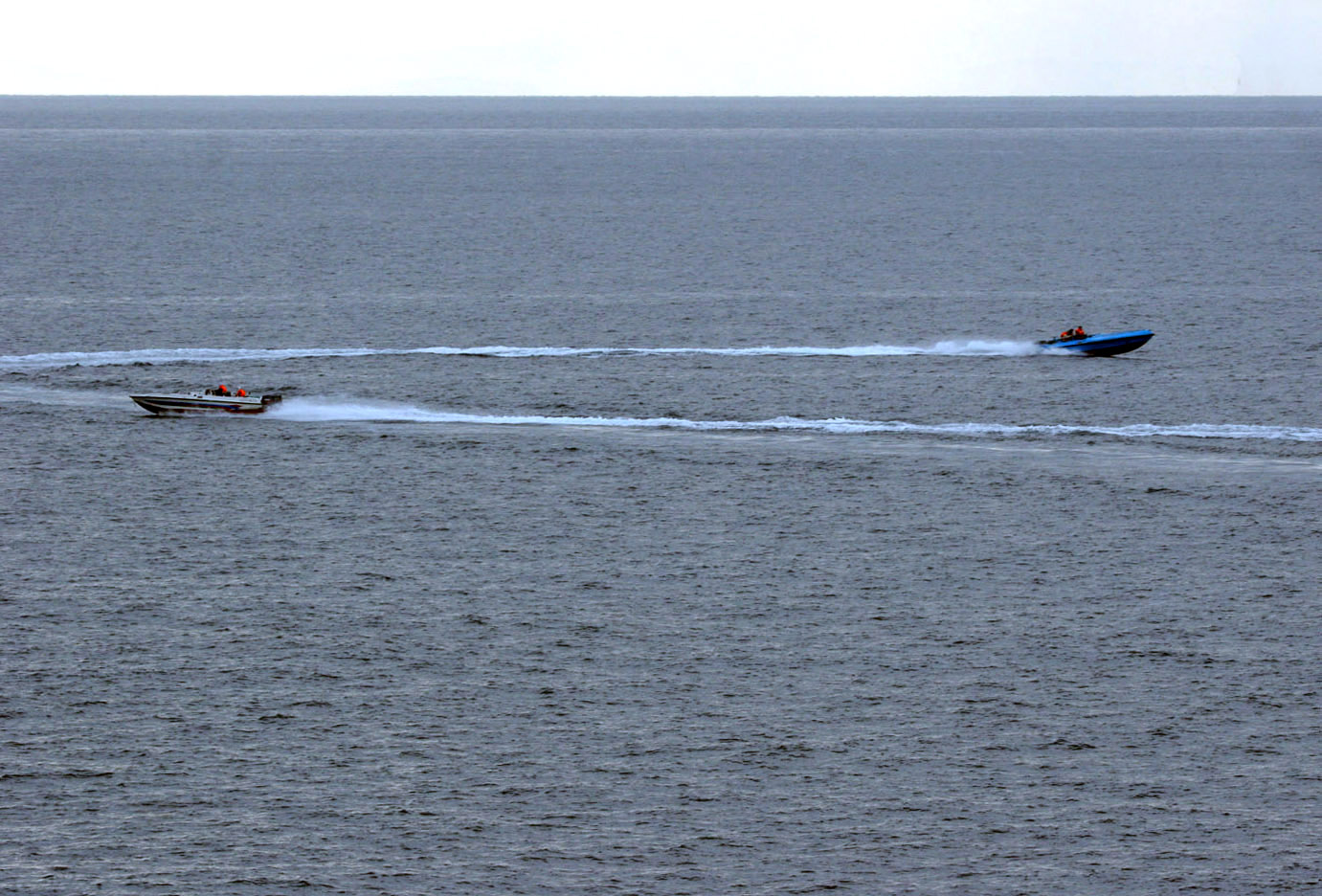
Iran describes the PGSA not as extortion but as sovereignty-based maritime governance. Non-compliant vessels are characterized as “trespassing” and “illegal.” This is the counter-narrative to the OFAC SDN designation: where the Treasury sees material support to a designated terrorist organization, Tehran sees customs enforcement at what it regards as a sovereign waterway.
The 2019 Precedent for Delayed Disclosure
The closest structural parallel to Wirth’s remark is the May–June 2019 tanker attack sequence.
On May 12, 2019, four commercial vessels — including two Saudi-flagged tankers — were struck by limpet mines off the UAE port of Fujairah. Initial reports were fragmentary. The UAE’s investigation took weeks. Some operators initially denied damage had occurred.
On June 13, 2019, the Kokuka Courageous (Japanese-owned, Panamanian-flagged) and Front Altair (Norwegian-owned, Marshall Islands-flagged) were struck in the Gulf of Oman. The U.S. released surveillance footage attributing the attacks to the IRGC. Iran denied involvement. The Kokuka Courageous’s operator initially declined to attribute the explosion to an external attack.
In both cases, commercial incentives — insurance claims, charter disputes, cargo liability, hull-value assessments — created pressure against immediate and full disclosure. Flag states, operators, and P&I clubs each had independent reasons to manage the timing and scope of public information.
The 2026 environment reproduces these incentives at far greater scale. The vessels still transiting operate under PGSA coordination, under extraordinary insurance arrangements (if any), and under conditions where public disclosure of an attack can trigger force majeure clauses, charter cancellations, and cargo liability disputes across multiple jurisdictions.
Wirth chose Bloomberg Surveillance as the venue. Chevron’s 10-Q SEC disclosure obligations mean any material risk to production or transit must eventually be reflected in public filings. His Bloomberg appearance is the interval between knowing and reporting.
Frequently Asked Questions
Has the Pentagon confirmed the attacks Wirth described?
No. As of publication, the Pentagon has not issued a statement confirming or denying additional kinetic incidents at Hormuz this week beyond the previously reported IRGC firing on four vessels on May 28. CENTCOM’s most recent public statement addressed its own strikes on Iranian missile launch sites and two IRGC mine-laying fast boats near Bandar Abbas on May 25–26.
What happens to insurance coverage if the MOU is signed?
Market precedent from the 2019 tanker attacks suggests that P&I clubs will not restore annual coverage immediately. After the 2019 incidents, Lloyd’s Market Association Joint War Committee hull-war and strikes listings for the Gulf of Oman remained in place for over two years. The 2026 crisis is structurally larger — involving formal P&I cancellations, not just JWC listings — and reinsurance contracts typically operate on annual renewal cycles. War-risk premiums would likely decline but are unlikely to return to pre-February 2026 levels within the first renewal cycle following any deal.
Why would operators not report attacks?
Disclosure of a kinetic incident triggers immediate commercial consequences: hull insurance claims require surveys and temporary withdrawal from service; time-charter parties may include force majeure or off-hire provisions activated by hostile acts; cargo interests may file claims; and flag state registries may initiate investigations that ground vessels pending review. For operators running skeleton fleets through a 95-percent-blocked strait, the commercial cost of disclosure can exceed the commercial cost of the damage itself.
How much revenue does the PGSA generate for the IRGC?
At the reported rate of up to $2 million per transit and 26 transits per 24 hours (the IRGC’s own claimed figure from May 28), gross daily revenue could approach $52 million — approximately $1.5 billion per month. Independent verification of this figure is not possible; the actual number of paying transits may be significantly lower than the IRGC’s claimed throughput, and not all transits may be charged the maximum rate.
Does Chevron have direct operations in the Hormuz transit zone?
Chevron operates in the Partitioned Zone between Saudi Arabia and Kuwait through the Saudi Arabian Chevron joint venture and holds upstream positions elsewhere in the Gulf. The company charters and operates tankers globally but has not disclosed whether its own vessels were among those Wirth referenced. Under SEC rules, any material impact to production or transit operations must be disclosed in quarterly filings; Chevron’s next 10-Q covers Q2 2026.