
BEIRUT — Israeli jets struck a Hezbollah communications command center in the Ghobeiry area of Dahiyeh, Beirut’s southern suburbs, on the morning of June 14, 2026 — the date President Trump had designated for the signing of a memorandum of understanding with Iran and the president’s 80th birthday. Hours later, Mohammad Bagher Ghalibaf, the Iranian parliament speaker Tehran had named as its MOU signatory, declared there was “no point” in continuing negotiations.
Saudi Arabia, listed by Trump among 12 “approvers” of the MOU framework, issued no statement on the strike, on Ghalibaf’s declaration, or on the deal’s future. The Saudi Ministry of Foreign Affairs has not commented publicly on any aspect of the Iran MOU process in more than 25 days, its last statement on the subject dating to the May 20 EU Gymnich meeting in Brussels. The actor that may have ended the agreement Riyadh was named to endorse is Israel — a country with which Saudi Arabia maintains no diplomatic relations and to which it holds no channel of communication.
Table of Contents
What Happened in Dahiyeh on June 14?
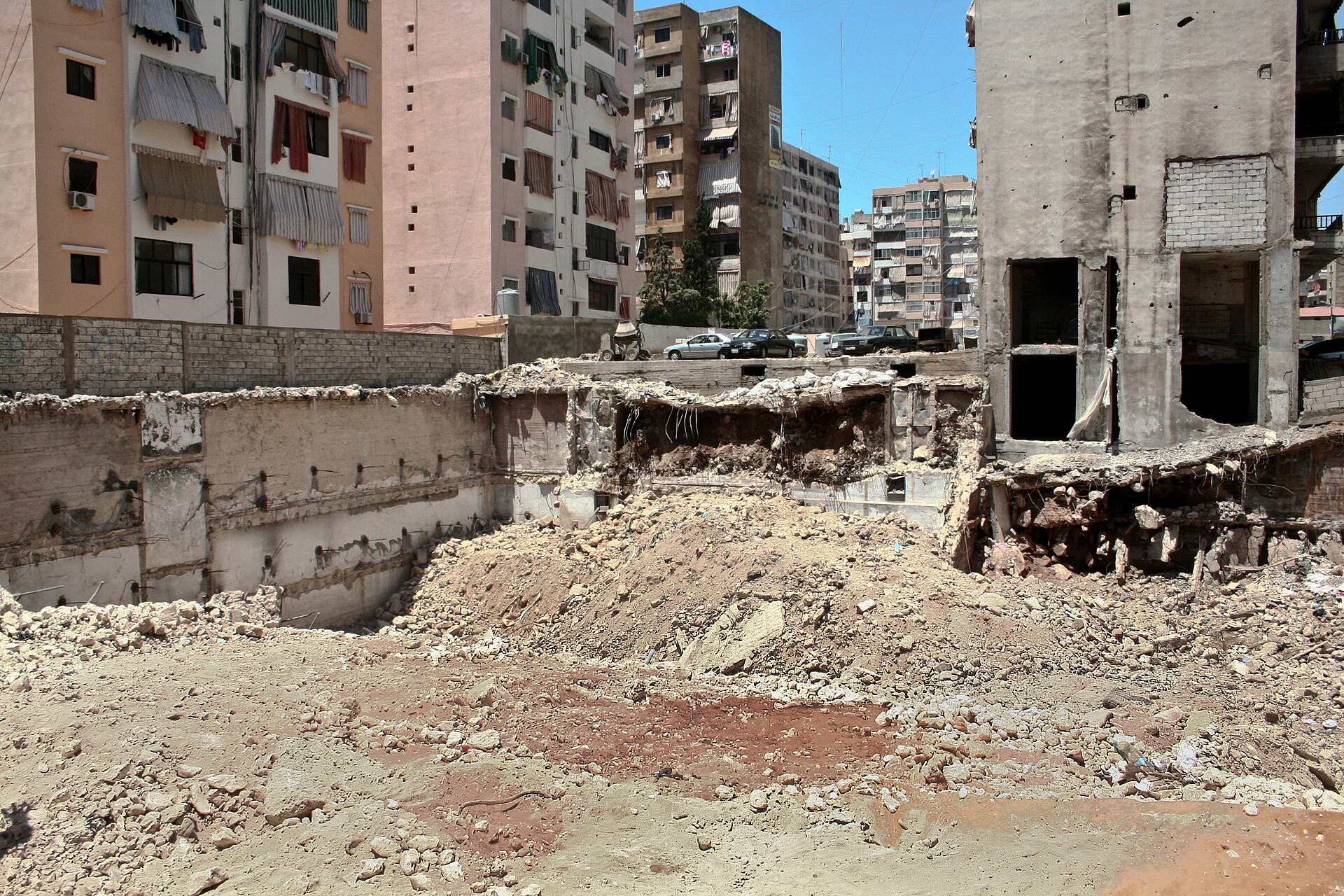
The Israel Defense Forces struck what it described as a Hezbollah “communications systems command center” in Ghobeiry, a densely populated neighborhood within Beirut’s Dahiyeh district, on the morning of June 14. The IDF stated the facility was used to “advance terrorist attacks” against Israel. Lebanon’s National News Agency reported two people killed and 11 wounded; the Jerusalem Post put the toll at three dead and 15 wounded, citing Lebanese health officials and local emergency responders.
The strike followed three Hezbollah drones that hit communities in northern Israel earlier that morning. Prime Minister Benjamin Netanyahu and Defense Minister Israel Katz called the drone incursion a “blatant ceasefire violation,” invoking the terms of the April 17 ceasefire agreement between Israel and Lebanon. The characterization was not without basis in the aggregate record: the Alma Research center has documented 553 Hezbollah drone attack waves and 323 rocket and missile attack waves against Israel during the ceasefire period since April 17. The IDF notified U.S. Central Command shortly before launching the operation, according to the Times of Israel. Whether the White House gave prior authorization has not been confirmed.
President Trump responded within hours. “This morning’s attack on Beirut should not have happened, particularly on a special day when we are so close to a peace deal with Iran,” he said. He insisted the MOU would survive: “It’s not going to have any impact on the deal.” He called on “all sides” to stand down and announced a fresh Lebanon truce, and Netanyahu appeared to call off further strikes. Defense Secretary Pete Hegseth, speaking on CBS’s Face the Nation, called Israel’s response “very measured” and said the deal was “not a matter of if, it’s a matter of when.”
The Signatory Who Declared the Talks Dead
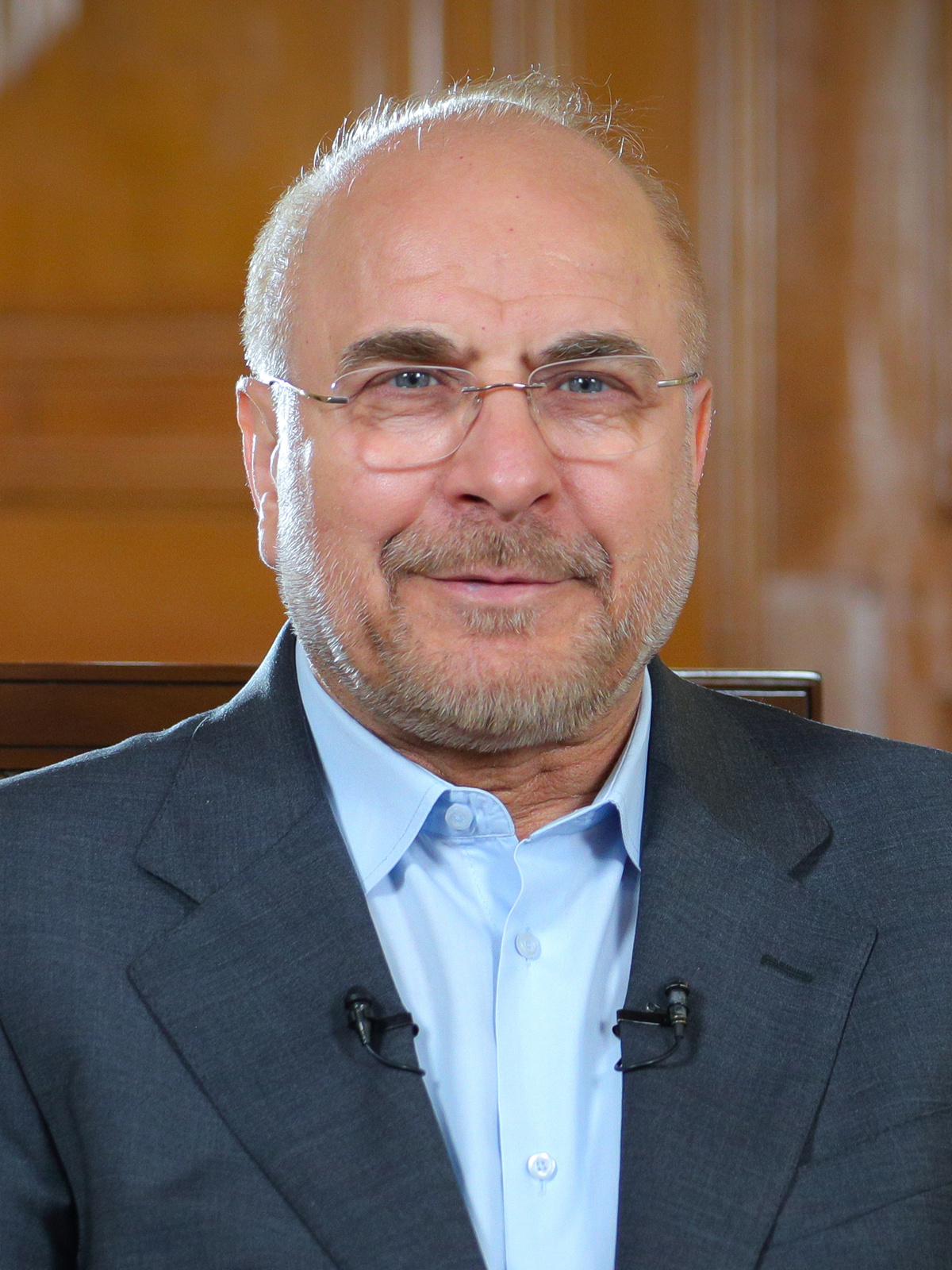
Ghalibaf — whom Tehran had designated as Iran’s MOU signatory over Foreign Minister Abbas Araghchi, breaking with the JCPOA precedent in which Foreign Minister Zarif signed — responded to the Dahiyeh strike by declaring the negotiation process finished. “The Zionist aggression on Dahieh has once again shown that America either does not have the will or the ability to fulfill its obligations,” he told Iranian media, according to the Express Tribune. “If you do not have the will or the ability to fulfill your commitments, then there is no basis for talking about continuing down this path.”
The Middle East briefing 3,000+ readers start their day with.
One email. Every weekday morning. Free.
The statement carried a secondary escalation: Ghalibaf declared that U.S. and Israeli assets in the Middle East were “legitimate targets,” a formulation that extends beyond diplomatic walkback into the language of operational threats. Tasnim, the IRGC-affiliated news agency, reported separately that Iran’s negotiating team was “stopping talks and exchange of texts through a mediator,” according to the Times of Israel. General Mohammad-Jafar Asadi, deputy chief of the Khatam al-Anbiya operational headquarters, reinforced the message in a separate statement, telling the Jerusalem Post that the Dahiyeh strike “will not go unanswered.”
Ghalibaf holds the position of Parliament Speaker under Article 89 of Iran’s constitution — a legislative role distinct from the executive authority of the foreign ministry. His designation as signatory rather than Araghchi had already signaled an institutional fracture within the Iranian government, placing the legislative branch at the center of an executive-level agreement. He was reelected Speaker on May 25 with 235 of 271 votes, 19 days before the signing date. On May 29, he told Iranian media that Iran “seizes concessions not through dialogue but with missiles.”
Did Saudi Arabia Respond to the Beirut Strike?
No Saudi government body issued any statement on the Dahiyeh strike on June 14 or on Ghalibaf’s declaration that negotiations had ended. The Saudi Press Agency, the Ministry of Foreign Affairs, and the Royal Court were silent.
Saudi Arabia’s silence covered every dimension of the June 14 crisis. Riyadh did not comment on the Israeli military action in Beirut. It did not respond to Ghalibaf’s statement that U.S. and Israeli assets in the region were “legitimate targets” — a category that encompasses American military installations in the Kingdom itself, including Prince Sultan Air Base and the assets of approximately 13,000 Pakistani troops stationed in Saudi Arabia’s Eastern Province under the Saudi Military Defense Agreement. It did not address whether it considered the MOU it had been listed to approve still viable. The SPA’s output on June 14 contained no reference to Beirut, to Israel, to Iran, or to the memorandum of understanding.
This pattern predates June 14. Trump’s Truth Social post naming Saudi Arabia among 12 “approvers” never received an independent Saudi endorsement. When Pakistani Prime Minister Shehbaz Sharif announced the deal text was “final,” Riyadh did not confirm it. When the 60-day phase-two timeline for nuclear terms was disclosed, Saudi Arabia did not acknowledge the framework it was expected to endorse. Across every major development in the MOU process — the text’s disclosure, the signing date’s announcement, the signing date’s cancellation, and now the strike that may have ended the talks — Riyadh has not confirmed, denied, endorsed, or qualified any element of the deal.
Qatar Reached Tehran Before Riyadh Reached a Microphone
On the morning of June 14, as IDF jets struck Dahiyeh and Ghalibaf declared the talks over, Qatari mediators were already in the air to Tehran. ABC News and Radio Free Europe/Radio Liberty reported that the delegation traveled for “final touches” on the agreement — a mission planned before the strike that became an emergency stabilization effort by the time they landed in the Iranian capital.
Qatar’s position in the MOU architecture is structural and active. Doha operates one of three mediation tracks between the United States and Iran, alongside Pakistan’s dual-letter channel — under which Prime Minister Sharif carried a civilian letter and Army Chief General Asim Munir carried a separate military back-channel letter to Supreme Leader Khamenei on June 7 — and whatever remains of direct U.S.-Iran communication. Qatar has extended a $6 billion credit line to Iran. Tehran accepts Qatari interlocutors in a way it does not accept Saudi intermediaries, a diplomatic access that reflects both Qatar’s maintenance of relations with Iran throughout periods when Riyadh severed them and Saudi Arabia’s own decision, never publicly explained, not to seek a mediation role in the MOU process.
Saudi Arabia holds none of these positions. It is not part of the direct channel, not part of the Pakistani architecture, and not part of Qatar’s shuttle diplomacy. Its sole formal connection to the MOU process is the “approver” label Trump assigned on Truth Social — a designation that came without a defined role, without enumerated responsibilities, and without any mechanism for Saudi input into the agreement’s terms. On the morning the deal’s survival was in question, Qatar was in Tehran. Riyadh’s position, 25 days into its silence, remained exactly where it had been before the first bomb fell on Ghobeiry.
Was the Deal Already Dead Before the Strike?
The MOU signing was already off before the first Israeli munition hit Dahiyeh. Iran’s foreign ministry spokesperson Baghaei confirmed on June 13 that no signing ceremony would proceed on June 14, citing U.S. “hesitation” and “instability.” Araghchi had separately stated that any MOU must cover “all fronts, including Lebanon” — a condition that Hezbollah itself had already rejected.
Hezbollah Secretary-General Naim Qassem dismissed the Lebanon ceasefire framework on June 4 as “absurd” and “humiliating.” The ceasefire monitoring committee — composed of the United States, France, Israel, Lebanon, and UNIFIL — includes no Iranian or Hezbollah representative. Iran demanded coverage for a front whose principal actor had refused the terms and whose oversight structure excluded Iran entirely. Lebanese President Joseph Aoun told CNN on June 5 that Iran was using Lebanon as a “bargaining chip” — a characterization that described the function of Araghchi’s demand rather than its stated content.
The Dahiyeh strike did not create these structural problems. Araghchi’s “all fronts” condition was unfulfillable before June 14, and Baghaei had already confirmed the signing was off. What the strike provided was a publicly visible event on a day when international media had gathered for a ceremony that Iran’s own spokesperson had already canceled. Three hundred and fifty-seven people were killed in Lebanon on April 8, according to Lebanese health authorities — the same day Iran declared its ceasefire — without producing any comparable declaration from Tehran’s designated signatory. Dahiyeh on the signing day did.
The Approver With No Lever to Pull
Saudi Arabia cannot restrain Israel. It maintains no diplomatic relations with Jerusalem, no military coordination channel, and no demonstrated political influence over a government that struck Dahiyeh on the morning its closest ally had designated as a signing day. Trump told reporters on June 7 that Netanyahu “won’t have any choice” but to accept whatever Washington agrees with Iran. “I call the shots,” the president said, according to the Times of Israel. A CNN report from June 1 detailed a heated exchange in which Trump used expletives to express disapproval of Israeli operations in Lebanon — a confrontation that evidently did not prevent the June 14 strike on Beirut.
Saudi Arabia cannot replace Qatar as a mediator. Qatar’s access to Tehran is built on decades of direct engagement, active financial instruments including the $6 billion credit line, and diplomatic ties that Riyadh severed during the Yemen war and restored only through Chinese mediation in March 2023. A government that required a third party to resume communication with Tehran is not positioned to serve as the third party between Tehran and Washington.
And Saudi Arabia cannot withdraw an approval it never formally issued. Pakistan’s June 14 declaration named Saudi Arabia as a contributor to the deal while assigning it no enforcement standing — the gap between mediation credit and treaty standing is the subject of Saudi Arabia Was Thanked for a Deal It Cannot Enforce. No MOFA statement endorsed the MOU text. No Royal Court declaration affirmed the “approver” designation. No SPA release confirmed that Saudi Arabia accepted the role Trump assigned it. The MOU’s terms on Hormuz — including the distinction between prohibited “tolls” and Iran’s preferred “service fees” — were drafted without Saudi input and affect Saudi shipping directly, at a cost that Saudi Arabia’s current fiscal position makes difficult to absorb. Brent crude sits at approximately $86-87 per barrel against the Kingdom’s fiscal breakeven of $108-111, a gap that translates to roughly $152-176 million per day in unrealized revenue. The Sadara Chemical Company’s $3.7 billion in guaranteed senior debt — backed by Aramco at $2.405 billion and Dow at $1.295 billion — exits its grace period on June 15, the morning after the failed signing date.
Netanyahu, following U.S. pressure on June 14, authorized direct Lebanon talks expected to begin at the State Department the following week, according to the Council on Foreign Relations. Saudi Arabia has not been named as a participant. The talks will address one component of a conflict in which Saudi Arabia was listed as a guarantor of the peace — a role it cannot perform for a process it did not build, over parties it cannot reach, on a day that someone else chose to end.
Frequently Asked Questions
Did Israel coordinate the Dahiyeh strike with the United States?
The IDF notified U.S. Central Command shortly before the operation, according to the Times of Israel, but this notification does not confirm prior authorization or a green light from the White House. Trump’s response — that the attack “should not have happened” — and the speed with which he issued it suggest he was not informed with sufficient lead time to intervene. The administration’s subsequent posture, however, was acceptance rather than condemnation: Hegseth called the response “very measured” on CBS, and Trump himself pivoted within hours to announcing a fresh Lebanon truce rather than pressuring Israel publicly. The pattern — late notification, public disapproval, private accommodation — mirrors the dynamic CNN reported from the June 1 phone call, in which Trump’s expressed anger at Netanyahu over Lebanon operations produced no operational change in Israeli behavior.
Has Iran formally withdrawn from the MOU?
Ghalibaf’s declaration that there was “no point continuing” and Tasnim’s report of suspended text exchanges represent the strongest public rejection of the process to date, but formal withdrawal and negotiating posture are distinct categories in Iranian diplomacy. Tehran suspended JCPOA compliance multiple times between 2019 and 2022 without formally exiting the agreement, using each pause to extract concessions upon return. Ghalibaf’s statement came from his position as Parliament Speaker, not as an authorized executive voice — a distinction that gives Iran room to treat his words as legislative opinion rather than binding foreign policy if it chooses to resume. What Qatari mediators, who were physically in Tehran on June 14, carry back to Washington will determine whether the declaration functions as an exit or a negotiating tactic.
Why was Saudi Arabia listed as a deal approver if it holds no negotiating role?
Trump’s naming of Saudi Arabia among 12 “approvers” serves a political legitimization function rather than describing negotiating architecture. Saudi Arabia is the largest Gulf economy, the dominant OPEC producer, and a U.S. defense partner with $142 billion in recent commitments through the May 13 package. Listing it as an approver projects Gulf consensus behind the MOU. The timing carries an additional layer: the U.S.-Saudi 123 Agreement, signed May 13, permits Saudi enrichment without requiring the three Gold Standard pillars — an enrichment ban, a reprocessing ban, and an Additional Protocol precondition — that the MOU framework is designed to impose on Iran. Saudi Arabia was named an approver of nuclear constraints on Tehran 31 days after securing enrichment permissions for itself, a sequencing that neither government has publicly addressed.
What military assets does Ghalibaf’s “legitimate targets” declaration encompass?
Ghalibaf’s statement that U.S. and Israeli assets in the Middle East are “legitimate targets” covers a broad operational geography. American military installations in the Gulf include Prince Sultan Air Base south of Riyadh, Al Udeid Air Base in Qatar (the largest U.S. facility in the Middle East), and the U.S. Fifth Fleet headquarters in Bahrain. CENTCOM maintains forward elements across the region. The approximately 13,000 Pakistani troops stationed in Saudi Arabia’s Eastern Province under the Saudi Military Defense Agreement signed September 17, 2025, operate alongside Saudi forces near critical oil infrastructure, including the Jubail industrial complex and Aramco processing facilities. GCC PAC-3 Patriot batteries, some of which were depleted during earlier Iranian and Houthi strikes, protect these installations. Ghalibaf’s formulation did not distinguish between military and civilian infrastructure, and the Khatam al-Anbiya operational headquarters — whose deputy chief separately stated the Dahiyeh strike “will not go unanswered” — commands Iran’s integrated missile and drone forces.
Could the MOU still proceed after the Dahiyeh strike?
Trump stated on June 14 that the strike would have “no impact on the deal,” and Hegseth called it “a matter of when, not if.” These statements describe the administration’s public posture rather than operational reality. The immediate obstacles include Ghalibaf’s public declaration, Iran’s reported suspension of text exchanges, and the Khatam al-Anbiya commander’s retaliation warning — any Iranian military response would initiate a new escalation cycle that moves both parties further from a signing ceremony. Netanyahu, under U.S. pressure, authorized direct Lebanon talks expected to begin at the State Department the following week, a process that could take weeks to produce results and that addresses only one of the Iranian preconditions Araghchi enumerated. The June 15 expiration of Sadara’s $3.7 billion debt grace period and Brent crude’s continued position $22-25 below Saudi Arabia’s fiscal breakeven add economic pressure that a delayed MOU cannot relieve. The G7 summit at Evian, scheduled for June 16, will proceed without Crown Prince Mohammed bin Salman, who declined Macron’s invitation citing “prior commitments.” While diplomats and officials debated the deal’s viability, the IRGC broadcast “completely closed” directly to ship captains via maritime radio on the same morning — a parallel message to a different audience that neither side addressed publicly.