
DHAHRAN — The grace period on Sadara Chemical Company’s $3.7 billion in guaranteed senior debt expired on June 15, 2026, and none of the parties involved — not Saudi Aramco ($2.405 billion guarantor), not Dow Chemical (~$1.2 billion guarantor), not the twenty-five-bank lending syndicate led by HSBC and JPMorgan, not the U.S. Securities and Exchange Commission or Saudi Capital Market Authority — has produced a filing, a press release, or any public acknowledgment that the event occurred. The coordinated non-disclosure, stretched across two sovereign regulatory regimes, two Fortune 500 reporting calendars, and more than two dozen lender desks with divergent fiduciary obligations, required more legal architecture to construct than a straightforward default declaration would have.
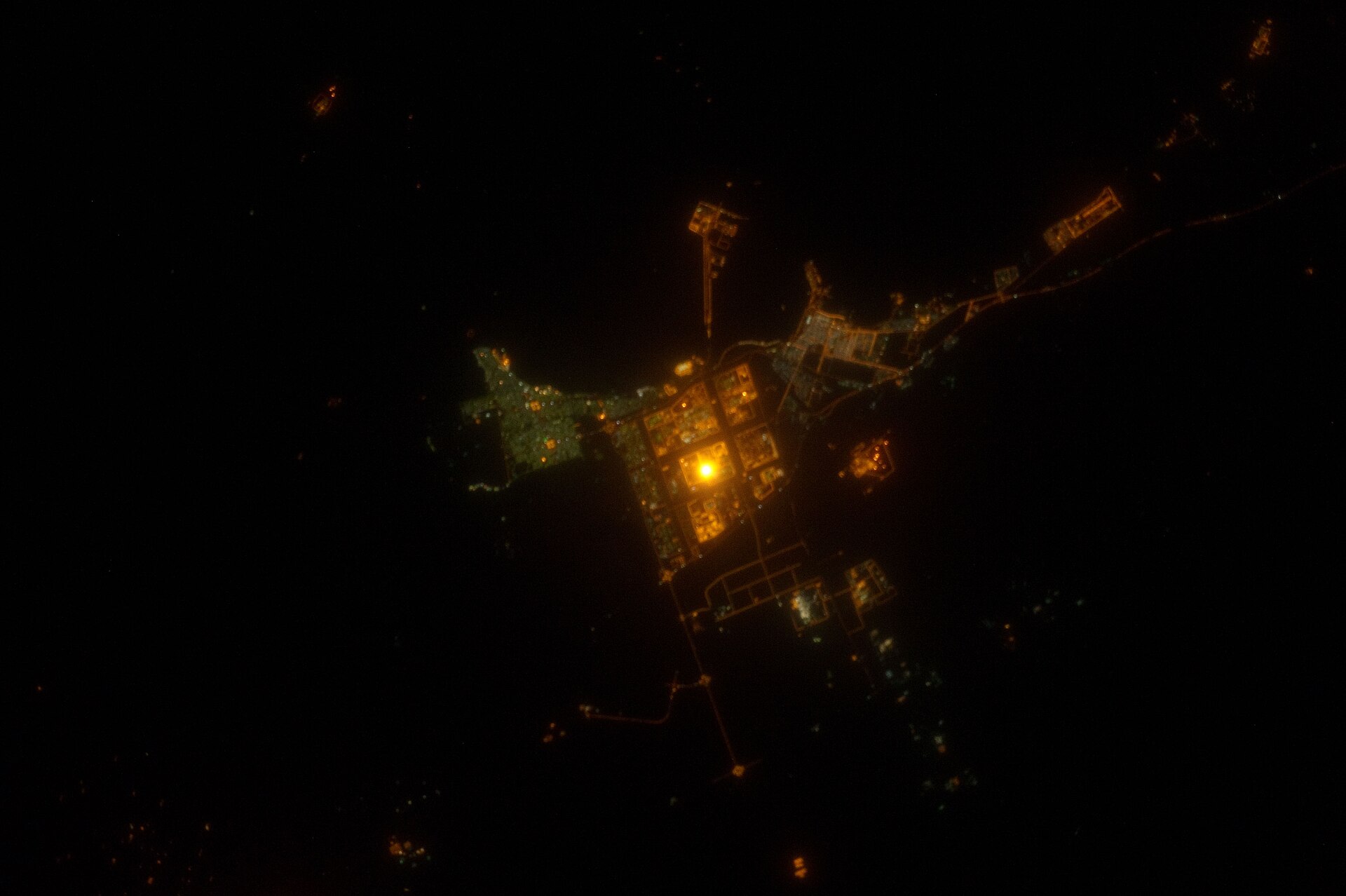
Sadara’s twenty-six Jubail manufacturing units have produced nothing and earned nothing for eleven consecutive weeks since shutting down in late March, after the company told investors it “cannot provide, at the present time, an estimate for the return to production.” A formal default on Saudi Arabia’s flagship petrochemical joint venture — a $20 billion investment that was once the world’s largest project-finance transaction — would trigger cross-default cascades across parent-company debt, void property and business-interruption insurance warranties, and deliver a headline that a war economy running a record $33.5 billion quarterly fiscal deficit cannot absorb. What happened instead was structured absence: a sub-rosa accommodation — waiver, standstill, or forbearance — engineered so that the day the clock ran out would be, to anyone outside the syndicate room, indistinguishable from any other Sunday.
Table of Contents
- The Architecture of Coordinated Silence
- What Did Dow Put on the Record Before the Deadline?
- Why Is Aramco’s Silence More Complete?
- How Do Twenty-Five Banks Agree to File Nothing?
- What a Formal Default Would Trigger
- Eleven Weeks of Nothing at Jubail
- The Fitterling Bridge
- Why Did SABIC File When Sadara Did Not?
- Who Absorbs the Price of Silence?
- Frequently Asked Questions
The Architecture of Coordinated Silence
Three affirmative decisions had to be made before June 15 for the day to pass without a single regulatory filing. All three required parties whose interests are not naturally aligned to converge on the same outcome: produce nothing public, trigger nothing formal, file nothing at all.
Dow pre-disclosed the deterioration of its guarantee position in Q1 filings, embedding a $292 million liability adjustment that converted the June 15 deadline from a potential surprise into a risk “already reflected in accounts” — the kind of formulation that, under SEC materiality guidance, provides a basis for arguing that no separate 8-K disclosure is required for the subsequent event. Aramco published a seventy-two-page Q1 2026 interim report containing no mention of the deadline, the guarantee, or Sadara’s debt trajectory, relying on a mathematical argument — $2.405 billion against $33.59 billion in quarterly net income — that the exposure falls below the Saudi CMA’s qualitative materiality threshold. The twenty-five-bank syndicate collectively agreed, before the deadline arrived, not to demand payment or accelerate the debt, which is the decision that prevented the other two from being overridden.
Any one of those three pillars, had it collapsed, would have forced a cascade of disclosure obligations across both regulatory jurisdictions. A single lender demanding payment would have created a formal event of default regardless of Dow’s pre-disclosure strategy or Aramco’s materiality analysis; an SEC or CMA inquiry could have compelled acknowledgment that the other parties had declined to provide. The fact that all three held — across negotiations that must have begun well before the Jubail shutdown accelerated the urgency in late March — is the strongest evidence that what occurred on June 15 was not an absence of action but a coordinated, legally structured decision to ensure the day generated exactly zero news.
As HouseofSaud.com reported last week, the $3.7 billion guarantee was structured in March 2021 with a five-year grace period that was always going to mature into whatever conditions prevailed in mid-2026. Nobody at the restructuring table predicted a Hormuz closure or an eleven-week production shutdown, but the accommodation reached for June 15 had to be negotiated against precisely those conditions — and the question is not whether a deal was struck, because the silence itself confirms one was, but what it cost.
The Middle East briefing 3,000+ readers start their day with.
One email. Every weekday morning. Free.
| Saudi Aramco | Dow Chemical (TDCC) | |
|---|---|---|
| Ownership stake | 65% | 35% |
| Original guarantee (March 2021) | $2.405 billion | $1.295 billion |
| Current guarantee (Q1 2026) | Not disclosed | ~$1.2 billion (10-Q) |
| Q1 2026 public disclosure | 72-page report — zero mention | $292M liability adjustment; −$895M investment balance |
| 8-K or Tadawul filing on deadline | None | None |
| Next mandatory reporting date | Q2 interim (~late July) | Q2 10-Q (~early August) |
What Did Dow Put on the Record Before the Deadline?
Dow disclosed a $292 million Sadara guarantee liability adjustment in its Q1 2026 10-Q and suspended equity-method loss recognition when cumulative losses reached $1.4 billion. CEO Jim Fitterling then directed investors to expect a “midyear update” in late July — converting the June 15 deadline from a discrete triggering event into a known variable absorbed within an ongoing restructuring narrative.
The Q1 2026 10-Q, filed with SEC EDGAR (filing 000175178826000134), reported the $292 million charge split between $81 million in Packaging & Specialty Plastics and $211 million in Industrial Intermediates & Infrastructure — not a cash outflow but an accounting mark-to-market on the guarantee position, adjusting the carrying value of Dow’s obligation to reflect the increased probability that some portion of the $1.2 billion guarantee would eventually be called. By booking the adjustment in Q1, Dow established a paper trail showing the market had been informed of deteriorating conditions before June 15 arrived, which is precisely the kind of staged disclosure that converts a binary deadline into a process already in the accounts.
The 10-Q also disclosed that Dow had suspended equity-method loss recognition from Sadara altogether, triggered when cumulative losses hit $1.4 billion and matched the company’s total existing obligations and commitments under US GAAP. Dow’s investment balance in Sadara stood at negative $895 million as of March 31, 2026, carried on the balance sheet under “Other noncurrent obligations” — a line item that means, in operational terms, that Dow has not merely lost its investment in the joint venture but owes more than its stake was ever worth. The suspension ensures that further losses at Sadara, no matter how large, will not flow through Dow’s income statement in future quarters, creating an accounting ceiling on reported pain.
The critical legal question is whether the June 15 grace period expiry required a separate 8-K — the SEC’s mechanism for disclosing material events between quarterly reports. There is no bright-line dollar threshold; the standard is whether a “reasonable investor” would consider the information important. At Dow’s market capitalization of approximately $33.5 billion, a $1.2 billion guarantee being called would almost certainly be deemed material on quantitative grounds. The absence of an 8-K therefore confirms one of two things: either no formal event of default or acceleration was declared — because the syndicate’s forbearance prevented the mechanical trigger — or Dow’s legal team concluded that the accommodation reached was not itself a material event. Either reading means the non-filing was a deliberate legal judgment, not an oversight, and that the six-week window between the deadline and the next mandatory reporting cycle was by design.
The asymmetry between the two guarantors was quantified three days after the deadline: Dow’s $292 million fair-value charge on Sadara sits in the public record while Aramco’s proportionally larger $2.405 billion guarantee exposure remains without an equivalent public mark under any filing regime.
Why Is Aramco’s Silence More Complete?
Aramco’s seventy-two-page Q1 2026 interim report, published May 10, contains no reference to the June 15 deadline, the $2.405 billion guarantee, or any scenario analysis related to Sadara’s debt. The company’s defense relies on a mathematical argument: the exposure, at roughly 7% of one quarter’s $33.59 billion net income, falls below the Saudi CMA’s qualitative materiality threshold for mandatory disclosure.
Where Dow at least acknowledged the guarantee deterioration through a Q1 accounting adjustment, Aramco produced nothing — not a line in a filing, not a sentence in a press release, not a footnote anywhere in the seventy-two-page document. The $2.405 billion figure, proportional to Aramco’s 65% ownership stake, does not appear to have been disclosed, updated, or referenced in any Aramco public document since the original March 2021 restructuring announcement. Under Saudi CMA rules, which are qualitative rather than threshold-based, the company can argue that the guarantee is not individually material at Aramco’s scale — a position that is, on paper, technically defensible and almost certainly the one Aramco’s legal advisers have adopted.
The broader financial context, however, makes the pure-ratio argument harder to sustain than the mathematics suggest. Aramco’s Q1 free cash flow of $18.6 billion fell short of the $21.89 billion quarterly dividend by more than $3 billion, producing a 0.85x coverage ratio — the first time the company has dipped below 1.0x since the pandemic. In an environment where the world’s most profitable company is borrowing to cover its dividend, every multi-billion-dollar contingent liability carries more weight than a percentage-of-net-income calculation implies, and the question of whether $2.405 billion is “material” to a company whose cash generation no longer covers its primary obligation to shareholders becomes considerably less rhetorical.
Aramco’s Sadara exposure is not limited to the guarantee. The 2021 restructuring included commercial agreements granting Aramco the right to market Sadara’s finished products — polyethylene, polyols, specialty chemicals — under an arrangement designed to gradually expand Aramco’s downstream presence over five years. With all twenty-six units offline and no restart timeline, that commercial off-take generates zero revenue, compounding the guarantee liability with a commercial loss that Aramco has also not quantified in any public document. The silence is not partial, the way Dow’s is; it is total, and it was built to be.
How Do Twenty-Five Banks Agree to File Nothing?
The syndicate reached a collective standstill or forbearance agreement before June 15 arrived, with no lender demanding payment or accelerating the debt. Acceleration would have triggered cross-default provisions and guarantee calls that serve no commercial purpose when the underlying asset — a twenty-six-unit petrochemical complex adjacent to a closed strait — generates zero revenue and has no restart date.
The lending syndicate includes at least twenty-five institutions spanning commercial banks (HSBC and JPMorgan among the lead arrangers), Islamic financial institutions, and export credit agency tranches, all of whom were represented by Milbank in the original 2013-2014 financing and the 2021 restructuring. Securing collective agreement among lenders with different mandates, jurisdictions, regulatory environments, and risk appetites is ordinarily measured in months of negotiation; securing agreement on the specific architecture of an accommodation that produces no public filing, no credit-event declaration, and no formal acceleration demand is harder still, and the fact that it was accomplished by June 15 suggests the negotiation was well advanced before the Jubail shutdown added urgency in late March.
The syndicate’s internal dynamics, however, make forbearance the rational choice in a way that few other project-finance scenarios would. Banks that accelerate the debt would be calling on guarantees backed by Aramco and Dow — two investment-grade counterparties with the capacity to pay — but the act of calling would trigger cross-default cascades, insurance warranty voidances, and regulatory disclosures that every party in the structure is trying to avoid. The state-linked Saudi banks in the syndicate — SNB, Riyad Bank, Al Rajhi — face an additional, unambiguous constraint: forcing a formal default on the kingdom’s flagship petrochemical venture during a war in which Jubail represents approximately 7% of GDP would be, in both regulatory and reputational terms, an act against the sovereign interest.
What the syndicate received in return for forbearance has not been disclosed, and under the terms of whatever agreement was reached it apparently does not need to be. Comparable project-finance standstills typically include enhanced private reporting (monthly or weekly financial updates to lenders, with no public disclosure), tighter covenant packages governing restart conditions, and some form of guarantee augmentation or extension — concessions that will surface, eventually, in the next round of filings, most likely Dow’s Q2 10-Q in late July.
What a Formal Default Would Trigger
The reason every party to this debt chose silence over a formal default declaration is not sentiment or reputation management but the mechanical cascade that default would initiate across legal documents governing far more than the $3.7 billion in question. Cross-default provisions, standard in the bond indentures of both Aramco and Dow, would potentially allow holders of entirely unrelated parent-company debt to declare those instruments in default as well — a chain reaction that neither guarantor’s treasury team would volunteer to set in motion. The precise scope of these provisions varies by indenture and has not been publicly litigated for either company, but the risk alone is sufficient to make formal default a last resort rather than a first response.
Beyond the bond indentures, Sadara’s property and business-interruption insurance policies almost certainly contain standard “no-default” warranty clauses — provisions that void coverage if the insured entity is in formal debt default. At a complex that cost $20 billion to build and has been idle for eleven weeks in a region where war-risk insurance premiums have surged 340%, the loss of coverage would compound the financial damage in dimensions that extend well past the debt itself. Supply contracts present a parallel risk: Aramco’s feedstock commitments to Sadara, which included ethane and natural gasoline supply at agreed terms under the 2021 restructuring, likely contain event-of-default termination rights that would complicate any future restart even after Hormuz reopens under whatever terms Iran extracts.
A formally defaulted Sadara would be harder to insure, harder to restart, harder to refinance, and harder to explain to a market that is already pricing Saudi industrial assets at a war-economy discount. The cure, in every measurable dimension, is worse than the disease — and that asymmetry is what made the silence not merely preferable but, from the perspective of every party at the table, the only commercially rational outcome.
Eleven Weeks of Nothing at Jubail
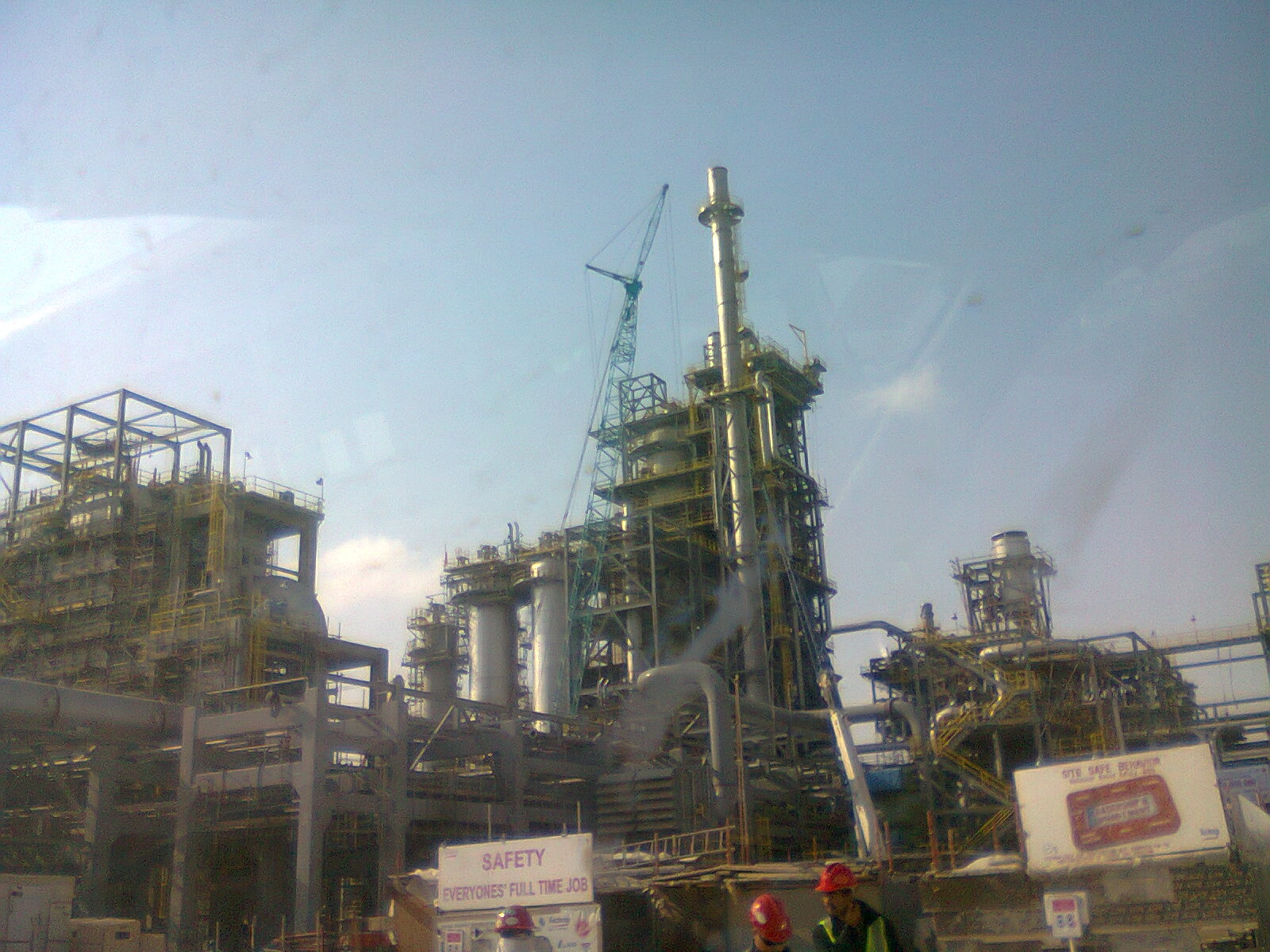
The financial engineering that made June 15 pass without a filing exists because of a physical reality at Jubail that no legal accommodation can change: all twenty-six of Sadara’s manufacturing units have been offline since late March 2026, shut down when the company determined it could no longer secure naphtha feedstock shipments through the Strait of Hormuz. In the eleven weeks since, no production has resumed, no restart date has been announced, and no estimate of war-related losses has been provided to any public body — only the template language about contingency on “domestic and international factors” that has become the standard disclosure formula for Saudi industrial companies whose operations have been severed by the Hormuz closure.
Even the confirmation of the Iran deal framework on June 14 — with formal electronic signing now set for June 19 in Switzerland — does not resolve the production timeline, because the IRGC’s June 11 universal closure order remains in force and the Hormuz reopening schedule is disputed between the U.S. and Iranian readings of the MOU. Restarting a petrochemical complex of Sadara’s scale is not a matter of reopening valves; it requires weeks to months of feedstock procurement through maritime channels that do not yet function, safety recertification of equipment that has been idle in extreme heat, and a production ramp-up sequence across twenty-six integrated units that must be brought online in a specific order. Brent crude closed at $80.73 on June 15, down nearly 5% on deal optimism and roughly $28 below Saudi Arabia’s fiscal breakeven — a price environment that would strain the economics of even a fully operational Sadara. The broader shipping freeze — six hundred vessels waiting at Hormuz as of June 15 — illustrates why Hormuz reopening remains a commercial question as much as a diplomatic one.
Jubail’s petrochemical corridor, of which Sadara is the largest single complex, represents approximately 7% of Saudi GDP — a figure that, when it was cited in prospectuses and government planning documents, was meant to demonstrate the success of downstream diversification away from crude exports. Eleven weeks of zero revenue from the flagship facility in that corridor, with no contractual mechanism to recover the loss and no insurance payout process that can begin without triggering the default provisions the current accommodation is designed to prevent, is the physical cost that the financial silence was built to keep off the public record.
The Fitterling Bridge
On April 23, 2026 — fifty-three days before the deadline — Dow CEO Jim Fitterling used his Q1 earnings call to construct the narrative scaffolding that would carry the company past June 15 without a headline. He told analysts that Sadara’s situation was “not really an operating problem; it is more of a leverage issue and a balance sheet issue” — a characterization that, applied to a twenty-six-unit complex sitting idle with zero revenue in a war zone, required considerable rhetorical discipline — and promised to “provide more of an update midyear when they come back for earnings,” a phrase that explicitly directed the market to expect nothing before the Q2 report in late July.
It’s not really an operating problem; it is more of a leverage issue and a balance sheet issue.
Jim Fitterling, CEO, Dow Inc., Q1 2026 earnings call, April 23, 2026
The “midyear update” framing was not an offhand remark from a CEO managing a long call; it was a regulatory bridge. By anchoring investor expectations to Q2 earnings, Fitterling created a six-week post-deadline window during which no new filing obligation would arise under normal reporting cadence. The Q1 10-Q had absorbed the $292 million adjustment; the Q2 10-Q would not be due until August. Between late April and late July, there was no scheduled reporting event that would compel Dow to characterize what happened — or did not happen — on June 15, and no analyst on the April 23 call pressed for specifics about the deadline. The market, told to wait, waited.
Fitterling also framed the annual cost: “approximately $400 million” in estimated full-year 2026 Sadara financial impact, a number large enough to register at the segment level but presented as a known quantity rather than an escalating crisis. By putting a figure on the damage before the deadline arrived, he ensured that whatever accommodation materialized on June 15 would be read by the market as part of a trajectory that had already been priced in — a managed decline rather than a sudden event, which is precisely the classification that keeps the situation below the 8-K materiality threshold. Fitterling also told analysts he would “continue to finish up negotiations with Saudi Aramco on the restructuring of Sadara” — language that recast the June 15 binary (default or not) as one data point in an ongoing process with no fixed endpoint.
Why Did SABIC File When Sadara Did Not?
SABIC is a listed company on Tadawul with direct disclosure obligations under Saudi CMA listing rules; Sadara is an unlisted joint venture with none. The listed guarantors — Aramco on Tadawul, Dow on the NYSE — each concluded separately that the June 15 deadline did not constitute a material event requiring disclosure under their own exchange rules, meaning the only formal Saudi regulatory acknowledgment of war-related petrochemical damage at Jubail came from a company legally distinct from the $3.7 billion guarantee.
On April 8, 2026, SABIC — 70% owned by Aramco — filed a Tadawul regulatory disclosure that became the first formal, legally binding acknowledgment by any listed Saudi company that its operations had been materially impaired by the war. The disclosure warned of “material impact to 2026 financial results” without specifying a number, and its core language was identical, word for word, to the phrasing Sadara had used in its own late-March shutdown announcement.
Cannot provide, at the present time, an estimate for the return to production, as this is contingent on domestic and international factors.
Sadara Chemical Company shutdown filing, March 31, 2026 — identical language used in SABIC Tadawul disclosure, April 8, 2026
The identical phrasing across two companies — one listed, one not, both majority-owned by Aramco — strongly suggests a template agreed with the Saudi CMA: a standardized formulation that satisfies the regulatory requirement to disclose material developments while offering no forward-looking guidance that could be held against the filer in subsequent quarters. The template was available to Aramco for its own Sadara-related disclosure; the company chose not to use it. Dow took a different approach through the Q1 accounting adjustment. The result is a disclosure record in which investors know that SABIC’s petrochemical operations are materially impaired — because SABIC said so — but do not know, from any official source, what happened when $3.7 billion in guarantees came due at the company next door.
| Date | Entity | Document | Sadara June 15 Reference |
|---|---|---|---|
| March 31, 2026 | Sadara | Shutdown announcement | None — cited “uncertainty over maritime access” |
| April 8, 2026 | SABIC | Tadawul regulatory disclosure | N/A — template war-damage language for own operations |
| April 23, 2026 | Dow Inc. | Q1 2026 10-Q and earnings call | $292M adjustment disclosed — June 15 not named as event |
| May 10, 2026 | Saudi Aramco | Q1 2026 interim report (72 pages) | No mention of deadline, guarantee, or Sadara debt |
| June 15, 2026 | All parties | — | No filing from any party |
Who Absorbs the Price of Silence?
The accommodation that allowed June 15 to pass without a filing was not free — standstill and forbearance agreements in project-finance restructurings of this scale invariably carry terms that benefit the lenders in exchange for their patience — and the cost falls disproportionately on the guarantor with the larger exposure and the weaker fiscal position. Aramco’s $2.405 billion guarantee sits on the books of a company whose Q1 free cash flow no longer covers its dividend, whose sovereign parent is running the largest quarterly deficit in Saudi history (SAR 125.7 billion, or $33.5 billion — 76% of Goldman Sachs’s full-year forecast consumed in one quarter), and whose cash at the sovereign wealth fund has fallen to approximately $15 billion, a six-year low. Every accommodation that avoids a headline in one quarter creates a liability that will compound in the next.
The specific terms of the forbearance — whether it takes the form of an extended grace period, a covenant holiday, additional guarantee commitments, or some hybrid — have not been disclosed and, under the current architecture, do not need to be until at least late July. The banks will accept those terms because acceleration gives them nothing — you cannot foreclose on a plant that produces nothing beside a strait that admits nothing — but they will demand harder terms the next time, and in a facility that does not mature until 2038, there will be a next time.
What the silence forecloses may matter more than what it costs in the current quarter. Aramco cannot credibly raise new project-finance debt for Jubail expansion — or for any downstream petrochemical venture — while a multi-billion-dollar silent accommodation sits unresolved, known to the syndicate and the regulators but not to the market. Dow, carrying a negative $895 million investment balance and cumulative equity losses of $1.4 billion, has no capacity or incentive to reinvest in a venture whose financial trajectory was deteriorating long before the war made it worse. The twenty-five banks, having agreed once to forbear, have established a precedent that will shape every subsequent negotiation — and in a structure where the underlying asset has been dark for eleven weeks, the precedent favors perpetual deferral over resolution, because there is nothing to resolve until Jubail produces again.
The silence bought on June 15 was not a resolution but a deferral, and the carrying cost of that deferral will grow in every quarter that the twenty-six units remain idle. Fitterling will deliver his “midyear update” in late July, and the language will be carefully calibrated to absorb June 15 into the ongoing narrative of a restructuring in progress rather than a deadline that came and went with nothing filed. Aramco will publish its Q2 interim results around the same time, and the question will be whether seventy-two pages of silence can hold for a second consecutive quarter now that the grace period it was designed to outlast has formally expired. The accommodation was engineered to be invisible, but its weight — $3.7 billion in guarantees on a plant that earns nothing, backstopped by a sovereign that is spending faster than it earns — will press through the structure whether anyone files a document or not.
Frequently Asked Questions
What was the original structure of Sadara’s project financing?
Sadara’s original 2013-2014 financing was a $12.5 billion syndicated facility — at the time one of the largest project-finance transactions in global history — comprising commercial bank tranches, Islamic finance tranches, a $2 billion sukuk, and export credit agency facilities from Japan’s JBIC and Italy’s SACE. Milbank LLP represented all lender classes in both the original financing and the March 2021 restructuring, describing the original deal as “redefining the possible” in project finance. The 2021 restructuring replaced $10 billion in shareholder “completion guarantees” — released when Sadara achieved project completion in November 2020 — with the current $3.7 billion senior debt guarantees, extended maturity from 2029 to 2038, and granted the five-year principal repayment grace period that expired on June 15.
Was Sadara in financial distress before the Hormuz shutdown?
Sadara’s accumulated losses exceeded 100% of share capital by the end of 2025 — a statutory threshold that, under Saudi Companies Law, triggers a mandatory extraordinary general assembly to vote on whether to continue operations, dissolve, or restructure. This marker was reached before the war-related shutdown began. The company posted a net loss of $1.54 billion (SR 5.793 billion) for fiscal year 2025, with revenue falling approximately 15% year-over-year to $2.63 billion, and had recorded net losses in four of its five most recent fiscal years. The $3.7 billion debt clock, in other words, was ticking toward a company that was already in structural financial decline before a single Jubail unit went dark.
Could Sadara restart operations even if Hormuz reopened immediately?
Even a Hormuz reopening does not resolve the restart. Feedstock procurement, safety recertification of equipment idle in extreme heat, and a phased ramp-up across twenty-six chemically sequenced units each require weeks to months that a reopened strait alone cannot compress. The more acute complication is legal: insurance claims for the shutdown period must navigate “no-default” warranty clauses that the current forbearance agreement is specifically designed to preserve — filing a claim that references the debt situation could void the coverage the claim seeks to activate. And the economics predate the war: at pre-shutdown production levels, Sadara posted a $1.54 billion loss on $2.63 billion in revenue in FY2025, meaning the business model was generating losses before the closure made operations impossible.
What are Dow’s remaining financial obligations to Sadara beyond the current guarantee?
Dow’s forward annual cash obligation related to Sadara — covering guarantee servicing and interest — is approximately $100 million per year through 2038, the restructured maturity date, representing twelve more years of payments on a venture that has produced losses in four of five fiscal years. The Q1 2026 equity-method loss specifically attributable to Sadara operations was $115 million, separate from and in addition to the $292 million guarantee liability adjustment. With equity-loss recognition now suspended at the $1.4 billion cumulative threshold, Dow’s income statement is technically insulated from further Sadara deterioration, but the balance sheet is not: the negative $895 million investment balance will remain as a noncurrent obligation until the guarantee is either resolved, restructured, or called.
The grace period expired on June 15 with no public announcement from either sponsor or the syndicate, a pattern documented in The Deadline Arrived — the Lenders Did Not. The market’s subsequent reading of that silence — Dow’s 39% year-to-date rally and analyst calls of “tail risk removed” — traces how the forbearance architecture converts an unresolved $3.7 billion guarantee into a perception of containment.