DHAHRAN — Saudi Arabia is the only party to the Islamabad Declaration whose return on endorsement is negative. Brent crude fell to $80.14 per barrel on June 15, according to TradingEconomics — its lowest level since March and roughly $28 to $31 below the kingdom’s war-adjusted fiscal breakeven of $108–111 per barrel (Goldman Sachs). The decline was driven by deal optimism that Saudi Arabia’s own endorsement helped generate.
Every other named participant secured a material transfer. Iran retains its Hormuz fee mechanism and stands to receive between $12 billion and $24 billion in frozen asset releases. Qatar consolidated its intermediary position. Pakistan entrenched 13,000 troops in the Saudi Eastern Province. The United States secured a named diplomatic win. Saudi Arabia — which endorsed the MOU’s “final stage” on June 13 through a phone call between Foreign Minister Prince Faisal bin Farhan and Pakistani Foreign Minister Ishaq Dar — holds no seat in any of the three active mediation tracks and received no direct communiqué from any signatory.
Below: the fiscal cost of the endorsement, the material benefits flowing to every other party, and why the structural damage extends past the signing ceremony scheduled for June 19 in Switzerland.
Contents
- What Did Saudi Arabia Receive from the Islamabad Declaration?
- The Arithmetic of Endorsement at Eighty Dollars
- How Does Every Other Endorser Benefit?
- Why Did the PGSA Fee Survive the MOU’s Toll Prohibition?
- Aramco’s Dividend Now Exceeds Its Cash Flow
- Does the MOU Restore Saudi Arabia’s Lost Production?
- Can Hormuz Reopen Without a Permanent Risk Premium?
- Frequently Asked Questions
What Did Saudi Arabia Receive from the Islamabad Declaration?
Saudi Arabia received no frozen asset release, no Hormuz fee exemption, no seat in any of the three active mediation tracks, and no direct communication from any signatory. Its endorsement — delivered on June 13 through a phone call between Prince Faisal and Pakistani Foreign Minister Ishaq Dar — contributed to deal optimism that compressed Brent crude by more than five percent within forty-eight hours.
The Faisal-Dar call ended twenty-six days of Saudi MOFA silence on the Iran framework. The ministry’s last direct public statement on MOU substance was May 20, at the EU Foreign Affairs Council’s Gymnich meeting — six days before OFAC sanctioned Iran’s Persian Gulf Strait Authority, three weeks before Iran’s Majlis Speaker was named signatory, and twenty-four days before the MOU text leaked via IRNA. During that silence, the Trump administration named Saudi Arabia among twelve “approvers” of the Islamabad Declaration. What approval entailed was never specified.
Riyadh issued no SPA communiqué. Only Arab News, citing unnamed sources, relayed the endorsement through Islamabad’s readout. Prince Faisal was excluded from all five rounds of direct US-Iran MOU negotiations, which spanned 106 days across three mediation tracks — the US-Pakistan back-channel, the Qatar shuttle, and the Oman bilateral. None included Saudi participation.
The Middle East briefing 3,000+ readers start their day with.
One email. Every weekday morning. Free.
Thirty-one days before the endorsement, the US-Saudi 123 Agreement (May 13) authorized Saudi enrichment without an IAEA Additional Protocol — omitting all three Gold Standard pillars the UAE’s 2009 deal includes. The MOU that Saudi Arabia then endorsed contains zero nuclear terms in Phase 1 and defers all enrichment constraints to a sixty-day Phase 2 negotiation. The Arms Control Association warned in February 2026 that an enrichment-permissive Saudi agreement would structurally undermine any framework to constrain Iran’s nuclear program. Sharon Squassoni of George Washington University described the 123 Agreement as a “gilded sweetheart deal” (Arms Control Association, June 2026). Saudi Arabia endorsed both agreements within thirty-one days.
Hours after the Faisal-Dar call, Iranian MOFA spokesman Esmaeil Baghaei confirmed the June 14 signing would not proceed, citing American “hesitation.” The endorsement did not alter the deal’s trajectory. Its only measurable transmission was the market signal that Hormuz’s reopening was imminent — a signal Brent priced in before any ship transited.
The Arithmetic of Endorsement at Eighty Dollars
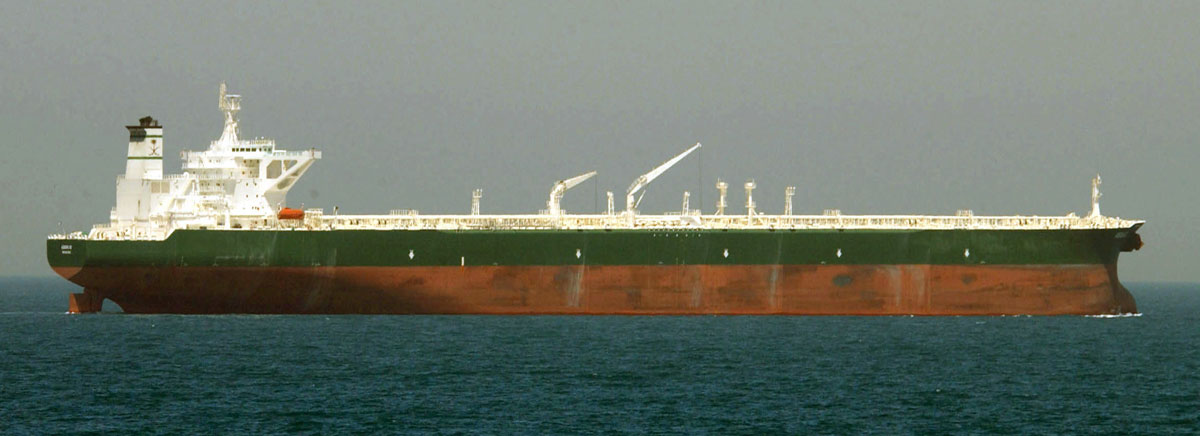
Saudi Arabia’s war-adjusted fiscal breakeven oil price is $108–111 per barrel, according to Goldman Sachs estimates that incorporate PIF transfer obligations and elevated defence spending. The IMF’s standalone figure is $96. At $80.14, the gap is $16 to $31 per barrel depending on the baseline. Neither number is academic. The kingdom’s Q1 2026 budget deficit was SAR 125.7 billion ($33.5 billion) — the largest quarterly shortfall on record — consuming 76 percent of the government’s full-year target of SAR 165 billion in ninety days (Saudi Ministry of Finance, reported by Gulf News).
Goldman Sachs has revised its full-year 2026 deficit projection to SAR 300–330 billion ($80–90 billion), roughly double the official forecast. The entire Q1 shortfall was financed through borrowing: public debt rose from SAR 1.52 trillion at the start of the year to SAR 1.67 trillion by the end of March.
Defence spending reached SAR 64.7 billion in Q1, a 26 percent year-on-year increase. Subsidy outlays surged 170 percent — the fiscal expression of insulating Saudi households from conflict-driven inflation on fuel, electricity, and water. Neither category is discretionary at current threat levels. Both are absent from the MOU’s terms.
At current production of approximately 7.76 million barrels per day and Brent at $80, Saudi Arabia generates roughly $621 million in daily oil export revenue. The pre-conflict baseline — 10.291 million barrels per day at approximately $109 per barrel — produced roughly $1.12 billion per day. The daily revenue gap is approximately $500 million, or $15 billion per month. That figure derives from publicly sourced production and price data — it is not an official Saudi disclosure.
The 2026 budget was designed for a different world. It assumed oil revenue would grow 5.1 percent over 2025, according to AGSI’s analysis of the Saudi fiscal framework. That forecast predated the Hormuz closure, the PGSA, the production collapse, and the MOU. Oil constitutes approximately 62 percent of Saudi government revenue (IMF). Non-oil receipts rose 2 percent year-on-year in Q1 to SAR 116.25 billion — nowhere close to compensating for the oil shortfall.
The revenue trajectory the budget assumed no longer exists. The expenditure commitments it authorized do.
What Each Party Receives from the Islamabad Declaration
| Party | Material Benefit from MOU | Source |
|---|---|---|
| Iran | $12–24B frozen asset releases; PGSA fee mechanism retained; 440.9kg HEU stays in Iran during 60-day Phase 2; enrichment maintained | Business Standard; WION; IRNA |
| Qatar | Intermediary positioning; $6B credit line leverage over Tehran; flew mediators when June 14 signing collapsed | Iran International; Israel Hayom |
| Pakistan | 13,000 troops in Saudi Eastern Province under SMDA; dual-letter diplomatic architecture; $5B Saudi-Qatari financial support | Outlook India; SMDA (Sep 17 2025) |
| United States | Named diplomatic achievement; Hormuz reopening announcement; VP Vance designated signatory | CNN; White House / Truth Social |
| Saudi Arabia | Named among 12 “approvers” without seat; no asset release; no PGSA exemption; Brent fell from ~$85 to $80.14 on deal optimism | TradingEconomics; Arab News |
The price decline from approximately $85 to $80.14 between June 13 and June 15 — a period that encompasses Saudi Arabia’s endorsement and Iran’s cancellation of the original Sunday signing — reduced daily Saudi revenue by roughly $38 million at 7.76 million barrels. Over a quarter, that differential compounds to approximately $3.4 billion in lost revenue against what the kingdom would have earned at the June 12 price.
How Does Every Other Endorser Benefit?
Every named party to the Islamabad Declaration except Saudi Arabia secured a concrete return. Iran gets $12–24 billion in frozen asset releases and retained Hormuz fees. Qatar gets intermediary leverage and a $6 billion credit line over Tehran. Pakistan entrenches 13,000 troops in the Eastern Province. The United States books a diplomatic achievement. Saudi Arabia gets a lower Brent price.
Iran
Foreign Minister Abbas Araghchi told Iranian state television on June 13 that Iran “won the war” and that the United States was “ready to unlock $24 billion in blocked funds” (WION). Washington has not confirmed the figure. Business Standard reported on June 15 that the US is prepared to release $12 billion — half of Iran’s claim. Even the lower amount represents a net gain Saudi Arabia does not share.
The MOU’s fourteen-point draft, published by Mehr News Agency, stipulates that Iran “undertakes no new nuclear commitments” and retains enrichment rights during the sixty-day Phase 2 window. Iran’s 440.9 kilograms of highly enriched uranium at 60 percent — enough for an estimated nine weapons within three weeks, per the Institute for Science and International Security — remain inside the country. IAEA inspectors have been unable to verify the stockpile for ninety-seven days. The IAEA Board voted 21–10–3 on a non-compliance resolution June 12, the first such vote in twenty years.
Iranian Deputy Foreign Minister Kazem Gharibabadi told Mehr News Agency on June 15 that Phase 2 nuclear talks depend on Washington “coming through on its commitments, including ending hostilities, lifting the blockade, and releasing frozen assets.” The preconditions are sequential. Iran secured its gains in Phase 1. The obligations fall on the counterparty in Phase 2.
Qatar
Qatar finalized a $6 billion credit line to Iran during a late-May delegation that included Parliament Speaker Mohammad Bagher Ghalibaf, Araghchi, and the governor of Iran’s Central Bank (Iran International, May 25–29). Tehran demanded $12 billion in unrestricted cash. Doha offered half, structured as credit for civilian goods purchased through Qatari suppliers (Israel Hayom, May 31) — maintaining financial leverage while positioning Qatar as the intermediary between Tehran and the frozen-assets pipeline.
When Iran canceled the June 14 signing, Qatar — not Saudi Arabia — flew mediators to Tehran. Qatar’s shuttle diplomacy is one of three active mediation tracks. Saudi Arabia holds a seat in none of them. The same exclusion applies to the Doha sessions now finalizing MOU implementation terms and the G7 Evian Arab-leader session: Saudi Arabia is absent from every track finalizing the deal it approved.
Pakistan
Pakistan deployed those 13,000 ground troops alongside at least sixteen JF-17 fighter jets to King Abdulaziz Air Base in the Saudi Eastern Province on April 11, 2026, under the Strategic Mutual Defence Agreement signed September 17, 2025 (Outlook India). The deployment represents the first formal invocation of the SMDA — a pact whose confidential terms provide for up to 80,000 Pakistani troops on Saudi soil.
Pakistan’s dual-letter diplomatic architecture — Prime Minister Sharif’s civilian letter and Army Chief Munir’s military letter, both delivered to Khamenei on June 7 via envoy Naqvi — positions Islamabad as the only state with simultaneous access to Iran’s supreme leader and Saudi Arabia’s eastern military infrastructure. Saudi Finance Minister Mohammed al-Jadaan confirmed $5 billion in Saudi-Qatari financial support for Pakistan, covering $4.8 billion in external obligations Islamabad cannot meet independently.
Pakistan’s entrenchment is durable in ways the MOU is not. The SMDA has no publicly known expiration clause. The troops deployed under it are not conditioned on the deal’s success or failure. Whether the Islamabad Declaration holds or collapses, Pakistan’s military presence in the Eastern Province — and the financial obligations Saudi Arabia assumed to secure it — persist.
United States
President Trump posted on Truth Social on June 14 that the deal was “now complete” and authorized the immediate removal of the US naval blockade against Iranian ports. Vice President Vance was named signatory — the first sitting US vice president designated to sign a bilateral security framework with Iran. Four USAF C-17 Globemasters deployed to Europe on Thursday in advance of the Switzerland ceremony (Bloomberg). Washington holds a seat in Phase 2 negotiations. Saudi Arabia does not.
The diplomatic asymmetry is structural, not incidental. All three mediation tracks were established without Saudi input and will continue without it. Phase 2’s nuclear negotiation involves the United States, Iran, and the mediating parties. The kingdom that endorsed the deal is absent from the process that determines whether it holds. How that exclusion translates into a direct structural risk for Saudi Arabia’s 123 Agreement is analyzed in The Enrichment Ceiling Will Be Set Without Riyadh in the Room.
Why Did the PGSA Fee Survive the MOU’s Toll Prohibition?
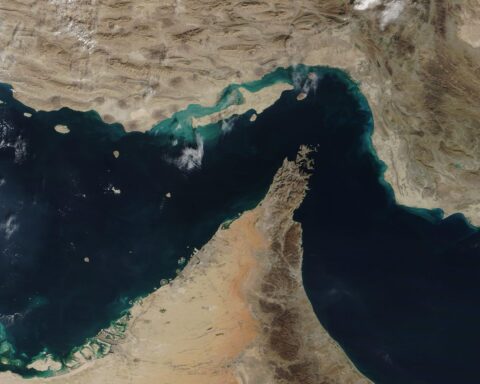
The MOU prohibits “tolls” on Strait of Hormuz transit. Iran charges “service fees.” The distinction survived because Iran’s Majlis codified the fee mechanism in domestic law on March 30–31, 2026 — weeks before the MOU draft existed — and the agreement’s language does not address charges framed as compensation for navigational services.
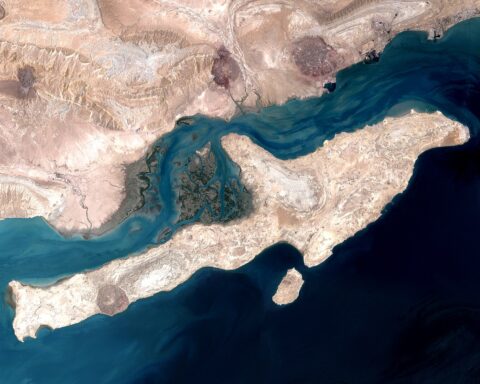
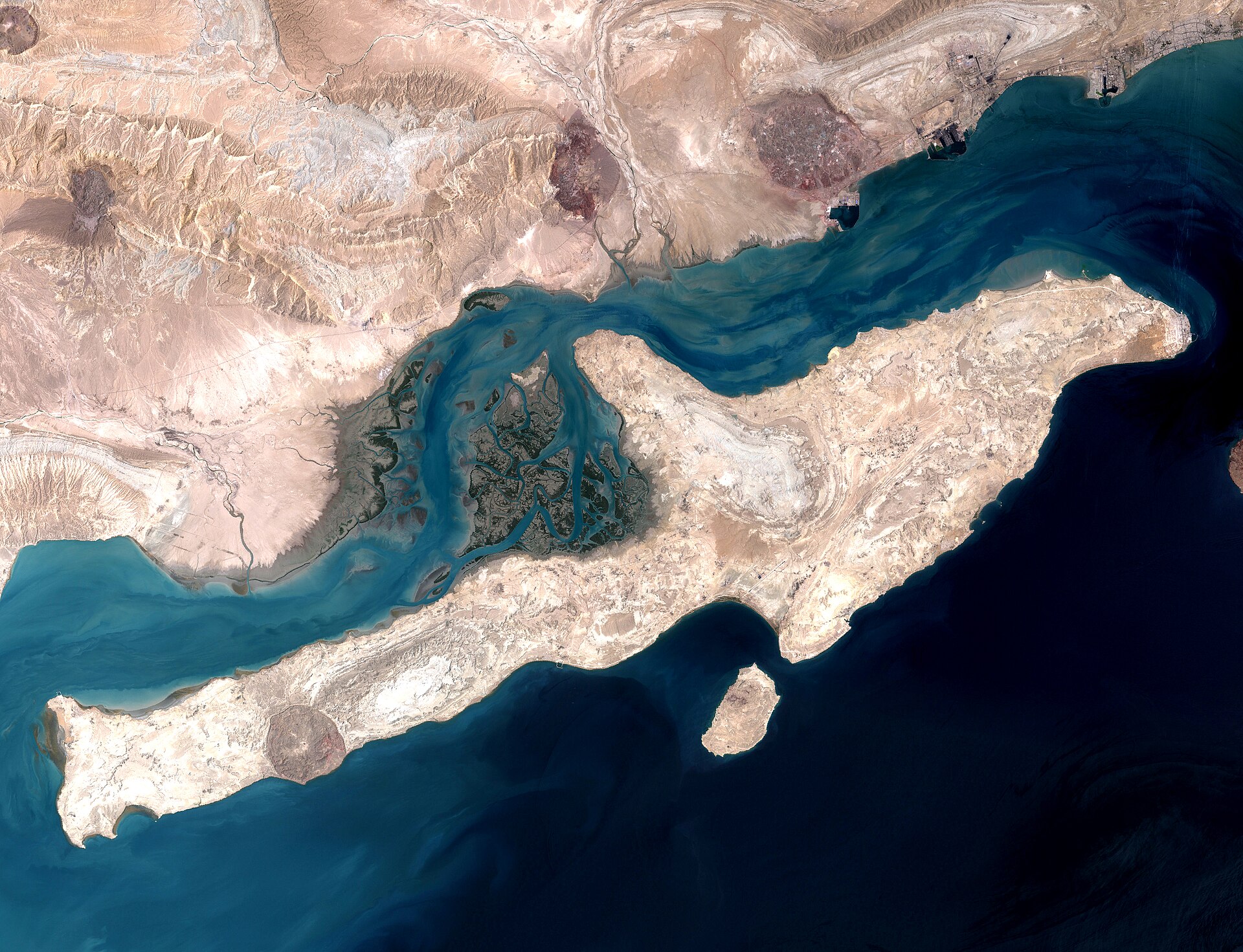
The Persian Gulf Strait Authority was formally established on May 5, 2026. It charges approximately $1 per barrel of cargo, or roughly $2 million per laden VLCC transiting the 5-nautical-mile corridor between Qeshm and Larak islands (Iran International; Windward.ai). OFAC sanctioned the PGSA on May 27. It continued operating. Payment is accepted in Chinese yuan routed through Kunlun Bank and CIPS, or in Bitcoin and stablecoins — channels designed to survive US secondary sanctions.
Iran told Euronews on May 25 that ships are charged “for navigational services” — not tolls. Araghchi stated on June 14 that Iran would continue to charge for “services rendered.” UNCLOS Article 26(2) permits charges for “specific services rendered to the ship” — the legal framework Iran is exploiting. No tribunal has adjudicated the distinction in the context of the Hormuz strait.
The fee structure is not applied neutrally. Russia, China, India, Iraq, and Pakistan are exempt from PGSA charges. Saudi Arabia is not. At approximately 5.5 million barrels per day of pre-conflict Hormuz transit volume, Saudi Arabia faces an annual PGSA liability of roughly $2 billion — an amount Iran collects from the same strait Saudi Arabia needs open. Windward.ai has advised shipping firms to “treat any payment to Iranian-linked entities as a sanctions-screening trigger, including indirect payments through brokers, agents or charterers.”
Iran and Oman have been conducting bilateral discussions on joint management of the strait since at least May 21, 2026 (Bloomberg). The co-administration framework gives the PGSA regional legitimacy that a unilateral Iranian mechanism would lack — and positions Oman, not Saudi Arabia, as Iran’s partner in governing the waterway on which Saudi oil exports depend. The PGSA predated the MOU. It will survive it.
Aramco’s Dividend Now Exceeds Its Cash Flow
Aramco reported Q1 2026 free cash flow of $18.6 billion against a declared base dividend of $21.89 billion — a coverage ratio of 0.85x, the first time it has fallen below 1.0 since the pandemic borrowing of 2020–2021 (Aramco Q1 2026 interim report). A $15.8 billion working capital build, driven by the Hormuz closure disrupting tanker scheduling and stranding inventory, compressed the figure that otherwise would have reflected $33.6 billion in adjusted net income.
Aramco’s Q1 revenue growth — net income rose 26 percent year-on-year — was driven by realized prices above $100 during the quarter, when Hormuz closure fears elevated Brent. At $80 Brent, Q2 earnings will compress substantially. The working capital build will partially reverse as inventory normalizes, but the underlying price-to-dividend math worsens with every dollar Brent declines.
Aramco is drawing down reserves to maintain its base payout. The performance-linked dividend component — which reached $10.16 billion per quarter in 2023 — has already been suspended. At current Brent levels, Aramco faces a choice between cutting the base dividend (which has never happened since the 2019 IPO), increasing borrowing, or accepting further cash depletion.
The sovereign wealth fund that depends on Aramco’s payouts is also strained. PIF cash reserves fell to approximately $15 billion — a six-year low — against an estimated $16 billion in NEOM exit liabilities. PIF issued a $7 billion bond in May 2026, its largest ever. Sadara Chemical Company’s $3.7 billion in guaranteed senior debt — Aramco holds 65 percent ($2.405 billion), Dow the remaining 35 percent ($1.295 billion) — reached its grace period expiration on June 15. The same day Brent hit its post-war low.
The fiscal chain is direct: lower Brent reduces Aramco revenue, which compresses free cash flow, which strains the dividend, which limits PIF distributions, which constrains Vision 2030 capital deployment. At $80 per barrel, every link is under tension. The MOU that was supposed to alleviate the Hormuz disruption — and eventually restore Saudi production volumes — transmitted its market effect before it delivered any operational benefit. Brent priced in the reopening. Hormuz has not reopened.
Does the MOU Restore Saudi Arabia’s Lost Production?
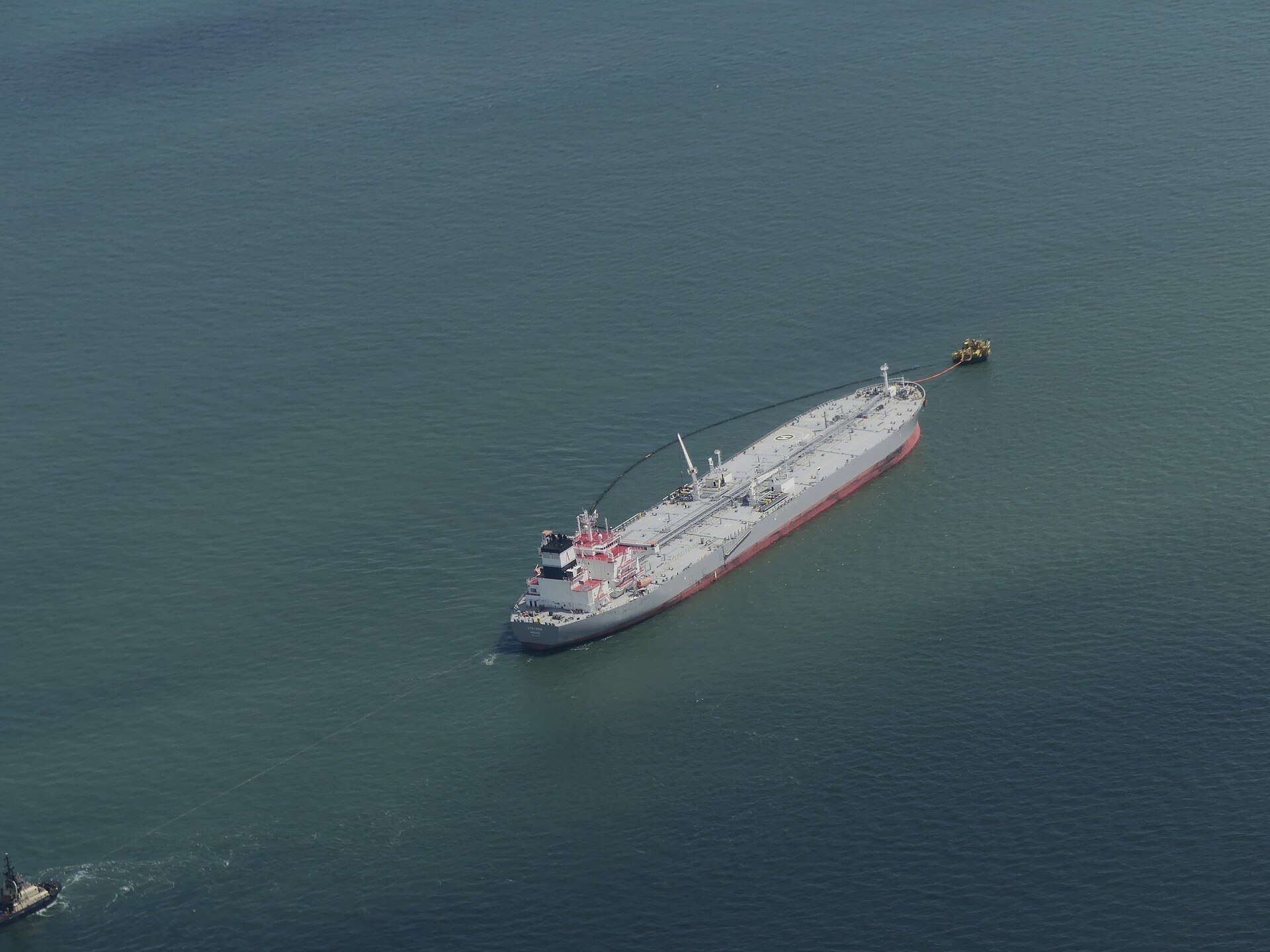
Not in the near term. Saudi Arabia’s OPEC+ quota stands at 10.291 million barrels per day against actual production of approximately 7.76 million — a gap of roughly 2.53 million barrels per day attributable to Hormuz disruption. The EIA’s June Short-Term Energy Outlook assumes Hormuz flows resume in Q3 2026 but warns normalization will not occur until early 2027. Global demand is simultaneously declining.
The kingdom’s East-West pipeline, connecting the Eastern Province to Yanbu on the Red Sea, operates at a maximum capacity of approximately 5 million barrels per day — a ceiling reached in late March (Bloomberg). That pipeline is the only alternative to Hormuz for Saudi crude heading to Asian markets. It cannot replace the lost volume. Saudi oil exports to Asia fell approximately 38.6 percent in Q1, according to Kpler data cited by AGSI.
OPEC+ has approved four consecutive monthly production increases of 188,000 barrels per day each since March, adding roughly 752,000 barrels per day to the group’s total quota. The arithmetic is paradoxical: Saudi Arabia votes to raise quotas it cannot fill. Every hike adds zero Saudi barrels to the market while contributing to the price-suppressive signal that traders interpret as future supply growth. The gap between Saudi Arabia’s quota and its actual output is now wider than the entire production of Libya.
AGSI projects Q2 2026 Saudi oil GDP will contract 19 to 25 percent quarter-on-quarter, with the Hormuz closure as the primary driver. The MOU commits to reopening the strait within thirty days of signing — but signing requires both parties, and as of June 15, Iran had not confirmed participation in the June 19 ceremony.
The EIA’s Brent forecast of $105 per barrel for June–July assumed the strait would remain closed. At current prices, the market has already front-run the reopening before a single ship has transited. The price upside from actual reopening is now limited. The demand-side outlook reinforces this: the EIA forecasts global oil demand in 2026 will fall 1.1 million barrels per day compared with 2025, a structural headwind that constrains price recovery even if Hormuz reopens on schedule. The EIA projects a 2.5 million barrel per day demand rebound in 2027 — but only at an average Brent price of $79 per barrel, well below every Saudi breakeven estimate.
Can Hormuz Reopen Without a Permanent Risk Premium?
The structural risk to Saudi Arabia as a stable energy exporter does not revert to pre-war levels when Hormuz reopens. War risk insurance premiums surged 340 percent during the conflict, according to BIMCO data. Iran’s PGSA fee mechanism — codified in domestic law and unaffected by the MOU’s toll prohibition — imposes a permanent extraction cost on Saudi transit that did not exist before March 2026.
Chatham House concluded in May 2026 that “now that Hormuz has been closed once, there will always be the risk it could happen again, posing a long-term threat to Saudi Arabia’s trade flows and economic transformation plans, with repeated or prolonged disruption weighing on revenues, investor confidence, and the kingdom’s ability to present itself as a stable hub.”
BIMCO’s CONWARTIME clause — which permits charterers to reroute or cancel voyages through war-risk zones — was activated across the Persian Gulf for the first time since the Iran-Iraq tanker war of the 1980s. These premiums do not reset to zero when a ceasefire takes effect. They decline gradually, over months or years, as underwriters accumulate loss-free transit data. For Saudi Arabia, that means elevated shipping costs on exports even after Hormuz reopens — a cost levied not by Iran’s PGSA but by the reinsurance market in London.
The PGSA compounds the insurance premium. It was established before the ceasefire, codified before the MOU, and structured to survive the toll prohibition. Saudi Arabia’s post-deal Hormuz transit cost includes both the war risk premium the conflict created and the service fee the deal preserved. Neither has a sunset clause.
The kingdom’s pitch to international investors — the foundation of Vision 2030 — rests on stability, predictability, and a managed transition away from hydrocarbon dependence. A strait that closed once, a fee mechanism that survived a deal, and a breakeven gap of $28 per barrel at current prices erode each of those claims. The investors PIF is courting for NEOM, the Red Sea megaproject, and the entertainment sector do not price risk on MOU language. They price it on precedent.
Frequently Asked Questions
What is the Islamabad Declaration?
The Islamabad Declaration is the informal name for the memorandum of understanding negotiated between the United States and Iran to end the 2026 war. It is named for Pakistan’s mediating role, specifically the April 2026 talks hosted at Islamabad’s Serena Hotel. The MOU establishes a framework for reopening the Strait of Hormuz within thirty days and a sixty-day window for nuclear and sanctions negotiations — it is not itself a nuclear agreement or a final peace treaty. The formal signing is scheduled for June 19, 2026, in Switzerland, with Vice President Vance signing for the US and Parliament Speaker Qalibaf for Iran — the first time a parliament speaker, rather than a foreign minister, has been designated to sign a US-Iran security framework.
Has the IRGC actually reopened the Strait of Hormuz?
As of June 15, 2026, no. The IRGC’s June 11 closure order — issued by Khatam al-Anbiya headquarters, which declared that approaching the strait constituted “cooperation with the enemy” — remains operative despite President Trump’s June 14 announcement that the US naval blockade was “lifted.” Daily Hormuz transits stand at approximately 13 vessels, compared with 153 or more pre-conflict (CSIS). The MOU commits to reopening within thirty days of signing — not on signing day. Until the IRGC independently confirms a stand-down, the closure is the operational reality regardless of what Washington or Islamabad announce. The commercial architecture preventing Hormuz transit — insurance, BIMCO clauses, and IRGC stand-down requirements — explains why six hundred vessels remain stationary as of June 15.
Why does the IMF breakeven differ from Goldman Sachs’ estimate?
The IMF’s fiscal breakeven of $96 per barrel reflects the oil price needed to balance Saudi Arabia’s government budget on a standalone basis, excluding off-budget sovereign obligations. Goldman Sachs’ war-adjusted figure of $108–111 incorporates PIF transfer commitments, elevated defence spending (+26% YoY in Q1), subsidy surges (+170% YoY), and the working capital strain the Hormuz closure imposed on Aramco’s logistics chain. AGSI has challenged the breakeven concept itself, calling it a “poor guide” to Saudi fiscal and oil production policy because it conflates budgetary balance with broader sovereign solvency. The $12–15 per barrel gap between the two estimates roughly measures the additional fiscal burden the war has imposed on the Saudi state.
Can Saudi Arabia bypass the PGSA by rerouting exports through the Red Sea?
Only partially. Rerouting through the East-West pipeline to Yanbu adds 4,000–5,000 nautical miles to deliveries bound for East Asian refineries, increasing voyage time by 10–14 days and per-barrel freight costs by an estimated $1.50–2.50 (Hellenic Shipping News). Red Sea ports also lack the tanker berth capacity for the vessel sizes — VLCCs and ULCCs — that dominate Asian crude trades. At 5.5 million barrels per day of pre-conflict Hormuz transit volume, Saudi Arabia’s bypass shortfall is roughly 500,000 barrels per day that neither the pipeline nor available Red Sea berths can absorb. The Red Sea route substitutes one cost structure for another, while leaving roughly a tenth of the lost volume unplaceable.