BEIRUT — A ceasefire between Israel and Hezbollah took effect at 4 p.m. Beirut time on June 19, nominally removing the condition Iran had cited when it suspended Phase 2 nuclear negotiations earlier the same day. Four Israeli soldiers were dead by the time the truce began — including a tank battalion commander — killed in a Hezbollah ambush that Hezbollah described as a response to Israeli violations. Israeli strikes had killed 47 Lebanese and wounded 97 on June 19, according to Lebanon’s health ministry. The IDF published a map showing no planned withdrawal from its buffer zone in southern Lebanon, a strip approximately 10 km deep reaching the outskirts of Nabatieh.
The ceasefire was brokered by the United States and Qatar, with Iran mediating for the Hezbollah side — a role a Gulf diplomat confirmed to AFP. Hezbollah endorsed Parliament Speaker Nabih Berri to negotiate on its behalf but signed nothing. Lebanon’s government was sidelined from the talks. And Saudi Arabia, which Berri praised alongside Pakistan, Qatar, and Egypt for their role in the broader US-Iran MOU, held no seat at the table where the Lebanon ceasefire was negotiated — the fourth consecutive Phase 2-adjacent format from which Riyadh has been absent.
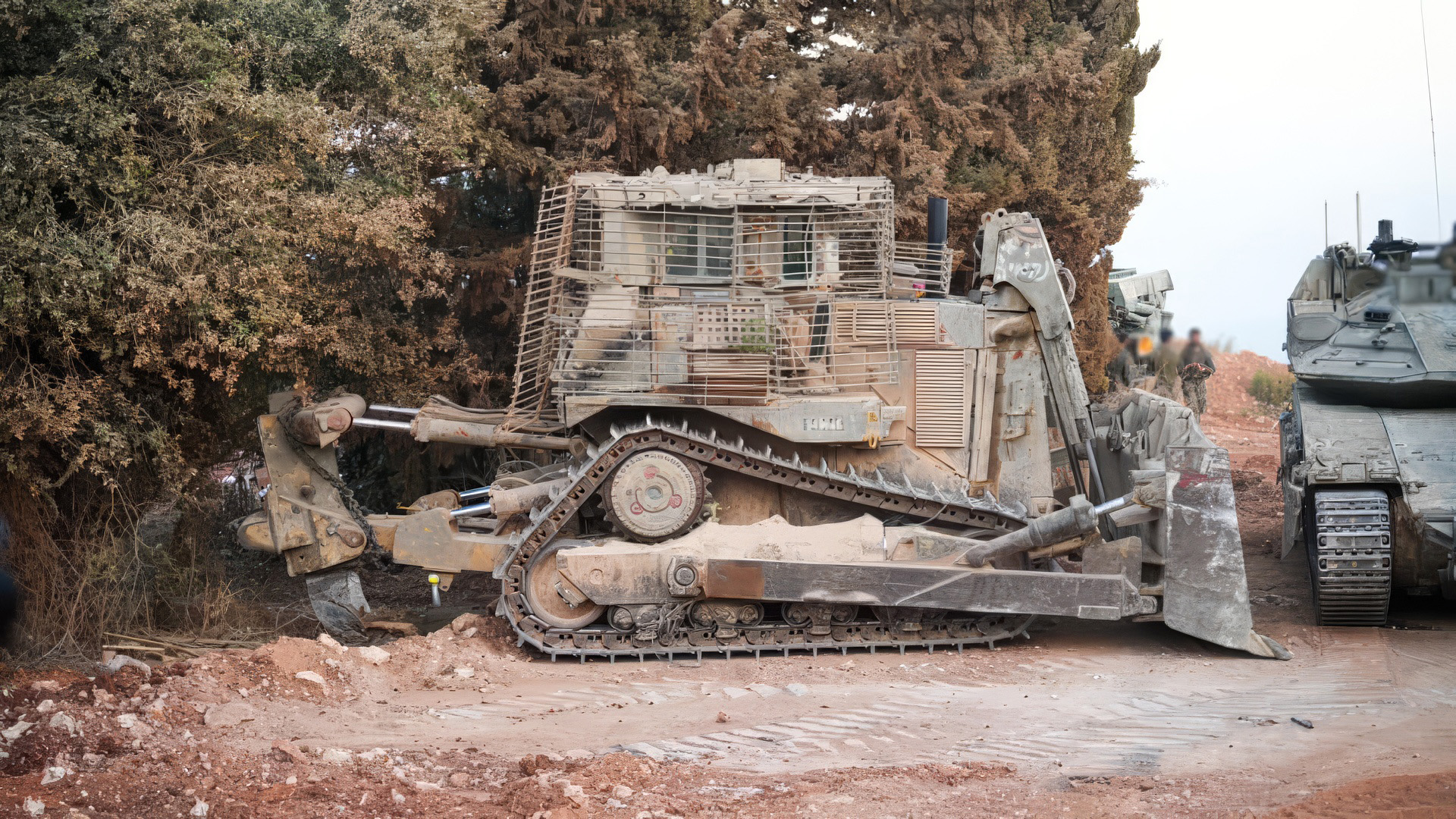
Table of Contents
What Did the Ceasefire Resolve?
Iran’s stated reason for walking out of Phase 2 was Israeli military action in Lebanon. On June 17, Iranian Foreign Minister Abbas Araghchi told CBS News that “any military attack by Israel against Lebanon from this point forward, as well as any continued occupation of Lebanese territory, will be regarded by us as a violation of the memorandum of understanding.” Hours later, Vice President JD Vance canceled the Bürgenstock session where Phase 2 was set to open. The White House cited logistics. Axios reported that Iran’s Lebanon demands were the actual constraint.
The June 19 ceasefire addresses the first half of Araghchi’s formulation. Strikes are to stop. Hezbollah’s rocket and anti-tank operations are to cease. Both sides confirmed the arrangement through intermediaries — the US and Qatar for Israel, Iran for Hezbollah.
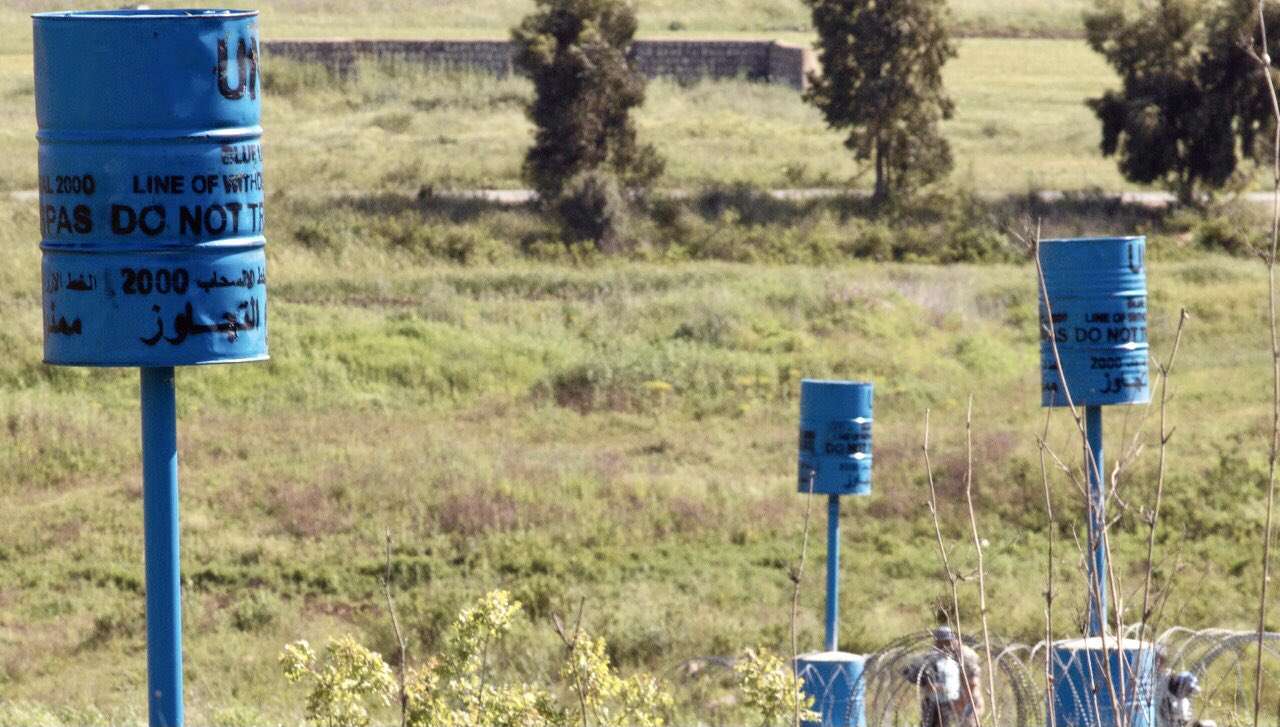
It does not address the second half. The IDF’s buffer zone in southern Lebanon — approximately 10 km deep, garrisoned since the November 2024 ground incursion — remains in place. An Israeli source told Hebrew media that the IDF retains “full freedom of action” within the zone. A map published by the IDF on June 18 showed no withdrawal “at this stage.” Nabatieh, a city of roughly 120,000 before the war displaced most of its population, sits at the buffer zone’s northern edge.
Israeli Prime Minister Benjamin Netanyahu, responding to the four soldiers killed before the ceasefire took hold, said Israel would “exact a very heavy price from Hezbollah.” He reaffirmed that no withdrawal from southern Lebanon was planned.
The Middle East briefing 3,000+ readers start their day with.
One email. Every weekday morning. Free.
The Buffer Zone Iran Defined as a Violation
Araghchi’s June 17 statement established a two-part test for MOU compliance on the Lebanon question. The first condition — cessation of Israeli strikes — is at least nominally met by the ceasefire, though the death toll on the truce’s opening day strains the claim. The second — “continued occupation of Lebanese territory” — describes the IDF’s current posture in southern Lebanon, a posture neither Israel nor the United States has committed to changing.
The buffer zone is not a temporary deployment awaiting withdrawal orders. The IDF map published June 18 delineates a strip running from the Blue Line north to the outskirts of Nabatieh. An Israeli official confirmed to Ynet that the zone would remain in place indefinitely. No timeline for drawdown has been announced by Israel, the United States, or any mediating party.
Washington and Tehran disagree on whether the MOU requires an Israeli withdrawal at all. A US official told CBS News that the memorandum “did not call for an Israeli withdrawal.” Two regional officials told the same outlet that the deal does require Israeli withdrawal from “nearly all” Lebanese territory, “minus a few hilltop points.” The sixty days allotted for Phase 2 negotiations must reconcile these readings. No framework for doing so has been proposed.
“Any military attack by Israel against Lebanon from this point forward, as well as any continued occupation of Lebanese territory, will be regarded by us as a violation of the memorandum of understanding.” — Abbas Araghchi, Iranian Foreign Minister, June 17, 2026
Can Phase 2 Survive the Fourth Ceasefire?
Will Todman and Mona Yacoubian of CSIS’s Middle East Program wrote on June 15 that “the Lebanon front holds the greatest potential to derail the deal.” Their analysis, published four days before the ceasefire, outlined the structural problem now in view: Iran claims the MOU includes a requirement for Lebanon cessation, the Israeli prime minister has publicly disputed this interpretation, and the United States has not confirmed the text includes such a provision.
The ceasefire’s fragility was visible on its first day. Hezbollah framed the killing of four IDF soldiers — carried out before the truce’s deadline — as a response to Israeli violations, maintaining a cycle in which any Israeli action constitutes a Hezbollah right to respond. Netanyahu’s promise to “exact a very heavy price” for the soldiers’ deaths was delivered the same afternoon.
Under Araghchi’s formulation, the IDF does not need to fire a shot for Iran to claim the MOU has been violated. Physical presence in the buffer zone satisfies his definition of “continued occupation.” Any military action within it — a patrol, a reconnaissance mission, a supply convoy — satisfies his definition of an “attack.” Iran’s Foreign Ministry has not specified what level of IDF activity would fall below either threshold.
Hezbollah’s own position on what constitutes an acceptable arrangement has not shifted since June 4, when Secretary General Naim Qassem rejected a previous US-brokered ceasefire as “absurd, humiliating, and insulting.” Qassem told reporters that demanding Hezbollah leave southern Lebanon while under attack would amount to “surrender, defeat and achieving the enemy’s goals.” The June 19 arrangement does not require Hezbollah to leave southern Lebanon. It also does not require the IDF to leave.
The 60-day Phase 2 window began on June 17, the day the MOU was signed. No session has been scheduled. Iran’s first stated condition — a halt to strikes on Lebanon — is nominally addressed by the ceasefire. The second — the buffer zone — was still garrisoned at the close of June 19.
Riyadh Was Praised for a Deal It Did Not Broker
Berri’s public acknowledgment of Saudi Arabia’s role came in a statement praising “the mediation efforts of Pakistan, Qatar, Saudi Arabia, and Egypt in bringing the deal together,” as reported by Asharq Al-Awsat and Islam Times. The praise referred to the broader US-Iran MOU — not to the Lebanon ceasefire. At the table where the June 19 truce was negotiated, the mediators were the United States, Qatar, and Iran. Saudi Arabia was not among them.
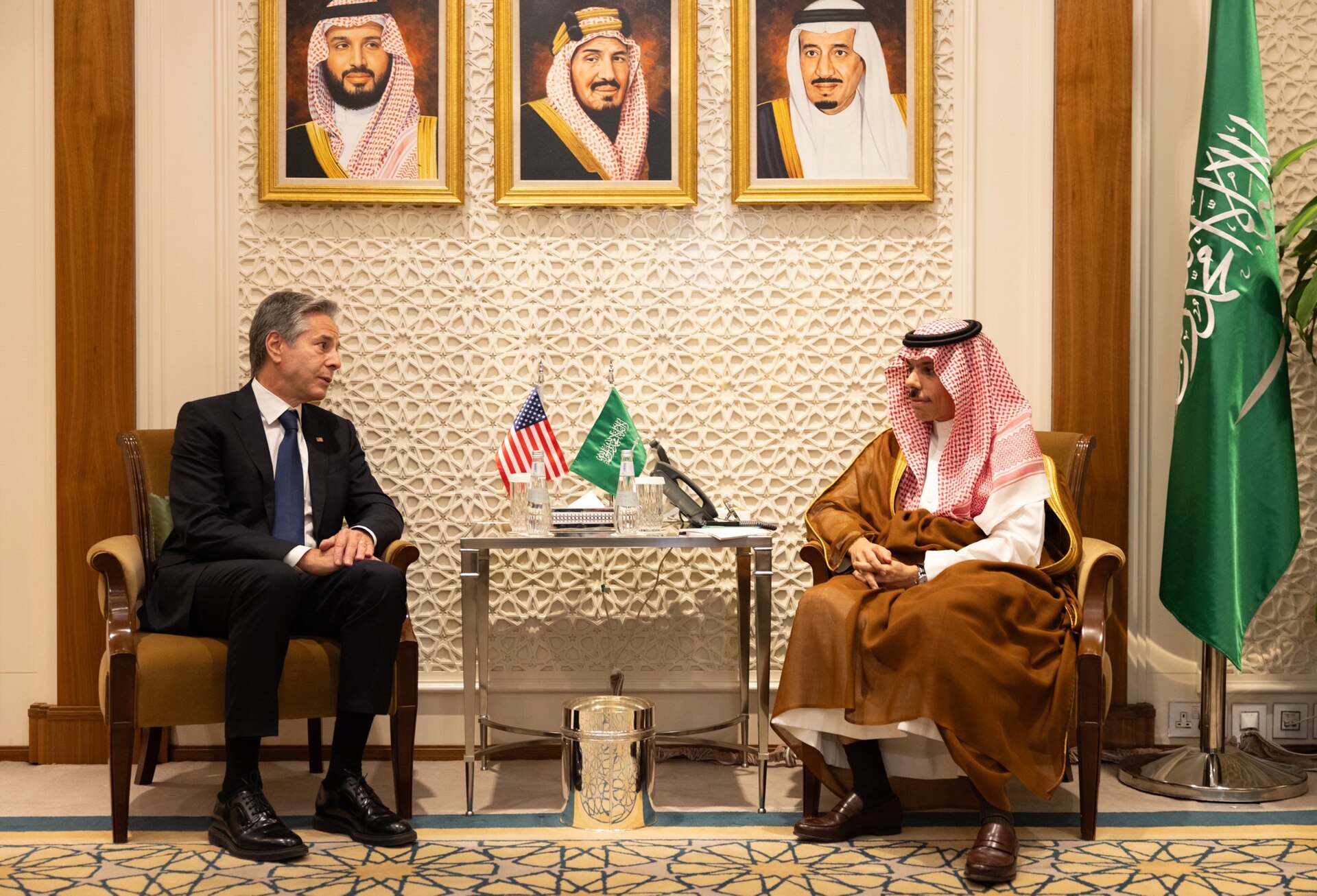
The absence follows a pattern. Riyadh was not represented at the Bürgenstock format that collapsed on June 17. It holds no seat in the Phase 2 nuclear track where enrichment ceilings will be negotiated. It was absent from the G7 Evian sessions on Hormuz mine clearance and Lebanon, despite being the Gulf state most exposed to both issues. Iran’s Tasnim news agency, covering Foreign Minister Prince Faisal bin Farhan’s June 18 call with Araghchi, described Iran as having “briefed” Faisal — not consulted him. The Saudi Press Agency’s readout of the same call said Faisal “welcomed” the MOU.
Saudi Arabia’s MOFA had “welcomed” the November 2024 ceasefire with near-identical language. Between the two statements, more than 3,900 combined ceasefire violations were documented by both sides under that arrangement. Riyadh’s commercial exposure to Hormuz — linked to a $300 billion reconstruction fund Saudi Arabia cannot block — continued to accumulate at $5.5 million per day at full production rates throughout the period.
Iran Waived the Fee but Kept the Gate
On the same day the Lebanon ceasefire took effect, Iran announced a 60-day waiver of the Persian Gulf Security Authority’s transit fee — the $1-per-barrel charge that, at full Saudi production rates of 5.5 million barrels per day, represents roughly $2 billion per year. The waiver was reported by BusinessToday, Tempo, and Ukraine’s UNN on June 19.
The fee suspension does not suspend the PGSA’s authority over the corridor. Ships transiting Hormuz still require 48-hour pre-clearance from the PGSA, the Iranian-administered body that controls passage. P&I clubs have not cleared the strait for commercial traffic. The Joint Maritime Information Centre’s risk assessment remains at “substantial” — below the “moderate” threshold most underwriters require before restoring coverage. The mines remain in the water.
The waiver’s term matches the Phase 2 timeline: 60 days, the same window allotted for nuclear negotiations. If Phase 2 stalls or collapses, the fee returns. Saudi Aramco tankers cannot transit Hormuz regardless — the mines, the pre-clearance requirement, and the absence of P&I coverage are unaffected by a fee waiver.
Four Ceasefires in Twenty Months
The June 19 truce is the fourth Israel-Hezbollah ceasefire since November 2024. In the first, Iran had no formal mediating role. In the fourth, it was publicly named alongside the United States and Qatar.
The first ceasefire, signed November 26, 2024, was monitored by the US-led Implementation and Monitoring Mechanism — a five-party body comprising the United States, Israel, Lebanon, France, and UNIFIL. More than 2,036 violations were attributed to Israel and more than 1,900 to Hezbollah under the arrangement, according to data compiled by JNS and the International Crisis Group. Saudi Arabia had no seat in the mechanism.
The second, in April 2026, was a 10-day US-brokered truce that introduced a “Yellow Line” buffer zone map. Lebanon and Hezbollah rejected the map as a violation of sovereignty. The truce collapsed before its term elapsed.
The third, on June 4, was negotiated between Israel and the Lebanese state — not Hezbollah. Secretary General Naim Qassem rejected it within hours.
The fourth — June 19 — is the first in which Iran was formally named as a mediator. Al Jazeera, in a March 2026 analysis of the ceasefire trajectory, had characterized the process as “built to fail.” The June 19 arrangement did not alter the IDF’s buffer zone, did not include Hezbollah as a signatory, and did not set a date for Phase 2 to begin.
Frequently Asked Questions
When does the Phase 2 negotiation window close?
The MOU signed on June 17 allocates 60 days for Phase 2 negotiations, placing the deadline at approximately August 16, 2026. No session has been scheduled as of June 19. The Bürgenstock meeting that was to open Phase 2 collapsed on its first day before a single formal negotiation took place.
Qatar PM Al Thani arrived at Bürgenstock on June 20, one day after co-brokering the ceasefire, functioning as the Gulf’s primary relay in a process the ceasefire was meant to unblock. Qatar PM Arrives for Iran Nuclear Talks That Exclude Saudi Arabia covers Araghchi’s conditional arrival, the US delegation composition, and Saudi Arabia’s continued absence from the table the ceasefire was supposed to open.
What monitoring mechanism covers the June 19 ceasefire?
No monitoring framework has been publicly announced for the June 19 arrangement. The November 2024 ceasefire was overseen by the US-led Implementation and Monitoring Mechanism (IMIM), which included the United States, Israel, Lebanon, France, and UNIFIL. Whether IMIM applies to the current truce, or whether a new mechanism will replace it, has not been specified by any of the three mediating parties.
What was Saudi Arabia’s last direct role in Lebanon conflict diplomacy?
Saudi Arabia’s last formal role in resolving a Lebanon conflict was the 1990 Taif Accord, which ended Lebanon’s 15-year civil war and was negotiated in the Saudi city of Taif. In 2026, Riyadh has focused on internal Lebanese political alignment — supporting coordination among President Michel Aoun, Speaker Berri, and Prime Minister Nawaf Salam — rather than military ceasefire brokerage. Saudi Arabia held no seat in the IMIM monitoring mechanism and was not present at any of the four ceasefire negotiations between 2024 and 2026.
Did Iran coordinate directly with Hezbollah before the ceasefire?
Yes. Araghchi traveled to Beirut and met Hezbollah Secretary General Naim Qassem in the days preceding the June 19 truce, according to reporting by the Palestine Chronicle. The meeting confirmed Iran’s role as direct interlocutor for Hezbollah — a function that was implicit in earlier ceasefire rounds but formalized for the first time on June 19, when Iran was publicly named as a mediator alongside the United States and Qatar.
What is the status of UN Security Council Resolution 1701?
UNSCR 1701, adopted in August 2006 to end that year’s Israel-Hezbollah war, called for Hezbollah’s disarmament south of the Litani River and the deployment of the Lebanese Armed Forces alongside an expanded UNIFIL presence. Twenty years later, Hezbollah remains armed in southern Lebanon, the IDF has established a buffer zone deeper than UNIFIL’s original mandate area, and none of the four ceasefire arrangements since November 2024 references Resolution 1701 as its legal basis.