Table of Contents
- What ‘Substantial’ Actually Says When You Read the Full Advisory
- Why Are P&I Clubs Answering a Different Question?
- The Fee Saudi Arabia Pays That Its Competitors Do Not
- How Does the Downgrade Compress Brent Before Saudi Arabia Can Ship?
- Lloyd’s Repriced the Tanker War — This Time It Walked Away
- Saudi Arabia Holds No Seat on Any Body That Matters
- What Actually Has to Happen Before Saudi Exports Normalize?
- Twenty-Three Tankers at Anchor, Waiting on London
- Frequently Asked Questions
LONDON — The Joint Maritime Information Centre downgraded the Strait of Hormuz threat level from “Severe” to “Substantial” on June 16-17, and the headlines landed exactly where the White House needed them — on the word “progress.” But the same JMIC advisory that carried the downgrade also told mariners that “an attack is a strong possibility under current conditions,” that IRGC hailing and surveillance may persist, and that mines remain in the shipping channel with naval clearance operations still under way. The three Bahri tankers that crossed Hormuz on June 18 carrying the first Saudi crude since February did so with their AIS transponders switched off through the Qeshm-Larak corridor, which is not the behaviour of vessels transiting a strait where the insurance market considers the risk resolved.
What the JMIC downgrade did, mechanically and immediately, is reduce war-risk premiums for the vessels already exempt from Iran’s Persian Gulf Security Agreement fee — Russian, Chinese, Indian, Iraqi, and Pakistani tankers whose operators never needed London’s permission to transit. What it did not do is reinstate the P&I club coverage that every commercial Saudi shipment requires, remove the Lloyd’s Market Association Joint War Committee listing that has designated the Persian Gulf a war-risk zone since March 3, or clear a single one of the estimated 80 Maham-7 glass-reinforced-polymer mines that US Navy sonar cannot reliably detect in the central channel. Saudi Arabia is trapped between a diplomatic label that says the strait is improving and an insurance market that says the strait is still closed for commercial-scale business — and every step the label takes toward “Normal” compresses the oil price Saudi Arabia will eventually receive when the insurance market finally agrees.
What ‘Substantial’ Actually Says When You Read the Full Advisory
JMIC operates as a multinational maritime intelligence body that classifies threat environments on a five-tier scale: Critical, Severe, Substantial, Moderate, Normal. The move from Severe to Substantial on June 16-17 was reported by CNBC and Seatrade Maritime as a signal that conditions in the strait were stabilising after the June 13-15 MOU process. The language of the advisory itself tells a more complicated story. “Maritime traffic continues under a substantial risk environment,” the JMIC advisory states. “Navigation interference and IRGC hailing and surveillance activity may persist. Rapid, short-notice actions near Iranian coastal waters and anchorages remain possible and an attack is a strong possibility under current conditions.”
Read that advisory as an underwriter in the Lloyd’s building, and the word that governs your decision is not “substantial” — it is “strong possibility.” The mines advisory attached to the same JMIC communication is unchanged: “Mariners should be advised of the existence of mines and expect naval presence as clearance operations continue.” NAVAREA IX warning 180/26, issued May 26, placed a confirmed floating mine at coordinates 26°24.3N 056°20.6E, inside the standard transit corridor. The Pentagon’s own estimate for full Traffic Separation Scheme clearance remains up to six months, a timeline that predates the downgrade and has not been revised since. A US official told NBC on June 16 that American forces had been intercepting IRGC drones fired at commercial ships every night since the MOU announcement on June 14 — activity that the JMIC advisory’s language about “rapid, short-notice actions” appears to encompass without naming directly.
CENTCOM announced on June 18 that “US forces lifted the blockade on all maritime traffic entering and exiting Iranian ports and coastal areas, in accordance with the President’s direction.” That is a military posture change — an American decision about American force disposition. It is not a commercial insurance determination, and no P&I club or war-risk syndicate has cited the CENTCOM announcement as a basis for revising coverage terms. Seatrade Maritime’s editorial response on June 18 was to note that previous Hormuz reopening announcements “have unravelled” in recent months and to recommend continued caution, a position that carries weight in the maritime insurance community precisely because Seatrade’s readership includes the people who write the policies.
Why Are P&I Clubs Answering a Different Question?
The JMIC and the P&I club system share a subject — the Strait of Hormuz — but they answer fundamentally different institutional questions with fundamentally different consequences for getting wrong. JMIC assesses military threat probability for naval and commercial awareness. P&I clubs assess whether they can expose their mutual insurance pools — and their reinsurance treaties — to the financial risk of covering vessels in a designated war zone. The first is an intelligence product. The second is a capital adequacy calculation governed by regulatory frameworks that do not reference JMIC classifications at all.
The Middle East briefing 3,000+ readers start their day with.
One email. Every weekday morning. Free.
All 12 International Group P&I clubs cancelled war-risk cover for the Persian Gulf effective March 5, 2026, after issuing 72-hour notices on March 1. The clubs that moved include Gard, Skuld, NorthStandard, London P&I, American Club, and Britannia — collectively responsible for insuring approximately 90% of the world’s ocean-going tonnage. This was not a repricing, which is what happened during the Iran-Iraq Tanker War and what happened during the Red Sea crisis. This was a withdrawal, and the institutional mechanics of reversing a withdrawal are categorically different from the mechanics of adjusting a premium. Reinstatement requires board-level votes at each club, renegotiation of reinsurance treaties across multiple layers, fresh actuarial assessment on a vessel-by-vessel and voyage-by-voyage basis, and regulatory capital recalculations that must satisfy prudential supervisors in multiple jurisdictions.
The earliest realistic window for structural reinstatement — meaning standing coverage rather than bespoke voyage-by-voyage arrangements — is January 2027, according to insurance industry analysis reported by PropertyCasualty360 and consistent with the Britannia P&I War Risks Explanatory Note issued March 17. Full normalisation, the point at which Persian Gulf transits are insured on terms comparable to pre-conflict, is estimated at three to five years after what the industry defines as a “durable ceasefire” — a standard that no P&I club has indicated the current MOU meets. The LMA Joint War Committee’s designation of the Persian Gulf, Gulf of Oman, and adjacent waters as a Listed Area (JWLA-033, March 3) has no published criteria for removal; the JWC has stated only that it will not delist until the threat has “materially diminished,” a phrase that carries no operational definition and no timeline.
The Fee Saudi Arabia Pays That Its Competitors Do Not
The PGSA fee structure creates a two-tier transit system through Hormuz that the JMIC downgrade does not flatten — it steepens. Russia, China, India, Iraq, and Pakistan hold PGSA exemptions, meaning their tankers transit the strait paying no fee to Iran’s corridor authority. For these vessels, the primary commercial friction on Hormuz transit has been war-risk insurance premiums, which in June 2026 still run at 2.5-3% of hull value per voyage — 25 to 30 times the pre-conflict baseline of 0.1%, according to Insurance Business and Howden Re. A JMIC step-down from Severe to Substantial, if sustained, creates downward pressure on those premiums for PGSA-exempt vessels, because threat-level classifications are among the inputs that war-risk syndicates and their actuaries weight when pricing voyage-specific cover.
For Saudi Arabia, the arithmetic stacks differently. Saudi crude transiting Hormuz faces the PGSA fee — $1 per barrel on 5.5 million barrels per day at full export capacity, accumulating at $5.5 million per day or roughly $2 billion per year — plus war-risk premiums that remain between $800,000 and $2 million per VLCC voyage, plus the absence of P&I coverage that no JMIC label change can restore. The Bahri convoy of June 18 — the tankers Shaden, Jaham, and Awtad, carrying approximately 6 million barrels — implies a PGSA payment of roughly $6 million, though neither Aramco, Bahri, nor the Saudi Ministry of Foreign Affairs has confirmed whether the fee was paid. Windward.ai’s June 2026 analysis identified an additional trap: any vessel receiving an Iranian safe-passage guarantee or paying the PGSA fee becomes uninsurable by any P&I club or war-risk underwriter under current OFAC guidance, creating a sanctions-insurance circular dependency that the JMIC downgrade does not address.
Iran’s Majlis codified the PGSA fee framework on March 30-31, before ceasefire talks began, establishing it as statutory revenue collection independent of any diplomatic track. Iranian Foreign Ministry spokesman Esmaeil Baghaei framed the fees in May as covering “navigational services in addition to measures necessary to protect the environment of the Strait of Hormuz, the Persian Gulf and the Sea of Oman” — language designed to position the PGSA as a standing sovereign instrument, not a wartime measure subject to negotiated removal. Neither the JMIC nor the JWC assesses fee structures, and no institution in the JMIC-to-P&I chain has any mechanism to factor PGSA costs into its classifications — which means the downgrade helps the countries that were already transiting more cheaply while doing nothing about the additional cost layer that applies exclusively to Saudi Arabia and other non-exempt states.
How Does the Downgrade Compress Brent Before Saudi Arabia Can Ship?
Brent crude traded at approximately $76.80 intraday on June 19, down roughly 40% from the $126.41 conflict peak — a collapse that has occurred almost entirely while Saudi Arabia’s Hormuz exports remained blocked. Each JMIC step-down sends a signal to futures markets that Iranian crude supply is returning to the market, because PGSA-exempt vessels from Iran’s NITC fleet can transit immediately at reduced insurance cost while Saudi tankers cannot. The market does not price the distinction between a military intelligence label and a commercial insurance clearance; it prices the expectation that barrels are coming, and the barrels arriving first are Iranian.
Kuwait compounded the pressure on June 18 — the same day as the CENTCOM blockade-lift announcement — by confirming an output hike targeting above 2 million barrels per day within a week, with June production expected at 2.628 million bpd according to Bloomberg and Asharq Al-Awsat. The combination of an Iranian supply signal (via the JMIC downgrade), a Kuwaiti output hike, and OPEC+’s own July quota increase of 188,000 bpd is compressing Brent along a trajectory that several analysts have projected could reach $72-74 by the time Saudi Arabia’s commercial export infrastructure — P&I coverage, swept lanes, insurable war-risk at commercial scale — is actually operational. Saudi Arabia’s fiscal breakeven sits at $108-111 per barrel. At $76.80, the gap is $31-34 per barrel; at 5.5 million bpd, that represents $170-187 million per day in theoretical revenue shortfall at full capacity. The price collapsed before Saudi barrels could move, and every diplomatic “progress” signal on Hormuz accelerates the collapse.
Aramco’s July OSP cut for Asian buyers — a $6-per-barrel reduction, the largest since 2022 — was published on June 8, seven days before the MOU signing and eleven days before the Geneva ceremony. The Arab Light premium to the Oman/Dubai benchmark collapsed 51% between May and July, from $19.50 to $9.50 per barrel. Even if P&I coverage were restored tomorrow, Saudi crude would arrive into a market where Aramco has already discounted the price to compete with barrels that moved through Hormuz without needing London’s permission.
Lloyd’s Repriced the Tanker War — This Time It Walked Away
The structural comparison that matters is not the Iran-Iraq Tanker War’s violence — over 400 ships attacked between 1984 and 1988, $2 billion in insurance claims consuming half the Lloyd’s market — but its insurance architecture. Throughout the Tanker War, Lloyd’s syndicates and P&I clubs repriced Persian Gulf coverage aggressively, with hull war-risk rates peaking at 7.5% of vessel value for Kharg Island transits in May 1984. But they never withdrew coverage entirely. The institutional infrastructure remained in place: policies were amended, premiums were increased, exclusion zones were drawn and redrawn, but the fundamental relationship between insurer and shipowner was maintained. When the ceasefire came in 1988, normalisation was a pricing adjustment within existing contract structures.
Operation Earnest Will in 1987 — the US Navy’s re-flagging and escort of Kuwaiti tankers — took approximately 18 months to produce measurable insurance rate normalisation, and that was with continuous naval convoy escort and no institutional withdrawal of P&I coverage. In 2026, the starting position is categorically worse: all 12 IG clubs have cancelled, not repriced. The Irregular Warfare Journal described the insurance withdrawal as “The Insurance Weapon,” arguing that commercial risk logic had been transformed into an irregular warfare instrument — a framework in which the insurance market’s institutional conservatism functions as a force multiplier for the original military threat, persisting long after the military conditions change.
The Red Sea precedent from 2024 reinforced the decoupling pattern. JWC listed areas for the Bab el-Mandeb strait and Gulf of Aden persisted for months after JMIC issued lower threat advisories for the same corridor — the first major modern demonstration that JMIC and JWC operate on institutional timelines that are structurally independent. War-risk premiums in the Red Sea corridor remained elevated well after Houthi attack frequency declined, because the JWC listing — not the JMIC advisory — is the document that triggers mandatory additional premium clauses in hull and cargo policies. The same architecture governs Hormuz now, and the same decoupling is already visible.
Saudi Arabia Holds No Seat on Any Body That Matters
The institutional architecture surrounding Hormuz reopening contains at least six decision-making bodies whose actions directly determine when Saudi crude can flow at commercial scale: the JMIC, the LMA Joint War Committee, the International Group of P&I Clubs, the PGSA governance structure, the mine clearance authority (currently US-led after Trump blocked the allied coalition at G7 Évian), and the Lebanon monitoring committee (US, France, Israel, Lebanon, UNIFIL). Saudi Arabia holds no seat, no vote, and no formal consultative role in any of them. The Saudi Cabinet’s June 18-19 statement referencing “all issues over past decades” — the most explicit Saudi signal of intent to claim a Phase 2 negotiating stake — was issued on the same day that CENTCOM unilaterally lifted its blockade without Saudi input and Kuwait unilaterally hiked output without OPEC+ coordination.
The JMIC downgrade illustrates the mechanism of exclusion with particular clarity because it is a decision that directly affects Saudi Arabia’s commercial position — reducing insurance costs for competitors, compressing Brent, generating diplomatic cover for Phase 2’s collapse at Bürgenstock — while originating from an institution where Saudi Arabia has no representation. Iran signed the deal and kept the minefield, but the minefield is not only physical. The institutional minefield — the gap between military intelligence classifications and commercial insurance clearance — is where Saudi Arabia’s export capacity is actually trapped, and the country has no institutional tool to close that gap from inside the system.
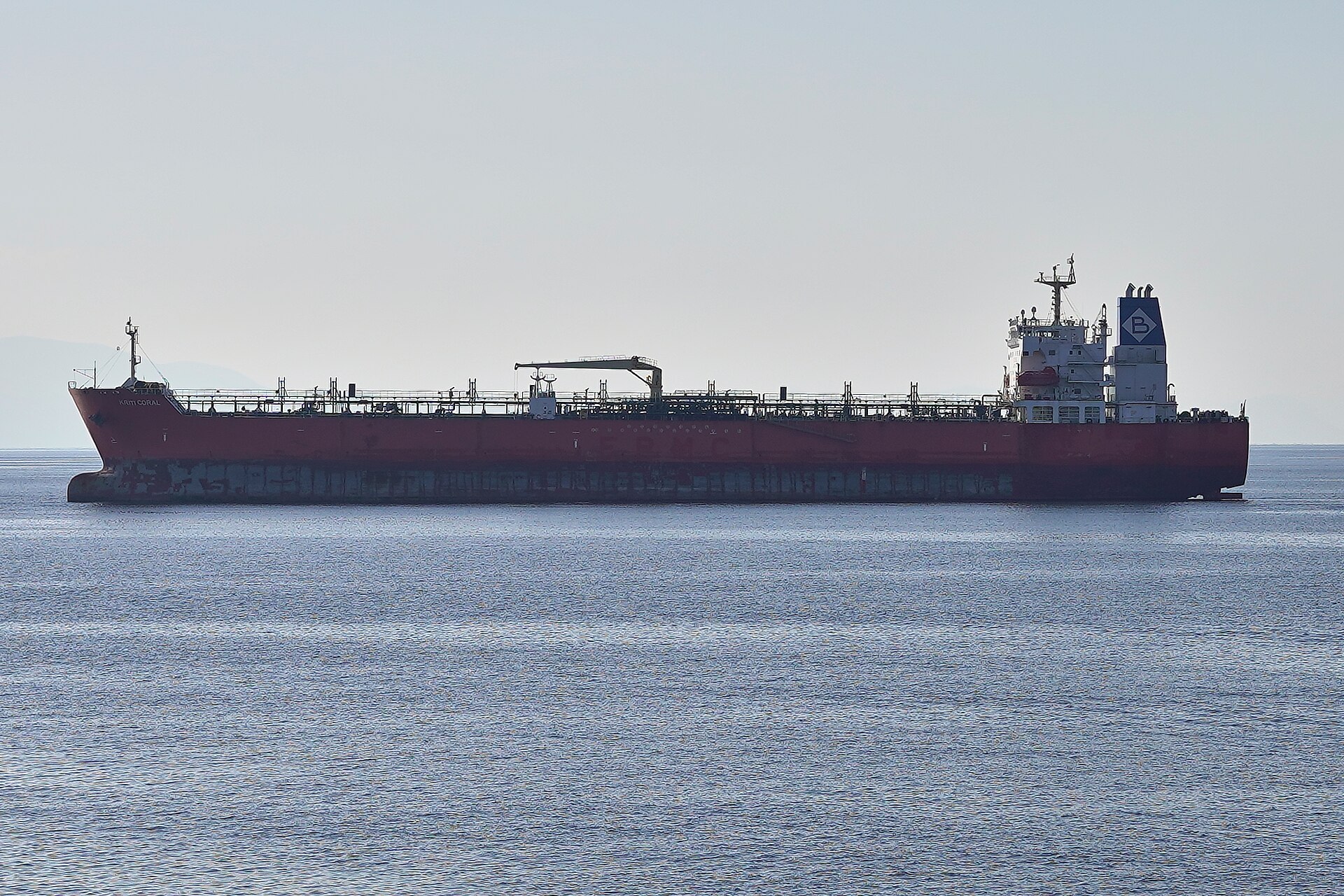
The Q1 2026 fiscal numbers frame the cost of that absence. Saudi Arabia posted a deficit of SAR 125.7 billion in the first quarter, 2.1 times the prior year. Aramco’s free cash flow of $18.6 billion covered only 85% of its $21.9 billion dividend obligation. Roughly 600 vessels remain in holding patterns across the region, with BIMCO’s CONWARTIME clause — which defines the Hormuz blockade as an express “war risk” — still triggered and showing no evidence of suspension. The JMIC can call the threat level whatever it likes; the commercial machinery that moves Saudi oil requires clearances from institutions that are not listening to the JMIC.
What Actually Has to Happen Before Saudi Exports Normalize?
Commercial-scale Saudi crude exports through Hormuz require a sequence of institutional clearances that no single diplomatic event — not the MOU, not the JMIC downgrade, not the CENTCOM blockade lift — can deliver. The sequence, in approximate order: full clearance of Maham-7 mines from the Traffic Separation Scheme (Pentagon estimate: up to six months; current Hormuz commercial traffic running at 5-10 transits daily — 5-10% of the pre-conflict baseline of over a hundred per day — per CNBC); removal of the JWC Listed Area designation JWLA-033 (no published criteria, no timeline); reinstatement of P&I club coverage from withdrawal to standing policies (earliest January 2027); normalisation of war-risk premiums from the current 25-30x baseline to commercially viable levels (the Tanker War precedent suggests 18 months minimum with continuous naval escort); and resolution of the OFAC-PGSA circular trap that currently makes any vessel paying Iran’s fee uninsurable under US sanctions guidance.
Polymarket priced a 76.5% probability on June 19 that Hormuz would not normalise by June 30 — a market assessment that, for once, may be understating the timeline rather than overstating it. Lars Barstad, CEO of Frontline, which operates 80 tankers including five stuck in the Gulf, told CNBC on June 11 that “oil tanker traffic through the Strait of Hormuz should quickly increase if the U.S. and Iran reach a credible deal” — but the conditional clause in that statement is doing all the work, and the P&I clubs’ definition of “credible” operates on a timeline measured in quarters and years, not days and weeks. The 40-day minimum for mine clearance confidence is itself only the first gate in a sequence where each subsequent gate has a longer timeline than the last.
| Clearance Required | Governing Body | Saudi Seat? | Earliest Realistic Timeline |
|---|---|---|---|
| Mine clearance (TSS) | US-led MCM operations | No | 40-50 days (swept lane) / 6 months (full TSS) |
| JWC delisting (JWLA-033) | LMA Joint War Committee | No | No published criteria or timeline |
| P&I reinstatement (structural) | 12 IG P&I Clubs | No | January 2027 at earliest |
| War-risk premium normalisation | Lloyd’s syndicates / war-risk market | No | 18+ months (Tanker War precedent) |
| PGSA/OFAC resolution | OFAC / Iranian Majlis | No | No mechanism identified |
| BIMCO CONWARTIME suspension | Individual charterers/owners | N/A | Requires JWC delisting + P&I reinstatement |
Twenty-Three Tankers at Anchor, Waiting on London
At Fujairah anchorage on June 19, more than 23 VLCCs sat at anchor — engines maintained, crews aboard, charter costs accumulating — waiting not for a diplomatic signal from Geneva or a military assessment from the JMIC, but for a committee in London to answer a question that the diplomats have not yet asked in the correct institutional language. The JMIC said “Substantial.” The P&I clubs said nothing, because nothing in the JMIC’s announcement changed the inputs to their decision. Insurance Business reported in June that “marine insurers warn the crisis is far from over, with war-risk premiums still running as much as 30 times above pre-conflict levels” — a statement issued after the downgrade, not before it.
Maritime traffic continues under a substantial risk environment. Navigation interference and IRGC hailing and surveillance activity may persist. Rapid, short-notice actions near Iranian coastal waters and anchorages remain possible and an attack is a strong possibility under current conditions.
JMIC Advisory, June 16-17, 2026 (via CNBC / Seatrade Maritime)
The BIMCO Chief Safety and Security Officer warned in June that transits “without coordination with Iran still carried significant risk” — a statement that places the commercial maritime industry’s own professional body on the side of continued caution regardless of the JMIC label. Howden Re, the reinsurance broker, reported in March that marine hull war, cargo war, and political violence markets were under “extreme” pressure with insurers expanding high-risk zones — a market posture that does not reverse on a single downgrade step, because reinsurance treaties are annual instruments that reprice at renewal, not on advisory cycles. The gap between the diplomatic signal and the commercial reality is not a temporary misalignment that will close as information propagates; it is a structural feature of how maritime insurance institutions process risk, and it will persist on its own institutional timeline regardless of what the JMIC, CENTCOM, or the White House says about Hormuz.
Frequently Asked Questions
What is JMIC and how does its threat scale work?
The Joint Maritime Information Centre is a multinational maritime intelligence body that classifies threat environments for commercial and naval shipping. Its five-tier scale runs from Normal (lowest) through Moderate, Substantial, Severe, to Critical (highest). The classification informs naval planning and commercial risk awareness but carries no binding authority over insurance markets. Unlike the JWC Listed Areas designation — which triggers mandatory contractual clauses in hull and cargo policies — a JMIC advisory is an intelligence product, not a regulatory instrument. The June 16-17 downgrade from Severe to Substantial was the first step-down since the Persian Gulf crisis began in early 2026.
Can a shipowner buy war-risk insurance for Hormuz transit right now?
Voyage-specific war-risk cover remains available from specialist Lloyd’s syndicates at 2.5-3% of hull value per transit — translating to $800,000-$2 million per VLCC voyage. This is bespoke, per-voyage pricing that must be arranged individually with a war-risk broker, not the standing coverage that commercial-scale operations require. The critical gap is P&I liability coverage: without it, a vessel transiting Hormuz operates without pollution liability, cargo liability, or crew injury cover — exposures that port states and cargo receivers can refuse to accept, effectively locking out commercial deliveries even if the hull is insured for war risk.
Why did the Bahri convoy transit on June 18 if insurance coverage is withdrawn?
Bahri is a Saudi state-owned shipping company (formally the National Shipping Company of Saudi Arabia), and its vessels operate under sovereign risk tolerance that differs from commercial fleet calculus. The three VLCCs — Shaden, Jaham, and Awtad — transited with AIS transponders off through the Qeshm-Larak corridor, carrying approximately 6 million barrels. State-backed vessels can self-insure or accept uncovered risk as a matter of national policy; commercial tanker operators answerable to shareholders, charterers, and P&I club mutual obligations cannot replicate this model. The convoy demonstrated physical navigability, not commercial replicability.
How long did insurance normalisation take after the 1987 Kuwaiti tanker re-flagging?
Operation Earnest Will — the US Navy’s escort and re-flagging of Kuwaiti tankers from 1987 — took approximately 18 months to produce measurable war-risk rate normalisation, despite continuous naval convoy escort throughout. The 2026 starting position is structurally worse because P&I clubs withdrew coverage entirely rather than repricing it. Historical precedent from the 1984-88 Tanker War, where Lloyd’s never withdrew but repriced to 7.5% of hull value at peak, suggests that full withdrawal followed by reinstatement — an event without direct precedent in modern maritime insurance — will follow a longer normalisation curve than any previous Hormuz-related episode.
Does the CENTCOM blockade lift on June 18 change the insurance picture?
CENTCOM’s announcement that “US forces lifted the blockade on all maritime traffic entering and exiting Iranian ports and coastal areas” changed American military posture, not commercial insurance terms. No P&I club or war-risk syndicate has cited the CENTCOM announcement as a basis for revising coverage. The blockade lift removes one layer of transit risk — the probability of interdiction by US naval forces — but leaves intact the mine threat (80 estimated Maham-7 mines, Pentagon clearance estimate up to six months), the IRGC drone threat (nightly intercepts since June 14 per NBC), the JWC listing, and the P&I withdrawal. Maritime insurers assess cumulative residual risk, not individual risk-layer removal.