RIYADH — The fourteen published points of the US-Iran Memorandum of Understanding do more than exclude Saudi Arabia. They resolve every operational ambiguity in ways that systematically foreclose Saudi leverage across fees, nuclear sequencing, Lebanon, mine clearance, and Phase 2 scope. Read clause by clause, the document is internally coherent for its signatories — Washington, Tehran, and Islamabad — and adverse for Riyadh on every dimension it touches.
The omissions are as load-bearing as the text. There is no mention of Saudi Arabia, no mention of the Persian Gulf Strait Authority that codifies the per-barrel fee, no enrichment ceiling, no IAEA baseline verification before the sixty-day clock starts, no Israeli withdrawal from southern Lebanon, no reference to Iran’s ballistic missile arsenal, no language constraining the Axis of Resistance. Each absence carries a Saudi cost. The MOU’s signatories meet at Bürgenstock on June 19; FM Faisal bin Farhan’s only publicly stated Phase 2 position — delivered at the European Council on Foreign Relations in Vienna on June 17 — was that “verification is key.” On Day 1 of the 60-day window, Vance Canceled Bürgenstock as Iran Cited Lebanon Strikes.
Table of Contents
- Track 1 — Energy: Points 4, 5, 10, and 13
- What Does Point 5’s “Best Efforts” Language Mean for Saudi Cargo?
- Why Does the MOU Designate Oman as Iran’s Hormuz Interlocutor?
- Track 2 — Nuclear: Points 8, 9, 7, and 14
- Does Point 8 Set Any Enrichment Floor or Ceiling?
- Track 3 — Security: Points 1, 2, and 12
- Why Does Point 1’s Lebanon Clause Have No Implementation Mechanism?
- Point 13’s Sequencing and the Saudi Trap
- The Bahri Convoy, the PGSA, and the Unanswered Receipt
- Frequently Asked Questions
Track 1 — Energy: Points 4, 5, 10, and 13
Point 4 commits the United States to fully end its naval blockade within thirty days and to withdraw forces within thirty days after the final deal. Point 5 commits Iran to “make arrangements using its best efforts for the safe passage of commercial vessels with no charge for 60 days only” between the Persian Gulf and the Sea of Oman. Point 10 directs the US Treasury to issue waivers “for the export of Iranian crude oil, petroleum products and petrochemical products, and associated banking, insurance, and shipping services” immediately upon signing. Point 13 makes those three deliverables — along with frozen-asset release — the prerequisite to any nuclear negotiation.
Each clause carries a date. The blockade unwinds in thirty days. The fee waiver expires in sixty. The oil waivers issue on signature. The nuclear negotiations begin only after the energy clauses have been physically executed. Sequenced this way, the document gives Tehran every economic deliverable on Track 1 before opening the file Riyadh actually cares about on Track 2.
The word “only” inside Point 5’s fee waiver is doing more work than the rest of the clause combined. The PGSA fee — codified by Iran’s parliament March 30-31, 2026 as “services rendered” under UNCLOS Article 26(2) — is not abolished, not renegotiated, not even mentioned by name. It is suspended for two months. At day sixty-one the regime returns by default to a bilateral conversation between Iran and Oman, neither of which signed the May 21 GCC-IMO letter objecting to the fee.
Saudi Arabia signed that letter. Five of six GCC members did. Oman was the exception. The MOU’s designation of Oman as Iran’s Hormuz co-administrator converts that signature gap into governance.
The Middle East briefing 3,000+ readers start their day with.
One email. Every weekday morning. Free.
What Does Point 5’s “Best Efforts” Language Mean for Saudi Cargo?
Point 5 obligates Iran only to “best efforts” on safe passage, while the US’s corresponding obligation under Point 4 — naval blockade removal — is unqualified. The asymmetry converts Iran’s commitment to a standard of conduct rather than an outcome guarantee, leaving Saudi cargoes exposed to discretionary disruption with no contractual remedy.
Shahram Akbarzadeh of Deakin University told Al Jazeera the MOU “does not address any issue of substance” and “simply leaves all questions regarding Iran’s nuclear programme and enrichment to be negotiated.” The energy clauses operate on the same principle. They specify the direction of obligation without specifying its content. Bahri’s three VLCCs — Shaden, Jaham, and Awtad — crossed the strait on June 18 carrying roughly six million barrels. Whether the convoy paid the PGSA’s $1-per-barrel charge has not been confirmed by Bahri, Saudi Aramco, or the Ministry of Foreign Affairs. The MOU offers no language that would resolve that ambiguity once the sixty-day clock expires.
Mohammad Bagher Ghalibaf, the Iranian parliament speaker who leads the Bürgenstock delegation as a co-signatory, told the Times of Israel: “Iran has the right to sovereignty over the Strait of Hormuz and of course we will receive a fee for services.” His second remark — “the Strait of Hormuz will not return to prewar conditions” — was delivered before the MOU text was finalized and after Point 5 had already been drafted. Esmaeil Baghaei, Iran’s foreign ministry spokesperson, told CGTN the fees cover “navigational assistance, environmental protection measures, ship insurance and other maritime support jointly offered by Iran and Oman.”
Iran has not ratified UNCLOS. The legal scaffolding for the PGSA’s “services rendered” claim is self-asserted by a state that has not bound itself to the treaty under which the claim is made.
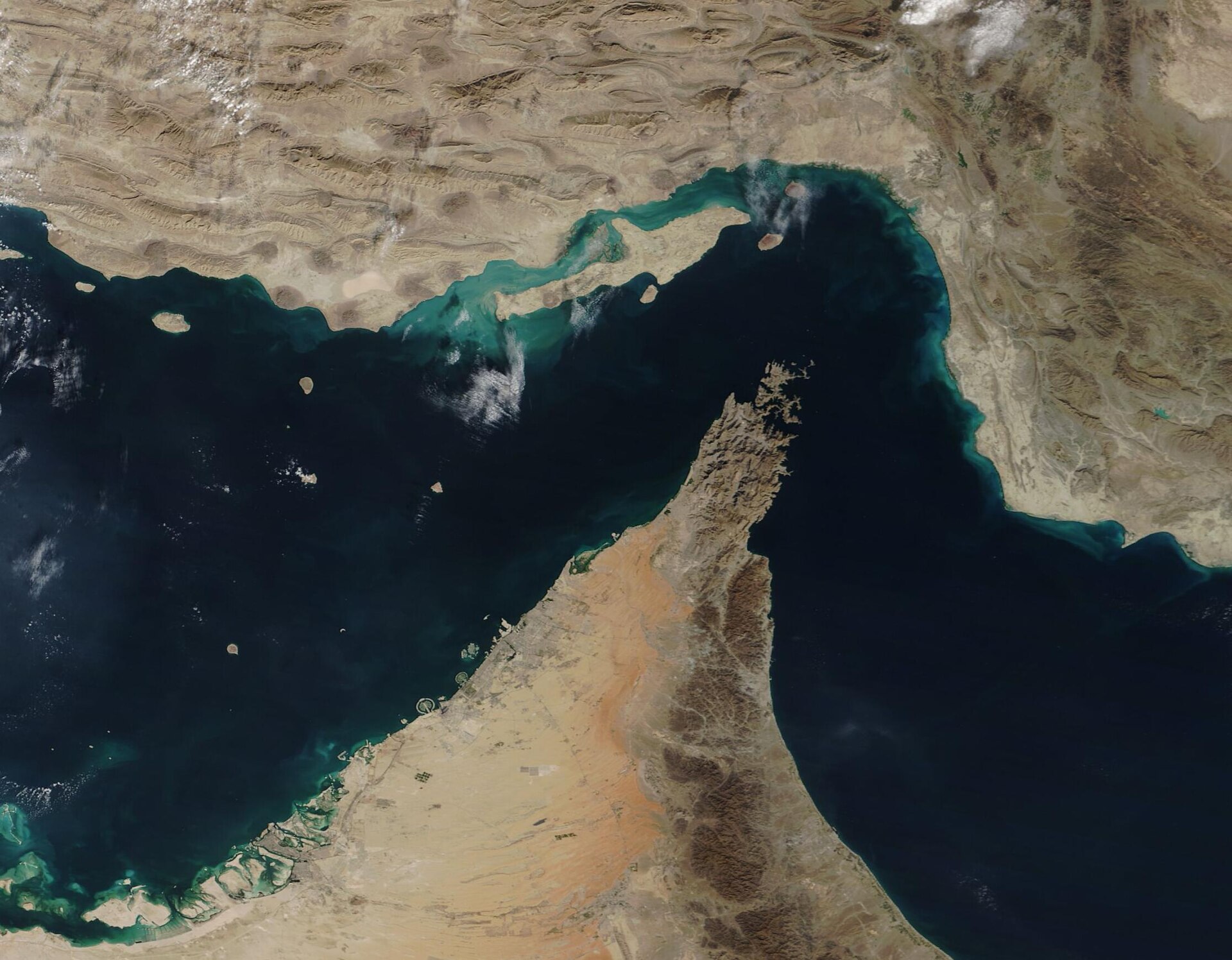
Why Does the MOU Designate Oman as Iran’s Hormuz Interlocutor?
Point 5 instructs Iran to conduct dialogue with Oman “to define the future administration and maritime services in the Strait of Hormuz in discussion with other Persian Gulf littoral states, in line with applicable international law and the sovereign rights of coastal states.” Oman is named; Saudi Arabia, the UAE, Kuwait, Qatar, and Bahrain enter only as participants in a discussion Tehran and Muscat structure.
The drafting decision tracks the May 21 GCC-IMO letter, which Oman alone among GCC states declined to join. Reporting on the letter in CNBC’s June 17 dispatch placed Saudi Arabia, the UAE, Kuwait, Qatar, and Bahrain on the objecting side and Oman in the silence Iran has now been invited to fill. Nicholas Hopton, a nonresident senior fellow at the Atlantic Council’s Scowcroft Middle East Security Initiative, wrote that Gulf states “may reluctantly accept new Strait passage arrangements” — a sentence whose conditional verb captures the position Riyadh enters Phase 2 carrying.
| MOU Point | Iran Obligation Type | US/Counterparty Obligation Type | Saudi Standing |
|---|---|---|---|
| Point 4 — Blockade | N/A (US-side clause) | Unqualified — “fully end” in 30 days | Non-party |
| Point 5 — Hormuz Passage | “Best efforts,” 60 days “only” | N/A (Iran-side clause) | Listed as “other littoral state” only |
| Point 5 — Mine Clearance | “Within 30 days” | N/A | Excluded from coalition |
| Point 5 — Future Administration | Bilateral Iran-Oman dialogue | N/A | “In discussion with” |
| Point 10 — Oil Waivers | N/A (US-side) | “Immediately upon signing” | Non-party |
| Point 13 — Sequencing | Receives 1, 4, 5, 10, 11 first | Delivers 1, 4, 5, 10, 11 first | Non-party |
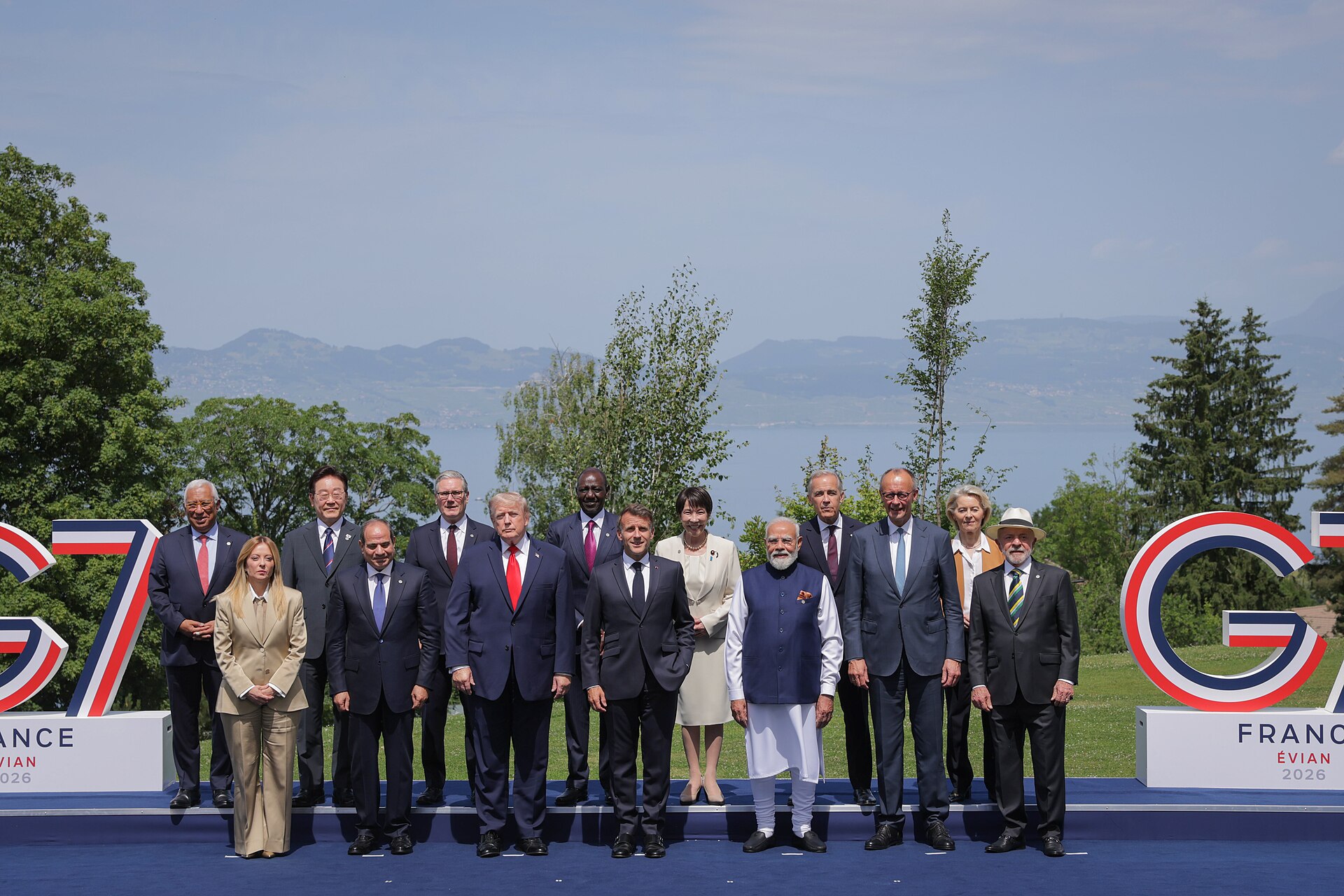
The mine clearance window is the clause that breaks first. Point 5 sets thirty days. The Pentagon’s published estimate is up to six months. Independent maritime analysts polled by Marine Log and Euronews put the minimum at forty to fifty days before insurance underwriters clear lanes. The New York Times, cited by the Jerusalem Post, reported that Iran has “lost track” of the locations of mines laid by IRGC Navy units. President Trump blocked a 15-nation allied demining coalition at G7 Évian on June 16, the day before the MOU points were leaked.
Track 2 — Nuclear: Points 8, 9, 7, and 14
Point 8 commits Iran to never “procure or develop nuclear weapons” and provides for the existing 440.9 kg of HEU at 60 percent enrichment to be “down-blended on site under IAEA supervision per mutually agreed mechanism.” Point 9 freezes the program at its current state during the sixty-day negotiation: Iran maintains the status quo; the US refrains from new sanctions and additional regional deployments. Point 7 commits the United States to terminate “all types of sanctions against the Islamic Republic of Iran, including the United Nations Security Council resolutions” on the schedule of the final deal. Point 14 routes the final deal through a “binding UNSC resolution.”
Each clause has Saudi implications, but the absence of any enrichment ceiling is the foundation the others rest on. Point 8 specifies that the existing stockpile will be down-blended, without specifying the target level, a completion date, or the verification mechanism — only that one will be “mutually agreed.” The 440.9 kg of HEU has gone unverified by the IAEA for 107 days, a gap that begins, rather than ends, the sixty-day negotiation period.
Wendy Sherman, the chief US JCPOA negotiator in 2015, told the Arms Control Association: “I can assure you they will not get all of this done in 60 days.” JCPOA negotiations consumed eighteen months and produced a 3.67 percent enrichment cap. Point 8 contains no cap of any kind. Khamenei’s authorization statement, issued the day before the Burgenstock meeting, pre-established the ceiling Iran’s negotiators would not cross — pre-authorizing a walkout before Phase 2 began.
Does Point 8 Set Any Enrichment Floor or Ceiling?
Point 8 sets neither an enrichment floor nor a ceiling. It addresses the existing 440.9 kg HEU stockpile only through “down-blending on site under IAEA supervision per mutually agreed mechanism,” without specifying the target enrichment level, completion date, or verification baseline — deferring every quantitative parameter to Phase 2.
The asymmetry with Saudi Arabia’s own civilian nuclear position is structural. The US-Saudi 123 Agreement signed May 13 omits all three Gold Standard pillars — no domestic enrichment ban, no reprocessing ban, and no Additional Protocol commitment. Simon Henderson of the Washington Institute observed that Washington is simultaneously negotiating Saudi enrichment rights and demanding Iran cap enrichment, and that the Saudi 123’s weakness helps Tehran’s Phase 2 position.
Point 9’s status-quo freeze is the more immediate problem. Iran’s program enters the negotiation at its most advanced point — 60 percent enrichment, 18,000-plus IR-2m and IR-6 centrifuge equivalents, no IAEA baseline since March. The status quo Tehran is asked to maintain is the position it would otherwise have to give up. Point 7’s commitment to terminate UNSC resolutions removes the multilateral leverage that any post-deal enforcement architecture would require. Once the resolutions are lifted, the snapback mechanism — the one tool Gulf states have used to constrain Iranian behaviour outside US bilateral channels — disappears. Point 14 then routes the final deal through a new binding UNSC resolution whose content is not yet drafted.
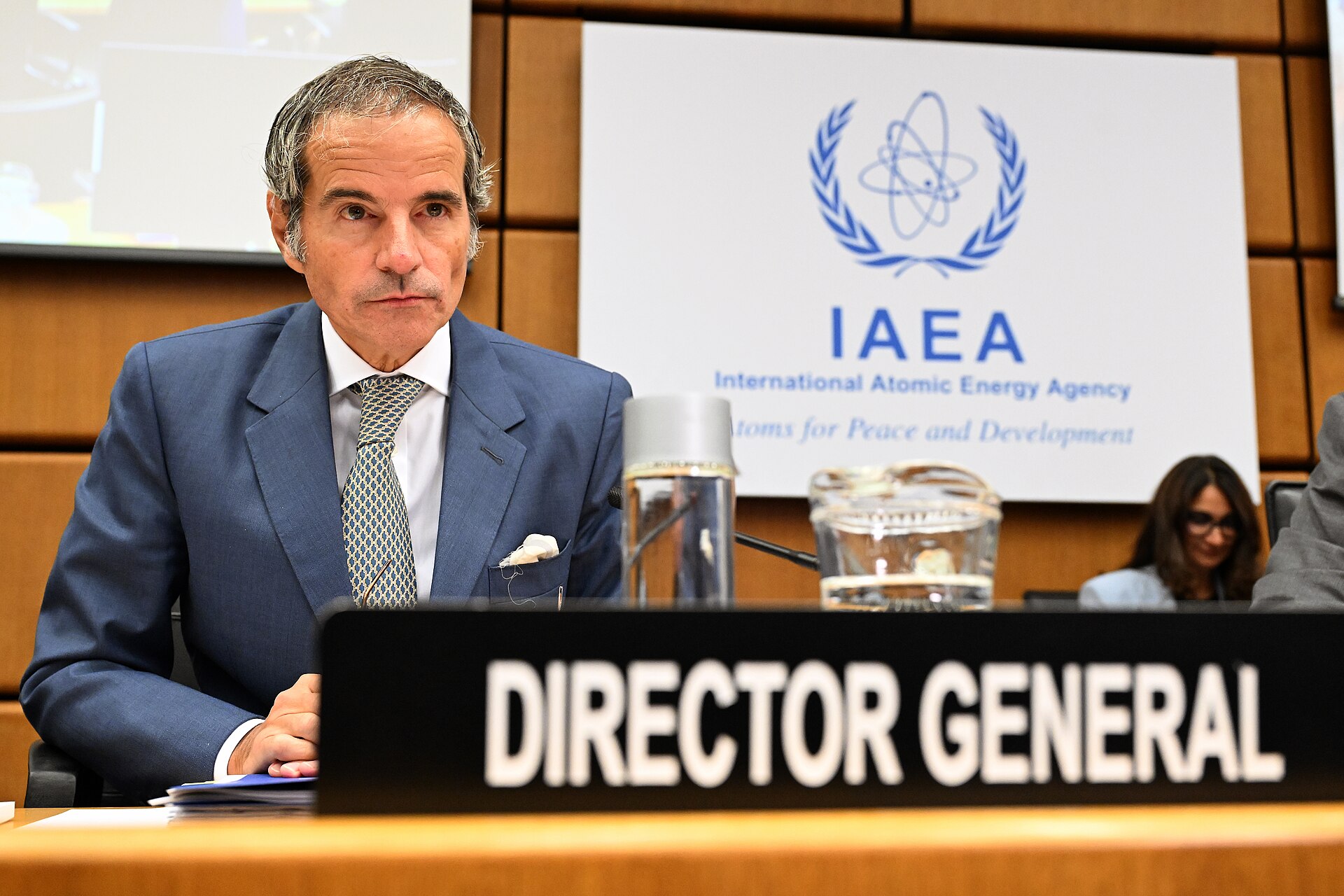
Track 3 — Security: Points 1, 2, and 12
Point 1 commits both parties to “immediate and permanent termination of military operations on all fronts, including in Lebanon,” with mutual restraint on future use or threat of force. Point 2 obligates each party to “respect each other’s sovereignty and territorial integrity, and to refrain from interfering in each other’s internal affairs.” Point 12 establishes an “executive mechanism” to oversee MOU implementation and compliance with the final deal.
The Lebanon clause is the front-loaded political risk. Iran’s Foreign Minister Abbas Araghchi told IRIB on June 13 that the MOU must cover “all fronts, including Lebanon.” Hezbollah’s Naim Qassem rejected a Lebanon ceasefire on June 4, calling it “absurd and humiliating.” Israel’s ambassador to the United States explicitly refused on June 18 to withdraw Israeli forces from southern Lebanon. Lebanese President Joseph Aoun told CNN on June 5 that Iran is using Lebanon as a “bargaining chip.” The monitoring committee — US, France, Israel, Lebanon, UNIFIL — has no Saudi seat. UNIFIL’s mandate expires December 31, 2026.
Point 12’s “executive mechanism” remains undefined in the published text. Its membership, voting structure, secretariat, and dispute resolution procedure are deferred to Phase 2. The Atlantic Council’s Nicholas Blanford, who has covered Lebanon for 32 years, wrote that “Hezbollah is emerging from this conflict more bullish and more closely controlled by Iran than at any time since its founding.” Jon Alterman and Mona Yacoubian of CSIS warned that “the Lebanon front holds the greatest potential to derail the deal.” Riyadh lifted its Lebanon trade ban June 11 — worth roughly $230-240 million annually — without a publicly stated reciprocity from any party at the table.
Why Does Point 1’s Lebanon Clause Have No Implementation Mechanism?
Point 1’s Lebanon clause names the front but specifies no withdrawal sequence, no monitoring authority, no dispute mechanism, and no enforcement penalty. Implementation defers to the existing US-France-Israel-Lebanon-UNIFIL committee, on which Saudi Arabia holds no seat — leaving the clause politically dependent on a forum Riyadh cannot access.
Point 2’s sovereignty language captures a structural absurdity. Both parties commit to “refrain from interfering in each other’s internal affairs,” but the MOU’s central provisions — Hormuz administration, oil exports, $300 billion in reconstruction — implicate states that are not parties. Saudi Arabia’s fiscal exposure to the post-sixty-day PGSA fee comes to roughly $5.5 million per day at 5.5 million barrels per day of capacity, an exposure Riyadh would carry under a clause it had no role in drafting. Point 6’s reconstruction fund commits “regional partners” — to be “finalized within 60 days” — to mechanisms not described in the text.
| Track | Saudi seat at the table | Saudi exposure quantified | Implementation forum |
|---|---|---|---|
| Hormuz administration | None — “in discussion with” only | $2B/year post-Day 60 ($5.5M/day) | Iran-Oman bilateral |
| Mine clearance | None — excluded from coalition | 1M+ bpd transit risk | IRGC Navy (no JMIC seat) |
| Nuclear enrichment ceiling | None — Faisal Vienna statement only | Saudi 123 Agreement precedent | US-Iran Phase 2 |
| Lebanon monitoring | None | $230-240M/yr trade volume | US-France-Israel-Lebanon-UNIFIL |
| Reconstruction fund | “Regional partner” TBD | $300B target, mechanism undefined | To be finalized within 60 days |
| Sanctions/UNSC track | None | Snapback architecture removed | UNSC binding resolution |
Point 13’s Sequencing and the Saudi Trap
Point 13 reads: “After implementation begins on paragraphs 1, 4, 5, 10, and 11, negotiations will proceed exclusively on the other paragraphs.” Iran receives the ceasefire, the blockade removal, the Hormuz passage, the oil waivers, and the frozen-asset release before nuclear negotiations open. JCPOA ran the opposite sequence — verification first, sanctions relief second.
Ali Alavi of SOAS told Al Jazeera that Iran “has more leverage now than it had during the JCPOA” and that Trump “gave much more.” Every Track 1 deliverable Tehran banks before Phase 2 begins reduces Tehran’s incentive to concede on Track 2. Point 11’s frozen-asset release — Iran claims $24 billion; the US version is undefined — lands immediately on signature. Point 10’s oil waivers issue the same day. Point 9 then guarantees that Iran’s nuclear program remains at its current state until the negotiations conclude, while Point 7 guarantees that the UNSC architecture will be dismantled.
Saudi Arabia enters Phase 2 carrying every cost Track 1 imposes — the PGSA exposure, the Brent collapse, the lost first-mover advantage on Iranian-coordinated oil returns — and no seat in the negotiation that determines whether those costs become permanent. Brent closed at $77.11 on June 18, down 3.07 percent on the session, against a Saudi fiscal breakeven the IMF places between $108 and $111 per barrel. The implied daily fiscal gap, at roughly 8 million barrels per day of current Aramco output, runs to $248 to $272 million per day.
The Bahri Convoy, the PGSA, and the Unanswered Receipt
Three Bahri VLCCs — Shaden (IMO 9588160), Jaham, and Awtad — moved through Hormuz on June 18 carrying approximately six million barrels of Saudi crude. The convoy was the first Saudi crude transit since February 28. AIS data tracked by Windward AI showed the vessels going dark during the Qeshm-Larak corridor — the same corridor PGSA fee collection points reportedly cover. The fee payment status has not been confirmed by Bahri, by Saudi Aramco, by the Saudi Ministry of Energy, or by the Ministry of Foreign Affairs. Iran’s foreign ministry has not announced collection. PGSA has not published a transit log.
The MOU’s Point 5 fee waiver runs sixty days from signature. The Bahri convoy crossed before signature. If the convoy paid, Saudi Arabia has set a precedent at $1 per barrel; if it did not, Iran has waived collection without explanation and without a public commitment to do so for the next convoy. Either way, the precedent is set before the MOU is signed and is set bilaterally, not through any GCC channel. PGSA was sanctioned by the US Treasury on May 27 and by the European Union on June 8. Roughly 95 percent of the world’s tanker fleet is EU-insured. The MOU does not mention PGSA, does not mention OFAC, and does not mention the EU’s June 8 designations.
The Joint Maritime Information Center moved its threat assessment from “severe” to “substantial” on June 17 — one step short of the “moderate” rating P&I clubs require to clear cargo. An IRGC “last warning” to the USS Frank E. Petersen Jr. (DDG-121) during minesweeping operations the same day Iran signed the MOU made the operational reality plainer than the legal text. The mines remain. The corridor’s administration moves to Iran and Oman. The fee suspension carries an expiry date.
| Metric | JCPOA (2015) | MOU Phase 2 (2026) |
|---|---|---|
| Negotiation timeline | 18 months | 60 days (Sherman: “they will not get all of this done”) |
| Enrichment cap | 3.67% | Not specified |
| Sequencing | Verification then sanctions relief | Sanctions relief first (Point 13) |
| HEU stockpile cap | 300 kg at 3.67% | Down-blending only, no target level |
| IAEA baseline | Pre-deal verification | 107+ days unverified at start |
| Snapback mechanism | UNSC resolution retained | UNSC resolutions terminated (Point 7) |
Vice President JD Vance leads the US delegation at Bürgenstock on June 19. Ghalibaf leads the Iranian delegation. Trump signed at Versailles; Pezeshkian signed the Iranian-language version; Pakistan’s Shehbaz Sharif is a co-signatory. Congressional review under INARA will examine the final agreement, not the MOU itself. Faisal bin Farhan’s June 17 Vienna statement — “verification is key in US-Iran nuclear talks. How we will have a long-term, sustainable verification regime is what will matter the most” — remains Saudi Arabia’s only publicly recorded Phase 2 input.
On June 20, Vance’s slot was filled by Witkoff — and Qatar PM Al Thani arrived as the Gulf’s active mediating presence. Qatar PM Arrives for Iran Nuclear Talks That Exclude Saudi Arabia covers Day 4 of the 60-day window: who holds the seat at Bürgenstock, what Araghchi’s conditional arrival means, and why Saudi Arabia’s absence has moved from diplomatic exclusion to structural fact.
Point 6’s reconstruction language sits adjacent to that input without acknowledging it. “At least USD 300 billion for the reconstruction and economic development” of Iran exceeds Tehran’s own initial demand of $270 billion in war reparations by $30 billion. The “implementation mechanism and regional partners” are to be “finalized within 60 days.” The drafting leaves Gulf states open to designation as financing parties under a clause whose mechanism they had no role in writing. Prince Faisal’s June 18 Vienna statement — that economic cooperation requires “a rebuilding of trust” — is the only Saudi instrument available to slow that designation, and its limits are examined in Faisal’s Trust Condition and the $300 Billion Fund Saudi Arabia Cannot Block.
The Bürgenstock venue completes the geometry. Vance and Witkoff occupy the rooms that defined the Iran file from February’s Munich exchange through the Geneva ceremony of June 19. Ghalibaf and Araghchi occupy the rooms Iran has used since the parliament codified the PGSA fee on March 30-31. Pakistan’s presence at the signing table — Sharif as co-signatory, Islamabad as guarantor of the financing track — gives Tehran a sovereign endorsement from a state Saudi Arabia funded through three crisis cycles. Iran’s foreign ministry confirmed on June 18 that mine clearance will not begin in earnest until after the Geneva signing. Pentagon planners briefed Reuters that “swept-lane confidence” — the threshold underwriters require for full Saudi crude resumption — runs forty to fifty days from clearance start under optimal conditions and six months under realistic ones.
The sixty-day Phase 2 clock starts at signature. The fee waiver expires at Day 60. The naval blockade ends at Day 30. The mine clearance window closes at Day 30 by MOU text and at Day 180 by Pentagon estimate. The oil waivers issue on Day 0. The nuclear file opens after Days 1, 4, 5, 10, and 11 have been implemented — which, under Pentagon timelines, means after the Hormuz mines are still in place.
Frequently Asked Questions
How many of the 14 MOU points reference Saudi Arabia by name?
Zero. The text references the United States, the Islamic Republic of Iran, Oman, “Persian Gulf littoral states,” “regional partners,” and the UN Security Council. Saudi Arabia is captured only by the residual category of “other Persian Gulf littoral states” inside Point 5, and is referenced nowhere in Points 1, 2, 3, 4, 6, 7, 8, 9, 10, 11, 12, 13, or 14.
What is the legal status of the PGSA fee after Day 60 of the MOU?
The MOU does not address it. Point 5’s fee waiver explicitly covers “60 days only.” After Day 60 the regime defaults to Iran’s parliamentary act of March 30-31, 2026, which codifies the fee under UNCLOS Article 26(2) “services rendered” — a treaty Iran has not ratified — and to whatever the Iran-Oman bilateral dialogue Point 5 mandates produces. There is no language committing Iran to a fee-free regime after Day 60, no language committing Iran to negotiate fees with non-Omani GCC states, and no language preserving the May 21 GCC-IMO objection.
Could Saudi Arabia trigger an UNSC snapback if Iran exceeds enrichment thresholds during Phase 2?
Not under the MOU’s architecture. Point 7 commits the United States to terminate “all types of sanctions…including the United Nations Security Council resolutions.” Once the relevant UNSC resolutions are terminated, the snapback mechanism associated with JCPOA-era Resolution 2231 ceases to exist as a procedural option. Point 14 routes the final deal through a new “binding UNSC resolution” whose content is not specified — meaning the post-deal coercive architecture available to non-signatories is a function of language not yet drafted.
What happens if Hezbollah refuses to comply with Point 1’s “all fronts” cessation?
The MOU does not specify. Point 1 commits states, not non-state actors. Iran’s signature does not bind Hezbollah, and Hezbollah’s Naim Qassem rejected a Lebanon ceasefire on June 4. Point 12’s executive mechanism — undefined in the published text — would presumably adjudicate, but its membership, voting rules, and enforcement authority are deferred to the sixty-day Phase 2. The Atlantic Council’s Nicholas Blanford has documented that Hezbollah’s command structure has tightened, not loosened, its dependence on the IRGC during the conflict.
Does the East-West Pipeline let Saudi Arabia bypass Hormuz entirely?
No. The Petroline (East-West Crude Oil Pipeline) ceiling is approximately 7 million barrels per day. Saudi Aramco’s current output runs around 8 million barrels per day, down from roughly 10 million pre-conflict. Even at reduced output, at least 1 million barrels per day must transit Hormuz to clear domestic loading. The Yanbu terminal on the Red Sea is the pipeline’s western outlet, and capacity utilization during the February-June period — when no Saudi crude crossed Hormuz — already pushed Yanbu to its operational maximum. On June 19, a Lebanon ceasefire took effect — removing Iran’s stated suspension trigger while leaving the IDF buffer zone, which Iran had defined as an MOU violation, unchanged.