
VIENNA — Iran’s Deputy Foreign Minister Kazem Gharibabadi declared on June 30 that International Atomic Energy Agency inspectors will not be granted access to Iran’s nuclear sites until a final agreement is concluded and all sanctions against Tehran are terminated. The statement came on Day 13 of the 60-day MOU Phase 2 clock, hours after US Special Envoy Steve Witkoff and senior adviser Jared Kushner arrived in Doha describing their objective as the “denuclearization of Iran.”
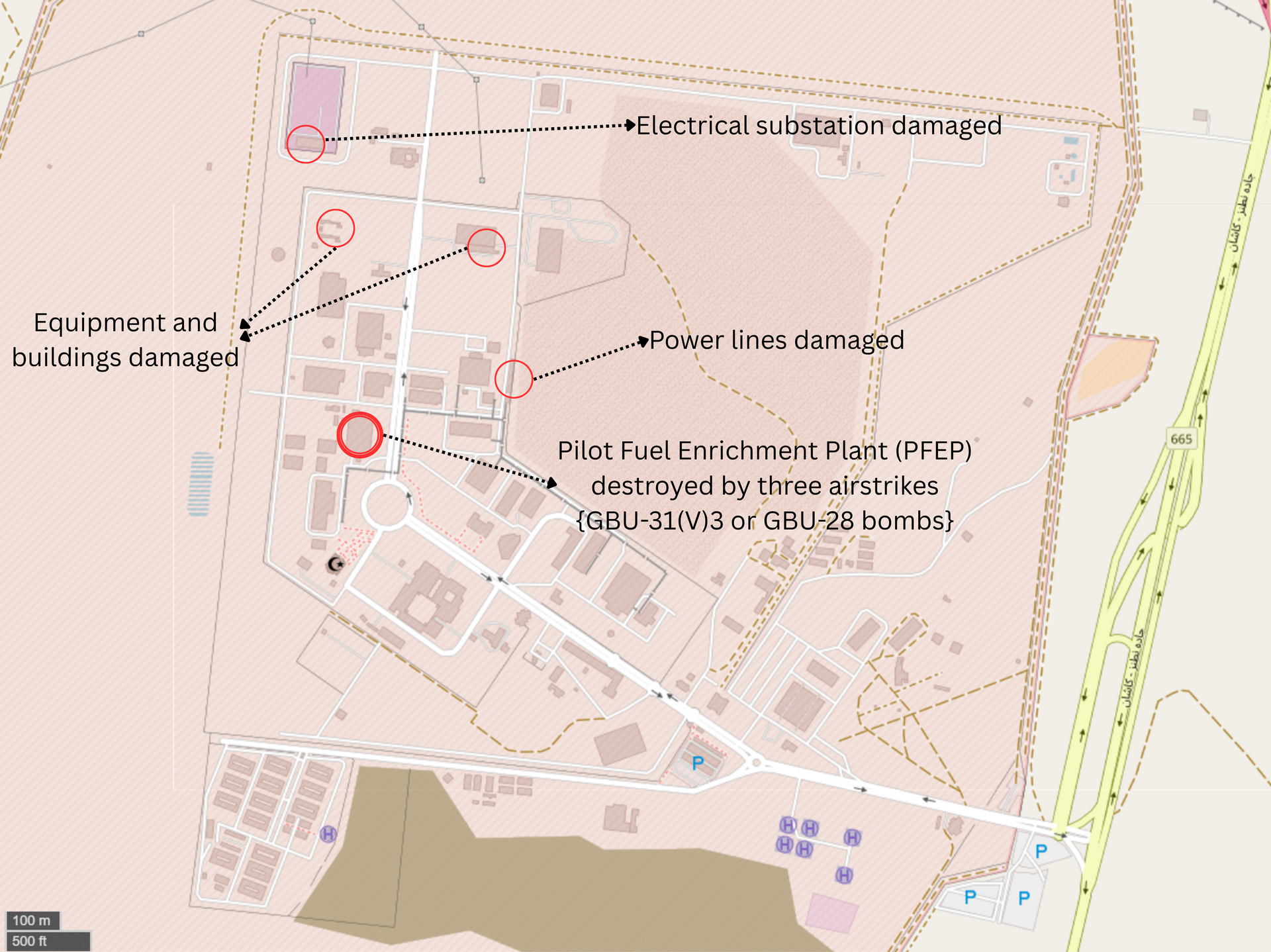
The IAEA has been locked out of 20 declared nuclear sites and one location outside facilities for approximately 121 days — four times the Agency’s own one-month detection goal for the diversion of one significant quantity of highly enriched uranium. Iran’s last verified stockpile, documented in IAEA Board report GOV/2026/8 on February 27, stood at 440.9 kilograms of uranium enriched up to 60% U-235.
Table of Contents
What Did Gharibabadi Say?
Gharibabadi’s position, first stated to Xinhua on June 25 and reaffirmed on June 30, was unambiguous: “These issues will be reviewed and decided only within the framework of a final agreement and as a result of practical action by the other side to end all sanctions and other measures.”
“Practical action,” in Gharibabadi’s formulation, points beyond a diplomatic agreement in principle. Iran’s position, as articulated across multiple Foreign Ministry statements in 2026, treats inspector access as contingent on the actual termination of sanctions infrastructure — executive orders reversed, designations lifted, banking channels reopened.
He also denied on June 30 that the Doha technical talks had been confirmed — the same day Iran’s Tasnim News Agency flatly rejected reports that any Iranian official had agreed to IAEA entry.
Iran’s Foreign Ministry spokesperson Esmaeil Baghaei went further. Iran’s delegation in Qatar “has no relation” to American visitors, Baghaei told reporters on June 30, according to NBC News and PBS. “We will not have any negotiation meetings at any level with the American side in the coming days.”
The Middle East briefing 3,000+ readers start their day with.
One email. Every weekday morning. Free.
The dual denial — no inspectors, no meetings — landed the same day Witkoff and Kushner arrived in Doha framing their mission as denuclearization. Iran’s delegation described its own presence as limited to follow-up on Clause 11 frozen assets, not the nuclear file.
The 121-Day Blackout
The IAEA last accessed Iran’s nuclear facilities in early March 2026. Four monthly detection windows have since closed without a single inspection.
Iran’s stockpile at 60% enrichment, last verified at 440.9 kilograms, contains enough fissile material for 10 to 11 nuclear weapons if further enriched to weapons-grade 90%, according to the Institute for Science and International Security’s June 2026 analysis.
Sixty percent enrichment represents approximately 99 percent of the total isotope separation work required to reach weapons-grade 90%, according to ISIS and independent technical assessments. Using centrifuges available to Iran, the final step could take days to weeks.
The IAEA has formally declared a “loss of continuity of knowledge” over Iran’s declared nuclear material inventory, according to the ISIS analysis. The designation carries a specific technical meaning: even if inspectors entered tomorrow, the evidentiary chain for the intervening 121-day period cannot be reconstructed.
Iran is the only Non-Proliferation Treaty non-nuclear-weapon state to have produced and accumulated uranium enriched to 60% U-235.
| Date | Event | Source |
|---|---|---|
| June 2025 | Israeli and US strikes on Iranian nuclear facilities | Multiple |
| September 9, 2025 | Cairo Agreement signed — interim IAEA access framework | IAEA / Xinhua |
| November 20, 2025 | IAEA Board passes Western-backed resolution on HEU disclosure | IAEA Board |
| November 21, 2025 | Iran terminates Cairo Agreement | Araghchi / Jerusalem Post |
| February 2, 2026 | Iran tells IAEA: access “currently under consideration” | GOV/2026/8 |
| February 27, 2026 | GOV/2026/8 published — last verified stockpile: 440.9 kg at 60% | IAEA Board |
| Early March 2026 | Last IAEA inspector visit to any Iranian nuclear site | ISIS / IAEA |
| June 17, 2026 | MOU Phase 2 begins — 60-day clock starts | MOU text |
| June 25, 2026 | Gharibabadi: no access until sanctions end and deal signed | Xinhua |
| June 30, 2026 | Gharibabadi reaffirms; Day 13 of Phase 2, 121 days without access | Multiple |
Can a Deal Be Verified Without Inspectors?
The 2015 Joint Comprehensive Plan of Action established a sequencing principle that Iran’s current demand inverts. Under the JCPOA, IAEA inspectors verified Iran’s compliance before Implementation Day on January 16, 2016 — before sanctions relief began. The pre-implementation verification period lasted approximately six months.
Gharibabadi’s June 30 position reverses that order: all sanctions terminated and a final agreement concluded before inspectors enter any facility. That hard line found clerical endorsement days later: 62 of 88 Assembly of Experts members declared any Hormuz deal a strategic mistake on the same day Pezeshkian flew to Qom to defend the MOU as Khamenei’s own policy. The Arms Control Association has described Iran’s current stance as a departure from every prior nuclear verification arrangement Tehran has accepted.
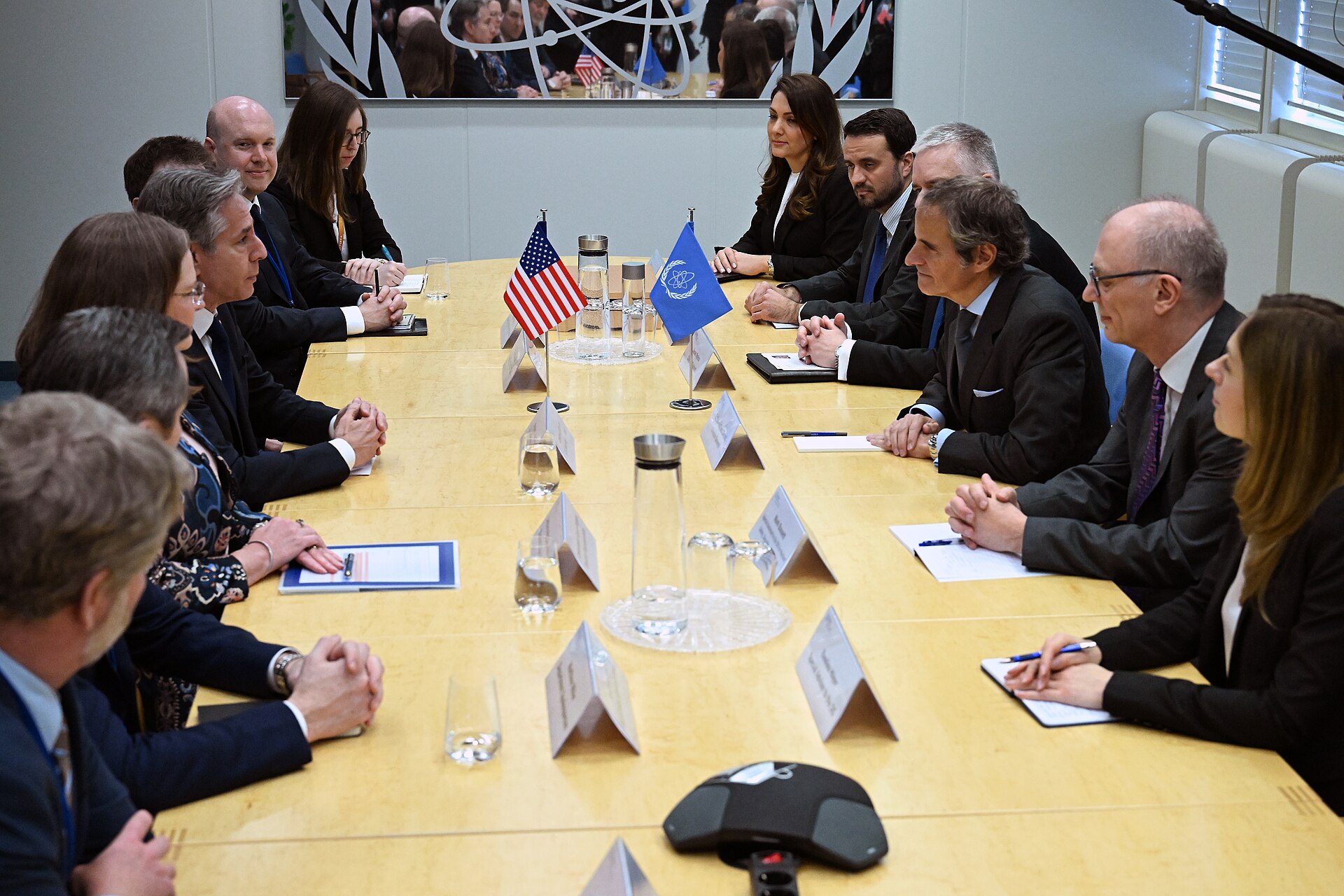
IAEA Director General Rafael Grossi stated on June 24 that the MOU “explicitly” states nuclear activities “will be supervised by the IAEA,” according to NBC News and CBS. Iran disputes this reading of the text.
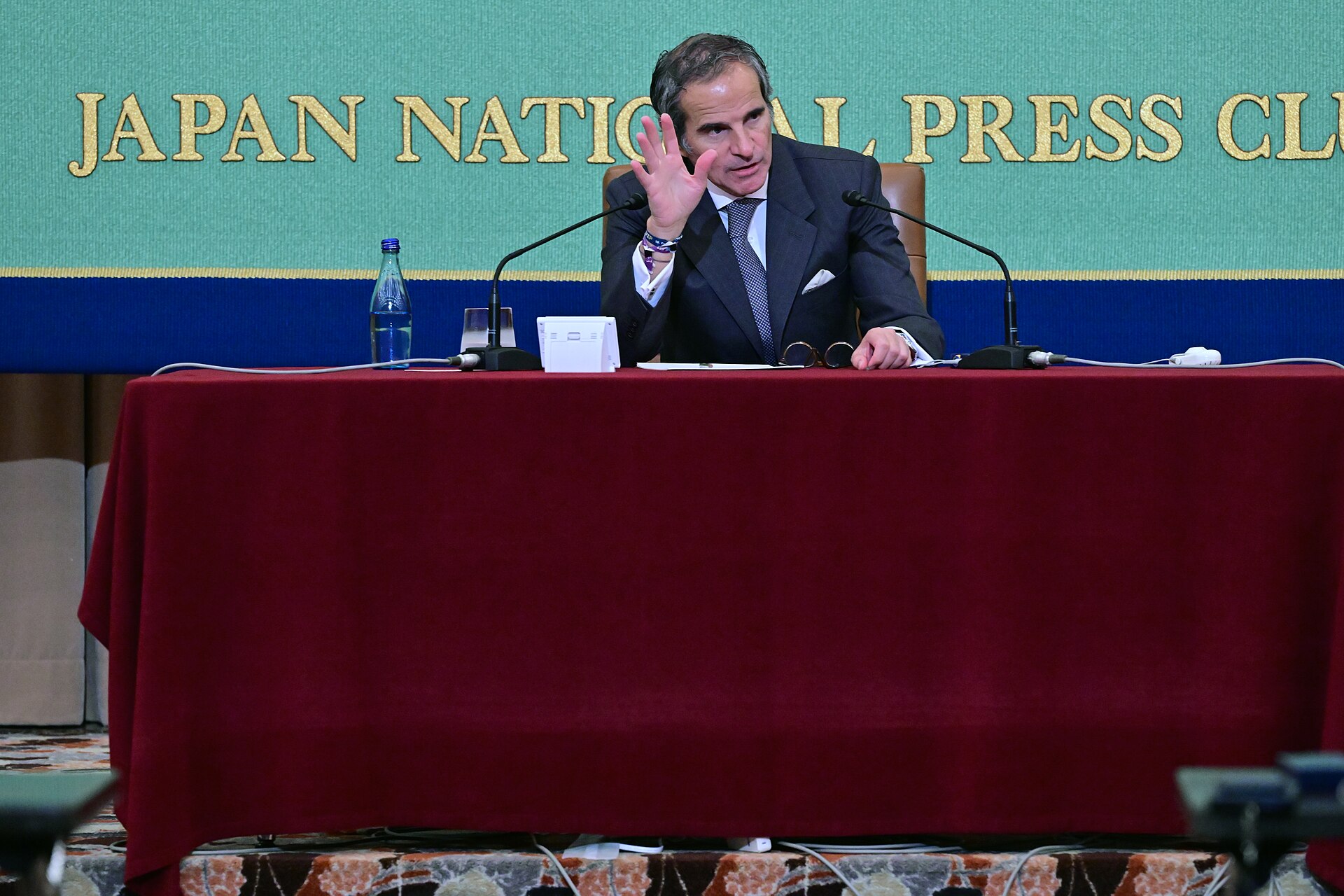
Two days later, at the Japan National Press Club in Tokyo, Grossi characterized the standoff as a “war of statements” between the US and Iran, as reported by Al Jazeera on June 26.
ISIS’s June 2026 analysis stated the operational consequences: “No breakout estimate to WGU is included in the Institute’s analysis of the IAEA report, since to do so would require unsubstantiated speculation about the existence and operability of centrifuges that were not destroyed in the strikes, due to Iran’s denial of IAEA access following the June 2025 military conflict.”
Iran also halted required reporting on nuclear material status and facility design information.
Doha’s Parallel Denial
Baghaei told reporters on June 30 that Iran would have “no negotiation meetings at any level with the American side.” Witkoff and Kushner had arrived in Doha that morning.
On June 29, President Trump announced via Truth Social that Iran had “requested a meeting” in Qatar. Iran denied it within hours. On June 30, the cycle repeated, with Gharibabadi adding the IAEA denial to the already-denied meeting.
The divergence between Washington’s and Tehran’s characterizations of what is happening in Qatar has widened daily. Witkoff described the Doha visit as pursuing “denuclearization.” Baghaei described Iran’s presence as unrelated to the Americans. Qatar, which hosted the original MOU negotiations and maintains the IRGC-CENTCOM deconfliction cell at or near Al Udeid Air Base, has issued no public statement on the June 30 meetings.
Trump, asked specifically about IAEA access to Iran’s nuclear sites, told PBS NewsHour: “There’s no rush. They’ll be on the ground at the appropriate time.”
The MOU’s 14-point text contains no mechanism to pause the countdown. Later that same day, Qatar’s foreign ministry confirmed that no high-level Iran meeting was planned in Doha — a statement that aligned with Iran’s account and against Trump’s.
What Does the MOU Require?
The MOU’s 14-point text contains one explicit reference to the IAEA: Point No. 8, which addresses the downblending of Iran’s highly enriched uranium stockpile. It specifies neither when inspectors gain access, under what conditions access begins, nor who enforces the timeline.
Grossi has argued the text means nuclear activities “will be supervised by the IAEA.” Gharibabadi treats access as a post-deal deliverable. The MOU names no arbiter for this disagreement, no enforcement body, and no process analogous to the JCPOA’s snapback mechanism under UN Security Council Resolution 2231. The text provides no procedure for one signatory to formally challenge the other’s interpretation.
Iran’s February 2, 2026 response to the IAEA, documented in GOV/2026/8, described normal safeguards as “legally untenable and materially impracticable” due to “acts of aggression” — its term for the Israeli and US strikes on nuclear facilities in June 2025.
The EU’s External Action Service, responding to IAEA Board document GOV/2026/33, stated that Iran “must urgently address” the verification gap “to allay concerns regarding the possible diversion of declared nuclear material from peaceful uses.”
Geneva technical talks opened with no IAEA inspection schedule on the agenda.
Saudi Arabia’s Empty Chair
Saudi Arabia holds no seat at the Doha talks, the Geneva technical negotiations, or the IRGC-CENTCOM deconfliction cell in Qatar. Foreign Minister Prince Faisal bin Farhan’s only public statement on the nuclear track was delivered at ECFR Vienna on June 18: “Verification is key.”
On the day Gharibabadi declared that verification would be deferred until after a final deal, Faisal was in Beijing.
The Persian Gulf Security Administration continues to impose costs on Saudi shipping at $5.5 million per day — approximately $2 billion annually. The diplomatic process to which those costs are tethered has no Saudi seat on verification.
The Stimson Center’s 2026 assessment concluded: “Saudi Arabia’s nuclear path will not depend on Iran or the war’s outcome.”
Background
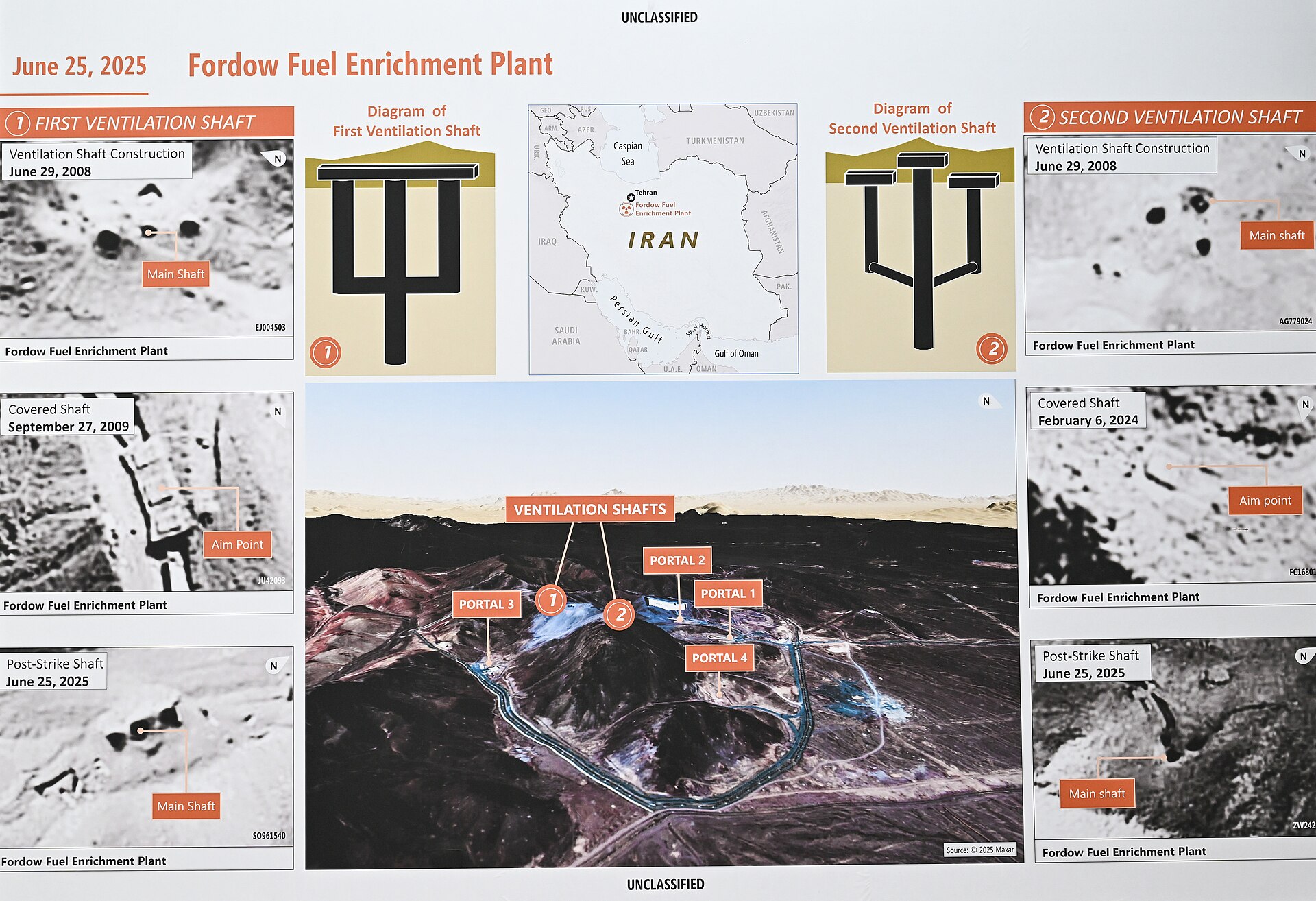
Iran’s denial of IAEA access has deepened in stages. The Cairo Agreement, signed at IAEA headquarters on September 9, 2025, provided an interim framework for inspectors to assess post-strike damage and account for nuclear material at affected facilities. It was brokered directly between Director General Grossi and Iran’s Atomic Energy Organization and covered access to Natanz, Isfahan, and Fordow.
The arrangement lasted less than three months. Iran terminated it on November 21, 2025 — one day after the IAEA Board of Governors passed a Western-backed resolution demanding Tehran disclose its HEU stockpile status. Foreign Minister Abbas Araghchi declared the Cairo Agreement “dead,” according to the Jerusalem Post.
GOV/2026/8, issued February 27, 2026, documented Iran’s reply to the IAEA’s access request: the matter was “currently under consideration.” The report also noted satellite imagery showing vehicular activity near the Isfahan tunnel complex and confirmed that Iran had denied access to two remaining nuclear facilities unaffected by the strikes, plus one location outside facilities.
On Day 61 — approximately August 16 — the PGSA’s $1-per-barrel Hormuz transit fee reverts by default if no final agreement is reached. Forty-seven days remain.
Frequently Asked Questions
What is a “significant quantity” of highly enriched uranium?
The IAEA defines a significant quantity of HEU (enriched to 20 percent or above) as 25 kilograms of uranium-235 — the approximate minimum needed for a single nuclear explosive device. Iran’s verified stockpile of 440.9 kilograms at 60 percent U-235 contains roughly 264 kilograms of U-235, equivalent to more than 10 significant quantities. The Agency’s timeliness goal for detecting diversion of one SQ is one month — a period the current 121-day access blackout exceeds by a factor of four.
Has Iran ever enriched uranium beyond 60 percent?
In February 2023, IAEA inspectors detected traces of uranium enriched to 83.7 percent U-235 at the Fordow Fuel Enrichment Plant. Iran attributed the finding to unintended pressure fluctuations within centrifuge cascades. The IAEA did not formally classify it as intentional production. That detection occurred under JCPOA-era monitoring arrangements — the same inspection regime Iran began restricting in February 2021 under its “Strategic Action to Lift Sanctions” law.
How many IAEA inspectors monitored Iran under the JCPOA?
At peak JCPOA implementation, approximately 130 to 150 IAEA inspectors had some form of access to Iranian nuclear sites, including continuous camera surveillance and environmental sampling at Natanz and Fordow. Iran began restricting that access in February 2021. The Cairo Agreement, signed in September 2025, briefly restored limited access for post-strike damage assessment. Iran’s termination of that agreement in November 2025 ended the last remaining IAEA presence on Iranian soil.
Does 60 percent enrichment mean Iran has a nuclear weapon?
No. Enrichment produces fissile material, but a nuclear weapon also requires a working implosion device, a delivery system, and weaponization engineering. The IAEA’s safeguards mandate covers nuclear material accounting, not weapons design — that determination falls to national intelligence agencies. US National Intelligence Estimates assessed in 2007 that Iran halted its structured weapons design program (Project Amad) in 2003, a finding reaffirmed in 2011. Whether design work has resumed since the June 2025 strikes is a question the IAEA, with no site access, cannot answer.
What happens on Day 61 of the MOU clock?
The MOU Phase 2 clock expires on approximately August 16, 2026. If no deal is in place by Day 61, the PGSA’s Hormuz transit fee — currently waived during the 60-day negotiation window — reverts to $1 per barrel by default. The PGSA’s pre-clearance bureaucracy, which requires vessels to file 40-category transit forms through the Larak corridor, remains operational regardless of the MOU’s status. The fee structure was established 43 days before the MOU was signed; the 60-day waiver was an addition, not a replacement. The demand has since received institutional reinforcement: a supermajority of Iran’s Assembly of Experts signed a statement on MOU Day 14 making the same precondition — full sanctions termination — a requirement before any settlement, including Hormuz reopening.
Iran’s parliament speaker Mohammad Bagher Ghalibaf escalated the position on July 2, saying IAEA access to bombed nuclear sites is “false” and citing two prohibitory domestic laws — Law 199 and the 2021 Strategic Action Law — that he said make any inspection of strike-damaged facilities illegal under Iranian domestic statute, regardless of what MOU Point 8 requires.