DOHA — Donald Trump announced on Truth Social on Monday that Iran had “requested a meeting” in Doha for Tuesday, June 30; hours earlier, Iran’s Deputy Foreign Minister Kazem Gharibabadi told IRNA that no technical talks had been scheduled for this week and that reports of Doha working-group sessions were “not confirmed.” The two statements, published within roughly two hours of each other on June 29, describe mutually exclusive realities about whether the next round of negotiations under the Bürgenstock MOU will take place at all.
The contradiction matters beyond the diplomatic embarrassment because the 14-point MOU signed June 17–18 at Lake Lucerne contains no mechanism for resolving it — no joint communication protocol, no shared spokesman’s office, no arbitration body empowered to confirm or deny meetings on behalf of both parties. On Day 12 of a 60-day clock that has no pause button, the two signatories cannot publicly confirm whether they are meeting tomorrow, and the framework offers no architecture to settle the dispute. Saudi Arabia, excluded from both the Geneva round and the proposed Doha session, has no channel through which to verify which version is operative — and the terms being negotiated in rooms where Riyadh has no representative include a PGSA fee structure that costs the kingdom an estimated $5.5 million per day.
Table of Contents
- What Did Trump Say — and When?
- Gharibabadi’s Denial and the Private Signal
- Why Can’t the MOU Resolve a Scheduling Dispute?
- Geneva to Doha: A Venue Shift That Rewrote the Agenda
- Saudi Arabia Watches From Outside Both Rooms
- Does the Clock Pause for a Dispute Nobody Can Resolve?
- Frequently Asked Questions
What Did Trump Say — and When?
Trump’s Truth Social post, published Monday June 29, read in full: “IRAN HAS REQUESTED A MEETING. IT WILL TAKE PLACE TOMORROW IN DOHA!” The statement, reported the same day by NBC News, CBS News, PBS NewsHour, Al Jazeera, the Times of Israel, and CNBC, asserted not only that a meeting would occur but that Iran had initiated it — framing Tehran as the petitioner and Washington as the party granting the audience. White House spokesperson Karoline Leavitt told Fox News that Steve Witkoff and Jared Kushner would fly to Doha for “high-level meetings this week,” describing both senior-level and separate technical discussions, according to The Hill and Middle East Online.
The timing is itself a data point. According to Al Jazeera’s June 29 liveblog, Gharibabadi’s denial via IRNA had already been published before Trump posted — meaning the US president either had not seen the Iranian denial, had seen it and chose to contradict it publicly, or was operating on a separate diplomatic channel that the Iranian deputy foreign minister was not authorized to acknowledge. None of these explanations resolves the contradiction, and all three confirm that the MOU provides no shared mechanism for coordinating public statements between the parties. The gap is not between an offhand remark and a formal statement — it is between two fully articulated, on-the-record positions issued within the same news cycle.
Gharibabadi’s Denial and the Private Signal
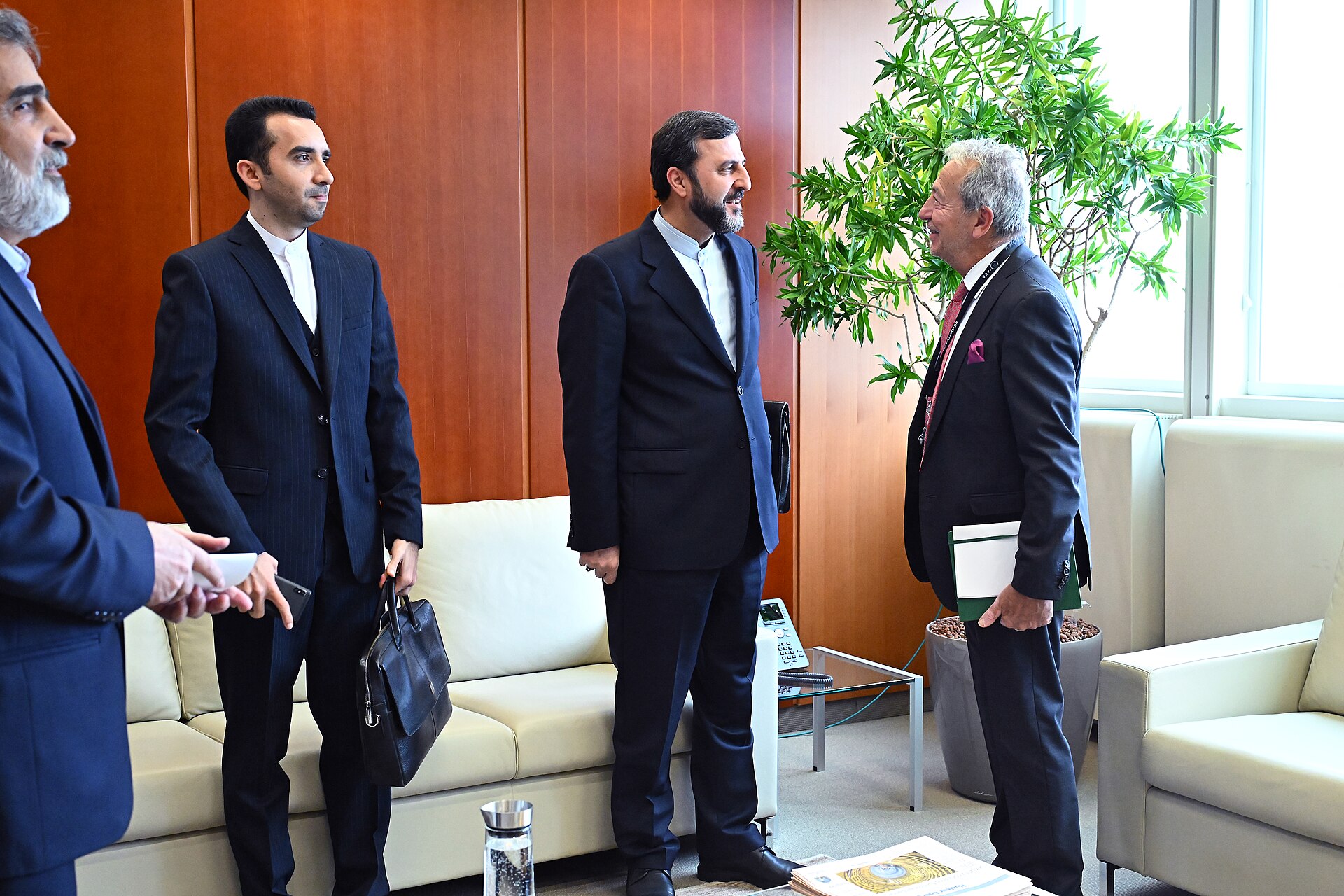
Gharibabadi’s statement, distributed through IRNA on June 29, was precise in what it denied and careful about what it left open. “Although consultations with Qatar, including regarding the follow-up on the implementation of the other party’s commitments, are ongoing as usual,” he said, “reports by some media outlets about the holding of technical talks of the working groups in Doha are not confirmed.” He added, per CBS News and PBS NewsHour: “The holding of technical meetings of the working groups has not been scheduled for this week.” The language draws a sharp line between ongoing Qatar-channel consultations — which Iran acknowledges — and the formal MOU-constituted working groups, which Iran says have not been calendared.
“The first round of technical talks within the framework of the designated working groups will be held once conditions are in place and after agreement on the date and location. Consultations on this matter will continue through mediating countries.”
The HOS Daily BriefThe Middle East briefing 3,000+ readers start their day with.
One email. Every weekday morning. Free.
— Kazem Gharibabadi, Deputy Foreign Minister, via IRNA, June 29, 2026
But on the same day, a senior unnamed Iranian source told RFERL that a meeting would take place in Doha on Tuesday, with the focus on Strait of Hormuz management rather than nuclear issues, and in a format different from the Geneva technical talks. The private signal directly contradicts Gharibabadi’s public statement — suggesting either that Iran’s diplomatic apparatus is not internally coordinated, or that the public denial is strategic positioning ahead of talks that Tehran expects to attend but does not wish to appear to have sought. If Trump’s claim that “Iran has requested a meeting” is accurate, the denial functions as face-saving; if it is not, the private RFERL source is freelancing against Tehran’s own deputy foreign minister.
Gharibabadi’s statement also embedded a sovereignty claim that went well beyond the scheduling question. “We remind them that, whether in times of war or peace, only the Islamic Republic of Iran can establish security in this strait and will not permit any country to interfere in such matters,” he said, per CBS News, PBS, and the Middle East Monitor. The line, inserted into a statement nominally about meeting logistics, pre-positions Iran’s baseline negotiating claim on Hormuz at the precise moment the US is declaring a meeting imminent — functioning simultaneously as denial, sovereignty assertion, and opening bid. It mirrors the pattern visible in the June 28 MOU violation cycle, where Iran escalated and de-escalated through the same public channel within hours.
Why Can’t the MOU Resolve a Scheduling Dispute?
The 14-point MOU text, signed at Bürgenstock and Lake Lucerne on June 17–18, references an “executive mechanism” to be established for monitoring implementation, according to analysis published by South Florida Reporter and Gibson Dunn’s June 2026 legal review. That body has not been constituted as of Day 12. It has no emergency protocol, no named personnel, no arbitration authority, and no capacity to adjudicate competing public statements — or even to confirm whether a meeting has been formally scheduled between the two parties that signed the document.
The gap is structural, not incidental, and it distinguishes the MOU from every comparable diplomatic framework in recent history. The 2015 JCPOA designated the UN Security Council under Resolution 2231 as its enforcement backstop; when disputes arose over compliance, there was an institution empowered to rule. The Minsk II accords, for all their failures, at least established the OSCE as a monitoring body (which documented 320,130 violations by 2016). The MOU names no equivalent. As Chatham House observed in its June 2026 analysis, the agreement “appears to rest on ‘good faith,’ which is probably as far as the sides could go to avoid giving the impression of a formal treaty, while indicating their intention to comply,” adding that “much of the agreement is ‘impossibly vague.’”
If the framework cannot produce a shared answer to the binary question “are we meeting tomorrow,” it offers no architecture for resolving the harder disputes embedded in the MOU’s 60-day timeline — the terms of HEU downblending under Point 8, the scope of the PGSA fee waiver, the status of IAEA verification (440.9 kg of HEU at 60% enrichment has gone unverified for over 97 days as of June 29, per IAEA Board report GOV/2026/8), or the conditions under which the Lake Lucerne monitoring group would convene. The same structural absence that allowed both sides to cite the MOU to justify violating it on June 27 now prevents them from confirming a meeting that one side says it arranged and the other says was never scheduled.
Geneva to Doha: A Venue Shift That Rewrote the Agenda
The June 29–30 sessions had originally been scheduled for Geneva, Switzerland, to continue the nuclear-focused technical discussions that the MOU framework established. The shift to Doha was triggered by the weekend’s military exchanges — IRGC strikes on Ali Al Salem and Juffair, US counter-strikes — which made a European venue politically untenable and reframed the negotiating agenda from nuclear matters to Strait of Hormuz management and de-escalation, according to RFERL and CNBC reporting on June 29. Geneva opened without IAEA inspectors; Doha, if it opens at all, will convene without the nuclear track that justified the original venue.
The venue change is also an agenda change, and the downgrade is consequential. Geneva was about nuclear working groups — the specific technical track that Gharibabadi’s IRNA statement denied had been scheduled. Doha, per the unnamed senior Iranian source cited by RFERL, would focus on Hormuz — a subject the MOU addresses primarily through the PGSA fee waiver and the “best efforts” shipping corridor language that has already failed to prevent a drone strike on the Ever Lovely container ship on June 25. The nuclear track is being sidelined at a moment when IAEA access has been frozen for over three months and the 440.9 kg of HEU detailed above sits unverified at Iranian enrichment facilities.
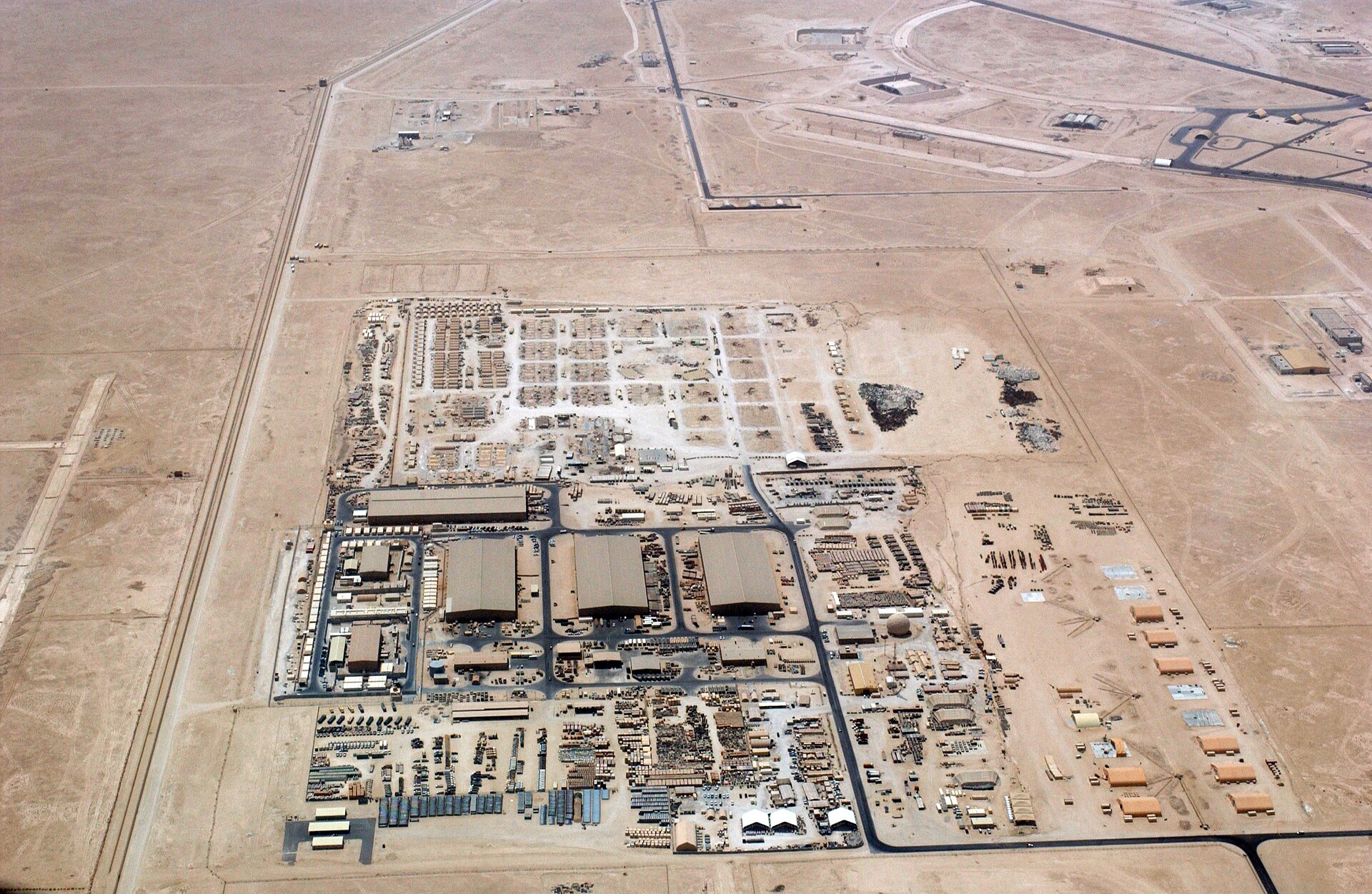
Qatar’s role as host compounds the structural tension that has accumulated over the past two weeks. Qatar is simultaneously serving as MOU co-mediator, host of the IRGC-CENTCOM deconfliction cell at or near Al Udeid Air Base, and proposed venue for Tuesday’s talks — even though IRGC struck Al Udeid on June 27, as confirmed by Qatar’s Ministry of Defense. The mediator was struck by one party and is now hosting both, a compound of roles that no previous Gulf diplomatic framework has attempted and that the MOU’s text does not address. The missiles pledge that the GCC-US Manama joint statement demanded as part of any final deal carries no agenda slot in the Doha format — another item lost in the venue shift.
Saudi Arabia Watches From Outside Both Rooms
Saudi Arabia holds no seat at the proposed Doha talks, just as it held none at the Geneva sessions or the Bürgenstock negotiations that produced the MOU. Foreign Minister Prince Faisal bin Farhan’s last documented diplomatic contact on June 28 was a condolence call from Pakistan Foreign Minister Ishaq Dar regarding the Ras Tanura helicopter crash — not a statement on the IRGC strikes that morning, not a reaction to Trump’s ceasefire claims, and not a position on whether Doha talks would proceed. The kingdom published no statement on the Doha confirmation dispute as of June 29.
The exclusion is structural rather than incidental, and it has deepened with each stage of the diplomatic process. Riyadh was absent from the Bürgenstock negotiations, absent from the Geneva technical track, absent from the IRGC-CENTCOM deconfliction cell in Qatar, and is now absent from the Doha talks that may or may not occur on Tuesday. The PGSA fee waiver — which imposes an estimated $5.5 million per day in implied costs on Saudi shipping according to prior HOS analysis — was negotiated without Saudi input, and the terms of its expiration on approximately Day 61 will be determined in rooms where the kingdom has no representative. Baghdad’s 6+2 regional framework proposal, announced by Araghchi on June 28, would similarly exclude Riyadh from the architecture being built around it.
The fiscal exposure runs deeper than transit fees. Brent crude closed at $73.41 on June 29 — up 1.1% on the stand-down and Doha-talks news, per CNBC — but Saudi Arabia’s fiscal breakeven sits at approximately $108–111 per barrel, a gap of roughly $35–38 per barrel that the kingdom absorbs every day the conflict suppresses global oil prices. WTI rose 1.4% to $70.23 on the same news, recovering partially from the June 28 close of $69.23 that marked the first time WTI had dipped below $70 since late February. ING strategists warned on June 29 that energy market participants “appeared to be too optimistic about the timeline for a recovery in Persian Gulf oil supplies,” suggesting the price uptick reflects hope for diplomatic progress rather than any structural improvement in shipping conditions.
| Indicator | Value (June 29) | Source |
|---|---|---|
| MOU day count | Day 12 of 60 | MOU signed June 17–18 |
| Days to PGSA fee reversion | ~48 (Day 61: Aug 16–17) | MOU 60-day waiver |
| Brent crude | $73.41 (+1.1%) | CNBC, June 29 |
| WTI crude | $70.23 (+1.4%) | CNBC, June 29 |
| Saudi fiscal breakeven | ~$108–111/bbl | IMF estimates |
| Brent-breakeven gap | ~$35–38/bbl | Derived |
| HEU unverified | 440.9 kg at 60% U-235 | IAEA GOV/2026/8 |
| Days without IAEA access | 97+ | IAEA reporting |
| PGSA daily Saudi exposure | ~$5.5M/day | HOS analysis |
Does the Clock Pause for a Dispute Nobody Can Resolve?
The 60-day MOU clock began June 17–18 and does not pause for scheduling disputes, venue changes, military escalation, or competing public statements about whether negotiations are occurring. Day 12 passed on June 29 with the two parties unable to confirm whether they would meet on Day 13. Day 61, approximately August 16–17, triggers automatic reversion of the PGSA fee structure by default — meaning that if no permanent arrangement is reached, the fee mechanism that the Persian Gulf Strait Authority has explicitly reserved the right to activate comes into effect without any further action required.
The legal status of the clock is itself disputed. Defense Secretary Pete Hegseth told Senator Tim Kaine that a ceasefire “pauses or stops” the 60-day window, but Kaine publicly rebutted this on PBS NewsHour and in remarks reported by The Hill, saying the War Powers Act statute “does not have a pause button.” The ambiguity over whether the clock can be frozen — a question the MOU does not address and on which the two branches of the US government disagree — adds another layer of uncertainty to a timeline that already lacks the administrative machinery to manage it.
The PGSA itself carries an additional legal dimension that compounds the expiration risk. The US Treasury’s OFAC designated the PGSA as an IRGC-linked Specially Designated National on May 27, 2026, meaning any payment to the authority by Western entities constitutes a prohibited transaction under US sanctions law. If the fee structure reverts on Day 61, Western shipping companies and their insurers face a compliance trap with no clean exit: pay an OFAC-designated entity to transit Hormuz, or refuse and lose access to the strait that carries roughly one-fifth of global oil supply. The operational reality facing ship operators navigating this compliance paradox — Iran requiring PGSA pre-clearance paperwork while the White House told vessels they could move freely — is documented in the dual-doctrine conflict over Hormuz transit authority.
Meanwhile, Iranian President Masoud Pezeshkian announced on June 29 that half of Iran’s frozen assets held in Qatar — $3 billion of the claimed $6 billion total — would be returned to Tehran, according to Tasnim News Agency as reported by the Washington Times and The Hill. Washington has not confirmed execution of the transfer; the Wall Street Journal reported US denial. The claim, made on the same day as the Doha talks dispute, suggests Iran is pursuing a parallel economic track independent of the scheduling question — monetizing the diplomatic process regardless of whether any specific meeting occurs. With 48 days remaining and no constituted monitoring body, no named arbitrators, and no emergency protocol, the framework cannot confirm whether it will produce a single formal session between now and August 16 — let alone the permanent arrangement that would prevent the PGSA fee from activating by default on Day 61. Qatar’s foreign ministry confirmed on June 30 that no high-level Iran meeting had been planned in Doha, settling the scheduling dispute from the host government’s own account.
Frequently Asked Questions
What exactly did Trump say about the Doha meeting?
Trump posted on Truth Social on June 29, 2026: “IRAN HAS REQUESTED A MEETING. IT WILL TAKE PLACE TOMORROW IN DOHA!” — in all capitals, as is his standard format on the platform. The framing was deliberate: by stating Iran “requested” the meeting, Trump positioned Tehran as petitioner and Washington as the granting party — a distinction Gharibabadi’s public denial neither acknowledged nor refuted.
What is Iran’s stated position on the Doha talks?
Deputy Foreign Minister Kazem Gharibabadi denied via IRNA that any working-group sessions had been scheduled, while a senior unnamed Iranian source told RFERL the same day a meeting would proceed in Doha focused on Hormuz. The internal contradiction matters beyond the scheduling question: Iran’s deputy foreign minister and an unnamed senior official gave the international press directly opposing accounts on the same date, through official and unofficial channels simultaneously. That pattern — public denial paired with a private signal — is consistent with face-saving before talks Iran expects to attend but does not wish to appear to have sought.
Why did the talks move from Geneva to Doha?
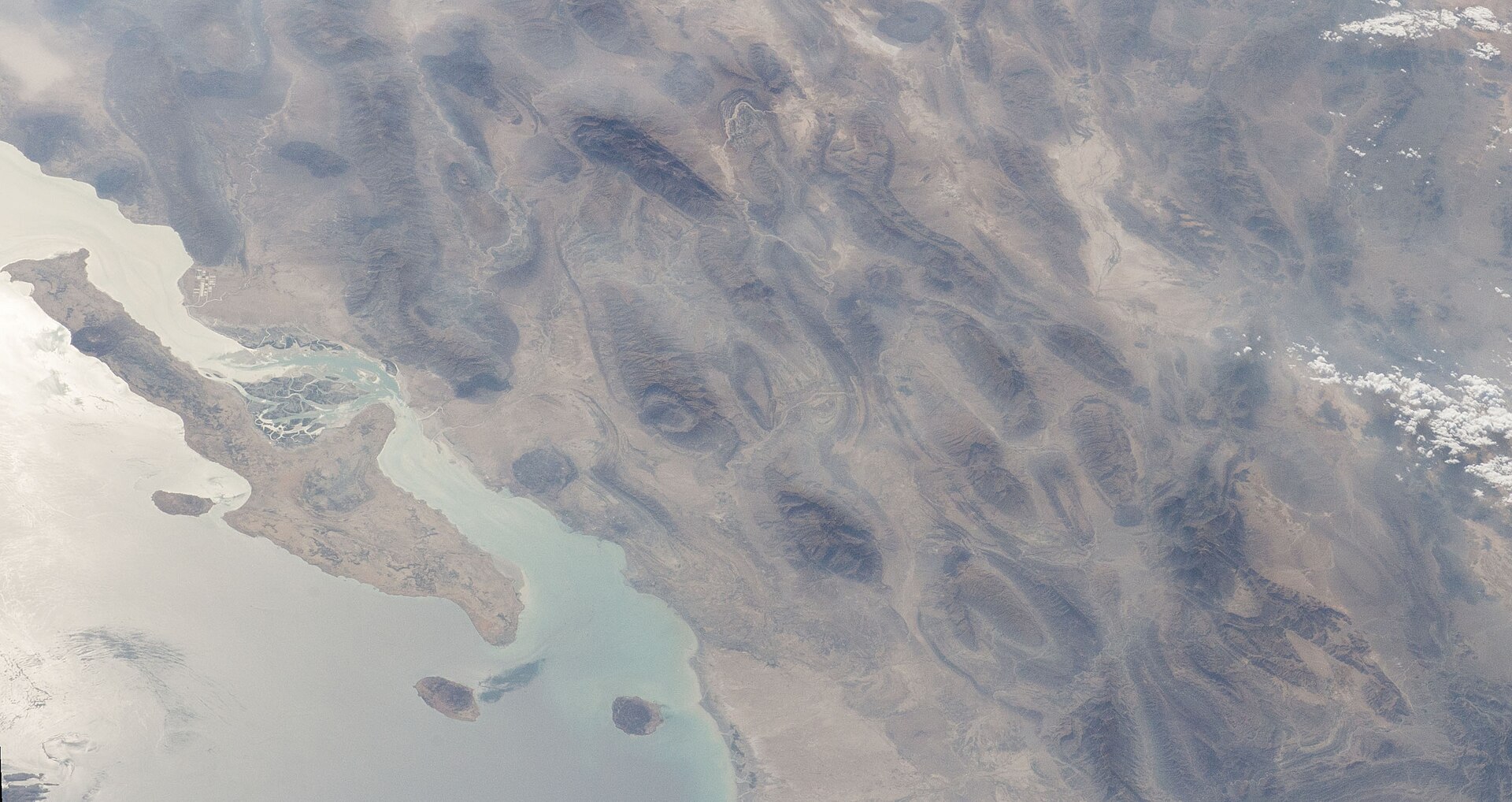
The sessions were originally scheduled for Geneva to continue nuclear-track discussions. IRGC strikes on US bases at Ali Al Salem (Kuwait) and Juffair (Bahrain) on June 27–28 made the European venue untenable, according to RFERL and CNBC. The relocation shifted not only the geography but the substance — from nuclear working groups to Strait of Hormuz management. Qatar’s hosting role carries a specific complication: the IRGC struck Al Udeid Air Base on Qatari soil on June 27, making Qatar simultaneously a struck party and the proposed venue for talks between the parties who struck it and responded.
What happens when the 60-day MOU clock expires?
Day 61, approximately August 16–17, 2026, triggers automatic reversion of the PGSA fee structure. The PGSA has reserved the right to introduce transit fees for the Strait of Hormuz after the 60-day waiver period, and the authority is designated by OFAC as an IRGC-linked entity — meaning Western shipping companies paying such fees would face US sanctions violations. Senator Tim Kaine has publicly stated the War Powers Act statute “does not have a pause button,” contradicting Defense Secretary Hegseth’s claim that a ceasefire could stop the clock.
Does Saudi Arabia have any involvement in the Doha process?
Saudi Arabia has no seat at Doha, Geneva, or Bürgenstock — and the MOU contains no mechanism through which Riyadh could gain one. The framework’s parties are the US and Iran; mediators are Qatar and Pakistan; neither role is open to Saudi Arabia. The terms being finalized — PGSA fee reversion on Day 61, Hormuz corridor rules, IAEA verification sequencing — will bind Saudi shipping and Saudi fiscal planning without the kingdom having negotiated a single clause. Faisal’s public statement that “verification is key” (ECFR Vienna) remains the kingdom’s only on-record input to the nuclear track; no equivalent statement addresses Hormuz fees.