
DUBAI — Emmanuel Macron stood beside Sultan Haitham bin Tarik on June 29 and announced a multinational mine-clearance mission for the Strait of Hormuz, and Iran said no within hours — not by violating the Islamabad Memorandum of Understanding, but by quoting it. Deputy Foreign Minister Kazem Gharibabadi told reporters that under the MOU “demining will be carried out solely by Iran and not by any other country,” then warned France against “provocations” in language reserved for adversaries who have misread a contract.
The treaty Iran is citing was signed June 17-18, 2026 and gives Iran thirty days to begin clearance and sixty days of fee-free transit. Article 5 names no enforcement body. Article 12 promises an “executive mechanism” that does not yet exist on Day 13. The Pentagon estimates full clearance would take six months with three dedicated vessels — Iran has not disclosed where its roughly eighty mines are. Saudi Arabia, which paid no part of the negotiation and signed no part of the document, is the GCC member without a PGSA exemption, and the post-Day-60 fee regime would cost the kingdom an implied $5.5 million per day or roughly $2 billion per year. The MOU is not being violated. It is working exactly as Iran wrote it.
Table of Contents
- What Article 5 Actually Says
- What Macron Proposed in Paris
- Why Iran’s Rejection Is Treaty-Consistent
- The Pentagon Says Six Months; the MOU Says Thirty Days
- What Happens When the Sixty-Day Clock Runs Out
- Why Markets Priced In a Resolution the MOU Cannot Deliver
- The 1987 Precedent and Why It Cannot Be Used Again
- What Saudi Arabia Pays While the Mines Stay
- Frequently Asked Questions
What Article 5 Actually Says
The fourteen-point text of the Islamabad MOU, published in summary form by Arab Center DC and confirmed against the version CNN ran into print, contains language that reads almost defensively when set against the demining argument now consuming European capitals. Article 5 commits Iran to “best efforts” for safe passage of commercial vessels “with no charge, for sixty days only,” and adds that demining “will be instated within thirty days.” Those two clauses contain four obligations and zero penalties, name one party and no overseer, and use the word “instated” — meaning begun, not completed — in the only sentence in the document that mentions mine clearance.
The verbs matter, because every later argument runs through them. “Best efforts” is the weakest standard in commercial contract law, a phrase courts in London and New York have repeatedly held imposes no obligation of result. “Instated” describes a process commencing, not a milestone reached, and the thirty-day window is measured from signing, not from the date the mines were laid or the date the channel reopens. Iran can satisfy the literal text by performing a single act of clearance on Day 29 and reporting it as Article 5 compliance. There is no audit clause to disagree.
Article 12 was supposed to supply the missing teeth. It states that “an executive mechanism will be established to monitor the successful implementation of this MOU” and gestures at the Lake Lucerne monitoring group as the venue. On Day 13 of the sixty-day clock, that body does not yet exist — it has no charter, no emergency protocol, no inspection rights, and no power to call a violation. The parties best positioned to monitor Iranian maritime conduct — the Gulf states that watch Hormuz traffic daily — are precisely the parties the Islamabad talks excluded, leaving the mechanism with neither teeth nor eyes.
Read in isolation, Article 5 sounds like a concession from Iran. Read alongside Article 12 and the absence of any reference to UNCLOS dispute resolution, it reads like a sovereignty claim with a sunset provision. Iran agreed to clear mines it laid, on its own timeline, with no third party authorized to verify the work — and the document calls that a security guarantee.
The Middle East briefing 3,000+ readers start their day with.
One email. Every weekday morning. Free.
What Macron Proposed in Paris
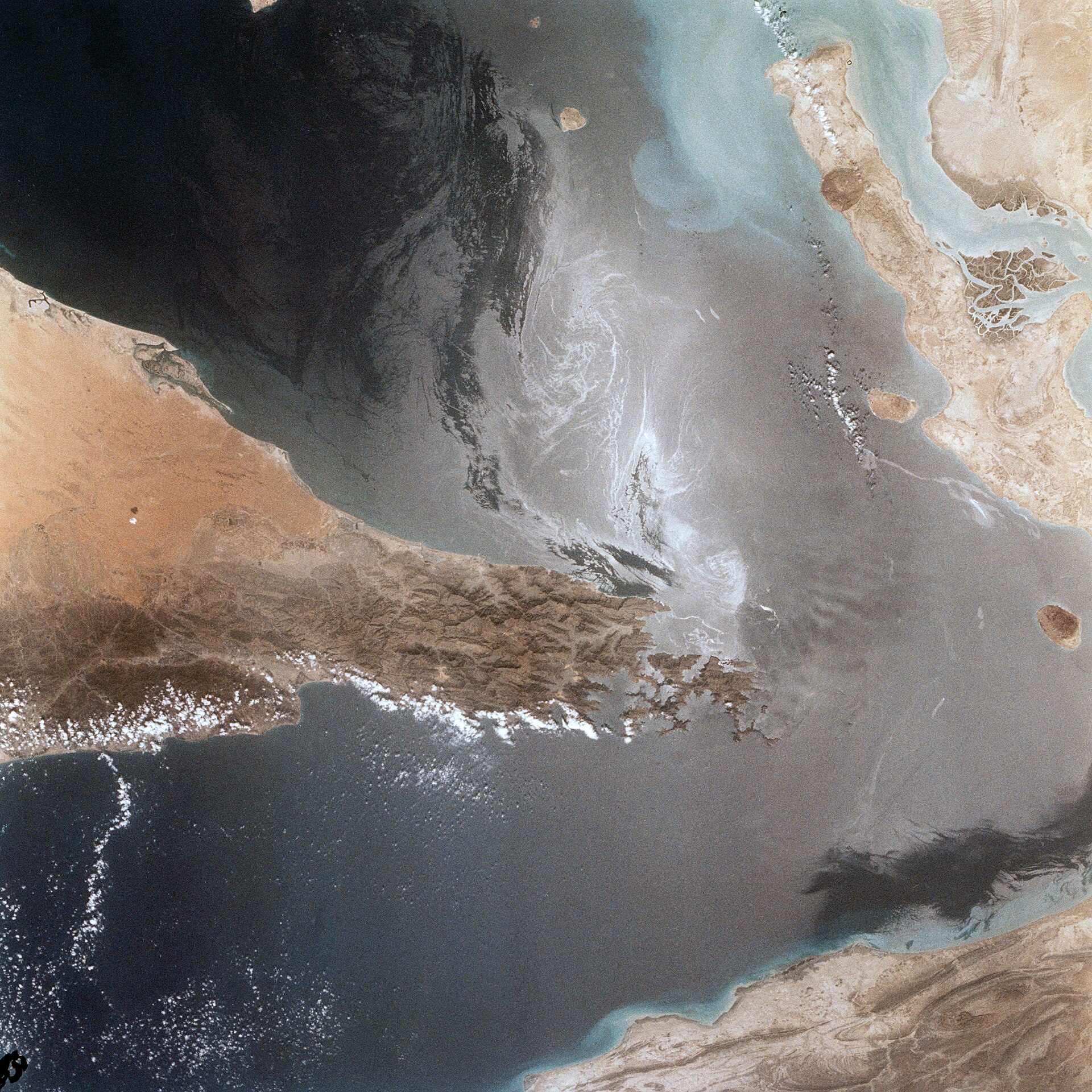
Sultan Haitham bin Tarik flew into Paris on June 29 for the first official Omani state visit to France since 1989, and Emmanuel Macron used the photo opportunity to make a maritime security announcement his foreign ministry had been preparing for weeks. “We have decided to work jointly, together with our partners, on mine clearance in the strait to secure maritime routes and guarantee free and unconditional passage through the Strait of Hormuz,” Macron told reporters at the Élysée, framing the operation as a multilateral coalition rather than a French unilateral initiative. The choice of words — “free and unconditional passage” — was a direct citation of UNCLOS Article 38, and a deliberate one.
The coalition Macron sketched is substantial. PBS NewsHour and gCaptain reported a forty-plus country grouping including Australia, South Korea, Japan, Bahrain, Qatar, the Netherlands and every G7 nation, organized around the UK Royal Fleet Auxiliary vessel Lyme Bay with 270 personnel and autonomous mine-hunting drones. The French aircraft carrier Charles de Gaulle has been positioned within striking distance for weeks. On paper, this is the most ambitious Western mine-clearance assembly since Operation Earnest Will in 1987-88, and the asset list is genuine.
What the announcement did not contain was any reference to a legal basis under the Islamabad MOU, any indication of Iranian consent, or any acknowledgment that the document Macron’s foreign ministry helped broker assigns demining to Iran exclusively. The Sultan, standing beside Macron, was careful — Oman has spent two years building the Iran-Oman Hormuz Committee precisely to keep extra-regional powers out of strait management, and the bilateral committee was institutionalized on June 24, five days before Macron’s announcement. Reading the body language, the Sultan endorsed the principle of cleared mines without endorsing the mechanism Macron had just described.
Gharibabadi’s reply came inside the same news cycle. “We strongly advise France not to make the situation more complicated with its provocations,” he told Anadolu Agency, then cited Article 5 by name. By the morning of June 30, Majlis Speaker Mohammad Baqer Qalibaf had added a sentence that read like a manifesto: “The Strait of Hormuz will never return to its pre-war conditions and will be administered by Iran.” That was not the language of a country being asked nicely to permit a clearance operation. It was the language of a coastal state that had read its own treaty and decided it had the legal cover to refuse.
Why Iran’s Rejection Is Treaty-Consistent
The instinctive Western reading of Gharibabadi’s statement is that Iran is breaking the MOU. The careful reading is the opposite. Iran is invoking the MOU — its specific words, its specific silences — to do exactly what the text permits: defer, control, and exclude. How Iran has used the document’s enforcement gaps for kinetic strikes is documented in Iran Cited the MOU to Justify Breaking It; the demining episode extends that pattern from ordnance to maritime engineering.
Article 5 reserves demining to Iran without saying so explicitly, by assigning the responsibility to one party and providing no mechanism for transferring it. The drafters of the MOU — Pakistan, Qatar and the United States as mediators, with Iran and a US delegation as principals — left this asymmetry in the text either because Iran demanded it or because the drafters did not believe the issue would arise in the first thirty days. Either way, the document gives Iran a defensible legal posture, and Gharibabadi is exploiting it with the precision of a lawyer who has spent decades arguing UNCLOS cases at The Hague.
The deeper logic runs through Article 42 of UNCLOS itself. The convention permits coastal states to adopt laws governing “safety of navigation” in straits used for international navigation. Iran’s position — articulated by Gharibabadi but originally developed by Foreign Ministry legal advisors in 2024 — is that mine management is a safety-of-navigation function reserved to coastal states. Neither Iran nor the United States has ratified UNCLOS, but Iran cites it as customary international law when convenient and rejects it as Western imposition when not. In the Hormuz case, it is convenient.
Ships have an absolutely unsuspendable right of passage through international straits. If the US negotiates a deal accepting Iranian and Omani control, that would challenge the universal agreement that all straits are open to all ships of all nations, under all circumstances.Marc Weller, Director, Global Governance and Security Center, Chatham House
Weller’s framing captures the doctrinal problem without resolving the operational one. Transit passage may be theoretically unsuspendable, but a mine in the channel is not a legal question. The MOU’s drafters knew this — they wrote a document that conceded the practical sovereignty Iran could exercise through ordnance while preserving the rhetorical sovereignty Western states could exercise through declarations. Both sides got what they could enforce. Iran got the verbs. The West got the press conferences.

The Pentagon Says Six Months; the MOU Says Thirty Days
The most vivid irreconcilability in the entire Hormuz file sits in two unrelated documents. The MOU’s Article 5 imposes a thirty-day window for Iran to begin clearance. The Pentagon’s working estimate, reported by the Washington Post in late April and reconfirmed in Al Jazeera’s late-April explainer, is that full clearance of the strait would take up to six months using three dedicated mine-countermeasures vessels. Those are not estimates of the same thing — one is a start date, the other is a completion date — but the mismatch is what makes the file impossible to read coherently.
BIMCO’s maritime security head Jakob Larsen, who has spent his career advising shipowners on insurance-grade clearance verification, was blunt in April: “Sweeping the Strait of Hormuz clear of mines with complete certainty could be a near-impossible task.” The qualifier matters. A channel can be declared clear and an insurer can decline to underwrite transit through it; certainty is what makes commerce flow, and certainty in mine warfare is the product of weeks of redundant sweeping with multiple platform types. The MOU’s thirty-day window does not allow for redundant sweeping. It barely allows for primary sweeping.
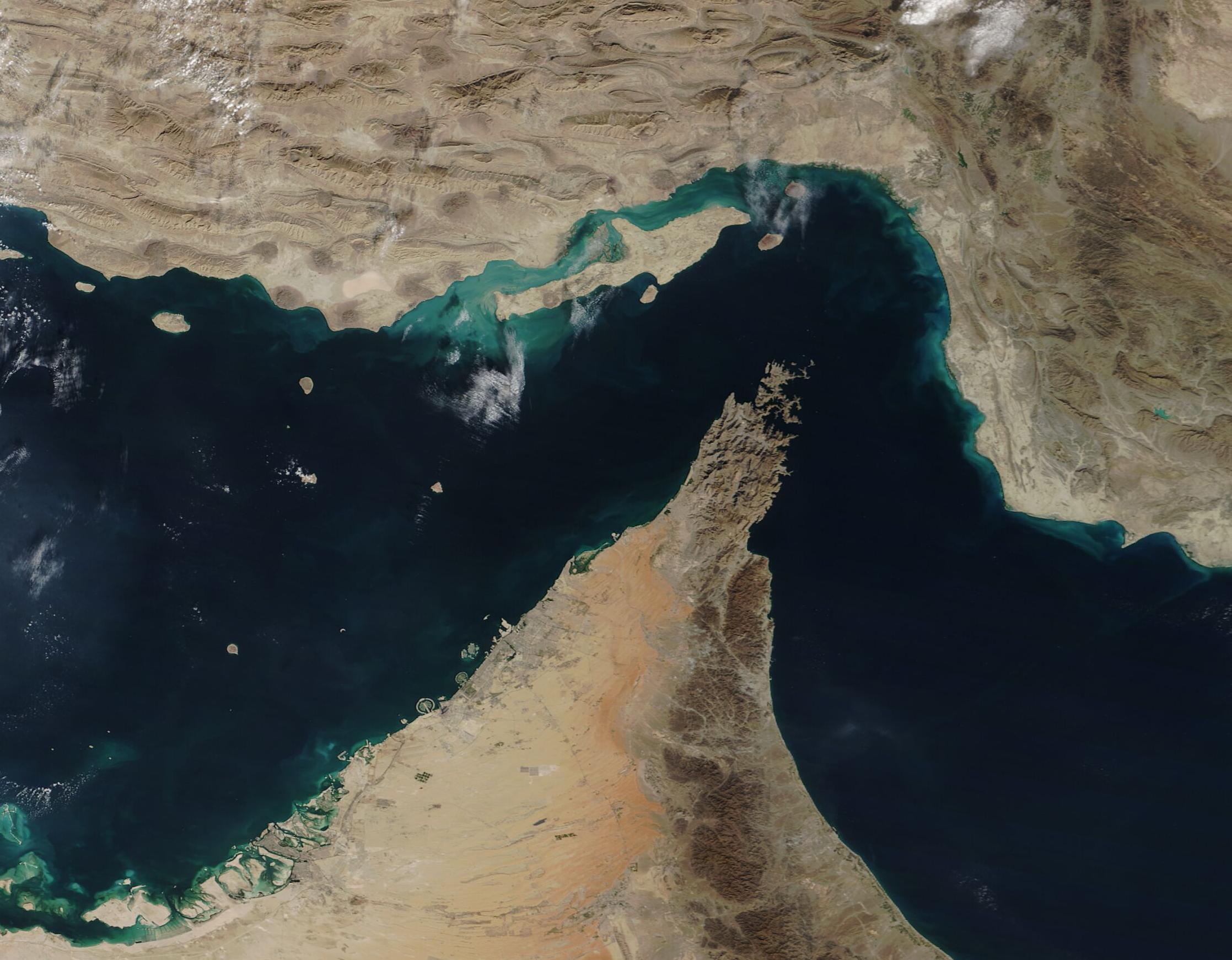
The mine count itself is contested in a way that illustrates the verification problem. The IMO has confirmed “approximately eighty naval mines laid by IRGC forces across the Strait’s Traffic Separation Scheme.” A revised US estimate from June puts the central-channel figure at “fewer than ten” — a narrower geographic scope, not a direct refutation, since the TSS encompasses far more water than the main navigable lane. NYK Line CEO Takaya Soga told the Financial Times on June 29 that eighty IRGC mines block the main shipping lane, collapsing the distinction. Whether the divergence reflects different geographic scopes or different intelligence pictures, the discrepancy is itself the most informative data point — Iran has not disclosed locations to anyone, and the eighty-mine figure is a forensic estimate from acoustic and visual sources while the ten-mine figure is a probabilistic estimate of what remains after partial transit recovery.
Pete Hegseth, the US Defense Secretary, told reporters in April that the Pentagon felt “confident in our ability, in the correct period of time, to clear any mines that we identify.” Read carefully, that sentence concedes two things: clearance time is variable, and identification is the binding constraint. Iran controls identification. The mines were laid over a period of months, deliberately scattered, and the Iranian Navy has not produced the kind of authoritative location map a NATO clearance mission would require. The MOU does not require Iran to produce one. The math of why the count alone makes the thirty-day window aspirational is laid out in Eighty Mines and a Best-Efforts Clause. It has not improved.
What Happens When the Sixty-Day Clock Runs Out
The MOU’s most consequential silence is what happens on Day 61. The sixty-day fee-free transit window expires on or around August 17, 2026. After that, the regime reverts by default to the Iranian parliamentary act of March 30-31, 2026 — the legislation that codifies a per-barrel transit fee under UNCLOS Article 26(2)’s “specific services rendered” exception. The act is law in Iran. The MOU is a temporary derogation from that law. When the derogation expires, the law applies.
The Persian Gulf Shipping Authority — covered in detail in Iran Told Ships to File Paperwork the US Told Them to Ignore — has already published its forty-category transit form and formalized the bureaucratic infrastructure for fee collection. The form exists, the routing protocols exist, the exemption list exists. Russia, China, India, Iraq and Pakistan are on the exempt list — by deliberate Iranian choice, those five countries paid nothing during the war and will pay nothing after Day 60. Saudi Arabia is not on the list. The kingdom that did the most to absorb the war’s GCC-level costs is the kingdom that will absorb the post-MOU transit costs.
| Variable | Pre-war (Jan 2026) | MOU Day 13 (Jun 30) | Post-Day 60 (Aug 17+) |
|---|---|---|---|
| Hormuz crude flows | ~21 mb/d | ~12 mb/d | Conditional on clearance |
| War-risk insurance premium | ~0.1% of hull | ~2% of hull | Unknown — depends on Day 30 demining status |
| PGSA transit fee (Saudi) | None | Waived | ~$1/bbl × 5.5 mbpd = $5.5M/day |
| Brent crude | ~$78 | ~$72-78 | Depends on perceived clearance progress |
| Saudi fiscal breakeven | ~$96-111/bbl | ~$96-111/bbl | Unchanged — gap widens if Brent stays sub-$80 |
The 60-day clock runs whether the mines are cleared or not. There is no clause in the MOU that pauses the timer for incomplete clearance, no clause that extends the fee waiver if Iran misses Article 5’s thirty-day milestone, no clause that triggers any consequence at all for missing it. The waiver expires on schedule. The fee activates on schedule. The mines remain. The legal architecture that becomes the default regime on Day 61 — how Iran used PGSA structure to extract sovereignty value without firing a shot — is documented in Iran Waived the Toll and Built the Tollbooth.
What this means in plain terms is that Iran’s incentive structure is precisely backwards from what European chancelleries assume. Slow clearance increases the value of the PGSA system once activated. Fast clearance, achieved by foreign hands, reduces it. Iran has structural reasons to defer that the document cannot punish.
Why Markets Priced In a Resolution the MOU Cannot Deliver
Brent crude traded near $118 in early April when the war was at its peak, fell to roughly $81 at MOU signing on June 17, and was changing hands at $72 by June 29 — a price implying that traders had concluded the worst was over. Vandana Hari, founder of Vanda Insights and one of the more rigorous oil-market analysts working the Asia day, told Al Jazeera on June 17 that “crude’s slide is entirely sentiment-driven,” cautioning that markets may be “front-running” the strait’s reopening while underestimating logistics challenges and renewed geopolitical risks. The week between her warning and Gharibabadi’s statement looks, in retrospect, like the most expensive period of complacency in the post-war market.
The mismatch between price and reality matters because Saudi fiscal arithmetic does not work at $72. The IMF’s consensus breakeven for Saudi Arabia in 2026 sits at $96-111 per barrel — a range that reflects Vision 2030 capital commitments, demographic pressures, and the kingdom’s elevated debt issuance program. At $72 Brent, the gap is between $24 and $39 per barrel multiplied by Saudi Arabia’s daily production, which translates into the fiscal squeeze that produced the SR125.7 billion ($33.5 billion) Q1 deficit reported by the Saudi Gazette in May, against a full-year deficit target of SR165 billion ($44 billion). The kingdom has been borrowing roughly $58 billion to bridge the gap. Markets pricing in Hormuz normalization at this price level are pricing a Saudi fiscal scenario that requires the strait to reopen on the Pentagon’s timeline, not Iran’s.
The routes available for navigation are extremely limited — they’re very narrow corridors. We’re talking about less than half the normal volume for a while, even if we can properly get in and out. We’re still nowhere near returning to conditions before the closure of the Strait of Hormuz.Takaya Soga, CEO, NYK Line (Financial Times, June 29, 2026)
Soga is the CEO of Japan’s largest shipping company and one of the largest tanker operators on the planet. His comment was buried in a Financial Times feature on Japanese energy security on June 29, but it deserved a front page. “Less than half the normal volume” is a darker read than the aggregate flow data — the 12 mb/d June recovery sits at roughly fifty-seven percent of the pre-war baseline — but the qualifier “even if we can properly get in and out” is the operative phrase: it concedes that the gating constraint is verification, not capacity, and that the current recovery remains precarious. The IEA’s June Oil Market Report, summarized by WorldOil.com, used almost identical phrasing — “operational and political constraints, including prolonged demining and unresolved transit arrangements, leave downside risks to the outlook.”
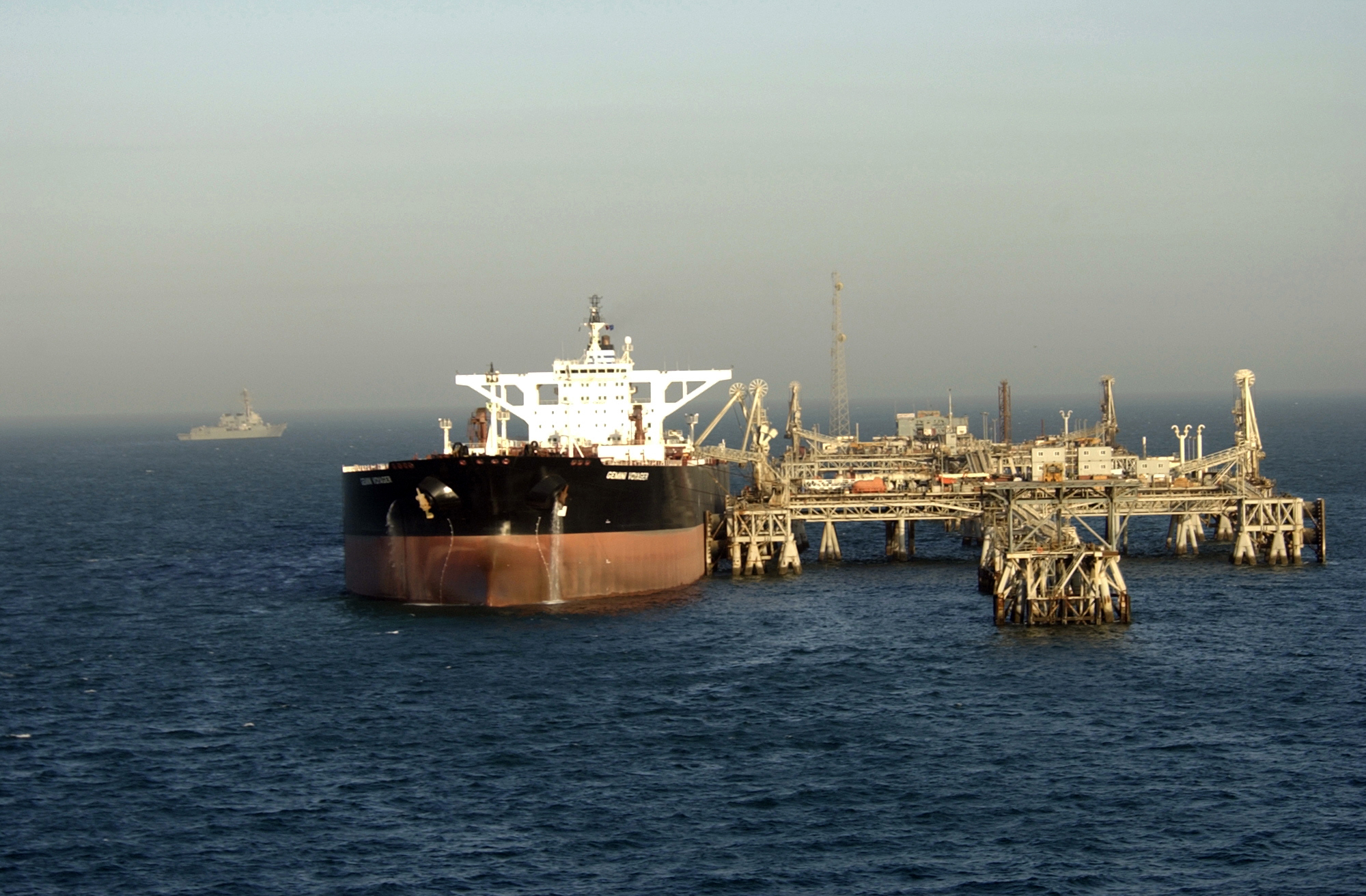
The shipping data corroborates the analyst caution. Strait flows fell from a pre-war baseline of approximately 21 mb/d to a May low of 9.6 mb/d, recovering to around 12 mb/d in early June — still under sixty percent of the pre-war level. War-risk hull insurance dropped from peak wartime levels of roughly five percent of hull value to two percent post-MOU, but two percent is still twenty times the pre-war baseline of 0.1 percent. For a $300 million VLCC, that is six million dollars in war-risk premium per transit, against nine hundred thousand pre-war. The traffic decline documented in Hormuz Traffic Falls to Four Vessels, Four Days After the Peak captures the chasm between the MOU’s diplomatic narrative and the actual conduct of shipowners who have to pay the premiums.
The 1987 Precedent and Why It Cannot Be Used Again
Western capitals reaching for historical analogy keep arriving at Operation Earnest Will. In 1987-88, Iran laid mines in the Persian Gulf during the Iran-Iraq Tanker War, and the US deployed thirty-plus warships in the largest naval convoy operation since the Second World War. USS Bridgeton was mined on July 24, 1987 — the first day of operations, an embarrassment the Reagan administration never quite recovered from rhetorically. France, the United Kingdom, Italy and the Netherlands deployed seven minesweepers independently of the US convoy, conducting clearance operations without Iranian consent and on the legal theory that international waters did not require it.
The instinct in 2026 is to replay that script — and Macron’s coalition announcement, with its forty-country roster and its RFA Lyme Bay deployment, reads like the script. The instinct fails on one decisive distinction. In 1987, there was no treaty assigning Iran responsibility for demining. There was no document Iran could cite to argue that foreign clearance was a breach of an agreed framework. The legal field was empty, and Western powers filled it. In 2026, the field is occupied. Iran does not need to justify its objection on customary international law grounds — it has Article 5 to point at, and Article 5 was written by negotiators who included American counsel.
The MOU created the precise legal obstacle Western states could not overcome in 1987. By writing demining responsibility into the treaty as Iran’s exclusive function, the negotiators handed Tehran a textual basis for objection that the Earnest Will planners never had to contend with. Macron can deploy the Charles de Gaulle and the Lyme Bay, can publish the forty-country coalition list, can stage every press conference his foreign ministry can arrange — but the moment any vessel enters the Traffic Separation Scheme to sweep without Iranian consent, Iran will frame the deployment as a treaty violation. Whether the framing is doctrinally correct is secondary. The framing is politically usable, which is what matters in a sixty-day window with no enforcement body.
There is also the matter of the IRGC’s June 15 warning to USS Frank E. Petersen Jr. — transmitted two days before the MOU was signed, while negotiations were still in their final hours. An IRGC Navy officer radioed “This is the last warning” to the US destroyer during a mine-clearance operation, ordering it to “alter course and go back to the Indian Ocean immediately” or “be targeted.” The destroyer declined to divert. Iran did not fire. But the radio traffic established, before the ink was dry on Article 5, that any unilateral Western clearance would be treated as a casus belli irrespective of treaty text. Max Bergmann, writing for the Center for Strategic and International Studies and quoted by PBS NewsHour in late June, summarized the analyst consensus: “We should not overstate its utility,” he said of the UK-France demining coalition. He did not need to explain what he meant.
What Saudi Arabia Pays While the Mines Stay
Saudi Arabia did not sign the MOU. The kingdom was not at Islamabad. The negotiating delegation list — Iran, the US, Pakistan as host, Qatar as facilitator — included no GCC member as principal. The Atlantic Council’s Eric Alter put it bluntly: Gulf states “were not parties to the Islamabad talks, and they do not appear to have been formally consulted.” Excluding them, he wrote, “removes the most capable and motivated observers, weakening the system intended to catch violations.” The implication has not been digested in Riyadh because there is no clean way to digest it.
The PGSA fee structure makes the exclusion concrete. After Day 60, when the waiver expires, the implied cost to Saudi Arabia is approximately $5.5 million per day or $2 billion per year — a number derived from the parliamentary act’s $1-per-barrel framework applied to Saudi production transiting Hormuz at roughly 5.5 million barrels per day. The fee is not a hypothetical. The legal basis exists, the collection infrastructure exists, the exemption list exists, and Saudi Arabia is conspicuously not on it. The kingdom is the largest single transit user of the strait without a PGSA exemption — a status that no GCC partner can correct because no GCC partner has the bilateral relationship with Tehran required to broker one.
The fiscal context for absorbing that fee is hostile. The Q1 2026 deficit consumed seventy-six percent of the kingdom’s full-year allowance before April. Oil revenues fell three percent year-on-year while expenditures rose twenty percent, the kind of scissors movement that Vision 2030’s planners did not model for. Adding a $2 billion annual transit fee to that mix is not catastrophic in isolation, but it is the fourth or fifth structural cost that Saudi Arabia has absorbed in a year when none of the structural costs were budgeted.
What Riyadh has not yet articulated, in public or through diplomatic back-channels, is a counterstrategy. The kingdom could in principle file an UNCLOS dispute — except it has not ratified the parts of UNCLOS that would matter, and Iran has not ratified UNCLOS at all. It could in principle convene a GCC working group — except the GCC’s June 27 collective-defense invocation, covered in The GCC Declared ‘Attack on All’ — Not One Soldier Moved, established that the bloc cannot generate the political will for coordinated economic countermeasures any more than it can for coordinated military ones. The phone-call diplomacy that produced the stand-down in Hours After Both Sides Violated the MOU, a Phone Call Restored It works for kinetic incidents. It does not work for slow, treaty-textual sovereignty grinds.
That leaves Doha. Iran’s foreign minister told reporters this week that Iran’s Doha delegation was there for frozen-funds discussions under Clause 11 of the MOU, not for nuclear talks — a framing examined in Iran Says It Came to Doha for Frozen Funds, Not Nuclear Talks. The same diplomatic channel that Iran is using to extract financial concessions could in principle be used to negotiate a Saudi PGSA exemption. There is no public indication that Riyadh has tabled the request, and no public indication that Tehran would entertain it if asked. The exemptions Iran granted were to states that did not arm the Western coalition Iran fought. Saudi Arabia armed it. The exemption list reads as a punishment register as much as a partner register.
Frequently Asked Questions
Can France and Oman proceed with demining without Iranian consent?
Operationally, yes — France has the assets and Oman controls the southern half of the strait. Legally, the picture is murkier than Macron’s June 29 statement implied. UNCLOS Articles 37-44 establish transit passage rights for vessels but do not address state-conducted clearance operations, and Article 42 explicitly permits coastal states to adopt safety-of-navigation rules. A French clearance vessel entering Iranian-claimed waters without consent would face the same legal ambiguity that USS Frank E. Petersen Jr. faced on June 15 — and would face it without the deniability of a transit mission, since clearance vessels conduct sustained operations in fixed areas. The Charles de Gaulle’s positioning suggests France retains the option militarily; the absence of any UN Security Council resolution authorizing clearance suggests Paris has not built the diplomatic cover to exercise it.
What is the Iran-Oman Hormuz Committee and does it have demining authority?
The Iran-Oman Hormuz Committee was institutionalized on June 24, 2026, as a bilateral coordination mechanism covering navigation safety, search-and-rescue, and what the joint communique called “shared maritime stewardship.” It is Iran’s preferred vehicle for excluding third-party involvement in strait management, and Oman’s preferred vehicle for keeping Western powers at one remove from a waterway that runs along its territorial sea. The committee is not mentioned in the MOU, has no enforcement powers under UNCLOS, and does not formally claim demining authority. What it does is establish a parallel governance structure that Iran can point to when third parties — including the forty-country coalition Macron announced — propose alternative arrangements. The Committee’s existence is the diplomatic answer to coalitions, even when it has no operational mandate of its own.
What does PGSA stand for and when does the fee activate?
PGSA is the Persian Gulf Shipping Authority, the Iranian bureaucratic entity established by the March 30-31, 2026 parliamentary act that codifies transit fees under UNCLOS Article 26(2)’s “services rendered” exception. The fee structure is currently waived under MOU Article 5’s sixty-day no-charge clause, with the waiver expiring approximately August 17, 2026. After that date, the per-barrel fee — which Iran has not formally announced but which working drafts circulating in PGSA documentation imply at $1/barrel — would apply to all non-exempt transit. The exempt list as of late June includes Russia, China, India, Iraq and Pakistan. Saudi Arabia, the UAE, Kuwait, Qatar and Bahrain are not exempt. The collection mechanism is a forty-category PGSA transit form requiring vessel registration, cargo declaration, and route certification — a level of bureaucratic friction that itself constitutes a transit cost separate from the fee.
Has Iran cleared any mines since the MOU was signed?
Iran has not publicly disclosed clearance operations or confirmed clearance vessel deployments. Reuters and AFP have reported anecdotal sightings of Iranian Navy auxiliaries in the Traffic Separation Scheme, but no independent verification of clearance activity has been produced by international monitoring bodies — partly because no international monitoring body has been authorized to verify. The IMO has not received Iranian notifications of cleared sections. The Lake Lucerne monitoring group has held no plenary. Strait traffic recovery from the May low of 9.6 mb/d to roughly 12 mb/d in early June is consistent with either modest Iranian clearance, increased risk tolerance by shipowners, or both. The absence of disclosure is itself a strategic posture under Article 5, which does not require Iran to report.
What is UNCLOS Article 26(2) and how does Iran use it to justify transit fees?
UNCLOS Article 26(2) provides that “charges may be levied upon a foreign ship passing through the territorial sea as payment for specific services rendered to the ship.” The article is one of two narrow exceptions to the general prohibition on transit charges. Iran’s March 2026 parliamentary act invokes Article 26(2) by framing the PGSA fee as compensation for “navigation safety services” — chart updates, pilotage availability, mine-clearance reporting, search-and-rescue standby — that Iran provides as the coastal state. The argument is doctrinally vulnerable: most legal scholars hold that Article 26(2) refers to services actually requested by individual ships, not to background sovereign functions imposed on all transiting vessels. Iran’s counterargument is that the strait’s post-war security regime constitutes a sui generis service that justifies a general fee. The dispute will not be resolved before Day 60, and the fee will activate while the dispute is pending.