
RIYADH — The oral stand-down that Qatar’s Emir Tamim brokered on June 29 between the United States and Iran stopped the missiles. It did not stop the Persian Gulf Security Administration’s 48-hour pre-clearance requirement, did not produce a written amendment to the Islamabad MOU, did not name an enforcer, and did not pause the 60-day Phase 2 clock now at Day 12 of 60. For Iran, the cost of this concession was a phone call. For Saudi Arabia, the cost compounds: $5.5 million per day in implied PGSA fees, an estimated $160-175 million per day in foregone revenue against a fiscal breakeven of $108-111 per barrel, and a venue shift that moved the next round of talks from Geneva — where Iran’s unverified enriched uranium was the agenda — to Doha, where the agenda is the Strait of Hormuz and the governing framework is Iran’s own. Saudi Arabia holds zero seats at the Doha table. Its foreign minister’s only diplomatic contact on the day of the stand-down was a condolence call from Pakistan.
Table of Contents
- What Did Iran Concede in the Stand-Down?
- The $6 Billion That May Not Have Moved
- Why Did the Talks Shift From Geneva to Doha?
- The PGSA Bureaucracy Survived the Stand-Down
- What Does Saudi Arabia’s Exclusion Cost?
- How Quickly Can Iran Reverse the Stand-Down?
- Forty-Eight Days to Default
- Frequently Asked Questions
What Did Iran Concede in the Stand-Down?
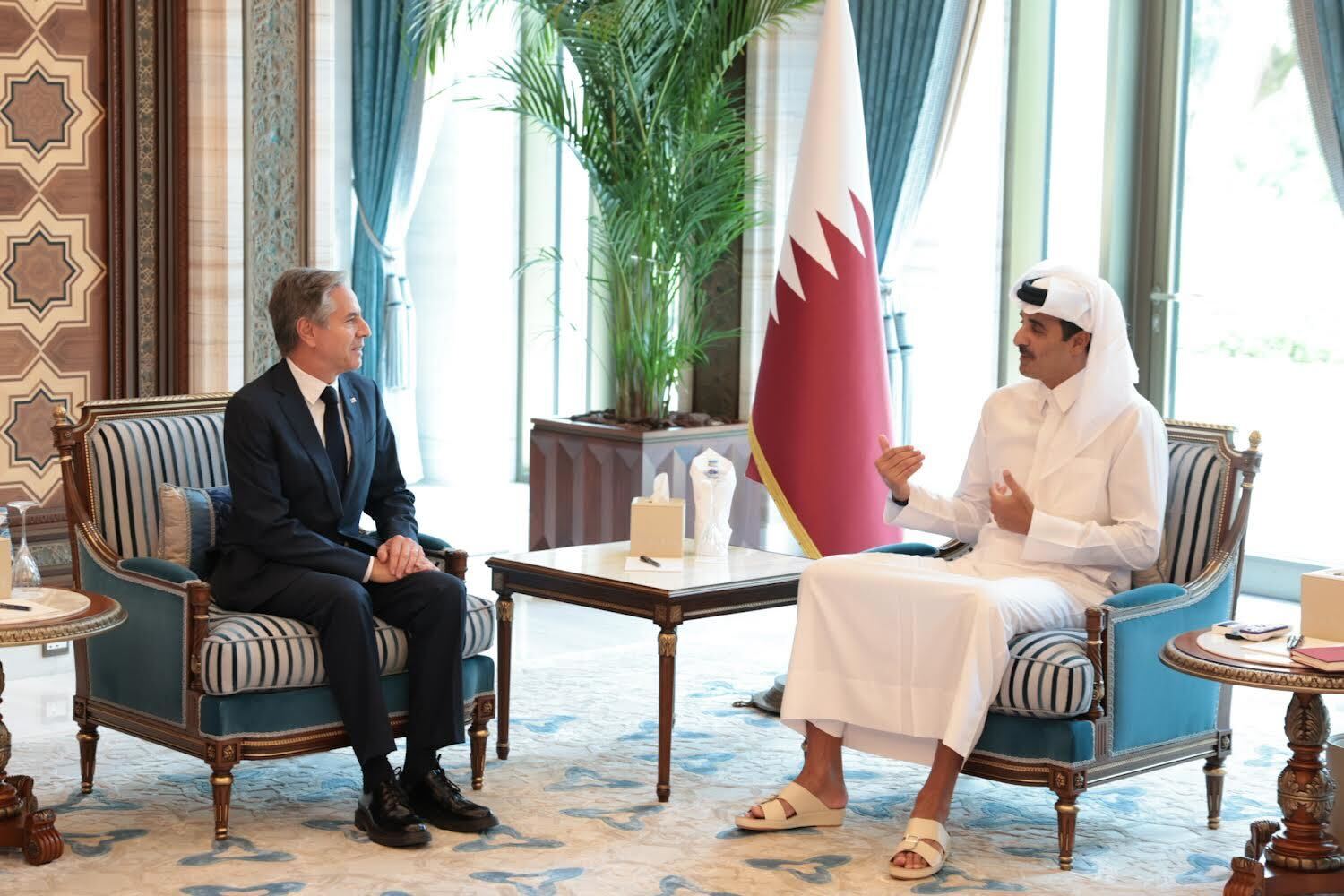
Nothing of structural value. The oral stand-down produced no written text, no named enforcer, and no monitoring mechanism. Iran simultaneously claimed $6 billion in frozen funds, preserved the PGSA pre-clearance system intact, and secured a venue shift from Geneva to Doha — where the agenda favors Tehran.
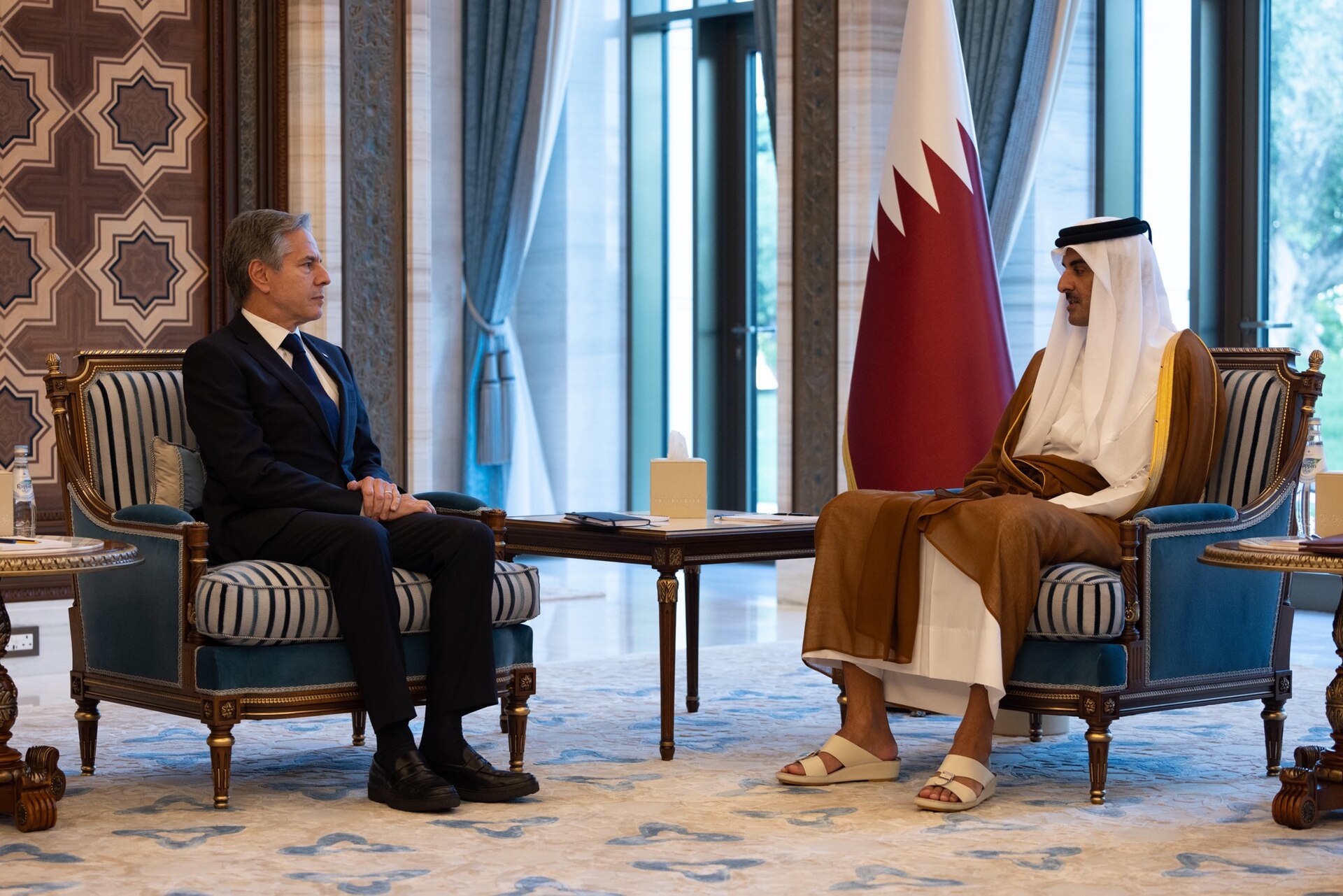
Emir Tamim “spoke directly with Trump and urged him to hold off on more strikes because the deal was close,” according to Time and PBS reporting on June 29. No written amendment to the Islamabad MOU was produced. No supplementary document was circulated. The stand-down exists as a verbal understanding between two governments that have spent the previous twelve days accusing each other of violating the same fourteen-point instrument.
The MOU itself was supposed to address this kind of gap. Article 12 states that “an executive mechanism will be established to monitor the successful implementation of this MOU.” Twelve days into Phase 2, no such mechanism exists. No arbitrators have been named. No enforcement body has been constituted. The Lake Lucerne monitoring group — the only institutional structure adjacent to the MOU — has no emergency protocol and no enforcement authority.
What exists instead is the IRGC’s stated position. On June 28, the IRGC announced through Tasnim that any violation of the ceasefire would result in the “suspension of all related processes.” Hours later, Iran reversed — agreeing to the oral stand-down without retracting the violation claim. The threat was issued, the concession extracted, and the reversal cost nothing. The IRGC’s June 28 strikes on Ali Al Salem and Juffair were justified by Tehran under MOU Articles 1 and 5. That legal position has not been withdrawn.
Precedent offers a frame. The Minsk II agreement — a written document with named signatories and an international monitoring body — produced 320,130 documented ceasefire violations in 2016 alone, as recorded by the OSCE, without any enforcement action. An oral stand-down with no text, no signatory, and no violation threshold sits a category below even that. The instrument that failed to constrain two state parties with written obligations is now expected to be outperformed by an instrument that has no written obligations at all.
The Middle East briefing 3,000+ readers start their day with.
One email. Every weekday morning. Free.
The $6 Billion That May Not Have Moved
On June 29, Iranian President Masoud Pezeshkian issued a statement through IRNA claiming that “$6 billion out of the total $12 billion of Iranian resources in Qatar will be released and returned to the country, and necessary follow-ups are being carried out.” The statement framed the funds as recovered assets, not as a concession or reward. Tehran’s language was proprietary: these are Iranian resources, being returned.
The claim requires context. The $6 billion originated as frozen Iranian oil revenue held in South Korea. In September 2023, the Biden administration authorized a SWIFT waiver transferring the funds to Qatar as part of a prisoner-swap arrangement, restricted to humanitarian purchases. After Hamas’s October 7, 2023 attack, the United States and Qatar agreed to re-freeze the disbursement. The money has sat untouched through the entire 2025-2026 conflict — the same $6 billion under a different geopolitical frame.
Whether it has actually moved is disputed. An American official familiar with the talks told the Wall Street Journal that no frozen Iranian assets had been released as of reporting. The gap between Pezeshkian’s announcement and the US denial remains unresolved as of June 29. What is not disputed is the conditional framework. The same Wall Street Journal report, cited by Gulf News, described an understanding that “segments of Iran’s blocked capital could be released if Tehran exhibits during the talks what Washington views as ‘appropriate behaviour’, including collaboration regarding its inventories of enriched uranium.”
The structure of this arrangement is asymmetric regardless of whether the $6 billion has physically moved. If executed, Iran secures a material benefit — $6 billion in unfrozen capital — for an oral, revocable commitment to stop shooting. If not yet executed, Iran has established the public expectation of release, creating a negotiating baseline at Doha. Pezeshkian did not describe the funds as conditional. He described them as incoming.
The three-way frozen assets dispute — with Pezeshkian claiming $6 billion agreed, the US denying any release, and Qatar saying nothing — is the central subject of a June 30 analysis of what three Doha delegations actually agreed to.
The $6 billion is half of $12 billion in Qatar-held frozen Iranian assets, which are themselves a portion of the $24 billion Iran has sought to have released globally. The National reported on May 26 that Iran’s broader demand is for total asset unfreezing as a precondition for a comprehensive agreement. An oral stand-down that unlocked even the first tranche would have produced a measurable financial return for an unwritten verbal pause. The remaining $6 billion in Qatar and the $12 billion held elsewhere give Tehran a layered set of claims to bring to each subsequent round of talks — each one conditional on the kind of behavior Tehran has already signaled it defines on its own terms.
Why Did the Talks Shift From Geneva to Doha?
Geneva’s two working groups — sanctions relief and nuclear activities — put Iran’s 440.9 kilograms of highly enriched uranium at 60% U-235, unverified for 97-plus days, at the center of negotiations. The shift to Doha moved the agenda to the Strait of Hormuz, where Iran controls the operating framework through the PGSA.
NBC and CNN confirmed the shift on June 29: “the next session on June 30 was originally scheduled for Switzerland to discuss Iran’s nuclear program, but latest escalation… led to the sessions being shifted to Qatar and now focus on the Strait of Hormuz.” What changed between the original scheduling and the shift was not the nuclear file — that HEU stockpile had been unverified for months. What changed was the escalation cycle that Iran initiated and then agreed to pause, producing the conditions under which a new venue and a new agenda could be set.
Iran’s foreign minister had already prepared the rhetorical ground. At a Baghdad press conference on June 28 — before the stand-down — Abbas Araghchi warned that “any attempt to adopt new or separate arrangements compared to what is underway by the Islamic Republic of Iran, will only lead to more complicated situations and delays in the reopening of the Strait of Hormuz, and will increase the tensions.” The statement, reported by RFERL and the Sunday Guardian, was not about Geneva. It was about ensuring that whatever came next would operate within Iran’s existing framework, not outside it.
Araghchi went further. Also from Baghdad, he stated that “under the memorandum of understanding, the Strait of Hormuz will return to its pre-war operating capacity within 30 days under the management adopted by Iran and after the obstacles are removed by the Islamic Republic of Iran.” The phrase “under the management adopted by Iran” does not describe a transition. It asserts that the transition itself will be managed by Iran, on Iran’s terms, through Iran’s instrument.
Geneva would have been a session where Iran answered questions. Doha is a session where Iran sets conditions. Geneva opened without IAEA inspectors on the agenda already, and the missiles pledge that Secretary Rubio extracted at Manama on June 25 had no Geneva working group to receive it. The move to Doha removed even the residual pressure of a nuclear-focused venue. Iran’s enriched uranium — the single issue where Tehran is most exposed — is no longer the subject of the next session.
The PGSA Bureaucracy Survived the Stand-Down
The oral stand-down stopped military operations. It did not touch the bureaucratic infrastructure Iran has built around the Strait of Hormuz since May 5, when the PGSA was founded — 43 days before the MOU was signed. The PGSA was never dissolved, never suspended, and never placed under review. As of June 29, every vessel transiting the Strait is still required to submit a 48-hour Vessel Information Declaration — a 40-category form — to an Iranian-created body before entering the corridor.
The fee is waived. The authority is not. This distinction sits at the center of the stand-down’s asymmetry. Under the MOU, the PGSA’s per-barrel transit fee is suspended for the 60-day Phase 2 window. But the pre-clearance requirement remains operative regardless, meaning that every commercial vessel — including the Bahri VLCCs loading at Ras Tanura — files its cargo, route, and ownership data with the PGSA before transiting. Iran collects information on every barrel Saudi Arabia ships, every tanker Saudi Arabia owns, and every destination Saudi Arabia supplies, whether or not a fee is charged. The administrative compliance architecture Iran has built around this data-collection regime — and the direct conflict between PGSA pre-clearance requirements and the White House directive that ships could move freely — is the subject of the administrative compliance paradox neither side has resolved.
The stand-down’s durability would need to register in markets for it to matter commercially. War-risk insurance premiums, which had risen to 2-3 percent from a pre-war baseline of 0.1 percent, do not respond to verbal understandings between governments. Underwriters price written instruments, sovereign guarantees, and physical conditions on the water. A verbal agreement brokered by a third-party head of state, with no text and no defined duration, does not meet any of those criteria. The premiums that made loaded tankers unable to move before the stand-down remain in effect after it, because the legal instrument governing the Strait has not changed.
The data the PGSA collects has its own compounding value. Each Vessel Information Declaration catalogues flag state, beneficial owner, cargo type, tonnage, origin, destination, and dozens of additional fields across 40 categories. Over weeks and months, this builds a real-time commercial intelligence picture of who ships what through Hormuz, on which vessels, and to whom. Iran did not need the stand-down to end for that collection to begin. It needed the stand-down to continue.
Chatham House assessed the MOU’s legal status directly: “the MOU confirms that the US and Iran ‘have jointly agreed,’ which might suggest an informal legal agreement — one which rests on ‘good faith.’” An oral stand-down nested within an informal legal agreement that itself rests on good faith is three layers removed from anything an insurer, a shipping line, or a sovereign wealth fund can price as stability.
What Does Saudi Arabia’s Exclusion Cost?
Saudi Arabia holds no formal seat at the Doha talks, no signatory role in the MOU, and no observer status. On the day the stand-down was announced, Foreign Minister Faisal bin Farhan’s only documented diplomatic contact was a condolence call from Pakistan’s FM Mohammad Ishaq Dar regarding the Ras Tanura helicopter crash.
Dar called to convey condolences for the crash on June 28, which killed all fourteen people aboard — all Saudi nationals. He “reiterated Pakistan’s commitment to regional peace under the Islamabad MoU,” according to Dawn and the Express Tribune. Faisal “thanked Pakistan for the brotherly gesture.” There was no statement on the stand-down. No announcement of a Saudi role at Doha. No indication that the call produced anything beyond a diplomatic courtesy and a restatement of existing commitments.
Pakistan and Qatar serve as co-mediators under the MOU. Saudi Arabia is outside the room where the process governing its most vital maritime corridor is being decided. The kingdom’s diplomatic position on the stand-down day consisted of receiving condolences for an industrial disaster while the framework governing its oil exports was being renegotiated in a different capital, by different parties, under an agreement it did not sign.
Saudi Arabia’s only formally documented input on the nuclear track remains FM Faisal’s single phrase at ECFR Vienna: “verification is key.” That was the extent of Riyadh’s contribution to the discourse on enriched uranium being produced within range of its eastern oil infrastructure. Iran’s peace offer arrived while its missiles were still in the air, and Saudi Arabia was not at the table for either event.
The financial cost of exclusion is compounding. The PGSA’s implied daily charge of $5.5 million accumulates whether or not Riyadh has a seat. Brent closed at $71.99 on June 28, down 4.34 percent, while WTI fell to $69.23 — the first time below $70 since February 27. This was the third consecutive weekly decline exceeding 10 percent. Against Saudi Arabia’s fiscal breakeven of $108-111 per barrel, the gap stands at roughly $36-39 per barrel. The stand-down does not close that gap. It extends the conditions under which the gap persists. Oil markets respond to resolved risk, not to paused risk, and an oral commitment that can be reversed with a Tasnim dispatch does not constitute resolution. The fiscal dimension of that gap is documented in detail in Saudi Arabia’s war-era fiscal compression: the kingdom’s $33.5 billion Q1 deficit consumed 76% of its full-year target in 90 days, while MBS maintained complete public silence on the IRGC strikes and the MOU framework that preserved the tollbooth. The fiscal dimension of that gap is documented in detail in Saudi Arabia’s war-era fiscal compression: the kingdom’s $33.5 billion Q1 deficit consumed 76% of its full-year target in 90 days, while MBS maintained complete public silence on the IRGC strikes and the MOU framework that preserved the tollbooth. The fiscal dimension of that gap is documented in detail in Saudi Arabia’s war-era fiscal compression: the kingdom’s $33.5 billion Q1 deficit consumed 76% of its full-year target in 90 days, while MBS maintained complete public silence on the IRGC strikes and the MOU framework that preserved the tollbooth. The fiscal dimension of that gap is documented in detail in Saudi Arabia’s war-era fiscal compression: the kingdom’s $33.5 billion Q1 deficit consumed 76% of its full-year target in 90 days, while MBS maintained complete public silence on the IRGC strikes and the MOU framework that preserved the tollbooth. The fiscal dimension of that gap is documented in detail in Saudi Arabia’s war-era fiscal compression: the kingdom’s $33.5 billion Q1 deficit consumed 76% of its full-year target in 90 days, while MBS maintained complete public silence on the IRGC strikes and the MOU framework that preserved the tollbooth. The fiscal dimension of that gap is documented in detail in Saudi Arabia’s war-era fiscal compression: the kingdom’s $33.5 billion Q1 deficit consumed 76% of its full-year target in 90 days, while MBS maintained complete public silence on the IRGC strikes and the MOU framework that preserved the tollbooth. The fiscal dimension of that gap is documented in detail in Saudi Arabia’s war-era fiscal compression: the kingdom’s $33.5 billion Q1 deficit consumed 76% of its full-year target in 90 days, while MBS maintained complete public silence on the IRGC strikes and the MOU framework that preserved the tollbooth. The fiscal dimension of that gap is documented in detail in Saudi Arabia’s war-era fiscal compression: the kingdom’s $33.5 billion Q1 deficit consumed 76% of its full-year target in 90 days, while MBS maintained complete public silence on the IRGC strikes and the MOU framework that preserved the tollbooth. The fiscal dimension of that gap is documented in detail in Saudi Arabia’s war-era fiscal compression: the kingdom’s $33.5 billion Q1 deficit consumed 76% of its full-year target in 90 days, while MBS maintained complete public silence on the IRGC strikes and the MOU framework that preserved the tollbooth. The fiscal dimension of that gap is documented in detail in Saudi Arabia’s war-era fiscal compression: the kingdom’s $33.5 billion Q1 deficit consumed 76% of its full-year target in 90 days, while MBS maintained complete public silence on the IRGC strikes and the MOU framework that preserved the tollbooth. The fiscal dimension of that gap is documented in detail in Saudi Arabia’s war-era fiscal compression: the kingdom’s $33.5 billion Q1 deficit consumed 76% of its full-year target in 90 days, while MBS maintained complete public silence on the IRGC strikes and the MOU framework that preserved the tollbooth. The fiscal dimension of that gap is documented in detail in Saudi Arabia’s war-era fiscal compression: the kingdom’s $33.5 billion Q1 deficit consumed 76% of its full-year target in 90 days, while MBS maintained complete public silence on the IRGC strikes and the MOU framework that preserved the tollbooth. The fiscal dimension of that gap is documented in detail in Saudi Arabia’s war-era fiscal compression: the kingdom’s $33.5 billion Q1 deficit consumed 76% of its full-year target in 90 days, while MBS maintained complete public silence on the IRGC strikes and the MOU framework that preserved the tollbooth. The fiscal dimension of that gap is documented in detail in Saudi Arabia’s war-era fiscal compression: the kingdom’s $33.5 billion Q1 deficit consumed 76% of its full-year target in 90 days, while MBS maintained complete public silence on the IRGC strikes and the MOU framework that preserved the tollbooth. The fiscal dimension of that gap is documented in detail in Saudi Arabia’s war-era fiscal compression: the kingdom’s $33.5 billion Q1 deficit consumed 76% of its full-year target in 90 days, while MBS maintained complete public silence on the IRGC strikes and the MOU framework that preserved the tollbooth. The fiscal dimension of that gap is documented in detail in Saudi Arabia’s war-era fiscal compression: the kingdom’s $33.5 billion Q1 deficit consumed 76% of its full-year target in 90 days, while MBS maintained complete public silence on the IRGC strikes and the MOU framework that preserved the tollbooth. The fiscal dimension of that gap is documented in detail in Saudi Arabia’s war-era fiscal compression: the kingdom’s $33.5 billion Q1 deficit consumed 76% of its full-year target in 90 days, while MBS maintained complete public silence on the IRGC strikes and the MOU framework that preserved the tollbooth. The fiscal dimension of that gap is documented in detail in Saudi Arabia’s war-era fiscal compression: the kingdom’s $33.5 billion Q1 deficit consumed 76% of its full-year target in 90 days, while MBS maintained complete public silence on the IRGC strikes and the MOU framework that preserved the tollbooth. The fiscal dimension of that gap is documented in detail in Saudi Arabia’s war-era fiscal compression: the kingdom’s $33.5 billion Q1 deficit consumed 76% of its full-year target in 90 days, while MBS maintained complete public silence on the IRGC strikes and the MOU framework that preserved the tollbooth. The fiscal dimension of that gap is documented in detail in Saudi Arabia’s war-era fiscal compression: the kingdom’s $33.5 billion Q1 deficit consumed 76% of its full-year target in 90 days, while MBS maintained complete public silence on the IRGC strikes and the MOU framework that preserved the tollbooth. The fiscal dimension of that gap is documented in detail in Saudi Arabia’s war-era fiscal compression: the kingdom’s $33.5 billion Q1 deficit consumed 76% of its full-year target in 90 days, while MBS maintained complete public silence on the IRGC strikes and the MOU framework that preserved the tollbooth. The fiscal dimension of that gap is documented in detail in Saudi Arabia’s war-era fiscal compression: the kingdom’s $33.5 billion Q1 deficit consumed 76% of its full-year target in 90 days, while MBS maintained complete public silence on the IRGC strikes and the MOU framework that preserved the tollbooth. The fiscal dimension of that gap is documented in detail in Saudi Arabia’s war-era fiscal compression: the kingdom’s $33.5 billion Q1 deficit consumed 76% of its full-year target in 90 days, while MBS maintained complete public silence on the IRGC strikes and the MOU framework that preserved the tollbooth. The fiscal dimension of that gap is documented in detail in Saudi Arabia’s war-era fiscal compression: the kingdom’s $33.5 billion Q1 deficit consumed 76% of its full-year target in 90 days, while MBS maintained complete public silence on the IRGC strikes and the MOU framework that preserved the tollbooth. The fiscal dimension of that gap is documented in detail in Saudi Arabia’s war-era fiscal compression: the kingdom’s $33.5 billion Q1 deficit consumed 76% of its full-year target in 90 days, while MBS maintained complete public silence on the IRGC strikes and the MOU framework that preserved the tollbooth. The fiscal dimension of that gap is documented in detail in Saudi Arabia’s war-era fiscal compression: the kingdom’s $33.5 billion Q1 deficit consumed 76% of its full-year target in 90 days, while MBS maintained complete public silence on the IRGC strikes and the MOU framework that preserved the tollbooth. The fiscal dimension of that gap is documented in detail in Saudi Arabia’s war-era fiscal compression: the kingdom’s $33.5 billion Q1 deficit consumed 76% of its full-year target in 90 days, while MBS maintained complete public silence on the IRGC strikes and the MOU framework that preserved the tollbooth. The fiscal dimension of that gap is documented in detail in Saudi Arabia’s war-era fiscal compression: the kingdom’s $33.5 billion Q1 deficit consumed 76% of its full-year target in 90 days, while MBS maintained complete public silence on the IRGC strikes and the MOU framework that preserved the tollbooth. The fiscal dimension of that gap is documented in detail in Saudi Arabia’s war-era fiscal compression: the kingdom’s $33.5 billion Q1 deficit consumed 76% of its full-year target in 90 days, while MBS maintained complete public silence on the IRGC strikes and the MOU framework that preserved the tollbooth. The fiscal dimension of that gap is documented in detail in Saudi Arabia’s war-era fiscal compression: the kingdom’s $33.5 billion Q1 deficit consumed 76% of its full-year target in 90 days, while MBS maintained complete public silence on the IRGC strikes and the MOU framework that preserved the tollbooth. The fiscal dimension of that gap is documented in detail in Saudi Arabia’s war-era fiscal compression: the kingdom’s $33.5 billion Q1 deficit consumed 76% of its full-year target in 90 days, while MBS maintained complete public silence on the IRGC strikes and the MOU framework that preserved the tollbooth. The fiscal dimension of that gap is documented in detail in Saudi Arabia’s war-era fiscal compression: the kingdom’s $33.5 billion Q1 deficit consumed 76% of its full-year target in 90 days, while MBS maintained complete public silence on the IRGC strikes and the MOU framework that preserved the tollbooth. The fiscal dimension of that gap is documented in detail in Saudi Arabia’s war-era fiscal compression: the kingdom’s $33.5 billion Q1 deficit consumed 76% of its full-year target in 90 days, while MBS maintained complete public silence on the IRGC strikes and the MOU framework that preserved the tollbooth. The fiscal dimension of that gap is documented in detail in Saudi Arabia’s war-era fiscal compression: the kingdom’s $33.5 billion Q1 deficit consumed 76% of its full-year target in 90 days, while MBS maintained complete public silence on the IRGC strikes and the MOU framework that preserved the tollbooth. The fiscal dimension of that gap is documented in detail in Saudi Arabia’s war-era fiscal compression: the kingdom’s $33.5 billion Q1 deficit consumed 76% of its full-year target in 90 days, while MBS maintained complete public silence on the IRGC strikes and the MOU framework that preserved the tollbooth. The fiscal dimension of that gap is documented in detail in Saudi Arabia’s war-era fiscal compression: the kingdom’s $33.5 billion Q1 deficit consumed 76% of its full-year target in 90 days, while MBS maintained complete public silence on the IRGC strikes and the MOU framework that preserved the tollbooth. The fiscal dimension of that gap is documented in detail in Saudi Arabia’s war-era fiscal compression: the kingdom’s $33.5 billion Q1 deficit consumed 76% of its full-year target in 90 days, while MBS maintained complete public silence on the IRGC strikes and the MOU framework that preserved the tollbooth. The fiscal dimension of that gap is documented in detail in Saudi Arabia’s war-era fiscal compression: the kingdom’s $33.5 billion Q1 deficit consumed 76% of its full-year target in 90 days, while MBS maintained complete public silence on the IRGC strikes and the MOU framework that preserved the tollbooth. The fiscal dimension of that gap is documented in detail in Saudi Arabia’s war-era fiscal compression: the kingdom’s $33.5 billion Q1 deficit consumed 76% of its full-year target in 90 days, while MBS maintained complete public silence on the IRGC strikes and the MOU framework that preserved the tollbooth. The fiscal dimension of that gap is documented in detail in Saudi Arabia’s war-era fiscal compression: the kingdom’s $33.5 billion Q1 deficit consumed 76% of its full-year target in 90 days, while MBS maintained complete public silence on the IRGC strikes and the MOU framework that preserved the tollbooth. The fiscal dimension of that gap is documented in detail in Saudi Arabia’s war-era fiscal compression: the kingdom’s $33.5 billion Q1 deficit consumed 76% of its full-year target in 90 days, while MBS maintained complete public silence on the IRGC strikes and the MOU framework that preserved the tollbooth. The fiscal dimension of that gap is documented in detail in Saudi Arabia’s war-era fiscal compression: the kingdom’s $33.5 billion Q1 deficit consumed 76% of its full-year target in 90 days, while MBS maintained complete public silence on the IRGC strikes and the MOU framework that preserved the tollbooth. The fiscal dimension of that gap is documented in detail in Saudi Arabia’s war-era fiscal compression: the kingdom’s $33.5 billion Q1 deficit consumed 76% of its full-year target in 90 days, while MBS maintained complete public silence on the IRGC strikes and the MOU framework that preserved the tollbooth. The fiscal dimension of that gap is documented in detail in Saudi Arabia’s war-era fiscal compression: the kingdom’s $33.5 billion Q1 deficit consumed 76% of its full-year target in 90 days, while MBS maintained complete public silence on the IRGC strikes and the MOU framework that preserved the tollbooth. The fiscal dimension of that gap is documented in detail in Saudi Arabia’s war-era fiscal compression: the kingdom’s $33.5 billion Q1 deficit consumed 76% of its full-year target in 90 days, while MBS maintained complete public silence on the IRGC strikes and the MOU framework that preserved the tollbooth. The fiscal dimension of that gap is documented in detail in Saudi Arabia’s war-era fiscal compression: the kingdom’s $33.5 billion Q1 deficit consumed 76% of its full-year target in 90 days, while MBS maintained complete public silence on the IRGC strikes and the MOU framework that preserved the tollbooth. The fiscal dimension of that gap is documented in detail in Saudi Arabia’s war-era fiscal compression: the kingdom’s $33.5 billion Q1 deficit consumed 76% of its full-year target in 90 days, while MBS maintained complete public silence on the IRGC strikes and the MOU framework that preserved the tollbooth. The fiscal dimension of that gap is documented in detail in Saudi Arabia’s war-era fiscal compression: the kingdom’s $33.5 billion Q1 deficit consumed 76% of its full-year target in 90 days, while MBS maintained complete public silence on the IRGC strikes and the MOU framework that preserved the tollbooth. The fiscal dimension of that gap is documented in detail in Saudi Arabia’s war-era fiscal compression: the kingdom’s $33.5 billion Q1 deficit consumed 76% of its full-year target in 90 days, while MBS maintained complete public silence on the IRGC strikes and the MOU framework that preserved the tollbooth. The fiscal dimension of that gap is documented in detail in Saudi Arabia’s war-era fiscal compression: the kingdom’s $33.5 billion Q1 deficit consumed 76% of its full-year target in 90 days, while MBS maintained complete public silence on the IRGC strikes and the MOU framework that preserved the tollbooth. The fiscal dimension of that gap is documented in detail in Saudi Arabia’s war-era fiscal compression: the kingdom’s $33.5 billion Q1 deficit consumed 76% of its full-year target in 90 days, while MBS maintained complete public silence on the IRGC strikes and the MOU framework that preserved the tollbooth. The fiscal dimension of that gap is documented in detail in Saudi Arabia’s war-era fiscal compression: the kingdom’s $33.5 billion Q1 deficit consumed 76% of its full-year target in 90 days, while MBS maintained complete public silence on the IRGC strikes and the MOU framework that preserved the tollbooth. The fiscal dimension of that gap is documented in detail in Saudi Arabia’s war-era fiscal compression: the kingdom’s $33.5 billion Q1 deficit consumed 76% of its full-year target in 90 days, while MBS maintained complete public silence on the IRGC strikes and the MOU framework that preserved the tollbooth. The fiscal dimension of that gap is documented in detail in Saudi Arabia’s war-era fiscal compression: the kingdom’s $33.5 billion Q1 deficit consumed 76% of its full-year target in 90 days, while MBS maintained complete public silence on the IRGC strikes and the MOU framework that preserved the tollbooth. The fiscal dimension of that gap is documented in detail in Saudi Arabia’s war-era fiscal compression: the kingdom’s $33.5 billion Q1 deficit consumed 76% of its full-year target in 90 days, while MBS maintained complete public silence on the IRGC strikes and the MOU framework that preserved the tollbooth. The fiscal dimension of that gap is documented in detail in Saudi Arabia’s war-era fiscal compression: the kingdom’s $33.5 billion Q1 deficit consumed 76% of its full-year target in 90 days, while MBS maintained complete public silence on the IRGC strikes and the MOU framework that preserved the tollbooth. The fiscal dimension of that gap is documented in detail in Saudi Arabia’s war-era fiscal compression: the kingdom’s $33.5 billion Q1 deficit consumed 76% of its full-year target in 90 days, while MBS maintained complete public silence on the IRGC strikes and the MOU framework that preserved the tollbooth. The fiscal dimension of that gap is documented in detail in Saudi Arabia’s war-era fiscal compression: the kingdom’s $33.5 billion Q1 deficit consumed 76% of its full-year target in 90 days, while MBS maintained complete public silence on the IRGC strikes and the MOU framework that preserved the tollbooth. The fiscal dimension of that gap is documented in detail in Saudi Arabia’s war-era fiscal compression: the kingdom’s $33.5 billion Q1 deficit consumed 76% of its full-year target in 90 days, while MBS maintained complete public silence on the IRGC strikes and the MOU framework that preserved the tollbooth. The fiscal dimension of that gap is documented in detail in Saudi Arabia’s war-era fiscal compression: the kingdom’s $33.5 billion Q1 deficit consumed 76% of its full-year target in 90 days, while MBS maintained complete public silence on the IRGC strikes and the MOU framework that preserved the tollbooth. The fiscal dimension of that gap is documented in detail in Saudi Arabia’s war-era fiscal compression: the kingdom’s $33.5 billion Q1 deficit consumed 76% of its full-year target in 90 days, while MBS maintained complete public silence on the IRGC strikes and the MOU framework that preserved the tollbooth. The fiscal dimension of that gap is documented in detail in Saudi Arabia’s war-era fiscal compression: the kingdom’s $33.5 billion Q1 deficit consumed 76% of its full-year target in 90 days, while MBS maintained complete public silence on the IRGC strikes and the MOU framework that preserved the tollbooth. The fiscal dimension of that gap is documented in detail in Saudi Arabia’s war-era fiscal compression: the kingdom’s $33.5 billion Q1 deficit consumed 76% of its full-year target in 90 days, while MBS maintained complete public silence on the IRGC strikes and the MOU framework that preserved the tollbooth.
How Quickly Can Iran Reverse the Stand-Down?
Immediately. The stand-down has no written text, no signatory, no violation threshold, and no arbitrator. The IRGC has already cited MOU Articles 1 and 5 to justify its June 28 strikes and has not retracted that legal position. Reversal requires only a statement — or no statement at all.
Tehran explicitly reserved the right to “suspend all related processes” through Tasnim on June 28 — a threat that was issued and then withdrawn within the same news cycle when the stand-down materialized. The reversibility cycle has already been demonstrated. The IRGC struck Ali Al Salem and Juffair. Iran’s diplomatic apparatus simultaneously maintained the fiction of a deconfliction channel in Doha that was never used before the strikes. The threat of full diplomatic suspension was announced and retracted within hours. The entire sequence — escalation, threat, reversal, agreement — took less than 24 hours and produced a net strategic gain for Tehran: $6 billion in announced (if unconfirmed) asset release, a venue shift, and an agenda change.
Chatham House placed both sides’ behavior within the same analytical frame: “For Trump, the priority was to reopen Hormuz and prevent a prolonged confrontation that would push up oil prices and inflation ahead of the US midterm elections. Meanwhile Tehran needs time to assess the damage to its military and nuclear infrastructure, stabilize the economy and reduce the risk of renewed attacks. Both sides are therefore using diplomacy to buy time.” The assessment identifies symmetry of motive — both sides buying time — but not symmetry of cost. Iran’s time is free. Saudi Arabia’s time is priced at the daily gap between $71.99 and $108-111.
CSIS offered the longer-range projection: “It is possible that the ceasefire itself will be the settlement, with the United States, Israel, and Iran not coming to a final deal but the ceasefire continuing indefinitely, with the risk of a flare-up hovering over the region.” If the ceasefire becomes the settlement, the PGSA becomes permanent. The pre-clearance regime becomes the new normal. And the party that built the tollbooth collects — whether or not it currently charges a fee.
Forty-Eight Days to Default
The MOU’s 60-day Phase 2 window opened on June 17 and closes around August 16. Today is Day 12. No pause mechanism exists in the text. Whether talks proceed at Doha, collapse, or produce another oral understanding, the clock runs. In 48 days, the PGSA’s fee waiver expires and the pre-established transit charge — reported as $1 per barrel — becomes payable by default.
The default requires no Iranian action. The fee reversion is structural: it activates on Day 61 unless a final agreement supersedes it. The pre-clearance bureaucracy, which is separate from the fee, continues regardless. On Day 61, the PGSA both charges for passage and retains the 48-hour Vessel Information Declaration. Iran’s position at that point would be exactly what it is today, plus a revenue stream.
The absence of a pause mechanism is not an oversight. The MOU text contains no clause allowing either party to stop the clock during interruptions, escalations, or venue changes. Geneva’s collapse did not pause it. The June 28 IRGC strikes did not pause it. The oral stand-down did not pause it. The clock is indifferent to what happens around it. It counts toward a deadline that benefits the party that built the default — and that party is Iran.
Every week that Brent declines widens Saudi Arabia’s exposure. At current prices, each day the MOU clock runs without resolution extends Saudi Arabia’s costs on two fronts: the PGSA’s implied charges and the shortfall against the revenue required to balance the national budget. An oral stand-down that keeps the clock running is not a neutral event for Riyadh.
The stand-down’s distributional logic reduces to a table:
| Iran | Saudi Arabia | |
|---|---|---|
| Written commitment | None | N/A (not party to stand-down) |
| PGSA pre-clearance | Preserved | Subject to |
| Venue shift | Gain (nuclear to Hormuz) | Excluded from both |
| $6B asset claim | Announced | No role |
| MOU clock | Running (48 days left) | Running ($5.5M/day implied) |
| Reversal cost | A statement | Market disruption |
| Brent gap vs. breakeven | N/A | ~$36-39/barrel |
The row that matters most is the one measuring reversal cost. Iran can undo the stand-down with a Tasnim dispatch and a citation of MOU Article 5. Saudi Arabia cannot undo any of its accumulated costs — the PGSA charges, the foregone revenue, the diplomatic exclusion — with any instrument available to it. Baghdad sent Saudi Arabia an invitation it could not answer. Doha did not send one at all.
By June 29, Iran’s reversal cost had been demonstrated in full: a brief stand-down agreed on Sunday had not, by midday Gulf time, produced a measurable return of commercial traffic. Hormuz transit sat at four vessels, down from 70 at the post-MOU peak four days earlier.
Frequently Asked Questions
Is the oral stand-down legally binding?
No. Even the written Islamabad MOU’s legal status is contested — Chatham House assessed it as resting on “good faith” rather than formal international law. An oral stand-down without text, signatories, or a monitoring body falls below that threshold. The closest historical precedent is the verbal understandings between Kennedy and Khrushchev during the Cuban Missile Crisis in October 1962, which were formalized through an exchange of letters within days. No formalization process has been announced for the June 29 stand-down. The absence of a written instrument means there is no defined violation, which means there can be no defined enforcement.
Has Iran received the $6 billion in frozen funds?
The physical transfer is unconfirmed. President Pezeshkian’s statement through IRNA on June 29 is the only government-level confirmation from either side. An American official told the Wall Street Journal that no frozen Iranian assets had been released as of reporting. Qatar, which holds the funds, has issued no public statement on the matter. If the $6 billion is released, it would be the first return of frozen Iranian assets since the MOU was signed on June 17 — and the first movement of the Biden-era prisoner-swap funds since they were re-frozen after October 7, 2023.
What happens on Day 61 of the MOU?
The 60-day Phase 2 window closes around August 16, 2026. The PGSA’s current fee waiver — $0 per barrel during the negotiating period — expires by default and the transit charge activates. Because the pre-clearance requirement (the 48-hour, 40-category Vessel Information Declaration) operates independently of the fee, Day 61 does not introduce a new bureaucratic burden — it adds a financial one atop the existing administrative layer. The fee reversion is automatic and requires no affirmative action by Iran, no vote, and no announcement. Inaction produces the same result as deliberate imposition.
Can Saudi Arabia join the Doha talks?
No existing mechanism provides for Saudi accession. The Islamabad MOU designates Pakistan and Qatar as co-mediators. Saudi Arabia has no signatory role, no mediator status, and no observer seat. The GCC as a bloc holds no collective position at the table despite having issued its first collective defense invocation in 45 years at the 167th Ministerial. Saudi influence on the process runs through the bilateral channel with Washington, which has not produced a formal Doha role, and through Pakistan, whose FM Dar’s June 29 call with Faisal addressed condolences and general MOU support rather than Saudi participation.
How does the venue shift affect Iran’s nuclear file?
Geneva’s original format included a dedicated working group on nuclear activities. Iran holds 440.9 kilograms of uranium enriched to 60% U-235 — enough, by IAEA assessment, for multiple weapons if enriched further — unverified by inspectors for more than 97 days. No nuclear working group has been announced for Doha. The Doha sessions focus on Hormuz transit and the terms of the Strait’s reopening. Every day the nuclear file sits outside the active negotiating agenda is another day the enrichment verification gap widens without external pressure to close it. MOU Point No. 8, which addresses HEU downblending, has no enforcement timeline. Within hours of the stand-down announcement, Iran’s deputy foreign minister told IRNA that no Doha working-group sessions had been scheduled — a direct contradiction of Trump’s Truth Social post claiming Iran had requested a June 30 meeting. The July 1 Doha technical session confirmed working groups had formed but left a reported $3 billion frozen-asset agreement unconfirmed by Washington. What neither working group addresses is the question of who controls the tollbooth when the MOU expires: the IRGC’s toll-sovereignty claim and its implications for Day 61 are examined here.
The second Doha round, which closed July 2, confirmed that the tollbooth remains open for business: the PGSA fee dispute — Iran’s transit charges vs. Rubio’s toll rejection — was not resolved, with the suspension set to expire automatically on August 18.