RIYADH — Saudi Arabia’s coalition spokesperson Turki al-Maliki named Hodeidah port, the Ras Isa oil terminal, as-Salif port, and Sanaa International Airport as explicit strike targets on July 4, 2026. Less than a year earlier, Israel’s Operation Black Flag struck precisely those four facilities — Hodeidah, Ras Isa, As-Salif, and the Ras Kanatib power plant — with 56 guided munitions. The target lists are identical. The question is whether that convergence is coincidental, coordinated, or irrelevant to what happens next.
For Houthi military doctrine, the answer to that question does not matter. What matters is the public record: al-Maliki’s statement placed Riyadh’s declared intent on the same infrastructure Israel already struck. Houthi spokesman Yahya Saree’s July 3 threat against Saudi airports and Aramco facilities preceded both — issued after Saudi warplanes intercepted an Iranian civilian aircraft carrying a Houthi funeral delegation at Sanaa airport. With PAC-3 interceptors at 86% depletion, the United States pending withdrawal from Prince Sultan Air Base, and no institutional monitoring framework in Hodeidah since UNMHA’s mandate expired March 31, Riyadh now carries the liability for a strike posture it may not have chosen but cannot disclaim.
Three questions follow: how rhetorical convergence between Saudi and Israeli targeting declarations transfers liability regardless of intent; why the structural air-defense gap transforms Houthi threats from theoretical to operational; and whether the Hodeidah question is still about who strikes first — or who absorbs retaliation last.
Table of Contents
- What Did al-Maliki’s July 4 Statement Actually Declare?
- Operation Black Flag — The July 2025 Precedent
- Does Naming the Same Targets Make Riyadh Complicit?
- The Houthi Retaliation Calculus
- Can Saudi Arabia Absorb What It Invited?
- The Denial Architecture and Why It Fails This Time
- What Does Houthi Doctrine Say About Rhetorical Conscription?
- The Institutional Vacuum After UNMHA
- What Riyadh Cannot Unsay
- Frequently Asked Questions
What Did al-Maliki’s July 4 Statement Actually Declare?
The coalition would “respond with unprecedented determination and force to any and all attempts to target the Kingdom, its citizens and residents and national assets, or any attempt to violate the sovereignty of the brotherly Republic of Yemen,” al-Maliki stated on July 4, 2026, according to Al Jazeera. The statement then enumerated specific infrastructure: Hodeidah port, the Ras Isa oil terminal, as-Salif port, Sanaa International Airport, power stations, and industrial facilities.
This is not the language Saudi Arabia has used before. Previous coalition escalation warnings — in 2022, 2023, and the early months of the 2026 Iran war — relied on calculated ambiguity. “All necessary measures” is the standard Saudi diplomatic formula. Al-Maliki’s July 4 statement replaced ambiguity with a named target list. It shifted from posture to declared intent.
The timing is precise. Saree’s July 3 threat against Saudi airports came first. Al-Maliki’s July 4 response named Houthi-controlled ports second. Israel’s Operation Black Flag — whether in its July 2025 execution or any subsequent operational cycle — struck the same ports. The sequence creates a public-record problem that persists regardless of Saudi intent.
The Middle East briefing 3,000+ readers start their day with.
One email. Every weekday morning. Free.
Al-Maliki also dismissed Houthi retaliation threats as “an extension of escalations and hostile behaviour” and “an attempt to divert attention,” according to Al Arabiya English. This language simultaneously acknowledges the Houthi threat and frames it as illegitimate — a rhetorical posture that works in press conferences but not in missile guidance calculations.
Operation Black Flag — The July 2025 Precedent
On the night of July 6-7, 2025, the Israeli Air Force launched Operation Black Flag: 20 fighter jets, guided by the IDF Intelligence Directorate and Israeli Navy, dropped 56 munitions on four target categories across western Yemen. The ports of Hodeidah, Ras Isa, and As-Salif were struck alongside the Ras Kanatib power station and the Galaxy Leader — the merchant vessel hijacked by Houthis in November 2023 and converted into a radar platform for Red Sea maritime surveillance.
Israeli Defense Minister Israel Katz stated: “The same fate awaits Yemen as Tehran. Under Operation Black Flag, the IDF has powerfully struck Houthi terror targets. Anyone who tries to harm Israel will be struck, and any hand raised against Israel will be cut off,” according to Ynet News.
The IDF’s official justification framed the ports as weapons-transfer infrastructure: “These ports are used by the Houthi terrorist regime to transfer weapons from the Iranian regime, which are employed to carry out terrorist operations against the State of Israel and its allies,” per the IDF statement published by Newsrael.
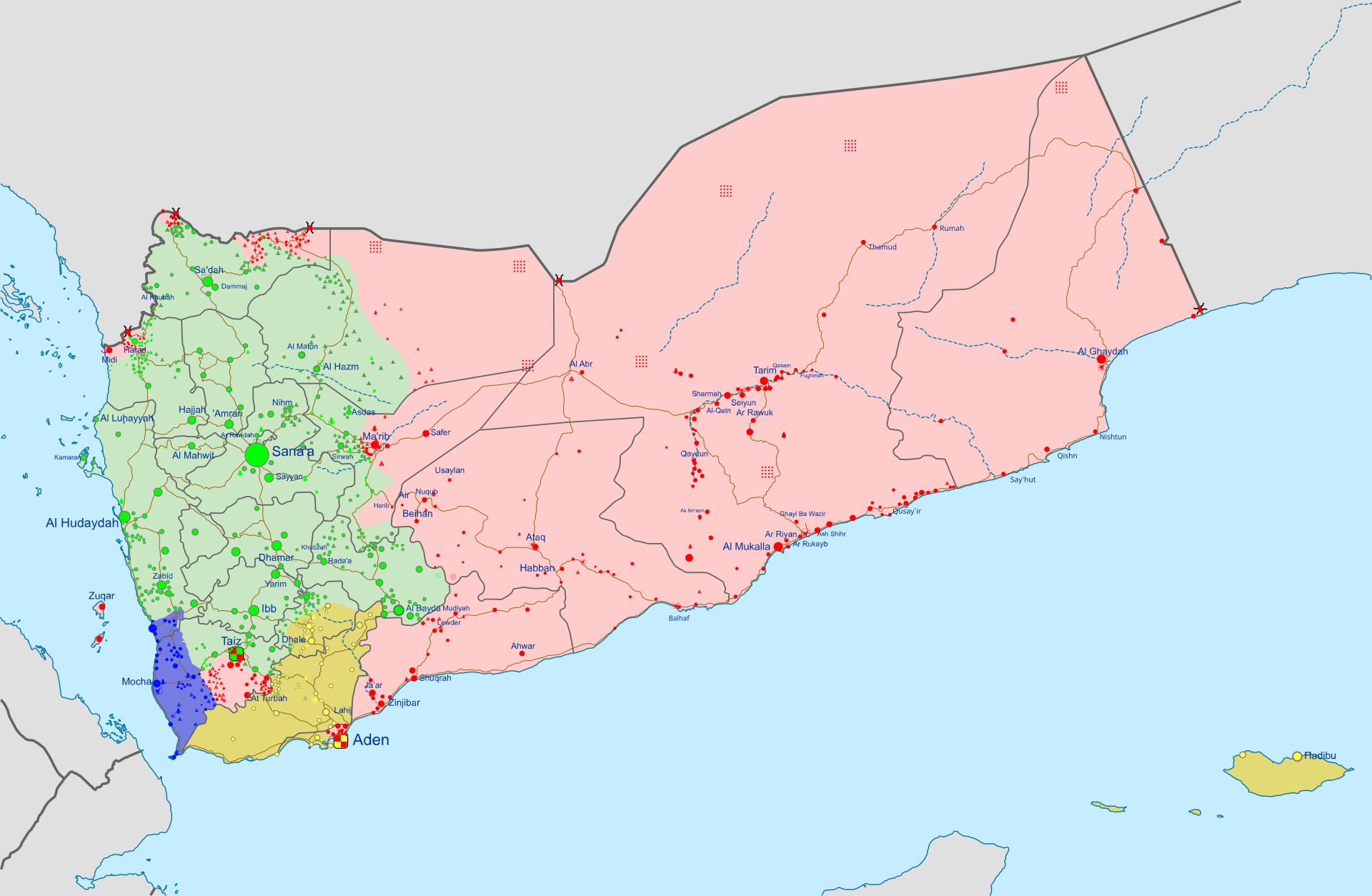
The operation followed the sinking of the MV Magic Seas — a Liberian-flagged, Greek-operated bulk carrier hit approximately 60 nautical miles southwest of Hodeidah, according to Marine Insight reporting from July 7, 2025. The IDF issued Arabic-language evacuation warnings to civilians in Hodeidah, Ras Isa, and Al-Salif approximately 30 minutes before strikes commenced.
Operation Black Flag — Target Summary
| Target | Category | Damage Assessment |
|---|---|---|
| Hodeidah Port | Port / logistics hub | Main power station knocked offline; city left in darkness (Reuters) |
| Ras Isa | Oil terminal / fuel offloading | Fuel offloading infrastructure struck (IDF) |
| As-Salif | Port / generator compound | Central generator compound destroyed (IDF) |
| Ras Kanatib | Power station | Major electricity supply facility hit (IDF) |
| Galaxy Leader | Converted radar platform | Partially sunk; rendered inoperable by April 30, 2026 (Katz statement) |
A prior Israeli strike on Hodeidah caused at least $20 million in damage, destroying most of the port’s oil storage capacity, according to a Yemeni official cited by the Times of Israel. The cumulative infrastructure degradation is not incidental — it is the operational logic of repeated strikes on the same four facilities.
Does Naming the Same Targets Make Riyadh Complicit?
Saudi Arabia explicitly denied involvement in Israeli strikes on Hodeidah in July 2024. Brigadier General Turki al-Maliki stated: “The Kingdom has no relation or involvement in the targeting of Hodeidah, and the Kingdom will not allow any entity to violate its airspace,” according to Arab News. That denial architecture remains available for any subsequent Israeli operation.
The problem is that al-Maliki’s July 4, 2026 statement named the same infrastructure Israel struck — not as collateral damage in someone else’s war, but as targets of Saudi declared intent. The denial template works when Saudi Arabia is a bystander. It fails when Saudi Arabia has publicly identified the same facilities as legitimate targets for its own coalition.
Three scenarios explain the convergence:
- Coordination: Riyadh and Tel Aviv agreed on target sets, with Saudi public statements providing political cover for Israeli kinetic action. No evidence supports this — Saudi-Israeli normalization is explicitly off the table as of 2026, according to the Institute for National Security Studies.
- Parallel logic: Both militaries independently identified the same four facilities as the obvious targets for coercing Houthi-controlled western Yemen. Hodeidah, Ras Isa, and As-Salif are the only three ports of consequence on that coastline. Any military planner would name them.
- Rhetorical conscription: Al-Maliki’s statement, regardless of operational intent behind it, conscripted Saudi Arabia into an Israeli target list already executed. The public record does not distinguish between parallel logic and coordination.
For Houthi operational planning, all three scenarios produce the same output. The Saudi coalition named the targets. Israel struck the targets. The Houthi response calculus treats both parties identically.
The Houthi Retaliation Calculus
Saree’s July 3 statement is unambiguous: “We warn the criminal Saudi enemy against repeating any attempt to violate our airspace or any aggression targeting our country. Such actions will be met with a comprehensive response targeting its airports and vital interests on land and sea,” according to Al Jazeera and The New Arab.
This threat was issued before al-Maliki’s July 4 statement. It responded to a specific provocation: Saudi warplanes intercepting an Iranian civilian aircraft carrying over 200 passengers — including a Houthi funeral delegation bound for Khamenei’s funeral in Tehran — at Sanaa airport at approximately 5:20 AM on July 3, 2026. The intercept failed; the aircraft landed despite Saudi interference.
Houthi political official Mohammed Abdul-Salam stated that Houthis would target Gulf states including Saudi Arabia and the UAE “if the war against Iran leads to strikes on oil and energy infrastructure,” according to the Stimson Center’s March 2026 analysis. This is not an improvised threat. It is a stated escalation ladder with a specific trigger condition.
The Houthi escalation framework operates on three levels:
- Level one: Airspace closure — partially activated on July 3, when Houthi air defenses repelled Saudi aircraft from Houthi-controlled airspace.
- Level two: Strikes on Saudi airports and energy infrastructure — explicitly threatened by Saree, with Aramco facilities named as targets in prior MEMRI-documented statements: “Our patience has run out; your airspace is in danger of being fully closed; we will not hesitate to attack Aramco facilities.”
- Level three: Maritime operations against Saudi Red Sea shipping — targeting the Yanbu corridor through which approximately 5 million barrels per day transit, in the same operational zone as Houthi naval doctrine.
The three levels are not sequential prerequisites. Houthi operational history since 2019 demonstrates simultaneous multi-axis capability: the September 14, 2019 Abqaiq-Khurais attack combined cruise missiles and drones on multiple vectors in a single coordinated strike. The Houthi arsenal has expanded since then — drone production scaled domestically, and Iranian transfers continued until the 2026 war disrupted supply lines. Even with depleted Iranian resupply, the Soufan Center assessed in March 2026 that existing stockpiles remain sufficient for targeted operations against fixed infrastructure within range.
Iran’s Foreign Ministry has characterised Israeli operations as “false flag” attacks designed to drag Arab states into war, according to the Palestine Chronicle and Middle East Monitor reporting from March 2026. Iranian officials specifically warned that Israel could orchestrate attacks on Gulf energy infrastructure and attribute them to Iran. Whether or not that framing is accurate, it provides Houthi media infrastructure with a readymade narrative: Saudi Arabia and Israel share a target list, therefore Saudi Arabia shares liability for Israeli strikes.
Can Saudi Arabia Absorb What It Invited?
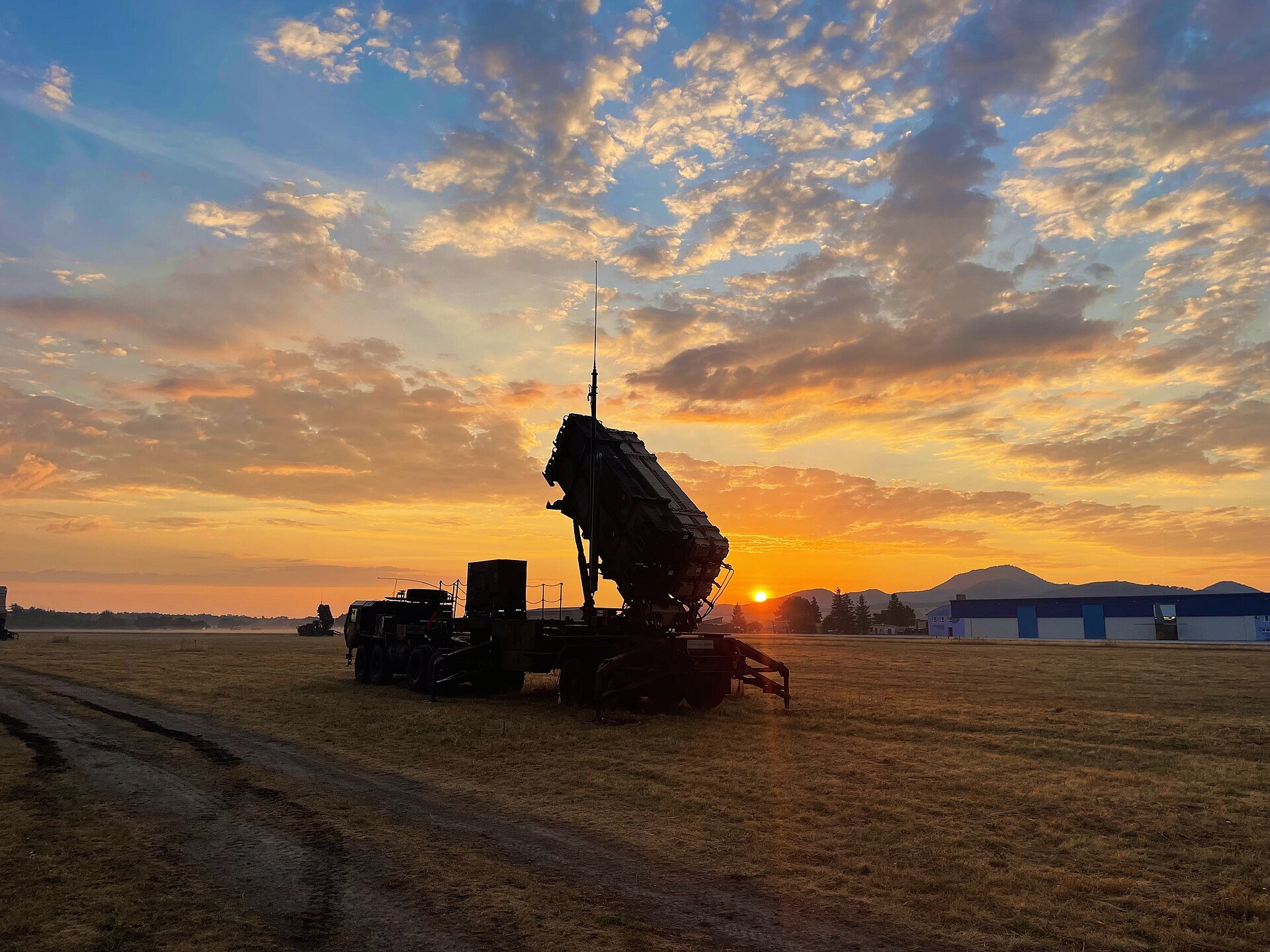
The answer is structural, not rhetorical. Saudi Arabia’s PAC-3 MSE stockpile stands at approximately 400 rounds — down from roughly 2,800 pre-war, an 86% depletion rate. The Camden, Arkansas production facility — the only PAC-3 MSE final assembly line on earth — produced 620 interceptors in 2025 for all global customers combined, according to US Department of Defense production data.
Saudi Arabia’s January 2026 Foreign Military Sales notification requests 730 rounds — more than 14 months of that entire global production output. No meaningful replenishment arrives before mid-2027 at the earliest. The $9 billion approved sale does not change the timeline; it confirms it.
Saudi Air Defense Inventory — July 2026
| System | Status | Operational Gap |
|---|---|---|
| PAC-3 MSE | ~400 rounds (86% depleted) | No replenishment before mid-2027 |
| M-SAM II (Cheongung-II) | Ordered ($3.2B, 10 batteries) | First delivery 2028 (Janes / WDS 2026) |
| US IESP maintenance | ~2,300 troops at PSAB | Contractors depart with troop withdrawal |
| Camden production | 620 rounds/year (all customers) | Saudi FMS request = 14+ months output |
The M-SAM II system — a $3.2 billion contract with South Korea’s LIG Nex1 for 10 batteries — intercepts at 15-20 kilometres altitude. But the IRGC Zolfaghar-class ballistic missile arrives in terminal phase below 10 kilometres, where only PAC-3 provides coverage. The M-SAM purchase does not close the gap that matters.
The approximately 2,300 US troops at Prince Sultan Air Base do not merely operate radar systems. They maintain the Integrated Extended Air Defense System (IESP) — the software, datalinks, and maintenance architecture that keeps PAC-3 batteries operational. When those troops withdraw, the maintenance contractors leave with them. Saudi Arabia retains the launchers but loses the operational capacity to sustain them in combat tempo.
Four hundred rounds against a Houthi inventory that has demonstrated sustained multi-axis operations — missiles, drones, and maritime platforms simultaneously — does not constitute a defensive posture. It constitutes a countdown.
The Denial Architecture and Why It Fails This Time
Saudi Arabia’s standard response to Israeli strikes on Yemen follows a consistent template. In July 2024, when Israel struck Hodeidah, Riyadh issued an explicit denial: no involvement, no coordination, no airspace access. The Saudi Ministry of Foreign Affairs expressed “deep concern over the escalating military situation in Yemen” and reaffirmed commitment to peace efforts — standard third-party diplomatic language.
The July 4, 2026 al-Maliki statement breaks that template. A state that publicly identifies infrastructure as its own strike targets cannot credibly deny association when a third party strikes those same targets. The denial architecture requires Saudi Arabia to occupy the position of uninvolved observer. Al-Maliki’s statement vacated that position.
Consider the sequence from a Houthi intelligence perspective:
- July 3, 2026: Saudi warplanes attempt to prevent an Iranian civilian aircraft from landing at Sanaa airport.
- July 3, 2026: Saree threatens Saudi airports and Aramco facilities.
- July 4, 2026: Al-Maliki names Hodeidah, Ras Isa, as-Salif, and Sanaa Airport as Saudi coalition targets.
- July 6-7, 2025 (confirmed precedent): Israel struck the same four facilities under Operation Black Flag.
Whether Saudi Arabia coordinates with Israel is irrelevant to how the Houthis construct targeting rationale. The public record — freely available, in al-Maliki’s own words, carried by Al Jazeera and Al Arabiya — provides the documentary basis for treating Saudi Arabia as a co-belligerent against Houthi-controlled infrastructure.
The French Institute for Strategic Research (FRS) assessed in 2026 that Riyadh views Israel’s Red Sea expansion as a “strategic threat” rather than a welcome alignment. Saudi Arabia faces a war on three fronts — military, diplomatic, and economic — and Israeli operations in the Red Sea complicate all three. But perception in Paris or Riyadh does not govern Houthi targeting logic.
What Does Houthi Doctrine Say About Rhetorical Conscription?
Houthi targeting doctrine operates on a principle of associative liability. Parties whose public statements, logistics, or territorial access implicate them in an attack against Houthi-controlled areas are treated as legitimate targets. This is not a theoretical framework — it is the operational logic behind Houthi Red Sea attacks on vessels with tenuous Israeli connections: partial ownership, flag-state associations, port-of-call histories.
Al-Maliki’s statement creates a more direct association than any shipping registry. The Saudi coalition spokesman — speaking in an official capacity, distributed through state-affiliated media, carried by international outlets — named the same infrastructure that Israel struck. Under associative-liability doctrine, this places Riyadh in the same targeting category as Tel Aviv regardless of what Saudi Arabia actually did or intended.
Muhammad Al-Bukhaiti, a senior Houthi political official, articulated the escalation principle in terms that map directly onto the current situation: parties that participate in — or publicly endorse — strikes on Yemeni civilian infrastructure become targets for proportionate response. Al-Maliki’s statement does not merely endorse; it claims prospective ownership of those strikes.
The Iran-aligned media ecosystem — including outlets that amplify Iranian and Houthi narratives across the Gulf — will not distinguish between Saudi operational intent and Saudi rhetorical posturing. The statement exists. It names the ports. It promises “unprecedented force.” That is sufficient for targeting rationale construction.
The Institutional Vacuum After UNMHA
The United Nations Mission to support the Hodeidah Agreement (UNMHA) expired on March 31, 2026. Security Council Resolution 2813, adopted January 28 with 13 votes in favour and two abstentions from China and Russia, authorised a final two-month drawdown period. No replacement monitoring mechanism was proposed. Residual functions transferred to the Office of the Special Envoy for Yemen — an advisory body with no enforcement capacity and no physical presence at the ports.
For seven years — from December 2018 through March 2026 — UNMHA provided institutional cover for Hodeidah’s contested status. Its monitors, however ineffective in preventing military activity, imposed a procedural constraint: strikes on monitored infrastructure generated UN documentation, Security Council briefings, and diplomatic consequences. That constraint no longer exists.
Hodeidah handles approximately 70% of Yemen’s commercial imports and 80% of humanitarian assistance, according to Asharq Al-Awsat and the Yemen Civil Society Observatory. Houthi-controlled ports received 1.3 million metric tons of fuel and food in January-February 2026, already 17% below the early 2024 baseline according to Yemen Online. The humanitarian dependency has not diminished. The institutional protection has.
The April 2025 US CENTCOM strike on Ras Isa — which killed 74 people according to Yemeni health authorities — demonstrated what happens when monitored infrastructure becomes a contested military space without neutral observation. Attribution contested, civilian casualties disputed, and no UNMHA documentation to establish baseline facts. The May 2025 Israeli strikes on Sanaa Airport caused damage that Yemeni aviation authorities estimated at $500 million — infrastructure that UNMHA would previously have documented in condition reports.
Al-Maliki’s July 4 statement arrived in this vacuum. Without UNMHA, there is no neutral observer to document who struck what, no monitoring body to verify whether Saudi or Israeli munitions hit Hodeidah infrastructure, no institutional mechanism to distinguish coalition rhetoric from coalition action. The absence of verification benefits anyone — Saudi, Israeli, or Houthi — who prefers ambiguity over accountability.
But it harms Saudi Arabia most, because the kingdom’s defensive position requires the world to believe its statements are coercive bluster rather than operational intent. Without UNMHA to document the distinction between Saudi threats and Israeli strikes, the Houthi narrative — that the two are indistinguishable — faces no institutional counterweight.
Hodeidah Infrastructure Status — July 2026
| Factor | Pre-March 2026 | Post-March 2026 |
|---|---|---|
| Monitoring | UNMHA observers present | No physical monitoring presence |
| Enforcement mechanism | Security Council briefings / documentation | None — advisory-only Special Envoy |
| Strike attribution | UN documentation of incidents | No neutral verification body |
| Humanitarian flow | 70% imports / 80% aid via Hodeidah | Same dependency, no institutional shield |
| Diplomatic constraint | Stockholm Agreement framework (Dec 2018) | Framework expired; no successor |
The ceasefire left Saudi Arabia’s skies wide open. The UNMHA expiry left Hodeidah’s ports without institutional protection. Al-Maliki’s statement left Saudi Arabia without plausible deniability. The three gaps compound: military, institutional, rhetorical. Each alone is manageable. Together they create a liability structure that no subsequent denial can dissolve.
What Riyadh Cannot Unsay
Statements can be walked back. Target lists cannot be unspoken. Al-Maliki’s July 4 enumeration of Hodeidah, Ras Isa, as-Salif, and Sanaa Airport exists in Al Jazeera’s archive, in Al Arabiya’s reporting, in Gulf News and Saudi Gazette reproductions. It will exist in whatever targeting dossier the Houthi military committee compiles when deciding whether Saudi infrastructure qualifies as proportionate response to strikes — by anyone — on their port cities.
Saudi Arabia did not create Operation Black Flag. It did not — so far as any public evidence shows — coordinate with Israel on Yemen strikes. It has an eleven-year history of striking the same facilities independently, under different operational names and different strategic logics. All of this is true and none of it matters for the liability question.
What matters is simpler: a state that publicly names infrastructure as targets, and then watches a third party strike that infrastructure, occupies a position that Houthi doctrine treats as co-belligerency. With 400 PAC-3 rounds, no UNMHA monitors, US troops packing, and a $3.2 billion M-SAM order that arrives in 2028, the liability is not abstract.
Al-Maliki threatened Hodeidah because he could not threaten Tehran. The Houthis threaten Riyadh because they cannot reach Tel Aviv with the same consistency. Both sides project force toward the target they can reach rather than the adversary they cannot. The difference is that Saudi Arabia’s security axis — Turkey, Pakistan, Egypt — provides diplomatic depth but not air-defense interceptors. And interceptors are what the next 48 hours require.
Frequently Asked Questions
Did Saudi Arabia participate in Operation Black Flag?
No public evidence links Saudi Arabia to Israel’s Operation Black Flag strikes. Saudi Arabia explicitly denied involvement in Israeli strikes on Hodeidah in July 2024, and the INSS assessed in July 2026 that Saudi-Israeli normalization remains off the table. However, al-Maliki’s July 4, 2026 statement naming the same target set creates an associative-liability problem under Houthi targeting doctrine that operates independently of actual Saudi participation.
Why did UNMHA’s expiry matter for Hodeidah’s vulnerability?
UNMHA provided the only neutral monitoring presence at Hodeidah since December 2018 under the Stockholm Agreement. Its mandate expired March 31, 2026 under Resolution 2813. Without physical monitors, no independent body can verify who strikes Hodeidah infrastructure — eliminating the documentary evidence that previously distinguished Israeli operations from Saudi coalition rhetoric. The Office of the Special Envoy for Yemen inherited residual advisory functions but has no enforcement capacity or port-based observers.
How quickly could Saudi Arabia replenish its PAC-3 interceptor stocks?
Under US Foreign Military Sales procedure, the January 2026 notification triggers a 30-day Congressional review period before a Letter of Acceptance can be signed. After acceptance, Lockheed Martin enters the production queue behind existing US Army and allied orders. Saudi Arabia has no mechanism to bypass queue priority: unlike direct commercial sales, FMS allocations are managed by the Defense Security Cooperation Agency and cannot be accelerated unilaterally by the buyer. Meaningful delivery of the 730-round order is unlikely before mid-2027 under any realistic production scenario.
What specific targets have Houthis threatened in Saudi Arabia?
Yahya Saree’s July 3, 2026 statement explicitly threatened Saudi “airports and vital interests on land and sea.” Earlier MEMRI-documented Houthi statements named Aramco facilities specifically. Mohammed Abdul-Salam’s statement to the Stimson Center extended targeting to all Gulf states if “the war against Iran leads to strikes on oil and energy infrastructure.” The Yanbu Red Sea corridor — carrying approximately 5 million barrels per day — lies within Houthi naval operational range and has not been explicitly excluded from their declared target set.
How have Houthis applied associative-liability doctrine to Red Sea shipping?
Between November 2023 and March 2026, Houthi forces justified attacks on over 100 commercial vessels by citing ownership or flag-state connections as thin as a minority shareholding in the vessel’s operating company. In several documented cases, the targeted vessel’s only “Israeli connection” was a single port call in Haifa within the previous twelve months. The same doctrine — that public association with a designated adversary creates targeting liability — now applies directly to Saudi Arabia through al-Maliki’s July 4 statement, with a far stronger evidentiary basis than a port-call log. That liability calculus was further complicated when Houthi forces killed 15 coalition-aligned government troops in Jabal Dabbas, Hodeidah on July 5 — one day after al-Maliki’s declaration, with no Saudi or coalition airstrike following.