
BEIJING — Iran’s ambassador to China told the World Peace Forum on July 4 that Hormuz transit fees are “definite,” then named China — and only China — as a nation that would receive “special treatment” for standing by Tehran during the war. He did not name Saudi Arabia, and in the recognition framework Iran is constructing around the strait, the omission is the classification.
Abdolreza Rahmani Fazli’s statement was not a commercial announcement but a coercive sorting mechanism that forces every major crude importer and Gulf state to declare alignment before August 18, when the MOU’s free-passage window closes and the Persian Gulf Strait Authority begins billing at approximately $5.5 million per day for Saudi crude alone. The “friendly nation” carve-out is a loyalty test: states either accept Iran’s toll sovereignty by seeking an exemption, or they accept its consequences by refusing one. China received the named designation 48 to 72 hours after giving Saudi Arabia an explicit freedom-of-navigation commitment — a contradiction Beijing has not yet been forced to resolve.
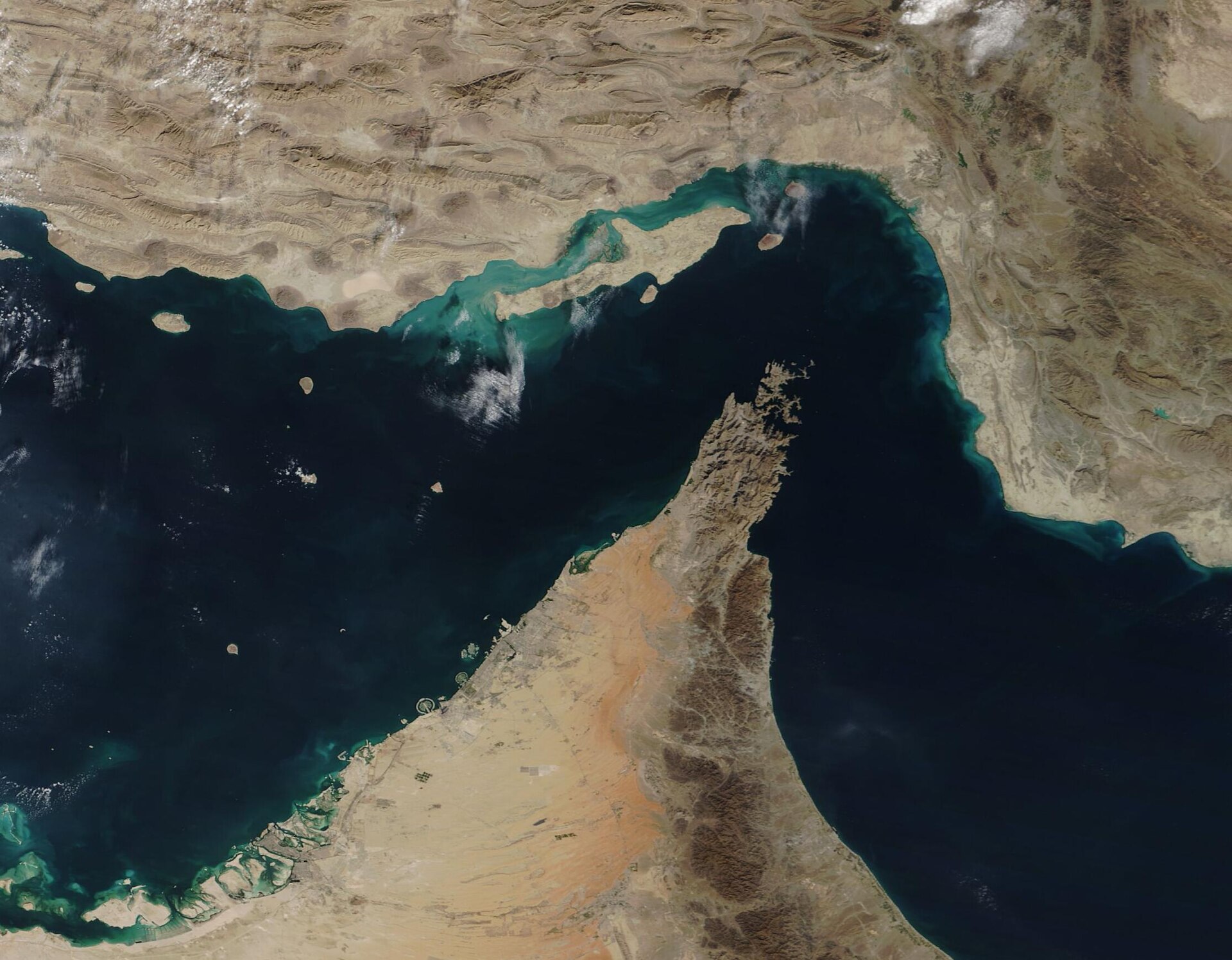
Table of Contents
- What Did Iran’s Ambassador Say in Beijing?
- The Fee Iran Won’t Call a Toll
- Who Decides Who Is Friendly?
- China’s 72-Hour Contradiction
- What Does Saudi Arabia Owe the PGSA?
- Oman Lends the Southern Shore
- Can the Hormuz Fee Precedent Spread?
- The Importers Who Haven’t Been Named
- Forty-Three Days to Choose a Side
- Frequently Asked Questions
What Did Iran’s Ambassador Say in Beijing?
Rahmani Fazli told the World Peace Forum that Iran will “definitely” charge service fees for Hormuz transit and will offer “special treatment” to nations that “stood by” Tehran during the four-month war with the United States and Israel. He named China as the sole beneficiary and identified no other state.
The venue was not incidental. The World Peace Forum, hosted annually by Tsinghua University, draws senior diplomats, retired generals, and foreign policy academics from across Asia, and it gave Tehran a platform to make a sovereign commercial announcement inside the capital of the country it was simultaneously exempting from that announcement’s consequences. Choosing a security conference to deliver what amounted to a restructuring of the strait’s political economy was a deliberate signal about the nature of the policy.
“We will definitely consider special treatment for the countries that were friendly to us and specially stood by us during the hard times,” Rahmani Fazli told the forum, according to Bloomberg, Al Jazeera, and Fortune. He then made the application explicit: “We will definitely have special considerations for China, because China is a friendly country.” The word “definitely” appeared twice — once for the policy, once for the named beneficiary — and the only country attached to either use was China.
The ambassador framed the fees as compensation for services Iran now provides in the strait: guaranteeing safe passage, monitoring maritime traffic, and covering what he called “the cost of environmental consequences” — a reference to mines, unexploded ordnance, and oil contamination left by four months of hostilities and counter-mining operations. He was careful to distinguish between “tolls,” which he rejected, and “service fees,” which he insisted the charges represent — a distinction that maps directly onto the narrowest gap in international maritime law.
The Middle East briefing 3,000+ readers start their day with.
One email. Every weekday morning. Free.
The Fee Iran Won’t Call a Toll
The legal architecture Iran is exploiting is narrow but real. UNCLOS Articles 37 through 44 establish “transit passage” through international straits — a right that cannot be suspended by the bordering state and that requires no payment or prior authorization. Article 26 reinforces this by prohibiting fees levied on foreign ships “by reason only of their passage.” But Article 26, paragraph 2, opens a gap: fees may be charged “only for specific services rendered to the ship.” Iran has mapped every element of the PGSA’s fee structure — safe-passage permitting, traffic coordination, environmental remediation — onto that paragraph with deliberate precision.
The gap is real, but so is the counter-argument that it does not apply here. Iran has never ratified UNCLOS, which means it is not formally bound by the transit passage regime and has long maintained that it need only grant “innocent passage” — a lesser right that the bordering state can suspend for security reasons. The United States has also not ratified UNCLOS but treats transit passage as customary international law, binding on all states regardless of treaty accession. The legal question is therefore not whether Iran is violating a treaty it never signed — Tehran’s position is that it never agreed to the relevant provisions — but whether the fee regime can survive as a precedent that other coastal states will be forced to accept or actively contest.
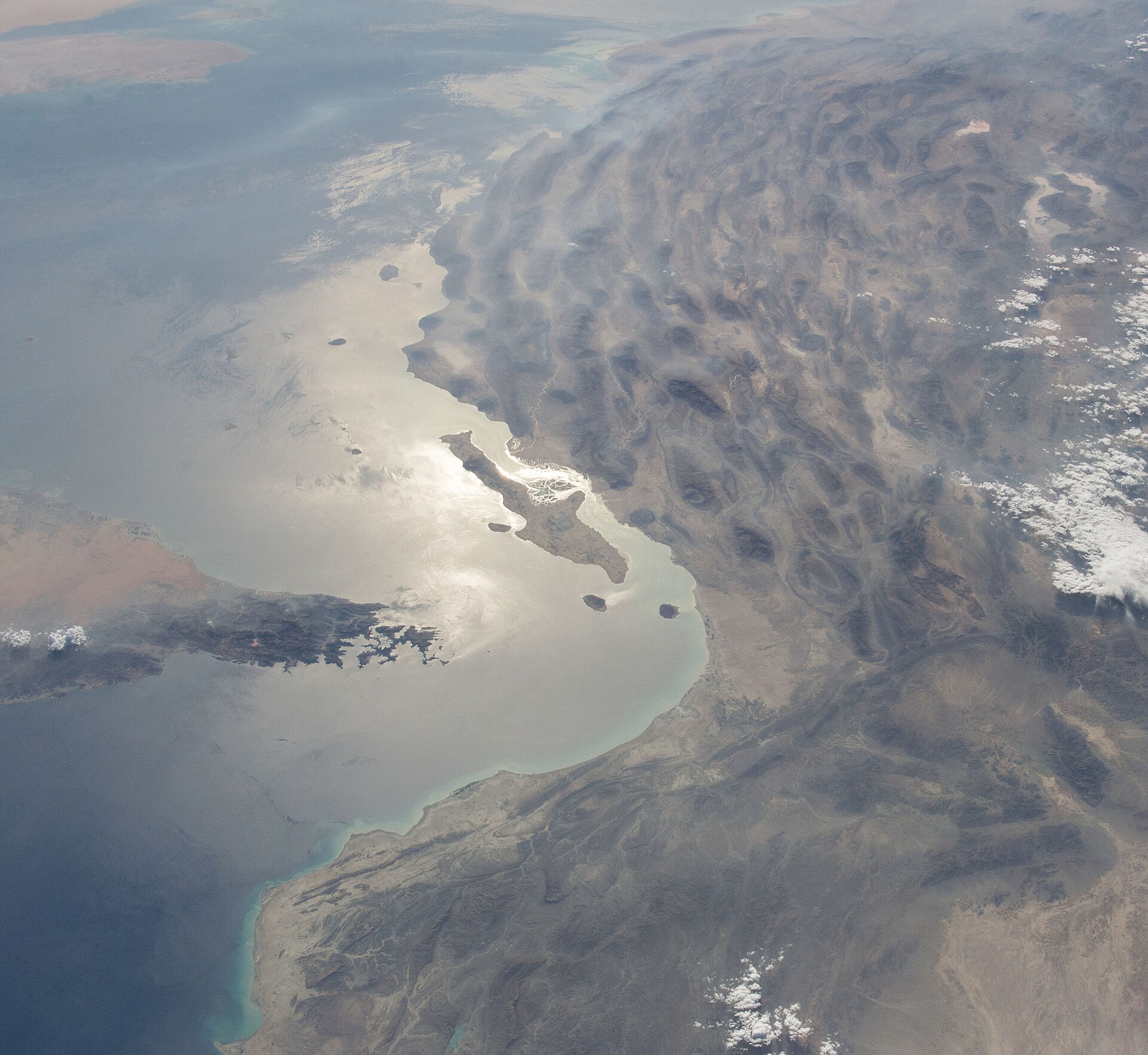
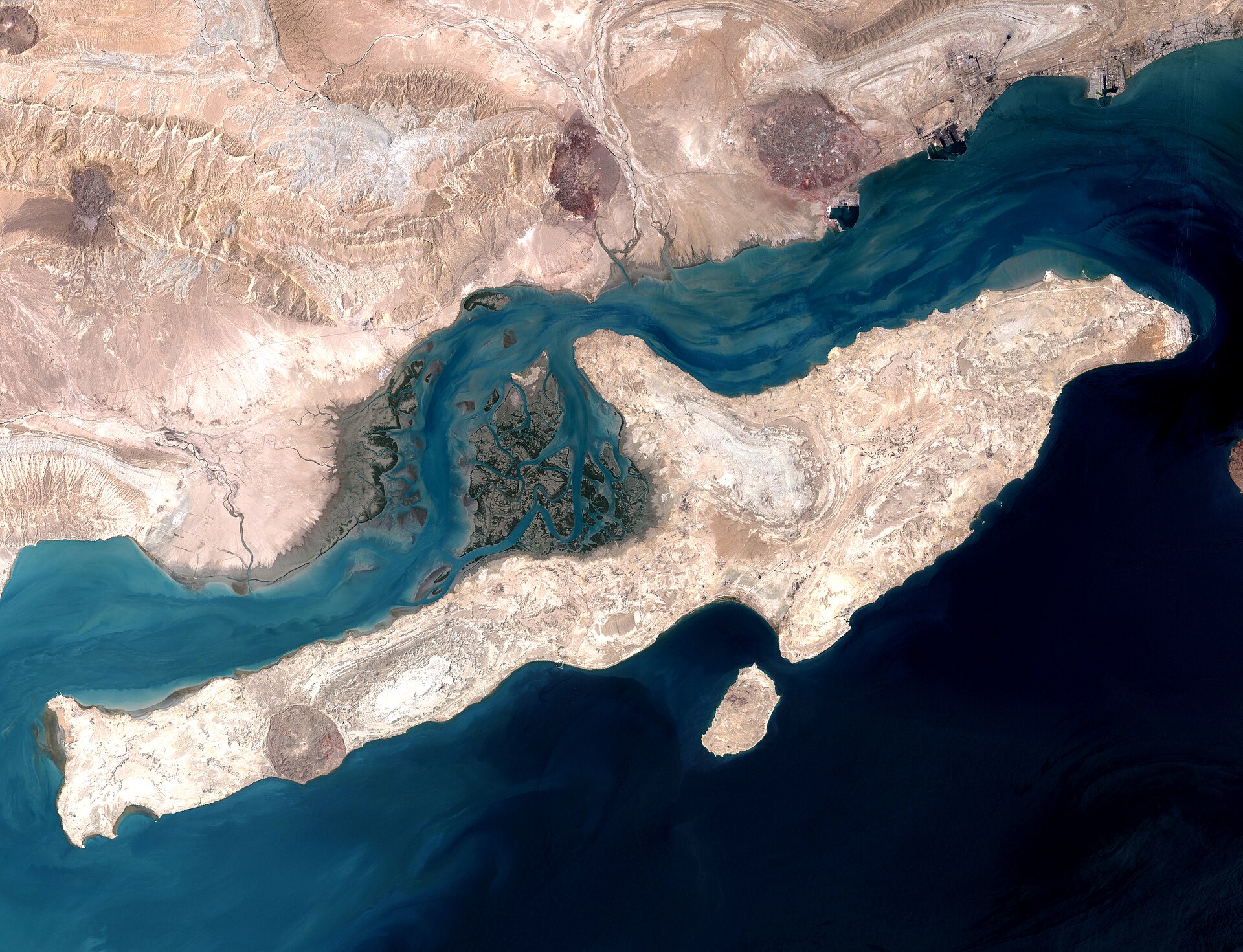
The PGSA, constituted on May 5, 2026, collects approximately $1 per barrel from vessels transiting a five-nautical-mile corridor between Qeshm and Larak islands. At pre-war Saudi export volumes of 5.5 million barrels per day through Hormuz, the implied annual cost to Saudi crude alone is approximately $2 billion. The authority accepts payment in bitcoin and Chinese yuan — no dollar-denominated transactions are processed — a design choice that insulates the payment mechanism from the US sanctions architecture while aligning it with Beijing’s currency interests. On May 27, OFAC designated the PGSA — a sanction that creates a double bind for every state whose crude transits the strait.
“A fee regime premised on bordering-state discretion to screen, price, and selectively deny passage would transform a legal right of passage into a purchased license,” the European Journal of International Law warned in April 2026, in an analysis titled “Codifying Coercion.” No UNCLOS-governed international strait has ever been subject to a per-transit charge, making the Hormuz fee, if it survives, a structural first with no limiting precedent.
Who Decides Who Is Friendly?
Iran decides, unilaterally, with no published criteria, no bilateral framework for negotiation, and no mechanism for appeal. The PGSA has issued no schedule of differentiated fees, no list of qualifying conditions, and no formal designation process. The only operational precedent is seven Malaysian-flagged vessels permitted to transit in April 2026 on the basis of an undefined “friendly” determination — a test run conducted and concluded before the ambassador formalized the category in Beijing.
The Malaysian passage, which occurred while Iranian naval forces were still enforcing a near-total blockade, established the operational logic: Iran permitted transit for vessels it chose to permit, denied it for those it did not, and published no reasoning beyond the implication that Malaysia had been deemed a friend. Rahmani Fazli’s Beijing statement elevates this from ad hoc enforcement to declared policy — but the underlying mechanism is identical. The “friendly nation” category exists as a sovereign assertion, and Tehran alone decides who qualifies.
The structure of the carve-out reveals its coercive function. A state that applies for friendly status — through whatever bilateral channel Iran might eventually designate — implicitly accepts the PGSA’s legitimacy, its fee-setting authority, and Iran’s sovereign claim over the strait corridor. A state that refuses to apply, or that is never offered the opportunity, is classified by default into whatever residual category Iran constructs for the non-friendly, subject to whatever rate or restriction Tehran attaches to that classification. Engagement legitimizes the regime, and refusal — by defaulting to the full rate — effectively funds it.
For Saudi Arabia, the trap is particularly tight. The Kingdom has no bilateral channel with Tehran for strait-related negotiations, no exemption from PGSA billing, no diplomatic relationship that would support a friendly-nation application, and a public position — aligned with Secretary Rubio’s “never acceptable” formulation — that forecloses the possibility of seeking one. Saudi Arabia’s $253 million in outstanding PGSA exposure, accumulating at $5.5 million per day from August 18, will accrue at whatever rate Iran assigns to states that never applied — and silence, in this framework, is functionally indistinguishable from hostility. Oman has since formalised an alternative framework that removes Saudi silence as a viable option entirely: the dual-corridor proposal is a structure Saudi Arabia cannot endorse, oppose, or abstain from without costs it cannot afford.
China’s 72-Hour Contradiction
The timeline is precise enough to be uncomfortable for Beijing. On July 1 and 2, Chinese Foreign Minister Wang Yi hosted Saudi FM Faisal bin Farhan for a bilateral meeting that produced a joint statement with explicit language endorsing “freedom of navigation in the Strait of Hormuz” — a formulation that Wang Yi had withheld from China’s Iran bilaterals, where the standard formula invokes “regional stability” and “respect for sovereignty” without naming Hormuz or specifying freedom of navigation. Riyadh left Beijing with language that, on paper, committed China to the principle that no state should charge for strait passage.
Between 48 and 72 hours later, Iran’s ambassador — operating in the same city, at a conference hosted by a university with deep ties to the Chinese foreign policy establishment — named Beijing as the anchor beneficiary of the fee regime that the Wang Yi-Faisal statement implicitly opposed. The Chinese foreign ministry’s response, delivered by spokesman Guo Jiakun, retreated to the generic: he called for the “unhindered flow of shipping through the Strait of Hormuz,” saying it was in the “interests of all parties.” He did not acknowledge the carve-out, did not reject it, and did not reference the FON language given to Riyadh days earlier.
The structural reality beneath the diplomatic language is less ambiguous. China buys almost all of Iran’s oil exports, has done so throughout the blockade and the war, and has made zero Saudi crude purchases through Sinopec for two consecutive months. Ghalibaf told CNBC that Iran has exported more than 40 million barrels since the blockade began, at a 20 percent premium — an inversion of the normal Hormuz-disruption dynamic in which Iranian exports suffer most. China’s simultaneous receipt of a named Iranian carve-out and a Saudi FON commitment is not a contradiction Beijing needs to resolve — it is a position Beijing is choosing to maintain for as long as both tracks remain commercially productive.
The Wang Yi FON language is not a safety valve for Saudi Arabia. China gave it bilaterally but cannot — and almost certainly will not — operationalize it against Iranian enforcement inside the five-nautical-mile Qeshm-Larak corridor where the PGSA collects its fees. What Riyadh received in that July 1 joint statement was a diplomatic sentence, not a naval commitment.
What Does Saudi Arabia Owe the PGSA?
Approximately $253 million in accumulated charges since the PGSA began operations on May 5, with an additional $5.5 million per day reactivating on August 18 when the MOU’s 60-day free-passage window expires. Saudi Arabia has no exemption, no bilateral arrangement with Iran, and no diplomatic channel through which to negotiate one — a position that the “friendly nation” framework now makes formally consequential rather than merely awkward.
| Date | Event | Cumulative Exposure |
|---|---|---|
| May 5, 2026 | PGSA constituted; billing begins | $0 |
| May 27, 2026 | OFAC designates PGSA | ~$121M |
| June 18, 2026 | MOU signed; 60-day free passage begins | ~$242M |
| July 5, 2026 | “Definite” fee statement in Beijing | ~$253M |
| August 18, 2026 | MOU window closes; $5.5M/day resumes | $253M+ |
The OFAC designation adds a second bind. Treasury’s FAQ 1249 warns that shipowners face sanctions exposure for “arranging transits with or paying tolls or fees to the PGSA” — language that extends to non-US entities under secondary sanctions authority. The PGSA’s decision to accept only bitcoin and Chinese yuan was designed to insulate the payment channel from the dollar-based architecture that OFAC enforces. But secondary sanctions reach beyond payment currency: any entity that facilitates a PGSA transaction risks designation regardless of whether dollars touched it, which means the sanctions threat and the fee threat operate on different axes and cannot be resolved by the same concession.
Saudi Arabia cannot pay without exposing Aramco, its shipping intermediaries, and its downstream customers to US sanctions. It cannot refuse without accepting whatever enforcement mechanism Iran applies to non-paying, non-friendly states — a category that, after August 18, could mean transit delays, insurance surcharges, or denial of passage through the Qeshm-Larak corridor. The Kingdom’s public position forecloses the first option; Iran’s demonstrated capacity to enforce the strait, sustained across four months of effective blockade, makes the second something other than theoretical.
Oman Lends the Southern Shore
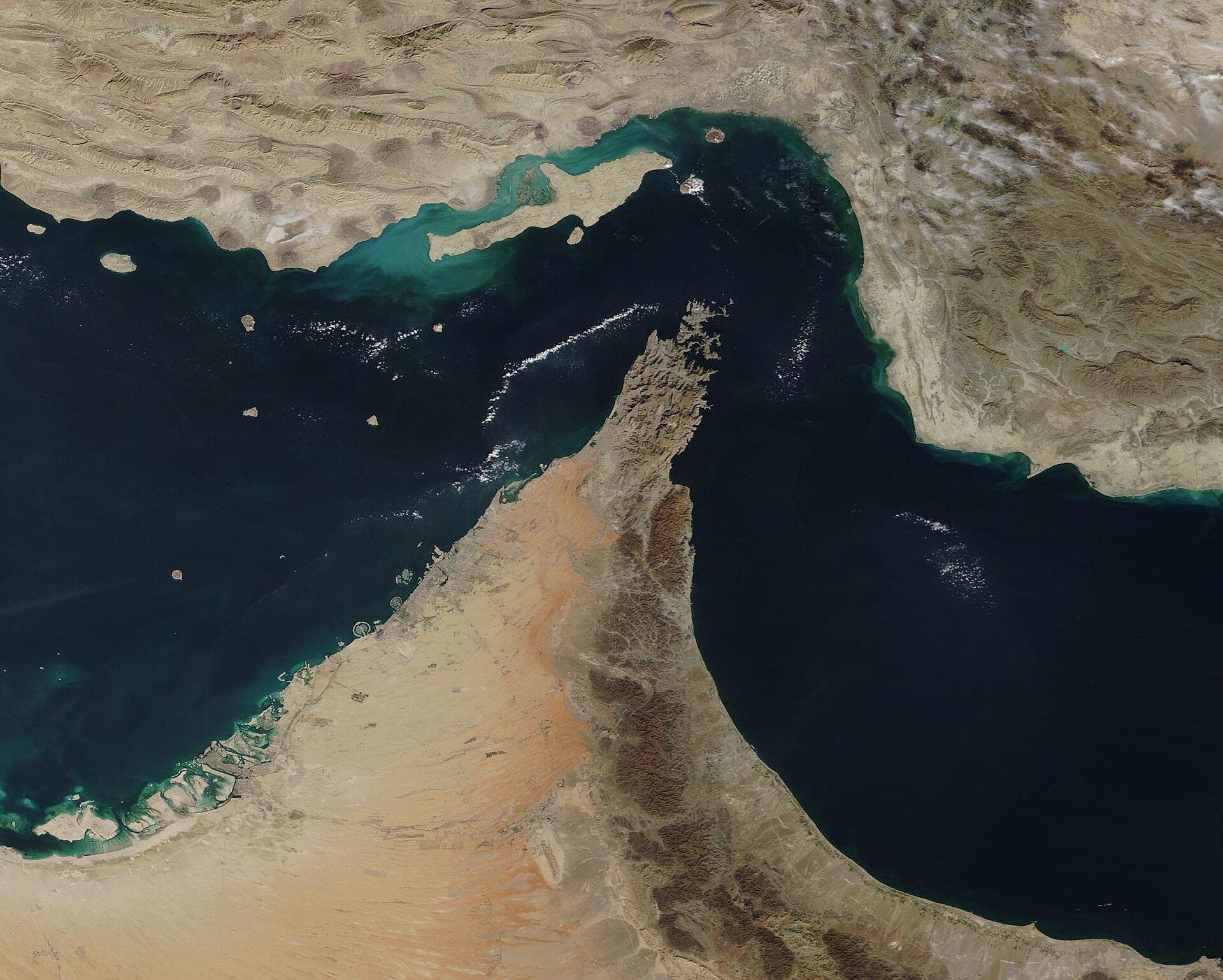
Rahmani Fazli’s confirmation that Iran is developing “new arrangements concerning the Strait of Hormuz with the collaboration and cooperation of the state of Oman” reframes the fee regime from unilateral assertion to something that resembles — at least in presentation — a bilateral governance structure. Oman controls the Musandam Peninsula, the rocky outcrop that forms the strait’s southern boundary, and its participation lends geographic legitimacy to a mechanism that critics have dismissed as piracy dressed in administrative language.
Oman’s position is structurally distinct from every other Gulf state’s. Muscat maintained its embassy in Tehran throughout the war, served as a back-channel intermediary in the early stages of the US-Iran talks that produced the June 18 MOU, and has a decades-long history of balancing Iranian and Gulf Arab relationships that predates the current crisis by generations. The sultanate was not designated by OFAC alongside the PGSA — a distinction that matters if Oman’s role evolves from political endorsement to operational intermediary, providing a non-sanctioned entity through which fee payments could be routed without triggering US secondary sanctions.
The framing is deliberately calibrated. A fee regime imposed by Iran alone can be characterized as coercion; a fee regime co-developed with the state that shares the strait’s opposite shore begins to look like governance — or at least like something that demands a governance-level response rather than a unilateral rejection. Whether Oman’s “collaboration” extends to operational participation in the PGSA, to co-sovereignty over fee-setting, or merely to diplomatic acquiescence remains undefined, and the ambiguity serves Tehran’s purposes because it allows the regime to be presented as multilateral without the constraints that genuine multilateral process would impose.
For Saudi Arabia and the rest of the GCC, Oman’s involvement complicates any collective response. A unified Gulf Arab rejection of the fee regime becomes harder to sustain when one of the six GCC members is identified — by Iran, if not yet by Muscat’s own public statements — as a partner in constructing it. Oman’s foreign ministry has issued no statement clarifying the scope of its collaboration, and the silence allows both Tehran and Muscat to define the arrangement on their own terms.
Can the Hormuz Fee Precedent Spread?
Yes — and that is precisely why the United States has framed the fee as a systemic threat rather than a bilateral dispute. If Iran’s fee survives as precedent, any state bordering an UNCLOS-governed international strait gains a template for extracting rent from commercial shipping, and the legal basis for challenging a similar regime in the Malacca Strait, Bab el-Mandeb, or Danish Straits collapses.
Secretary Rubio, speaking at a GCC ministerial in Bahrain on June 24, framed the stakes in exactly those terms. “You can call it a toll, you can call it a fee, whatever you want to call it — it’s a game of semantics — will never be acceptable,” he said, before warning that Iran’s scheme could “spread throughout the world like a contagion.” The word was chosen carefully: Rubio was not describing an Iranian problem but a structural precedent that, if normalized, would give every littoral state the same commercial extraction tool.
“We will definitely consider special treatment for the countries that were friendly to us and specially stood by us during the hard times.”
— Abdolreza Rahmani Fazli, Iran’s Ambassador to China, World Peace Forum, Beijing, July 4, 2026
The European Journal of International Law’s April 2026 analysis warned that “a precedent permitting a belligerent littoral state to impose tolls, discriminatory access conditions, or bilateral clearance schemes during armed conflict would alter the legal architecture on which maritime commerce, naval mobility, and third-state reliance depend.” Just Security, separately, observed that “transit passage is strongly protected in doctrine but difficult to enforce in practice when a coastal State is willing to violate the rules.” Iran has spent four months demonstrating that willingness — and the fee regime is the instrument it built to monetize the demonstration.
No comparable precedent exists. The Bosphorus and Dardanelles are carved out under the 1936 Montreux Convention; Turkey’s transit fees predate UNCLOS and are legally independent of it. The Panama Canal is a single-state interoceanic passage, not a strait connecting two areas of the high seas. If Hormuz becomes the first UNCLOS international strait subject to a per-transit charge, the limiting principle — the legal argument that this case is unique and non-replicable — does not yet exist.
The Importers Who Haven’t Been Named
Rahmani Fazli named China and left the rest of the world’s major crude importers to calculate their exposure in silence. The ambassador’s omission of India — which ships approximately 2.6 million barrels per day through the strait, roughly half of its total crude imports — was conspicuous given that New Delhi maintained a posture it characterized as neutral during the war, continuing to buy Iranian crude through rupee-denominated channels while declining to join either the US-led coalition or Iran’s diplomatic counter-offensive. India’s classification under the “friendly nation” framework remains undefined, and the uncertainty serves Tehran’s interests — keeping New Delhi’s alignment question open at the moment when Iran needs it to be most uncomfortable.
Japan’s exposure is more acute and its options fewer. Eighty-seven percent of the country’s energy comes from fossil fuels, 95 percent of its crude from the Middle East, and approximately 1.6 million barrels per day transit Hormuz — a dependency so concentrated that even a modest per-barrel charge carries national-budget consequences. Tokyo’s alliance with Washington makes a friendly-nation designation from Tehran politically implausible, which means Japanese crude will almost certainly face the full PGSA rate: at $1 per barrel, approximately $584 million per year. South Korea faces a parallel calculus, with 1.7 million barrels per day through the strait representing 68 percent of its total crude imports and no diplomatic basis for seeking an Iranian exemption.
| Country | Hormuz Volume | Share of Imports | Named “Friendly” | Implied Annual PGSA Cost |
|---|---|---|---|---|
| China | Largest ME importer | — | Yes (named) | Reduced (TBD) |
| India | ~2.6 Mbpd | ~50% | No | ~$949M |
| South Korea | ~1.7 Mbpd | ~68% | No | ~$621M |
| Japan | ~1.6 Mbpd | ~95% (ME crude) | No | ~$584M |
| Saudi Arabia | ~5.5 Mbpd (exports) | N/A (exporter) | No | ~$2.0B |
The European signals point in the direction Iran would prefer. Al Jazeera reported, at the time of Rahmani Fazli’s statement, that some European nations now accept ships transiting Hormuz “will have to pay some sort of fee” — a softening of the absolutist rejection Rubio articulated in Bahrain barely ten days earlier. If Europe’s largest economies move toward accommodation, even tacitly, the “friendly nation” carve-out will have achieved its first strategic success: not by rewarding Iran’s allies, but by isolating its opponents into a shrinking coalition of states willing to absorb the full cost of refusal.
Forty-Three Days to Choose a Side
The MOU’s 60-day free-passage window, signed on June 18, expires on approximately August 17, at which point the PGSA’s daily charge on Saudi crude reactivates and whatever tiered fee structure Iran has formalized for friendly and non-friendly states takes effect. Rahmani Fazli’s statement landed on Day 18 of that window, with the Doha round 2 talks having failed to resolve the fee dispute and the next round suspended until after July 9 — leaving the fee question unaddressed during the funeral pause that has frozen most Iran-related diplomacy across the region.
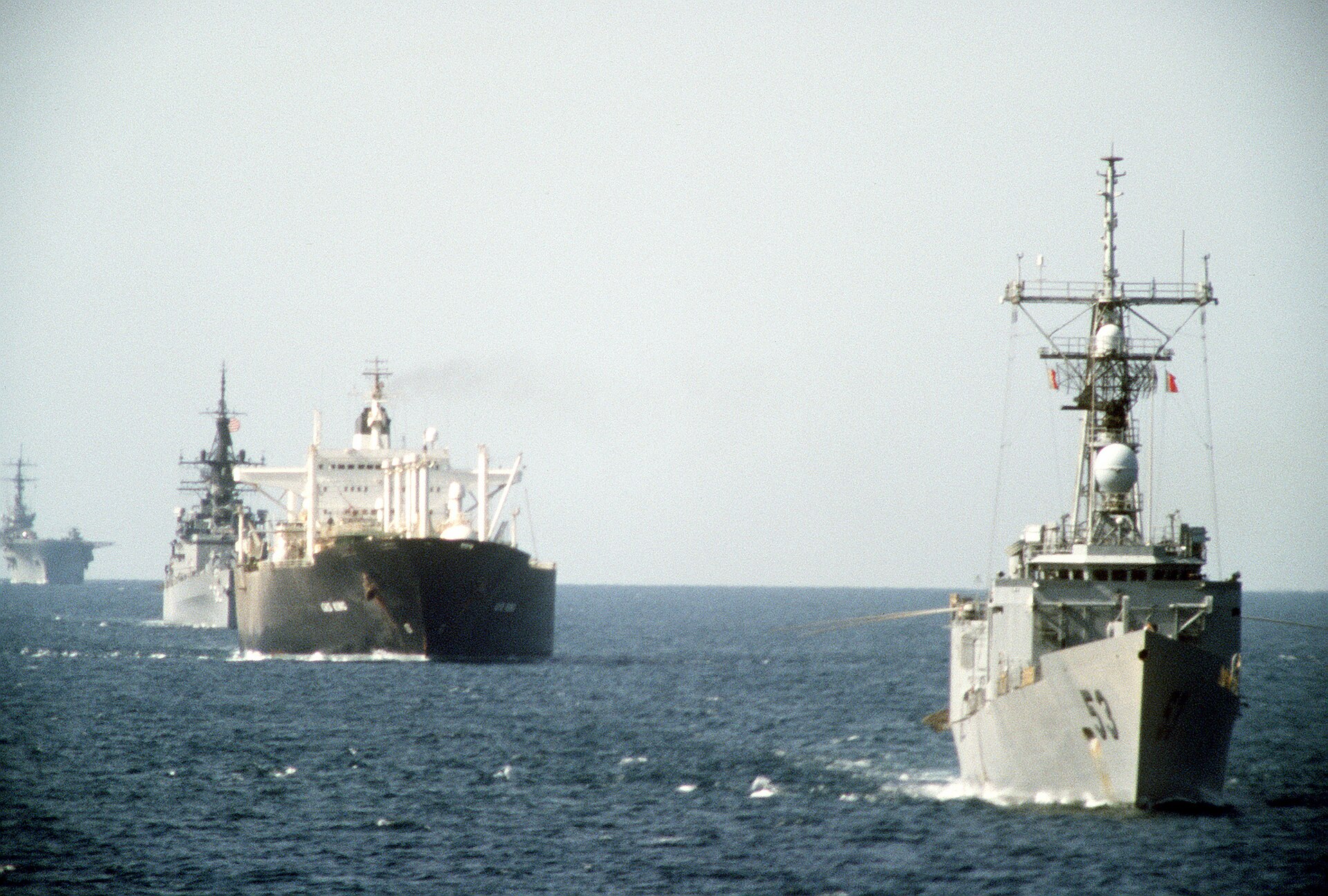
The sequencing of events between now and August 17 works against Saudi Arabia at nearly every turn. On July 11, Pakistan hosts the next round of US-Iran talks in Islamabad, with the nuclear track explicitly on the agenda — a meeting from which Saudi Arabia is excluded as participant, observer, or signatory. Ghalibaf’s structural veto over MOU compliance — built into articles that make four of five key obligations US-side — means Iran can declare the agreement breached at any point, collapsing the free-passage window early and accelerating the PGSA’s reactivation. Iran’s opening move in Doha was to raise the US breach of Article 1’s Lebanon ceasefire provision, subordinating the fee question to compliance demands that Washington has shown no urgency to address. The bilateral fracture behind Saudi Arabia’s exclusion traces directly to the Project Freedom grounding at Prince Sultan Air Base in May — the precipitating event the US-Saudi rupture has not recovered from.
Forty-three days remain before the window closes. Rahmani Fazli did not need to name every country that will pay the full rate — he only needed to name the one that will not, and let the silence work on everyone else.
Frequently Asked Questions
Can Saudi Arabia route all its oil exports around Hormuz?
Not at pre-war volumes. The East-West pipeline to Yanbu on the Red Sea coast has an effective capacity of approximately 4 million barrels per day, compared to pre-war Saudi Hormuz throughput of 7 to 7.5 million barrels per day — leaving a structural gap of 3 to 3.5 million barrels per day that cannot be rerouted. Yanbu’s terminal storage and berth capacity impose a physical ceiling that would require years of infrastructure expansion to raise, and the Red Sea route carries its own risk exposure from Houthi disruptions that have persisted since late 2023.
How would the PGSA enforce payment after August 18?
The PGSA issues per-vessel safe-passage permits through the Qeshm-Larak corridor; ships without permits forfeit transit guarantees. But the primary enforcement mechanism is the insurance market, not the Iranian navy. The Joint War Committee’s Listed Area designation for the entire Arabian Gulf remains in force, requiring shipowners to notify insurers and pay elevated war-risk premiums for any Hormuz transit. Those premiums dropped from a peak of 2.5 to 8 percent of hull value during active hostilities to approximately 1 percent under the MOU, but they have not returned to pre-war levels — and a fee dispute that collapses the MOU’s stability framework could push them back toward wartime rates, pricing non-compliance through London’s insurance desks rather than through Iranian gunboats.
Is there a precedent for authorized financial flows to Iran at this scale?
During the 2014-15 JCPOA implementation, US-authorized sanctions relief channels processed approximately $700 million per month in unfrozen assets and oil revenue to Iran — a scale that the Trump administration subsequently cited as part of its justification for withdrawing from the agreement in 2018. The current OFAC designation of the PGSA is partly designed to prevent a repetition: ensuring that no payment mechanism to Iran’s strait authority can be authorized without explicit sanctions relief that would require congressional notification and invite political opposition far exceeding the administrative cost of the fee itself.
Why does the PGSA accept only bitcoin and yuan?
The currency restriction is a sanctions-architecture decision, not a commercial preference. Dollar-denominated payments would route through US-regulated correspondent banking networks, giving OFAC direct enforcement jurisdiction over every transaction. Bitcoin settles on a decentralized ledger outside the SWIFT network, and yuan clears through China’s CIPS system — neither requires a US-regulated intermediary. The dual-currency design aligns the PGSA’s payment infrastructure with the “friendly nation” framework itself: China, the named beneficiary, is also the issuer of one of the two accepted currencies, reinforcing the alignment incentive at the transactional level.
The Hormuz classification problem extends beyond the Saudi-Iran bilateral: the UAE’s simultaneous role as strike partner, Israeli base host, and payments channel to Tehran has created a bifurcated Gulf risk profile that the friendly-nation framework cannot accommodate. A structural analysis of how the Saudi-UAE divergence reshapes every dimension of Gulf security is in The UAE and Saudi Arabia Are No Longer the Same War.