
RIYADH — Saudi Arabia grounded 43 American warplanes at Prince Sultan Air Base for four days in May 2026, shutting down the most ambitious US naval operation in the Persian Gulf since the 1980s Tanker War — the first time any country hosting US forces has physically stopped an active American military operation on its own soil in the post-Cold War period. The standard narrative frames the current US-Saudi rupture as Washington withdrawing protection from a difficult ally, but the actual sequence runs the other direction: Riyadh issued the veto, Trump failed to reverse it in a direct phone call with MBS, and Washington resorted to threatening Riyadh’s air-defence interceptor supply to force the runways back open.
The grounding lasted four days; its consequences have lasted two months and are accelerating. Every downstream event — the PAC-3 resupply freeze, the 2,300-troop withdrawal threat, Secretary Rubio deliberately skipping Riyadh on his Gulf tour, MBS declining Trump’s G7 invitation for a third consecutive year — becomes legible only when the Project Freedom shutdown is established as the precipitating cause, not background context. The enabling condition was a legal vacuum both capitals created and neither has corrected in nearly fifty years. Iran’s July 16 Khatam al-Anbiya declaration — threatening all regional infrastructure conditional on US civilian infrastructure strikes — compounds this consequence directly: Abqaiq sits inside a threat Saudi Arabia cannot answer with the interceptor supply chain Washington proved in May it controls.
Table of Contents
- What Did Saudi Arabia Do to Project Freedom?
- The Legal Void That Made the Veto Possible
- How Did Washington Force Riyadh to Reopen?
- Nine Days From Shutdown to $142 Billion
- Why Is the 1973 Oil Embargo the Only Real Precedent?
- From Grounding to Alliance Collapse
- Who Won the Four Days?
- Frequently Asked Questions
What Did Saudi Arabia Do to Project Freedom?
Saudi Arabia suspended US military authority to operate from Prince Sultan Air Base, grounded all 43 American warplanes stationed there, and closed Saudi national airspace to Operation Project Freedom within hours of President Trump announcing the operation on social media on May 3, 2026. The announcement came without prior consultation with Riyadh, Kuwait City, or any Gulf partner, according to NBC News, citing two US officials familiar with the planning. Kuwait simultaneously cut off US access to its bases and airspace, but the Saudi action was structurally decisive because of what sat on PSAB’s tarmac.
The House of Saud Daily Briefing
Saudi Arabia's news in 3 minutes, every morning. Free. See today's issue
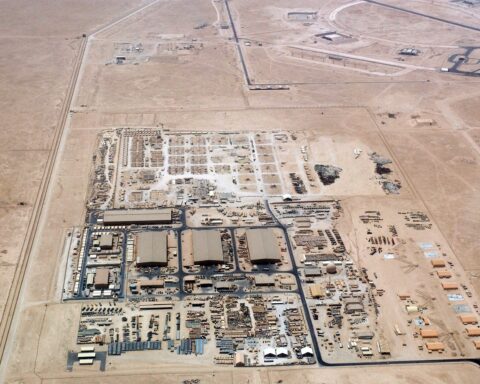
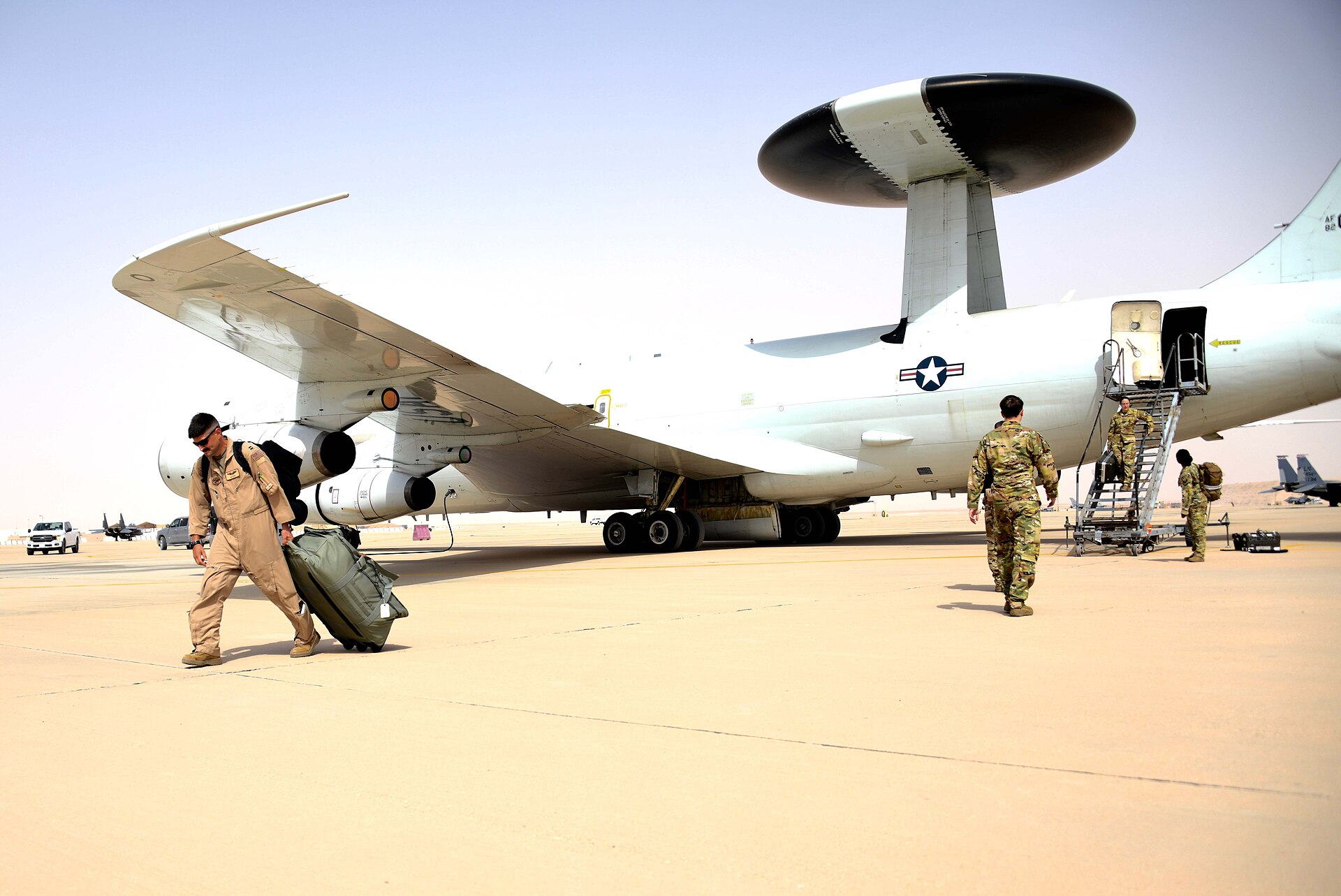
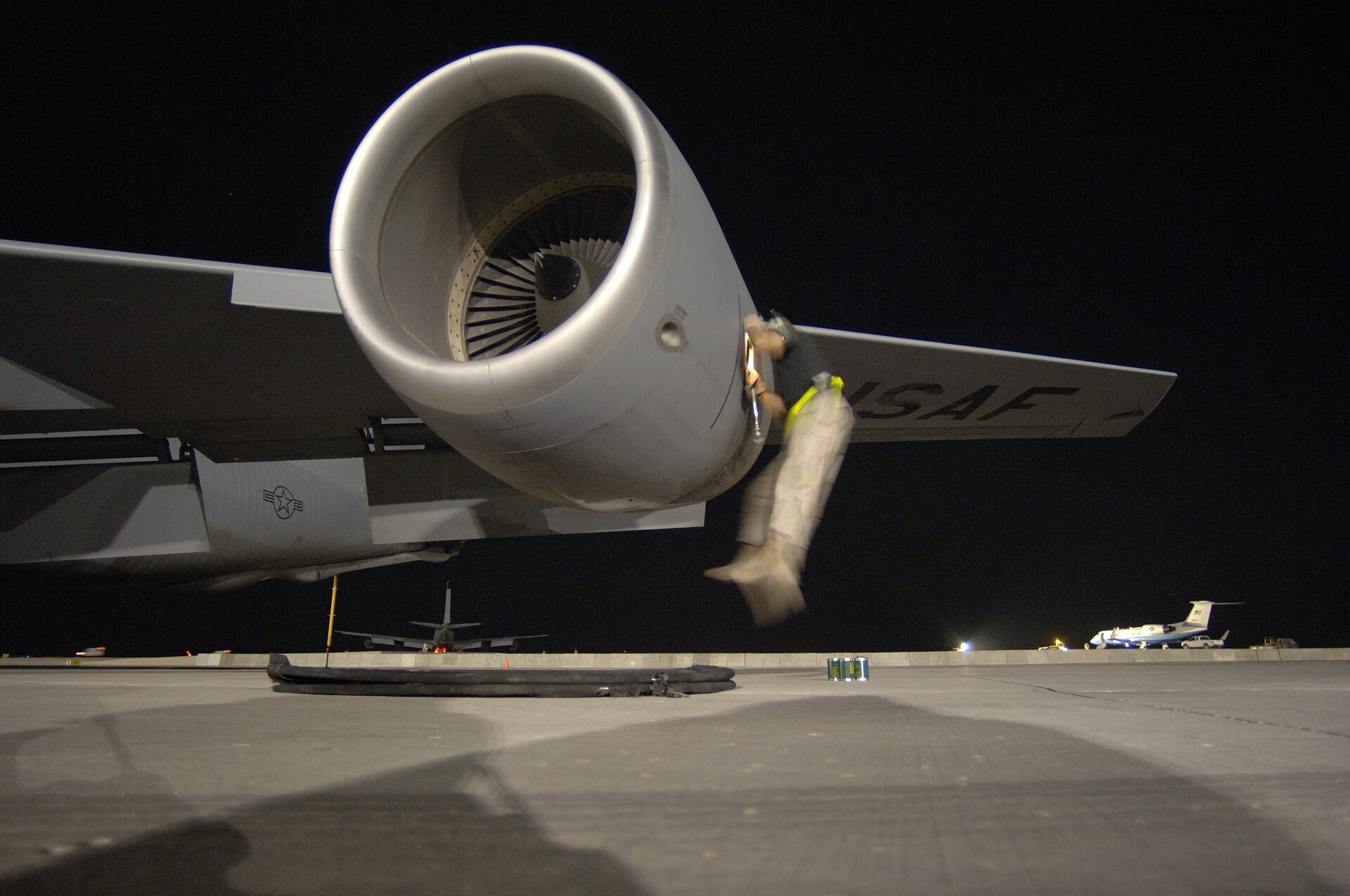
As of February 2026, Prince Sultan Air Base hosted 13 KC-135 Stratotankers, 6 E-3G Sentry AWACS surveillance aircraft, and 4 E-11A BACN communications relay planes, according to The Aviationist — the tanker and surveillance fleet without which US strike and patrol aircraft cannot maintain station time over the Strait of Hormuz from Arabian Sea carrier positions. The planned Project Freedom force was enormous: over 100 land- and sea-based military aircraft, approximately 15,000 service members, and a surface fleet anchored by guided-missile destroyers USS Truxtun, USS Rafael Peralta, and USS Mason, according to CENTCOM’s May 4 press release. None of it could operate without PSAB’s tankers or the 2.15 million square kilometres of Saudi airspace that provide the only viable overflight corridor from carrier assets in the Arabian Sea to the operational theatre.
The grounding held from May 3 to May 7 — four days during which the most powerful military in the world could not execute its own declared operation because the host nation said no. Trump publicly attributed the pause to Pakistan’s mediation request — “based on the request of Pakistan and other countries … to see whether or not the agreement can be finalized and signed” — a framing that NBC News and Jewish Insider identified as diplomatic cover for what was, in operational terms, a Saudi veto. According to the Wall Street Journal, Saudi Arabia and Kuwait lifted restrictions on May 8, clearing the way for Project Freedom’s possible restart.
The operation was “not well thought-out” and risked dragging Saudi territory into direct Iranian retaliation.
MBS to President Trump during direct phone call, May 7, 2026 — Eastern Herald / National Security Journal
The Legal Void That Made the Veto Possible
What made Saudi Arabia’s grounding legally possible — and diplomatically cost-free — is a structural anomaly that both capitals created and neither has corrected in nearly fifty years. Saudi Arabia is the only GCC member, and the only close US security partner in the Middle East, that does not maintain a Status of Forces Agreement with the United States. The sole governing instrument is the 1977 USMTM Memorandum of Understanding — an administrative arrangement covering foreign military sales and training advisors, authorised under State Department Title 22 non-combatant authority, with no combat-operations language, no airspace-use provisions, no criminal jurisdiction clause, and no withdrawal notification requirement.
| Country | SOFA | DCA | Governing Framework |
|---|---|---|---|
| Saudi Arabia | None | None | 1977 USMTM MOU (administrative only) |
| Kuwait | 1992 | Yes | Full combat-operations framework |
| Bahrain | 1971 | 2017 | Full combat-operations framework |
| Qatar | — | 1992 | Defence cooperation agreement |
| Jordan | 1996 | 2021 | Full combat-operations framework |
Every peer maintains a formal legal framework: Kuwait’s 1992 SOFA and Defence Cooperation Agreement, Bahrain’s 1971 SOFA updated with a 2017 DCA, Qatar’s 1992 Defence Cooperation Agreement, Jordan’s 1996 SOFA reinforced by a 2021 DCA. Saudi Arabia has none of these instruments, and that absence meant Riyadh could ground every American aircraft on its soil without breaching a single treaty obligation — because no treaty exists to breach.
The void cuts in both directions, a dimension the existing coverage has missed entirely. The same legal vacuum that enabled MBS to shut down an active US operation also leaves Riyadh with no treaty-based claim to continued American military presence. When US officials told the Jerusalem Post that Washington was “considering pulling back some of its military presence in Saudi Arabia, instead focusing on countries that provided more cooperation during the war,” they were describing a withdrawal that requires no congressional notification, no partner consultation, and no formal diplomatic process — because the 1977 memorandum contains none of these provisions.
The absence is not accidental. Both capitals have historically preferred the flexibility of an informal arrangement: Washington avoids congressional scrutiny over permanent basing commitments; Riyadh avoids public acknowledgement of an enduring American military presence on Saudi soil, a political liability since the al-Qaeda recruitment campaigns that the original post-1991 US deployment helped provoke. In May 2026, Saudi Arabia discovered both the power and the fragility of that arrangement within the same four-day window.
How Did Washington Force Riyadh to Reopen?
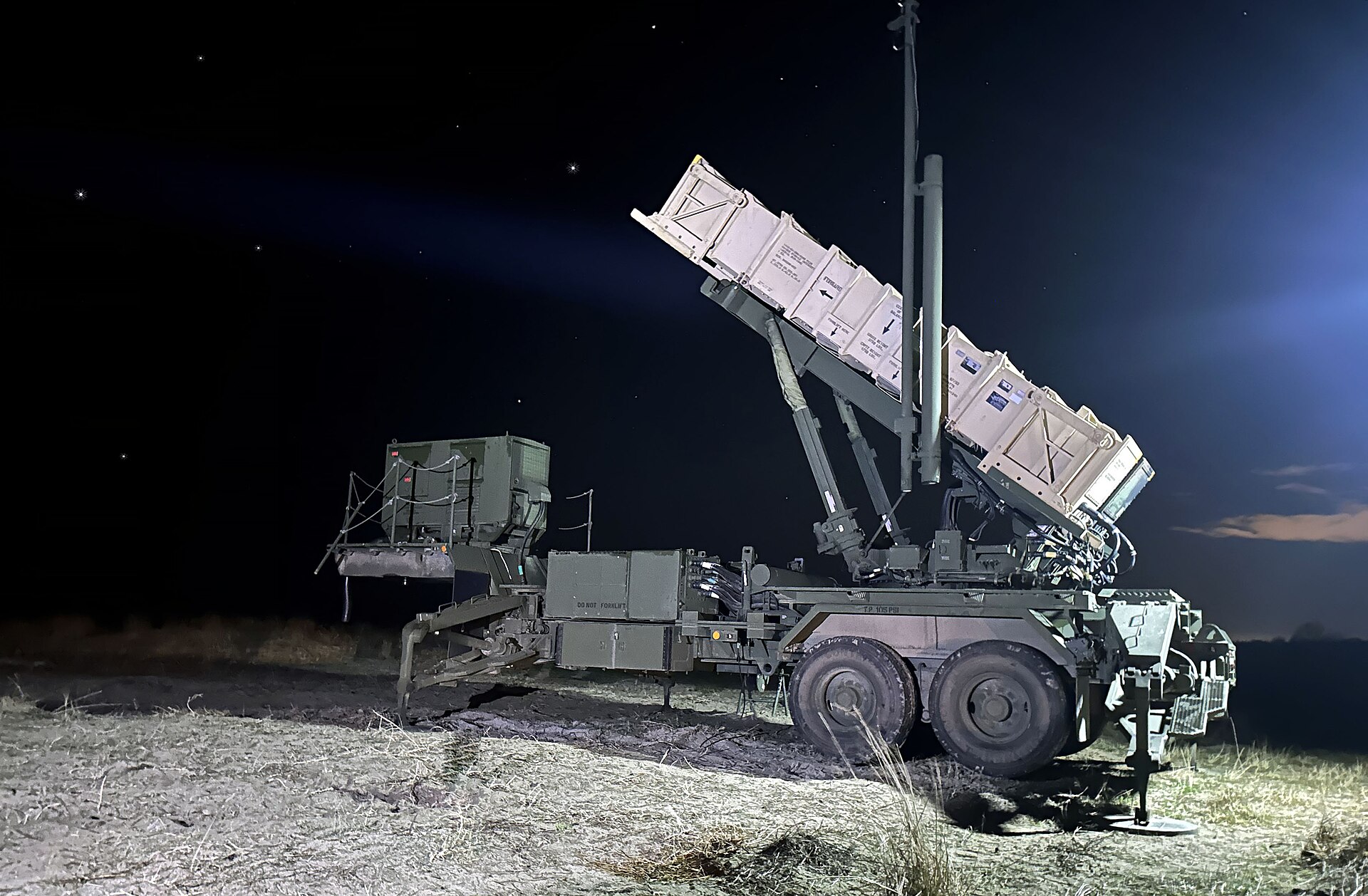
Washington threatened to withhold deliveries of Patriot PAC-3 and THAAD interceptors — the munitions Saudi Arabia depends on to defend critical oil infrastructure, desalination plants, and population centres from Iranian ballistic missile attack — according to the Jerusalem Post, citing US officials. The threat came after Trump’s direct phone call with MBS on May 7 failed to reverse the grounding, and it targeted the only dependency that could compel Saudi compliance within days rather than months: the air-defence supply chain. Riyadh reversed its position and lifted restrictions on May 8.
The coercion worked because Saudi Arabia’s interceptor inventory was already dangerously depleted. By May 2026, the Kingdom retained approximately 400 PAC-3 interceptors from a pre-war stockpile of roughly 2,800 — an 86 percent depletion rate driven by the sustained Iranian missile campaign that included the March 27 strike on Prince Sultan Air Base itself, which injured 10-12 US service members and effectively destroyed E-3G Sentry aircraft 81-0005, according to The Aviationist. Lockheed Martin’s Camden, Arkansas facility produces approximately 620 PAC-3 missiles per year — a production ceiling that means full restocking, even at maximum output allocated exclusively to Saudi Arabia, would require more than three years. The interceptor threat was a chokepoint, not a bluff, and both capitals understood its terms.
The coercion mechanism’s counterpart — the standard arms channel that kept operating through the same crisis — is documented in Washington’s parallel approval of a $1.96 billion APKWS sale, which reveals that the PAC-3 withholding was a deliberate policy instrument rather than a supply constraint. A deeper operational analysis of why the 20,000 APKWS-II guidance sections cannot be loaded onto RSAF aircraft that lack weapon system certification documents the delivery gap the sale cannot close.
White House spokeswoman Anna Kelly offered the diplomatic gloss: “President Trump listens to a variety of opinions on any particular issue, and he takes seriously the input of our regional partners.” The formulation recast a sovereign state’s veto over military operations on its own territory as “input” from “regional partners” — diplomatic language designed to compress a four-day operational shutdown into the register of polite consultation, when the operational record shows coercive extraction.
The interceptor threat established a template that persists two months later. The PAC-3 supply chain remains effectively frozen — not as active coercion now, but as a consequence of the relationship breakdown the coercion itself accelerated. The M-SAM-II acquisition from South Korea and the IESP contractor dependency on US troop presence both reflect a Saudi air-defence architecture that Washington weaponised once and that Riyadh has been unable to reconstruct since.
Nine Days From Shutdown to $142 Billion
Nine days after CENTCOM’s May 4 press release announced Project Freedom to the world, MBS hosted Trump in the Saudi capital and signed the largest single defence sales agreement in US history — $142 billion in arms commitments, announced on May 13, 2026, in a ceremony designed to broadcast alliance renewal to a watching region. The sequencing was not coincidental: the arms deal functioned as a diplomatic resolution to a crisis that the interceptor threat had only mechanically ended, with both capitals staging a public reconciliation denominated in weapons contracts rather than mutual concessions.
The $142 billion figure, reported by the Times of Israel and Newsweek, deliberately echoed the $110 billion arms package Trump announced during his first Riyadh visit in May 2017 — a deal that the Brookings Institution’s Bruce Riedel later assessed as delivering between $14.5 billion and $25 billion in actual transfers, characterising the headline number as “fake news.” The 2017 package included systems from Lockheed Martin, Boeing, and Raytheon — contracts that took years to progress through delivery and remain incomplete as of mid-2026, a trajectory the new agreement is unlikely to improve upon given the current political temperature. The 2026 version faces a constraint more fundamental than political will: production capacity. Camden’s 620 PAC-3-per-year ceiling, the M-SAM-II system that intercepts at the wrong altitude for the Iranian threat, and the IESP contractor workforce that departs with withdrawing US troops all mean the headline figure bears minimal relationship to what Saudi Arabia can receive, install, and operate within the timeline that Iranian missile capabilities make relevant.
The deal also failed as diplomatic repair, a failure visible in the six weeks that followed. Secretary Rubio conducted a Gulf tour from June 23 to 25, visiting UAE, Kuwait, and Bahrain while deliberately excluding Riyadh — the first time in recent memory a US Secretary of State touring the Gulf has skipped Saudi Arabia. Rubio held only a brief bilateral with Saudi Foreign Minister Prince Faisal on the sidelines of a GCC meeting in Bahrain, according to the Eastern Herald — a downgrade from dedicated capital visit to corridor meeting. MBS, for his part, declined Trump’s G7 invitation to Évian-les-Bains in mid-June, his third consecutive refusal after Puglia 2024 and Kananaskis 2025 — and on the same day, Riyadh hosted France’s Middle East adviser for a private bilateral, a signal that the Saudi diplomatic calendar no longer orbits Washington’s schedule.
Why Is the 1973 Oil Embargo the Only Real Precedent?
Turkey’s March 1, 2003 parliamentary vote to deny the US use of Turkish territory as a northern front for the Iraq invasion is the comparison American analysts reach for first, but it collapses on contact with the operational timeline. Turkey’s refusal was a pre-authorisation denial: parliament voted to reject a new military deployment before operations had been announced, before aircraft had been committed to Turkish runways, and before a single US service member had staged for a Turkish-corridor invasion. The 4th Infantry Division’s heavy equipment was still on transport ships in the Eastern Mediterranean when the vote came down, and the division redeployed to Kuwait — an inconvenience, not an operational shutdown.
Saudi Arabia did something qualitatively different in May 2026. It revoked operational authority over aircraft already stationed on Saudi soil, during a military operation the president had already publicly launched, without a parliamentary vote, without a formal diplomatic protest, and without invoking any treaty clause — because no treaty clause exists to invoke. Turkey also restricted Incirlik-based aircraft from striking Iraq targets on at least three occasions between 1996 and 1997, according to the Atlantic Council, but those were mission-profile constraints within an established basing framework, not wholesale groundings of the American presence.
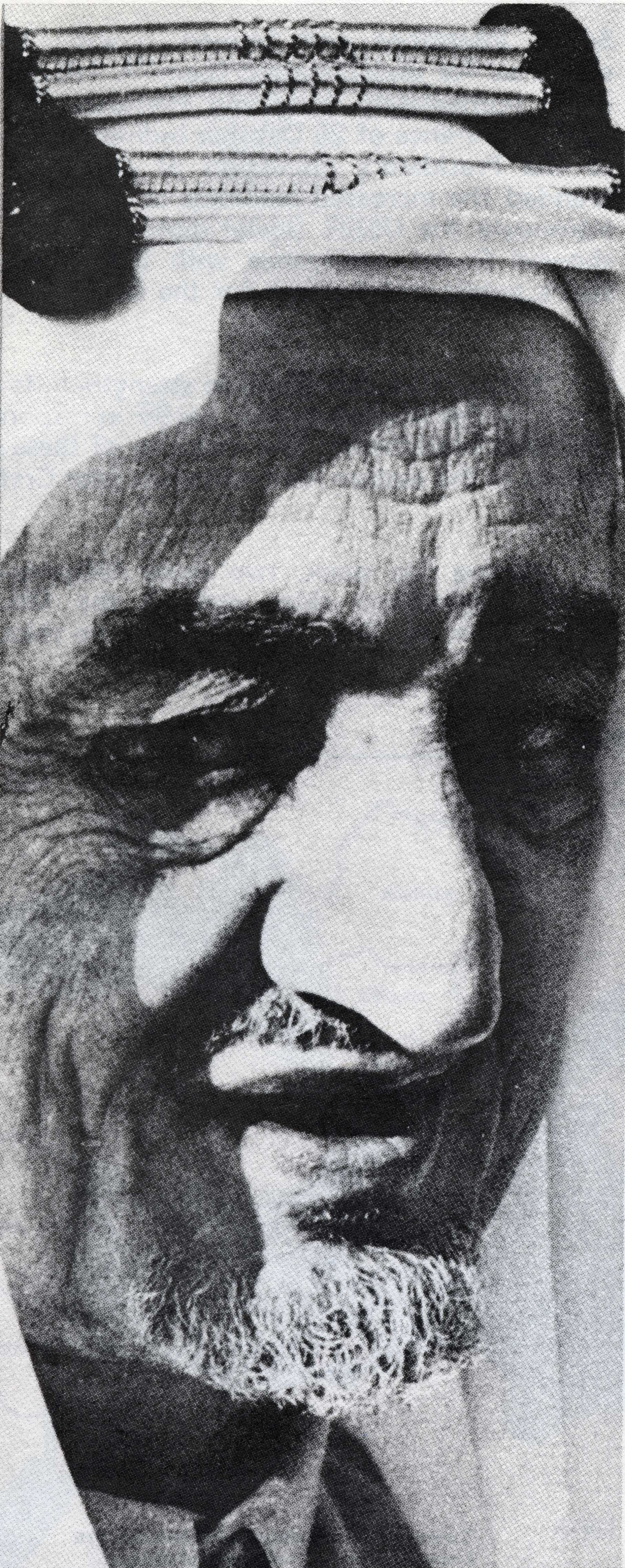
The only genuine precedent is King Faisal’s October 17, 1973 oil embargo, launched against the United States during the active Operation Nickel Grass airlift to Israel in the Yom Kippur War. That embargo deployed Saudi Arabia’s primary strategic asset — oil supply — to impose costs on an active US military operation in real time. The May 2026 grounding deployed Saudi Arabia’s other strategic asset — sovereign territory — to achieve the same effect, with more immediate operational impact: the embargo took weeks to restructure global supply chains, while the grounding stopped American aircraft within hours. NPR has reported that President Nixon considered military seizure of Saudi, Kuwaiti, and Emirati oil fields as a last resort during the 1973 crisis — a coercive escalation that Trump’s interceptor-withholding threat echoes in logic, if not in scale.
The 1973 embargo produced a permanent restructuring of the US-Saudi relationship — the petrodollar agreement, the Joint Economic Commission, the arms-for-oil architecture that governed the next fifty years. The 2026 grounding has so far produced the opposite: not a new framework but an accelerating dissolution of the old one, with each downstream event widening the breach rather than establishing terms for repair. The highest-level attempt to begin those repairs came on July 17, when Khalid bin Salman met Defense Secretary Hegseth at the Pentagon — Washington’s first defense-principal engagement with Riyadh since Operation Project Freedom exposed the legal vacuum at Prince Sultan Air Base.
From Grounding to Alliance Collapse
The grounding (May 3-7), Washington’s interceptor-withholding coercion (May 7-8), and the $142 billion arms deal that papered over the rupture without repairing it (May 13) established a sequence that then accelerated into a series of retaliatory and counter-retaliatory moves without parallel in the 80-year bilateral relationship. After Washington used the interceptor supply as a coercive instrument in May, new deliveries have remained in bureaucratic suspension — not as declared policy, but as friction applied across the foreign military sales pipeline. Each month without resupply narrows the margin between Saudi air-defence capacity and the Iranian missile threat that the March 27 PSAB strike demonstrated is not hypothetical, while the Kingdom’s attempt to fill the gap with South Korea’s M-SAM-II addresses a different intercept altitude than the one Iranian Zolfaghar missiles use for terminal-phase approach.
Israel “definitely” now represents the primary regional threat to Saudi security.
Prince Turki al-Faisal, former Saudi intelligence chief and ambassador to Washington — Quincy Institute event, 2026
The diplomatic signals have matched the operational degradation. Rubio’s Gulf tour omitted Riyadh; US officials told the Jerusalem Post that Washington was refocusing “on countries that provided more cooperation during the war”; and MBS responded with counter-signalling that treated the exclusion as mutual — declining Évian, hosting the French bilaterally, and dispatching Deputy Foreign Minister El-Khereiji to Tehran for Khamenei’s condolence ceremony at the same rank China sent its representative. Saudi analyst Aziz al-Ghashian, speaking to the Quincy Institute, captured the structural dynamic: US actions were counterproductive because “the Saudis inherit long-term ramifications” from short-term American military decisions — a description that applies with equal force to the interceptor coercion itself.
The 2,300-troop withdrawal threat sits at the end of this chain as the mechanism that converts a diplomatic rupture into permanent security degradation. The troops at Prince Sultan Air Base are not combat forces in any conventional sense; they are the maintenance crews, intelligence analysts, and integrated air-defence system operators without whom Saudi Patriot and THAAD batteries cannot function at full capacity. Their departure removes not just personnel but the institutional infrastructure — the IESP contractors, the Link-16 data feeds, the radar calibration expertise — that keeps Saudi Arabia’s imported air-defence architecture operational. Riyadh has moved to build alternative security partnerships with Turkey, Pakistan, Egypt, and Qatar, but none of these partners can replicate the integrated maintenance capacity that walks out the door with American troops. The White House’s response has since hardened: Washington is now weighing a punitive reduction of its PSAB presence that would strip the American personnel Saudi air defenses need to function.
Who Won the Four Days?
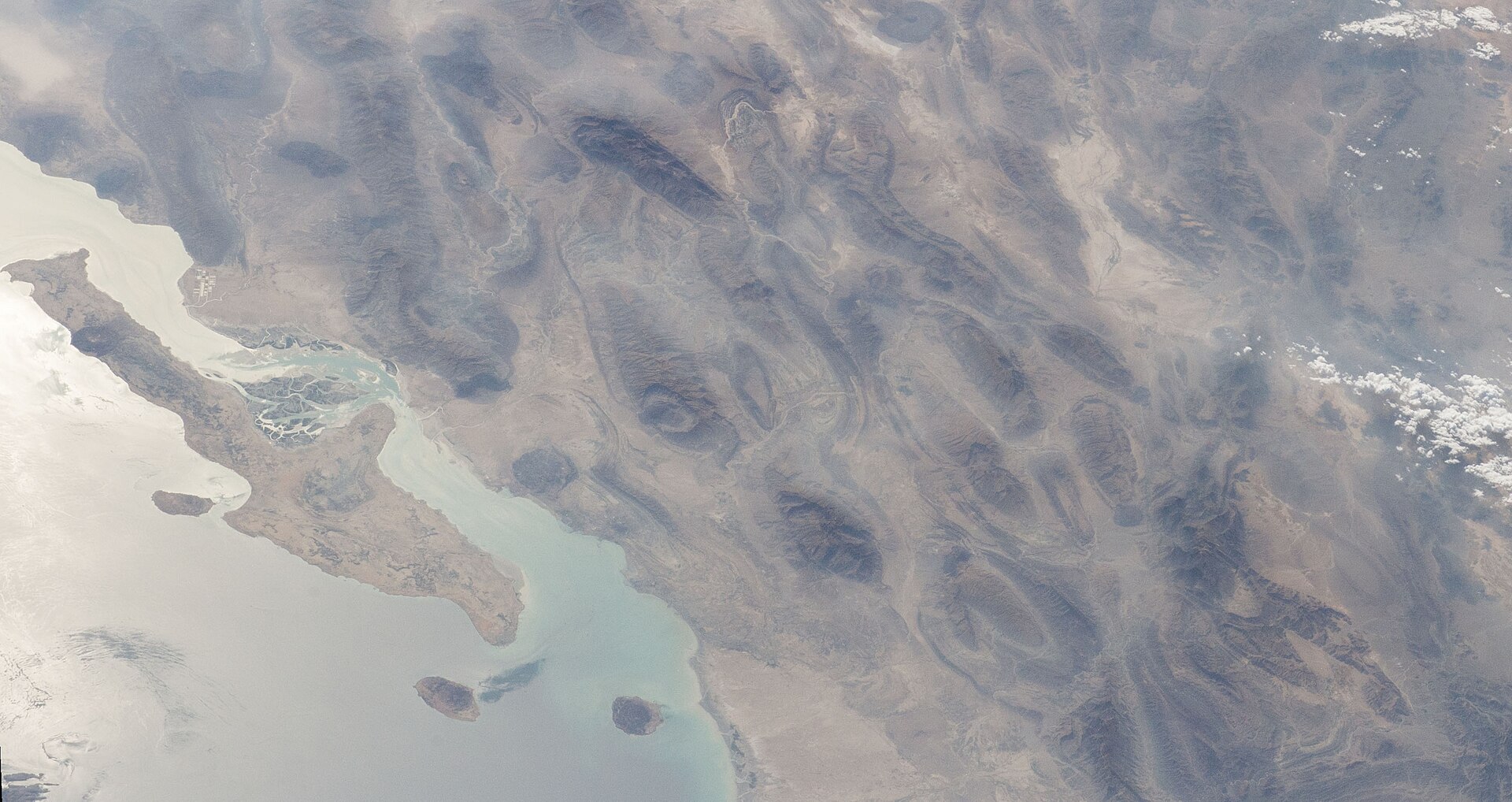
Iran used the four-day window not for negotiation but for state-building, converting a temporary military standoff into a permanent jurisdictional claim over the waterway that carries 21 percent of global oil supply. The IRGC navy issued an official statement during the grounding period declaring that safe transit through the Strait of Hormuz would be “ensured” once US threats ceased and “new procedures” were implemented, according to Al Jazeera — framing the Project Freedom pause as an American capitulation to Iranian regulatory authority over international waters, not a temporary operational delay.
The institutional expression of that claim arrived on approximately May 6, 2026 — three days into the grounding — when Iran established the Persian Gulf Strait Authority, a regulatory body to oversee vessel passage through the Strait of Hormuz. The PGSA’s fee structure, codified in the weeks that followed, imposed a $253 million lump-sum obligation on Saudi Arabia with a $5.5 million daily surcharge activating on August 18 if fees remain unpaid — a toll regime that Operation Project Freedom was designed to prevent, built in the operational window that Saudi Arabia’s veto created.
Saudi Arabia’s stated rationale for the grounding was defensive: Riyadh had spent years repairing ties with Tehran and had “little interest in becoming the launchpad for another major regional war,” according to the National Security Journal. The March 27 PSAB attack had demonstrated that hosting US combat operations carries direct retaliatory costs, and Saudi Arabia’s East-West Pipeline infrastructure meant its oil exports were less dependent on Hormuz transit than those of Kuwait, Qatar, or the UAE. But the assumption was that the four-day pause would remain a pause rather than becoming the foundation for an Iranian jurisdictional claim that Saudi Arabia now lacks the alliance framework — and, after the PAC-3 freeze, the air-defence capacity — to contest.
Jonathan Ruhe of the Jewish Institute for National Security of America told Breaking Defense that the grounding “puts a heavy burden of proof on the US to show that the Strait is safe” — because commercial shippers are risk-averse and even single successful Iranian strikes cause extended disruptions that make the insurance mathematics prohibitive. Former Deputy Assistant Secretary of Defense Mick Mulroy estimated roughly 20,000 commercial captains and crew were stranded on ships during the Hormuz closure, warning that without viable hull-war insurance the operation “will not have the impact we hoped.” The four days gave Iran time to build the institutional architecture; the two months since have given that architecture time to calcify into what Tehran treats as settled regulatory fact. The IRGC’s July 7 Hormuz missile strikes on commercial vessels have now forced the next question: whether the US can mount a retaliatory strike at all — and whether Prince Sultan Air Base will open its gates to support it, given that Saudi Arabia has already shown access is conditional.
On July 19, the strategic consequence became kinetic: Iran struck Prince Sultan Air Base and the SAMREF refinery at Yanbu simultaneously — the dual-corridor attack that hit both the military infrastructure Operation Project Freedom had already hollowed out and the energy bypass Saudi Arabia built to compensate for Hormuz.
Frequently Asked Questions
Did Project Freedom resume after Saudi Arabia lifted the restrictions?
According to the Jerusalem Post, Project Freedom “resumed covertly” after Saudi Arabia and Kuwait lifted restrictions on May 8, and the Wall Street Journal reported the operation could restart “as early as this week.” However, the full force projection envisioned in CENTCOM’s May 4 press release — over 100 aircraft including A-10s, F-15s, F-16s, F/A-18s, F-35s, EA-18G Growlers, and RC-135 surveillance aircraft, plus guided-missile destroyers — has not materialised at the announced scale. The operational tempo shifted from planned convoy escort to intermittent patrols, and commercial shipping insurers have continued to price Arabian Gulf transits at elevated war-risk premiums, with Lloyd’s Joint War Committee maintaining the entire Arabian Gulf as a Listed Area.
What happened at Prince Sultan Air Base on March 27, 2026?
Iran struck Prince Sultan Air Base with a combination of ballistic missiles and drones, injuring 10-12 US service members, damaging multiple KC-135 Stratotankers, and effectively destroying one E-3G Sentry AWACS aircraft — one of only six operational E-3Gs at the base, according to The Aviationist. The E-3G fleet was already facing USAF retirement pressure, and the loss further degraded airborne early-warning capacity at a moment when Iranian missile launches were accelerating. The attack occurred five weeks before Trump announced Project Freedom and shaped MBS’s risk assessment: hosting US combat operations had already turned Saudi territory into a target rather than a sanctuary.
What role did Kuwait play in the Project Freedom shutdown?
Kuwait simultaneously cut off US access to its military bases and airspace on May 3, according to NBC News and Drop Site News. Kuwait’s action carried a distinct legal dimension: the country operates under a 1992 SOFA and Defence Cooperation Agreement with the United States, meaning it had a formal treaty framework governing the US presence that Saudi Arabia lacked, and chose to suspend cooperation anyway. Kuwait lifted restrictions on May 8 — the same day as Saudi Arabia — suggesting active coordination between the two capitals rather than independent decisions. By January 2026, all four major GCC military partners had signalled privately they would not allow their airspace for strikes on Iran, according to the Quincy Institute, but only Saudi Arabia and Kuwait followed through when the operational moment arrived.
Why does Saudi Arabia’s East-West Pipeline matter in this context?
The East-West Pipeline (Petroline) runs approximately 750 miles from Saudi Arabia’s Eastern Province oil fields to the Red Sea port of Yanbu, bypassing the Strait of Hormuz entirely. This infrastructure gives Riyadh a structural hedge that Kuwait, Qatar, and the UAE lack: Saudi Arabia can route up to 4 million barrels per day through Yanbu, compared to a pre-war Hormuz throughput of 7-7.5 million bpd, maintaining export viability despite a permanent 3-3.5 million bpd capacity gap. The pipeline advantage partly explains Riyadh’s willingness to risk the Project Freedom veto — Saudi economic exposure to Hormuz disruption was structurally lower than its neighbours’, which makes Kuwait’s simultaneous veto, from a country with no Red Sea pipeline alternative, the strategically more exposed act.
A parallel analysis examines the broader argument that Operation Project Freedom may have signalled PSAB’s severability to Iran: Prince Sultan Air Base Lost Its Deterrent Before Iran Fired.
The terms Riyadh would accept for any future US maritime operation in the Gulf were made explicit in the July 11 call between MBS and Trump — the first head-of-state contact since the war re-escalated — in a single SPA-published sentence that simultaneously reads as escort request, operational veto, and endorsement of Iran’s Article 5 navigation framework. MBS Told Trump What Riyadh Would Allow in the Gulf — In One Sentence unpacks the three readings Washington, Tehran, and Gulf capitals extracted from identical language.
The alliance fracture documented here — Saudi Arabia’s veto of US basing operations — is one dimension of a deeper Gulf bifurcation. While Riyadh grounded US warplanes, the UAE was absorbing 2,819 Iranian strikes and deploying Israeli Iron Dome batteries on its soil. A full account of how the two economies now occupy structurally different wars is in The UAE and Saudi Arabia Are No Longer the Same War.
On July 17, Iran struck six countries in a single day while exempting Saudi Arabia entirely — the clearest behavioral proof yet of the Helsinki bilateral’s operational effect. The Helsinki bilateral’s behavioral proof traces how the Operation Project Freedom grounding fits into the broader Saudi-Iranian de-escalation architecture neither capital will name.
The SOFA void and the grounding of US warplanes at PSAB created a legal and operational vacuum that Iran moved to exploit diplomatically: Khamenei’s personal repudiation of the Islamabad MOU removed the diplomatic ceiling that had kept Saudi Arabia nominally off Iran’s formal target list, closing the last constraint that the alliance fracture documented here had left intact.
The House of Saud Daily Briefing
Saudi Arabia's news in 3 minutes, every morning. Free. See today's issue