DHAHRAN — Brent crude fell to $70.82 per barrel on July 2 — below the $72.48 level recorded on February 27, the day before the US-Israel war on Iran began — erasing the entirety of a war premium that peaked at $126 in April. The OPEC+ Joint Ministerial Monitoring Committee confirmed on July 5 a fifth consecutive monthly production increase of 188,000 barrels per day, lifting Saudi Arabia’s individual quota to 10.35 million barrels per day.
n
The kingdom’s 2026 revenue model was constructed around oil priced well above $70. The IMF’s December 2025 Article IV consultation placed the central government fiscal breakeven at $86.60 per barrel. Bloomberg Economics puts the composite figure — incorporating off-balance-sheet obligations from the Public Investment Fund and giga-project commitments — between $108 and $111. At current prices, Saudi Arabia operates $15 to $20 below the IMF floor and $37 to $41 below the composite threshold, pumping more crude into a market that pays less for every barrel than it did before the first missile struck.
The House of Saud Daily Briefing
Saudi Arabia's news in 3 minutes, every morning. Free. See today's issue
n
n
Table of Contents
n
- n
- From $126 to $70 in Sixty-Five Days
- More Barrels Into a Cheaper Market
- Who Is Still Buying Saudi Crude?
- The Sanctioned Exporter Outearns the Cartel Enforcer
- Can Aramco Cover Its Own Dividend?
- The 1986 Precedent and Its 2026 Difference
- Frequently Asked Questions
- n
n
n
n
n
n
n
n
n
n
n
From $126 to $70 in Sixty-Five Days
n
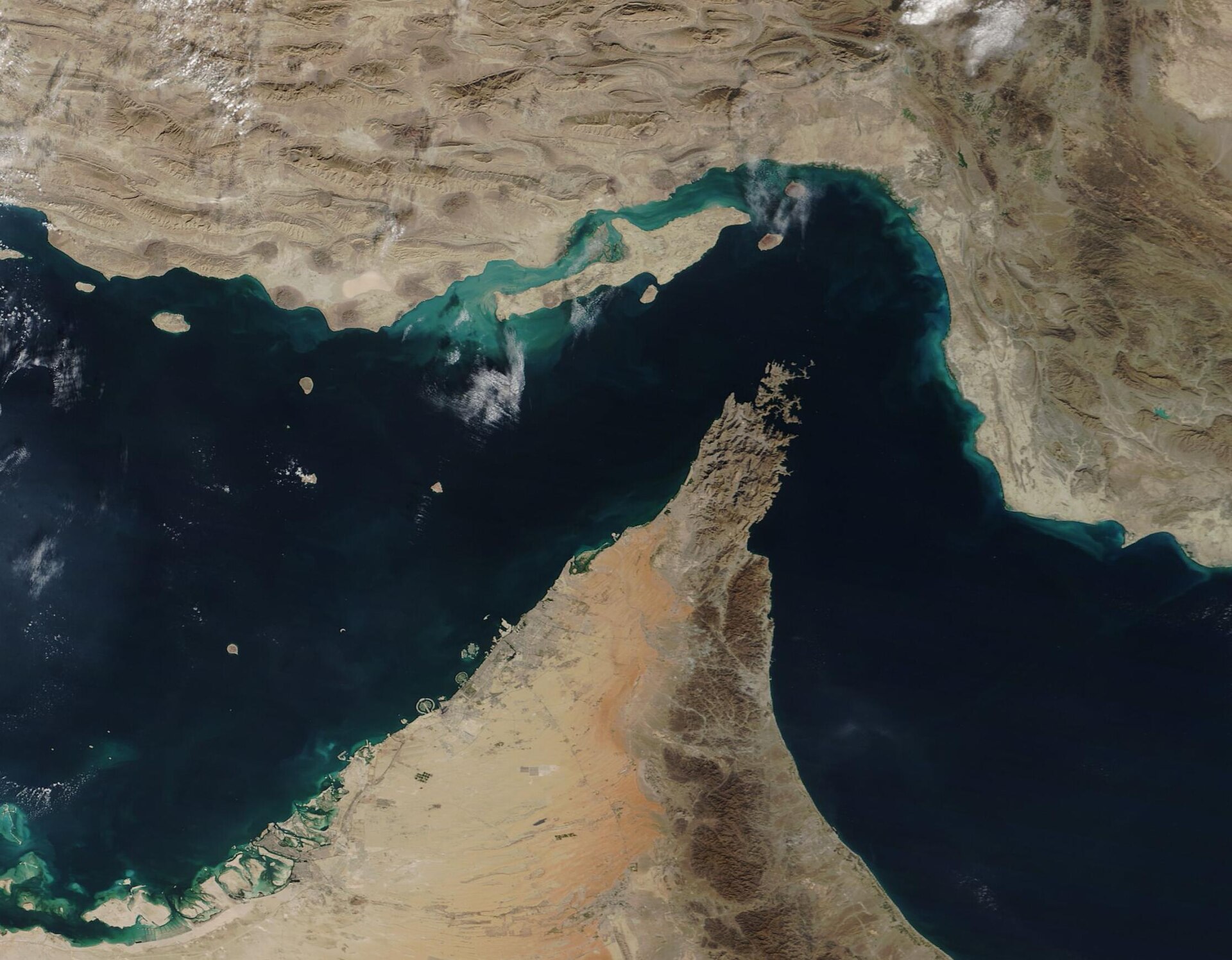
The premium built slowly. Brent crossed $80 on March 4, five days after the first US-Israel strikes on Iranian nuclear facilities. It passed $90 on March 15, tracking the decline in Hormuz transit volumes. By early April — with Gulf tanker traffic approaching zero — Brent was above $110. The peak of $126 came April 30, when Iran’s naval mines closed the last navigable corridor through the strait.
n
The collapse was faster. Hormuz flows surpassed 10 million barrels per day as of July 1, according to Bloomberg, citing a US official who described American military support as instrumental in restoring traffic. That figure represents roughly half the pre-crisis baseline of 20 to 20.3 Mbpd — a partial reopening that the futures market priced as if it were complete. Al Jazeera reported that Brent futures for August delivery stood at $70.82 as of 04:30 GMT on July 2, “lower than at any point since February 27, the day before the war began.”
n
The forty-three percent decline from peak took sixty-five trading days. The 2008 oil crash — Brent falling from $147 to $36 — took roughly 140. UAE crude exports recovered to 3.9 Mbpd, matching pre-war levels, via Hormuz transits and the ADCO pipeline bypass to Fujairah, per Bloomberg, Vortexa, and Kpler data from July 1. Saudi exports stand at approximately 90 percent of the pre-war baseline, with the East-West Pipeline to Yanbu handling 4 to 5 Mbpd of the kingdom’s Red Sea-routed output. The IEA’s December 2025 Oil Market Report projected a global surplus of 3.84 Mbpd through 2026 — a surplus that arrives into a market where the war premium has vanished and no replacement floor has appeared.
n
More Barrels Into a Cheaper Market
n
The July 5 OPEC+ decision was the fifth in a sequence that has added a cumulative 1.1 million barrels per day to the group’s aggregate quota since the hike cycle began. Saudi Arabia’s share of the latest increase is 62,000 bpd, bringing its individual allocation to 10.35 Mbpd. The increments have been mechanically identical — 188,000 bpd each month — but the price environment into which they arrive has moved in only one direction.
n
The first hike, in March, came with Brent above $100. The second, in April, at $95. The third, in May, at $82. The fourth, in June, at $76. The fifth arrives at $70 — the first hike delivered below the price the war was supposed to have permanently elevated. Argus Media and Reuters reported that OPEC+ “seriously considered” doubling the increment to approximately 411,000 bpd, a punitive escalation aimed at Iraq and Kazakhstan, whose persistent overproduction had triggered compensation obligations neither showed intent to honor. The final decision preserved the existing pace.
n
The AGSI’s back-calculation from Saudi budget revenue projections places the kingdom’s implied planning price at approximately $65 per barrel at 10 Mbpd. The fiscal arithmetic that made the fourth hike questionable makes the fifth structurally corrosive — another 62,000 barrels per day of production into a market already paying less than the budget assumed. The earlier thesis that physical Hormuz constraints would insulate price has been overtaken by the speed of the market’s normalization trade.
n
n
Who Is Still Buying Saudi Crude?
n
Sinopec, China’s largest refiner, has purchased zero Saudi crude for two consecutive months. The holdout is not ideological. S&P Global reported in April 2026 that the ESPO Blend spread crossed the $5 to $7 per barrel switching threshold — the level at which Chinese state refiners redirect procurement toward Pacific-basin alternatives. Russian crude, routed through Kozmino and priced inside Arab Light on a delivered-cost basis, clears the economic test Beijing applies at the institutional level.
n
Aramco responded by cutting price. The July Official Selling Price for Arab Light to Asia fell to a $9.50 per barrel premium over the Oman/Dubai benchmark — down from $15.50 in June and $19.50 at the May peak. That $10 per barrel collapse in two months, applied to approximately 5 million barrels per day of exports, represents $1.5 billion per month in forgone revenue compared to the May pricing level — $18 billion annualized.
n
The cut has not restored the customer. Sinopec’s absence functions as a negotiating position — a strategic hold designed to extract further OSP concessions — but the mechanism operates identically regardless of intent: every month of zero purchases compounds the revenue gap while strengthening Beijing’s hand for the next pricing round. Aramco dispatched six million barrels on three supertankers to South Korea, Japan, and China via Oman corridor routing in late June, with undisclosed spot discounts applied beyond the already-reduced OSP. The barrels moved at prices Aramco chose not to disclose. The Aramco pricing signal arrived days later: Saudi Arabia’s August Arab Light OSP dropped to a $1.50 discount, the first time Aramco sold below benchmark since the 2020 price war.
n
The Sanctioned Exporter Outearns the Cartel Enforcer
n
Ghalibaf, Iran’s parliament speaker, told CNBC on July 1 that Iran had exported “more than 40 million barrels of crude oil since the US removed its naval blockade” at “prices roughly 20 percent higher than before the war.” Tanker-tracking firms Vortexa and Kpler put the actual figure at approximately 50 million barrels — higher than Tehran’s own public claim by at least 25 percent.
n
A 20 percent premium over Iran’s pre-war baseline of roughly $72 implies Iranian crude is clearing at $85 to $87 per barrel. Saudi crude, at $70 Brent minus OSP discounts minus undisclosed spot concessions, realizes an estimated $62 to $65 per barrel. The sanctioned exporter outearns the cartel enforcer by $20 to $25 on every barrel loaded.
n
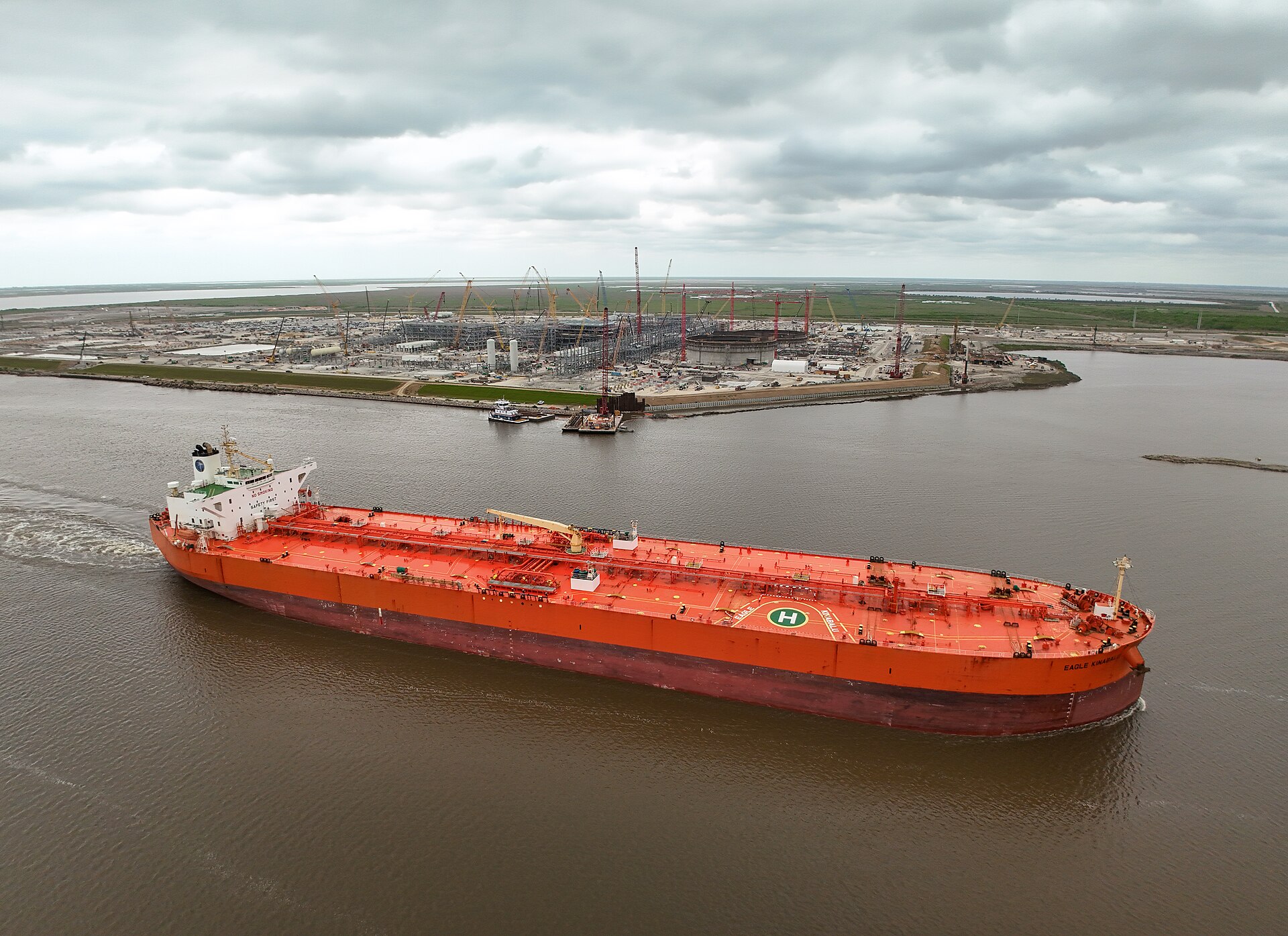
The inversion is structural. Iran routes through shadow fleets operating outside the insurance architecture that constrains legitimate shippers. Tehran bears no P&I club costs, no Joint War Committee surcharges, no TD3C freight premium — expenses that add $3 to $11 per barrel to Saudi-routed cargoes depending on the corridor. The gap between official export volumes and AIS-tracked transit data has widened into a structural feature: only 27 ships per day transit Hormuz on AIS, while Saudi Arabia has shipped 34 million barrels since June 17 — moved on state-backed and dark-fleet tonnage, not independent commercial operators priced out by war-risk insurance at eight times pre-crisis levels. Iran’s buyers — overwhelmingly Chinese teapot refiners settling in yuan — pay a security-of-supply premium precisely because the oil is sanctioned and therefore insulated from OPEC quota discipline. The premium is the product: barrels that cannot be cut by committee command.
n
Saudi Arabia absorbed voluntary production cuts for two years to defend the price framework. Iran, subject to no quota and no compliance mechanism, captured the market share that restraint was designed to protect. The cartel discipline problem extends beyond Iraq and Kazakhstan — it extends to the roughly 4 million barrels per day of Iranian and Russian supply that sits entirely outside the OPEC+ compliance architecture.
n
n
Can Aramco Cover Its Own Dividend?
n
Aramco’s Q1 2026 free cash flow was $18.6 billion against a quarterly dividend obligation of $21.89 billion — a coverage ratio of 0.85x. The company drew on cash reserves to bridge the shortfall, reducing its balance to $53.3 billion, the lowest since the end of 2018. At $70 Brent with a $9.50 OSP premium and 10.35 Mbpd authorized production, the arithmetic deteriorates further: every $1 decline in realized price costs approximately $1.8 billion per quarter at current volumes.
n
The dividend is not merely an investor obligation. Aramco’s $87.6 billion annual payout flows predominantly to the Saudi state, with the government and PIF together holding approximately 98 percent of the company. A one-third reduction — the scenario outlined by the Gulf International Forum — would cost PIF approximately $6 billion per year in direct dividend income, accelerating depletion from what the Financial Times reported as PIF’s late-2024 cash trough of approximately $15 billion. The $10 OSP cut since May, applied to retain Asian customers who have not returned, strips roughly $4.5 billion per quarter from the revenue line before accounting for the broader Brent decline.
n
NEOM compounds the exposure. The Line — with a reported build cost that has ranged from $500 billion to over $1 trillion in successive NEOM disclosures — reached 2.4 kilometers of its 170-kilometer target before construction was suspended in September 2025, per reporting by the Wall Street Journal and Bloomberg. The project remains fiscally active at the obligation level while functionally dormant. Estimated termination costs stand at $16 billion, per Bloomberg. The Q1 budget deficit of SAR 125.7 billion — approximately $33.5 billion — against a full-year Ministry of Finance projection of SAR 165 billion ($44 billion, 3.3 percent of GDP) implies the annual forecast was built for a price environment the market no longer delivers.
n
| Measure | Level | Gap to $70 Brent | Source |
|---|---|---|---|
| Budget implied price | ~$65/bbl | +$5 (above) | AGSI back-calculation |
| IMF central gov’t breakeven | $86.60/bbl | -$16.60 | IMF Article IV, Dec 2025 |
| Bloomberg composite breakeven | $108–111/bbl | -$38 to -$41 | Bloomberg Economics |
| Aramco FCF coverage ratio | 0.85x | Below 1.0x | Q1 2026 earnings |
| Q1 budget deficit | SAR 125.7B (~$33.5B) | — | Saudi MoF |
| Aramco cash reserves | $53.3B | Lowest since end-2018 | Q1 2026 earnings |
n
n
The 1986 Precedent and Its 2026 Difference
n
In 1985, Saudi Arabia — then under Oil Minister Yamani — abandoned its role as OPEC’s swing producer after years of absorbing cuts while other members cheated on quotas. The switch to netback pricing triggered a collapse documented by Brookings’ Dermot Gately: from $23.29 per barrel in December 1985 to $9.85 by July 1986, a 58 percent decline in seven months. The kingdom chose market share over revenue, and the revenue fell anyway.
n
In both periods, Saudi Arabia bore the cost of production restraint while competitors captured share at the kingdom’s expense. In both, the response was to increase volume — five consecutive OPEC+ monthly hikes in 2026, unilateral netback flooding in 1986. The fiscal floor has moved.
n
In 1986, Saudi Arabia’s non-oil economy was minimal, sovereign obligations were limited, and the population was 13 million. In 2026, the kingdom carries Vision 2030 expenditure commitments that the IMF estimates require $86.60 oil to balance the central government and over $108 to cover the full obligation set. The population is 36 million. The development program cannot be abandoned without recognition of termination costs — $16 billion for NEOM alone — that the current budget cannot absorb. The IMF noted in its Article IV that Saudi Arabia “faces lower oil prices” and called for “prudent fiscal policy and deeper reforms.”
n
The 1986 crash lasted roughly 18 months before partial recovery. At $70 Brent, with Aramco’s dividend coverage below 1.0x, PIF cash-depleted, and OPEC+ adding volume monthly, the kingdom’s fiscal position deteriorates by approximately $30 billion per year relative to the IMF breakeven. The PGSA fee regime — $253 million outstanding, auto-activating at $5.5 million per day on August 18 if the US-Iran MOU lapses — adds an extraction layer that 1986 did not contain, applied to a revenue base already insufficient to cover the obligations it was designed to fund.
n
Frequently Asked Questions
n
What is the PGSA and how does it affect Saudi shipping costs?
n
The Persian Gulf Shipping Authority is the Iranian-administered fee collection mechanism for Strait of Hormuz transits, established during the conflict. OFAC designated PGSA-related entities on May 27, 2026, creating a dual impossibility for Saudi-flagged or Saudi-chartered vessels: paying the fee risks violating US sanctions, while nonpayment risks Iran classifying the transit as unauthorized. The $253 million in outstanding fees auto-activates at $5.5 million per day on August 18 if the US-Iran MOU lapses — forty-four days from the date of publication. Bahri, Saudi Arabia’s sovereign carrier, requires P&I insurance certificates for port state control compliance, but all twelve International Group P&I clubs issued 72-hour cancellation notices for charterers’ liability war risk extensions on March 5, 2026, leaving the fleet structurally exposed to both fee obligations and insurance gaps simultaneously.
n
How does the ESPO switching threshold work?
n
ESPO Blend is exported from the Kozmino terminal on Russia’s Pacific coast — physically closer to Chinese refineries than Middle Eastern crude and settled through payment channels that bypass the dollar-clearing constraints imposed by Western sanctions. The switching threshold S&P Global places at $5 to $7 per barrel reflects delivered cost, not posted price: freight savings from the shorter route and reduced payment-processing costs are factored in before the comparison to Arab Light is made. The spread crossed that threshold in April 2026 while Aramco’s OSP remained at $19.50. Even after the $10 cut to $9.50, the delivered cost of Arab Light sits at or near the upper bound of the switching range — meaning Aramco would need to cut further, or Sinopec would need a non-economic reason to return.
n
Could OPEC+ reverse the production hikes?
n
The Joint Ministerial Monitoring Committee retains authority to recommend output adjustments at any meeting. Reversal faces two structural obstacles. Iraq and Kazakhstan accumulated overproduction volumes that triggered compensation obligations neither has honored — rolling back quotas before enforcing compliance would reward noncompliant members while penalizing Saudi Arabia, which has adhered to its allocation throughout. The group’s active consideration of doubling the increment to 411,000 bpd, as reported by Argus Media and Reuters, signals that the dominant faction prefers market-share recovery over price defense — the same strategic pivot Saudi Arabia applied in 1986 under Yamani and again in 2014–2016 under Ali al-Naimi.
n
What happens to Vision 2030 at $70 oil?
n
The distinction between “indefinitely deferred” and “formally cancelled” matters more than it appears. The Line at NEOM is suspended, not terminated — meaning its $16 billion in estimated termination costs remain off the balance sheet while its capital commitments remain legally live. Formally cancelling the project would trigger recognition of those costs against a budget already running at a Q1 deficit of $33.5 billion. Deferral preserves the optionality; it does not reduce the obligation. At $70 oil through Q3, the Ministry of Finance faces a decision it has avoided making: whether to absorb those termination costs now, or to maintain the fiction of continuation until the next budget cycle forces the recognition. The IMF’s July 2026 WEO update, which assumed Hormuz’s reopening by mid-July to justify an $89 Brent average and a 5.5% Saudi rebound in 2027, published its price assumptions on the same day the MOU governing that reopening collapsed — leaving the Fund’s fiscal trajectory for the kingdom without its foundational premise.
The war premium’s absence was stress-tested on July 10, when the halt in AIS-visible transits confirmed by Lloyd’s List on July 9 — zero commercial crossings — left Brent at $76, suggesting the market has priced bypass routes as sufficient even without visible throughput. That decoupling was confirmed later the same day, when the US struck targets near Asaluyeh and Brent still fell two percent — the first direct strike on Iranian energy infrastructure that produced no war premium at all. The IMF captured that same pricing reality in its July 2026 WEO Update, cutting Saudi Arabia’s 2026 growth forecast to 1.7 percent — the third consecutive downgrade in six months, from 4.5 percent in January — on explicit Hormuz-disruption attribution.
That structural decoupling between Hormuz disruption and price response frames a separate paradox: the US operation that could most reliably restore the war premium — seizing Kharg Island — would push Brent above Saudi Arabia’s fiscal breakeven while simultaneously destroying the PGSA enforcement mechanism Riyadh depends on. The full analysis of Trump’s Kharg Island offer and the oil shock Saudi Arabia cannot endorse examines why the fiscal benefit and the strategic cost arrive in the same package.
The House of Saud Daily Briefing
Saudi Arabia's news in 3 minutes, every morning. Free. See today's issue