RIYADH — On the night of October 17, the Saudi Civil Defence pushed a cellular broadcast to every phone in Riyadh warning of a “hostile aerial threat” and telling residents to stay calm, remain indoors, and keep away from windows and doors. The alert was lifted within minutes, but what it conceded outlasts any all-clear: the Saudi government, which silenced its own warning system for thirteen days while at least eighteen people were killed and more than three hundred were wounded, has turned the sirens back on and admitted — by the act itself — that the Houthi campaign against the capital is neither temporary nor contained.
This was not the first such warning since the conflict escalated in September, and the October 17 broadcast arrived in a Riyadh already stripped of the calendar that was supposed to project normality. The EU-GCC summit had been formally postponed two days earlier, citing delegate safety. The Future Investment Initiative had shifted to a hybrid format allowing remote participation. King Khalid International Airport remained shut since October 11. The alert did not land ahead of a high-stakes diplomatic week — it landed after that week’s calendar had already collapsed, which makes the government’s decision to send it something closer to a reckoning than a contingency measure.
Table of Contents
- What Did the October 17 Alert Tell Riyadh Residents?
- How Does Saudi Arabia’s Warning System Work?
- Why Did the Warning System Go Silent for Thirteen Days?
- The Calendar That Already Collapsed
- What Does the Alert Reveal About Saudi Threat Assessment?
- The Investment Case After the Siren
- What Has the Houthi Campaign Declared?
- What Happens When the Next Alert Sounds?
What Did the October 17 Alert Tell Riyadh Residents?
The Saudi Civil Defence issued the warning through the National Early Warning Platform for Emergencies, delivering it by cellular broadcast — the same technology that pushes emergency weather warnings to every mobile phone within range of a cell tower, whether or not the user has installed a specific application — and simultaneously posting it on the official @SaudiDCD account on X. The alert text told residents to remain calm, stay indoors, and keep away from windows and doors, language that describes a shelter-in-place order without using those words. AFP correspondent Timour Azhari, reporting from the capital, confirmed both the content of the broadcast and the sound of several loud booms that followed shortly after it reached phones across the city.
The Saudi-led coalition subsequently announced it had intercepted and destroyed four drones “over the past few hours” across the regions of Riyadh, the Eastern Province, and the south. No casualties or confirmed structural damage from the October 17 incident have been reported by Saudi authorities or international wire services, and the alert was lifted within minutes — a substantially shorter window than the September 19 Riyadh alert, which AFP reported lasted approximately thirty minutes before the Civil Defence stood it down. The brevity may reflect faster threat resolution, or it may reflect a system that has learned to keep its public-facing profile as short as the politics allow.
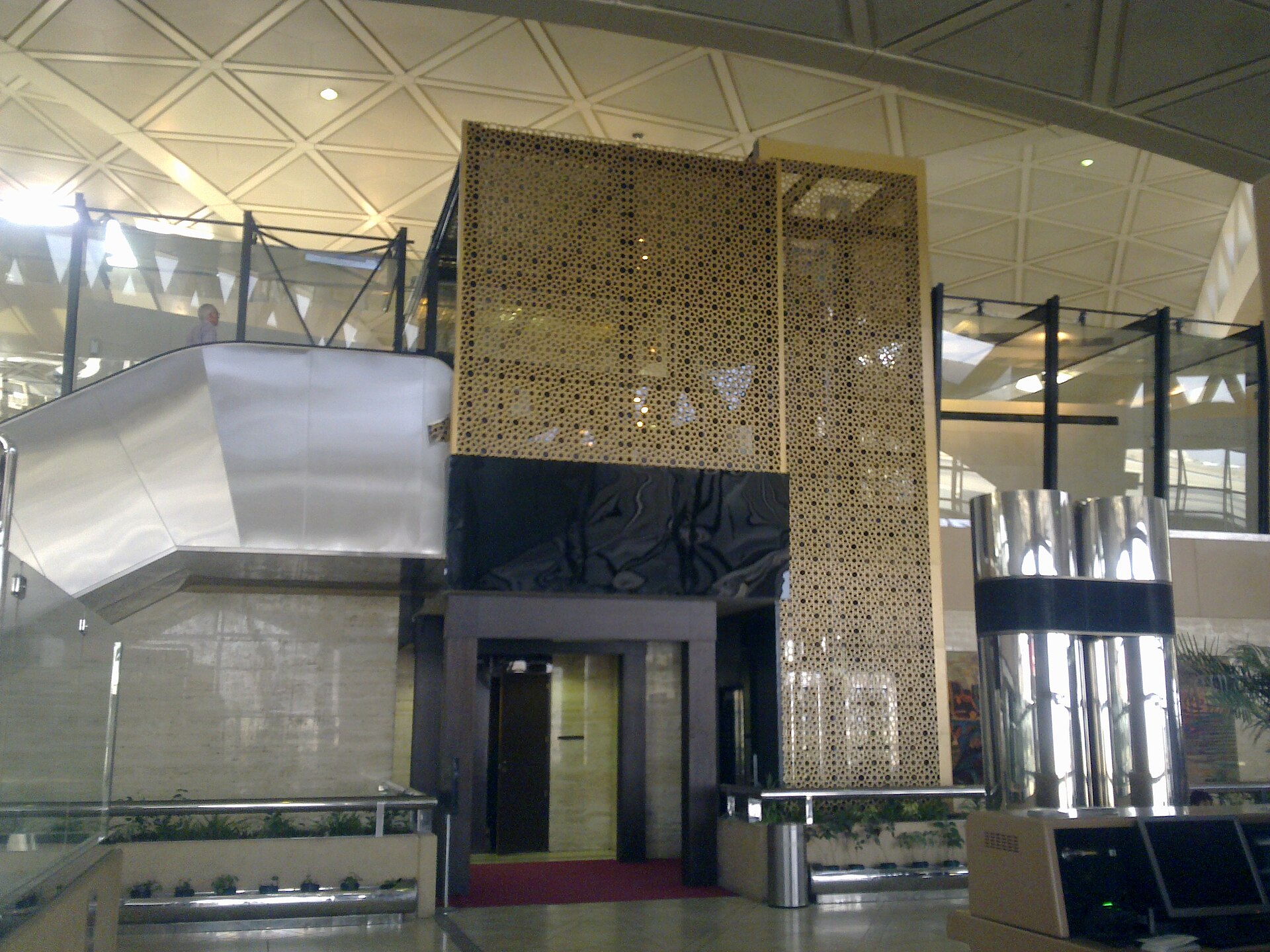
The alert landed on a city that had already absorbed weeks of escalating strikes and their consequences. King Khalid International Airport — the capital’s only commercial gateway — remained closed at the time of the broadcast, with the US State Department’s Overseas Security Advisory Council flagging the suspension as still in effect on October 17. One day before the alert, the US Embassy in Riyadh had issued its own security advisory directing American citizens to follow Saudi Civil Defence cellular broadcasts and shelter instructions — effectively telling its nationals to rely on the same warning system that Saudi officials had privately described as too “disruptive” to operate just weeks before the embassy’s endorsement.
How Does Saudi Arabia’s Warning System Work?
Saudi Arabia began using the National Early Warning Platform for Emergencies to deliver military threat alerts in May 2026, repurposing a system originally designed for natural disasters after the collapse of the 2022 ceasefire with the Houthis and the resumption of hostilities in July. The platform sends warnings by cellular broadcast, meaning every mobile phone within range of a Saudi tower receives the alert regardless of whether the user has subscribed to a notification service or downloaded a government application. In a capital of more than seven million people, the broadcast is indiscriminate by design — it cannot be targeted to specific districts, graduated by threat level, or modulated in tone — and when it fires, every phone in every pocket across the city sounds at once.
The Middle East briefing 3,000+ readers start their day with.
One email. Every weekday morning. Free.
The system expanded through September to cover both Riyadh and the holy cities. Saudi Arabia issued its first military alert for Mecca on September 15, crossing a threshold that marked the formal extension of the Houthi threat envelope to Islam’s holiest site. Four days later, on September 19, the first “hostile aerial threat” warning reached Riyadh residents, during which AFP reported two explosions over the capital before the alert was lifted. By October, the platform was issuing warnings that had become a recurring feature of the capital’s nights, including a “danger” alert covering Riyadh and Al-Kharj on October 14 after coalition forces intercepted Houthi missiles targeting the city.
The platform delivers alerts through two parallel channels — the cellular broadcast that hits every phone in range and the Saudi Civil Defence’s official social media feeds — creating redundancy that reflects the seriousness with which the government built the system, even if the seriousness with which it has operated that system has been inconsistent. The Interior Ministry has also instructed citizens not to film missile and drone interceptions over Saudi cities, a directive that sits alongside the alert system as part of a broader attempt to manage what the population sees, hears, and records when the sky above the capital becomes a combat zone.
Why Did the Warning System Go Silent for Thirteen Days?
Between September 29 and October 12, Saudi Arabia’s civilian alert system went dark. For thirteen consecutive days, the National Early Warning Platform did not issue a single military threat warning to Riyadh residents — not when drones crossed into Saudi airspace, not when missiles were launched toward the capital, and not on October 11 when Houthi projectiles struck King Khalid International Airport in what Andreas Krieg, a Middle East security analyst, assessed for Fortune as the deadliest attack on Saudi soil in over a decade. Across those thirteen days, the casualties that would eventually total at least eighteen dead and hundreds wounded accumulated in attacks the warning system was built to announce but chose not to.
The explanation came from unnamed Saudi officials speaking to Reuters: the alerts had been halted because authorities described them as “disruptive,” with citizens complaining about being woken at night. Reuters reported that the system had been deliberately silenced — not because the threat had diminished or the defensive perimeter had strengthened, but because the government’s own tool for communicating danger to its citizens was generating a political problem it preferred to suppress. An alert that wakes seven million people is, by definition, disruptive; the question the silence answered is whether the government considered the disruption of a siren worse than the disruption of a missile strike announced by nothing except impact.
Officials described the alerts as “disruptive,” with citizens complaining about being woken at night.
— Saudi officials to Reuters, as reported by Al-Monitor, October 13, 2026
Western embassies in Riyadh, operating under no comparable political calculus, continued to issue internal missile and drone alerts to their own staff throughout October. But Reuters also reported that no embassy warning preceded the October 11 airport attack that proved deadliest — a finding that implicates not just the Saudi system’s silence but the broader intelligence picture available to every government operating in the capital during those two weeks. When the alert system came back on October 12, it returned to a city that had learned what its government was prepared to trade for quiet, and the thirteen-day experiment in managed silence had produced a body count that no subsequent siren could undo.
The October 17 alert is the direct consequence of that failure. A government that silenced its warnings and watched the silence produce mass casualties has fewer options for managing the next round of attacks — the credibility cost of going quiet again is too high, the Reuters investigation too public, and the eighteen dead too recent. The system is back on not because the government wants it on, but because the cost of leaving it off has become more disruptive than the alerts themselves ever were.
The Calendar That Already Collapsed
There is a reading of the October 17 alert that frames it as a threat to Saudi Arabia’s diplomatic and economic calendar — a warning shot that endangered the summits and conferences Riyadh had spent years assembling. That reading is wrong, because the calendar was already gone by the time the alert was sent. The EU-GCC summit, which Crown Prince Mohammed bin Salman and EU Council President António Costa were to co-host in Riyadh on October 24, was formally postponed on October 15 — two full days before the alert. The National News reported the postponement cited Houthi attacks and the safety of delegates, and its cancellation removed the centrepiece of a diplomatic week designed to demonstrate Riyadh’s capacity to convene Europe and the Gulf under one roof in a city that now cannot guarantee the safety of its own residents.
The Future Investment Initiative — Saudi Arabia’s flagship investor conference, scheduled for October 26 to 29 — did not cancel outright but restructured itself around the assumption that its host city’s airport might not reopen in time. Reuters reported that organisers shifted to a hybrid format allowing remote participation, with some attendees who still intended to appear in person exploring alternative routes: flying into airstrips outside Riyadh or in neighbouring Gulf states and driving to the Saudi capital overland.
The sequence matters for understanding the October 17 alert. The government did not reactivate its civilian warning system to protect a high-stakes diplomatic week; that week had been gutted before the broadcast was sent. It reactivated the system because the threat demanded it, because the cost of the thirteen-day silence had been publicly exposed by Reuters and absorbed by markets and allies alike, and because the four drones intercepted over Riyadh on the night of October 17 were going to produce booms across the capital that no amount of calendar management or public relations could absorb. The alert was not crisis communications dressed as public safety — it was the sound of a government that had run out of calendar to hide behind and had no choice left except to tell the truth through a cellular broadcast.
What Does the Alert Reveal About Saudi Threat Assessment?
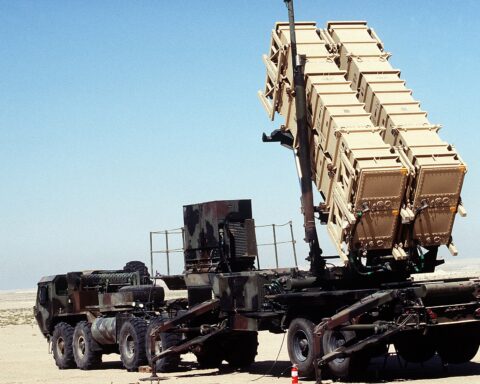
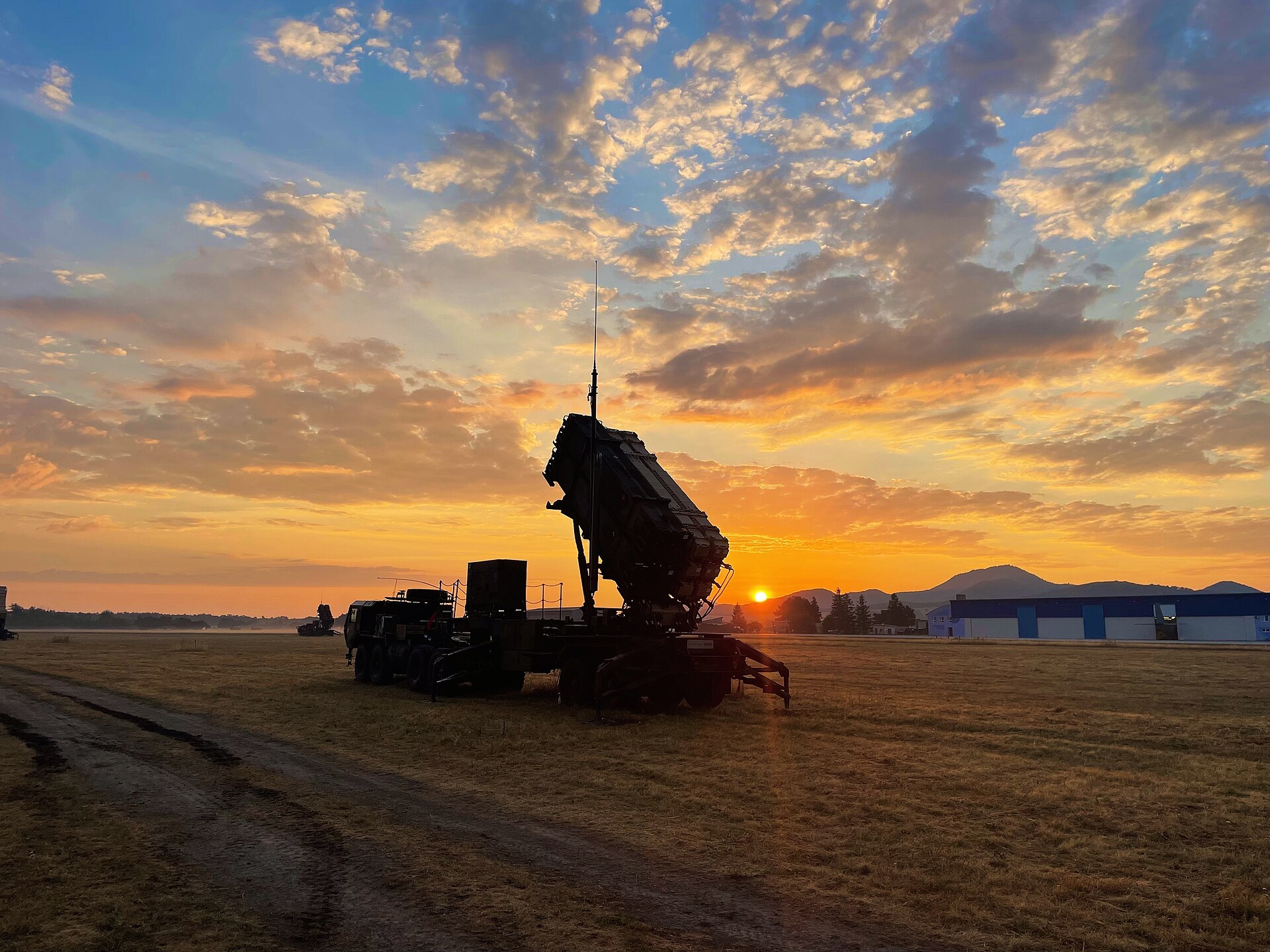
When a government tells its own capital to shelter from aerial threats, it is making a public statement about the limits of its defensive architecture that no press conference or military briefing can walk back. Saudi Arabia’s layered air defence network — its Patriot and THAAD batteries, its radar arrays, its coordination channels with coalition partners — is supposed to provide the interception capacity that renders civilian exposure to airborne threats minimal. The October 17 alert, and the four drones the coalition said it intercepted that night, demonstrates that the interception layer alone is not considered sufficient to guarantee civilian safety in the capital. If it were, the alert system would be redundant, and no government builds and deploys a civilian shelter-in-place warning mechanism for threats its defences eliminate before they arrive overhead.
The governance logic is transparent once stated plainly. A state that intercepts every inbound projectile before it reaches populated areas does not need to tell millions of people to stay away from their windows. The alert’s existence concedes one of two realities, and likely both: that some threats penetrate the defensive envelope and reach the ground, or that the defensive response itself — falling debris from interceptions at altitude, overpressure from mid-air engagement — poses enough risk to civilians that sheltering is the only prudent instruction. Al Jazeera reported that on October 14, the coalition intercepted Houthi missiles targeting Riyadh, and authorities issued a “danger” alert for the capital and Al-Kharj — a recognition that successful interception does not equal civilian safety for the population living underneath the engagement.
The broader question of who defends Saudi airspace and how reliably has been a running thread since the Houthi campaign against the capital began in earnest. The October 17 alert does not answer that question, but it quantifies the Saudi government’s own confidence in whatever answer it has: not confident enough to let seven million residents sleep through it, not confident enough to leave the warning system silent a second time, and not confident enough to pretend — as the thirteen-day gap attempted — that the sky over Riyadh is reliably clear when the evidence arriving by cellular broadcast says otherwise.
The Investment Case After the Siren
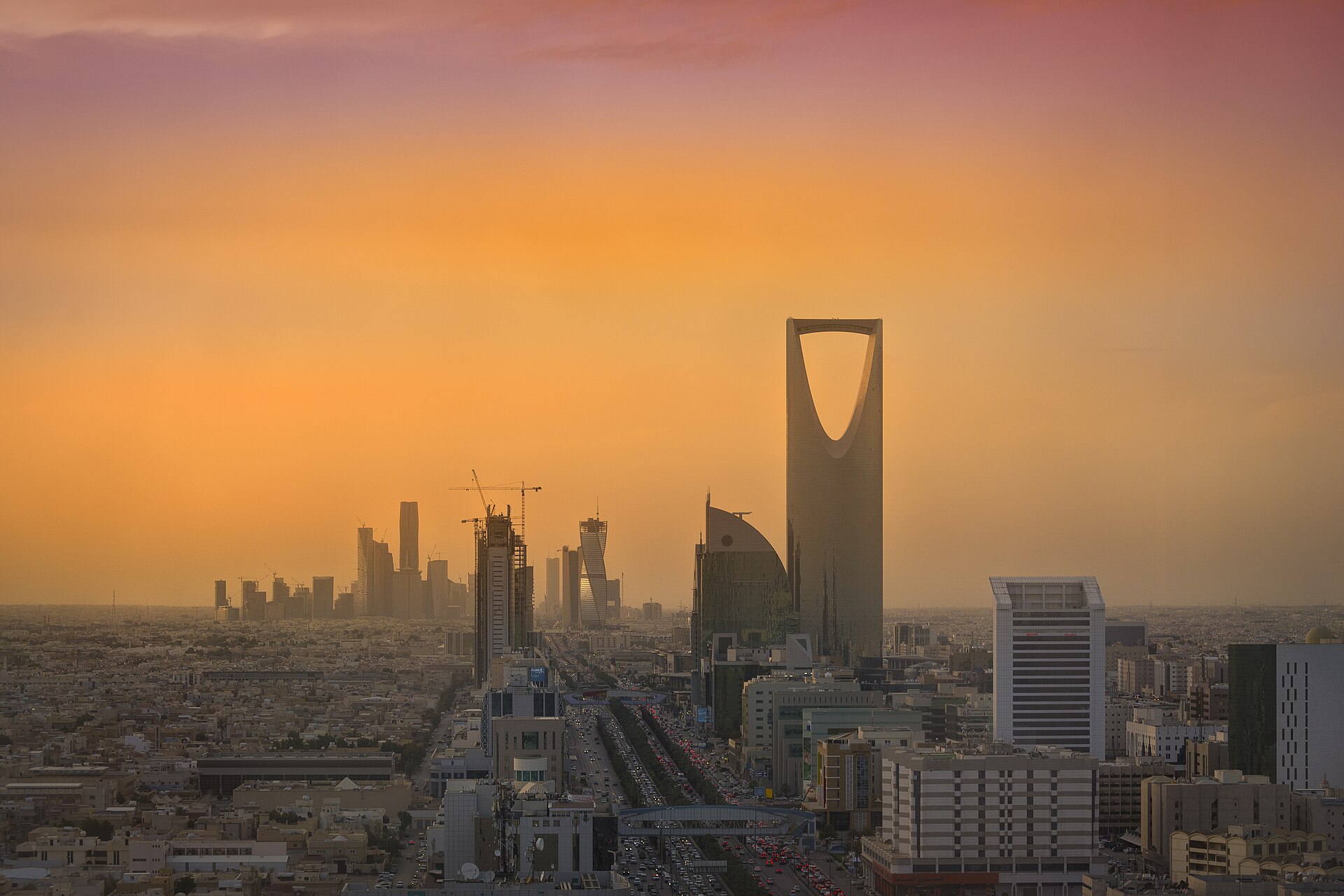
The Riyadh stock exchange fell to a forty-three-month low on October 14, three days before the alert, reflecting a market that was already pricing in the damage the Houthi campaign was inflicting on the kingdom’s economic story before the October 17 broadcast compounded it. Tim Callen, an economist, assessed for AGBI that the attacks on King Khalid International Airport would inflict near-term economic damage extending well beyond the human cost of the strikes themselves. Fortune reported that a growing security premium now threatened Saudi Arabia’s entire investment project, with Krieg noting that the short-term impact was already substantial and accumulating with each successive Houthi operation against the capital.
The mechanics of the confidence collapse are specific. ExxonMobil, TotalEnergies, Shell, and BP withdrew from a separate Riyadh energy conference before the alert system was even restored — a decision reported by Semafor that demonstrated the world’s largest Western oil companies had made an independent security assessment and concluded their executives should not be in the Saudi capital under current conditions. The FII conference, Saudi Arabia’s signature annual investment gathering, had to rebuild its format around the assumption that attendees could not fly into the city, with Reuters reporting that some were exploring overland routes from neighbouring Gulf states as a workaround for the airport closure. Saudi Energy Minister Prince Abdulaziz bin Salman has signalled publicly that Vision 2030 and the kingdom’s investment agenda will proceed, but the distance between that message and the lived reality of a capital whose airport is closed, whose stock market sits at a multi-year trough, and whose civil defence texts its residents to shelter from aerial threats is a distance that each successive alert makes harder to bridge.
The investment case for Saudi Arabia has always rested on an implicit security promise: that the kingdom is stable, defended, and open for business in a region where those qualities command a premium. The October 17 alert, arriving at the end of a week in which a summit was postponed, a flagship conference was restructured, an airport remained shut, and a stock market continued to slide, tested that promise in a way no quarterly earnings call or investor roadshow can paper over. Global capital does not need to be told a city is under threat; it needs only to see that the city’s own government is telling its own residents to hide.
What Has the Houthi Campaign Declared?
Yahya Saree, the Houthi military spokesman, has made the group’s targeting framework explicit in a series of public statements that strip any residual ambiguity from the campaign’s scope and intent. Saree has warned that “any attacks on the capital, Sanaa, will be met with a harsh and painful response in the capital of the Saudi enemy, Riyadh” — language that names the Saudi capital specifically as the designated response target and frames every Houthi strike against it as reciprocal rather than offensive. He has separately declared that Saudi airports and airspace “are exposed to targeting,” a statement that treats the kingdom’s civilian aviation infrastructure as a category of military objective rather than an exception to it.
“Any attacks on the capital, Sanaa, will be met with a harsh and painful response in the capital of the Saudi enemy, Riyadh.”
— Yahya Saree, Houthi military spokesman (CBS News, October 2026)
Saree has also declared that humanitarian flights to and from King Khalid International Airport would require Houthi authorisation — a condition that, whether operationally enforceable through the group’s existing capabilities or not, asserts a de facto veto over a sovereign state’s principal airport and the airspace above it. He has cited a figure of 274,302 Saudi-led coalition airstrikes against Yemen over twelve years, a number drawn from Houthi sources and not independently verified, but deployed publicly to construct a proportionality argument: the strikes on Riyadh are framed as a fraction of what Yemen has absorbed, and therefore, in the Houthi telling, justified. He has also stated that Mecca and Medina are explicitly exempt from targeting, a carve-out that removes the two holiest cities in Islam from the threat map while leaving every other Saudi population centre — the capital, its airport, its economic zones, and its civilian infrastructure — within scope.
No specific Houthi claim for the October 17 evening attack has been publicly indexed; the four-drone intercept announcement is the coalition’s account and has not been matched by a corresponding Houthi communiqué in indexed media. But the absence of an individual claim does not signal the absence of an attack — it may indicate that the campaign has reached a tempo where individual operations no longer warrant individual statements from a movement that has already declared its intentions at the strategic level and sees no reason to narrate each execution.
What Happens When the Next Alert Sounds?
The October 17 alert was not a singular event but a data point on a trajectory the Saudi government can track as clearly as anyone outside it. The first Riyadh “hostile aerial threat” warning came on September 19. The system went dark from September 29 to October 12. Since its restoration, alerts have sounded on October 14 and October 17 — a three-day interval that suggests neither a pause in Houthi operations nor a respite for the population being told to shelter. King Khalid International Airport remains closed. The EU-GCC summit is indefinitely postponed. FII is operating under contingency architecture. The stock exchange sits at its lowest point in nearly four years.
What the October 17 alert accomplished — and what every subsequent alert will deepen — is the normalisation of a condition the Saudi government spent weeks trying to manage as exceptional. A capital under recurring aerial bombardment is not experiencing a temporary disruption that sharp messaging can outlast: its shelter-in-place system is active, its commercial airport remains suspended, its stock market is retreating, and its diplomatic calendar is in disarray. The Houthi campaign has not plateaued; it has stated its intentions, demonstrated its reach, and forced the Saudi government to tell its own people to shelter — twice in three days as of October 17, in a pattern that shows no sign of decelerating.
The next alert will sound, because nothing in the military, diplomatic, or economic environment suggests the conditions that produced this one have shifted in Saudi Arabia’s favour. The question the government faces is not whether Riyadh will hear the siren again but whether it will leave the system on when the disruption of the truth becomes more uncomfortable than the disruption the silence was designed to contain — and whether the eighteen people who died during thirteen days of quiet are a price it is prepared to justify paying twice.
Frequently Asked Questions
Is Riyadh Season still going ahead as scheduled on October 21?
As of the October 17 alert, no formal postponement of Riyadh Season had been publicly announced, though Saudi authorities had also made no public confirmation the season would proceed as planned. Riyadh Season was scheduled to open on October 21, according to Gulf News, just four days after the October 17 broadcast. The government had already postponed National Day fireworks and drone shows indefinitely in September (Khaleej Times, September 23, 2026) — an earlier precedent for suspending high-visibility public gatherings when the aerial threat environment makes mass events untenable. Riyadh Season draws primarily a domestic audience rather than foreign delegations, which may reduce the calculus that drove the EU-GCC summit’s postponement, but a capital actively receiving civil defence shelter alerts represents a different operating environment for any large public event than the one organisers planned around.
Why did the Saudi Interior Ministry tell citizens not to film missile interceptions?
Gulf News reported that the Interior Ministry issued a directive warning Saudi citizens against filming missile and drone interceptions over cities, a ban that creates an unusual tension alongside the civilian alert system. Residents are instructed to stay indoors and away from windows, which limits what they can observe, but those who witness defensive engagements — either before reaching shelter or through windows despite the guidance — are separately told not to record what they see. The practical concern is speed: footage of Patriot missiles launching from positions near residential areas, debris falling after interceptions at altitude, or the visible trail of incoming projectiles would circulate on social media far faster than any official statement could contextualise or correct. The directive amounts to the government managing two competing needs at once — ensuring public safety by acknowledging the threat through alerts while limiting the visual record of that threat to prevent uncontrolled imagery from overriding the managed narrative.
What security guidance has the US government issued for Americans in Riyadh?
The US Embassy in Riyadh issued a security alert on October 16 — one day before the Saudi Civil Defence broadcast the October 17 “hostile aerial threat” warning — directing American citizens to monitor local media, follow Saudi Civil Defence cellular broadcasts, and shelter when instructed. The State Department’s Overseas Security Advisory Council separately published an advisory on October 17 noting that King Khalid International Airport operations remained suspended. The embassy’s direction to follow Saudi Civil Defence broadcasts carried an implicit endorsement of a system the embassy’s own staff had watched go silent for thirteen days during the deadliest stretch of attacks, and it reflected a practical reality: whatever the warning platform’s record, the cellular broadcast remained the fastest and widest-reaching alert mechanism available to any civilian in the Saudi capital, and no American-operated alternative covered the same ground for the same population.