RIYADH — Mohammed al-Bukhaiti, a member of the Houthi political bureau, told AFP on October 13 that if the United States joins Saudi Arabia’s military campaign against Yemen, the response would be “swift and painful” and would target “all [US] interests in the region.” Asked the next day whether Washington would intervene, President Trump replied: “I can’t tell you that. Do you really think I can tell you that?”
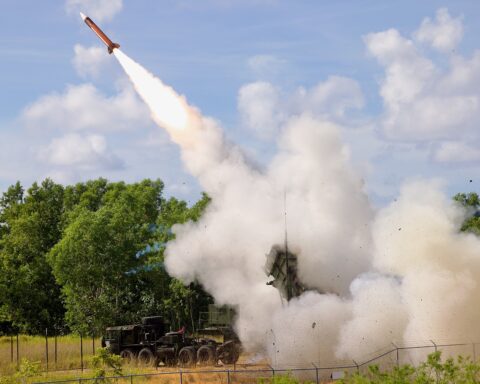
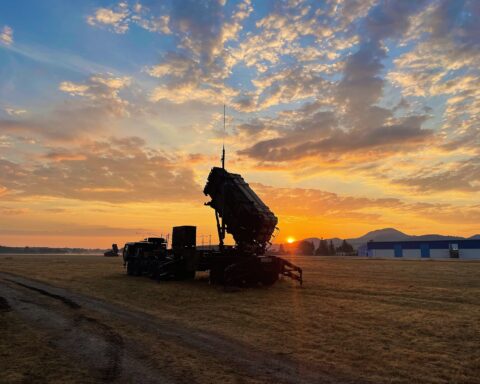
Saudi Arabia’s defence now rests on what it can assemble without a clear American answer: Patriot interceptor stocks that the Wall Street Journal estimates at fewer than 1,000 units, about 8,000 Pakistani troops restricted to a defensive mandate, a French radar deployment guarding a single export terminal, and a Turkish mutual-defence pact that has not yet passed the Turkish parliament. The crown prince made two appeals to Trump in September for US strikes on Houthi positions, CNN reported on October 10. Both were declined.
The question is no longer whether Riyadh can afford to fight the Houthis or whether the coalition can sustain its air campaign. It is whether Riyadh can defend what the Houthis have already demonstrated they can reach — from Aramco’s headquarters in Dhahran to the capital’s international airport — and whether anyone outside the Kingdom will help it do so.
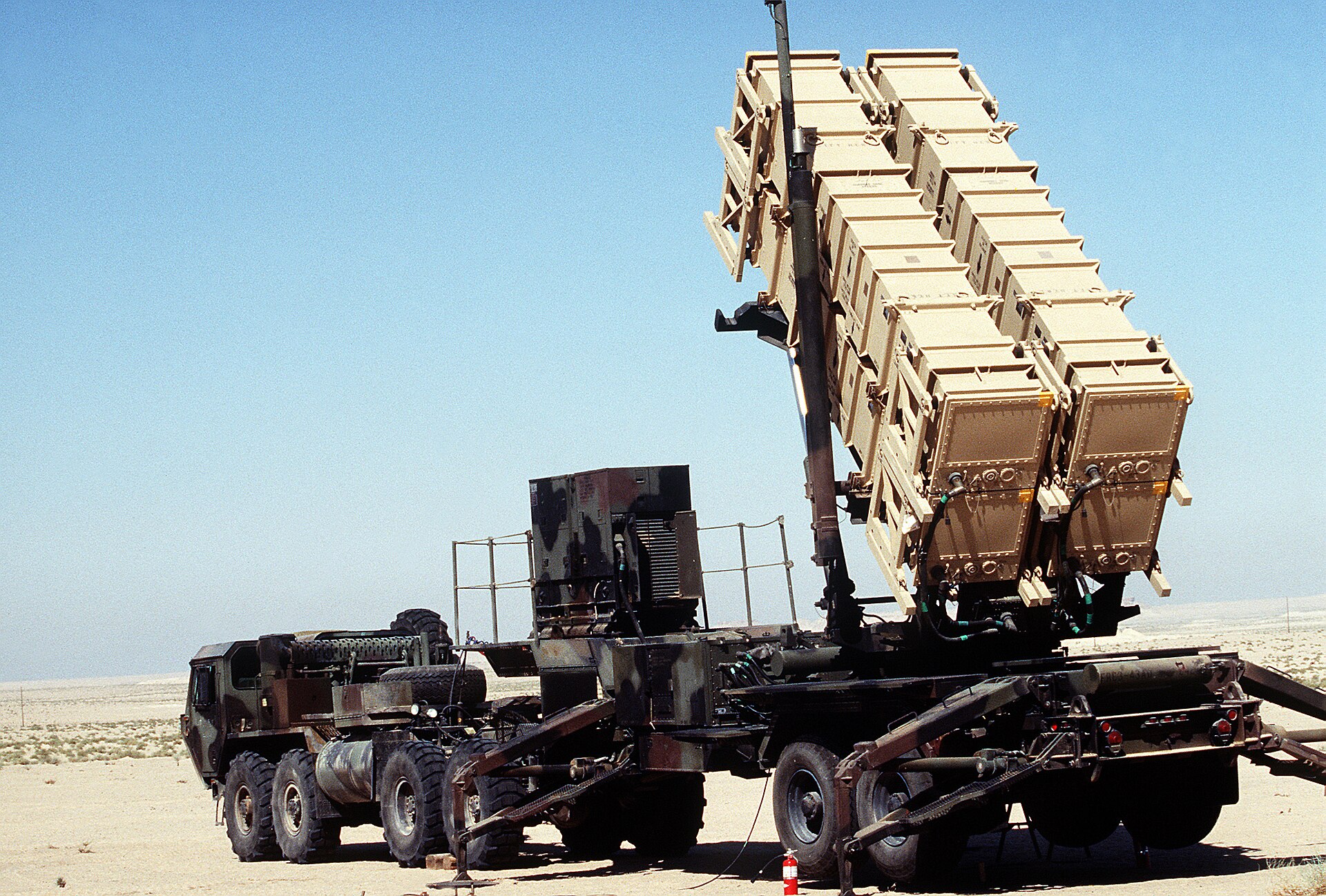
Table of Contents
- What Did al-Bukhaiti’s Warning to Washington Say?
- What Has Trump Committed to Saudi Arabia’s Defence?
- How Many Interceptors Does Saudi Arabia Have Left?
- Who Has Sent Troops — and What Can They Do?
- Can Any Defence System Stop a Simultaneous Multi-Type Attack?
- Tehran Calls for Restraint While Its Media Celebrates
- The Calendar Riyadh Cannot Move
- Frequently Asked Questions
What Did al-Bukhaiti’s Warning to Washington Say?
Al-Bukhaiti’s full statement, carried on October 13 by CBS News and Al Jazeera via AFP, was a single conditional threat directed at Washington — not at Riyadh:
“If the US becomes involved in the aggression against Yemen, we will not deliberate over the decision to respond, rather, there will be a swift and painful response targeting the US and all its interests in the region.”
The language is deliberately non-specific. Al-Bukhaiti did not name Al Udeid Air Base in Qatar, Prince Sultan Air Base south of Riyadh, Red Sea naval assets, or any individual US facility. He targeted “all interests” as a general category — a formulation broad enough to cover military installations, commercial shipping, and diplomatic premises without committing to any single target set.
The Middle East briefing 3,000+ readers start their day with.
One email. Every weekday morning. Free.
The channel matters. A public statement to AFP — an international wire service — is designed to reach Washington through the global press, not through Riyadh’s military command or back-channel diplomacy. This is messaging for American domestic consumption: a warning that US involvement would produce American casualties and American targets, delivered through media that American voters read. The timing — less than three weeks before US midterm elections on November 3 — places the warning inside the window where any American military casualty in the Gulf becomes a political cost Trump has shown no willingness to absorb.
Houthi military spokesman Yahya Saree had already named specific Saudi targets. He declared King Khalid International Airport and Saudi Aramco facilities “legitimate targets” and issued an evacuation warning for all Aramco facilities, according to the Associated Press. Saree also warned of a “harsh and painful response” directed at “Riyadh,” according to Al Jazeera.
The division of labour is functional. Saree threatens Saudi infrastructure. Al-Bukhaiti warns Washington. The Houthis simultaneously offered safe passage to non-Saudi commercial shipping — a move the Jerusalem Post analysed on October 14 as an effort to isolate Saudi Arabia from the broader shipping community rather than confront every flag state operating in the Red Sea.
What Has Trump Committed to Saudi Arabia’s Defence?
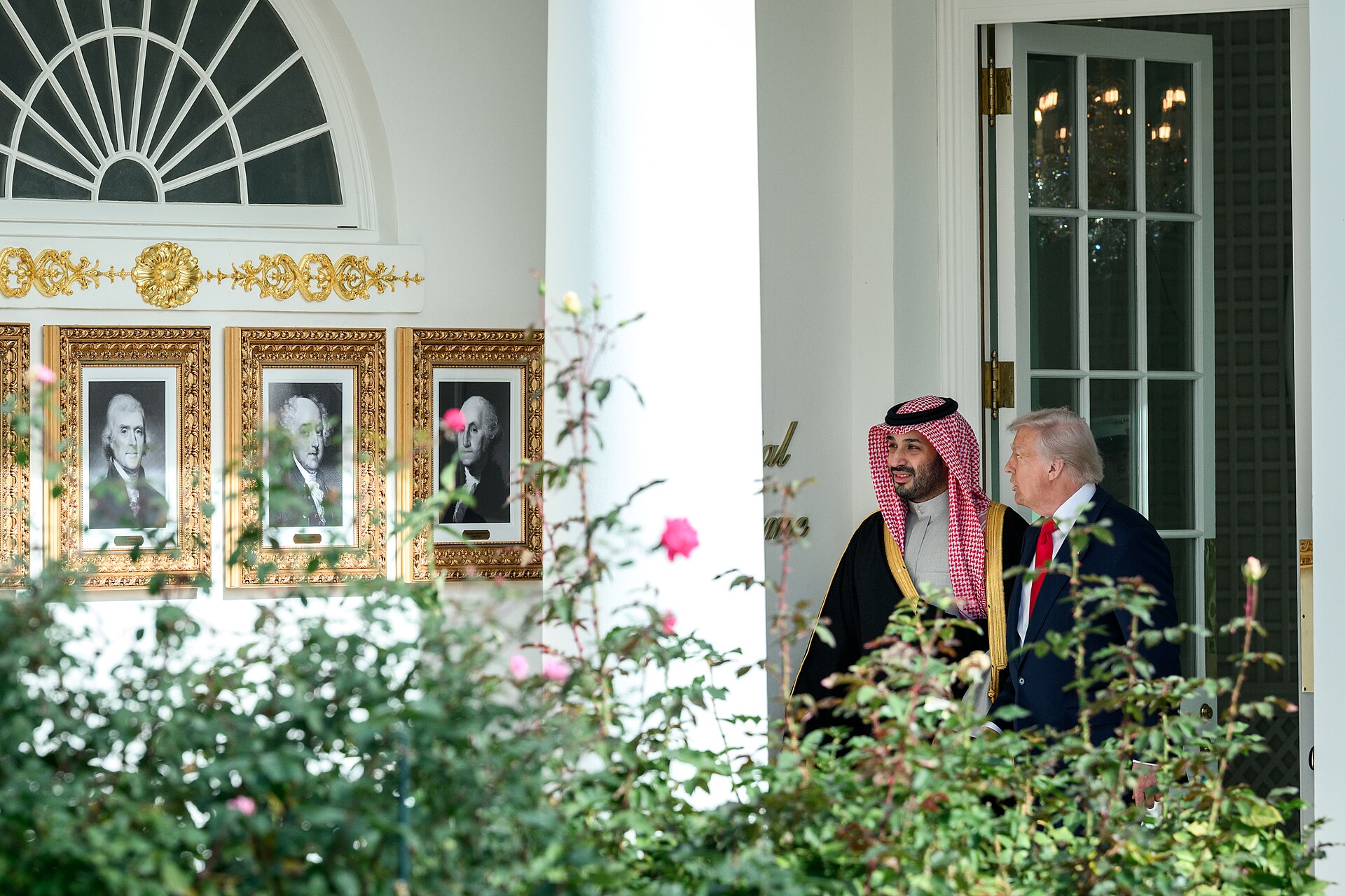
As of October 14, Trump has confirmed a phone call with Crown Prince Mohammed bin Salman and declined to disclose its outcome. He told CBS News on October 13 that he had spoken with the crown prince but would not say whether he had decided to join the Saudi campaign. On Truth Social, he described the Houthis as “behaving very badly” and said they had “emerged again, probably at the behest of Iran.” He offered no operational commitment.
Four days earlier, he had been marginally more forthcoming. “We may. We’re going to look at it,” he told CNN on October 10, adding: “They’re able to defend. The Saudis are good fighters.” The second sentence carried a meaning distinct from the first. “We may” left the door open. “The Saudis are good fighters” suggested they should handle it themselves. The two statements sit beside each other without resolution — which is the position Riyadh has been left in.
The crown prince had already tested Trump’s position. CNN reported on October 10 that Mohammed bin Salman made two separate appeals to Trump in September 2026 for US strikes on Houthi positions. Both were declined. Trump had also publicly ruled out attacking Iran before the November 3 midterm elections, according to The National on October 8 — constraining his options on the broader Iranian theatre before al-Bukhaiti’s warning arrived.
Secretary of State Marco Rubio offered a different register. On October 5, he told The National: “We intend to live by” the US-Saudi defence agreement. The gap between Rubio’s assurance and Trump’s refusal to confirm anything is where Saudi defence planning now operates.
What Washington has provided is intelligence, not firepower. CNN reported on October 11 that more than 100 US military advisers are operating in Saudi Arabia under a new joint command structure. They have no strike role. The US State Department simultaneously issued a security alert requiring special authorisation for US government employees to use Saudi airports and restricting travel within 20 miles of the Yemen border. The US Embassy in Riyadh advised Americans to exercise “extreme caution” at major Saudi airports.
Rubio says the US will honour its agreement. The State Department tells its own personnel to avoid the airports that agreement is supposed to protect.
How Many Interceptors Does Saudi Arabia Have Left?
The Wall Street Journal reported in 2026 that Saudi Patriot interceptor stocks had fallen to fewer than 1,000 units. No more precise figure has been published. Riyadh does not disclose its remaining inventory.
The consumption rate provides context that a static number cannot. Francis Tusa, editor of the defence newsletter Defence Eye, told The National on October 13 that during one attack on a Jordanian airbase, approximately 80 Patriot interceptors were expended in a single night. “US generals have told Trump ‘we haven’t got the rounds left,'” Tusa said.
Dr. Lynette Nusbacher, a former military intelligence officer, told The National on the same day that both THAAD and Patriot systems lack “sufficient quantity” and that there is observable “leakage” in Saudi Arabia’s missile defences. “Leakage” is the gap between missiles fired at incoming threats and missiles that successfully intercept — every round that misses or is drawn off by decoys is a round subtracted from a stockpile that cannot be replaced domestically.
The replenishment pipeline runs through the same Washington that al-Bukhaiti has warned to stay out. Patriot interceptors are manufactured by Raytheon (now RTX) in the United States. Saudi Arabia does not produce them domestically. Every interceptor that leaves the launcher can only be replaced by a US export decision, a US production slot, and a US logistics chain — all of which become politically contested the moment American involvement in the Saudi campaign becomes a domestic issue in Washington.
The $5 billion bomb and guidance-kit sale approved on September 4, according to AFP, restocks offensive munitions. It does not replenish the defensive interceptors on which Saudi Arabia’s air defence depends. The proposed $24.3 billion sale of 48 F-35A fighter jets, reported by The Aviationist on September 17, is a procurement programme measured in years — not an answer to the interceptor deficit measured in nights. The F-35s have not been delivered. The interceptors are being fired now.
Who Has Sent Troops — and What Can They Do?
Three countries have committed forces to Saudi Arabia’s defence. None has committed to offensive operations against the Houthis. A fourth — the United States — provides advisers with no combat role.
Pakistan: 8,000 troops, defensive mandate
Reuters reported that approximately 8,000 Pakistani troops are stationed in Saudi Arabia. Their mandate is strictly defensive — no offensive operations in Yemen. CNN confirmed on October 7 that Pakistan’s deployment is limited to protecting specific installations and does not extend to cross-border operations or strike missions.
The Mecca Joint Defence Agreement, signed on August 7, 2026, by Saudi Arabia, Pakistan, and Turkey, treats an attack on one signatory as an attack on all, according to Kuwait Times citing AFP. Saudi, Pakistani, and Turkish military chiefs met in Riyadh on September 26 to coordinate, Gulf News reported. Prince Khalid bin Salman called on signatories to “activate collective deterrence measures,” according to Al Jazeera on October 6.
Pakistan’s troops predated the pact. Their mandate has not visibly changed since it was signed. They protect Saudi installations from attack. They do not pursue Houthi launch sites, conduct cross-border strikes, or operate Saudi air defence batteries.
Turkey: a pact awaiting parliament
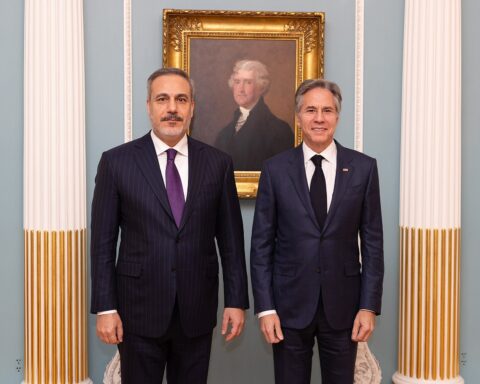
President Erdogan said on October 12 that he would send the Mecca pact to the Turkish Grand National Assembly “in a few days,” according to Al-Monitor. Foreign Minister Hakan Fidan said on October 8 that preparations were complete. The assembly has not voted.
Until it does, Turkey’s commitment exists as a presidential statement, not a legal obligation. A defence pact that has not passed parliament is a diplomatic signal, not a deployable force.
France: radars and troops at one terminal
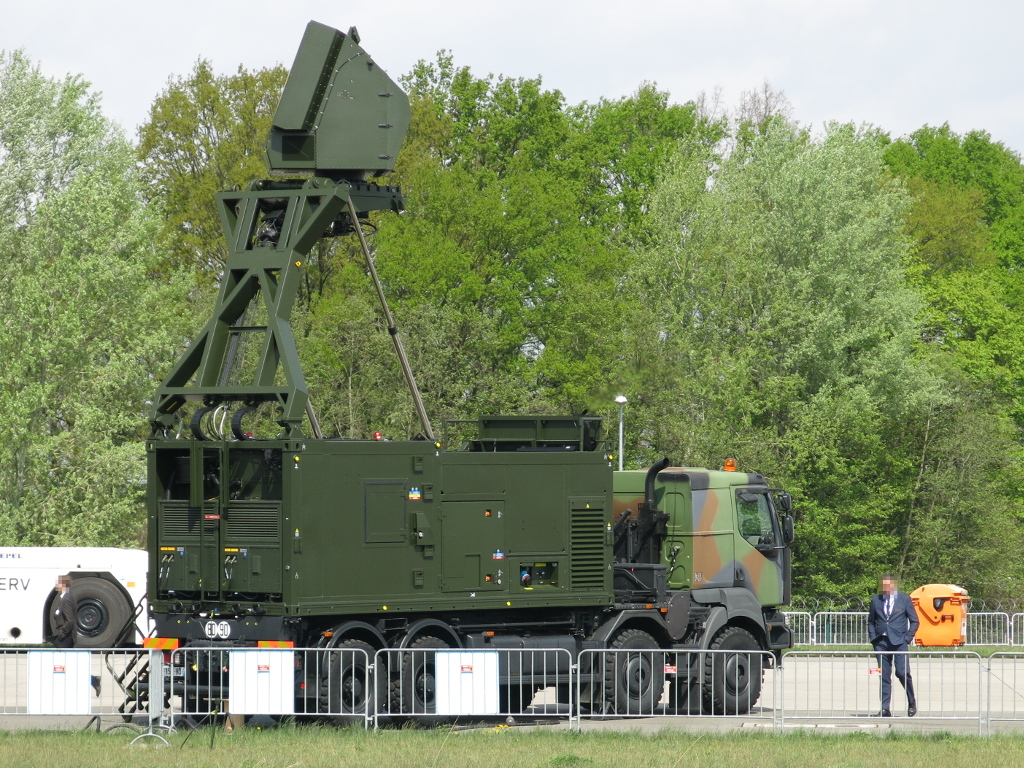
President Macron confirmed on September 24 that France had deployed troops, radar systems, and air defence assets to Yanbu. Reporting by The Arab Weekly and militarnyi.com identified the radar equipment as Thales Ground Master 200 class systems. The deployment is strictly defensive.
Yanbu is not a symbolic posting. The terminal handles over 5 million barrels per day of Saudi crude exports — the western terminus of the East-West pipeline that allows Aramco to bypass the Strait of Hormuz. If Hormuz is closed or contested, Yanbu is where Saudi oil leaves the country. France is protecting that bypass route — not Dhahran, not Riyadh, not the airports. Every Saudi city, airport, and energy facility outside Yanbu’s radar footprint falls outside France’s stated mandate.
United Kingdom: one tanker aircraft
Britain’s contribution, reported by The National on September 22, is a single RAF Voyager tanker aircraft. The Voyager extends the range of allied fighter jets through aerial refuelling. It does not intercept missiles, launch strikes, or defend installations. It is a force multiplier for an air campaign — but the campaign it multiplies is Saudi Arabia’s, not Britain’s.
| Contributor | Assets | Mandate | Status |
|---|---|---|---|
| Pakistan | ~8,000 troops | Defensive only — no Yemen operations | Deployed (pre-dates Mecca pact) |
| Turkey | None deployed | Mutual defence under Mecca pact | Parliament has not ratified |
| France | Troops, Thales GM-200 radars, air defence | Defensive — Yanbu terminal only | Deployed since Sep 24 |
| United Kingdom | 1 RAF Voyager tanker | Aerial refuelling support | Deployed since Sep 22 |
| United States | 100+ advisers | Intelligence support — no strike role | Operating under joint command |
The combined inventory: Pakistani troops guarding fixed positions. A Turkish promise awaiting a parliamentary vote. French radars protecting one pipeline terminal. A British tanker extending somebody else’s range. And American advisers providing intelligence without authority to fire a round.
Can Any Defence System Stop a Simultaneous Multi-Type Attack?
Nawaf Obaid, a fellow at King’s College London’s War Studies department, told The National on October 13 that Saudi Arabia possesses “one of the world’s most sophisticated integrated air and missile defence architectures.” He immediately qualified the assessment: “No existing system can guarantee interception of simultaneous multi-type attacks.”
Robert Tollast of the Royal United Services Institute identified the operational consequence. Defending one site, he told The National, risks leaving other critical areas vulnerable. Saudi Arabia’s target list is not short: Aramco’s Dhahran headquarters, the Abqaiq processing facility, Ras Tanura terminal, Yanbu pipeline terminus, King Khalid International Airport, King Abdulaziz International Airport in Jeddah, Prince Mohammed bin Abdulaziz Airport in Medina, and military bases including Prince Sultan Air Base and King Fahd Air Base. Each requires interceptor coverage. Each battery assigned to one site is a battery unavailable to another.
The Houthis have demonstrated they possess the tools for exactly this kind of coordinated attack. The Palestine-2 missile has an estimated range of approximately 2,000 kilometres, with hypersonic speed and manoeuvring capabilities, according to The National’s reporting on October 13. A manoeuvring warhead does not follow the predictable parabolic arc that Patriot’s fire-control radar is optimised to track — it changes course during its terminal phase, reducing the defender’s engagement window. When combined with slower drones and cruise missiles arriving on different vectors and timelines, the defender faces not one intercept problem but several simultaneous ones, each consuming interceptors from the same finite stock.
Thomas Juneau, a professor at the University of Ottawa, offered the structural assessment. He told the Jerusalem Post in analysis published October 13-14: “Saudi Arabia faces no good options with the Houthis. Military escalation was inevitable and is likely to continue — but it will hurt Saudi Arabia more than the Houthis.”
“The Houthis hold stronger cards, and they know it; their goal will be to extract maximal concessions from Saudi Arabia.”
Juneau’s assessment rests on an asymmetry the Houthis have constructed deliberately. The existing US-Houthi ceasefire allows the Houthis to maximally pressure Riyadh while warning off Washington — fighting one war while threatening to start another. Saudi Arabia cannot replicate that position. It needs Washington’s interceptors, Washington’s intelligence, and Washington’s logistical pipeline. Al-Bukhaiti’s warning to AFP is designed to sever precisely those dependencies.
Tehran Calls for Restraint While Its Media Celebrates
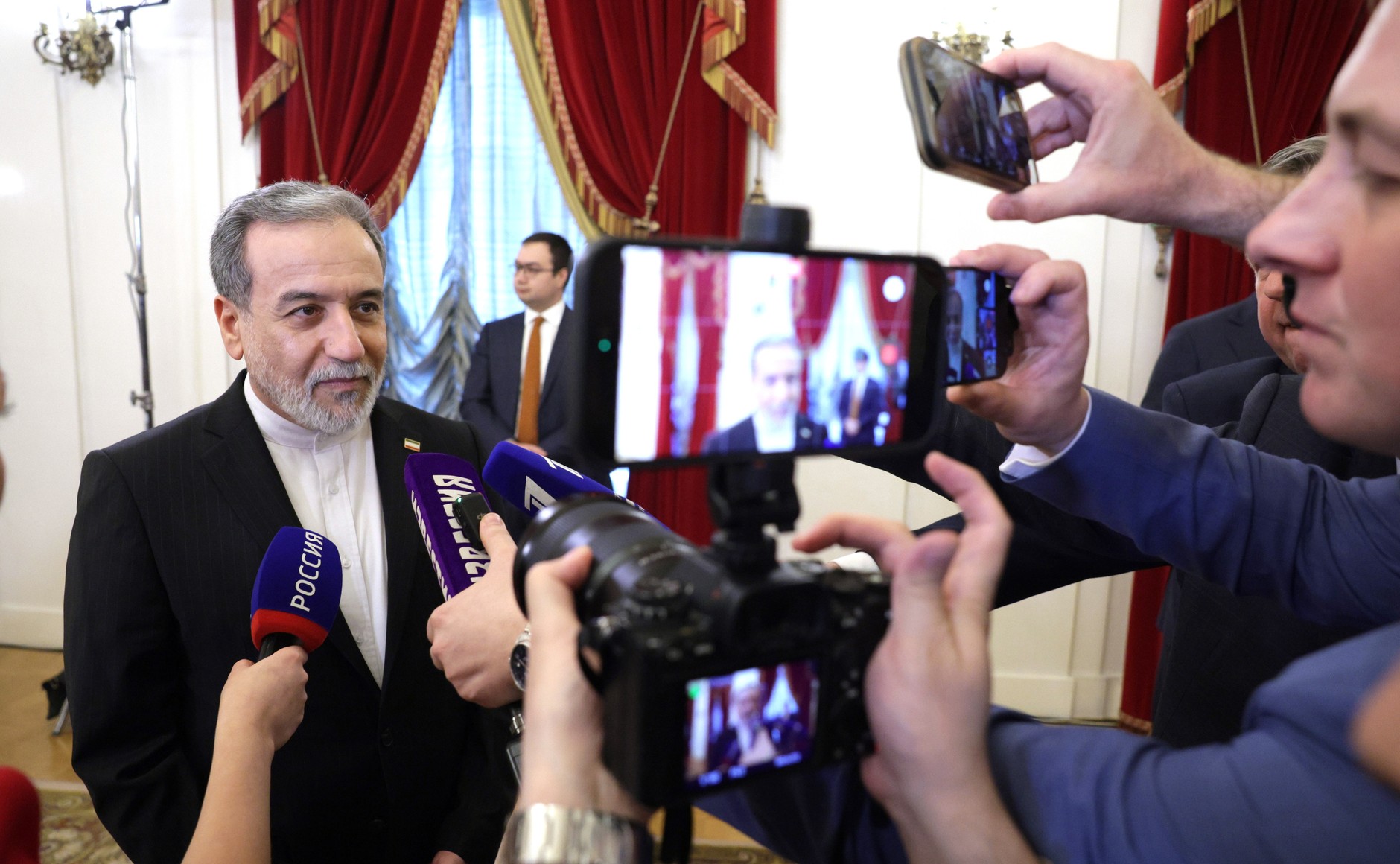
Iranian Foreign Minister Abbas Araghchi called Saudi Foreign Minister Prince Faisal bin Farhan on October 12. He told him, according to Al Jazeera, that “insisting on a military approach and disregarding a political solution would only further complicate the situation.” He offered to “facilitate dialogue between Saudi Arabia and Yemen.”
On October 9, ultraconservative Iranian daily Kayhan — whose editor-in-chief is appointed by the Supreme Leader — ran the headline: “Yemenis set Aramco refineries and Al Saud airports on fire.” Two days later, on October 11, IRGC-affiliated Tasnim News Agency led with: “Yemen emptied Saudi Arabia’s skies of aircraft.”
The dual track requires no decryption. Tehran’s official diplomatic channel urges Saudi Arabia to negotiate. Tehran’s state-aligned media celebrates the military results that are supposed to drive Riyadh to that table. Araghchi’s offer to “facilitate dialogue” arrives in the same news cycle as coverage that treats Saudi vulnerability as a Yemeni achievement and, by extension, an Iranian vindication. The facilitation on offer is not neutral mediation. It is mediation by the power whose aligned outlets are celebrating the damage.
The 13 people killed and 308-309 injured in the October 10 strike on King Khalid International Airport — Al Jazeera reported 309, the BBC 308 — do not appear in Kayhan’s framing as casualties. They appear as evidence that the campaign is producing results.
At least 20 people had died in Saudi airport attacks between October 6 and 11, according to the BBC. Araghchi’s call to Prince Faisal came one day after that toll was published. Egyptian Foreign Minister Badr Abdelatty separately called Araghchi, pushing for a halt and stating there was “no justification” for the escalation, CBS News reported. Cairo’s intervention underscored the regional pressure building on Tehran — but Kayhan and Tasnim continued to publish their own narrative without interruption.
The Calendar Riyadh Cannot Move
King Khalid International Airport remains closed. The Saudi Civil Aviation Authority extended the closure through October 17, according to Gulf Business. The airlines that have suspended service now include Air India, Cathay Pacific, Etihad, Gulf Air, IndiGo, Philippine Airlines, Qatar Airways, Air France-KLM, British Airways, and Lufthansa group, according to Gulf Business, Airline Geeks, and Travel and Tour World.
The suspension dates frame what comes next. Air France-KLM has suspended flights until October 24. British Airways has suspended until November 3. Those dates bracket two events Riyadh has spent months preparing: the EU-GCC Summit, scheduled for October 24, and the Future Investment Initiative (FII10), running October 26-29.
No state has announced its withdrawal from the EU-GCC Summit. No formal cancellation has been issued. But the summit is ten days away, the capital’s international airport is closed, and the State Department has told US government employees they need special authorisation to fly into Saudi airspace. FII10, the investment conference Riyadh uses to signal that the Kingdom is open for business, follows two days after the summit. British Airways will not resume flights until five days after FII10 ends.
The fiscal backdrop compounds the military question. Saudi Arabia’s 2026 budget deficit has been revised upward from 165 billion riyals to 245 billion riyals — an increase of 80 billion riyals before the current escalation — according to Reuters via Zawya on September 30. That revision was published before a single missile struck King Khalid Airport, before the airport closure, before airlines pulled out, before the aviation insurance market repriced Saudi airspace. CENTCOM assessed that 135 ships have been turned around since the July 14 Houthi blockade, according to CBS News on October 10 — a maritime disruption whose costs compound against a budget that was already running 80 billion riyals over plan.
The defence systems Saudi Arabia needs cost money. The interceptors it is consuming cost money. The airport closure costs money. The airline suspensions cost money. The diplomatic events it may not be able to host cost reputational capital that Riyadh has spent years accumulating. All of it draws against a fiscal position that deteriorated before the war’s full costs arrived on the balance sheet.
Trump confirmed the call with the crown prince and declined to disclose what was decided. Al-Bukhaiti warned Washington through AFP. Rubio said the US intends to honour its agreement. The State Department told its own employees to stay away from Saudi airports. Erdogan said he would send the pact to parliament “in a few days.” Araghchi offered to facilitate dialogue. Kayhan celebrated the fires.
The Turkish Grand National Assembly has not voted.
Frequently Asked Questions
What is the Mecca Joint Defence Agreement?
Signed on August 7, 2026, by Saudi Arabia, Pakistan, and Turkey, the Mecca pact treats an attack on one signatory as an attack on all, according to Kuwait Times citing AFP. Saudi, Pakistani, and Turkish military chiefs met in Riyadh on September 26 to coordinate operational protocols, Gulf News reported. Activation requires parliamentary ratification by each signatory. Saudi Arabia separately rebuffed an Israeli offer of military assistance against the Houthis, according to The Arab Weekly on October 13 — meaning the Mecca pact is Riyadh’s chosen multilateral framework, not the only collective-defence option presented to it.
Did Saudi Arabia reject Israeli military assistance?
The Arab Weekly reported on October 13 that Saudi Arabia rebuffed an Israeli offer to assist militarily against the Houthis. Neither Riyadh nor Jerusalem has publicly confirmed or detailed the contents of the offer, and the specifics remain unresolved. The rejection aligns with Saudi Arabia’s longstanding position against formalising military cooperation with Israel while the Palestinian question remains unresolved — a stance that also serves to deny the Houthis a propaganda point, since the Houthis name their longest-range missile the “Palestine-2.”
Has the US-Houthi ceasefire been formally terminated?
Neither side has formally terminated the ceasefire as of October 14. The Houthis’ current military operations target Saudi Arabia specifically — not US forces or assets — which allows them to maintain the position that the ceasefire with Washington remains intact while they prosecute a separate campaign against Riyadh. This is the structural asymmetry that gives al-Bukhaiti’s warning its force: the Houthis can escalate against Saudi Arabia and simultaneously frame any US intervention as a new American act of aggression, distinct from the existing ceasefire terms.
How large is the broader US military presence in the Gulf?
Beyond the 100-plus advisers in Saudi Arabia reported by CNN on October 11, the US maintains substantial forces across the Gulf Cooperation Council states. Al Udeid Air Base in Qatar houses the Combined Air Operations Center. The US Fifth Fleet is headquartered in Bahrain. Additional forces operate from facilities in Kuwait, the UAE, and Oman. Al-Bukhaiti’s warning to “all US interests in the region” encompasses this entire footprint — not just the advisory mission inside Saudi Arabia.
Does the revised 2026 Saudi deficit include the cost of the current military campaign?
The September 30 revision from 165 billion riyals to 245 billion riyals, reported by Reuters via Zawya, preceded the October escalation with the Houthis. The costs of the current campaign — military operations, airport closures, airline disruptions, insurance premiums on shipping and aviation, and any postponement or cancellation of the EU-GCC Summit and FII10 — are not reflected in the revised figure. The deficit was already running 80 billion riyals over the original budget before a single missile struck King Khalid Airport.