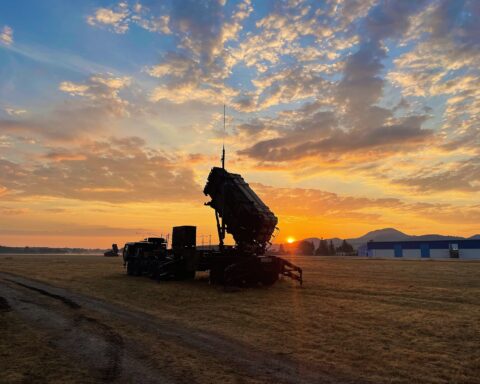
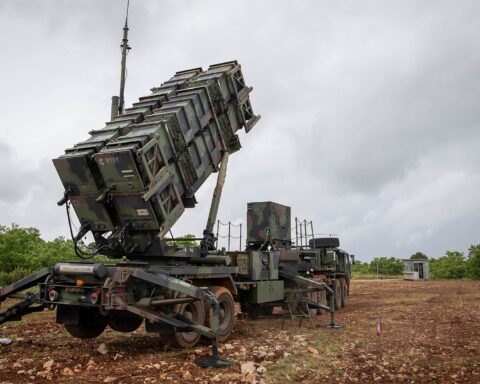
ANKARA — Turkey’s foreign minister ruled out offensive military operations under the Mecca Joint Defence Agreement on 8 October, five days before President Recep Tayyip Erdogan said he would send the pact to parliament for ratification. Hakan Fidan told reporters the agreement obliges Turkey to defend a signatory that comes under attack, and nothing more — Turkish forces would not be deployed to strike Houthi positions in Yemen or conduct operations beyond the borders of the state requesting aid.
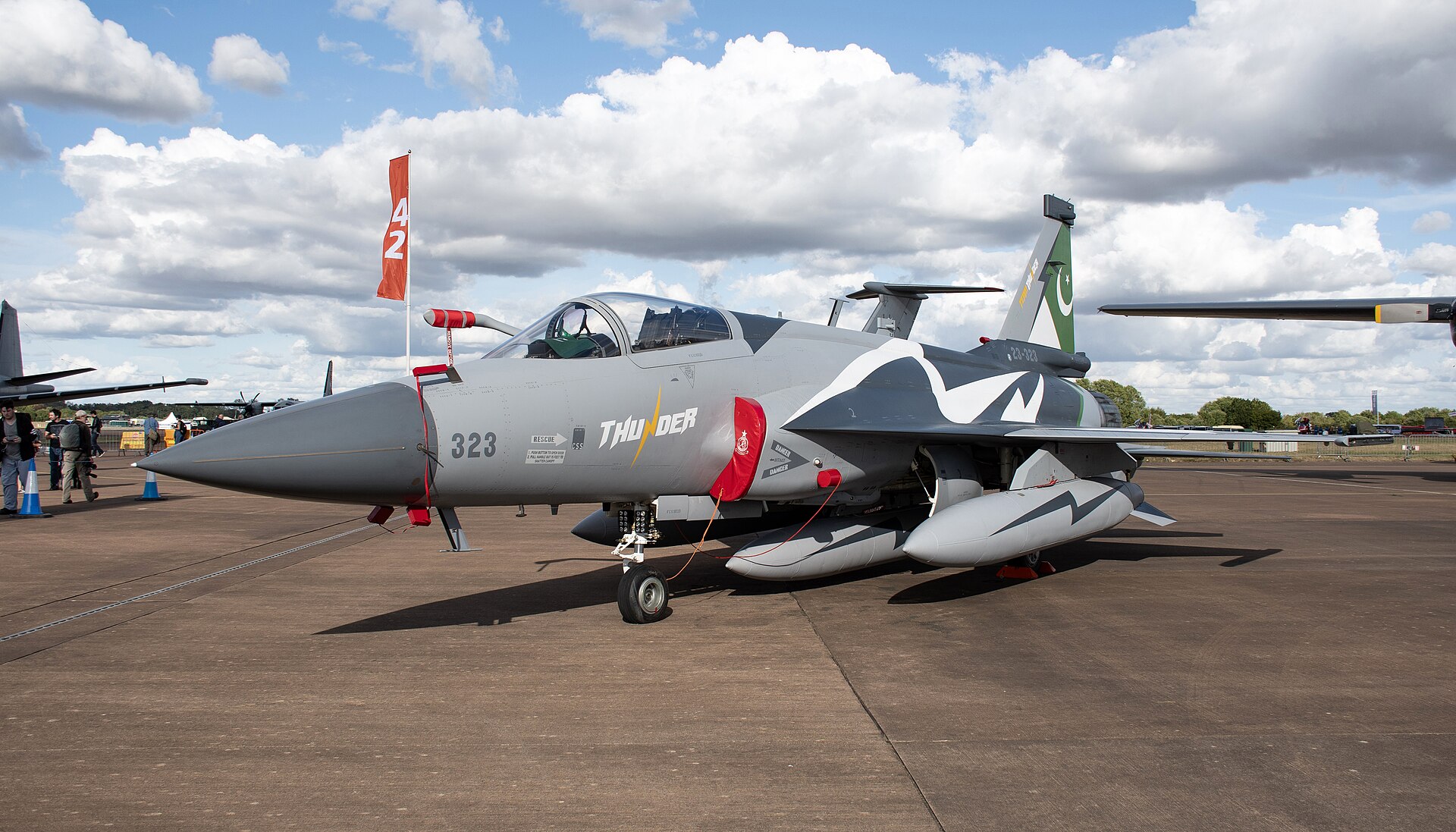
The distinction defines what Riyadh would gain from a ratified treaty. Saudi Arabia’s defensive air-cover requirement is already partly addressed: Pakistan has deployed troops, JF-17 fighters, and an HQ-9 battery; France has stationed forces, radar, and air defences at Yanbu; Britain has provided Sky Sabre interceptors and an RAF Voyager aerial-refuelling tanker. What none of those partners has offered — and what Fidan has now explicitly excluded — is the willingness to strike the launch sites from which Houthi missiles have continued to reach King Khalid International Airport, where 20 people died between 6 and 11 October. A ratified Turkish commitment under Fidan’s terms adds political breadth to the coalition without adding operational depth.
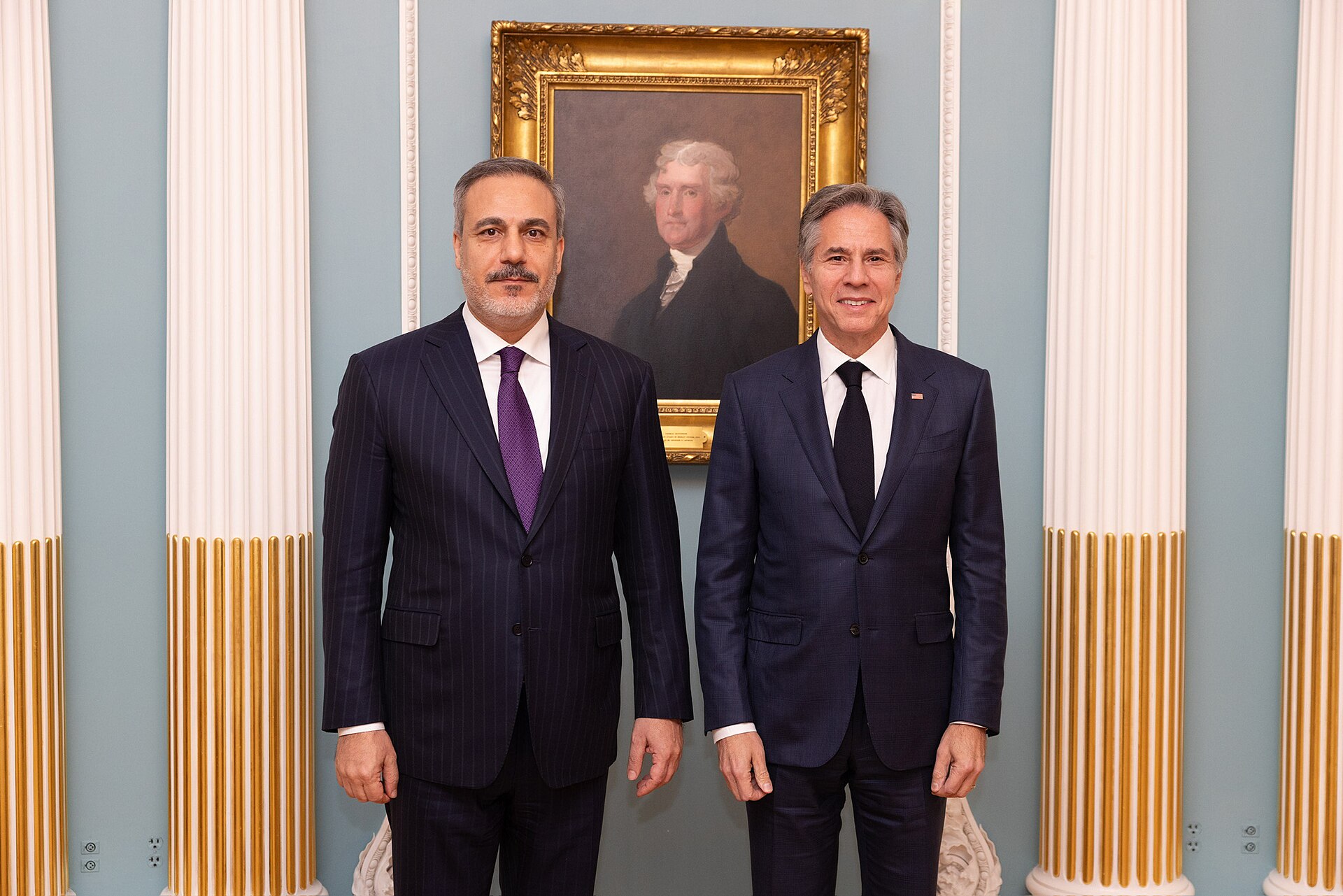
Table of Contents
- What Did Fidan Rule Out on 8 October?
- Has Turkey’s Parliament Ratified the Mecca Pact?
- The Coalition Arithmetic in Ankara
- What Has Turkey Already Deployed?
- The Pact Without a Published Text
- What Do Saudi Arabia’s Other Partners Already Provide?
- Does a Defensive-Only Deployment Change Riyadh’s Position?
- The Adversary Response
- Frequently Asked Questions
What Did Fidan Rule Out on 8 October?
Turkish Foreign Minister Hakan Fidan said on 8 October that the Mecca Joint Defence Agreement is “not an attack agreement” and that Turkey would not deploy troops to conduct offensive operations. He added that the pact “identifies no common adversary and is not directed at Iran,” limiting Ankara’s commitment to defending the territory of a signatory under attack.
Fidan’s remarks, carried by TRT World, drew a line through the pact’s value proposition to Saudi Arabia. “Once a country that is party to the agreement is attacked, you stand by it for its defence,” he said. “This is not an attack agreement.” He specified that Turkish forces would not be deployed “to conduct an attack,” and that the agreement is not aimed at any particular state — a formulation that separates the Mecca pact from the NATO model it is often compared to, where Article 5 carries an implicit identification of the threat.
“Once a country that is party to the agreement is attacked, you stand by it for its defence. This is not an attack agreement.”
Hakan Fidan, Turkish Foreign Minister, 8 October 2026 (TRT World)
The HOS Daily BriefThe Middle East briefing 3,000+ readers start their day with.
One email. Every weekday morning. Free.
The pact was signed on 7 August in Mecca by Saudi Arabia, Turkey, and Pakistan, with the stated principle that an attack on any signatory constitutes an attack on all. Fidan’s public framing converts that open-ended mutual-defence obligation into a territorial air-defence commitment with no strike mandate, which is the one operational role that Riyadh’s existing partner constellation does not fill.
Saudi Arabia’s primary challenge since Houthi missiles began reaching the Riyadh area on 19 September has not been interception over Saudi airspace, though interception failures have occurred and the rate of incoming fire has tested stockpiles. The challenge has been destroying the launchers, guidance systems, and supply lines in northern Yemen that regenerate after each barrage, and Fidan’s remarks confirmed that Turkey’s forces would not be joining the effort to prevent the next volley at its source.
Has Turkey’s Parliament Ratified the Mecca Pact?
As of 12 October 2026, Turkey’s parliament has not ratified the Mecca Joint Defence Agreement. President Erdogan said on 12 October that he would send the pact to parliament “in a few days,” without naming a date. A senior Turkish official told Al-Monitor on 9 October that Ankara may prioritise a separate military deployment authorisation bill over the treaty itself.
The Turkish Grand National Assembly has not voted on the pact, and no session date has been scheduled for either the ratification or the deployment bill. Erdogan’s 12 October comment, reported by Al-Monitor and Reuters, placed the submission loosely in time, and the senior official’s remark — “We have to ratify the Makkah treaty as well, but we may prioritise the military deployment authorisation bill” — suggested two legislative tracks running on separate and potentially conflicting schedules. Whether the government bundles them as a single package or runs two sequential votes will shape how quickly Turkey’s commitment moves from political to operational.
Turkey’s constitution requires parliamentary approval for overseas military deployments under Article 92, which means the government cannot legally expand the current troop presence beyond its advisory and air-defence scope without a vote. Pre-ratification deployments — air-defence systems, electronic-warfare equipment, and a small advisory presence — have proceeded under a 2010 bilateral defence framework that requires no new legislative authorisation, and that framework is the gap the parliamentary vote is supposed to close.
The Coalition Arithmetic in Ankara
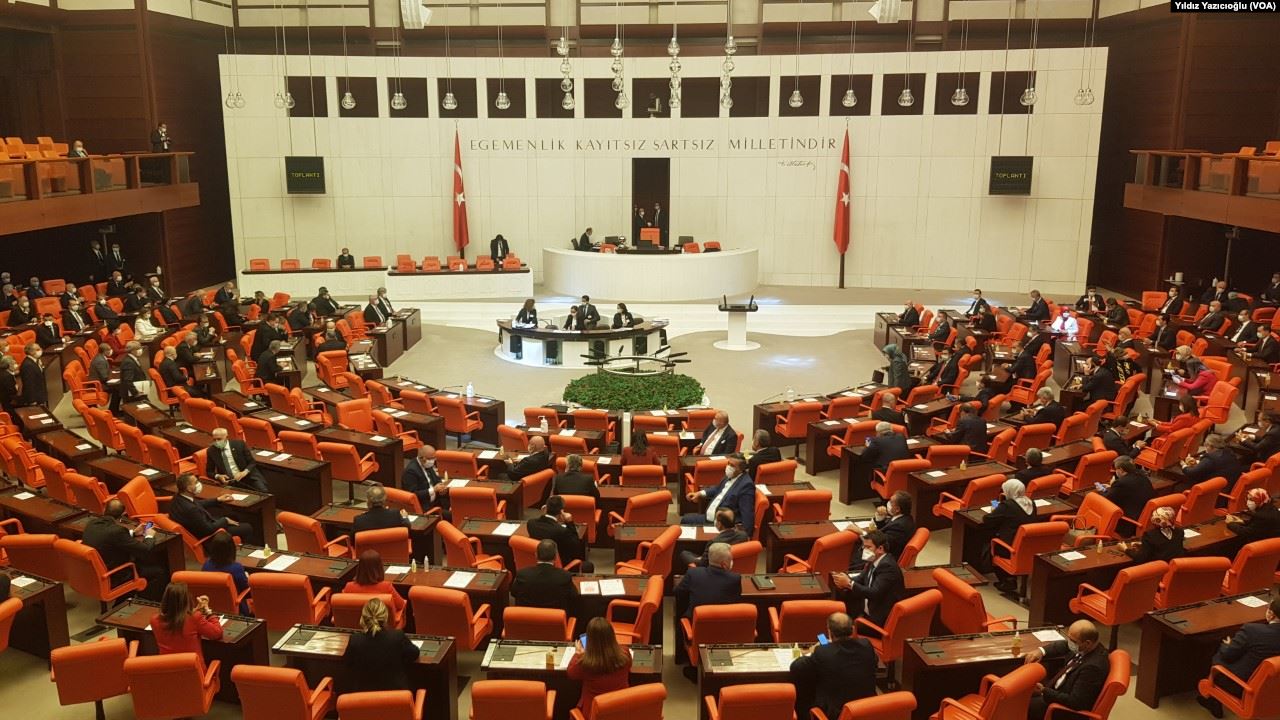
The government’s Justice and Development Party, the AKP, holds 280 of the parliament’s 600 seats and governs in coalition with the Nationalist Movement Party, the MHP, which holds 46. Together with allied members, the ruling alliance controls approximately 333 seats, exceeding the 301-vote majority threshold by 32, and no reporting has identified defections within either party on the pact question.
The opposition cannot block ratification on the numbers. The YENİ Party holds 91 seats and the CHP 44, for a combined 135 — less than half the majority threshold. Both parties have cited Article 92 in public statements opposing a deployment vote without full parliamentary debate, and their objection is procedural rather than constitutional: the scope, duration, and objectives of the deployment have not been defined in legislation, and no treaty text has been made available to members of the assembly.
The 2015 precedent weighs on the debate from across the border. Pakistan’s parliament voted against joining the Saudi-led coalition in Yemen that year, and Islamabad has not reversed that position in substance even as it deploys troops to Saudi territory under the September 2025 bilateral defence pact. Turkish opposition members have cited the Pakistani experience, arguing that open-ended military commitments in the Gulf tend to outlast the political conditions that produced them, and the AKP has not yet responded with a floor date. The EU-GCC summit is scheduled for 24 October in Riyadh, and a ratified trilateral pact with deployed forces would present differently at that forum than a signed agreement still awaiting parliamentary approval from one of its three signatories.
What Has Turkey Already Deployed?
Turkey has deployed air-defence systems, electronic-warfare equipment, and limited advisory personnel to Saudi Arabia before parliamentary ratification, using a 2010 bilateral framework that requires no legislative vote. Post-ratification plans include special forces, pilots, aircraft, and drone operators, though officials have said no large troop deployment or direct intervention in Yemen is intended.
The pre-ratification deployment was reported by the Washington Times on 7 October and Turkish Minute on 8 October. It provides Saudi Arabia with additional sensor and electronic-warfare capacity but no independent strike capability, no Turkish-flagged aircraft on combat patrol, and no ground forces in forward positions. The 2010 bilateral, which covers training cooperation, equipment transfers, and advisory missions, gave Ankara a legal mechanism to act before the Mecca pact cleared the legislature.
After ratification, Turkey plans to send special forces, pilots, aircraft, drone operators, and intelligence assets, according to Turkish Minute, citing defence ministry sources. A senior official added the constraint that mirrors Fidan’s political ceiling from the operational side: “We don’t plan to send a large group of soldiers and have no plans to directly intervene in Yemen.” The word “directly” leaves room for intelligence sharing, target-acquisition support, and airspace coordination with Saudi strike packages, but it rules out Turkish pilots flying combat sorties over Houthi-held territory or Turkish ordnance landing in Yemen.
The gap between the pre-ratification and post-ratification postures is wider on paper than in effect. Drone operators and intelligence assets can improve the quality of Saudi Arabia’s own targeting without Turkey conducting a single airstrike, and special forces can train Saudi units without crossing the border. Fidan’s cap does not prevent Turkey from making Saudi operations more effective — it prevents Turkey from becoming a combatant in the war those operations are directed against.
The Pact Without a Published Text
The Mecca Joint Defence Agreement was signed by the defence ministers of Saudi Arabia, Turkey, and Pakistan on 7 August 2026. Kuwait Times and AFP reported from the ceremony that the pact treats an attack on any member as an attack on all. Beyond that principle and the mutual-defence framing, the public record contains no treaty text, no schedule of obligations, no territorial definitions, and no mechanism for invoking the collective-defence clause.
The Institute for National Security Studies in Tel Aviv assessed the gap in August 2026. Yoel Guzansky and Gallia Lindenstrauss, writing in INSS Insight No. 2187, noted that nothing in public material specifies the treaty’s obligations, territory of application, or trigger mechanism. They placed the pact in the context of past alliance attempts across the Muslim world, none of which achieved sustained operational coordination, and concluded that it reveals “how far the Arab and Muslim worlds remain from constituting a single strategic bloc.” Pakistan’s 2015 refusal to join the Saudi-led Yemen coalition and its failure to respond militarily after the 2019 Abqaiq-Khurais attacks were the precedents they cited.
“The agreement is largely a political commitment and lacks the institutional mechanisms necessary for sustained military coordination.”
Doga Eralp, Marine Corps University, War on the Rocks (2026)
The Arab Center Washington DC reached a similar conclusion, describing the pact as carrying “political weight without operational content” and noting the absence of a joint command structure, standing multinational forces, or specified trigger mechanisms. Doga Eralp, writing for War on the Rocks, added that adversaries calibrate against “capabilities and declared red lines, not rhetoric” — an observation that Fidan’s 8 October remarks brought into focus, since the declared red line came not from an adversary’s intelligence assessment but from a signatory’s own foreign minister.
The 5 October emergency meeting of the pact’s committee in Riyadh produced the framework’s strongest language to date. Prince Khalid bin Salman announced that the committee had agreed to deploy Pakistani and Turkish forces and “activate collective deterrence measures… in response to the attacks and all those responsible for them.” The Saudi, Pakistani, and Turkish military chiefs had met in Riyadh on 25 September to prepare that decision. Three days after the committee’s statement, Fidan defined what “collective deterrence” would and would not include.
Pakistan had already moved on the pact’s political track before the military provisions were formally activated. Islamabad delivered a warning to Tehran on Saudi Arabia’s behalf on 8 September, according to The National, and Pakistan’s defence minister said in September that Houthi aggression spilling into Saudi Arabia “will definitely make this agreement operational.” The diplomatic sequence preceded the military activation by nearly a month — and both preceded any action by Turkey’s legislature.
What Do Saudi Arabia’s Other Partners Already Provide?
Pakistan, France, and the United Kingdom have deployed defensive military assets to Saudi Arabia. Pakistan has approximately 8,000 troops, around 16 JF-17 fighters, two drone squadrons, and an HQ-9 battery. France has troops, radar, and air defences at Yanbu. Britain has provided Sky Sabre medium-range interceptors and an RAF Voyager aerial-refuelling tanker.
| Partner | Personnel | Air assets | Air defence | Source |
|---|---|---|---|---|
| Pakistan | ~8,000 troops | ~16 JF-17, 2 drone squadrons | HQ-9 | Reuters / The Standard, May 2026 |
| France | Troops (number undisclosed) | — | Radar, air defences at Yanbu | Al-Monitor / Forbes, Sep 2026 |
| United Kingdom | — | RAF Voyager tanker | Sky Sabre (medium-range) | Time / NBC News, Sep 2026 |
| Turkey (pre-ratification) | Limited advisory | — | Air defence, EW equipment | Washington Times / Turkish Minute, Oct 2026 |
| Turkey (post-ratification plan) | Special forces, pilots, drone operators | Aircraft (type undisclosed) | To be determined | Turkish Minute, Oct 2026 |
Pakistan’s is the largest deployment. Reuters, citing Western and Pakistani sources, reported in May 2026 that approximately 8,000 troops had arrived alongside a squadron of around 16 JF-17 Block III fighters, two drone squadrons, and an HQ-9 air-defence system financed by Riyadh. Pakistani security sources called the Reuters report “angled” without disputing the figures. On 9 October, Islamabad confirmed it had a “substantial number of forces” in the Saudi capital.
France concentrated its contribution at Yanbu, the Red Sea port that has become Saudi Arabia’s primary crude-export terminal since Hormuz closure disrupted Eastern Province shipments. French troops, radar, and air-defence systems arrived under a bilateral arrangement reported by Al-Monitor and Forbes in September 2026, and the deployment protects both a military installation and the commercial infrastructure that now handles a large share of Saudi oil revenue. France is not a signatory to the Mecca pact, but its contribution fills the same defensive role that Turkey’s post-ratification deployment is designed to provide.
Britain’s commitment is smaller but operationally specific. Sky Sabre, a medium-range air-defence system, provides intercept capability against the cruise missiles and drones that have struck Saudi airports, while the RAF Voyager extends the patrol time of Saudi and allied fighter aircraft over the kingdom’s airspace. Both arrived in September 2026, according to Time and NBC News.
Turkey’s pre-ratification presence — air defence, electronic warfare, and advisory personnel — fills a narrower band than any of the three deployments above. What the post-ratification plan adds is human capital: instructors who can train Saudi units, pilots who can fly alongside Saudi aircraft, and drone operators who can feed targeting data into Saudi command networks. The equipment list expands, but the mission profile, under Fidan’s cap, does not shift from defensive to offensive.
Does a Defensive-Only Deployment Change Riyadh’s Position?
A defensive-only Turkish deployment does not address Saudi Arabia’s primary gap, which is the inability to suppress Houthi launch sites in northern Yemen. Defensive air cover — interceptors, radar, electronic warfare — is already provided by Pakistan, France, and the United Kingdom. Turkey’s contribution under Fidan’s cap adds personnel and equipment that parallel existing capacity without introducing a new mission type.
The military problem Riyadh faces in October 2026 is not a shortage of interceptors, though interceptor stockpiles are finite and the rate of Houthi launches is testing them. The problem is that Houthi forces continue to fire from positions across northern Yemen that Saudi airstrikes have not neutralised, and the multinational framework has not expanded the target set. Pakistan’s defence minister stated on 6 October that combat operations are “practically being conducted by Saudi Arabia’s own forces,” an assessment that confines the multinational presence to a shield rather than a sword.
Fidan’s cap fixes that limitation for Turkey. A ratified Mecca pact with three signatories all committed to defensive operations gives Riyadh a broader coalition for UN votes, joint condemnation statements such as the four-nation communiqué issued on 11 October by Saudi Arabia, Egypt, Pakistan, and Turkey, and a visible allied military presence on Saudi soil that signals to Tehran and the Houthis that the kingdom does not stand alone.
But deterrence depends on the credibility of a retaliatory threat, and Fidan defined that threat as exclusively defensive. Eralp’s observation — that adversaries measure “capabilities and declared red lines, not rhetoric” — applies to the pact as publicly interpreted. The red line was drawn not by Houthi targeting data or Iranian escalation planners but by a signatory’s own foreign minister, in a press conference, before his parliament had voted. The Riyadh meeting that prepared the committee’s October decision brought the top commanders of all three signatory states to the same table, but it did not produce a joint command authority that could assign missions across national contingents — each partner operates under its own rules of engagement, its own chain of command, and its own publicly stated ceiling.
The Adversary Response
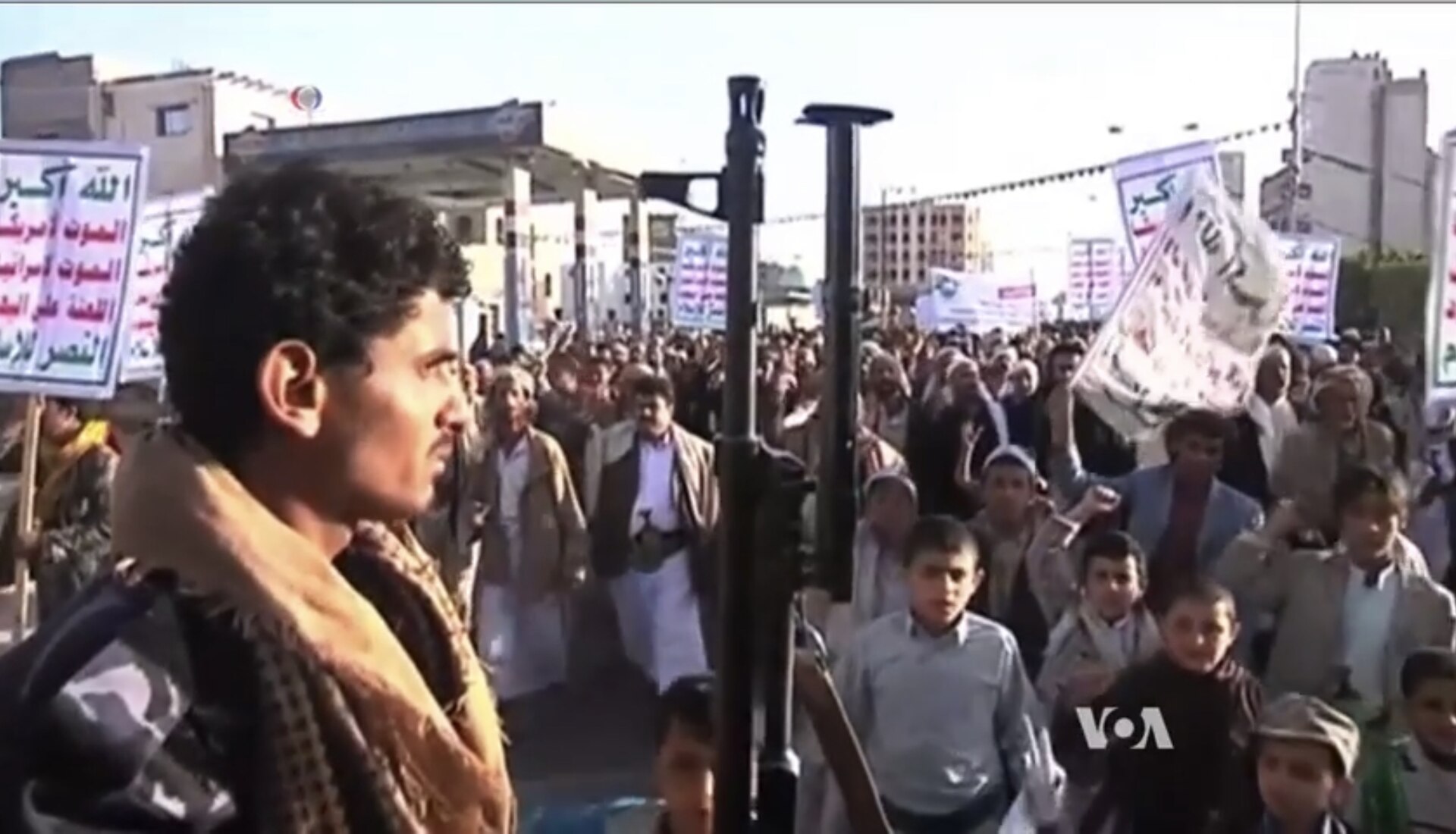
Houthi senior official Mohammed Al-Bukhaiti warned in September that any direct military intervention by Turkey or Pakistan would “trigger severe and immediate military retaliation” against both countries. Iran issued parallel warnings: when the pact was signed, Tehran said it “will not guarantee Saudi Arabia’s security,” and officials stated on 5 October that “the roar of our missiles” would reach all signatories.
Those threats have not been tested because the deployment has remained defensive. No Turkish or Pakistani aircraft has struck a Houthi target, and no signatory has claimed to be conducting operations beyond Saudi airspace. The adversary-side assessment appears to rest on the same distinction Fidan drew: a foreign air-defence battery on Saudi soil is reactive and does not, by itself, expand the war to a new state, while a foreign aircraft over Yemen carrying Turkish ordnance would be an act of war by Turkey against the Houthis and, by extension, a provocation to Tehran’s proxy network — a different set of consequences for all parties.
Iran’s operational response to the pact has tracked that distinction. Houthi missiles continued reaching Saudi airports through October, and the Terminal 4 strike on 11 October killed a Pakistani resident and injured 11 — a fact that tested the pact’s collective-defence threshold without triggering a military response from Islamabad beyond the defensive posture already in place. The strike pattern did not change after the committee’s decision to “activate collective deterrence,” and neither the Houthis nor Iran treated the activation language as a military constraint on their operations.
On 11 October, Saudi Arabia, Egypt, Pakistan, and Turkey issued a joint statement calling the Houthi attacks “a blatant violation of international law,” the first four-nation condemnation under the pact framework that included a non-signatory in Egypt. The statement’s language stayed within the diplomatic register — condemnation and solidarity, not retaliation — and its signatories included two countries with troops in Saudi Arabia and one, Egypt, whose military cooperation with Riyadh runs through separate bilateral channels that predate the Mecca agreement. Neither Turkey nor Pakistan accompanied the statement with any announcement of expanded rules of engagement or a shift from defensive to offensive operations.
Frequently Asked Questions
What is Article 92 of the Turkish constitution?
Article 92 requires the Turkish Grand National Assembly to authorise the deployment of Turkish armed forces abroad and the stationing of foreign forces in Turkey. The authorisation defines the scope, duration, and size of the deployment and must be renewed periodically. The government has used Article 92 to sustain Turkish military operations in Syria and northern Iraq, with annual renewals passing by simple majority. In the Mecca pact context, Article 92 means that Ankara cannot expand its current advisory and air-defence presence into a larger deployment without a parliamentary mandate, even if the treaty is ratified separately.
What bilateral agreements existed between Turkey and Saudi Arabia before the Mecca pact?
A 2010 defence cooperation agreement covers military training, advisory missions, equipment transfers, and joint exercises, and it provides the legal basis for Turkey’s pre-ratification deployments in 2026. After the Mecca pact was signed on 7 August, Turkey, Saudi Arabia, and Pakistan held their first formal trilateral meeting — foreign and defence ministers together with military chiefs — in Istanbul on 31 August, according to the Oman Observer. The three countries’ foreign ministers then convened an urgent follow-up meeting on 24 September to arrange the joint military-chiefs session that took place in Riyadh the following day. The bilateral 2010 framework has therefore operated in parallel with, not instead of, the new trilateral architecture.
Has any Mecca pact signatory offered to conduct offensive operations against the Houthis?
No signatory has publicly committed to striking Houthi launch sites in Yemen or conducting combat operations beyond Saudi airspace under the pact framework. Islamabad has stated that combat operations remain a Saudi responsibility. Trump called the Turkish and Pakistani deployments “good” on 7 October, according to Gulf News, but did not commit US offensive support, and the joint statement issued on 11 October by Saudi Arabia, Egypt, Pakistan, and Turkey condemned the attacks without announcing retaliatory action against Houthi positions.
How did Pakistan’s parliament vote on the 2015 Saudi coalition request?
Pakistan’s parliament voted in April 2015 against joining the Saudi-led coalition in Yemen, despite Riyadh’s financial support and a direct request from Saudi leadership. The vote established a precedent for Islamabad’s position on offensive Gulf operations that has persisted through the September 2025 bilateral defence pact and the August 2026 Mecca agreement: Pakistani troops deploy to Saudi territory to defend it, not to fight across the border in Yemen. The 2026 deployment maintains that distinction in both its mandate and its positioning.
What weapons have the Houthis used against Saudi airports since 6 October?
The Houthis have used a combination of ballistic missiles and cruise missiles against Saudi airports. The coalition reported intercepting two ballistic missiles aimed at Riyadh on 8 October, and the Houthis described their KKIA strikes variously as ballistic missiles and cruise missiles, with Al Jazeera and GDN reporting both designations on 9 October. The 10 October strike on KKIA killed 12, according to Al Jazeera; a subsequent BBC report raised the toll to 13 after confirming an Indian victim’s death. Wounded were reported at 309 by Al Jazeera and 308 by BBC. The European Union Aviation Safety Agency widened its Saudi airspace warning on 9 October in response to the escalating threat.