
RIYADH — Saudi Arabia spent billions to own the world’s sports calendar. The UCI just pulled an Olympic qualifier from Riyadh because athletes cannot safely get there.
The 2026 UCI Urban Cycling World Championships — covering BMX Freestyle Park, BMX Flatland, and Trials — was canceled on October 16 after the UCI and the Saudi Cycling Federation jointly concluded that “recent developments in the region” made the event unviable. Australia’s national cycling federation had already withdrawn, citing “the unpredictable security situation, with military strikes and reprisal attacks.” Canada’s government was advising against non-essential travel to Saudi Arabia, and Canadian BMX freestyle rider Jeffrey Whaley said what the governing bodies would not: “I control my flairs and backflips. I do not control the war over there.”
The cancellation is the third major international sporting event pulled from Saudi Arabia since March: Formula 1 scrapped both its Gulf races, and the Asian Tour indefinitely postponed a $5 million golf tournament on the same day. Vision 2030 assembled what a Play the Game study catalogued as 312 sponsorship deals across 21 sports — a FIFA 2034 World Cup secured as sole bidder, approximately $5 billion in sovereign wealth poured into LIV Golf, and hosting rights stretching from Formula 1 to the WTA Finals. The entire strategy rested on one premise: that Riyadh would be perceived as safe, prestigious, and open for business. The closure of King Khalid International Airport after a missile strike that killed at least 12 people has made that premise indefensible.
Table of Contents
- What Did the UCI Cancel in Riyadh?
- Three Cancellations in Seven Months
- How Much Has Saudi Arabia’s Sports Portfolio Lost?
- Why Can International Federations No Longer Absorb the Risk?
- The Airport Is the Bottleneck
- What Remains on Riyadh’s Calendar?
- Can Vision 2030’s Sports Strategy Survive the War?
- Frequently Asked Questions
What Did the UCI Cancel in Riyadh?
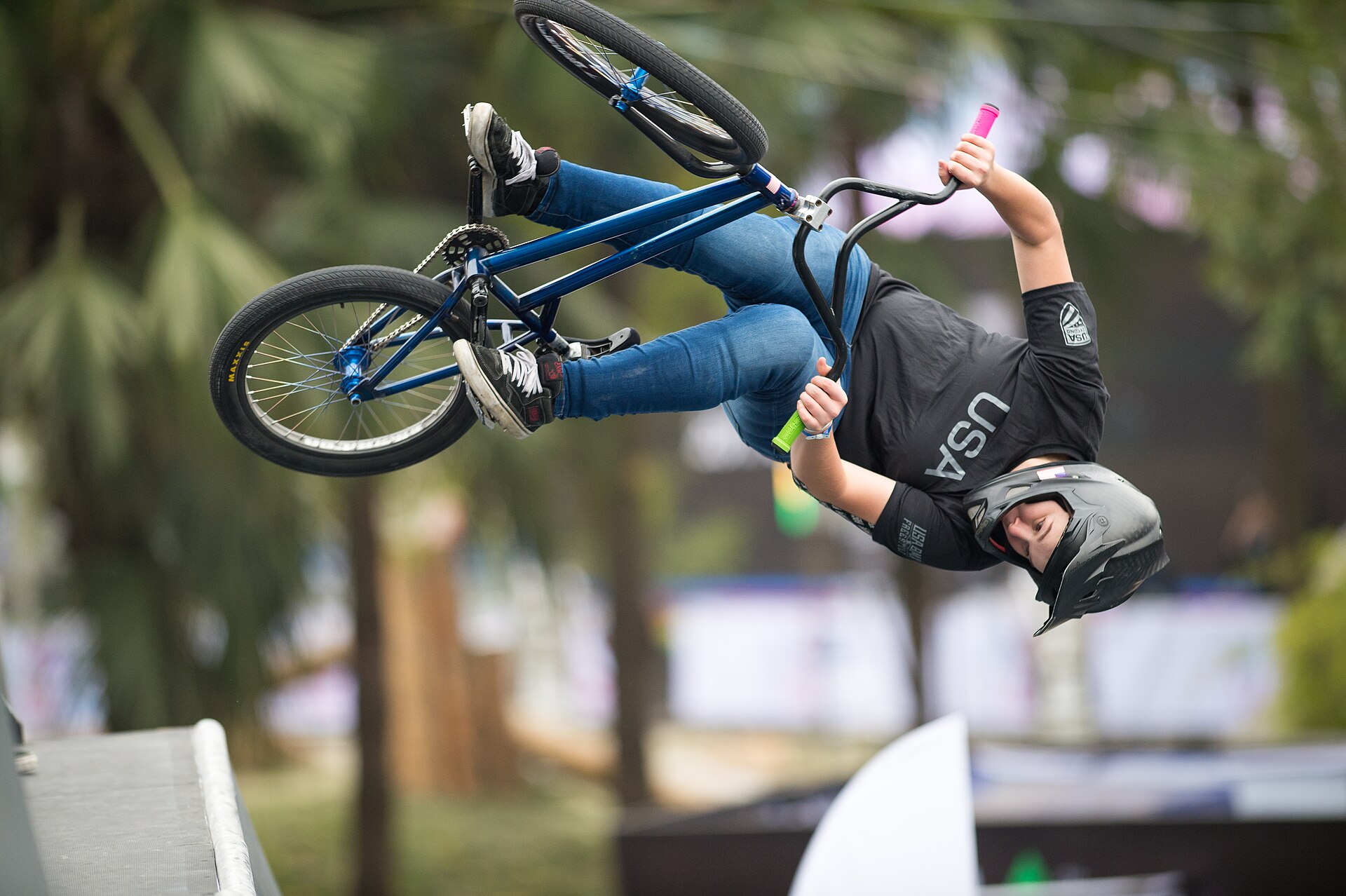
The UCI canceled the 2026 Urban Cycling World Championships, a BMX Freestyle Park, Flatland, and Trials event scheduled for November 3–7 in Riyadh. Two male and two female athletes were set to earn Olympic qualification berths for BMX Freestyle Park at the 2028 Los Angeles Games. The UCI announced the cancellation on October 16 after what it described as a joint assessment with the Saudi Cycling Federation.
The event had recent precedent. In November 2025, the same championships drew more than 230 riders from 40 countries to Riyadh — one of the largest gatherings in the discipline’s history. The UCI had announced Riyadh as host for both the 2025 and 2026 editions back in 2023, as part of a broader Middle East hosting expansion that also included Al Ula for the 2028 Gravel World Championships and Abu Dhabi for the 2028 Road World Championships. The decision to bring Olympic-qualifying events to Saudi Arabia was a strategic bet — and one that, twelve months after the 2025 success, the UCI could no longer honour.
AusCycling’s withdrawal was the public breaking point. The Australian federation stated it “cannot justify exposing our athletes and staff to these risks” of the “unpredictable security situation, with military strikes and reprisal attacks.” Multiple other national federations were close to or had begun their own withdrawals when the UCI pulled the event. The cascade was moving faster than the calendar.
The Middle East briefing 3,000+ readers start their day with.
One email. Every weekday morning. Free.
The UCI’s official statement deserves attention for what it does not say. The event “will not proceed” following “a joint assessment of recent developments in the region.” The federation “reaffirmed Saudi Arabia’s commitment to developing cycling and hosting future international events.” There is no mention of Houthis, no mention of missile strikes, no mention of the airport closure.
The cancellation was real; the language was designed to leave the commercial relationship intact. As Escape Collective’s Iain Treloar noted before the cancellation, the UCI was “caught in a difficult position because of its aggressive pursuit of World Championship bids in the Middle East.” The diplomatic phrasing confirmed it.
Four Olympic berths are now in limbo. The UCI said it would “update shortly on the sporting consequences,” but as of October 18, no replacement event or alternative qualification pathway has been announced. For the athletes who spent the year training for a shot at LA 2028 through Riyadh, the question is not whether they are good enough — it is whether the governing body can find them a venue that is safe enough.
Three Cancellations in Seven Months
The UCI’s decision did not happen in isolation. It is the third cancellation or indefinite postponement of a major international sporting event in Saudi Arabia since March 2026, and it landed on the same day as a fourth.
On March 14, Formula 1 canceled both the Saudi Arabian Grand Prix in Jeddah (originally scheduled for April 17–19) and the Bahrain Grand Prix, citing the broader Middle East conflict. FIA President Mohammed Ben Sulayem referenced safety and expressed hope for a “swift return to stability in the region.” No replacement races were scheduled for those weekends. The support series — Formula 2, Formula 3, and F1 Academy — were also pulled.
On October 16 — the same day as the UCI cancellation — the Asian Tour indefinitely postponed the PIF Saudi International, a $5 million golf tournament at Riyadh Golf Club that had been scheduled for November 18–21. The organisers cited “organisational and logistical challenges,” a phrase notable for how carefully it avoids the word “security.” No new date has been set.
Then there is the Six Kings Slam. Riyadh Season’s marquee tennis exhibition — featuring Jannik Sinner, Carlos Alcaraz, Novak Djokovic, Alexander Zverev, Taylor Fritz, and Alex de Minaur at the ANB Arena — was postponed from its original October 21–24 dates to December 27–30. Organisers used the same formulation: “organisational and logistical challenges.” The event, a Netflix-backed spectacle designed to showcase Riyadh as a global entertainment capital, was quietly moved to the last weekend of the year.
And separately, PIF confirmed in May 2026 that it would stop funding LIV Golf after the 2026 season, citing investment priorities and “current economic conditions.” The total PIF investment in LIV Golf since its 2022 launch: approximately $5 billion. The league has hired financial advisers to seek alternative backers, but the sovereign fund’s withdrawal from its highest-profile sports property signals a broader retrenchment.
Three different governing bodies — the FIA, the UCI, and the Asian Tour — reached the same conclusion independently over seven months. Riyadh Season’s own organisers pushed their flagship tennis event to December. PIF is pulling out of the sports investment that defined its global brand. These are not scheduling conflicts; they constitute an accumulating institutional record — one that every future host-city bid from Saudi Arabia will have to address.
How Much Has Saudi Arabia’s Sports Portfolio Lost?
Since March 2026, Saudi Arabia has seen at least three major international sporting events canceled or postponed indefinitely, with Formula 1 alone estimating $190–200 million in combined revenue losses from the Bahrain and Saudi Arabian Grand Prix cancellations. PIF has separately confirmed it will end its approximately $5 billion LIV Golf investment after the 2026 season. The financial damage is significant, but the reputational cost may be larger.
| Event | Status (2026) | Key Financial Metric |
|---|---|---|
| Saudi Arabian & Bahrain GPs (F1) | Canceled, March 14 | ~$107M/year combined promoter fees to F1; est. $190–200M revenue loss |
| LIV Golf (PIF funding) | Ending after 2026 season | ~$5 billion total PIF investment since 2022 |
| UCI Urban Cycling Worlds (Riyadh) | Canceled, October 16 | 4 LA 2028 Olympic berths in limbo |
| PIF Saudi International (golf) | Postponed indefinitely, October 16 | $5 million prize fund; no new date |
| Six Kings Slam (tennis) | Postponed: Oct 21–24 → Dec 27–30 | Undisclosed (Netflix-backed) |
| Asian Winter Games (NEOM Trojena) | Moved to Almaty, Kazakhstan | Undisclosed |
| The Line (NEOM) | Construction halted May 2026 | Pushed past 2030 |
The F1 numbers come from a Guggenheim analyst estimate cited by Greenberg Traurig in an April 2026 legal briefing on the conflict’s contractual impact across Gulf industries. Bahrain and Saudi Arabia together paid approximately $107 million per year in promoter fees to Formula One Management — money that F1 has not been able to replace with alternative venues for the canceled race weekends.
The LIV Golf withdrawal is a different kind of loss. PIF is not pulling out because of a scheduling conflict or a safety assessment — it is pulling out because the economics no longer justify the commitment. The timing, though, is revealing: the sovereign fund that defined Saudi Arabia’s global sports brand is retreating from its most visible property at the same moment that governing bodies are pulling events from Saudi venues. The convergence tells a story that neither cause alone would tell.
Why Can International Federations No Longer Absorb the Risk?
Sports governing bodies face direct liability if athletes are harmed at sanctioned events that proceed over safety objections from member federations. AusCycling’s formal withdrawal — citing “military strikes and reprisal attacks” — created a legal and reputational tripwire that made cancellation the UCI’s only defensible option. Once a national federation says it cannot guarantee athlete safety, the sanctioning body is exposed.
The legal landscape has shifted underneath every hosting contract in the Gulf. Greenberg Traurig published an analysis in April 2026 — after the F1 cancellations but before the UCI’s decision — warning that standard force majeure clauses may not cover war, and that airspace closures alone are often not standalone contractual triggers. Broadcast sub-license force majeure terms, the firm noted, can differ from the primary hosting contract, creating a gap between what the host thinks is covered and what actually is.
Morgan Lewis reached a similar conclusion in a separate April 2026 briefing. Traditional business interruption coverage under property policies, the firm found, is “unlikely to respond to cancellation or boycott-related losses without physical damage.” Event cancellation policies may offer better protection — but war exclusions are standard across those policies. The legal architecture that was supposed to protect hosts and federations from exactly this scenario has a structural gap at its center: it was not designed for a war that falls short of a declared conflict but exceeds the threshold of “regional instability.”
This matters because it changes the calculation for every future event. An insurer reviewing a Saudi hosting bid will now see a pattern: F1 in March, UCI in October, the Asian Tour in October, the Six Kings Slam pushed to December. Each cancellation becomes precedent for the next risk assessment. The cost of insuring a major event in Saudi Arabia will rise — and for some events, coverage may not be available at all.
Vision 2030’s broader exposure as a systemic risk is not limited to oil markets and sovereign debt. It now extends to the insurance tables that underwrite every stadium, every broadcast deal, and every athlete’s travel policy.
The UCI’s diplomatic language — “reaffirmed Saudi Arabia’s commitment to developing cycling and hosting future international events” — is designed to keep the door open. The commercial relationships are too valuable to sever formally. But the precedent is set. The next time a national federation reviews a Saudi hosting bid, it will ask a question that did not need asking twelve months ago: can our athletes get there, and can we guarantee they get home?
The Airport Is the Bottleneck
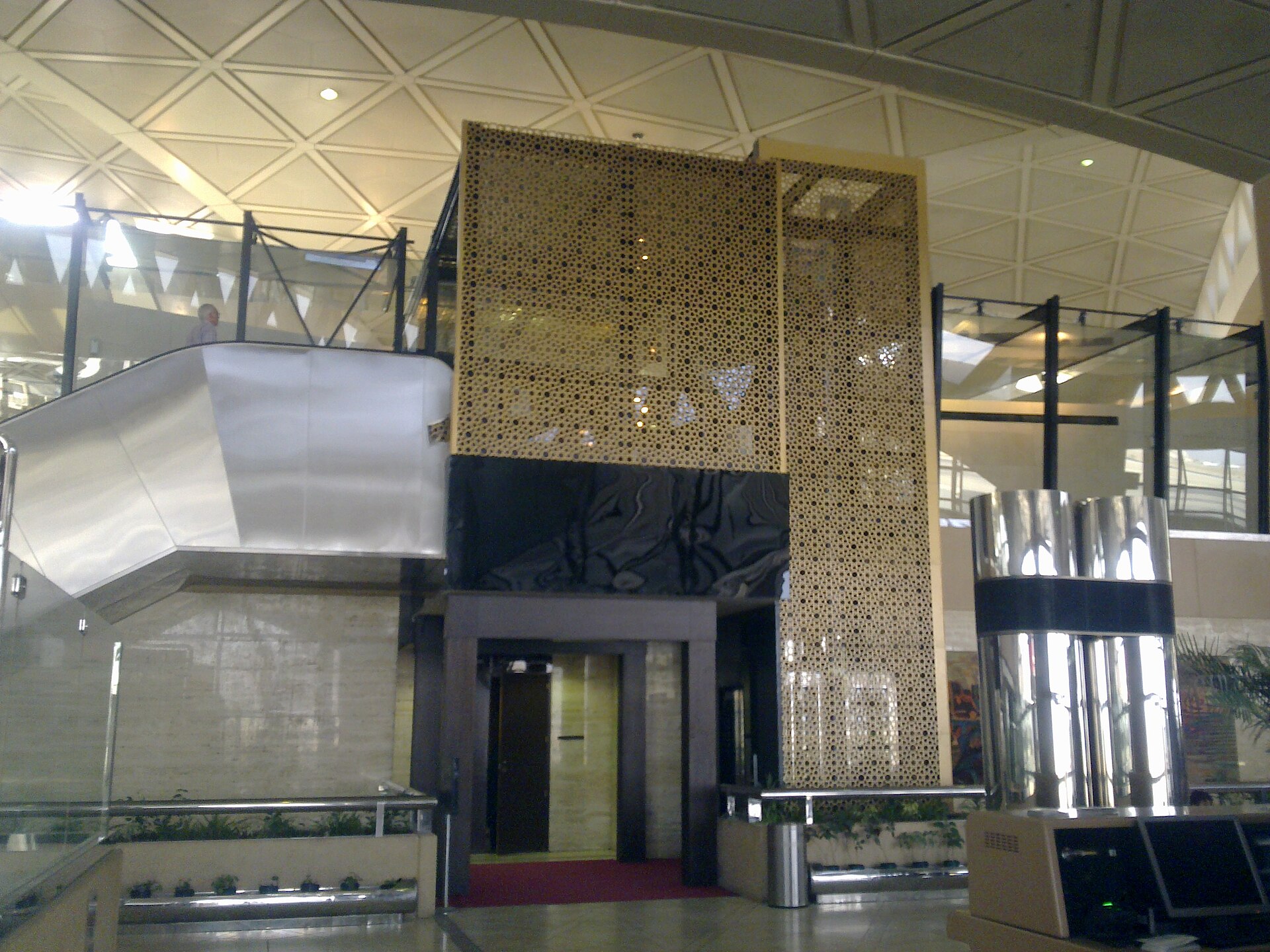
Everything runs through King Khalid International Airport. On October 10, a Houthi missile strike on the airport killed at least 12 people and wounded more than 300, according to Saudi civil aviation authorities. A Saudia Airbus A320 was destroyed on the tarmac, killing its pilot and two others. The Saudi civil aviation authority closed the airport “until further notice.”
A NOTAM extended the closure through at least 21:00 GMT on October 17, and the reopening has been uneven. Etihad Airways suspended Riyadh flights through at least October 19; Air France-KLM suspended service through the end of October. Delta Air Lines, which had planned to launch a new Riyadh route, postponed its inaugural flight to March 2027. Even airlines that intend to return are doing so cautiously, operating under rolling NOTAMs rather than normal scheduling.
The day after the attack, Houthi military spokesperson Yahya Saree renewed warnings to “all airlines, experts, employees, workers and travellers against using Saudi airports and airspace” — excepting only Mecca and Medina airports. The Houthis declared Saudi airports “potential targets.” That declaration did not create the risk; it formalised it. And it did so in a way that no airline, no federation, and no insurer can pretend not to have heard.
The airport is not a peripheral issue for the sports calendar — it is the load-bearing infrastructure for every event Vision 2030 has brought to Riyadh. The UCI Urban Cycling Worlds needed 230-plus international athletes, their teams, and their equipment to fly in. The PIF Saudi International needed a field of touring professionals. The Six Kings Slam needed six of the world’s top tennis players and a production crew.
None of this works if the question of whether the airport will be open is answered by a rolling NOTAM renewed in 24-hour increments. An event that requires international air travel cannot survive on the same airport status as a weather delay.
What Remains on Riyadh’s Calendar?
Riyadh Season is still scheduled to open on October 21 for a ten-week entertainment programme. The Future Investment Initiative’s tenth edition (FII10) is planned for October 26–29 at the King Abdulaziz International Conference Centre with more than 550 speakers and 10,000 expected attendees. The Six Kings Slam has been pushed from October to December 27–30. No sporting event of international scale is confirmed to proceed in Riyadh on its originally scheduled date.
Reuters reported that Saudi Arabia is preparing a hybrid format for FII10, giving executives the option to attend remotely. Some participants may be routed through airstrips outside Riyadh or in neighbouring Gulf states and then driven to the capital. The contingency planning is itself a concession: a summit designed to project Saudi Arabia’s economic centrality — themed “The Power of Legacy” — is being redesigned around the possibility that people cannot fly to Riyadh.
The broader Vision 2030 infrastructure programme has taken parallel damage. NEOM’s The Line had construction halted in May 2026 and will not meet its original completion target, according to analysis by CSIS. The Asian Winter Games relocated to Almaty, Kazakhstan, the Mukaab construction was suspended, and the LEAP tech summit moved from April to August. Each was a component in a strategy that required every element to function simultaneously — a sports calendar to attract visitors, an airport to receive them, a skyline to impress them, and a security environment that made all of it possible.
PIF’s own position has weakened. Carnegie Endowment nonresident scholar Andrew Leber noted in May 2026 that Vision 2030 risks stalling in its “home stretch,” with PIF assets under management plateauing since 2024 and foreign tourist spending growing only approximately 4 percent in 2025 — a sharp decline from years of double-digit post-pandemic growth. The fund that was supposed to bankroll the transformation is running out of momentum at the moment when the transformation is running out of venues.
Can Vision 2030’s Sports Strategy Survive the War?
Vision 2030’s sports acquisition strategy assumed that Saudi Arabia would be perceived as a safe global destination. The accumulating institutional record — Formula 1 in March, the UCI and Asian Tour in October, the Six Kings Slam pushed to December — constitutes a formal pattern of governing bodies concluding that Saudi Arabia does not currently meet that standard. The strategy and the war are running on incompatible timelines, and no amount of money can reconcile them.
CSIS analysts Michael Ratney and Adel Hamaizia wrote that the 2026 conflict has made it “difficult to attract the investors and tourists Saudi Arabia hopes will fuel its transformation.” They noted that Vision 2030’s success “depends in no small measure on two factors largely beyond Saudi Arabia’s control.” The sports strategy is the clearest expression of that dependency. Saudi Arabia controls the money, the venues, and the hosting bids — it does not control whether the Houthis will fire on the infrastructure those events require.
The FIFA 2034 World Cup is the biggest asset remaining in the portfolio — and the most distant. Saudi Arabia was awarded the tournament as the sole bidder after Australia withdrew. Eight years separate the present from that event, and the war may be over long before the first match is played. But institutional memory is long, and when the next international federation evaluates a Saudi proposal, it will have the 2026 record in front of it: three cancellations, multiple postponements, a closed airport, and a string of euphemisms about “organisational and logistical challenges” that everyone understood to mean something else entirely.
The tragedy is not that Vision 2030 failed to acquire the sports calendar — it acquired it comprehensively. The tragedy is that the acquisitions — the races, the championships, the hosting rights, the LIV Golf investment — have become liabilities. Each canceled event is not just a scheduling loss; it is a public institutional finding that Saudi Arabia is not currently a place where international sport can safely operate. Those findings accumulate, and they do not expire when the war ends.
In November 2025, more than 230 riders from 40 countries flew to Riyadh for the UCI Urban Cycling World Championships. They competed, collected their rankings, and flew home through King Khalid International Airport. Twelve months later, the same event in the same city was canceled because the airport where those riders had landed was shut — a missile strike had killed at least 12 people and destroyed a passenger jet on the tarmac.
Frequently Asked Questions
What happens to the four LA 2028 Olympic berths that were at stake in Riyadh?
The UCI stated on October 16 that it would “update shortly on the sporting consequences” of the cancellation, but as of October 18, no replacement event or alternative qualification pathway has been announced. Two male and two female BMX Freestyle Park Olympic slots remain unallocated. The UCI’s options include redistributing the berths to other qualifying events on the 2026–2027 calendar, creating a standalone replacement qualifier at a different venue, or adjusting the point-based qualification criteria. The governing body has not indicated which approach it favours, leaving athletes who had planned their qualifying campaigns around the Riyadh event without a timeline.
Has the 2027 Asian Cup football tournament been affected?
Saudi Arabia is scheduled to host the 2027 AFC Asian Cup, and the tournament remains formally on track. The South China Morning Post reported on October 16 that while the UCI cycling championships and the PIF Saudi International golf tournament were affected by the Riyadh attacks, the Asian Football Confederation has not signalled any change to the 2027 Asian Cup schedule. The tournament is further out than the events that were canceled, and its timeline gives organisers and the AFC more room to assess whether conditions stabilise. However, it now sits inside the same institutional risk framework that forced three cancellations in seven months.
How does the UCI’s remaining Middle East hosting pipeline look?
The UCI announced its Middle East hosting expansion in 2023, and several events beyond Riyadh remain on the calendar. Al Ula is set to host the 2028 Gravel World Championships; Abu Dhabi is scheduled for the 2028 Road World Championships and the 2029 Track World Championships. Notably, the 2026 UCI Esports World Championships — originally part of the Middle East programme — had already been quietly moved from the region to Copenhagen before the Riyadh cancellation was announced. The pipeline is intact on paper, but the Riyadh precedent will shadow every remaining commitment.
What is Iran’s stated position on the conflict’s impact on Saudi events?
Iranian Foreign Ministry spokesman Esmaeil Baghaei said on October 12 that Tehran is “deeply concerned” by escalating attacks between the Houthis and Saudi Arabia and that Iran is “ready to help broker dialogue.” Iranian President Masoud Pezeshkian stated in September 2026 that “We are not at war with Saudi Arabia.” Foreign Minister Abbas Araghchi spoke by phone with his Saudi counterpart, framing Iran as a potential mediator. Tehran’s official posture separates Iran from the Houthi campaign — a distinction that Saudi Arabia and its allies have publicly rejected.
Are other Gulf states facing similar sports cancellations?
Formula 1 canceled the Bahrain Grand Prix alongside the Saudi race in March 2026, and the broader Middle East conflict has affected event planning across the Gulf Cooperation Council. However, the concentration of cancellations in Saudi Arabia specifically — rather than in the UAE, Qatar, or Bahrain — reflects the fact that Houthi strikes have targeted Saudi cities and infrastructure directly. Abu Dhabi’s UCI hosting commitments for 2028 and 2029 remain in place, and Qatar’s event calendar has not faced comparable disruption. The risk premium is currently specific to Saudi Arabia’s security environment rather than a blanket Gulf-wide phenomenon.