
RIYADH — Saudi Arabia accepted a phone call from Iran on 11 October while Houthi missiles were still hitting Saudi airports and oil infrastructure. The call did not stop the next strike, or the one after that. It could not have. Iran is the interlocutor, but the Houthis are the ones firing, and no agreement between Riyadh and Tehran can bind a group that Tehran itself cannot compel.
That is the structural problem at the centre of every diplomatic effort now underway. The kingdom proposed talks in Oman in July; the Houthis refused. Iran offered to mediate; Saudi Arabia said it had not asked. Araghchi offered “any form of support” to start dialogue; Krimly accused Iran of arming the group it offered to restrain. Each move generated a headline. None generated a mechanism that connects a signature in a foreign ministry to a ceasefire on the ground.
Four matters are at issue: the principal-agent gap that makes Saudi-Iran diplomacy structurally unenforceable, the minimum asks each side has placed on the table, the precedent — or lack of it — for the arrangement Iran is proposing, and what Riyadh’s decision to talk at all signals to Washington, Tehran, and the Houthis themselves.
Table of Contents
- The Call That Changed Nothing
- What Did Iran Actually Offer?
- The Principal-Agent Gap
- Why the Beijing Deal Contained No Houthi Commitment
- What Does Each Side Want?
- Why Riyadh Agreed to Talk
- Krimly in Cairo — The Accusation and the Admission
- Can Anyone Deliver the Houthis?
- What Would a Ceasefire Even Look Like?
- Frequently Asked Questions
The Call That Changed Nothing
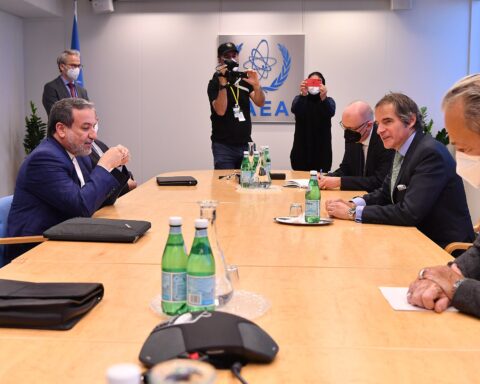
On 11 October, Iranian Foreign Minister Abbas Araghchi called Saudi Foreign Minister Prince Faisal bin Farhan — their first publicly reported contact since the Houthis escalated attacks on the kingdom. Saudi state media confirmed the call took place, according to Al Jazeera. Araghchi told Faisal that “insisting on a military approach and disregarding a political solution would only further complicate the situation,” according to the same report.
The timing was not incidental. The day before, a Houthi strike on King Khalid International Airport in Riyadh killed 13 people and wounded between 308 and 309 others, according to Al Jazeera and the BBC. An Indian national’s death raised the initial toll of 12 to 13, the BBC reported on 11 October. The airport remained closed. A US citizen was among the dead, Secretary of State Marco Rubio confirmed on CBS News.
The call produced no ceasefire, no joint statement, and no follow-up meeting. By 14 October, Reuters and AP reported that a Houthi strike had caused a fire “spreading across several floors” of Aramco’s Dhahran headquarters, damaging offices including the CEO’s. The Saudi energy ministry described only “a limited fire at an administrative building” with no deaths or injuries at the site. Saudi Civil Defence reported four people injured in Riyadh from debris of intercepted missiles the same day.
The Middle East briefing 3,000+ readers start their day with.
One email. Every weekday morning. Free.
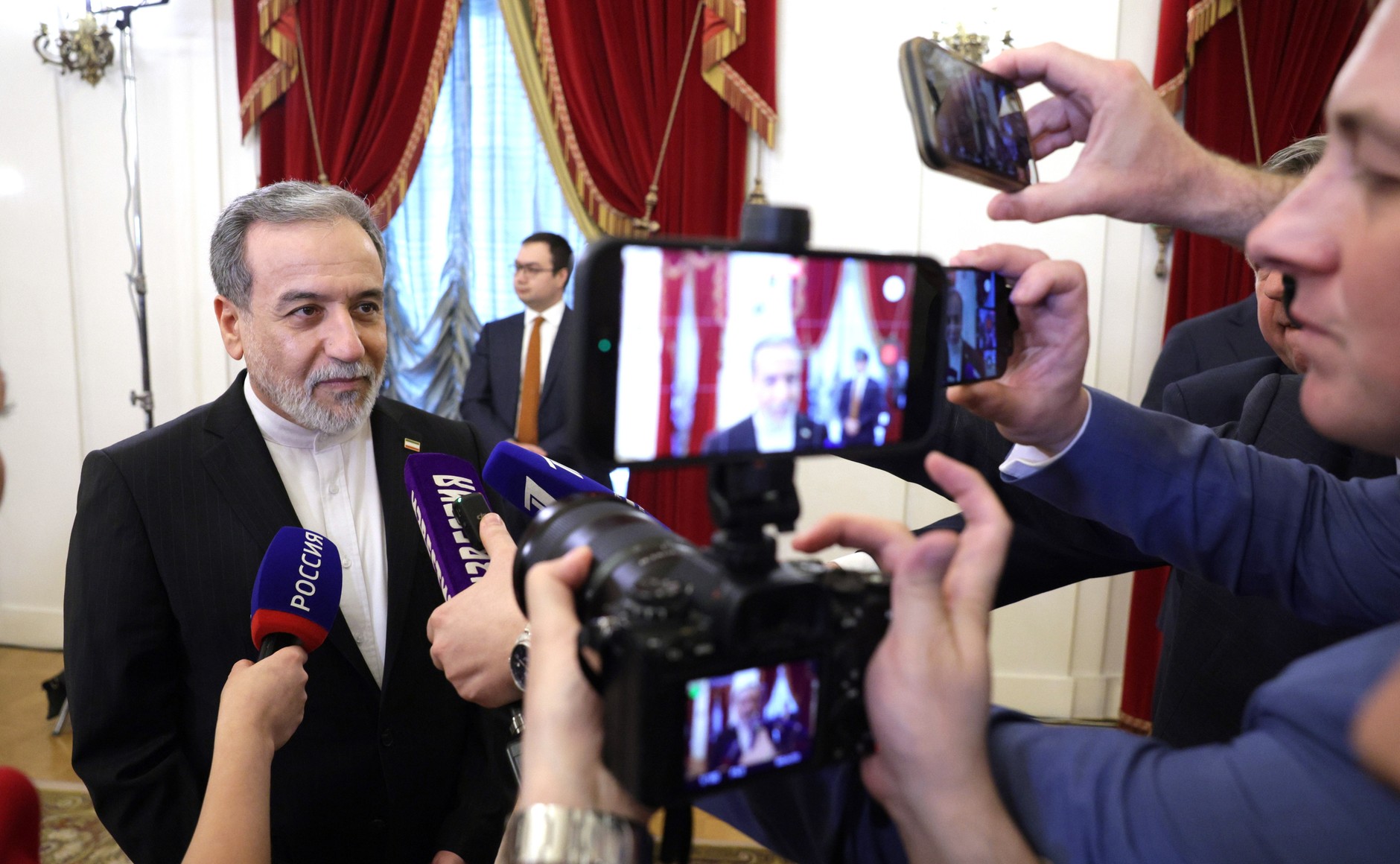
Iran’s FM spokesman Esmaeil Baghaei repeated the mediation offer at a Monday briefing: “We do not want hostilities to continue between two Muslim countries,” according to BERNAMA and Al Jazeera. As of 17 October, Araghchi confirmed that Saudi Arabia had not responded to the mediation offer, Free Malaysia Today reported.
What Did Iran Actually Offer?
Iran’s offer, stripped of its diplomatic framing, amounts to this: Tehran will talk to the Houthis on Riyadh’s behalf and “provide any form of support” to start a Saudi-Houthi dialogue, as Araghchi put it on 11 October, according to Al Jazeera. On 17 October he added that Iran supports “an inclusive and comprehensive political process as the only practical and sustainable way to resolve the issue,” and offered what amounted to a threat dressed as philosophy: “either we build security together, or we will endure insecurity together,” Free Malaysia Today reported.
The language matters. “Inclusive and comprehensive” ties Yemen to the wider US-Iran confrontation rather than isolating it as a discrete ceasefire. Iran is not offering to stop the Houthis. It is offering to be the party through which any stop must pass — positioning itself, as Negar Mortazavi of the Center for International Policy told Al Jazeera, “as an indispensable party to a broader regional settlement.”
Tehran simultaneously denied involvement in the Houthi attacks. On 16 October, Iran rejected Saudi accusations of encouraging the escalation, according to CBS News. The two positions — denial of involvement and an offer to mediate the group Iran claims not to control — coexist without embarrassment. They are, in diplomatic terms, features rather than contradictions. A state that admits command authority over a proxy has legal exposure under international law. A state that claims mere influence can offer mediation without conceding liability.
The internationally recognised Yemeni foreign minister publicly criticised Iran’s mediation offer on 17 October, CBS News reported — a signal that Sanaa’s legitimate government does not want Tehran granted a mediator role, and an indication of how many parties hold veto power over any arrangement.
The Principal-Agent Gap
The core problem is not whether Iran wants to help. It is whether Iran can deliver what it promises. Every major analyst who has studied the Iran-Houthi relationship describes Tehran as a supplier and influencer, not a command authority.
Andreas Krieg of King’s College London told Al Jazeera that “Ansar Allah is not simply an Iranian proxy awaiting instructions.” Iran “can facilitate talks and potentially influence the intensity of escalation,” he said — language that concedes influence while denying control. Ali Alfoneh of the Arab Gulf States Institute in Washington wrote that Iran needed “considerable time and effort” to persuade the Houthis to act against Saudi Arabia, and that “one could argue that, in the end, Ansarullah acted more out of self-interest than to accommodate Tehran,” according to the Christian Science Monitor.
The evidence supports this reading. The Houthis halted Red Sea attacks on Israeli-linked shipping after the October 2025 Gaza ceasefire without an apparent Iranian directive. They then stayed on the sidelines for months after the 28 February US-Israeli strikes on Iran — again without visible instruction from Tehran.
Laurent Bonnefoy of CNRS/Sciences Po noted that Houthi leaders “appeared to disregard” reports that Iran asked them in July 2026 to close Bab el-Mandeb, according to Asia Times. The IRGC-linked Tasnim news agency urged Ansarullah in early September to see itself as part of a larger Axis system — which, as the Christian Science Monitor observed, suggests the group was not already integrated into one.
Saudi Arabia proposed a meeting in Oman in July 2026 to end the escalation. The Houthis refused, according to AP. Iran was not part of that channel. The refusal came from the actor, not the patron.
This is the gap that no phone call can close. A ceasefire requires enforcement. Enforcement requires command authority. Iran has influence. The distance between influence and authority is the distance between a diplomatic communiqué and a grounded missile.
Why the Beijing Deal Contained No Houthi Commitment
The 2023 Beijing agreement, which restored Saudi-Iranian diplomatic ties and reopened embassies, is frequently cited as a precedent for what diplomacy might achieve. It is a poor one. The deal contained no published Yemen-specific commitment, according to the Christian Science Monitor. A Saudi official told the Monitor at the time that the agreement produced “concrete commitments” on Yemen but would not disclose them. US envoy Tim Lenderking framed stopping arms smuggling as a condition, not an agreed term.
The adversary confirmation came in September 2026. At the margin of the UN General Assembly on 22 September, IRGC spokesman Hossein Mohebi said plainly: “The issue of Yemen was not on the agenda of the previous agreement.” He went further. Iran, he said, now demands “that the lifting of the blockade on Yemen be included in the agreement,” according to Middle East Eye. Yemen had not been part of the deal. It was now a new demand.
This is a significant admission. It means that when Iran signed the Beijing deal in 2023, it signed no Houthi-restraint commitment. Iran armed the war it offered to mediate — the pattern visible in the current crisis — was already embedded in the only major Saudi-Iran agreement of the past decade. The deal restored embassies. It did not restrain proxies. The distinction matters because anyone proposing a second Beijing-style agreement must explain what the first one actually bound Iran to do about Yemen. The answer, by Iran’s own account, is nothing.
What Does Each Side Want?
Saudi Arabia’s implied minimum is verifiable Iranian weapons restraint — not promises. The Houthis demand the lifting of the blockade on Houthi-controlled Yemen. Iran’s own price sits above both: sanctions relief, Hormuz access, and the release of billions in frozen US-held assets. No party has offered the concession the other requires to move.
Saudi Arabia has not publicly stated its minimum ask from Iran. It has, however, stated what it believes Iran is doing. Deputy FM Rayed Krimly, speaking at a briefing in Cairo on 15 October, accused Iran of encouraging Houthi escalation and continuing to arm the group in violation of UN Security Council resolutions, per AP — the full set of charges is detailed in the section below.
The implied Saudi minimum is verifiable restraint — a mechanism by which Iran demonstrates, not merely promises, that weapons transfers and operational support to the Houthis have ceased. Riyadh wants to talk to the Houthis directly, through Oman, not through Tehran.
The Houthi minimum is less ambiguous. Mohebi’s September statement at the UN — demanding the lifting of the blockade on Houthi-controlled Yemen — represents the price Iran has placed on the table on behalf of its ally. Military spokesperson Yahya Saree told aviation companies, workers and travellers to avoid Saudi airports and airspace “except those serving Mecca and Medina,” according to Middle East Eye. The exemption for the holy cities is the Houthis’ own red line — religious legitimacy they cannot afford to cross. Everything else, from Riyadh’s airport to Aramco’s headquarters, remains a target.
Iran’s own demand sits above both. Araghchi’s seven-day roadmap, presented via Qatar in September, asked for the US to lift its blockade, grant sanctions waivers, and release approximately $12 billion in frozen assets, according to Al Jazeera. The IRGC now wants Yemen added to any broader deal. For Riyadh, this means that even if it could negotiate a bilateral ceasefire with the Houthis, Iran has made that ceasefire contingent on a US-Iran agreement that does not exist and that Washington has paused until after the 3 November midterms.
Why Riyadh Agreed to Talk
The question is not rhetorical. Saudi Arabia took Araghchi’s call while publicly accusing Iran of arming the group that was killing Saudi civilians. The answer lies in the alternatives, or the absence of them.
The Wall Street Journal, citing officials, reported that Crown Prince Mohammed bin Salman has been moving between “heavily guarded palaces equipped with bunkers.” The same report said the kingdom is “running low” on interceptor missiles. Saudi authorities have not confirmed either claim. But Krieg of King’s College London observed that “even a layered defence system cannot create an impermeable dome over a country of Saudi Arabia’s size,” as reported in The Week’s summary of the WSJ reporting.
The economic pressure is documented. Saudi Arabia’s pre-budget statement projected real GDP falling 3.6 percent in 2026, driven by a 21.8 percent drop in oil activities, according to Reuters via Zawya. The revised 2026 budget deficit stands at 245 billion riyals, up from a budgeted 165 billion. CNN reported that the crown prince made two appeals to President Trump in September for US strikes on the Houthis. Both were declined. On 8 October, Trump said publicly that the US “will not be attacking Iran at any time prior to the midterm elections” on 3 November, according to The National.
Two appeals to Washington, both refused. A GDP forecast of negative 3.6 percent. Airport strikes that had killed at least 19 people across multiple attacks by 16 October, according to AP via CBS News. Aramco’s headquarters damaged. A revised deficit nearly 50 percent larger than planned. Under these conditions, taking a phone call from Araghchi is not capitulation. It is attrition management — an acknowledgment that the military track alone cannot stop the bleeding, and that Washington does not trust Saudi skies enough to intervene.
Krimly in Cairo — The Accusation and the Admission
Krimly’s Cairo briefing on 15 October was the most detailed Saudi public statement on the diplomatic situation since the escalation began. It contained two things that do not sit easily together: an accusation and an admission.
The accusation: Iran “continues to arm, train and support the Houthi militia” and “the escalation by the Houthis at this later stage of the conflict is encouraged by Iran,” according to AP. He added that Iran “does not seem ready to make the concessions needed in the wider war with the United States” and that “they don’t seem to be able to reach consensus on the needed solutions.”
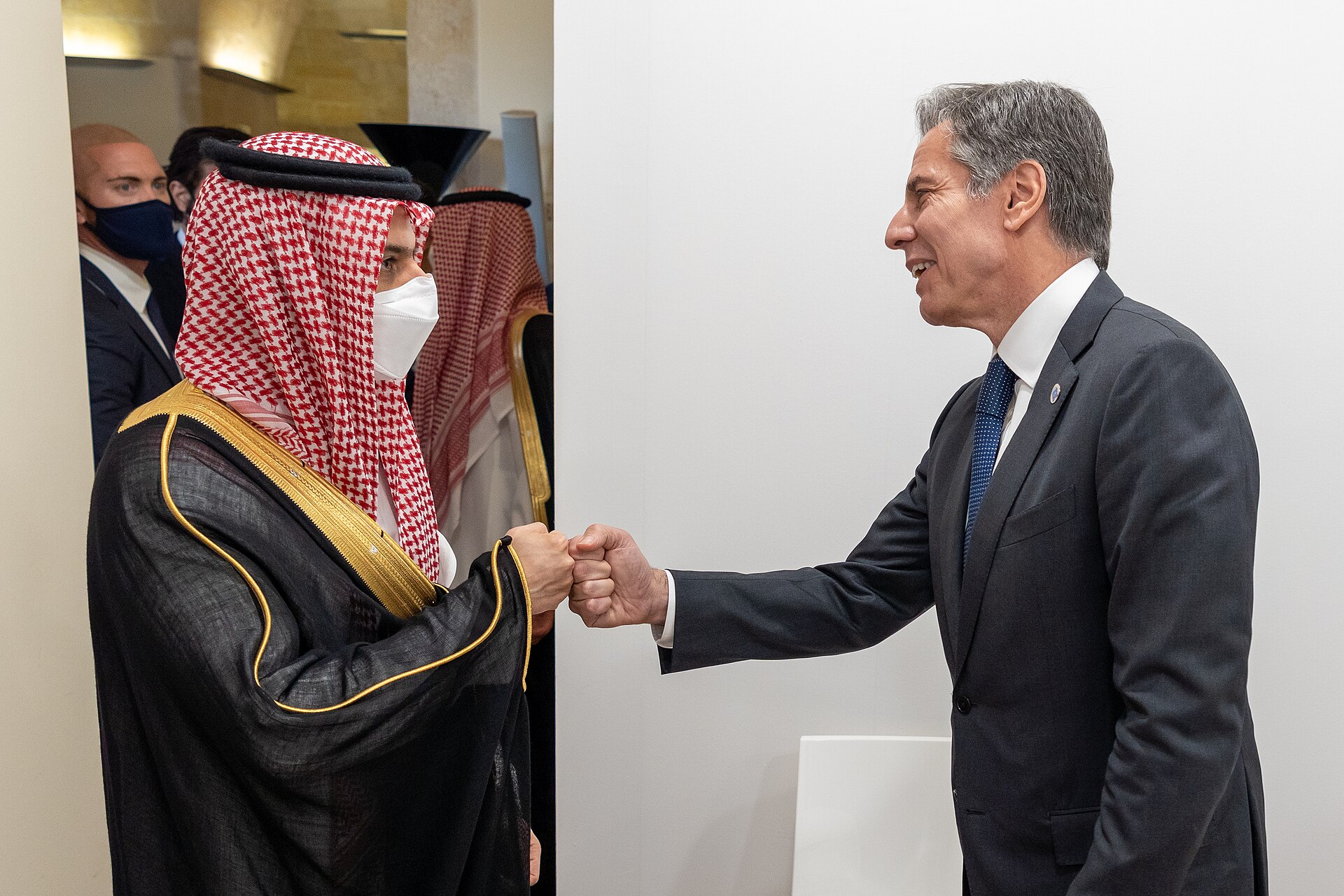
The admission: “We have not asked Iran to mediate.” And: “We maintain direct channels of communication with the Houthis.” Oman is a “facilitator,” not a “mediator.” Riyadh does not want Iran at the table. It wants Iran to stop arming the people already at the table — the Houthis with whom Saudi Arabia is trying, and so far failing, to negotiate directly.
This is a more sophisticated position than it first appears. By publicly rejecting Iran’s mediation while maintaining Omani-facilitated direct channels with the Houthis, Krimly drew a line between two diplomatic tracks. The first — Saudi-Houthi, via Oman — is the track Riyadh wants to pursue. The second — Saudi-Iran, via phone calls and press conferences — is the track Iran wants to advance. The contest between these two tracks is itself a form of negotiation. Whoever defines the architecture of talks defines who matters.
Can Anyone Deliver the Houthis?
No party has demonstrated the ability to deliver a Houthi halt. Iran deflected China’s direct request in September 2026, conditioning any restraint on the resolution of its own war with Washington. The Houthis have exercised operational autonomy on multiple occasions without Iranian direction — and, in at least one documented case, against it.
In September 2026, Reuters reported that China had privately asked Iran to help rein in the Houthis, following a Saudi appeal to Beijing. Iran’s response to China, according to Reuters via investinglive.com: “stability and peace in the region depend on ending the US-Israeli war on Iran.” Tehran did not say it could not restrain the Houthis. It said it would not, until its own war was resolved.
This is the closest thing to an honest answer anyone has offered. The Beijing deal’s guarantor asked. The patron state declined. The mechanism that was supposed to underwrite Gulf stability — Chinese leverage over Iran — produced a deflection, not a restraint.
The Houthis, for their part, have shown repeatedly that their decision cycle runs on local logic. They rejected the July 2026 Oman proposal. They claimed the 14 October strike on Aramco’s Dhahran headquarters.
They turned Iran’s Hormuz threat into operational reality while CENTCOM reported 135 ships turned around since the blockade began on 14 July, according to CBS News. Bonnefoy’s observation — that Houthi leaders disregarded Iranian requests — sits alongside Alfoneh’s assessment that the group acts “more out of self-interest than to accommodate Tehran.”
If Iran cannot deliver the Houthis to China, it cannot deliver them to Saudi Arabia. If Saudi Arabia cannot reach the Houthis through Oman, it cannot reach them through Tehran. And if Washington will not strike before 3 November, the military option is deferred indefinitely. Each channel leads to the same locked door.
The Makkah Defence Agreement, activated in early October when Prince Khalid bin Salman announced that its committee had agreed to “activate collective deterrence measures,” according to Al Jazeera, pledged Pakistani and Turkish forces alongside Saudi defenders. But deterrence requires the adversary to calculate consequences, and the Houthis have shown a tolerance for coalition airstrikes that suggests the calculation runs differently in Sanaa than it does in Riyadh. Yemen’s government launched an offensive on 4 October, CNN reported, and the coalition said 100 jets flew in Operation “Dawn of Yemen,” according to the Oman Observer. The Houthis responded not by negotiating but by hitting Aramco’s headquarters.
What Would a Ceasefire Even Look Like?
Any ceasefire framework must answer three questions that no party has yet addressed publicly: who signs for the Houthis, who verifies compliance, and what happens when it breaks. Without verifiable answers to all three, any agreement inherits the structural failure of the 2022 truce, which held for months with no enforcement mechanism — and then didn’t.
The 2022 truce, which collapsed in July of that year according to the BBC, was negotiated between the Saudi-led coalition and the Houthis with UN mediation. Iran was not a signatory. No enforcement mechanism existed beyond the parties’ willingness to observe it. The current escalation began with Houthi attacks on southern cities — Khamis Mushait, Abha, Taif — injuring 13 civilians on 14 September alone, according to the Khaleej Times. By 19 September, smoke rose near Riyadh’s main airport and the Houthis claimed what appeared to be their first strike on the capital in the current cycle, Reuters reported via the Kathmandu Post. A new ceasefire arrangement would inherit the same structural weakness unless it included something the old one lacked: a verification regime with consequences.
Iran’s proposed framework — “inclusive and comprehensive” — would embed Yemen inside the broader US-Iran negotiation. That means a Saudi-Houthi ceasefire becomes hostage to sanctions relief, Hormuz reopening, and the frozen assets Tehran is demanding. Mohebi’s insistence that Yemen be added to the agenda confirms this linkage. For Saudi Arabia, accepting Iran’s framework means accepting that its airports will remain targets until Washington and Tehran reach a deal that neither side appears close to reaching.
The alternative — direct Saudi-Houthi talks via Oman — has its own problems. The Houthis refused the July proposal. Their minimum demand, the lifting of the blockade on Houthi-controlled Yemen, requires Saudi Arabia to concede the one source of pressure it holds over the group. And Krimly acknowledged in Cairo that Iran does not seem “ready to make the concessions needed,” which suggests that even the direct track depends, at some level, on Iranian behaviour that Riyadh cannot control.
After thirteen silent days, Riyadh sent the alert — a reminder that the defensive infrastructure operates on reaction time, not diplomatic calendars. Iran offered to stop a war it has not stopped, and the offer remains on the table, unanswered, while the strikes continue. Iran’s mines reached the supertankers in the same week Araghchi proposed building security together. The juxtaposition is the argument.
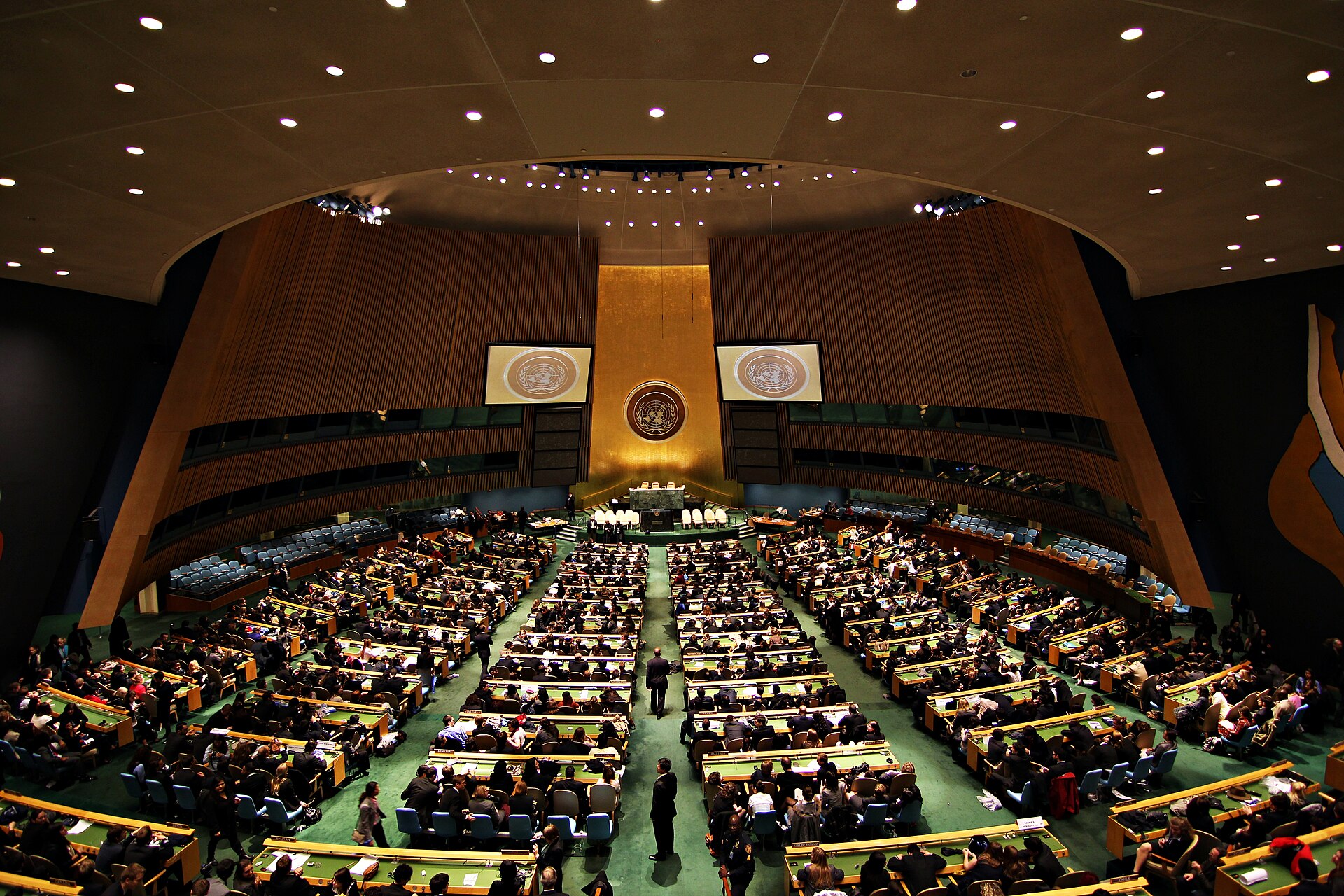
On 18 October, Saudi Arabia intercepted two ballistic missiles fired toward Khamis Mushait and a drone aimed at Riyadh, according to CBS News. The call was eight days old. The bombs kept coming.
Frequently Asked Questions
Has Saudi Arabia formally rejected Iran’s mediation offer?
Krimly said on 15 October that “we have not asked Iran to mediate,” which is a diplomatic non-rejection — Riyadh did not slam the door, but it did not walk through it either. As of 17 October, Iran confirmed Saudi Arabia had not responded. The distinction matters: a formal rejection would close a channel Riyadh may want to preserve as leverage in other negotiations, including over Hormuz and the broader US-Iran standoff.
Could Iran order the Houthis to stop attacking Saudi Arabia?
The available evidence suggests Iran has significant influence but not operational command. The precedent is mixed — the Houthis independently halted Red Sea shipping attacks after the October 2025 Gaza ceasefire, and independently disregarded reported Iranian requests regarding Bab el-Mandeb in July 2026. A direct Iranian order to cease all Saudi operations has no known precedent in the public record, and analysts including Alfoneh and Bonnefoy have documented cases of Houthi autonomy from Tehran’s preferences.
What role is Oman playing?
Oman is facilitating direct Saudi-Houthi communication, a role Krimly explicitly distinguished from mediation on 15 October. Muscat’s value is structural rather than substantive: it provides a neutral venue and a back channel between parties that cannot negotiate openly. Oman does not propose terms, guarantee outcomes, or bear enforcement responsibility — which is precisely why Riyadh accepted it as a facilitator while rejecting Iran in the same role.
Why have direct Saudi-Houthi talks failed so far?
Saudi Arabia proposed talks in Oman in July 2026; the Houthis refused. The structural barrier is reciprocal: the Houthis’ opening demand — lifting the blockade on Houthi-controlled Yemen — would require Riyadh to concede its main source of pressure on the group. Riyadh will not do so without verifiable Iranian weapons restraint. Each side is waiting for a concession the other will not make first.
Is the Iran-Saudi phone channel still active?
The 11 October call is the last publicly confirmed contact. Iran said on 17 October that Riyadh had not responded to the mediation offer. Whether lower-level contacts continue through intelligence or back channels is not publicly known. King Khalid Airport remained closed for days after the deadliest strike, and the diplomatic freeze and the operational tempo have moved in opposite directions since the call.