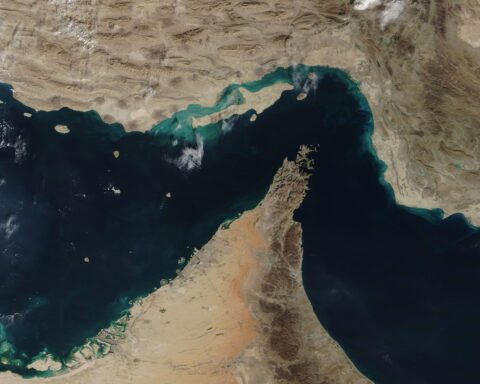
DUBAI — A second supertanker struck a naval mine in the Strait of Hormuz on Saturday, the navy of Iran’s Islamic Revolutionary Guard Corps said, setting off “a massive explosion in the vessel’s engine room” that “brought the ship to a halt,” according to the Iranian state broadcaster PressTV. The claim came less than a day after the IRGC said a first supertanker had hit a mine on Friday evening and caught fire, Tasnim News Agency reported.
Neither ship has been named, and no Western military or maritime authority has confirmed either strike. If the claims hold, the mine campaign has reached the very large crude carriers that move Saudi Aramco’s export cargoes out of Ras Tanura and Juaymah. Riyadh is relying on those cargoes to meet a November crude target of 10.5 million barrels per day, according to Enerdata, while the kingdom’s 2026 budget deficit has been revised to 245bn riyals, Reuters reported via Zawya.
Table of Contents
What did the IRGC say happened to the two tankers?
The IRGC Navy’s account of the second incident, carried by PressTV, said the mine “triggered a massive explosion in the vessel’s engine room and brought the ship to a halt.” The statement added that the tanker “had switched off all its positioning and radar systems” and had been “deceived by the aggressor US military” into taking the route on which it was struck.
Tasnim, the news agency affiliated with the Guard, reported the first strike on Friday evening and said the vessel caught fire after hitting the mine. Both supertankers, according to Tasnim, were carrying “more than two million barrels of crude oil.” Tehran Times and Mehr News Agency ran the same IRGC Navy account on Saturday, Mehr under the headline “Oil Tanker explodes in Hormuz after hitting naval mine.”
The IRGC Navy also issued a warning that reached past the strait itself. Actions against vessels using unauthorised routes, it said in the statement reported by PressTV, “would no longer be confined to the Strait of Hormuz.” The language of authorised and unauthorised passage tracks the permit regime the Guard has sought to impose on Hormuz traffic, under which Tehran treats routes chosen without its coordination as hostile.
The Guard’s account places responsibility on Washington rather than on the mine. By saying the tanker had been “deceived by the aggressor US military” into its route, the IRGC Navy presented the strike as the cost of following US rather than Iranian guidance through the strait. Each of the four Iranian outlets that carried the second claim on Saturday (PressTV, Tasnim, Tehran Times and Mehr) attributed it to the IRGC Navy, and none cited a second source.
The Middle East briefing 3,000+ readers start their day with.
One email. Every weekday morning. Free.
Actions against vessels using unauthorised routes would no longer be confined to the Strait of Hormuz.
— IRGC Navy statement, via PressTV, 17 October 2026
The statements arrive alongside Tehran’s effort to present itself as a party to de-escalation, a posture detailed in the coverage of Iran’s two-track approach to mediation. Neither the PressTV nor the Tasnim reports gave the tankers’ names, owners, flag states or the condition of their crews, according to Anadolu Agency.
Why do supertankers change the Saudi calculation?
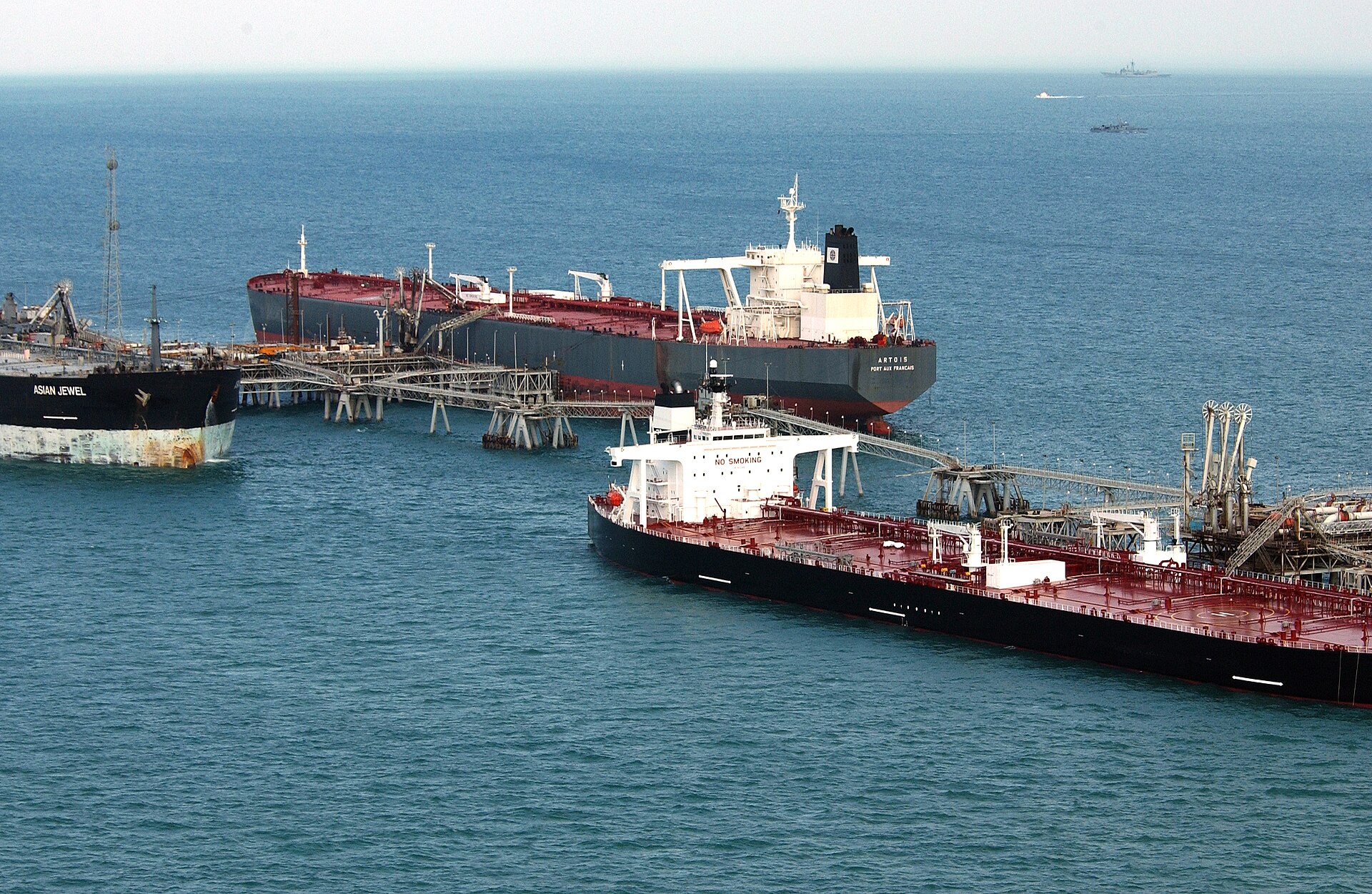
A very large crude carrier holds between 1.9 million and 2.2 million barrels of crude, according to the US Energy Information Administration. The IRGC’s description of cargoes above two million barrels places both ships at the top of that range, which means both were reported fully laden.
Saudi Arabia’s export system depends on that vessel class for its long-haul Asian trade. Saudi crude shipments fell to 6 million barrels per day in August, the International Energy Agency reported, as reported by Trend. The gap between August’s shipments and the November target reported by Enerdata is the volume Riyadh is now asking its terminals, and the tankers that call at them, to deliver.
The difference between a container ship and a supertanker is not only one of size. A loaded VLCC is a single cargo of crude whose delay or diversion registers in the export figures of the producer that loaded it. Under the IRGC’s account, two such cargoes were stopped in the strait inside roughly a day.
The damage the IRGC described differs between the two incidents. Tasnim said the first vessel caught fire after the mine strike, while the PressTV account of the second described an explosion in the engine room that brought the ship to a halt. Either outcome leaves a cargo of more than two million barrels stationary inside the strait, and no source has reported a salvage or towage operation for either vessel.
No source has identified the cargo owner of either tanker, and nothing in the IRGC statements indicates the oil was Saudi. The vessels sit in the same class, on the same route, as the tankers Aramco has been loading at its Gulf terminals since September, according to AGBI.
Aramco’s Loadings Run Through the Strait
Saudi Aramco resumed loading at Ras Tanura on 26 June after a four-month halt that followed the closure of Hormuz in February, CNBC reported. The restart brought the kingdom’s largest Gulf terminal back into service on a waterway that remained under Iranian threat.
The East-West pipeline, with a design capacity of about 7 million barrels per day, is the kingdom’s route around the strait to Yanbu on the Red Sea. It was suspended on 12 September and restarted on 22 September, according to Saudi Gazette via Zawya and Baird Maritime citing Reuters. During the shutdown, loadings at Ras Tanura and Juaymah rose to about 4 million barrels per day combined, AGBI reported, with four VLCCs loading at Ras Tanura in a single day.
AGBI described the shift as Saudi Arabia shuttling oil through Hormuz after the pipeline closure. Ras Tanura and Juaymah sit on the kingdom’s Gulf coast, so every tanker that loads there must pass through the strait to reach its buyers in Asia or anywhere else.
Aramco chief executive Amin Nasser said in late September that disruptions typically last “days, not weeks or months,” according to Saudi Gazette via Zawya. The pipeline restart restored a bypass, but AGBI’s figures show how quickly Aramco turned back to Hormuz once the bypass was unavailable.
Disruptions typically last days, not weeks or months.
— Amin Nasser, Saudi Aramco chief executive, via Saudi Gazette/Zawya, 25 September 2026
Saudi territory has already been targeted directly in this war, from the cruise missile intercepted near Madinah to the campaign of Iranian strikes on Gulf energy sites. Aramco had made no public statement on its Ras Tanura or Juaymah loading schedules after the 17 October claims at the time of publication.
Can anyone verify the strikes?
US Central Command and the UK Maritime Trade Operations centre “did not initially comment” on the 17 October incidents, Euronews reported. Anadolu Agency noted that no independent confirmation from Western sources had emerged. Al Jazeera reported both supertanker claims on 17 October, attributing each to the IRGC.
CENTCOM has rejected a previous IRGC mine claim outright. On 31 August it posted that “no ships have hit mines in the Strait of Hormuz” and described the Guard’s statements as “another attempt… to intimidate commercial shipping through the dissemination of disinformation.” The command has not issued an equivalent denial of the October claims.
No ships have hit mines in the Strait of Hormuz.
— US Central Command, post on X, 31 August 2026
The absence of confirmation is not proof of absence. UKMTO’s weekly overview of 16 October said the centre was “struggling to accurately report true number of attacks with majority of vessels attacked refusing to report.” In the week ending around 13 October, UKMTO counted at least 12 ships attacked, Iran International reported.
Shipowners have reasons to stay quiet. A reported strike can affect a vessel’s insurance, its charter terms and the willingness of crews to sail, dynamics explored in detail in the earlier piece on how insurance closed the strait after Iran laid the mines. The US side has offered its own measure of the blockade it enforces, with CENTCOM saying 135 ships had been turned around since it began on 14 July, according to CBS News.
Several basic facts remain open. The IRGC has not said whether the two supertankers are separate vessels, and no shipping registry, broker or flag administration has identified either ship, according to Anadolu Agency. No deaths or injuries have been reported, but no source has said the crews are safe.
The IRGC’s own detail invites scrutiny. Its statement that the second tanker had switched off its positioning and radar systems is a claim about the ship’s conduct that only the owner, the crew or a third-party tracking record could confirm, and none has come forward. The US Fifth Fleet had issued no statement specific to the 17 October claims at the time of publication.
Brent, Freight and the Price of Doubt
Brent topped $108 a barrel on 24 September, Al Jazeera reported, before easing to $102.94 on 9 October, according to CNBC. Oil rose about 5% as Iran escalated attacks on Hormuz tankers in October, OilPrice.com reported. IranNewsWire reported that Brent climbed toward $110 after the 17 October mine claims circulated; that figure has not been independently confirmed, and no verified price for trading after the second claim was available at publication.
Freight markets moved further and earlier than crude. The rate for a VLCC on the Gulf-to-China route reached $1.2 million a day, against roughly $80,000 a year earlier, bdnews24 reported citing LSEG data on 5 October. Those rates were set before either supertanker claim.
CNN reported on 11 October that Iran was stepping up attacks on tankers in an effort to restore its hold over the waterway. The IRGC’s statements on the two supertankers fit that reading: they name a vessel class, a cargo size and a culprit — the US military — while leaving out every detail an insurer or charterer could check.
For Saudi Arabia the price effect cuts two ways. Higher Brent raises the value of each barrel the kingdom ships, but only the barrels that leave port earn it, and a freight rate running at roughly fifteen times the year-earlier level is paid by whoever charters the tanker. The kingdom’s revised budget deficit was set before the October attacks on Hormuz shipping intensified.
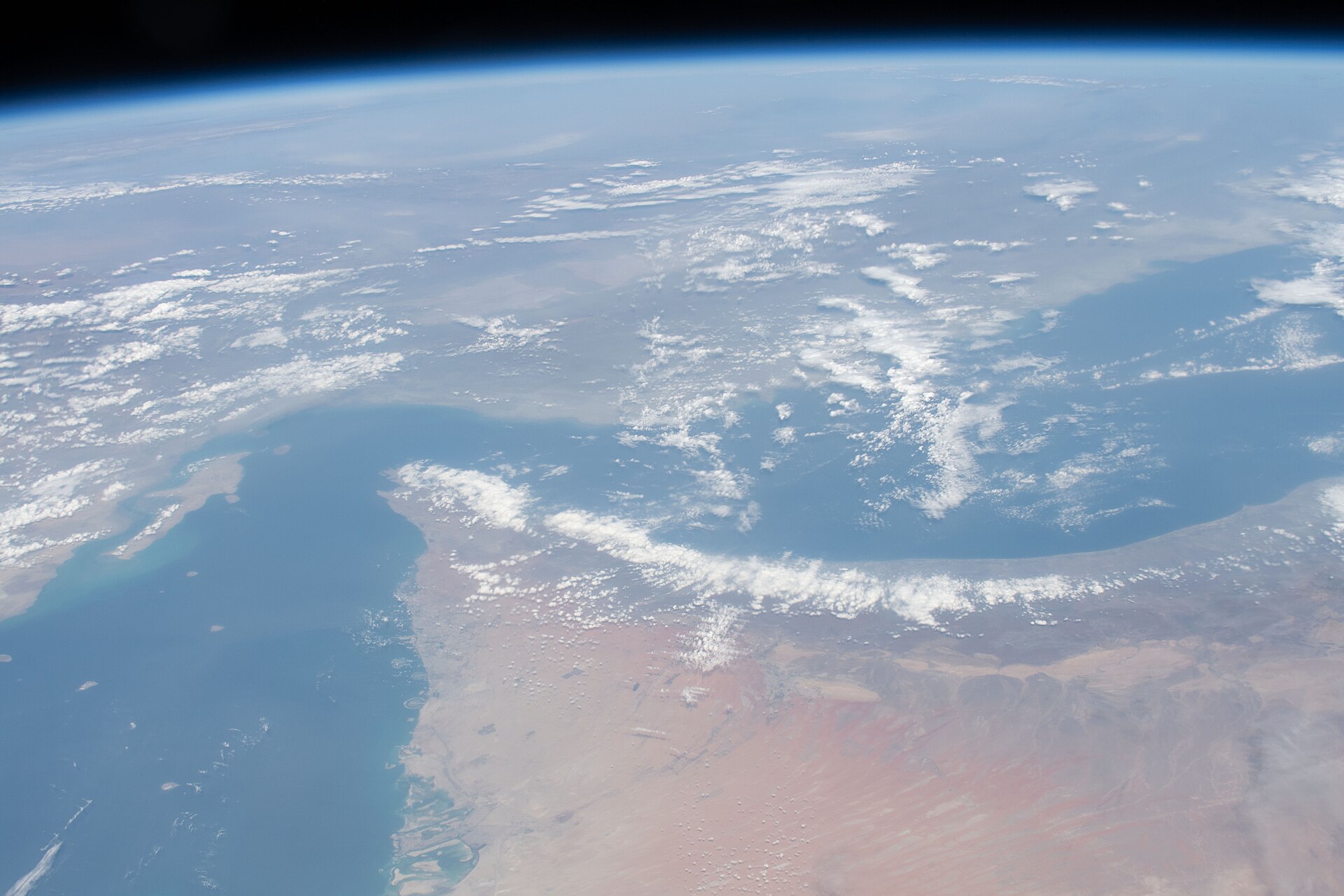
Background: Eight Months of a Contested Strait
The Hormuz crisis began in February 2026, when the IRGC announced the closure of the strait; CNBC dated the start of Ras Tanura’s four-month halt to that closure. The United States began enforcing a blockade on 14 July, according to the CENTCOM figures reported by CBS News.
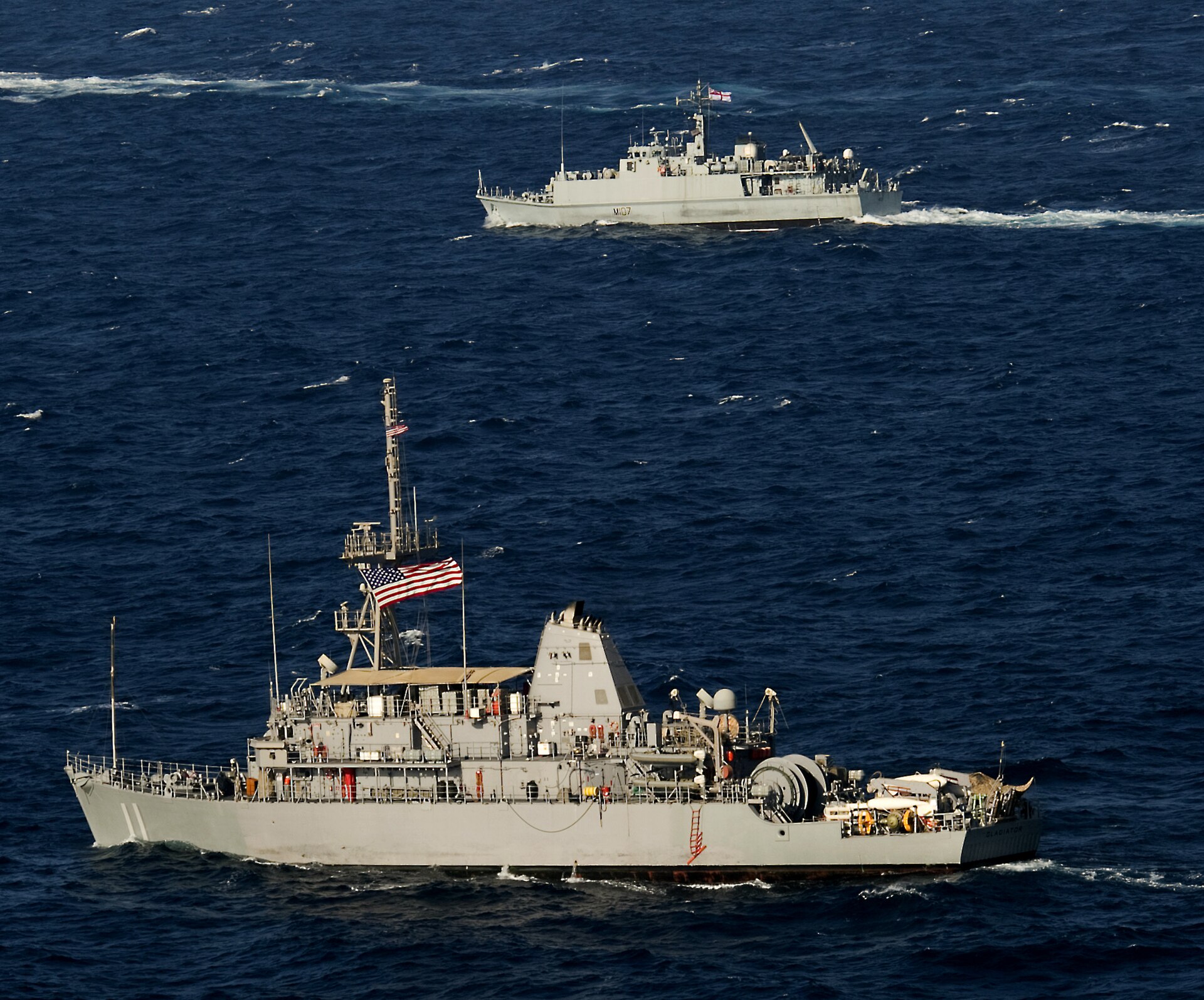
The Joint Maritime Information Center, which issues guidance through UKMTO, raised its threat level for Hormuz to SEVERE by July. Its Update 071 advised that mine risk “remains relevant within and adjacent to the TSS,” the traffic separation scheme that channels shipping through the strait.
The pipeline shutdown in September pushed more Saudi crude onto Gulf terminals, and October brought the densest run of reported attacks.
Frequently Asked Questions
How large is a very large crude carrier by weight?
A VLCC typically has a deadweight of 200,000 to 320,000 tonnes, according to the US Energy Information Administration. Deadweight measures the total weight a ship can carry, including cargo, fuel and stores.
Has Aramco pulled its supertankers out of Hormuz before?
Yes. Aramco put VLCCs back into Hormuz after a three-week pause, OilPrice.com reported. The company has not said whether it will pause VLCC traffic again after the October mine claims.
Who controls the Strait of Hormuz now?
Both sides say they do. Iran claimed full control of the strait on 16 October, and Al Jazeera reported on 17 October that the US and Iran were each claiming control amid continuing attacks on vessels.
Is the United States preparing to strike Iran?
President Donald Trump said on 8 October that the US “will not be attacking Iran at any time prior to the midterm elections” on 3 November, The National reported. He added that the naval blockade remains “in full force.”