
RIYADH — Saudi Arabia’s most important month of international events is breaking apart under Houthi missile strikes, and the calendar items still standing face a problem no organiser can solve: the airlines that would deliver their audiences have largely stopped flying. The EU-GCC summit, scheduled for 24 October with Crown Prince Mohammed bin Salman as co-chair, was formally postponed on 15 October. The Six Kings Slam tennis exhibition has been pushed to December. Riyadh Fashion Week is gone until 2027. Soundstorm, the kingdom’s largest music festival, has been cancelled.
What remains — the Future Investment Initiative on 26–29 October and Riyadh Season’s opening on 21 October — now faces a test that has nothing to do with programming or ambition. Approximately 46 per cent of the kingdom’s 8,883 scheduled flight departures between 8 and 15 October were cancelled or listed as not operating, according to Cirium, the aviation analytics firm. The European Union Aviation Safety Agency has recommended that carriers avoid Saudi airspace entirely. The US State Department has raised Saudi Arabia to Level 3: reconsider travel.
For the executives, sovereign-wealth managers, and heads of state on FII’s guest list, the question is no longer whether the conference is worth attending. It is whether they can physically get there — and right now, the governments and airlines that would get them there are saying no.
Table of Contents
- What Has Already Been Cancelled or Postponed?
- The EU-GCC Summit Was the First to Fall
- Can FII Survive as a Hybrid Conference?
- Who Is Still Flying to Riyadh?
- The Security Premium Returns
- What Does It Cost Riyadh to Proceed?
- Riyadh Season and the Domestic Wager
- What October Cannot Survive
- Frequently Asked Questions
What Has Already Been Cancelled or Postponed?
Saudi Arabia has cancelled, postponed, or scaled back at least nine major events since September 2026. National Day celebrations, Riyadh Fashion Week, Soundstorm, the Red Sea Film Festival, and the Saudi International golf tournament have all been pulled. The EU-GCC summit has been postponed indefinitely. Only FII and Riyadh Season remain on the near-term calendar, and both face active review.
The collapse began before the worst of the missile strikes. National Day fireworks and drone shows were postponed indefinitely on 23 September — the first confirmed event casualty, suspended before the Houthis escalated their targeting of Saudi airports. By mid-October the cancellations were running faster than organisers could manage.
Riyadh Fashion Week, one of Vision 2030’s cultural showpieces, was pushed to 2027. Soundstorm, the kingdom’s largest music festival and a flagship of the General Entertainment Authority, was cancelled outright. The Red Sea International Film Festival and the Asian Tour Saudi International golf tournament followed with indefinite postponements.
The Middle East briefing 3,000+ readers start their day with.
One email. Every weekday morning. Free.
| Event | Scheduled date | Status (as of 18 October) |
|---|---|---|
| National Day celebrations | 23 September | Postponed indefinitely |
| World Petroleum Congress | 11 October | Proceeded — Shell, TotalEnergies, BP, ExxonMobil absent |
| Riyadh Season opening | 21 October | Under review; GEA reportedly weighing cancellation |
| Six Kings Slam (tennis) | 21–24 October | Postponed to 27–30 December |
| EU-GCC Summit | 24 October | Postponed — no new date set |
| Future Investment Initiative (10th edition) | 26–29 October | Officially scheduled; hybrid option reported |
| Riyadh Fashion Week | October 2026 | Postponed to 2027 |
| Soundstorm festival | 2026 | Cancelled |
| Red Sea International Film Festival | 2026 | Postponed |
| Saudi International (golf) | 2026 | Postponed indefinitely |
The Six Kings Slam tells the story in miniature. Billed as the headline opener for Riyadh Season, the tennis exhibition was scheduled for 21–24 October. On 18 October, organisers announced a postponement to 27–30 December, citing “organizational and logistical challenges” — a phrase that avoids the word “missiles” while describing their consequences with precision.
At the World Petroleum Congress, which opened in Riyadh on 11 October, four of the world’s largest international oil companies — Shell, TotalEnergies, BP, and ExxonMobil — sent no executives. For a congress hosted in the capital of the world’s largest oil exporter, the empty chairs were not a diplomatic oversight. They were a corporate security verdict delivered without a press release, and they set the tone for everything that followed.
The General Entertainment Authority is reported to be weighing whether to cancel Riyadh Season’s opening entirely. FII remains officially on schedule. Between the event that is almost certainly gone and the one that has not acknowledged the crisis publicly, the rest of Riyadh’s October exists in managed ambiguity — decisions deferred, reassuring statements issued, and no one committing to a booking.
The EU-GCC Summit Was the First to Fall
The summit was supposed to be the centrepiece of October’s diplomatic calendar: a meeting co-chaired by European Council President António Costa and Crown Prince Mohammed bin Salman, designed to deepen energy and security ties between the two blocs at a moment when both needed something concrete to show for the relationship. More than 75 per cent of EU imports from the GCC are fuel. The agenda was not ceremonial.
On 15 October, GCC Secretary-General Jasem Al Budaiwi confirmed the postponement. The summit, he said, would “be rescheduled to a later date to be agreed upon in due course by the GCC and EU sides.” He cited the safety of visiting delegations amid continued threats to civilians. The European Council released a holding statement — “the partnership between the EU and the GCC is of great strategic importance to both regions” — the kind of language that preserves a relationship while conceding that the meeting cannot happen.
No new date has been set. The phrase “in due course” is diplomatic shorthand for a timeline that depends entirely on when the security situation changes, a variable that neither the GCC secretariat nor the European Council controls. The Houthis have threatened to continue targeting Saudi airports, and the coalition has confirmed that King Khalid International Airport was struck twenty times in October, killing seventeen people and injuring 333.
The summit’s postponement set a precedent that weighs on every event still scheduled. If the combined diplomatic apparatus of the European Union and the Gulf Cooperation Council concluded that it could not guarantee head-of-state security in Riyadh, the decision facing a conference organiser or a CEO considering an FII appearance becomes considerably simpler. The governments that would normally encourage senior attendance at a Saudi investment event are the same ones now telling their citizens to reconsider travel.
For a kingdom that has invested heavily in summit diplomacy as a pillar of its post-2016 foreign policy, the loss extends beyond one October date. It raises the question that FII’s organisers are now confronting with eight days to FII’s opening: if the EU and GCC together could not assure the safety of visiting heads of state in Riyadh, what can a conference organiser promise its speakers?
Can FII Survive as a Hybrid Conference?
FII remains scheduled for 26–29 October with no official postponement. Reuters has reported, citing unnamed sources, that Saudi Arabia is preparing a hybrid participation option. FII CEO Maha Al Saud and executive committee chairman Richard Attias have affirmed delegate safety as their “highest priority” without confirming a format change. A hybrid conference is technically feasible but undermines FII’s core value: physical access to Saudi decision-makers and PIF leadership.
FII was conceived as the kingdom’s answer to Davos — a gathering where proximity to Crown Prince Mohammed bin Salman, PIF governor Yasir Al-Rumayyan, and the broader Saudi investment establishment was the product on offer. Al-Rumayyan told an audience in Rome in June that the fund’s strategy was “to bring the world back to Saudi.” A video link does not accomplish that. The conference’s value has never resided in its panels, which can be streamed from anywhere, but in the bilateral meetings, the deal rooms, and the photographs of handshakes that signal to global markets that Saudi Arabia is a destination for capital rather than a risk to be hedged.
A risk adviser cited by the Financial Times captured the prevailing posture among major firms: they are “deferring decision-making” on FII attendance until the last possible moment. The deferral is informative on its own. Companies that are enthusiastic about attending a conference do not wait until the final week to decide. The delay signals that compliance departments and corporate security teams have not cleared travel to Riyadh, and may not before the doors open.
FII’s organisers may be studying the 2018 precedent, when the conference was boycotted after the killing of journalist Jamal Khashoggi. JPMorgan CEO Jamie Dimon and Ford Chairman Bill Ford withdrew. Saudi officials claimed more than 25 deals worth $56 billion at that edition — a figure never independently verified. By October 2019, the boycott had broken: the conference drew 300 speakers from 30 countries and declared itself recovered.
The comparison collapses on the central fact. The Khashoggi boycott was a reputational protest by executives who could physically reach Riyadh and chose not to attend. The 2026 problem is structural: airlines have suspended service, airspace authorities have issued blanket warnings, and governments have raised their travel advisories to levels that corporate compliance teams cannot ignore. An executive who boycotted FII in 2018 was taking a moral stand. An executive who cannot attend in 2026 may simply be unable to find a viable flight through airspace that European regulators have declared unsafe.
The distinction matters because the remedy is different. A reputational boycott fades when political pressure recedes, and in 2018 it did — within twelve months. A physical access crisis ends only when the security environment changes, and neither FII’s organisers nor the Saudi government have shown they can deliver that change on a ten-day timeline.
Who Is Still Flying to Riyadh?
Very few international carriers are still flying to Saudi Arabia. Cathay Pacific has suspended Riyadh service until 31 January 2027, and Air France-KLM has grounded its routes until 31 October — a window that covers the entirety of FII. Delta has postponed the launch of its new Atlanta–Riyadh service to March 2027. KKIA partially reopened on 18 October, but all flights now require prior authorisation from Saudi authorities.
| Airline | Saudi service status | Expected resumption |
|---|---|---|
| Cathay Pacific | Suspended | 31 January 2027 |
| Air France-KLM | Suspended | 31 October 2026 |
| Air India | Suspended | 24 October 2026 |
| Delta Air Lines | Atlanta–Riyadh launch delayed | March 2027 |
KKIA normally handles approximately 110,000 passengers per day. The partial reopening on 18 October came with conditions that are incompatible with the traffic volumes a major international conference generates: prior authorisation for every arrival and departure. An airport designed to process tens of thousands of daily travellers does not function as a conference gateway when every movement requires individual clearance from Saudi authorities.
EASA’s conflict zone bulletin tells the wider story. CZIB 2026-09-R1, issued on 9 October and valid until 16 November, does not merely caution against Saudi airports. It recommends avoiding Saudi airspace entirely — including for overflights and as en-route alternates. For European carriers, the bulletin functions as a regulatory signal with the weight of a directive. Air France-KLM’s suspension through 31 October covers the full duration of FII’s scheduled programme, and the EASA bulletin’s validity extends three weeks beyond the conference.
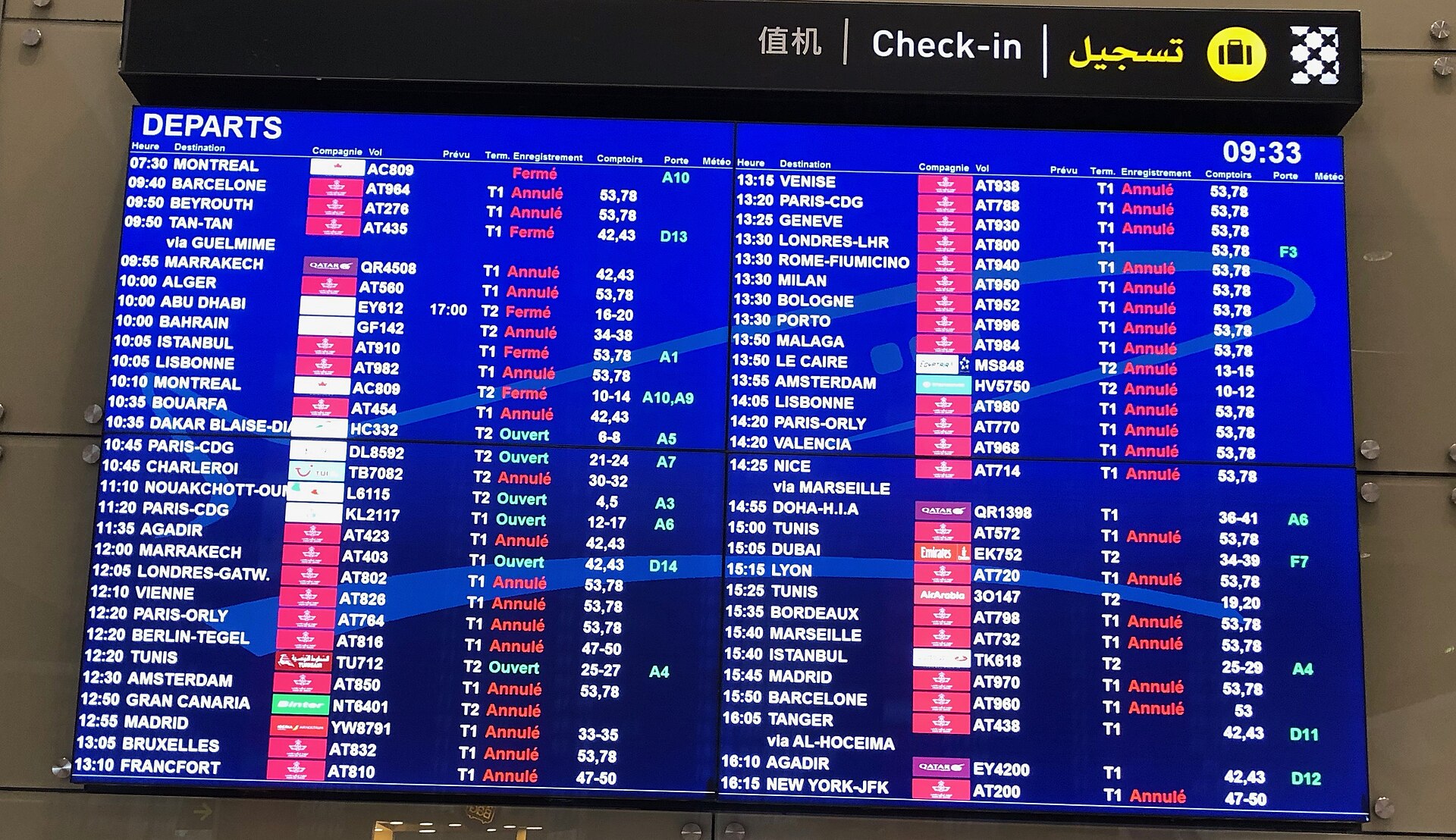
The US government has layered its own restrictions on top. The State Department raised Saudi Arabia to Level 3 — “reconsider travel” — on 10 October. The US Embassy in Riyadh went further, issuing alerts that strongly recommend American citizens avoid KKIA specifically and requiring government employees to obtain special authorisation before using airports in Riyadh, Jeddah, or Dammam. When the United States imposes airport-level restrictions on its own diplomatic staff, the signal to the private sector needs no translation.
For delegates based in Asia and the Pacific, the logistics are grimmer still. Cathay Pacific’s suspension eliminates the primary Hong Kong–Riyadh link until well into 2027. Air India’s halt through 24 October forces Indian delegates to reroute through hubs that may themselves be adjusting to Saudi overflight advisories. The question of who attends FII is inseparable from the question of how they would get there, and right now, the aviation network that Riyadh depends on to function as a global city is telling the world not to come.
The Security Premium Returns
“It is the return of a security premium to doing business in Saudi Arabia.”
Andreas Krieg, Middle East security analyst, King’s College London
The security premium — the additional risk, cost, and hesitation that investors layer onto any Saudi exposure — was supposed to have been retired by Vision 2030. A decade of social liberalisation, entertainment spending, sports acquisitions, and mega-project announcements was designed to replace the old perception of Saudi Arabia as a geopolitically volatile petrostate with something newer: an investable, diversifying, culturally open economy. Houthi missiles have reversed that work in a matter of weeks.
Krieg told Fortune that he expects delayed investment decisions and higher required returns from companies evaluating Saudi exposure. “In the short term, this is clearly damaging,” he said, though he cautioned against overshoot: “I would not extrapolate from several weeks of disruption to the collapse of Vision 2030.” The damage he describes does not require a collapse to compound. Delayed decisions and higher hurdle rates have their own momentum — a project deferred by twelve months in a deteriorating fiscal environment may never return to the table.
“All in all, I think current events are quite a big blow to the Vision 2030 thesis.”
James Reeve, Saudi macro consultant, former senior director, Public Investment Fund
James Reeve, who understands PIF’s investment logic from the inside, identified the sharper vulnerability. The impact on new foreign direct investment, he told Fortune, is “more troubling for the Vision 2030 story” than the risk to existing projects. Existing investments carry sunk costs and contractual obligations that make departure slow and expensive. New capital is uncommitted, mobile, and watching the same airline suspension notices and airspace bulletins that are emptying Saudi-bound flights. New money does not need to divest from Saudi Arabia — it simply never arrives.
The World Petroleum Congress provided a live demonstration. Shell, TotalEnergies, BP, and ExxonMobil — four companies with decades of Saudi exposure — chose not to send executives to an event in the capital of the world’s largest oil exporter. These are not firms that avoid the kingdom on principle. Their simultaneous absence was a corporate security decision made visible at precisely the moment Saudi Arabia needed the opposite signal.
Prince Abdul Aziz bin Salman, the Saudi energy minister, has responded publicly: “Vision 2030 must continue, investment must continue.” The statement’s intended audience is double — domestic, where it signals that the plan survives, and international, where it increasingly struggles to land. The fiscal numbers underscore the difficulty. Saudi Arabia’s 2026 budget deficit has been revised to 245 billion riyals — roughly $65 billion — up from the budgeted 165 billion. The first half of 2026 alone produced a 160-billion-riyal deficit, 71 per cent higher than the same period in 2025. The World Bank has cut its GCC real GDP forecast to negative 4.3 per cent. These are the figures that FII was supposed to frame within a narrative of opportunity and reform. Without FII’s stage, they circulate uncontested.
What Does It Cost Riyadh to Proceed?
Proceeding with FII under current conditions risks a thinly attended conference that broadcasts Saudi vulnerability to the global financial audience the event was built to impress. Postponement carries a different price: conceding that Houthi missiles have achieved what the 2018 Khashoggi boycott could not — the cancellation of the kingdom’s premier investment platform. Neither outcome serves Riyadh’s interests, and the window to choose between them is closing fast.
The cost of going ahead is not logistical — it is photographic. A packed hall signals confidence and continuity. A thinned one, with featured speakers appearing by video because their airlines cancelled or their governments advised against travel, produces images that tell a different story to every Bloomberg terminal and Reuters feed covering the event. The 2018 conference generated exactly those photographs of half-empty rooms, and Saudi Arabia spent the following year repairing what they communicated.
FII functions as the annual mechanism through which PIF and the broader Saudi investment ecosystem demonstrate stability to global capital. In a normal year, the conference generates deal announcements — some fully negotiated, some aspirational — that sustain the narrative of Saudi Arabia as a destination rather than a risk. A hybrid FII, attended in person by those who navigated the disruption and by video link by those who could not, shifts that narrative decisively toward fragility. The format itself becomes the headline, reported not on the business pages but alongside images of airport damage and airline cancellation notices.
Postponement, however, is not a clean exit. The EU-GCC summit’s indefinite delay already sent a diplomatic signal that Riyadh could not guarantee visiting-leader security. Postponing FII would add an investment signal of equal force: that the kingdom’s own flagship showcase could not survive its own security environment. For a fund whose governor promised European investors he would “bring the world back to Saudi,” an FII postponement would amount to an involuntary admission that the world has been pushed away by forces Riyadh cannot control.
The deeper cost is strategic patience. Every week that Saudi Arabia’s events calendar remains disrupted, the security premium Krieg described entrenches further — in insurance rates, in corporate travel policies, in the hurdle rates demanded by investment committees, and in the quiet decisions of fund managers who stop considering Saudi allocations without ever announcing that they have done so. FII has historically been where Riyadh pushed back against that kind of erosion. Without it, the drift has no counterweight.
Riyadh Season and the Domestic Wager
FII speaks to foreign capital. Riyadh Season speaks to Saudi citizens. The annual mega-event — concerts, sporting exhibitions, theme parks, dining — is the most visible product of the social liberalisation that Vision 2030 promised and that Crown Prince Mohammed bin Salman has staked his domestic legitimacy on delivering. Its scheduled opening on 21 October was built around the Six Kings Slam, a high-profile tennis exhibition featuring the sport’s biggest names. That tournament has been pushed to December, and the General Entertainment Authority is reported to be weighing whether to pull the broader opening altogether.
Riyadh Season was the domestic proof that the kingdom had changed — that the capital was a city where global performers wanted to play and where Saudi citizens could enjoy a cultural life that did not require a flight to Dubai or Bahrain. Cancelling the season would be understood not as an event management decision but as a concession that the war has reached the place the government promised it would not: the daily experience of ordinary Saudis, in the city they were told was being built for them.
The domestic context is already shifting. Citizens have tracked the KKIA strikes through social media and lived experience. The entertainment season was the visible return on a social compact that asked Saudi society to accept sweeping reforms in exchange for a more open, more connected country. If the reward is suspended while the costs continue to mount — a deepening fiscal deficit, airlines grounded, the airport requiring security clearance for every departure — the compact itself comes under a strain that the next concert announcement cannot relieve.
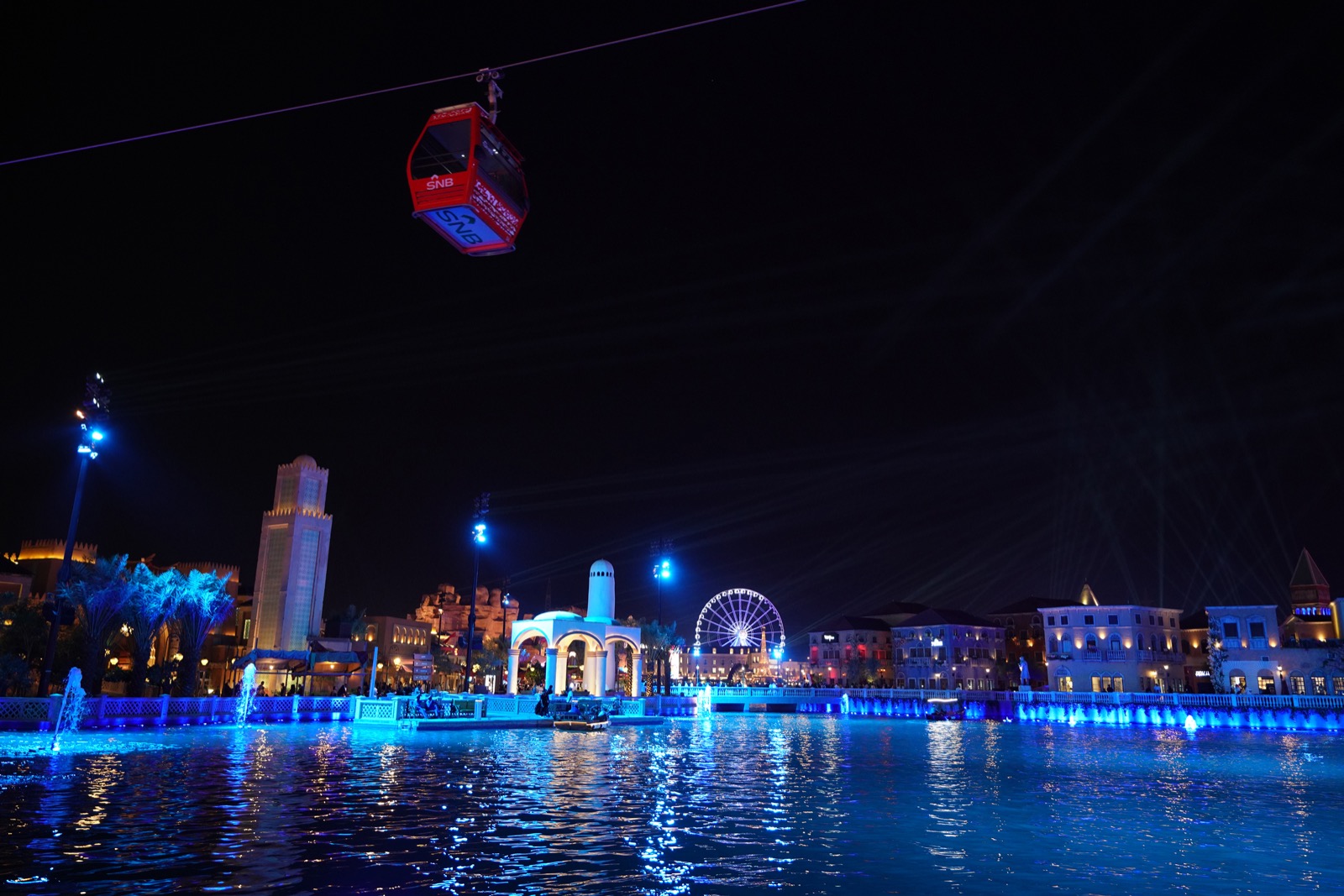
Proceeding with a diminished Riyadh Season carries risks of its own. A flagship entertainment programme running under active missile threat, with international headliners cancelling and aviation access constrained, does not project the image of a transformed kingdom. It projects something closer to defiance without the means to sustain it — a government insisting on normalcy while its main airport operates under conditions that no definition of normal can accommodate.
What October Cannot Survive
The question facing Riyadh is no longer whether to hold its October events. One major summit has been pulled. At least five other events have been cancelled or pushed into 2027. The question is whether the two that remain — FII and Riyadh Season — can justify proceeding in an environment where nearly half the kingdom’s flights are grounded, European regulators have declared the airspace unsafe, and the United States is advising its citizens to stay away from the airport.
Saudi Arabia’s energy minister has insisted that Vision 2030 and investment must continue. FII’s leadership has affirmed its commitment to delegate safety. Neither statement addresses the structural obstacle: a conference of global scale requires an aviation network operating at something close to normal capacity, and the kingdom’s main airport has been struck twenty times in October. The partial reopening, with its per-flight authorisation requirement, is a managed concession to the reality on the ground — not a return to the conditions under which FII was designed to operate.
October 2026 was supposed to be the month Riyadh proved it could host the world and absorb a war simultaneously. The events calendar was stacked precisely to demonstrate that the Houthi campaign had not bent the kingdom’s trajectory. Instead, the calendar has become the most visible register of how far that trajectory has already shifted — each cancelled event, each postponed tournament, each empty seat at the petroleum congress adding a line to a ledger that Riyadh cannot close until the airspace above its capital is safe. That depends on a war whose timeline no one in the kingdom controls.
Frequently Asked Questions
Has FII 2026 been officially cancelled or postponed?
No. As of 18 October 2026, the Future Investment Initiative’s tenth edition remains scheduled for 26–29 October at the King Abdulaziz International Conference Center in Riyadh. FII CEO Maha Al Saud and executive committee chairman Richard Attias issued a joint statement on delegate safety but did not announce a postponement or format change. Reuters has separately reported, citing two unnamed sources, that a hybrid participation option is being prepared, though FII has not confirmed this publicly. Registration for in-person attendance remains listed on the FII Institute’s website.
What is the EASA conflict zone bulletin on Saudi airspace?
EASA issued Conflict Zone Information Bulletin 2026-09-R1 on 9 October 2026, valid until 16 November 2026. Unlike a standard airport advisory, the bulletin recommends that operators avoid Saudi airspace in its entirety — not only airports, but overflights and the use of Saudi airports as en-route alternates. This affects any routing that would normally transit Saudi airspace, including a significant share of Europe-to-Asia traffic. Airlines operating under EASA member-state oversight may apply for specific operational exemptions, but the default recommendation is full avoidance.
How does the 2026 FII crisis compare to the 2018 boycott?
The two situations differ at the root. In 2018, airlines flew, the airport was open, and executives who wished to attend could do so — the boycott was a voluntary reputational statement with a clear catalyst (the Khashoggi killing) and a defined shelf life once political pressure eased. FII recovered fully within twelve months. In 2026, the barriers are physical: suspended airline routes, a blanket airspace advisory from EASA, government travel warnings, and an airport operating under authorisation-only conditions. The 2018 boycott tested Saudi Arabia’s reputation; the 2026 crisis tests its infrastructure. Recovery depends on a change in the security environment, not a shift in sentiment.
What is the current status of KKIA and other Saudi airports?
King Khalid International Airport partially reopened on 18 October 2026 with restrictions: all arrivals and departures require prior authorisation from Saudi authorities. The airport was previously closed after a 10 October Houthi strike that killed twelve people and wounded over 300, followed by an 11 October attack on Terminal 4 that killed a Pakistani resident and injured eleven. Dammam’s King Fahd International Airport was also attacked on 11 October. The US Embassy has specifically recommended that American citizens avoid KKIA and has required special authorisation for government personnel to use airports in Riyadh, Jeddah, and Dammam.
Will Riyadh Season still open on 21 October?
No official cancellation has been announced by the General Entertainment Authority. However, the Six Kings Slam tennis tournament — which was to be the marquee opening event from 21 to 24 October — has been postponed to 27–30 December, with organisers citing “organizational and logistical challenges.” The GEA is reported to be evaluating whether to proceed with the broader season launch. A decision is expected before the scheduled opening date, but as of 18 October, Riyadh Season’s status remains formally unchanged.