RIYADH — Iran’s Revolutionary Guards say two supertankers struck mines in the Strait of Hormuz within roughly 24 hours, the first of them loaded with more than 2 million barrels of crude, and the only date that governs American policy toward Tehran is still 3 November. Donald Trump pledged on 8 October that the United States would not attack Iran before the midterm elections, and Saudi Arabia, whose 2026 deficit forecast has already swollen from 165 billion riyals to 245 billion, is paying for every day of that promise.
Neither tanker has been named, flagged or claimed by an owner, and neither US Central Command nor the UK Maritime Trade Operations centre had independently confirmed either mine strike as of 18 October, which means the most important oil story in the world currently rests on the word of the force that says it laid the mines. The market has not waited for confirmation: US crude topped $100 a barrel on 16 October, according to CNBC, before the second claimed explosion had even been announced. The Iranian terms for reopening the strait were repeated in Baghdad on 17 October, Washington’s refusal of them stands, and Riyadh, which expelled Iran’s diplomats in March and has twice been turned down when it asked the White House for military help, has no lever of its own on either side of a dispute that is now being priced by the barrel and timed by the ballot box.
Table of Contents
- What Did Iran Claim in Hormuz This Weekend?
- Why Did Washington Put Iran on Hold Until November?
- The Mines Admiral Cooper Said Were Gone
- How Does $100 Oil Change the American Decision?
- What Is Left of Tehran’s Seven-Day Plan?
- The Saudi Budget Runs on a Different Clock
- Why Can’t Riyadh Move Washington’s Calendar?
- The Room Trump Left Inside His Own Pledge
- Frequently Asked Questions
What Did Iran Claim in Hormuz This Weekend?
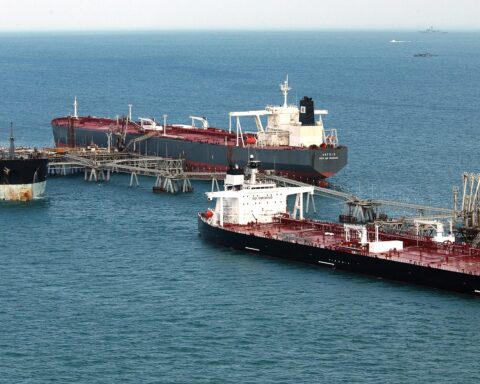
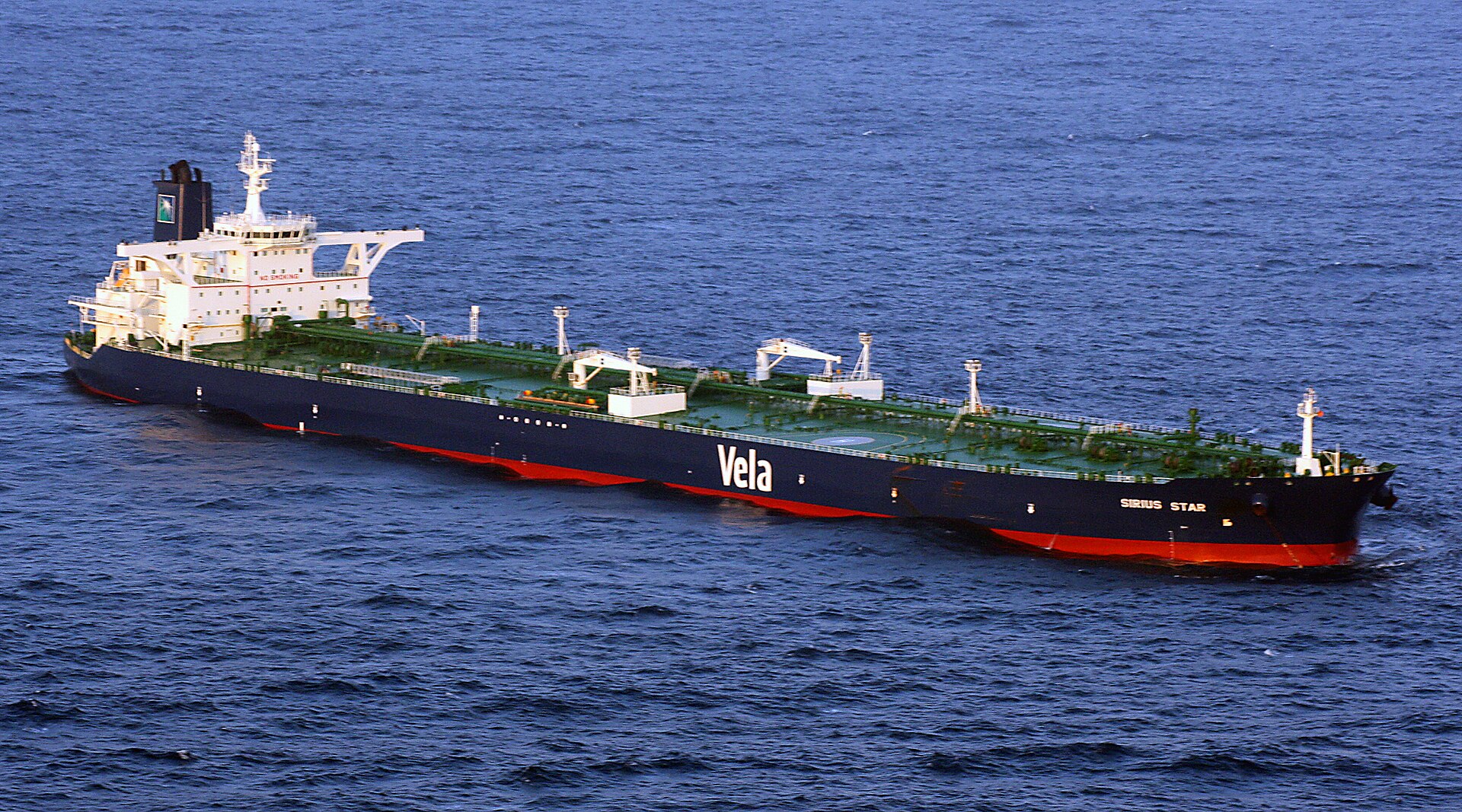
The IRGC Navy said on 17 October that a supertanker carrying more than 2 million barrels of crude struck a naval mine in the Strait of Hormuz and caught fire, and on 18 October it said a second supertanker exploded after hitting a mine in the same waterway. Neither vessel has been identified, and CENTCOM has rejected Iran’s claim to control the strait.
The first claim, carried by Tasnim News Agency and relayed by Al Jazeera and Euronews, came with an accusation attached, because the Guards said the tanker had switched off its positioning and radar and had been “deceived by the US military” into an unauthorised passage. That framing matters more than the fire itself, since it turns a commercial casualty into a story about American recklessness and tells every master in the Gulf that following a US Navy reassurance is the fastest way to lose a ship. The second claim, issued on 18 October and reported by multiple outlets, completed the pair inside a single day.
Washington’s answer was a sentence about ownership rather than about ships. A CENTCOM spokesperson said the strait “is controlled by the United States and our regional partners, not Iran”, according to HNGN and Radio Free Europe/Radio Liberty, which is an assertion of authority over the water that sits awkwardly beside the fact that, as of 18 October, nobody in the US chain of command had said whether either tanker had been hit at all. The White House, asked about the claims, declined to comment on “sensitive military plans” and said Trump “keeps all options on the table to ensure that Iran can never have a nuclear weapon”, an answer about Iran’s centrifuges given to a question about its mines.
The weekend’s pair was also not the first such claim this month, which is the detail that turns a spike into a pattern. On 10 October the IRGC Navy said a “violating” supertanker trying to leave the strait by an “unauthorised” route had exploded after hitting mines, with its navigation and GPS switched off, according to an IANS report published on 11 October, and the Qatar Tribune reported the same claim alongside a UAE coastguard rescue of 22 crew from an unnamed tanker fire whose cause was never identified. Three Iranian claims of mine strikes on supertankers in little more than a week, none independently confirmed, is either a disinformation campaign of unusual discipline or a minefield that someone in Washington has to explain, and both possibilities lead back to the same American admiral.
The Middle East briefing 3,000+ readers start their day with.
One email. Every weekday morning. Free.
Why Did Washington Put Iran on Hold Until November?
Washington put military action against Iran on hold because the president tied it to the electoral calendar. On 8 October Trump wrote that the US would not attack Iran before the 3 November midterms while keeping the naval blockade “in full force”, after rejecting a Tehran plan in September and, according to the Wall Street Journal, expecting renewed bombing after the vote.
“Will not be attacking Iran at any time prior to the midterm elections.”
Donald Trump, 8 October 2026, as reported by The National
The pledge was unusual for its candour, since presidents normally dress electoral caution in strategic language and Trump simply named the date. It arrived after a fortnight in which the diplomatic track had already been closed from the American side: Iran’s Foreign Minister Abbas Araghchi had sent a seven-day roadmap through Qatar in September, and the Wall Street Journal reported on 26 September that Trump had rejected it and expected to resume bombing once the midterms were over. The 8 October post therefore did not pause a war so much as formalise a waiting period that Washington had already chosen, and Brent fell 1.3 per cent to $102.94 the following day, according to CNBC, as traders took the promise at its word.
The economic half of the calculation came in Trump’s own words, when he told reporters that “oil prices will come down after the midterm elections”, according to PBS NewsHour. That sentence concedes the political problem without solving it, because it asks voters to tolerate expensive fuel on the promise of cheaper fuel delivered by a war the president has scheduled for after they have voted. The holding pattern was built on an assumption that Hormuz would stay roughly as it was for four weeks, and the IRGC’s weekend claims, if true, are a direct test of whether it can.
The assumption was always fragile, because it rested on Iran agreeing to wait as well. CNN reported on 15 October that Tehran was intensifying attacks ahead of the vote, seeking to raise the cost of American patience precisely while American voters were heading to the polls, and Kuehne+Nagel reported on 16 October that attacks on ships had reached a record as Iran broadened its campaign, a finding NBC News echoed the following day. A pause that one side observes and the other exploits stops being a pause and becomes a deadline set by the opponent, and the opponent’s preferred instrument, according to its own statements, is the mine.
The Mines Admiral Cooper Said Were Gone
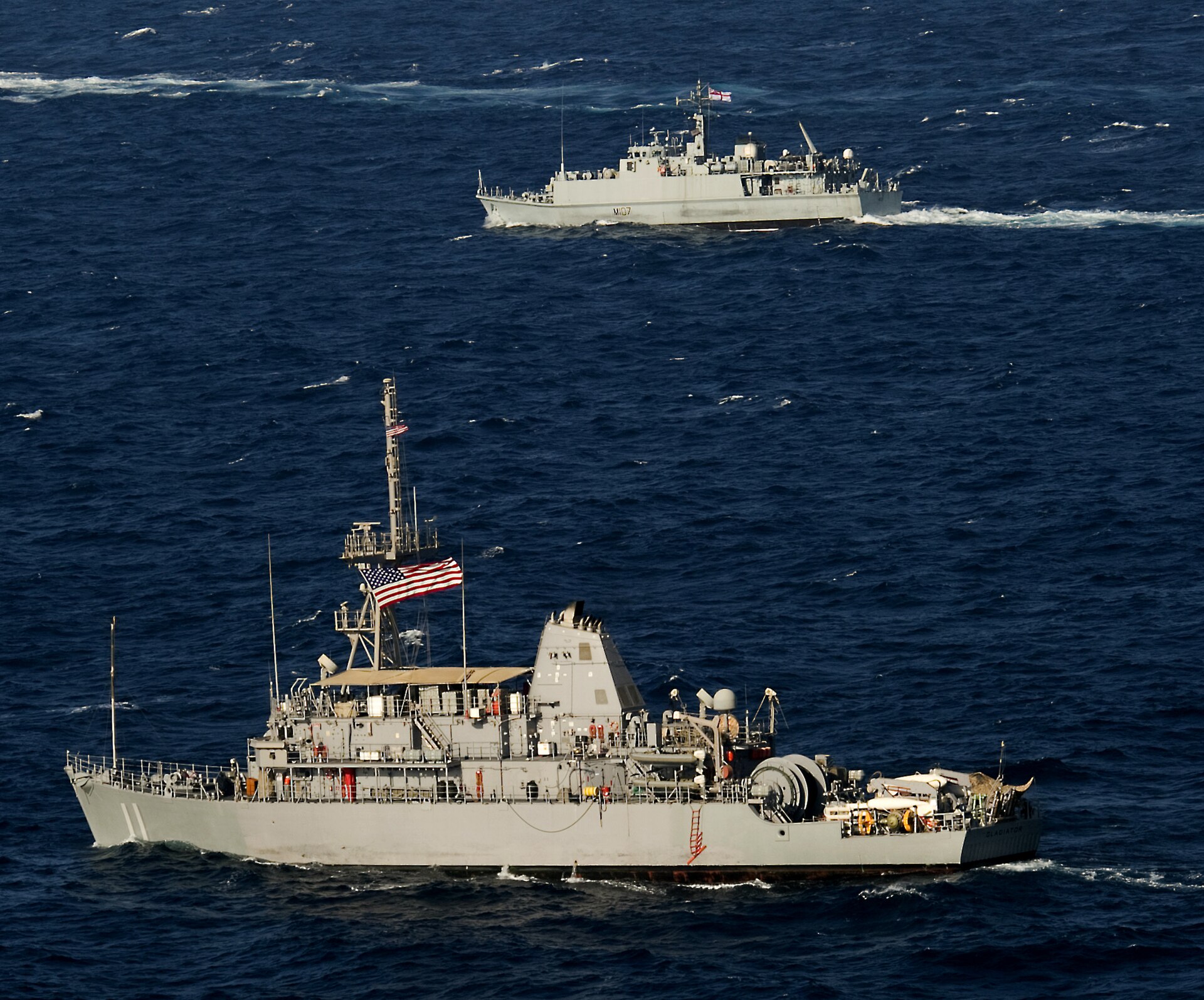
On 28 August CENTCOM Commander Admiral Brad Cooper announced that mine clearance of the Strait of Hormuz shipping lanes was complete, with Navy divers and SEALs removing mines under multi-service air cover, and he summed up the operation for Stars and Stripes in five words: “We got the job done.” Task and Purpose carried the same announcement, and it was the closest thing the United States had produced to a victory in the strait since the war began on 28 February.
Seven weeks later the IRGC says the lanes are mined again, and the gap between those two statements is now the central problem of US policy in the Gulf. If the Iranian claims are accurate, Iran has resumed mine-laying in waters that the US Navy declared clean, which means that the clearance was either incomplete or has been undone, and in either case the American guarantee to shipowners is worth less than it was in August. If the claims are false, Tehran has found a way to close the strait with press releases, which is cheaper than mines and, judging by the price of crude, nearly as effective.
Either reading puts the burden of proof on Washington, which is a strange position for the power that says it controls the water. CENTCOM’s own figures show what American control has looked like in practice: 135 ships turned around since the blockade began on 14 July, according to CBS News, against a pre-war norm of 130 to 140 ships passing through Hormuz every day, according to Reuters. Three months of enforcement have turned back roughly one ordinary day’s traffic, which is a measure of how far the strait’s commercial life has already contracted, and a fresh mine campaign threatens what little is left.
The admiral’s problem is also an electoral one, which is why it lands in the White House rather than on a naval staff. Mine countermeasures are slow, visible and dangerous to the sailors who perform them, and a second clearance operation launched before 3 November would put American divers in the water at the moment the president has promised voters that the country will not attack Iran, while a clearance delayed until after the vote leaves tankers burning, or reported burning, through the final fortnight of the campaign.
How Does $100 Oil Change the American Decision?
Oil above $100 changes the American decision by moving the cost of waiting from Tehran to the US voter. With US crude above $100 and diesel at a record national average of $5.942 a gallon, according to Newsweek, the pre-midterm pause now carries a visible domestic price that the White House promised would arrive only after the vote.
The danger was forecast long before the tankers burned. Fortune reported on 24 March that both Tehran and Wall Street expected oil above $100 to punish Republicans at the midterms, which means the Iranian strategy of squeezing the strait through the autumn was not a secret and the White House pause was announced in full knowledge of it. Newsweek’s headline put the president “on two timers before the midterms”, and the IRGC’s claims on 17 and 18 October have shortened the second one.
Diesel is the number that should worry the campaign more than the crude benchmark, because diesel moves freight, farm machinery and delivery fleets, and a record pump price turns an argument about the Persian Gulf into an argument about the cost of groceries in the states where the House majority will be decided. A president who has told voters that relief comes after the election is now asking them to absorb the bill for a strategy whose timing he chose, at a moment when Iran is plainly trying to make the bill larger.
| Date | Event | Source |
|---|---|---|
| 28 Aug | CENTCOM declares Hormuz shipping-lane mine clearance complete | Stars and Stripes, 28 Aug |
| 25 Sep | Araghchi’s seven-day roadmap via Qatar: reopening for blockade lifted, sanctions waivers, about $12bn in frozen assets | Al Jazeera, 25 Sep |
| 26 Sep | Trump rejects the plan and expects renewed bombing after the midterms | Wall Street Journal, 26 Sep |
| 4 Oct | Ghalibaf: strait stays shut until “our seven conditions” are met | Reuters via Al Jazeera, 4 Oct |
| 8 Oct | Trump rules out attacking Iran before 3 November; blockade “in full force” | The National, 8 Oct |
| 9 Oct | Brent at $102.94 | CNBC, 9 Oct |
| 10 Oct | IRGC claims a “violating” supertanker exploded on mines | IANS, 11 Oct; Qatar Tribune, 12 Oct |
| 11 Oct | Rezaei: US response “insufficient”, Tehran “no longer responding to Washington” | IRNA via CBS News, 11 Oct |
| 16 Oct | US crude (WTI) topped $100 | CNBC, 16 Oct |
| 17 Oct | IRGC claims supertanker with 2m+ barrels hit a mine and caught fire; Araghchi says plan “still on the table” | Tasnim, Al Jazeera, Euronews, 17 Oct |
| 18 Oct | IRGC claims a second supertanker exploded on a mine; CENTCOM says strait is controlled by the US and partners | IRGC statement; HNGN/RFE/RL, 18 Oct |
What the burning tankers do to the American matrix, then, is collapse the distinction between the military clock and the political one. Before 17 October the White House could argue that doing nothing in Hormuz was the safe electoral choice and that the bombing could wait for a quieter moment, but if mines are back in the lanes the price of doing nothing is paid in exactly the currency, petrol and diesel, that voters notice first. The Iranians understand this, and their Foreign Minister went to Baghdad to remind the region that they had an offer ready.
What Is Left of Tehran’s Seven-Day Plan?
Tehran’s seven-day plan still exists on paper. Araghchi told the Organisation of Islamic Cooperation’s foreign ministers in Baghdad on 17 October that Iran could restore normal passage through Hormuz within seven days “if the necessary conditions are met”, but Parliament Speaker Ghalibaf has tied reopening to seven conditions, and Washington has already rejected the core terms.
The timing of the Baghdad remarks was deliberate, delivered on the same day the Guards announced the first tanker fire, so that the offer of a reopened strait and the demonstration of a closed one arrived together. Araghchi told the ministers the seven-day plan was “still on the table”, according to Tasnim, which is the diplomatic counterpart to a mine: an instrument that sits quietly until someone moves, and whose existence is enough to change the behaviour of everyone nearby. For a White House that has promised voters lower oil prices after the election, an Iranian offer to reopen the strait within a week is a standing reminder that relief is available sooner, at a price Trump has said he will not pay.
“The period of dragging out the process and dictating one-sided demands is over.”
Mohammad Ghalibaf, Speaker of Iran’s Parliament, 4 October 2026, via Reuters and Al Jazeera
The terms are harder than the tone. Ghalibaf said on 4 October that the strait “will not be opened until our seven conditions, based on the Islamabad Memorandum, are met”, and Iran’s Supreme National Security Council had already set out a broader list in August, which NBC News reported as the withdrawal of the US naval blockade, payment of war damages, the unfreezing of Iranian assets, the lifting of sanctions and a permanent end to the conflict against Iran and its regional allies. Araghchi’s September roadmap compressed the opening price to the blockade, sanctions waivers and about $12bn in frozen assets, which is why it was taken seriously in Doha and rejected in Washington.
The channel itself is now in doubt from the Iranian side as well. Mohammad Rezaei told IRNA on 11 October that the latest American response was “insufficient” and that Tehran was “no longer responding to Washington”, according to CBS News, and the Conference Board observed on 15 October that the US “rejection of Iran’s recent proposal for a quick reopening of the Strait of Hormuz does not preclude further negotiations but does extend the timeline for an end to the conflict”. Extended timelines are a luxury for a superpower with its own oil fields and a disaster for a state whose economy depends on the barrels that pass, or no longer pass, through the waters both sides are fighting over.
The Saudi Budget Runs on a Different Clock
The Saudi finance ministry’s pre-budget statement on 30 September raised the 2026 deficit estimate to 245 billion riyals from a budgeted 165 billion, according to Reuters via Zawya, and forecast that real GDP would shrink 3.6 per cent this year on a 21.8 per cent fall in oil activity. Those are not the projections of a government that can afford to let a war idle until an American election is over, and every additional week of a mined, contested strait pushes the 2026 outturn further from even the revised figure.
| Indicator | Figure | Source |
|---|---|---|
| 2026 deficit, original budget | 165bn riyals | Reuters via Zawya, 30 Sep |
| 2026 deficit, revised | 245bn riyals | Reuters via Zawya, 30 Sep |
| Q1 2026 deficit | $33.5bn, more than double a year earlier | Al Jazeera/Bloomberg, 6 May |
| Q1 oil revenue / spending | Oil revenue down 3%; spending up 20% | Al Jazeera/Bloomberg, 6 May |
| Saudi crude supply, August | 5.97 mb/d, lowest since 1990 | IEA, 11 Sep; Bloomberg |
| 2026 real GDP forecast | -3.6% | Reuters via Zawya, 30 Sep |
| 2027 real GDP forecast | +12.8% | Reuters via Zawya, 30 Sep |
The first quarter told the story before the autumn escalation made it worse: the deficit more than doubled against the prior year as oil revenue fell and spending rose sharply, according to Al Jazeera and Bloomberg, and by August the IEA placed Saudi crude supply at its lowest level since 1990. The kingdom is therefore selling less oil into a market where the price is high precisely because it cannot ship, a paradox explored in the House of Saud analysis of how Saudi Arabia got the price and lost the barrel, and the American price spike that frightens the White House is no consolation in Riyadh.
The most revealing figure is the one that assumes the war ends. The ministry’s 2027 growth forecast — double-digit, as the table above documents — only makes sense if exports return to something like normal, which places the entire Saudi fiscal plan on the reopening of a strait whose fate is being negotiated by Washington and Tehran without a Saudi seat at the table. A rebound that depends on an American decision timed to an American vote is a budget written in someone else’s handwriting, and it explains why the arguments made in the case that Vision 2030 has become a global systemic risk now read less like warnings than like accounts.
The alternatives to Hormuz are themselves under fire. The East-West pipeline to the Red Sea, which Aramco says can carry 7 million barrels a day, was shut after a drone attack on 12 September and restarted on 22 September, but Baird Maritime, citing Reuters, reported that restoring full capacity could take six weeks or more, and Aramco chief executive Amin Nasser said on 16 October, according to Arabian Business, that the company is “studying additional crude export routes” and expanding overseas storage. The detail of what remains open to Aramco is set out in the analysis of why Aramco has no fourth route, and the short version is that Riyadh’s options for going around the strait are shrinking at the same pace as Washington’s appetite for going through it.
Why Can’t Riyadh Move Washington’s Calendar?
Riyadh cannot move Washington’s calendar because it has no direct line to Tehran and limited pull in the White House. Saudi Arabia expelled Iranian diplomatic staff in March, leaving it to route signals through Washington, Oman or Qatar, while Crown Prince Mohammed bin Salman’s two September requests for US strikes were both declined.
The diplomatic isolation was a Saudi choice made under fire. On 21 March, after Iranian attacks on the kingdom, Riyadh declared Iran’s military attaché and embassy staff persona non grata and gave them 24 hours to leave, according to the Qatar Tribune, which was a reasonable response to missiles and drones but has left the kingdom without any bilateral back-channel to the government whose mines, by its own account, are now in the shipping lanes. Every Saudi message to Tehran must pass through an intermediary whose own interests shape the delivery, and the mediators who carried the seven-day plan have little reason to prioritise Riyadh’s fiscal deadlines over their own.
The American channel has proved no more responsive. CNN reported on 10 October that the crown prince made two appeals to Trump in September for US strikes, both of them declined, a pattern traced in the account of how MBS called twice and Trump walked away, and when the president was asked about the deadly strike on King Khalid International Airport his answer was “We may. We’re going to look at it.” Secretary of State Marco Rubio said on 5 October that the US intends “to live by” the US-Saudi defence agreement, according to The National, which is a promise about the treaty rather than about the timetable.
There is an irony in this that Washington has not forgotten. In May, according to NBC News as reported by The New Arab, Saudi Arabia warned it could deny US aircraft its airspace and the use of Prince Sultan Air Base, and Trump paused the Project Freedom escort operation in Hormuz about 36 hours after announcing it. The kingdom that once slowed American action in the strait is now asking for it to be accelerated, and a White House weighing its electoral interests has little incentive to reward a partner whose own priorities have shifted with the price of its exports, a tension explored in the analysis of why Washington does not trust Saudi skies.
What Riyadh has, in the end, is exposure rather than influence. Its budget is tied to a reopening it cannot negotiate, its security depends on a partner whose president has dated his next move to a domestic vote, and its only diplomatic routes to Tehran run through capitals with their own agendas, as Doha’s two-sided diplomacy has shown. The one thing that could shorten the wait is not a Saudi decision at all, but the possibility that Trump’s own pledge contains more room than its headline suggests.
The Room Trump Left Inside His Own Pledge
The wording of the 8 October post is narrower than the coverage it received. Trump promised that the United States would not be “attacking Iran” before the midterms, and in the same message he said the blockade remained “in full force”, which means the White House has already defined continued naval enforcement as something other than an attack. Mine clearance in international shipping lanes, escort of commercial tankers and the interdiction of minelaying vessels could all be presented under that same definition, and CENTCOM’s insistence on 18 October that the strait is controlled by the United States and its partners reads like a department preparing the ground for exactly that argument.
The burning tankers make that argument easier to sell, because a mine is an attack on commerce that the United States can answer without striking Iranian soil. If the IRGC’s claims are confirmed, and particularly if one of the unidentified vessels turns out to belong to an allied flag or an American-linked charterer, the White House will have a case for action that sits inside the letter of the pledge while breaking its spirit, and a president who has told voters that prices will fall after the vote may decide that a visible naval operation before it is the better story. The IRGC’s claim that the first tanker was “deceived by the US military” was aimed squarely at that possibility, since it frames any American escort as the cause of the next fire rather than the cure.
None of this is certain, and nothing in the White House’s refusal to discuss “sensitive military plans” commits it to any course. The evidence of the past month is that Trump prefers to wait, that Iran prefers to escalate while he does, and that the price of both preferences is being paid in Riyadh, where the next record attack on shipping, reported by the agencies now counting Hormuz incidents, or the next unconfirmed mine claim, as covered in the report on Iran’s supertanker claims, moves the Saudi deficit before it moves an American vote.
Admiral Cooper said in August that the job was done, and two months later the Guards say the lanes are mined again and the market is behaving as if they are right. Until Washington says, with evidence, which of them is telling the truth, the strait belongs to whoever is believed, and on 18 October that was not the United States.
Frequently Asked Questions
What was the Islamabad Memorandum that Ghalibaf cited?
The Islamabad Memorandum, read out by a US official on 17 June 2026, provided 60 days of toll-free passage through Hormuz, an end to the US blockade within 30 days and a reconstruction plan of at least $300 billion, according to Iran International. It collapsed on 8 July after three ships, including the Saudi-flagged Wedyan, were hit near the strait and CENTCOM struck more than 80 targets in southern Iran, according to The New Arab.
How has the US treated ships that try to break its blockade of Iran?
CENTCOM has used force against blockade runners as well as turning ships back. On 5 September it destroyed the tanker M/T Kylo and disabled two others after Iranian attacks on a US carrier and destroyer, according to Business Today, and in October it released footage of a fighter jet bombing the stern of a Panama-flagged cargo vessel in the Gulf of Oman, disabling its propulsion, the Qatar Tribune reported.
How far has Hormuz traffic fallen during the war?
Kpler data cited by Reuters showed only 33 vessels transited the strait between 3 and 6 August, down from 50 a week earlier, when the pre-war norm was 130 to 140 ships a day. Lloyd’s List Intelligence counted at least 346 non-Iranian-linked transits across the whole of August, a monthly total below three days of pre-war traffic.
When does OPEC+ next set Saudi output, and what is the current target?
OPEC+ kept November production targets unchanged at its 4 October meeting, with Saudi Arabia’s set at 10.5 million barrels a day, according to Enerdata, and the group’s next meeting is scheduled for 1 November, according to The Nation Thailand. That meeting falls two days before the US midterms, with Saudi supply far below its quota because of export constraints rather than policy.