
DUBAI — Iran’s Islamic Revolutionary Guard Corps has established a mine blockade of the Strait of Hormuz that has cut daily tanker transits from 85 to 4, according to IMF PortWatch data for the week of 18 October. The IRGC claims three supertankers struck mines in the past week; Kpler shipping data puts the throughput decline at 86 per cent — from 20.8 million barrels per day on 8 October to 2.9 million by 11 October.
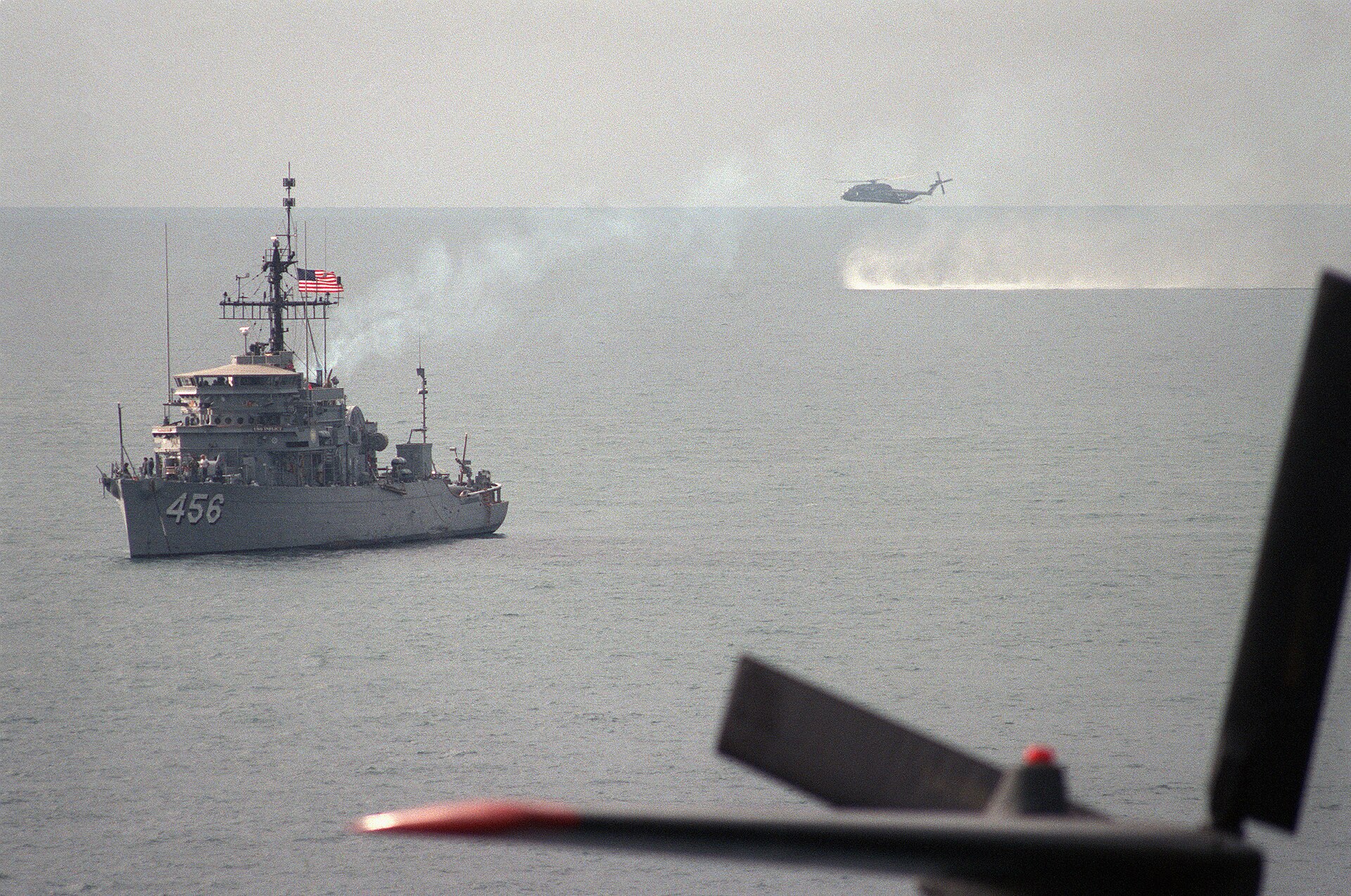
Two US carrier strike groups sit in the Arabian Sea. Neither has entered the strait to clear mines; the Navy retired its Avenger-class minesweepers from Bahrain in 2025. Saudi Arabia’s only alternative export route, the East-West pipeline to Yanbu, is running below design capacity — and Yanbu itself came under Houthi missile fire on 19 October.
Table of Contents
- What Has Iran Done to the Strait of Hormuz?
- Three Claimed Strikes and the ‘Violating’ Doctrine
- Why Has the US Not Cleared the Mines?
- Can Saudi Arabia Export Without Hormuz?
- What Does International Law Say About Mining a Strait?
- The Freight Market as Enforcer
- What Happens After 3 November?
- Frequently Asked Questions
What Has Iran Done to the Strait of Hormuz?
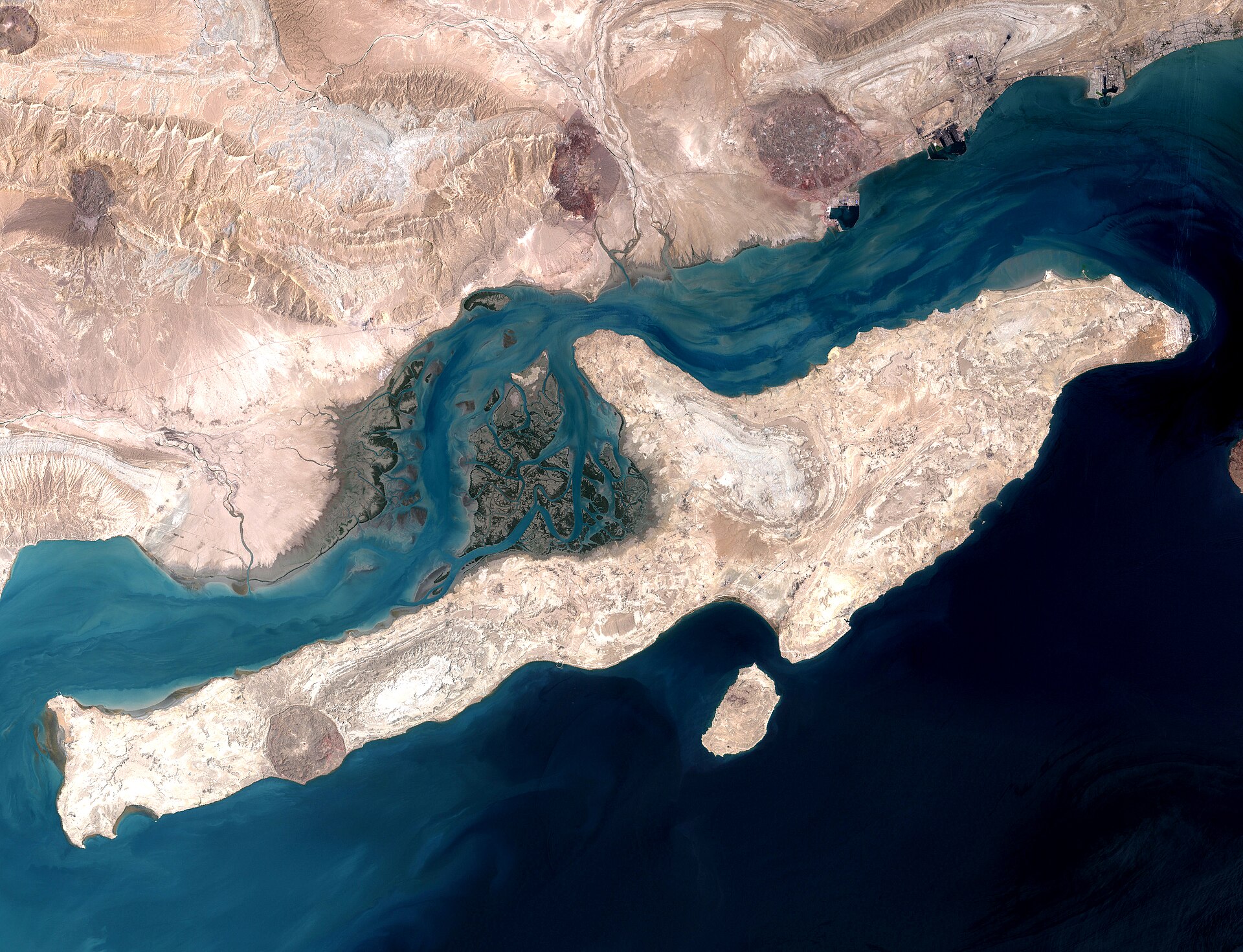
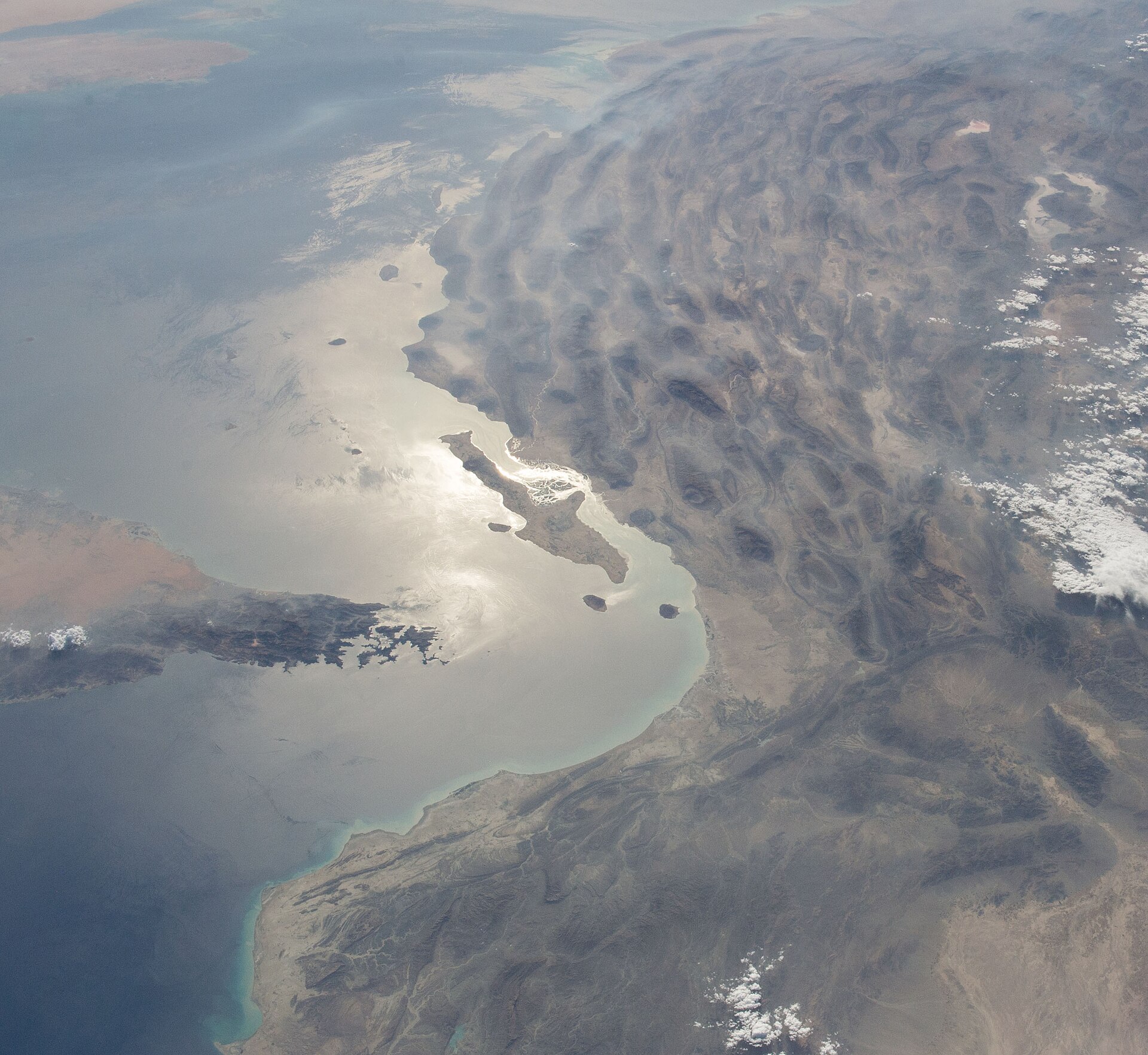
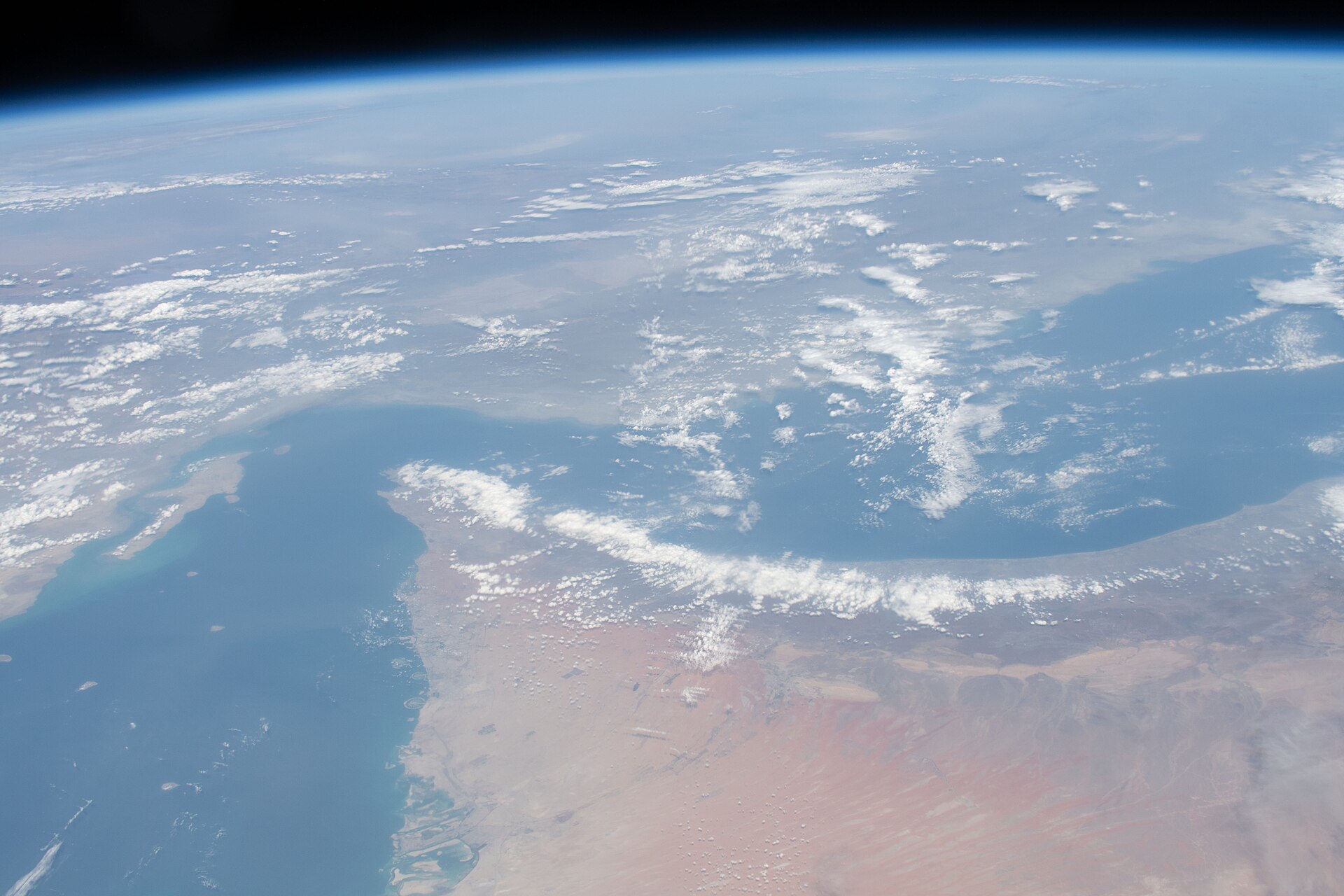
Iran has mined the Strait of Hormuz, declared it closed to uncommitted commercial shipping, and required all vessels to coordinate with IRGC naval authorities before transiting. Since the mine barrier went operational, daily tanker transits have fallen from 85 to 4 and crude throughput has dropped 86 per cent, according to IMF PortWatch and Kpler data respectively.
The closure has come in phases. Iran first shut the strait on 4 March 2026, hours after US and Israeli forces struck targets inside Iranian territory on 28 February. A ceasefire on 8 April temporarily reopened the waterway. When the truce collapsed in July, the IRGC announced a second closure and began laying mines. The pre-war strait carried approximately 20 million barrels of crude per day through 130 to 140 daily ship transits.
The early rounds of clearance appeared to work. CENTCOM confirmed on 25 August that US underwater drones had identified more than 100 suspected mines and that the Traffic Separation Scheme had been declared safe. By late September, that assurance had expired. TechTimes reported 10 tankers struck between 28 September and 4 October. The US sank 16 Iranian minelayers earlier in the conflict. The IRGC reseeded the channels anyway, drawing on a stockpile that analysts estimate at between 2,000 and 6,000 naval mines, according to TechTimes on 19 October.
Since 14 July, CENTCOM has counted 135 commercial ships turning around rather than attempt the passage, according to CBS News on 10 October. Maj. Gen. Mostafa Izadi, the IRGC’s deputy commander-in-chief, told PressTV on 20 October that the closure carried no expiration.
The Middle East briefing 3,000+ readers start their day with.
One email. Every weekday morning. Free.
“This situation will continue for as long as the Islamic Republic of Iran decides.”
Maj. Gen. Mostafa Izadi, IRGC deputy commander-in-chief, PressTV, 20 October 2026
Three Claimed Strikes and the ‘Violating’ Doctrine
The IRGC’s account of the mine barrier operates on its own terms. PressTV reported on 20 October that the most recent vessel to strike a mine was an unnamed supertanker carrying more than two million barrels of crude, which exploded and caught fire south of the strait. The vessel, PressTV said, had used an “unauthorized passage” and had switched off all radar and navigation systems. By 21 October, the IRGC claimed three tankers had struck mines in the preceding days, according to the Straits.live daily brief aggregating nine outlets.
Independent verification has not followed. gCaptain, the maritime industry publication, reported on 21 October that “evidence remains elusive” and that neither vessels’ names nor their locations had been independently confirmed. The Joint Maritime Information Centre’s advisory of 18 October noted “no substantiation” for the earlier round of IRGC mine-strike claims. The data here is thin on both sides — the IRGC names no ships, and the monitoring agencies have not been able to confirm or rule out the strikes from satellite imagery or AIS data.
The gap between the IRGC’s claims and verifiable evidence has not prevented the doctrine from functioning. Since 28 February, Iran has required all vessels to coordinate with IRGC naval authorities before transiting the strait. Ships that fail to do so are designated “violating” — a term PressTV and Tasnim use without quotation marks, as though the designation were self-evident. Rear Admiral Ali Azmaei of the IRGC Navy warned on 18 October that any vessel deactivating its navigation or identification systems would be considered “hostile,” according to Al Jazeera. Tasnim’s 19 October dispatch reinforced the warning: non-compliant vessels could expect “a firm and decisive response.”
The framework inverts the conventional burden. A tanker need not be caught breaching sanctions or carrying contraband. Under the IRGC’s rules, transiting without Iranian coordination is the offence; the mine is the consequence. Xinhua, China’s state news agency, reported the claims on 19 October without challenge, noting that “over the past week, the navy has reported that several ‘violating’ oil tankers attempting to cross the Strait of Hormuz exploded after striking naval mines.” The quotation marks around “violating” were Xinhua’s; in PressTV’s version, they were absent.
The doctrine’s effectiveness does not depend on the accuracy of the IRGC’s strike claims. Whether three supertankers or none actually hit mines this week, the combination of a declared minefield, a coordination requirement enforced by an unpredictable physical consequence, and the visual spectacle of burning tankers — amplified across Iranian, Chinese, and Western media — has produced its intended result: four vessels a day attempt what 85 once managed. A ship-owner in London or Singapore calculating a transit decision does not need independent verification of a mine strike to decline the passage. The IRGC’s claim, the absence of disproof, and the freight market’s pricing of the risk are sufficient. gCaptain’s scepticism is editorially responsible; commercially, it is beside the point.
Why Has the US Not Cleared the Mines?
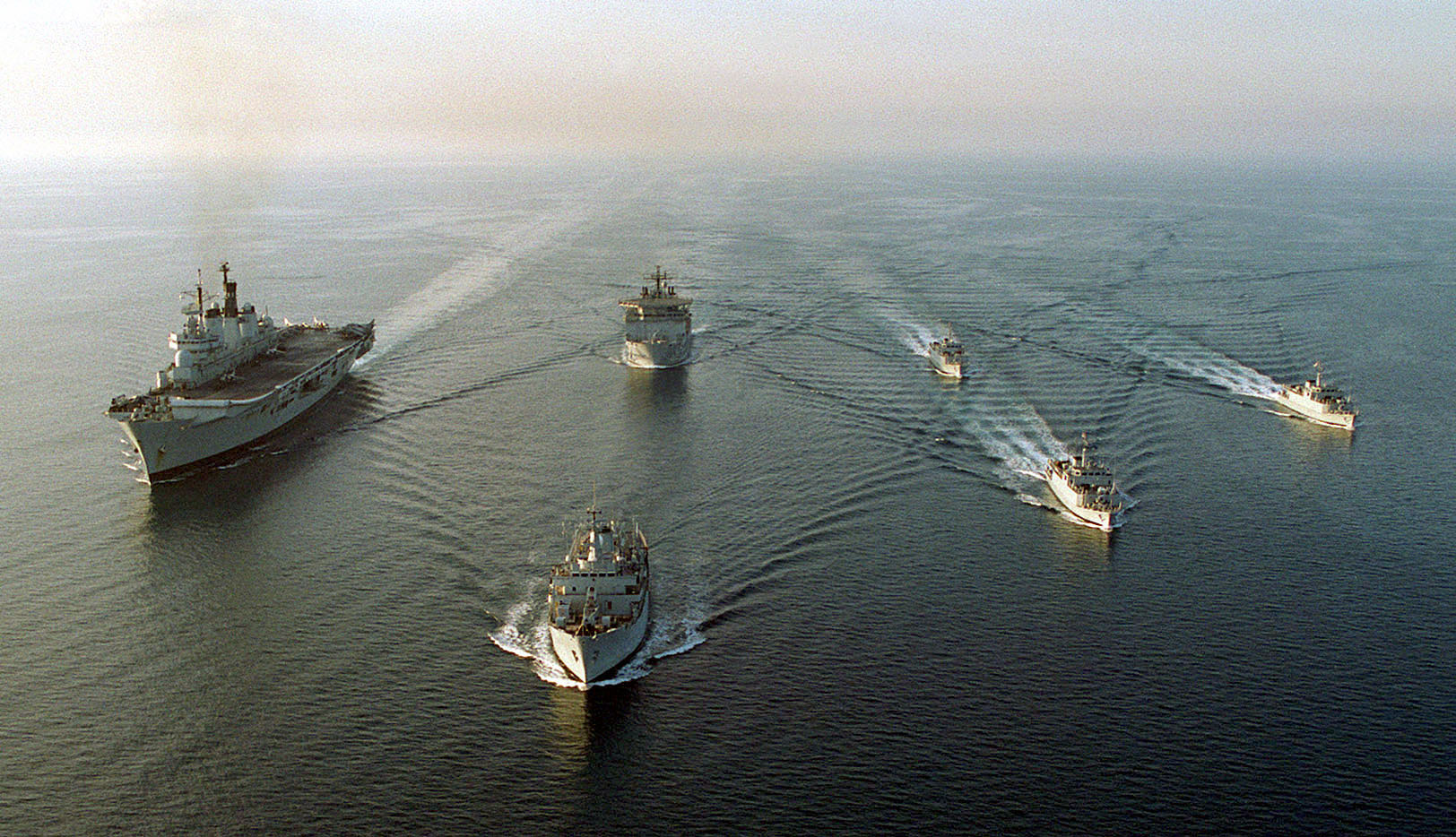
The US Navy retired its Bahrain-based Avenger-class mine countermeasure ships in 2025, according to Navy Times. Three Independence-class littoral combat ships with mine-countermeasure mission packages replaced them. A Department of Test and Evaluation report, cited by NPR in April 2026, concluded that the LCS MCM capability “has yet to be demonstrated under real-world conditions.” The political constraint is equally direct: The National reported on 8 October that President Trump ruled out military strikes on Iran before the 3 November midterm elections.
The US military presence in the region is large and, for the specific problem of mines, functionally mismatched. The USS George Washington and USS George H.W. Bush carrier strike groups are deployed in the Arabian Sea, according to Army Recognition. Capt. Nicholas DeLeo, commanding officer of the George Washington, told Gulf News on 20 October that Iranian forces had launched attacks near Hormuz, but that all strikes on US vessels were “unsuccessful.”
CENTCOM’s commander, Admiral Cooper, stated on 17 October that “the Strait of Hormuz is controlled by the United States and our regional partners, not Iran,” according to TechTimes citing the CENTCOM statement. The PortWatch transit figures from the same week told a different story. An IISS Survival analysis in June 2026 had already observed that US planners “seemed to downplay the likelihood and ramifications of an actual blockage of the strait.” CENTCOM issued a formal declaration in August that shipping lanes were open; the policy decision behind Washington’s abstention from escort operations tracks the gap between that statement and fifteen subsequent UKMTO-logged attacks.
The mismatch between the deployment and the problem is specific. Mine countermeasures demand slow, shallow-draught vessels towing sonar arrays and deploying unmanned submersibles to identify and neutralise individual mines across miles of shipping channel — work measured in days per square nautical mile, not in carrier air sorties. The USS George Washington’s air wing can intercept Iranian missile launches — DeLeo’s account confirms it has. What an air wing cannot do is locate a contact mine resting in the sediment of a shipping lane. The Avenger-class ships were retired in 2025 not because the mine threat had diminished but because the LCS modular concept was expected to deliver equivalent capability from a more versatile hull. The DoT&E’s assessment — that the replacement system remained operationally unproven — was published months after the ships it replaced had already departed Bahrain.
The political calendar compounds the operational gap. Daniel Byman of the Center for Strategic and International Studies described the broader dynamic in an April 2026 commentary as “a struggle of political endurance and bargaining leverage.” The carriers, in this reading, are not positioned to clear the strait. They are positioned to ensure that the blockade does not escalate into something worse — direct strikes on Gulf ports, attacks on US warships, or a wider naval confrontation — while Washington waits for conditions it considers favourable for a deal.
Can Saudi Arabia Export Without Hormuz?
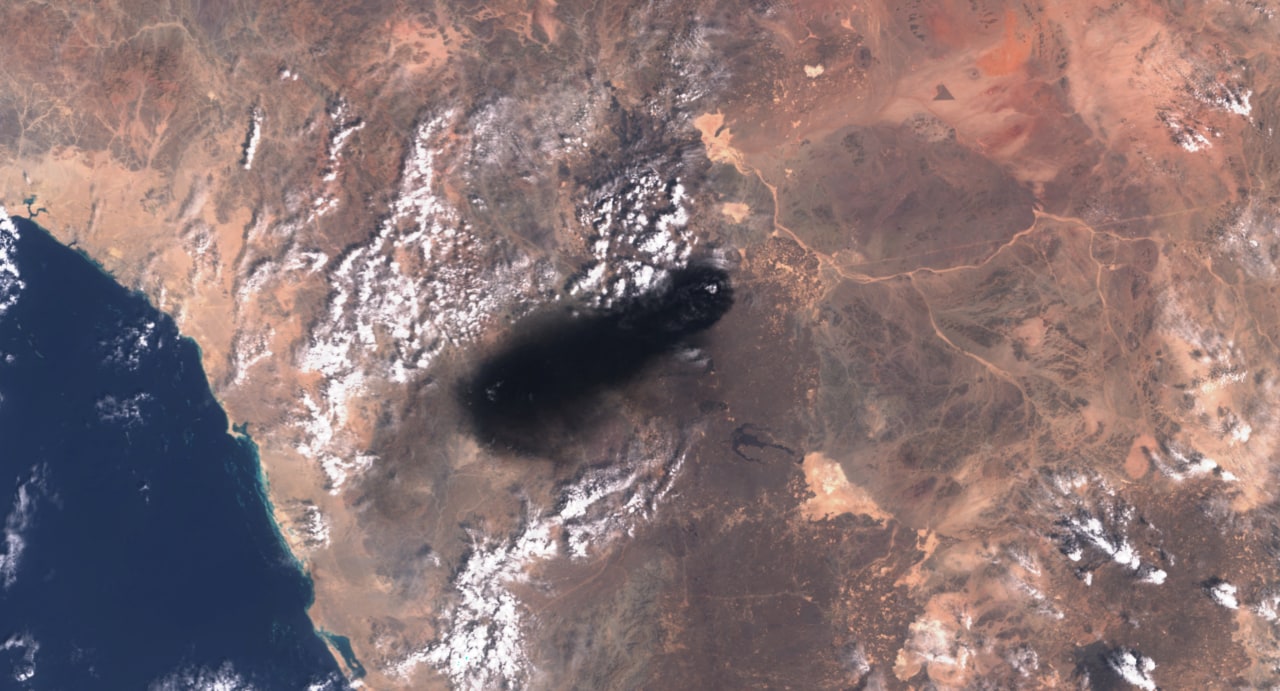
Saudi Arabia’s only high-volume alternative to the Strait of Hormuz is the East-West pipeline to Yanbu on the Red Sea, which Enerdata reported flowing at 5.8 million barrels per day in early October against a design capacity of 7 million. Even at maximum throughput, the pipeline cannot replace the crude volumes that once transited the strait, and Yanbu itself faces Houthi missile attacks — Saudi forces intercepted a projectile heading toward the terminal on 19 October, according to CNBC.
Saudi crude shipments fell to 6 million barrels per day in August, according to IEA data reported by Trend on 14 September. Saudi output dropped by 2.6 million barrels per day that month. The kingdom’s production target for November remains 10.5 million barrels per day, as Enerdata reported on 4 October. The pipeline to Yanbu — restarted on 22 September after a suspension, according to Saudi Gazette via Zawya — is carrying the bulk of what still leaves the country. Even at its 7-million-barrel design ceiling, the line cannot bridge the gap between what the kingdom pumps and what it can ship.
| Metric | Value | Source |
|---|---|---|
| Hormuz daily tanker transits | 4 (baseline: 85) | IMF PortWatch, Oct 18 |
| Hormuz crude throughput | 2.9 mb/d (was 20.8, Oct 8) | Kpler via Al Jazeera |
| Saudi crude shipments (Aug) | 6 mb/d | IEA via Trend, Sep 14 |
| East-West pipeline flow | 5.8 of 7 mb/d capacity | Enerdata, Oct |
| Ships turned around since 14 Jul | 135 | CENTCOM via CBS News |
| VLCC Gulf-China charter rate | $1.2m/day (was ~$80k) | LSEG via bdnews24, Oct 5 |
| Brent crude (21 Oct) | $110.46 | Straits.live |
Yanbu is not immune to the war. The Houthis claimed a missile strike on the terminal on 19 October; Saudi forces said they intercepted the projectile, according to CNBC. France had already deployed soldiers, radars, and defence systems to the facility after earlier strikes in September, France24 reported on 24 September. The French presence addressed the immediate missile threat but not the underlying strategic exposure. Saudi Arabia’s entire pipeline export capacity now runs through a single Red Sea terminal supplemented by a foreign garrison that arrived about four weeks ago. Before the blockade, the East-West pipeline was a contingency route — Yanbu operated well below its terminal handling capacity. Iran’s mine barrier has converted the contingency into the only high-volume channel. The Houthis, who have tested the coalition’s protective reach throughout October, have every incentive to test it again.
The broader economic damage is accumulating on a fiscal framework that assumed the exports the blockade has removed. Saudi Arabia’s 2026 deficit has been revised upward to 245 billion riyals, from a budgeted 165 billion, according to Zawya citing Reuters on 30 September. Real GDP is projected to contract by 3.6 per cent this year. The infrastructure to ship Saudi crude at anything approaching full volume does not exist as long as Hormuz is closed and Yanbu remains the sole outlet.
The damage is not confined to the ledger. Dammam, the eastern logistics hub, absorbed a direct strike that disrupted the Aramco air bridge in early October. India issued a security advisory for its 2.65 million nationals in the kingdom, stopping just short of ordering evacuation. The advisory reflected a calculation that the war’s perimeter had moved close enough to civilian infrastructure to warrant a formal warning — without yet reaching the threshold that would trigger the political consequences of a full withdrawal order.
What Does International Law Say About Mining a Strait?
The Hague Convention VIII of 1907 prohibits laying automatic contact mines with “the sole object of intercepting commercial shipping” and requires that such mines become harmless within one hour of breaking loose from their moorings. Mark Nevitt, writing for Just Security in March 2026, argued that Iran’s mining of Hormuz violates the convention because “no convenient or commercially acceptable alternative route exists for neutral shipping.” The US Naval War College’s Newport Manual supports the same conclusion: mining a strait is permissible under the laws of armed conflict only “if an alternative convenient or commercially acceptable route is available to neutral merchant shipping.”
Iran’s legal counter rests on a body of law it has deliberately left unratified. Tehran signed the UN Convention on the Law of the Sea in 1982 but has never ratified it. Under UNCLOS, transit passage through international straits cannot be suspended — a position the United States and most maritime scholars endorse as binding customary international law. Alexander Lott of the Norwegian Centre for the Law of the Sea challenged the certainty of that consensus in a March 2026 EJIL Talk article. “It is not clear if the right of transit passage forms part of customary international law,” Lott wrote. Iran, he suggested, may qualify as a “persistent objector” to the transit passage regime — a legal status that would exempt it from a customary norm it has consistently rejected.
Tehran’s operational doctrine follows from this reading. If only innocent passage — not transit passage — applies in Hormuz, then Iran may regulate or suspend navigation through the strait on security grounds. The IRGC’s requirement that all vessels coordinate before transiting, and its designation of non-compliant ships as “violating,” derives from this legal claim. The IRGC’s insistence that the strait will remain closed is, in Iran’s framing, an exercise of authority over waters it considers subject to Iranian jurisdiction rather than a violation of international transit rights.
The Freight Market as Enforcer
Mines close a waterway. Freight and insurance markets close the trade routes that depend on it. VLCC charter rates on the Gulf-to-China corridor — which carries the bulk of Middle Eastern crude to Asia — have reached $1.2 million per day, up from approximately $80,000 twelve months earlier, according to bdnews24 citing LSEG data on 5 October. Brent crude traded at $110.46 per barrel as of 03:05 UTC on 21 October, according to Straits.live.
The freight premium functions as a second-order blockade. A tanker owner weighing a Hormuz transit now faces mine risk, insurance withdrawal, war-risk surcharges, and crew contracts that exclude declared conflict zones. Even after a physical reopening, Hapag-Lloyd has estimated that “about six weeks” would be needed to restore normal shipping networks, according to TechTimes on 19 October. Vessel scheduling, port berth allocation, crew contracts, and insurance underwriting do not reverse on the same timeline as a ceasefire announcement. War-risk policies, once withdrawn, must be individually renegotiated — a process that depends not on the clearing of mines but on the insurer’s assessment that the risk of new mines is acceptably low.
Daniel Byman of CSIS identified a further constraint. Interdicting Chinese-flagged tankers — which carry much of the Gulf crude bound for Asia — “would risk escalation with a peer competitor,” he wrote in an April 2026 analysis. The crude that still moves through or near the strait does so under flagging and commercial arrangements that Washington has not confronted. The infrastructure vulnerabilities Tehran has targeted extend beyond the waterway itself — subsea cables, port logistics, and now the freight and insurance systems that underpin tanker operations.
What Happens After 3 November?
The US political calendar has given the blockade a fixed horizon. President Trump ruled out military action against Iran before the 3 November midterm elections — a position first reported by The National on 8 October and unchanged since. The IRGC knows the date as well as the White House does.
Whether the post-midterm window produces a different dynamic depends on capabilities that have not improved during the blockade. The minesweeping capacity is the same as it was in July. Iran’s mine stock is no smaller. The East-West pipeline remains the kingdom’s sole high-volume alternative, and the Houthis continue to probe Yanbu’s air defences. Saudi Arabia’s recent experience with air-defence reliability has offered limited reassurance on that front.
The terms of a negotiated opening are already public. Iran’s chief negotiator, Abbas Araghchi, outlined a seven-day roadmap in September: the strait reopens if the US lifts its naval blockade, issues sanctions waivers, and releases approximately $12 billion in frozen Iranian assets, according to Al Jazeera on 25 September. The proposal positions Iran as a state willing to negotiate — on a timeline and at a price it has set — while the mines maintain the negotiating position.
Riyadh’s position in any post-midterm negotiation is structurally constrained. The Araghchi roadmap is a bilateral US-Iran instrument: the conditions are American — lift the blockade, waive sanctions, release assets — and the concession is Iranian — reopen the strait. Saudi Arabia, which bears the largest fiscal burden of the closure and whose crude made up the largest single-country share of pre-war Hormuz traffic, does not appear in the framework as a party. The kingdom’s ability to influence the outcome depends on Washington’s willingness to press Saudi interests inside a channel Tehran designed for two participants.
The interval between now and 3 November is, in operational terms, a period during which the mine barrier faces no military threat of removal. Izadi’s “as long as the Islamic Republic of Iran decides” reads differently alongside a calendar that guarantees thirteen days of US inaction. The foreign deployments that have arrived in the Gulf — RAF Typhoons, French radar arrays — are configured for air defence, not mine warfare. A diplomatic reopening of the strait, if it comes, will not produce a physical one on the same schedule. Mines do not observe ceasefires, and the vessels that could remove them are the ones the US Navy decommissioned last year.
Frequently Asked Questions
What types of mines is the IRGC deploying in Hormuz?
The IRGC is deploying at least two identified types: Maham-3 moored mines and Maham-7 bottom mines, which rest on the seabed and are triggered by the magnetic or acoustic signature of a passing vessel, according to TechTimes on 19 October. Iran’s total mine inventory is estimated at between 2,000 and 6,000 units. The IRGC has demonstrated the ability to reseed cleared channels within weeks — CENTCOM declared the Traffic Separation Scheme clear on 25 August, and new mine strikes were reported by late September.
How does the 2026 blockade differ from the 1987-88 Tanker War?
During the 1987-88 Tanker War, Iran laid mines in the Persian Gulf and the US responded with Operation Earnest Will — a mission to reflag Kuwaiti tankers under the American flag and provide direct naval escort through the war zone. The US Navy maintained dedicated minesweeping vessels forward-deployed in the Gulf throughout that operation. In 2026, the carrier strike groups in the Arabian Sea are positioned for deterrence and air-defence operations, not for escort or mine clearance. The Avenger-class minesweepers that would have performed the clearing role were retired from Bahrain in 2025, a year before the blockade began.
What is Araghchi’s seven-day roadmap?
Abbas Araghchi’s September 2026 roadmap sets three conditions for a seven-day reopening: a US naval blockade lift, sanctions waivers, and release of approximately $12 billion in frozen Iranian assets (Al Jazeera, 25 September). Washington has neither publicly accepted nor rejected the proposal. Absent from the roadmap is any provision for how mine clearance would proceed, who would bear liability for cargo and vessels already destroyed, or on what timeline international war-risk insurers would reinstate coverage — the commercial and legal obstacles that persist after any political agreement.