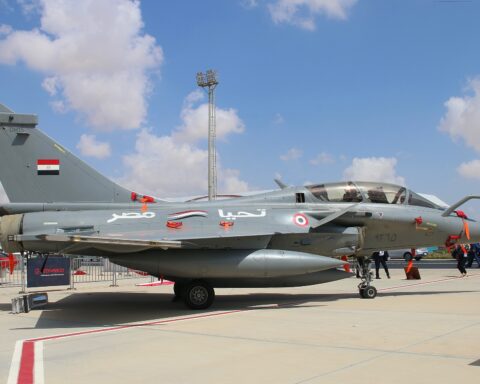
LONDON — Britain committed RAF Typhoon fighter jets to defend Saudi cities against Houthi drone and missile attacks on 20 October, a deployment announced not through a Commons debate or a parliamentary vote but through a written statement by Defence Secretary Wes Streeting — the lowest form of engagement Westminster offers its elected members on a question of war and peace. Forty-eight hours earlier, the question hanging over British involvement in the Gulf was whether the Royal Navy could even count the Houthi attacks on shipping it had no warship close enough to stop; now the commitment extends to combat aircraft flying defensive patrols inside Saudi airspace, a quiet A400M Atlas transport aircraft moving defence materiel between Saudi bases, and UK military advisers embedded with Saudi staff officers — all authorised under the royal prerogative, with no stated exit condition, no collective security framework, and no obligation to tell parliament first.
The announcement caps a seven-month escalation that began in March 2026 with Sky Sabre air-defence systems, moved to a Voyager tanker in September, and now reaches the RAF’s frontline multi-role fighter. Each step was framed as temporary, defensive, and under review. Each step remains in place when the next arrives. The written statement that disclosed the Typhoons also extended the Voyager’s mission, which the Ministry of Defence said “includes operations intended to degrade Houthi military targets in Yemen” — language that sits alongside the insistence that the Typhoon jets “will not conduct offensive strikes against the Houthis.” Britain is, on paper, defending Saudi skies while refuelling the aircraft that bomb Yemen, and the mechanism that authorised both was one minister’s signature on a document most MPs will read in the next morning’s Hansard.
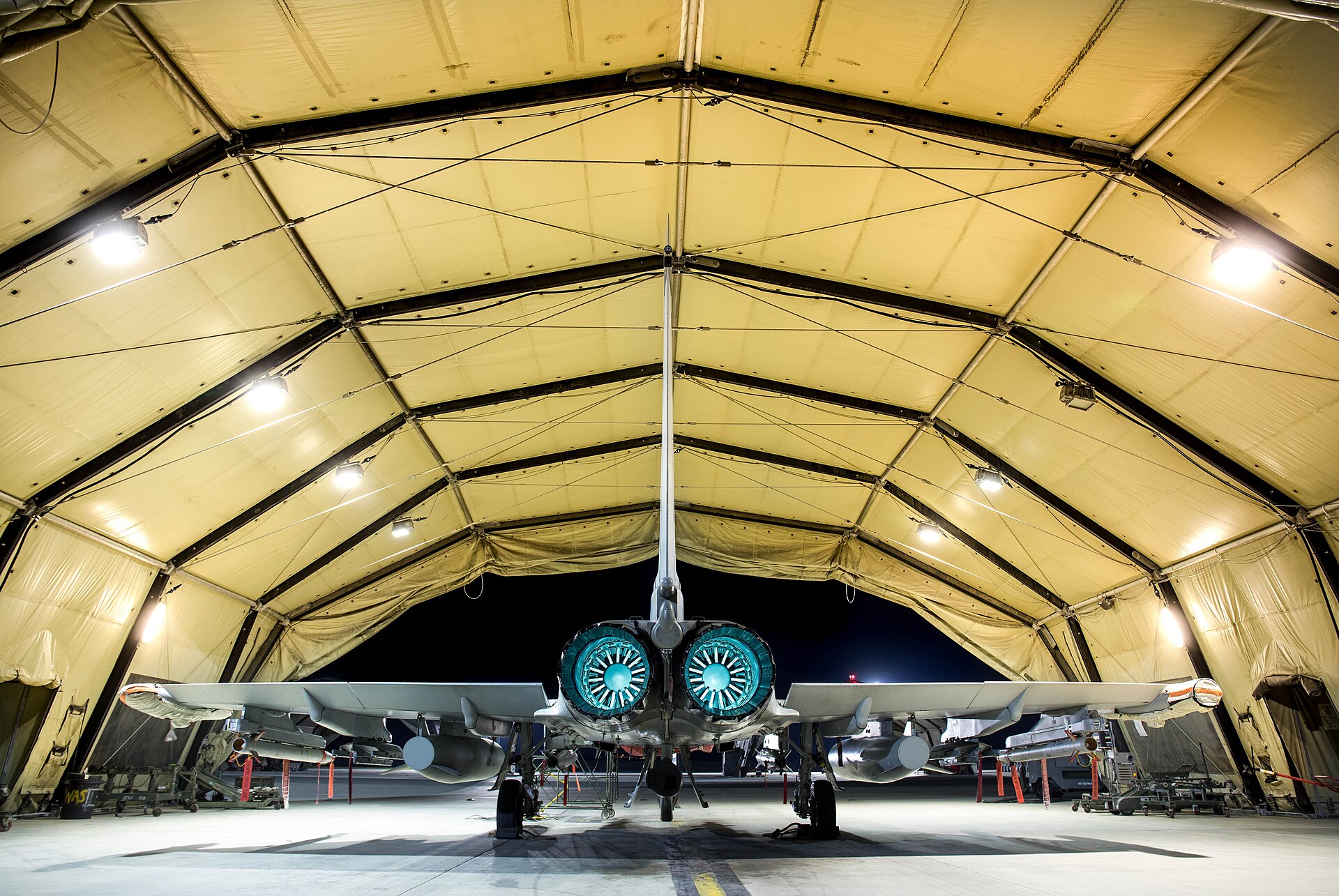
Table of Contents
- A Written Statement, Not a Vote
- From Sky Sabre to Typhoons: Seven Months in Three Steps
- How Can the Jets Be Defensive If the Tanker Enables Offensive Strikes?
- The Cyprus Problem: 1,000 Miles From the Fight
- Why Did Egypt Need a Parliamentary Vote and Britain Did Not?
- Outside the Makkah Pact, Outside NATO, Outside Any Framework
- What Does the RAF Lose While Its Typhoons Fly Saudi Patrols?
- The Adversary Response That Has Not Arrived
- Akrotiri Already Took Iranian Fire
- Who Decides When Britain Leaves?
A Written Statement, Not a Vote
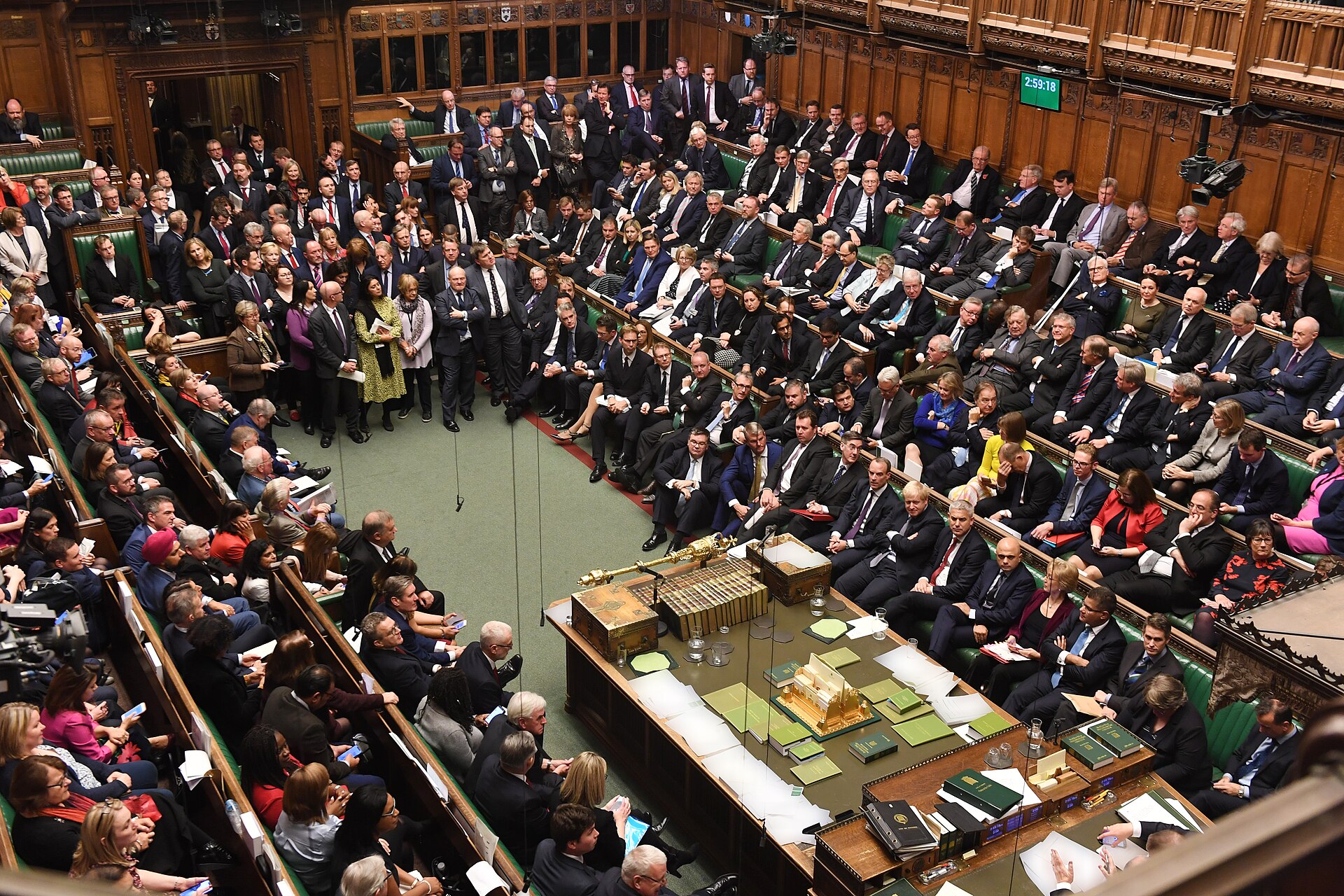
Deploying UK armed forces abroad is a royal prerogative power exercised by ministers; parliament has no legally established role, and the government has no legal obligation to consult or inform the House of Commons before sending troops, aircraft, or ships into a theatre of war. The Commons Library briefing paper CBP-10001, published in March 2026, is precise on this point: the convention that grew after Iraq — when Tony Blair sought and won a Commons vote, 412 to 149, on 18 March 2003 — was never codified in statute. Votes were held for Libya in 2011 and Syria in 2013, but in each case the government chose to seek one; nothing compelled it. Under Andy Burnham, the current prime minister who replaced Keir Starmer after Starmer’s resignation in June 2026, no such choice was made.
Streeting’s written statement described the Houthi attacks as “absolutely despicable” and said that “RAF Typhoons will fly defensive air missions to help protect Saudi airspace from drones and missiles.” The same document added a sentence that defence correspondents might have expected in a closing paragraph rather than buried in the middle: “The government remains clear that there is no long-term military solution to the conflict in Yemen.” There is a gap between those two positions that no paragraph in the statement attempts to bridge — if no military solution exists, the deployment must eventually end, but the statement says nothing about when, under what conditions, or who makes that decision. The mechanism matters because it defines accountability.
A vote produces a record of which MPs supported the deployment, what conditions they attached, and what the government said from the dispatch box under questioning. A written statement produces a document placed in the House of Commons Library, often read by journalists before it is read by backbenchers. Jeremy Corbyn’s Military Action (Parliamentary Approval) Bill, introduced on 4 March 2026, would have required parliamentary approval for deploying armed forces in armed conflict; it has not passed. Conservative MP Bernard Jenkin said in March 2026 that “we are already at war” — a description that, if accurate, makes the absence of a vote more remarkable, not less.
From Sky Sabre to Typhoons: Seven Months in Three Steps
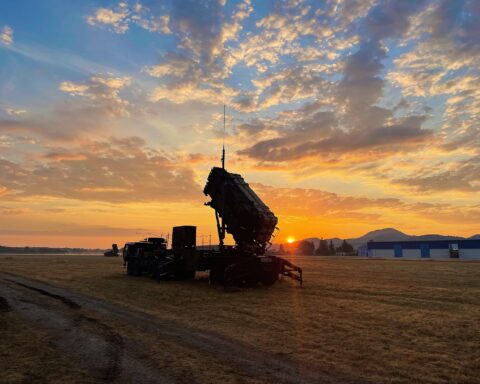
The UK commitment to Saudi Arabia’s air defence did not begin on 20 October. In March 2026, Britain deployed Sky Sabre ground-based air-defence systems to Saudi Arabia — short-range missile batteries designed to intercept drones and cruise missiles at closer ranges than Patriot systems. By that point, British pilots had already logged more than 1,200 flying hours on defensive missions across the Gulf region since the Iran conflict began, according to Forces News reporting in March 2026. The framework was being built before anyone called it a deployment.
The Middle East briefing 3,000+ readers start their day with.
One email. Every weekday morning. Free.
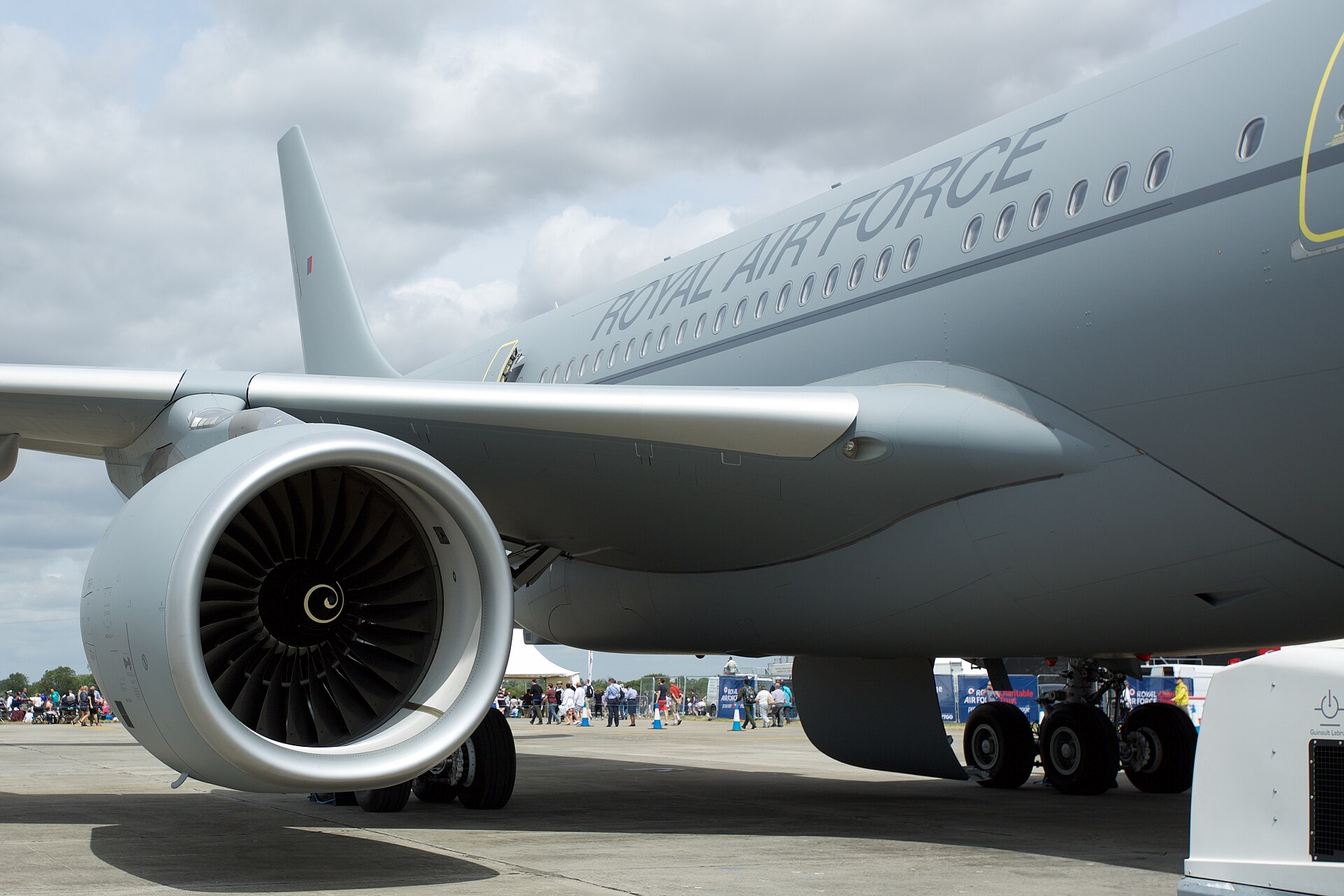
The second step came on 22 September 2026, when Prime Minister Burnham announced an RAF Voyager air-to-air refuelling aircraft operating from RAF Akrotiri in Cyprus to support Saudi defensive air operations. Burnham described the commitment as “time-limited” and said it would be “kept under review.” Defence Minister Luke Pollard, explaining the rationale in September, said the deployment was “purely defensive” but added that “what happens in that part of the Middle East is absolutely vital for our own national security and our own economic security” — naming energy prices as a stated motivation. Before the Typhoon announcement, Burnham told the House of Commons the Voyager had completed 14 operational missions.
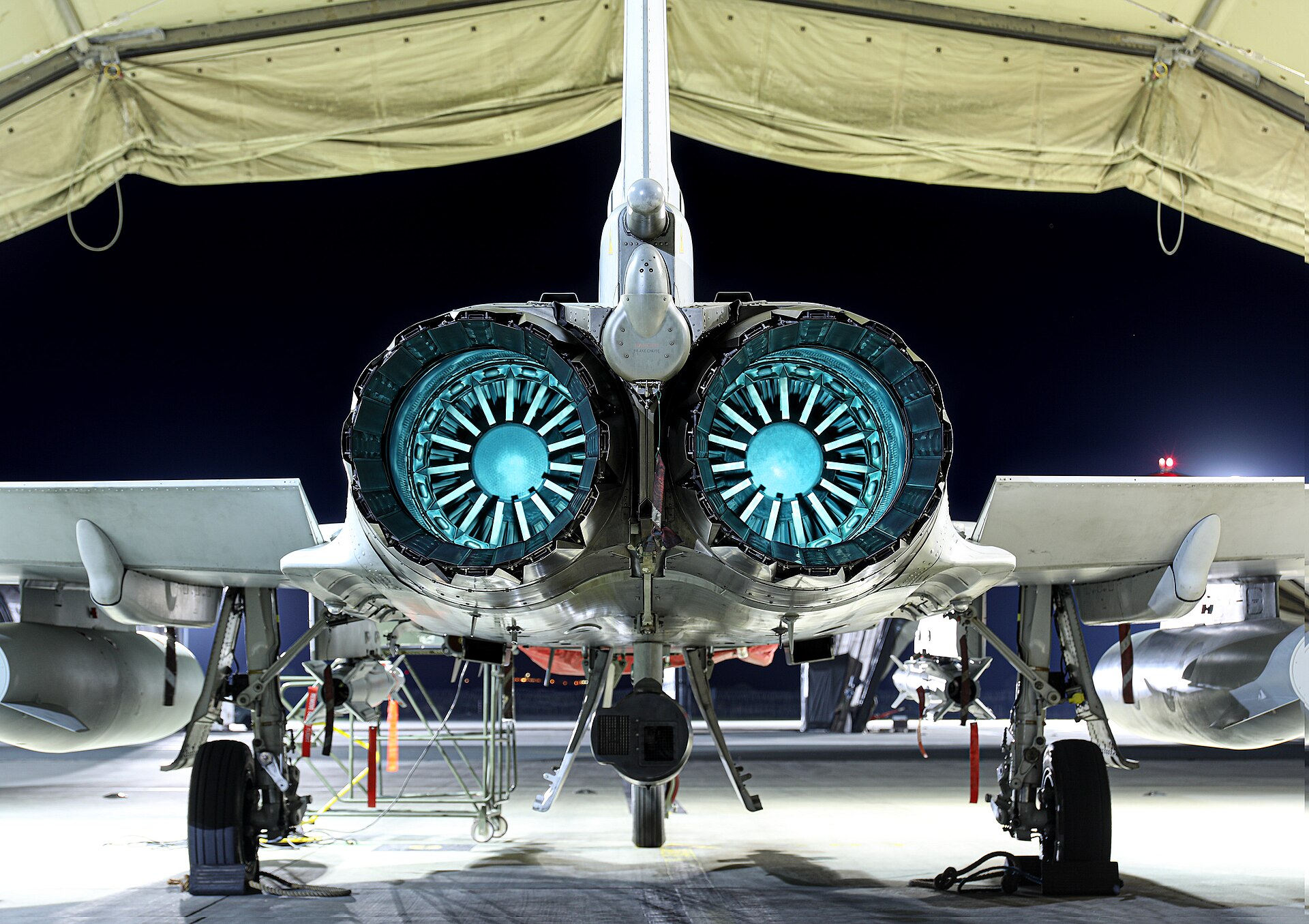
The Typhoons represent a qualitative shift from what came before. Sky Sabre is a ground-based system parked on a base; the Voyager is a tanker that stays behind the front line; Typhoon FGR4s flying defensive counter-air missions are combat aircraft operating in airspace where Houthi drones, cruise missiles, and ballistic missiles arrive. The Ministry of Defence did not specify how many Typhoons are deployed, but defence analyst Michael Clarke — former Director-General of RUSI, speaking on Sky News — suggested “about four” aircraft. Four jets is not a squadron; it is enough for a continuous rotation of patrols, assuming a level of serviceability the RAF, stretched thin across multiple commitments, may struggle to guarantee.
How Can the Jets Be Defensive If the Tanker Enables Offensive Strikes?
The Ministry of Defence’s written statement contains a contradiction that Streeting did not address and no journalist has yet forced him to resolve in a live setting. The Typhoons, it says, “will not conduct offensive strikes against the Houthis” — the mission is framed as defensive counter-air only, protecting Saudi cities and infrastructure from incoming aerial threats. But the same statement extended the Voyager tanker’s mission, describing it as supporting Saudi defensive air operations “including operations intended to degrade Houthi military targets in Yemen.” That phrase — “degrade Houthi military targets in Yemen” — is the language of offensive bombing, and the Voyager is the aircraft that keeps Saudi jets in the air long enough to do it.
The legal and political distinction between a Typhoon that shoots down a drone over Riyadh and a Voyager that refuels a Saudi F-15 on its way to bomb Sanaa may be real in international humanitarian law, but it will not survive the first question from an opposition MP who has read the statement carefully. Britain is not merely defending Saudi airspace; it is sustaining the offensive capacity of the coalition that is fighting the war in Yemen, a war that the same statement says has no military solution. The tension is not accidental — it reflects a government that wants the political cover of “defensive only” while maintaining a military relationship that requires enabling offensive operations.
This duality is not new. The UK sold Saudi Arabia the Typhoons that fly in the Royal Saudi Air Force and provided the maintenance contracts that keep them airworthy. The question raised by the 20 October statement is not whether Britain is involved in Saudi Arabia’s war — that was settled years ago — but whether the government can credibly describe any part of its involvement as purely defensive when its tanker aircraft are fuelling bombing runs. Burnham’s September phrase, “time-limited,” looks less like a policy constraint and more like a holding answer that no one has revisited.
The Cyprus Problem: 1,000 Miles From the Fight
The Typhoons are currently based at RAF Akrotiri in Cyprus, approximately 1,000 miles from Yemen. Michael Clarke, assessing the deployment for Newsweek, noted that operating combat air patrols from that distance is “not very feasible” and that the jets “would need to operate closer to the region” for sustained missions. The jets can reach Saudi airspace from Cyprus with air-to-air refuelling support, but cannot sustain extended patrols there without the very Voyager tanker whose mission has just been extended.
The basing question is, in practice, a question about depth of commitment. If the Typhoons remain in Cyprus, they are a rapid-reaction force that can surge into Saudi airspace when an attack is underway but cannot maintain a continuous defensive presence. If they move to a Saudi base — or to a Gulf state that will host them — the deployment becomes semi-permanent, the footprint grows, the logistics chain lengthens, and the political exposure deepens. The MoD statement does not say where the jets will operate from, which may mean the decision has not been made, or may mean the government prefers not to disclose it.
Clarke’s broader point about the RAF fleet being “pretty stretched” because it polices NATO airspace over the Baltic adds a material dimension. Every Typhoon sent to the Gulf is a Typhoon not available for NATO’s enhanced air policing missions in Eastern Europe, at a time when those rotations are already running at high tempo. The RAF cannot be in two places at once with the same aircraft, and the number Clarke suggested — about four — is not a number that allows for comfortable rotation between theatres without pulling aircraft from somewhere else.
Why Did Egypt Need a Parliamentary Vote and Britain Did Not?
On 18 October 2026 — two days before Streeting’s written statement — Egypt’s National Defence Council, chaired by President Abdel Fattah el-Sisi, pledged “all necessary and possible forms of support” to Saudi Arabia. Egypt’s parliament then convened in a closed emergency session, because under Egyptian law the deployment of armed forces abroad requires a two-thirds parliamentary majority. As of the latest reporting, the vote had not been finalised, and Cairo’s commitment remained a pledge awaiting legislative action. Egypt, not generally held up as a model of democratic governance, required a supermajority vote before its president could send forces to support Saudi Arabia.
Britain required a written statement. The contrast is not about the quality of Egyptian democracy — it is about the structural absence of any parliamentary mechanism in UK law that forces the government to seek approval. The post-Iraq convention was a political norm, not a legal requirement, and norms survive only as long as governments choose to follow them. Under Starmer’s government, in March 2026, UK minister Steve Reed called a Commons vote on military action “unprecedented” because the matter concerned “defending British people and British assets” — a framing that defined the deployment as so clearly defensive that a vote would be a novelty rather than a necessity. The Burnham government appears to have inherited the reasoning along with the prerogative.
The Egyptian comparison illuminates something that the legal technicalities can obscure: the question is not whether a vote is required but whether a vote is owed. The Houthi campaign against Saudi Arabia — which struck King Khalid International Airport on 10 October, killing 13 people and wounding 308 to 309 — has now drawn British combat aircraft into a conflict zone where British pilots may fire weapons in anger. That is, by any common understanding, a decision about war, and the people whose taxes fund it and whose forces fight it learned about it from a document placed in the Commons Library.
Outside the Makkah Pact, Outside NATO, Outside Any Framework
The Makkah Defence Agreement — signed by Saudi Arabia, Pakistan, and Turkey in August 2026 — provides a rudimentary collective security architecture for the coalition that is forming around Saudi Arabia. Its committee, led by Prince Khalid bin Salman, agreed in October to “activate collective deterrence measures” in response to Houthi attacks. The agreement creates, at minimum, a shared decision-making structure, a defined set of participants, and a joint command relationship. The UK is not a signatory, and no source connects the Typhoon deployment to any NATO authorisation. Britain’s commitment has no coalition architecture around it — no shared decision-making process, no defined withdrawal threshold, no mechanism for other participants to shape British operations or for Britain to shape theirs.
This matters for two reasons that the written statement does not acknowledge. First, bilateral commitments without multilateral constraints leave exit decisions entirely in the hands of the two capitals involved, and in practice that means the capital with more leverage — which, given the scale of UK-Saudi arms sales and the Saudi share of British defence-industry revenue, may not always be London. Second, the absence of a framework means the UK has no institutional cover for the decision. NATO membership creates collective responsibility; the Makkah pact, for all its limitations, distributes political risk among signatories. Britain is bearing the exposure alone, supported by nothing more than the bilateral defence co-operation plans already in place and the political relationship between Burnham and Riyadh.
France, by contrast, confirmed troops, radars, and air defences for the Red Sea port of Yanbu in September 2026 — a deployment that, while also bilateral, is geographically bounded and functionally specific. The US sent more than 100 military advisers under a new joint command for intelligence support, maintaining the careful distinction between providing information and providing firepower. Britain’s commitment, with Typhoons in the air and a tanker enabling offensive operations, sits at the more exposed end of a spectrum that every contributing nation has calibrated carefully against its own tolerance for risk. Burnham called it standing with Saudi Arabia; the question, which the written statement does not answer, is who stands with Britain.
What Does the RAF Lose While Its Typhoons Fly Saudi Patrols?
The RAF’s Typhoon fleet is the backbone of the UK’s air defence and its primary contribution to NATO’s collective security in Europe. Michael Clarke’s observation that the fleet is “pretty stretched” because it polices NATO airspace over the Baltic is not editorial — it is a description of operational reality. The RAF maintains a continuous presence in the Baltic states as part of NATO’s enhanced air policing mission, intercepting Russian aircraft that probe alliance airspace. It also contributes to the UK’s own Quick Reaction Alert posture, keeping Typhoons on standby at RAF Coningsby and RAF Lossiemouth to scramble against unidentified aircraft approaching British airspace.
Diverting about four aircraft to the Gulf — if Clarke’s estimate is accurate — does not collapse any of these commitments, but it compresses the margin. The number of Typhoons available for operations on any given day is considerably smaller than the total fleet size, once training, maintenance, and upgrade cycles are accounted for. Every aircraft allocated to Saudi patrols is one fewer in the pool for NATO rotations, homeland defence, and the exercises that sustain both. The cost is not dramatic enough to make headlines, which is precisely what makes it sustainable politically and corrosive operationally — a slow erosion of capacity that no single deployment creates but that cumulative commitments produce.
The deeper question is whether the Gulf deployment becomes permanent in all but name. The Sky Sabre systems sent in March are still there. The Voyager sent in September is still there, with its mission now extended. If the Typhoons follow the same pattern — announced as temporary, renewed as conditions persist, never formally withdrawn — the RAF will be maintaining a de facto forward presence in the Gulf alongside its European commitments, funded from a defence budget that the current government has not increased to match. Burnham’s September promise that the Voyager deployment was “time-limited” is, seven months into the broader pattern, starting to look like something the next prime minister will inherit rather than something the current one will end.
The Adversary Response That Has Not Arrived
At the time of writing, no direct Houthi or Iranian statement responding specifically to the 20 October Typhoon announcement has been published. The gap is worth noting rather than filling with speculation, because the adversary’s calculation about British involvement may be more consequential than the deployment itself. The most recent Houthi military statement, from spokesman Yahya Saree, pledged to “continue the escalating operations deep inside Saudi Arabia” — a commitment that predates and is presumably unaffected by the identity of the aircraft defending against those operations.
What exists from the Houthi side is a warning directed at a different newcomer. Yahya Al Raei, speaker of the Houthi-run Sanaa parliament, warned Egypt in October that military involvement “would pose a grave danger to its national security.” The warning was specific to Cairo and has not been replicated toward London, but the underlying logic — that joining Saudi Arabia’s defence creates a target — applies regardless of the flag on the aircraft. Iran’s most relevant statement came from Foreign Minister Araghchi in March 2026, when he said London’s Gulf involvement “would be seen as participation in aggression.” That was said before the Typhoon deployment, before the Voyager, before Sky Sabre; it was a warning about the trajectory, not the destination, and the trajectory has since accelerated.
The silence may be temporary, strategic, or simply a function of the speed at which the announcement moved. But any British assessment of the deployment’s risk that assumes the adversary has already priced in UK involvement is an assessment based on the absence of a response rather than the content of one — a distinction that matters when the adversary has shown a consistent willingness to escalate and an ability to strike targets that defensive systems were supposed to protect.
Akrotiri Already Took Iranian Fire
RAF Akrotiri, the base in Cyprus from which the Typhoons and the Voyager operate, was struck by Iranian Shahed drones in March 2026 — an attack that demonstrated a point the MoD statement does not mention: the infrastructure supporting Britain’s Gulf operations is already within adversary reach. Akrotiri is not a rear-echelon facility insulated from the conflict; it is a known staging point for British contributions to Saudi air defence, and its location is no secret to Iranian military planners or Houthi media operations.
The March drone attack on Akrotiri did not cause casualties sufficient to force a political crisis in London, but it established a precedent that the next attack may not replicate. If Typhoons flying from Cyprus or from a forward operating base in the Gulf become involved in shooting down Houthi drones — the core mission described in Streeting’s statement — the UK moves from enabling Saudi defence to participating in it directly, and the threshold for retaliation shifts accordingly. A Voyager refuelling Saudi jets is one degree removed; a Typhoon that destroys a Houthi drone is zero degrees removed. The distinction is not academic for the people who plan targeting packages on the other side of the conflict.
Burnham has positioned the deployment as standing with Saudi Arabia against a common threat, and the framing is consistent with the language used by every contributing nation since the airport strikes began in October. Prime Minister Burnham said “we will continue to stand with Saudi Arabia against the Houthis” and called the 10 October airport strikes “appalling attacks.” But the question that Akrotiri raises, and that the written statement ignores, is what happens when standing with Saudi Arabia means absorbing the risk that Saudi Arabia already absorbs — and doing so from a base that has already been hit.
Who Decides When Britain Leaves?
Streeting’s written statement contains no exit condition. It does not specify a date, a benchmark, a reduction in threat level, or a diplomatic outcome that would trigger withdrawal. It does not say how many Typhoons are deployed, which means parliament cannot monitor whether the commitment is scaling up. It does not say where the jets will operate from, which means parliament cannot assess whether the footprint is expanding. It says the government has “no long-term military solution to the conflict in Yemen,” but it does not say what the short-term military objective is, or how the government will know when it has been achieved.
The absence of exit conditions is not an oversight; it is a feature of deployments authorised under the royal prerogative without parliamentary scrutiny. A vote would have required the government to define the mission’s scope, answer questions about its duration, and accept amendments — or at least hear them. A written statement requires none of these things. The next formal opportunity for MPs to interrogate the deployment will be when the Defence Secretary appears before the House of Commons Defence Select Committee, or when an opposition day debate forces the question — neither of which is scheduled, and neither of which produces a binding outcome.
The pattern from March to October is instructive. Sky Sabre arrived and stayed. The Voyager arrived, was called “time-limited,” had completed 14 missions by October, and has now had its mission extended rather than reviewed. The Typhoons arrived with the same temporary framing and no mechanism for parliament to compel a review. If the Houthi campaign continues — and Yahya Saree’s pledge to “continue the escalating operations deep inside Saudi Arabia” suggests it will — the deployment will persist by default, because ending it would require a political decision that no minister has an incentive to make and no parliamentary mechanism exists to force.
Corbyn’s bill, had it passed, would have required approval for the deployment; it would also, by implication, have required a decision to renew or withdraw. Without it, the commitment is open-ended, the accountability gap is structural, and the 48 hours between “can Britain count the attacks?” and “Britain is flying the patrols” produced a decision that may outlast the government that made it.
| Date | Contribution | Announced By | Parliamentary Mechanism | Exit Condition Stated |
|---|---|---|---|---|
| March 2026 | Sky Sabre air-defence systems | MoD operational update | None (royal prerogative) | None stated |
| 22 September 2026 | RAF Voyager tanker (from Akrotiri) | PM Burnham statement | None; described as “time-limited” | “Kept under review” |
| 20 October 2026 | RAF Typhoon fighters + A400M Atlas transport + military advisers | Written parliamentary statement (Streeting) | None (written statement only) | None stated |
| 20 October 2026 | Voyager mission extended (now includes offensive support language) | Same written statement | None | None stated |
Frequently Asked Questions
Has the UK Parliament ever voted on military deployments to the Gulf?
Parliament voted on Iraq in 2003, on Libya in 2011, and on Syria in 2013, but none of these votes were legally required — they were political choices by the governments of the day. The post-Iraq convention that the government would consult parliament before committing forces to conflict was never written into statute. The current Gulf deployment follows the earlier precedent set during the 2026 Houthi escalation, when UK minister Steve Reed argued in March 2026 that a Commons vote would be “unprecedented” for a mission framed as defending British people and assets. The Corbyn bill that would have codified a parliamentary requirement was introduced on 4 March 2026 but has not advanced through the legislative process.
Could the Typhoons be ordered to conduct offensive strikes without a new announcement?
Legally, yes. The royal prerogative gives ministers the authority to change the rules of engagement without parliamentary approval. The distinction between “defensive counter-air” and “offensive strikes” is an operational constraint imposed by policy, not by law. The written statement’s language confines the Typhoons to defensive missions, but the same statement extends the Voyager’s role to include supporting operations that “degrade Houthi military targets in Yemen.” Changing the Typhoons’ mission would require a new policy decision by ministers — not a new legal authority — and while political convention would likely prompt another statement, nothing in UK law compels it.
What is the Makkah Defence Agreement and why is the UK not part of it?
The Makkah Defence Agreement, signed by Saudi Arabia, Pakistan, and Turkey in August 2026, is a mutual defence pact created in response to the Houthi escalation and the broader Iran conflict. Its committee, chaired by Saudi Defence Minister Prince Khalid bin Salman, agreed in October to activate collective deterrence measures. The UK was not invited to sign and has not sought membership, partly because joining a Saudi-led defence pact would represent a far deeper commitment than any British government has been willing to make publicly, and partly because the pact’s members include countries — Turkey in particular — with whom the UK has competing interests in other theatres. Britain’s bilateral approach avoids the entanglements of multilateral membership but also forfeits the shared decision-making that might constrain the deployment’s scope.
How many British military personnel are now involved in Saudi Arabia’s defence?
The MoD has not disclosed the total number. The written statement mentions Typhoon pilots, A400M transport crew, and military advisers supporting Saudi staff officers, but provides no figures for any category. Clarke’s estimate of “about four” Typhoons implies multiple pilot crews per aircraft to sustain continuous operations, plus ground crew, intelligence staff, and the transport and tanker crews already in theatre. UK forces had logged more than 1,200 flying hours on Gulf defensive missions by March 2026, before the Voyager or Typhoon deployments were announced, suggesting a support infrastructure considerably larger than the aircraft visible on the apron.
What happens if a British aircraft is shot down over Saudi Arabia?
The written statement does not address this contingency, and the government has made no public statement about escalation scenarios. Under international humanitarian law, British forces operating in Saudi airspace with Saudi consent would be lawful combatants in an international armed conflict, and an attack on them would be, in legal terms, an act of war. Whether the political response would match the legal classification is a separate question — and one that the absence of a parliamentary vote leaves entirely to the judgement of ministers acting under the prerogative, without any prior commitment to consult the House of Commons.