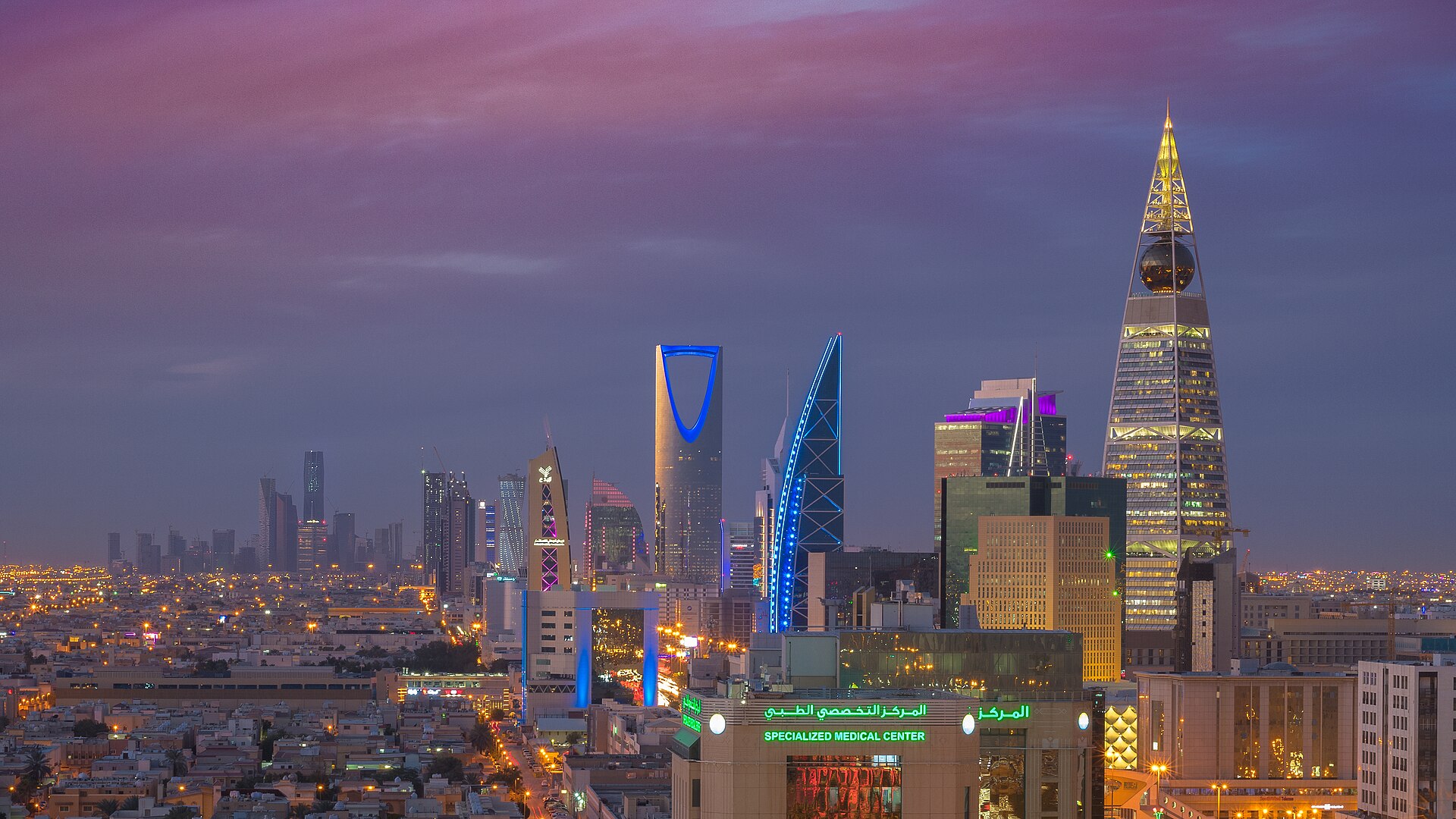
RIYADH — Riyadh Season, the General Entertainment Authority’s flagship annual programme, is set to open its seventh edition on Wednesday 21 October under the theme “Big Time” — five days after King Khalid International Airport recorded a 66% departure disruption rate and two days after the government postponed the Future Investment Initiative to 2027. The two decisions, made within days of each other about events in the same city, point in opposite directions. Together they expose a hierarchy.
FII — scheduled for its tenth edition on 26–29 October, per Kuwait Times citing KUNA — was shelved after what Jewish Insider reported as “a series of attacks on the kingdom by the Iran-backed Houthis.” Riyadh Season proceeds. Its audience is different, its political logic is different, and what it would cost the crown prince to cancel is different. FII sells Riyadh to the world’s fund managers. Riyadh Season — boxing, wrestling, racing, concerts across a ten-week run — sells Riyadh to Saudi Arabia.
GEA Chairman Turki Alalshikh has not announced a cancellation or modification. On 11 October, responding to the deteriorating security environment, he posted on X: “hard times reveal true friends.”
Table of Contents
The Two Decisions
On Monday 19 October, organisers of the Future Investment Initiative decided to cancel the in-person event and postpone it to 2027. Jewish Insider attributed the move explicitly to “a series of attacks on the kingdom by the Iran-backed Houthis.” The language left no ambiguity. FII had been scheduled for its tenth edition from 26–29 October. The conference was the crown prince’s principal annual vehicle for addressing global capital directly — and its postponement was an admission that the vehicle could not operate.
On the same day, no comparable announcement came from the General Entertainment Authority. Riyadh Season’s seventh edition — announced by GEA Chairman Turki Alalshikh via the Saudi Press Agency on 26–27 September, with a 21 October opening date and a ten-week run — remains on schedule. As of 20 October, Alalshikh had not issued any public statement modifying the season’s scope, dates, or security arrangements.
The FII postponement was legible as economic realism. Its attendees — institutional investors, sovereign wealth fund principals, corporate chairmen — were being told by their own governments not to come. The United States Embassy in Saudi Arabia warned on 19 October that “Americans currently in the Middle East should exercise heightened vigilance due to the complex security environment.” The United Kingdom issued a travel advisory on 17 October, Canada on 18 October, and Australia on 19 October. FII’s audience was dispersing before the organisers made it official.
The Middle East briefing 3,000+ readers start their day with.
One email. Every weekday morning. Free.
Riyadh Season’s audience operates under different constraints. The more than 11 million visitors who attended in 2025, per SPA milestone announcements, were overwhelmingly Saudi and Gulf residents. They did not need visas or international flights to reach the venues. The entertainment calendar — concerts, theme parks, combat sports — is part of the domestic social infrastructure the crown prince has built since 2019, the public-facing layer of Vision 2030 that Saudi citizens experience directly. Cancelling the investor conference tells capital markets to wait. Cancelling Riyadh Season tells Saudi citizens that the war has reached their weekend.
The contrast in communication is as revealing as the contrast in decisions. FII’s postponement was reported by Jewish Insider on 19 October with named attribution and an explicit cause — Houthi attacks, stated plainly. No GEA statement accompanied Riyadh Season’s continuation, because no statement was needed. The season was not confirmed; it was simply not cancelled. The default held. Proceeding required no institutional voice, no press conference, no public risk assessment. The season opens not because anyone announced it would survive the war, but because no one announced it would not.
What Opens on 21 October?
Riyadh Season’s seventh edition opens 21 October on a ten-week run under the “Big Time” theme. The Six Kings Slam tennis tournament — originally the headline opening event, set for 21–24 October at the ANB Arena — was postponed on 14 October to 27–30 December. The UCI Urban Cycling World Championships, also on the season calendar, was cancelled outright, per Ringside News on 18 October. No replacement opening event has been publicly named.
The Six Kings Slam was the marquee start. Organisers announced the postponement on 14 October — four days after KKIA’s deadliest strike — citing “organizational and logistical challenges,” with no mention of security or the strikes, per Yahoo Sports. At least 12 dead and over 300 wounded at the airport serving the venue supplied the context the statement would not.
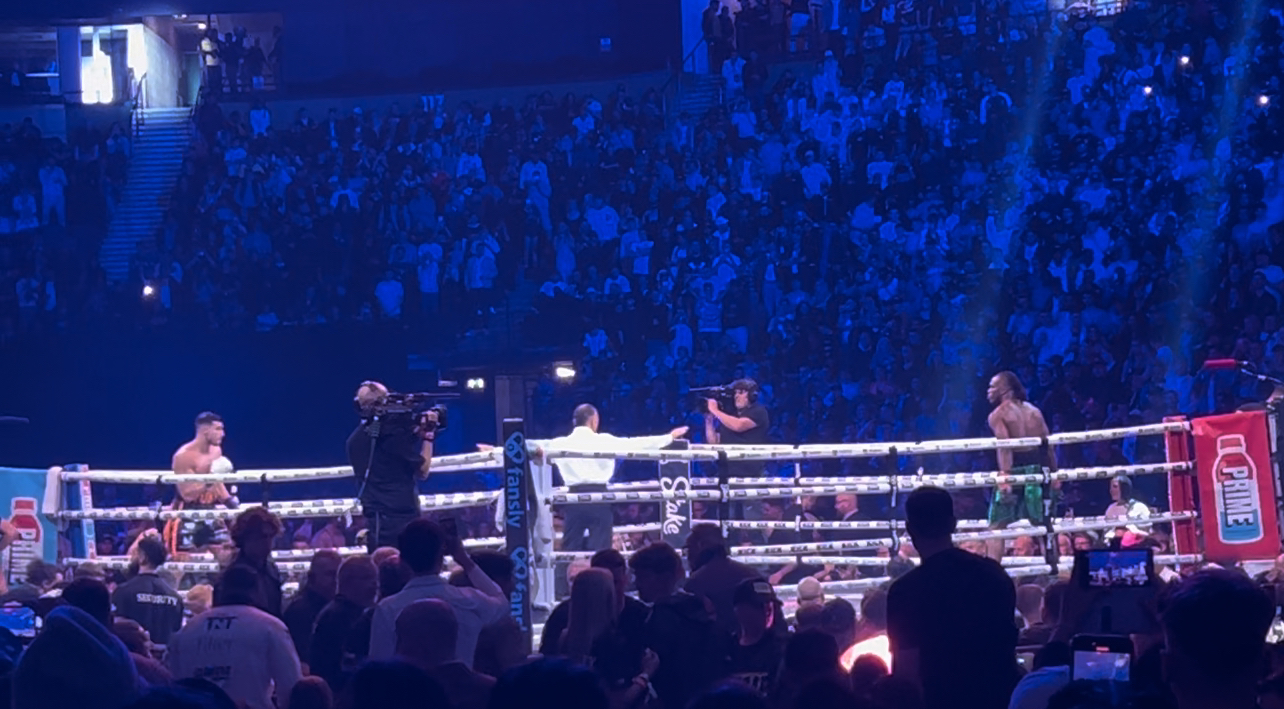
What remains for the early season is combat sports and racing. The Riyadh Racing Season 2026–27, carrying a SAR 236.3 million prize pool, opened at King Abdulaziz Racecourse on 16 October, proceeding without reported incident according to SPA. The Canelo Álvarez vs. Christian Mbilli WBC super-middleweight title fight is scheduled for 31 October at The Venue in Riyadh. WWE Crown Jewel is set for 7 November. UFC’s Riyadh event is confirmed for 5 December. The Six Kings Slam returns 27–30 December.
But opening night — the moment Riyadh Season begins in front of cameras, the images that set the tone — has no confirmed centrepiece. The season opens. What it opens with remains unstated.
How Does an International Audience Reach a Season Under Fire?
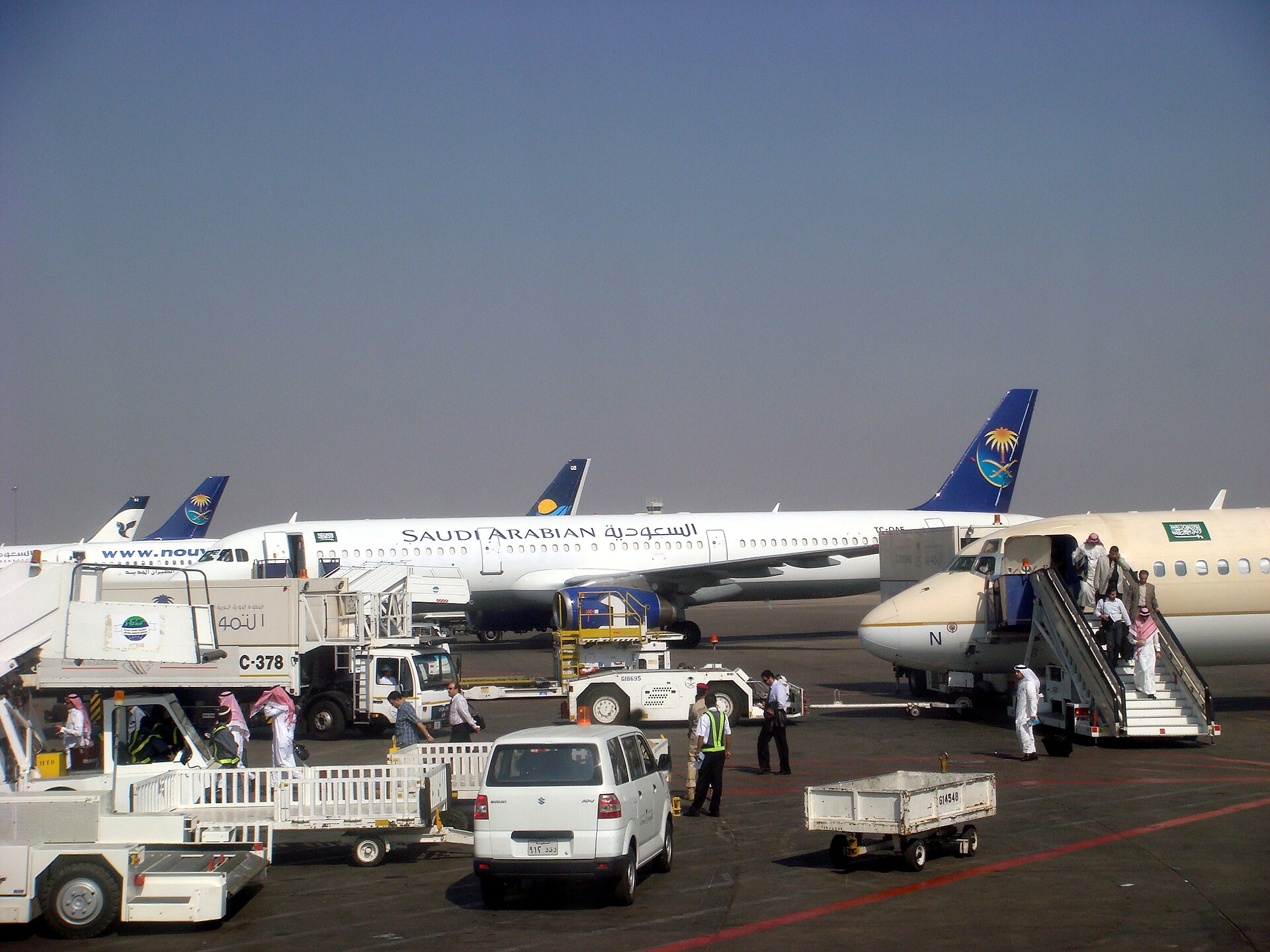
On 19 October, 181 of 274 scheduled departures from King Khalid International Airport were affected — a 66% disruption rate, per Cirium data reported by Gulf News. Cathay Pacific has suspended Riyadh flights through 31 January 2027. KLM through 31 October. Four governments issued travel advisories between 17 and 19 October. Whether international visitors can reliably reach Riyadh for the season’s opening has no clean answer.
KKIA’s status on 20 October is contradictory on its face. The airport technically reopened under NOTAM A3650/26, issued 17–18 October, which requires prior GACA permission for all arriving and departing aircraft — transforming scheduled airline service into something closer to charter operations, where each flight requires individual authorisation. It is an extraordinary restriction for a capital city’s main international hub. Gulf News, updated at 11:17 on 20 October, stated: “King Khalid International Airport remains suspended, according to the advisories supplied for this update.” The gap between “reopened with prior-permission requirements” and “remains suspended” is the gap any international visitor to Riyadh Season must navigate.
| Airline | Route | Suspension Period |
|---|---|---|
| Cathay Pacific | Hong Kong–Riyadh | Through 31 January 2027 |
| KLM | Amsterdam–Riyadh | Through 31 October |
| Etihad Airways | Abu Dhabi–Riyadh | Through 24 October |
| Air France | Paris–Riyadh | Through 24 October |
| Air India / Air India Express / IndiGo | India–Saudi Arabia | Through 24 October |
| Emirates | Dubai–Riyadh | Specific flights cancelled 20 October |
Source: Gulf News, 20 October 2026
The toll on KKIA is what drives the disruption. The BBC confirmed 20 deaths in Saudi airport attacks between 6 and 11 October. Saudi coalition officials, cited by Ringside News on 18 October, stated 17 killed and 333 wounded across 20 attacks on KKIA during the month — a lower death count than the BBC’s figure for a shorter period. On 10 October alone, strikes on KKIA killed 13 — Al Jazeera reported that figure from the outset; the BBC initially reported 12, then updated to 13 after an Indian victim’s death was confirmed. The injury counts diverged by one: the BBC said 308 wounded, Al Jazeera 309. The interval between all-clear announcements and subsequent strikes has become a recurring feature of the airport’s operations.
The European Union Aviation Safety Agency widened its Saudi airspace warning on 9 October, per Fortune — a measure that affects insurance premiums, routing decisions, and airline risk calculations independently of whether individual carriers have suspended service. Dammam’s King Fahd International Airport, which has faced its own attacks, offers no reliable alternative route into the capital. For a season built on that 11 million visitor benchmark, the airport’s condition imposes a ceiling on international attendance before a single ticket is scanned.
Who Is Still Coming?
As of 20 October, the Canelo Álvarez vs. Christian Mbilli WBC title fight (31 October), WWE Crown Jewel (7 November), the PIF Saudi International golf tournament (18–21 November), UFC Riyadh (5 December), and the rescheduled Six Kings Slam (27–30 December) all remain on the calendar. GEA Chairman Alalshikh and UFC CEO Dana White have both publicly confirmed their events will proceed.
The confirmation signals have been personal rather than institutional. On 11 October, Alalshikh posted on X: “Canelo reached out and told me he’ll still fight in Riyadh this October, no matter what happens. He fears nothing.” He added: “hard times reveal true friends.” The framing turned a boxing match into a loyalty test — and made any subsequent relocation a public breach of that loyalty.
Dana White was blunter. Asked about the 5 December UFC event in Riyadh, the CEO told Front Office Sports on 19 October: “We’re going.”
WWE Crown Jewel remains on schedule for 7 November at Riyadh Season Stadium. Front Office Sports reported on 19 October that some WWE wrestlers hope the trip is cancelled, but WWE’s parent company TKO has made no announcement. Morgan Stanley estimated that WWE earns approximately $150 million in site fees for WrestleMania 43, scheduled for April 2027 in Saudi Arabia — an estimate the bank called “conservative.” Crown Jewel’s fee is undisclosed but belongs to the same contractual structure. Fees of this scale are not agreed and withdrawn in a week.
The Asian Tour stated that “player, staff and service team safety is its top priority” regarding the PIF Saudi International golf tournament, scheduled for 18–21 November, per The National on 13 October. The phrasing acknowledged risk without conceding the date.
The financial architecture reinforces each promoter’s decision to stay. Saudi Arabia assembled its sports calendar over years of deal-making, and the site fees, broadcast partnerships, and sovereign wealth fund relationships that underpin it are not structured for rapid exit. Each event that proceeds affirms the viability of the model. Each one that withdraws damages it — not just for the departing promoter but for every other deal in the pipeline. White’s two-word confirmation is not only about December. It is about every future UFC card the Saudi market represents.
| Event | Original Date | Status (20 October) |
|---|---|---|
| Future Investment Initiative (10th edition) | 26–29 October | Postponed to 2027 |
| Six Kings Slam tennis | 21–24 October | Moved to 27–30 December |
| UCI Urban Cycling Championships | October | Cancelled |
| National Day fireworks / drone shows | 23 September | Postponed; no reason stated |
| Riyadh Racing Season 2026–27 | 16 October | Opened as scheduled |
| Canelo Álvarez vs. Mbilli (WBC title) | 31 October | Confirmed by GEA chairman |
| WWE Crown Jewel | 7 November | No changes announced |
| PIF Saudi International (golf) | 18–21 November | Monitoring; no changes |
| UFC Riyadh | 5 December | Confirmed by Dana White |
The pattern is legible. Investor and international-prestige events have been postponed or rescheduled. Combat sports, racing, and entertainment with a predominantly Saudi and Gulf audience proceed. The dividing line runs between events whose value depends on flying in an international audience and those whose value is domestic — or whose promoters have personally staked credibility on appearing. FII’s postponement had institutional language and no face attached. The events that continue have faces: Alalshikh’s, White’s, Canelo’s.
The Language of ‘Logistics’
When the Six Kings Slam was postponed on 14 October, organisers attributed the decision to “organizational and logistical challenges in hosting the event and their potential effect on the audience experience,” per Yahoo Sports. The word “security” did not appear. The word “missile” did not appear. The statement was issued four days after at least 12 people died at the airport serving the venue.
The pattern predates Riyadh Season. On 23 September — Saudi Arabia’s National Day — fireworks and drone shows were postponed across nine cities. No reason was stated. Other National Day celebrations proceeded, per Khaleej Times. The fireworks postponement attracted brief media coverage and no official explanation. Three weeks later, the same silence accompanied the cycling cancellation and the same euphemism accompanied the tennis rescheduling.
The Al Nassr vs. Neftchi AFC Champions League Elite match in Riyadh went ahead on 13 October — but late, delayed by a Civil Defence security alert, per The National. Al Nassr won 3–1. No GEA or football authority statement addressed the disruption afterward. The alert was treated as an interruption to be absorbed, not as a signal that the match should not have been held.
What emerges across these episodes is not a communications policy but the absence of one. Each event receives an individual decision. The language is euphemistic when the outcome is postponement (“logistical challenges”) and silent when the outcome is continuation. There is no published rubric stating which threat level triggers which response, no announced coordination between the GEA and military authorities, no guidance for ticket-holders on what to do if a siren sounds during a fight.
Where Is the Safety Framework?
Saudi Arabia has no publicly announced equivalent of a Home Front Command cultural-events framework. The GEA has issued no statement about security arrangements, modified safety procedures, or shelter protocols for Riyadh Season 2026 venues. Decisions to proceed or postpone appear to be made event-by-event by the GEA chairman, communicated through personal social media posts rather than institutional channels.
Other countries facing sustained missile threats have handled entertainment differently. Israel’s response after 7 October 2023 included institutional mass cancellation of cultural events under Home Front Command guidelines. Bruno Mars cancelled his Tel Aviv concert, with automatic refunds processed. The Israel Philharmonic Orchestra postponed its season-opening concerts. The Cleveland Orchestra cancelled its Israel tour, citing State Department guidelines. The model was military-directed: a command structure issued the determination, and the cultural sector complied.
Ukraine’s trajectory was different in mechanism but equally visible. All performances were cancelled on 24 February 2022 — organically and from the bottom up, without a formal culture ministry directive. When Kyiv’s theatres reopened in June 2022, they operated under published air-raid shelter protocols, per Forbes. Audiences were told where to go when a siren sounded. The restart was conditional and publicly explained.
Saudi Arabia matches neither model. There is no top-down military directive governing cultural events during the Houthi campaign. There is no bottom-up cancellation wave from performers or organisers. There is a GEA chairman posting on X about which fighters show loyalty, and a set of ad hoc decisions communicated through euphemism or silence.
The 13 October Al Nassr match offered a glimpse of what a mid-event security incident looks like without a standing framework: a Civil Defence alert, a kick-off delay, resumption, no public debrief. Whether Riyadh Season’s primary venues — Boulevard World, the ANB Arena, Riyadh Season Stadium — operate under comparable emergency procedures is a question that no GEA statement, press conference, or social media post has addressed. The absence is itself a data point. A published security protocol, even a minimal one, would signal that the government assessed the threat to entertainment venues and found it manageable. Silence signals that either no such assessment has been shared, or its conclusions are not ones the GEA wishes to make public.
The Economics of Defiance
Saudi Arabia’s revised 2026 budget projects a deficit of 245 billion riyals, per Reuters via Zawya on 30 September. GDP is forecast to contract 3.6% in 2026 before a projected rebound of 12.8% in 2027, according to the same reporting. Against that fiscal backdrop, the entertainment economy is not a budget line the government can quietly shelve. It is one of the few sectors where Vision 2030’s spending was designed to generate visible, photographable, attendance-denominated returns.
The site fees give some measure of scale. The Canelo fight, UFC December, and WWE Crown Jewel each carry undisclosed premiums within the same contractual structure as WrestleMania 43, whose approximately $150 million site fee Morgan Stanley called “conservative.” The Riyadh Racing Season’s SAR 236.3 million prize pool, announced and deployed on schedule from 16 October per SPA, represents investment that operates on its own timeline, independent of whether international visitors can reach the racecourse.
But that 2025 attendance benchmark was achieved by a city that could receive international guests at scale. KKIA’s current condition — technically reopened, operationally constrained, described as “suspended” by Gulf News as of 20 October — transforms the proposition. A season with full domestic attendance but negligible international visitors is a different financial reality, and a different symbolic one. Whether Riyadh Season 2026 can still function as a tourism revenue driver depends on a breakdown the GEA has never published: the ratio of international to domestic attendance. In 2025, SPA reported the headline figure without specifying origin. Under current airport conditions, that missing data becomes the central question of the season’s economics.
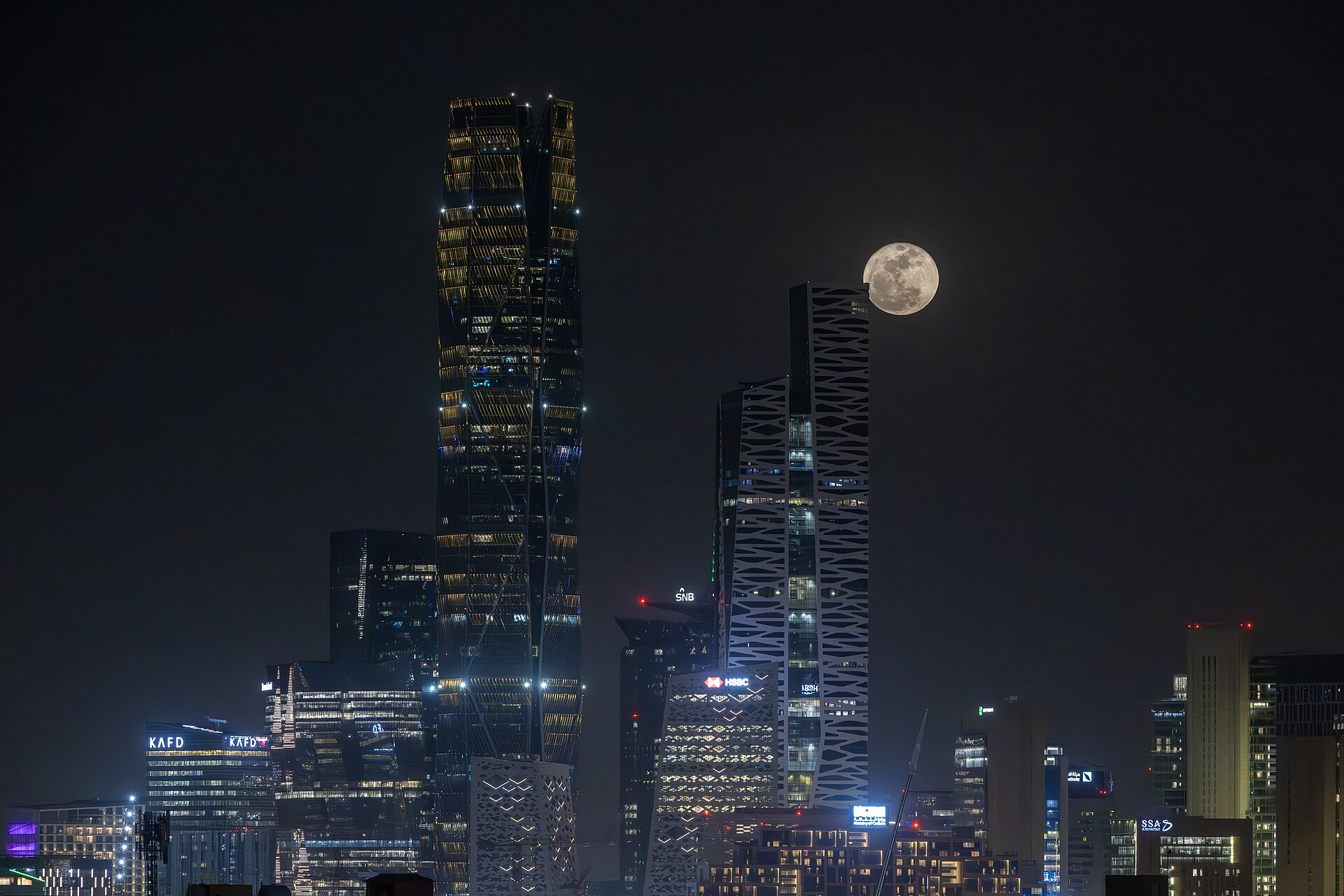
The diplomatic calendar adds its own pressure. The EU-GCC summit was set for Riyadh on 24 October, per The National on 8 October — three days after the season opens, in the same week FII was supposed to host the world’s investors. No confirmation or cancellation has been issued since the airport strikes began. Diplomats, investors, and entertainment audiences face the same city under the same missile threat, but the government is sorting them into different categories of welcome.
The bifurcation carries a secondary cost. Vision 2030’s entertainment strategy was designed to function as international soft power — proof that Saudi Arabia had changed, that its cities were open, that its culture had gone global. Riyadh Season at full capacity, with international visitors filling the stadiums and populating the social media feeds, served that function. A domestic-only edition serves a different one: morale, continuity, the assertion that normal life persists under fire. Both have value. But the version the government spent years building and contracting for — the one denominated in foreign visitor counts and international media coverage — requires a functioning airport.
The New York Times observed on 10 October that airport strikes threaten Riyadh’s events calendar. Ten days later, the calendar has not collapsed. It has bifurcated. The investor-facing half retreated on 19 October. The domestic-facing half opens on 21 October — without its marquee tennis tournament, without a published security protocol, and without an airport that Gulf News, as of its latest update, is willing to describe as operational.
Frequently Asked Questions
Have the Houthis directly threatened Riyadh Season events or venues?
No Houthi statement found as of 20 October names Riyadh Season, entertainment venues, or specific Season events as targets. Houthi attacks have been directed at airports, Aramco infrastructure, and energy installations. Mohammed al-Bukhaiti, a Houthi official, framed the campaign as reciprocal for Saudi strikes on Yemeni sites, listing “airports, seaports, weddings and mourning halls, hospitals, and markets in Yemen” as justification, per Al Jazeera on 11 October. The risk to Riyadh Season venues is indirect — routed through airport disruption and the broader threat environment — rather than a stated Houthi objective targeting entertainment infrastructure.
Is the EU-GCC summit on 24 October still happening in Riyadh?
As of 20 October, neither confirmation nor cancellation has been announced for the EU-GCC summit set for Riyadh on 24 October, per The National on 8 October. The United Kingdom issued a Saudi Arabia travel advisory on 17 October and Australia on 19 October. The summit falls in the same week as the now-postponed FII, but diplomatic attendance may operate under different risk calculations than investor attendance. No European government has publicly announced a change in delegation plans.
Is there a fallback venue for the Canelo fight?
Some outlets have reported a possible Las Vegas relocation for the Canelo Álvarez vs. Christian Mbilli WBC super-middleweight title fight, though this remains unconfirmed as of 20 October. The bout is officially scheduled for 31 October at The Venue in Riyadh, per Post Wrestling on 11 October and Front Office Sports on 19 October. GEA Chairman Alalshikh’s public framing of Canelo’s commitment — “he fears nothing,” proof of friendship “in hard times” — makes relocation a personal concession the chairman has publicly foreclosed.
What share of Riyadh Season visitors are international versus domestic?
The GEA has not published a breakdown of international versus domestic attendance for any edition of Riyadh Season. SPA reported more than 11 million visitors for the 2025 edition without specifying origin. The season’s programming — boxing, wrestling, racing, concerts, and theme park experiences — is marketed jointly to Saudi, Gulf, and international audiences. Under current airport restrictions, the 2026 edition’s attendance composition will tilt further toward domestic visitors, though by how much depends on whether KKIA’s constrained operations ease during the season’s ten-week run.