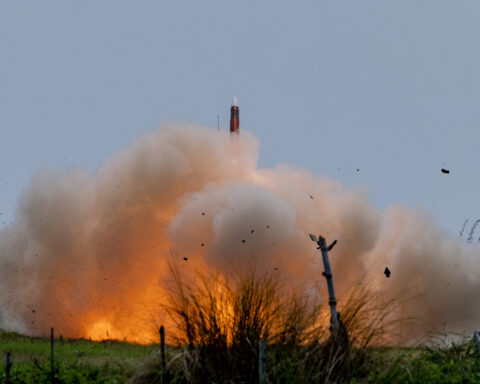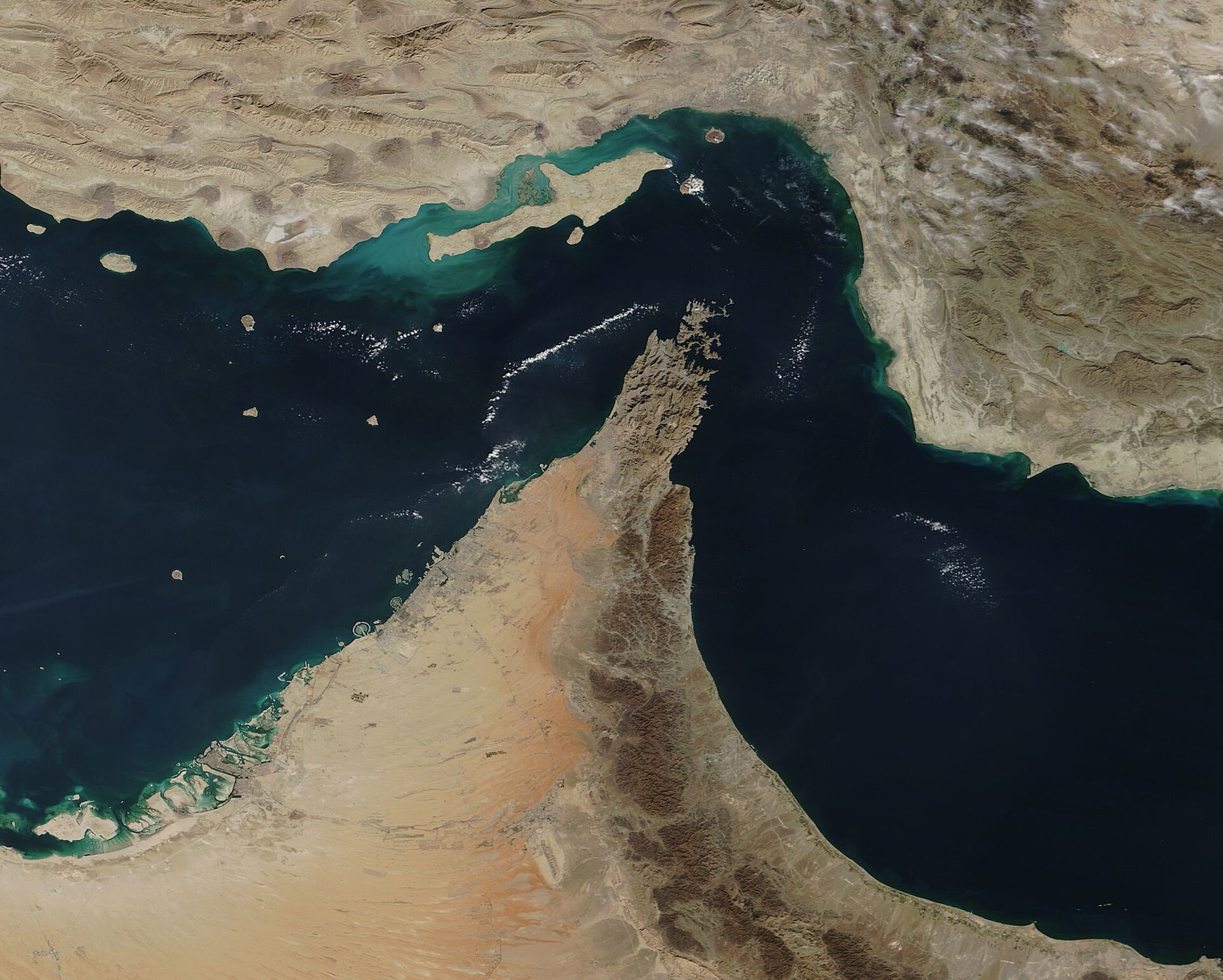

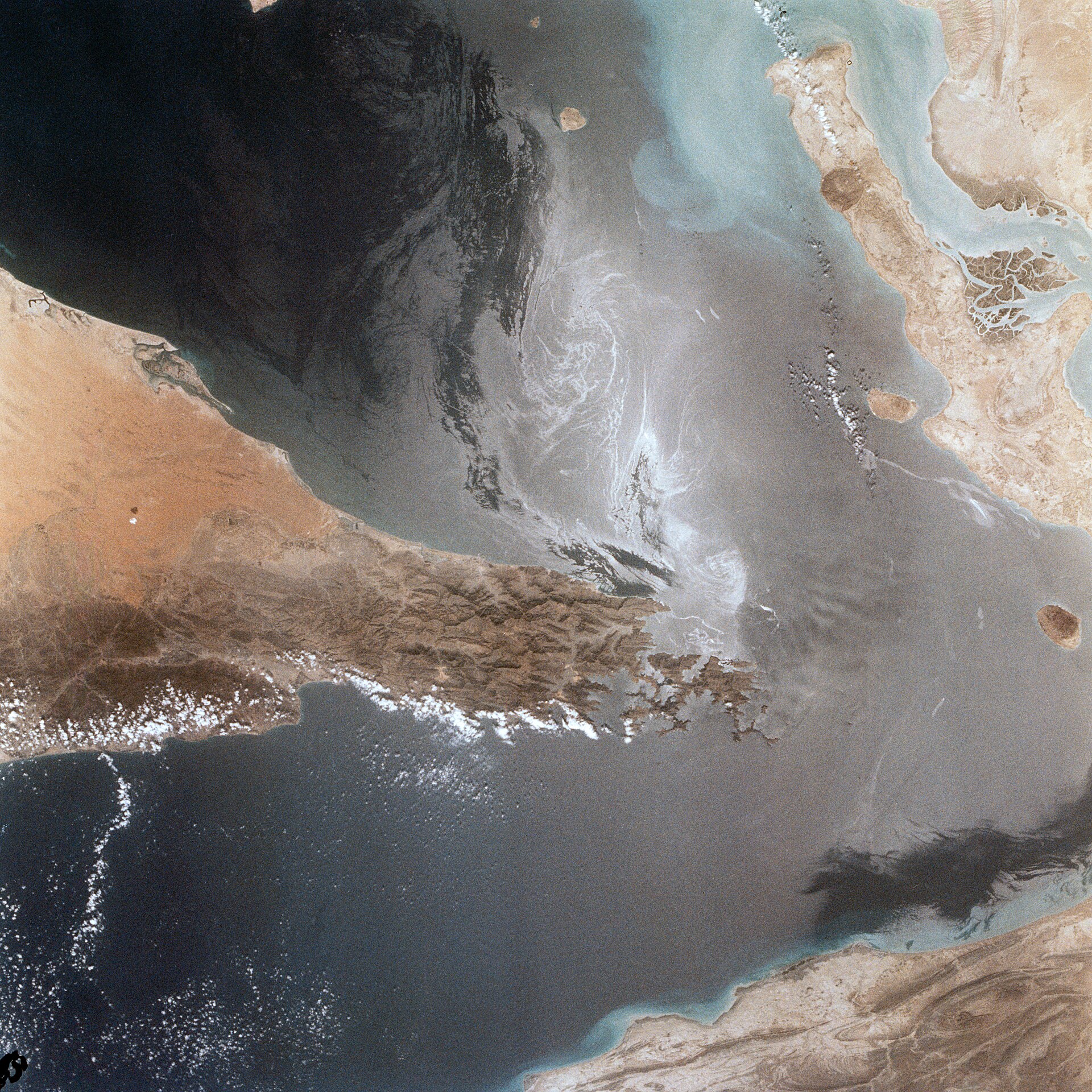
TEHRAN — Iran’s regular army said on Saturday that its air defence force destroyed a reconnaissance drone over the Strait of Hormuz, a claim the United States Central Command did not address in a statement that same day — even as it refuted three separate Iranian assertions about the USS Abraham Lincoln, seized tankers, and an alleged transit toll.
The House of Saud Daily Briefing
Saudi Arabia's news in 3 minutes, every morning. Free. See today's issue
The claim came from the Artesh, Iran’s conventional military under Commander-in-Chief Amir Hatami, not from the Islamic Revolutionary Guard Corps — a distinction that most English-language coverage has blurred but that tracks a command-structure question central to the nine-month air war over the most contested waterway on earth. No drone model was named, no time of day was given, and no wreckage was shown. Iran said only that the aircraft was detected over Gulf waters and brought down by “domestically developed air defense systems” within its integrated national air defence network.
Table of Contents
What Did Iran’s Army Claim on November 28?
The Army’s Public Relations Department issued the statement through state broadcaster IRIB on November 28, with Press TV timestamping the earliest English-language version at 16:49 GMT. The announcement described the aircraft as an “enemy reconnaissance drone” belonging to an “invading” force and stopped there. It named neither the United States nor any drone designation, offering nothing that could be checked against serial numbers, model specifications, or operational records.
Mehr News Agency’s English edition filled the gap the army’s own statement had left, running the headline “Iranian Army air defense shoots down US drone over Hormuz” with the “US” attribution that the military’s wording had carefully avoided. WANA News Agency followed at 19:15 GMT with identical language, while Nour News, a state-linked outlet closer to the security establishment, stuck to the original phrasing and attributed the claim to the “Army’s Public Relations Office” without naming the drone’s operator.
The pattern — the military keeping its statement technically unspecific while state media attaches the more provocative identification — has been consistent across Iranian drone claims throughout the conflict. It allows the army to avoid an outright falsehood if the drone turns out to belong to another country’s fleet or to a commercial operator. The vague wording also delivers the domestic-audience message that Iran is shooting down American hardware over its waters.
No video or photographic evidence was released. The air defence system used was described only as “domestically developed” — a phrase Iran’s military applies across its entire air defence inventory, one that carries no diagnostic value for external observers trying to assess what happened.
CENTCOM Refuted Three Claims and Ignored the Fourth
What gives the November 28 claim its analytical edge is not the assertion itself — Iran’s rate of drone-kill announcements has surged in the final weeks of November — but the shape of the American response. CENTCOM, the US unified combatant command responsible for the Middle East theatre, issued a statement on November 28 that specifically dismantled three Iranian claims: that Iranian forces struck the USS Abraham Lincoln, that the IRGC recaptured two seized tankers, and that the United States charges ships $2.5 million to transit the strait.
The Abraham Lincoln was “never struck by Iran,” CENTCOM said, according to The Boston Report. The tanker recapture was “fabricated.” The US charges “no fees” for Hormuz passage. Three claims addressed, three claims denied — and then nothing about the drone.
The selectivity has become its own form of communication over the past nine months, even if the signal resists confident reading. It could mean the drone claim is too routine to warrant a response, or it could mean the US is not yet ready to confirm or deny a loss. Both interpretations carry weight, and neither is conclusive. That ambiguity serves both sides: Iran gets an unchallenged headline, while the Pentagon avoids establishing a precedent of responding to every individual drone assertion.
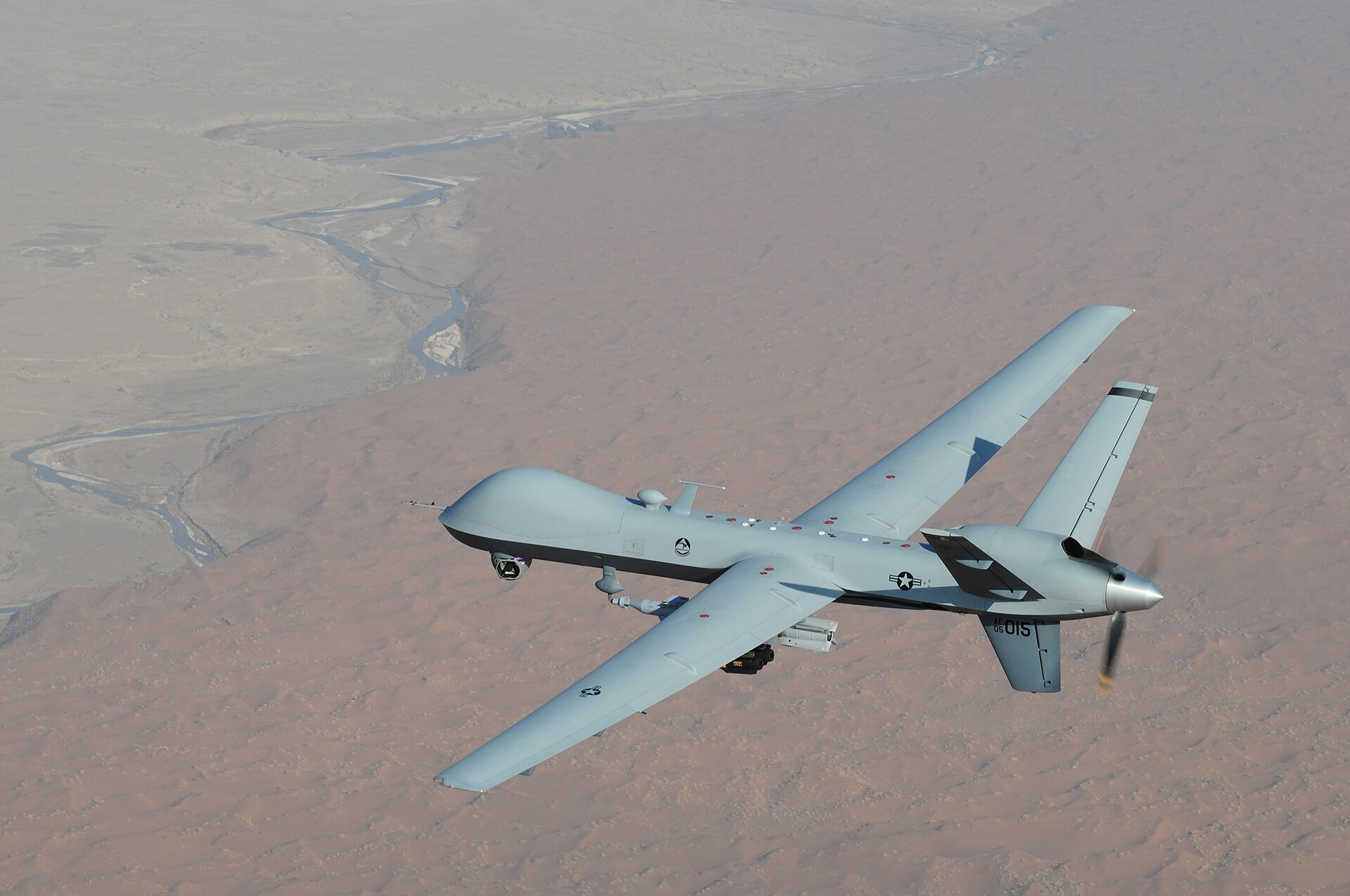
The broader pattern holds across the conflict. When the Iranian Army claimed on November 12 that a missile had damaged a US F-16 over the Gulf, CENTCOM denied it within hours. A claim involving a manned aircraft and a major platform invites an immediate correction. When the IRGC claimed on November 21 to have downed what it called the 58th MQ-9 Reaper, the US said nothing. The command has consistently contested assertions that would, if believed, undermine confidence in its ability to protect capital ships and enforce interdictions. The smaller, harder-to-verify drone claims pass unchallenged into the information environment.
Critical Threats, the American Enterprise Institute’s tracking project, documented near-daily US-Iran air exchanges over Hormuz as of its November 18 assessment — a tempo that would be consistent with periodic drone losses even if only a fraction of Iran’s claimed kills are real.
Why Does the Artesh-IRGC Distinction Matter Over Hormuz?
Most Western coverage of Iranian military operations treats the IRGC and the Artesh as interchangeable, or defaults to “Iran” without specifying which force is making a given claim. The distinction matters because it tracks a command arrangement that has defined the Hormuz campaign from the beginning — one that runs through the Armed Forces General Staff and, through it, to Supreme Leader Mojtaba Khamenei.
The Artesh is Iran’s conventional military — army, navy, and air force — commanded by General Amir Hatami since June 14, 2025. The IRGC is a parallel, ideologically aligned military with its own ground, naval, and aerospace forces under Commander-in-Chief Ahmad Vahidi. Under normal conditions the two operate independently, with separate procurement chains, separate intelligence directorates, and separate public-relations offices. Over Hormuz, those boundaries have dissolved. The Artesh Navy and the IRGC Navy have been operating jointly under the Armed Forces General Staff for Hormuz operations, according to Fattahi of Mehr News in reporting published on November 28.
“The Strait of Hormuz will remain closed until Iran’s conditions are met.”
— Amir Hatami, Artesh Commander-in-Chief, November 28 (Al Jazeera live blog)
The Hormuz closure was first imposed between February 28 and March 4, lifted partially under the June Islamabad Memorandum, then re-imposed on July 12. It is an AFGS-directed joint operation, not a unilateral IRGC initiative or an Artesh-only action. That means the November 28 drone claim, while announced through Artesh channels, sits within a unified command structure that spans both military branches. Hatami’s same-day statement to Al Jazeera declared the strait closed until Iran’s conditions are met. It was a statement about an operation he shares with the IRGC, not one he runs alone.
The parallel pattern of claims — the Artesh announcing on some days, the IRGC on others, and sometimes both on the same day — has been visible since at least mid-November. Wikipedia’s aviation shootdown list records separate Artesh (November 16) and IRGC (November 17) drone-kill entries as distinct events. The pattern illustrates a dual-track announcement system that reflects the dual-track command beneath it.
Iran’s Claimed Drone Toll Reaches 78
WANA News Agency’s running tally, published alongside its November 28 report, counts 78 claimed US drone kills since the war began on February 28 — 20 MQ-1 Predators and 58 MQ-9 Reapers. The November 28 drone, for which no model was specified, extends that series further. The cumulative number has become a narrative in its own right, regardless of how many of those 78 claims correspond to actual losses.
The pace accelerated sharply in the final week of November. On November 24, the Artesh Air Defense Force claimed two US drones — a LUCAS and an MQ-9 Reaper — destroyed in separate operations west and east of the strait, according to Press TV and WANA. On November 22, the IRGC separately claimed four US drones downed within 24 hours. On November 21, the IRGC announced the latest in a series of MQ-9 kills over Hormuz, and the US was silent.
The Artesh Air Defense Force has its own history of such claims predating the November acceleration. On September 20, the force claimed to have destroyed an “advanced Orbiter reconnaissance drone” over Hormuz at 18:30 local time, according to Caliber.az. Iran’s army described the platform as taken down by “indigenous air defense systems” — similar language to the “domestically developed” phrasing in the November 28 claim.
None of these claims have been independently verified, and no drone wreckage from any of the 78 announced kills has been shown to international media. The gap between Iran’s cumulative count and anything the United States has publicly acknowledged — which is, in aggregate, nothing — remains one of the conflict’s most opaque informational voids. Reuters, the Associated Press, and the BBC did not cover the November 28 claim; it circulated exclusively through Iranian state media and regional wire services.
Nine Months of Air Exchanges Over the Strait
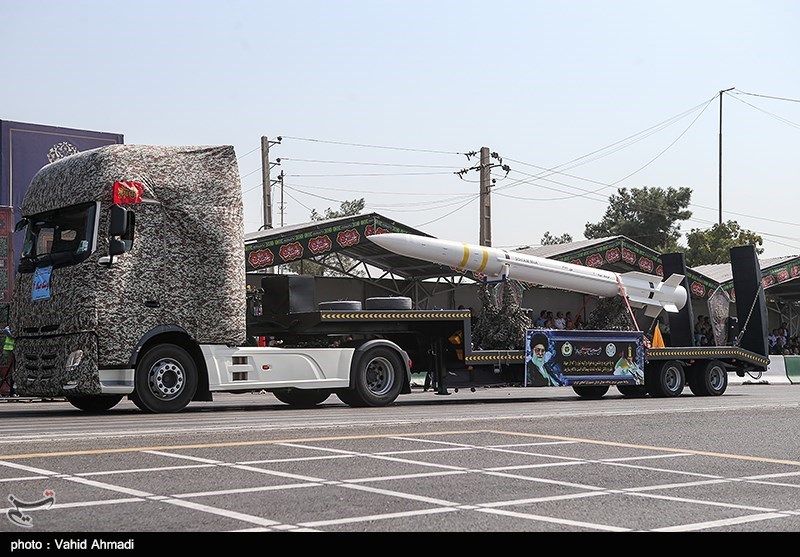
The air campaign over Hormuz dates to the war’s earliest days, when Iranian forces began targeting US aircraft within hours of the February 28 strikes that killed Ali Khamenei. The United States has maintained a continuous surveillance presence over the strait since then, using both manned aircraft and unmanned platforms. The resulting exchanges have become a near-daily feature of the conflict — routine enough that individual incidents rarely break through to Western wire services. Yet each one carries escalation risk in a waterway where both navies are operating at close quarters.
The reconnaissance drones at the centre of Iran’s claims are the workhorses of that surveillance operation — expendable assets designed to loiter over contested airspace and collect intelligence on naval movements, mine-laying activity, and military positioning along the Iranian coastline. Their loss, when it occurs, is a cost of doing business rather than a strategic blow. That calculus helps explain why CENTCOM has been less inclined to refute drone-kill claims than assertions about damage to carriers or manned aircraft.
The strait carried 130 to 140 ships a day before the war, according to Reuters. Since Iran re-imposed the closure on July 12, that traffic has collapsed to a fraction of the baseline, with ship-to-ship transfer routes absorbing volume the strait can no longer carry safely. Iran’s Army has ordered the strait closed further each day until conditions are met — conditions the government has not publicly enumerated in full. The air war over the waterway, of which the drone claims are a visible fragment, runs alongside that naval closure.
Frequently Asked Questions
How do the Artesh and IRGC announce drone claims differently?
The two forces use separate channels that sometimes produce conflicting details about the same event. Artesh claims route through the Army’s Public Relations Department to IRIB, then reach English-language audiences via Mehr News and Press TV. IRGC claims go through the IRGC’s own public-relations office, with Tasnim and Fars News often carrying them first. The lack of coordination has produced discrepancies. On November 21, the IRGC identified a downed drone as an MQ-1 Predator, while the Iranian Army and NBC News separately described it as an MQ-9 Reaper. The November 28 claim avoided that problem by naming no model at all.
Why didn’t Reuters or the Associated Press cover the November 28 claim?
The claim circulated exclusively through Iranian state media and regional wire services — Mehr, Press TV, WANA, Nour News, and IRIB. Western wire services stopped routinely covering individual Iranian drone-kill claims in the early months of the conflict. By then, the volume of unverifiable assertions had made standalone reporting on each one impractical. The absence of independent evidence — no wreckage, no video, no US confirmation or denial — further reduces the editorial case for dedicated coverage, particularly when CENTCOM’s own statement on the same day did not mention the drone.
Has Iran shown physical evidence of any drone it claims to have shot down?
No wreckage from any claimed shootdown during the current conflict — across all 78 announced kills — has been presented to international media or independent observers. Iran has not published verified photographs, serial-number documentation, or video footage of recovered drone components. The United States has not publicly disclosed its total unmanned aircraft losses since the war began on February 28. The evidentiary record for the cumulative claim rests entirely on Iranian military announcements distributed through state media.
When did Amir Hatami take command of the Artesh?
Hatami has served as Artesh Commander-in-Chief since June 14, 2025, succeeding Mousavi, who was promoted to Armed Forces General Staff chief before the war. Mousavi died on February 28, 2026 — the same day US-Israeli strikes killed Ali Khamenei and the conflict began. Hatami has therefore commanded the Artesh through the entire war. His authority runs through the Armed Forces General Staff to Supreme Leader Mojtaba Khamenei, the same chain of command under which the Hormuz closure is directed.
The House of Saud Daily Briefing
Saudi Arabia's news in 3 minutes, every morning. Free. See today's issue