
RIYADH — Saudi Foreign Minister Prince Faisal bin Farhan held two separate phone calls on Sunday, November 22, first with Pakistan’s Deputy Prime Minister and Foreign Minister Ishaq Dar on convening another R4 foreign ministers’ meeting, then with Norwegian Foreign Minister Espen Barth Eide on bilateral ties and regional developments, according to readouts carried by Ajel and Pakistan’s Foreign Office. Both conversations came on the same day Iran’s Foreign Minister Abbas Araghchi declared the Islamabad memorandum of understanding dead and Saudi air defences intercepted another Houthi ballistic missile.
The Pakistan call fits a pattern Riyadh has followed since October, using the four-nation R4 bloc of Pakistan, Saudi Arabia, Egypt and Turkey as a diplomatic channel while the Makkah Pact handles defence. The Norway call fits no obvious pattern at all, and that is what makes it worth reading closely: Oslo holds no formal mediation seat, yet it has spent 2026 working the Gulf file harder than almost any other European capital, with around 25 Norwegian-affiliated ships stuck at Hormuz and an export economy built on keeping sea lanes open.
Table of Contents
What Did Faisal and Dar Agree on the R4?
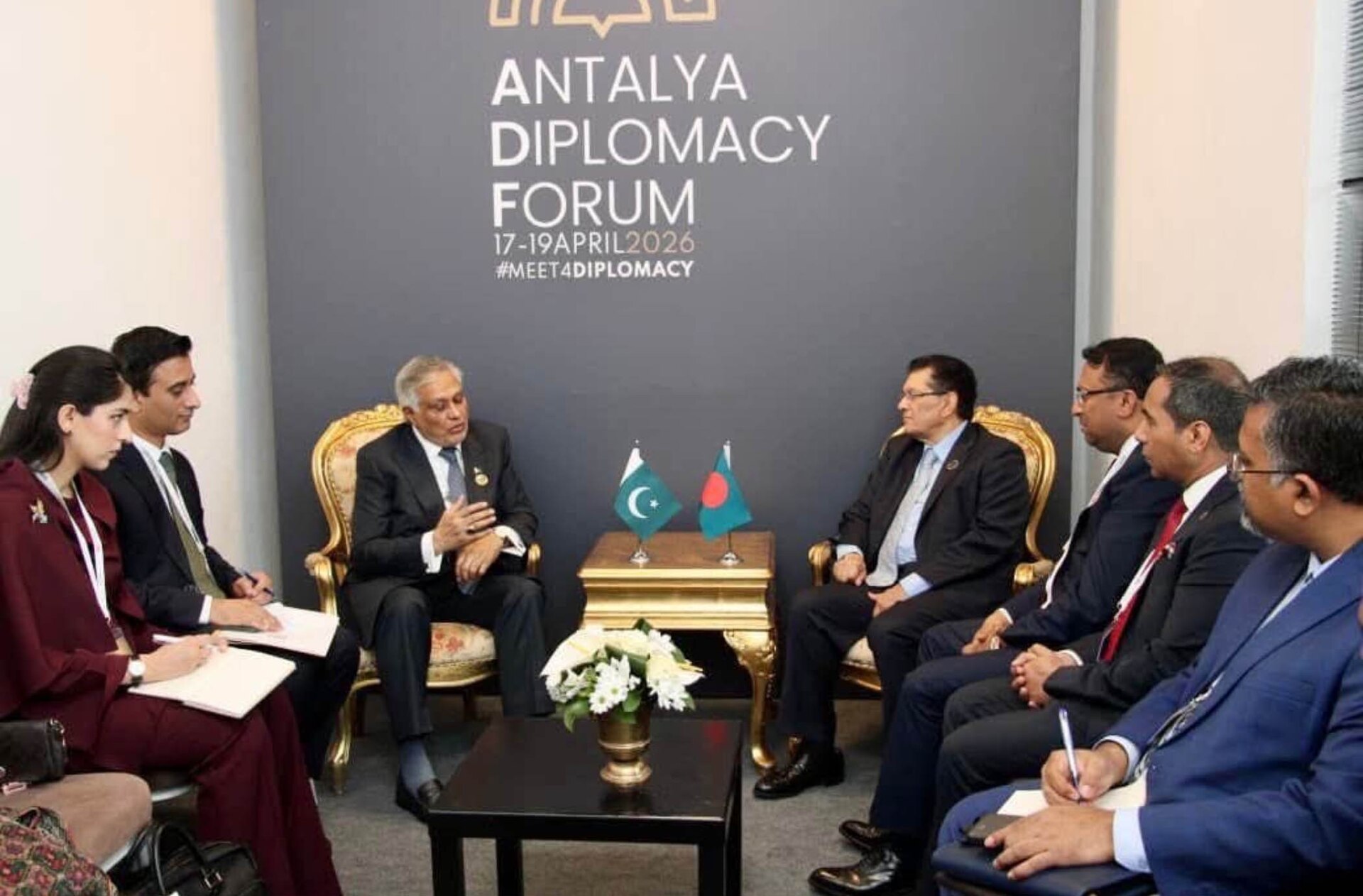
The Faisal-Dar call came first, reported by Ajel at roughly 18:48 UTC, or just before 10pm in Riyadh. Pakistan’s Foreign Office released the fuller readout, carried by Dunya News, and its wording is careful about what it promises and what it does not.
The House of Saud Daily Briefing
Saudi Arabia's news in 3 minutes, every morning. Free. See today's issue
“They also discussed the possible convening of a meeting in the near future of the R4 Foreign Ministers to continue consultations on regional developments. Both sides agreed to remain in close contact to sustain the momentum of diplomatic engagements.”Pakistan Ministry of Foreign Affairs readout, via Dunya News, November 22, 2026
“Possible convening” and “near future” commit nobody to a date or a venue. According to the same Foreign Office statement, the two ministers also discussed “cooperation at multilateral fora and ways to further strengthen coordination on matters of mutual interest,” which is standard readout language that rarely means anything specific. The R4 sentence is the one with content, and the readout does not mention troops, deployments or the Makkah Pact at all.
The R4 foreign ministers last met in Istanbul on October 23, according to Pakistan Today, which framed Sunday’s call as Dar and Prince Faisal pushing “for R4 meeting amid escalating US-Iran and Gulf tensions.” Pakistan Today also reported that Germany has invited the R4 and the European Four, the UK, France, Germany and Italy, to talks in December on lowering tensions in the Gulf. No independent German or Saudi government statement confirming that invitation has been published, and the report should be treated as Pakistan Today’s account until Berlin or Riyadh says otherwise.
Turkey’s foreign minister separately called Saudi, Egyptian, Norwegian and Pakistani counterparts to discuss the Iran conflict in recent weeks, Anadolu Agency reported, and an R4-Europe format has been under discussion since at least November. Sunday’s call reads as an attempt to get the four foreign ministers into one room ahead of any broader session with European counterparts.
Why Is Norway on the Phone to Riyadh?
The Faisal-Eide call followed about an hour later, reported by Ajel at roughly 19:55 UTC. The Saudi readout gives very little away: the ministers “reviewed the bilateral relations between Saudi Arabia and Norway and discussed opportunities to strengthen cooperation between the two countries,” then “discussed the latest regional developments and ongoing efforts regarding these issues.” Neither Hormuz nor Iran nor the Houthis appears by name, and Ajel did not say which side placed the call.
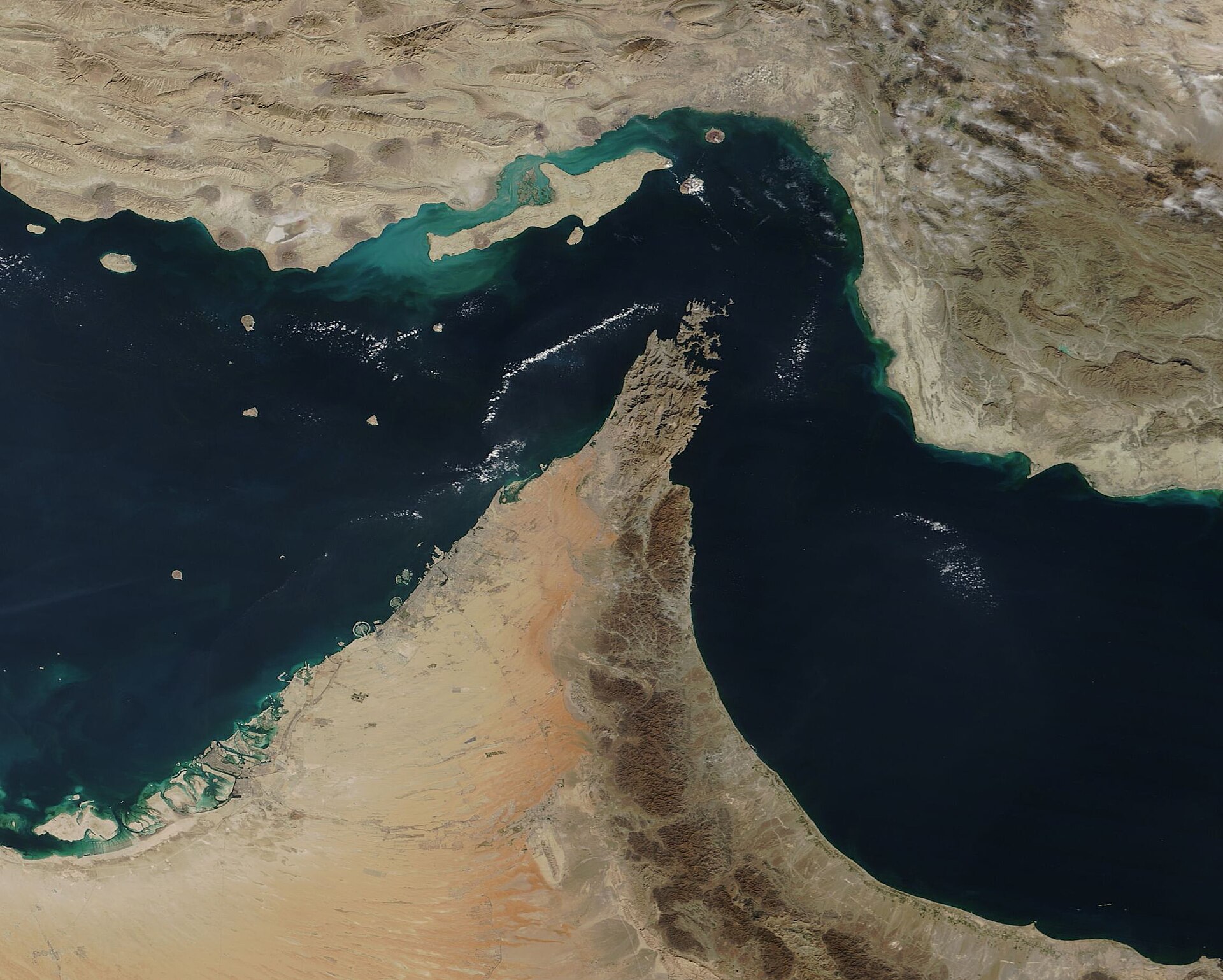
Eide has been open about where Norway stands. In May, according to The National, he said Norway had “no formal role in negotiations” but was “trying to contribute to solutions,” which is about as candid as a foreign minister gets about working from outside the room. The economic stake is far less modest: according to The National, around 25 Norwegian-affiliated vessels were stranded at Hormuz as of May, in a country with one of Europe’s largest shipping industries.
That export dependence puts Norway in a different position from most of Europe. For Germany or Italy, a closed Hormuz mainly means higher fuel bills, but for Norway it means stranded ships and lost freight income for one of its biggest industries. A Norwegian foreign minister talking to the Saudi foreign minister about “ongoing efforts” on a day when Iran has just declared a mediation framework dead is protecting a national interest that sits squarely in the Strait, even if the readout never names it.
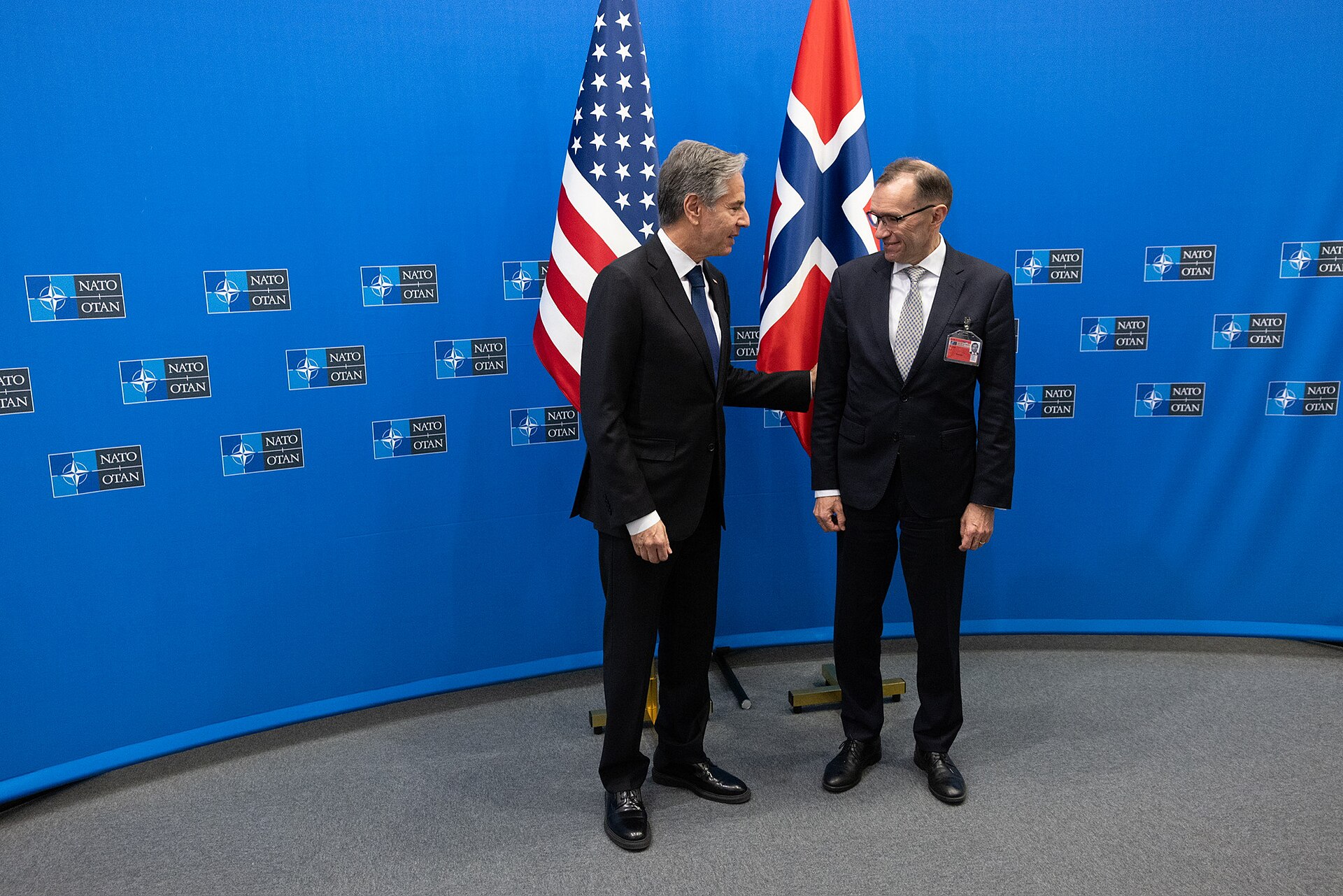
Oslo also has to manage its position with Tehran. On May 12, State Secretary Andreas Kravik met Araghchi in Tehran and, according to The National, urged Iran to engage with the Pakistan-led talks. A Norwegian minister who can speak to both Araghchi and Prince Faisal in the same year is rare among European governments, and Oslo has spent most of 2026 building that position.
Oslo’s Year on the Gulf File
Norway’s record on the Gulf this year amounts to a series of small, consistent moves rather than one big initiative. On April 2, it joined a virtual meeting of more than 35 countries on Hormuz chaired by UK Foreign Secretary Yvette Cooper, according to a Norwegian government statement published by GlobalSecurity. Six days later, Eide put Norway’s position on record in terms that left little doubt which mediation track Oslo was backing.
“We have given our full support to the Pakistan-led mediation. The Strait of Hormuz must be reopened to traffic as soon as possible, in accordance with the UN Convention on the Law of the Sea.”Espen Barth Eide, Norwegian Foreign Minister, April 8, 2026, via Norwegian government statement published by GlobalSecurity
In June, Norway hosted the Oslo Forum, the annual retreat run with the Centre for Humanitarian Dialogue, which this year brought Saudi participants into the same setting as other mediators, according to the HD Centre. By August, Eide was in Islamabad praising Pakistan’s mediation as a “massive task” and crediting Prime Minister Shehbaz Sharif, Dar and Field Marshal Asim Munir with “doing a service to the world,” ARY News reported.
Taken together, that record makes Sunday’s call less surprising than it first looks. Norway has publicly backed Pakistan’s mediation, sent a minister to Tehran and hosted Saudi diplomats in Oslo, so Riyadh is the obvious next call for Oslo once the Islamabad framework collapses. The real question is whether Norway’s influence lasts beyond the track it chose to back, and that depends partly on whether Pakistan can keep doing two jobs at once.
Can Pakistan Defend Saudi Arabia and Still Mediate?
Pakistan has been trying to do both jobs since the spring. In April, Al Jazeera reported that Prime Minister Sharif pledged solidarity with Saudi Arabia while maintaining that Pakistan had no intention of pursuing military action against Iran. Islamabad has kept to that line since then, publicly accepting the defence of Saudi Arabia on Saudi soil and announcing no offensive operations against Yemen or Iran.
The Makkah Pact, which entered full legal force on November 14 when Turkey deposited its ratification, has made that position harder to hold. Pakistan ratified on October 23, the same day the R4 met in Istanbul, and Turkey’s parliament followed with a 279-119 vote on November 5, according to Anadolu Agency. The Makkah Pact is now in force across all three ratifying states. Pakistan is now a treaty-bound defender of Saudi Arabia and, at the same time, the country whose mediation Iran has just declared over.
Pakistan’s military has refused to give any detail on its forces. Lt Gen Ahmed Sharif Chaudhry, director general of Inter-Services Public Relations, said according to Geo News that Pakistani troops were “already in Saudi Arabia in multiple capabilities and domains” and had been for “decades,” a presence that predates the Makkah Alliance. He added that military alliances “do not make public troop numbers, deployment locations or operational arrangements,” which left open how far that presence had grown since the pact’s ratification.
Islamabad has also spoken out on the Houthi campaign. Pakistan condemned the Houthi strike on the tower in Riyadh’s King Abdullah Financial District as a “grave violation,” according to Pakistan Today. The confirmed strike on the tower occurred on November 19. Condemning the Houthis while chasing an R4 meeting with Egypt and Turkey lets Pakistan show solidarity with Riyadh without committing its forces to anything new.
A Dead Memorandum and Another Missile
Both calls came at the end of a crowded day. Earlier on Sunday, Araghchi declared the Islamabad memorandum of understanding dead while signaling that a new deal with Washington remained possible if the United States met certain commitments. The Pakistan-brokered framework, the main product of the mediation Eide had publicly backed in April, was suddenly gone, and Iran was hinting that something might replace it.
On the same day, the Saudi-led coalition intercepted another Houthi ballistic missile, Anadolu Agency reported, in an Anews dispatch that tied the Faisal-Dar call directly to the attack. It was one of several Houthi launches across the weekend, including a missile intercepted near Mecca in the early hours of Sunday and a drone brought down over the Riyadh region later that morning.
The two calls point in different directions. Dar’s readout speaks of “momentum,” a word that only makes sense if the R4 sees an opening in Araghchi’s hint that a new deal is possible, while Norway’s interest is narrower and more urgent, because its ships cannot leave until the Strait reopens. Neither readout mentions the missile, and neither mentions Araghchi, although both ministers would have known about both by the time they spoke.
For Riyadh, the two conversations serve different purposes. The R4 gives Saudi Arabia a seat alongside three Muslim-majority military powers in any December session with Europe, while Norway is a European government that talks to Tehran directly and has no defence obligation to anyone in the Gulf. The Qatar-Oman channel between Washington and Tehran still excludes Saudi Arabia as a party to the war, and a well-connected Nordic foreign minister is one of the few ways Riyadh can hear what is being said in rooms it cannot enter.
Background: From the Islamabad Track to the Makkah Pact
Pakistan’s mediation between Washington and Tehran had public European backing by April, when Eide declared Norway’s full support, and the Islamabad memorandum that Araghchi buried on Sunday was the track’s main product. Over the same months, Pakistan moved closer to Riyadh on defence, with the Makkah Pact going from signature on August 7 to full legal force in just over three months.
The Gulf states have been building their own structures in parallel. On November 10 in Manama, the GCC Joint Defence Council approved a forward command headquarters in Kuwait, according to Gulf Business and Al Jazeera, a step toward integrated Gulf military coordination. That decision came twelve days before Sunday’s calls and is not connected to them, but it shows how many separate frameworks Riyadh is now running at once, including the GCC, the Makkah Pact, the R4 and an R4-Europe format still waiting for a date.
Eide said in May that Norway had no formal role in the negotiations, and six months later that is still true. Yet on the night Iran declared the Pakistan-brokered framework dead, about an hour after Ajel reported the Dar call, Norway’s foreign minister was on the line with Riyadh.
Frequently Asked Questions
What does the Makkah Pact actually commit its members to?
The pact, signed on August 7, 2026, contains a collective-defence guarantee stating that an armed attack against any party shall be regarded as an attack against all parties. The wording mirrors NATO’s best-known clause, and it is the provision that turns Pakistan’s long-standing military presence in Saudi Arabia into a treaty obligation.
What is the Oslo Forum, and who attends?
The Oslo Forum is an annual retreat for conflict mediators co-hosted by Norway and the Geneva-based Centre for Humanitarian Dialogue. According to the HD Centre, the June 2026 edition gathered roughly 140 mediators and diplomats from more than 50 countries.
Has Germany confirmed the December R4-Europe talks?
Not publicly. The only report of Germany inviting the R4 and the European Four to December talks on Gulf de-escalation comes from Pakistan Today, and no statement from the German Foreign Office or the Saudi foreign ministry confirming a date, venue or agenda has been published. Until one of them does, the invitation rests on a single Pakistani outlet’s account.
Who chaired the April Hormuz meeting that Norway joined?
UK Foreign Secretary Yvette Cooper chaired the April 2 virtual meeting, which brought together more than 35 countries to discuss reopening the Strait, according to the Norwegian government statement published by GlobalSecurity. The meeting came about a month after Iran first closed the waterway in late February, and more than two weeks before Iran re-closed it on April 18.
The House of Saud Daily Briefing
Saudi Arabia's news in 3 minutes, every morning. Free. See today's issue