VIENNA — US government officials encouraged Iraq and Venezuela to consider leaving OPEC earlier this year, Reuters reported on Friday, November 27, citing people familiar with the matter. The pressure on Venezuela went far enough that Saudi Crown Prince Mohammed bin Salman intervened this summer and persuaded the Trump administration not to press the issue further, two of those people told the news agency.
The report lands two days before the seven core OPEC+ producers meet on Sunday, November 29, a date set in OPEC’s own November 1 statement. Iraq and Venezuela are two of OPEC’s five founding members, and Iraq’s own oil ministry is now fighting inside the group for a higher quota than the 4.431 million barrels per day it holds, according to Oilprice.
The House of Saud Daily Briefing
Saudi Arabia's news in 3 minutes, every morning. Free. See today's issue
Reuters, as carried by Nigeria’s BusinessDay, said the US concern was that OPEC and OPEC+ production limits would cap output gains in both countries. The State Department rejected that account of its talks with Baghdad, saying its conversations with Iraq “have focused on improving energy infrastructure to increase production and transportation of energy, not OPEC.”
Table of Contents
- What did Reuters report about US pressure on OPEC members?
- How far did the pressure on Venezuela go?
- Iraq takes its capacity dispute to the November 29 meeting
- The State Department’s response and the silence from producers
- What does OPEC fragmentation mean for Saudi Arabia?
- Background: OPEC departures since 2019
- Frequently Asked Questions
What did Reuters report about US pressure on OPEC members?
The Reuters account draws on ten people familiar with the matter, according to BusinessDay. In its summary, US officials raised the idea of OPEC exits with both governments earlier in 2026, arguing that quotas would hold back production growth that the US wanted to see in both countries.
In Iraq, Prime Minister Ali Faleh al-Zaidi raised the possibility of leaving OPEC at a government meeting this summer, Reuters reported. The oil ministry pushed back and persuaded al-Zaidi to keep Iraq in the group, steering him instead towards seeking a higher production quota.
In Venezuela’s case, the report says the US went further and stopped the country from paying its annual OPEC membership dues. Reuters said it could not establish exactly when the US rejected the payment request. It found no indication that the US had sought to block Iraq’s dues.
“The risk of OPEC fracture is rising.”Dan Alamariu, chief geopolitical strategist, Alpine Macro, quoted by Reuters
The report also records a public signal from the president. In August, Trump said it was up to Venezuela whether to leave OPEC, according to Reuters. On Friday, Trump posted on Truth Social backing al-Zaidi’s efforts to “stop the smuggling of Iraqi oil, end corruption, and bring all weapons under the exclusive control of the state,” Al Jazeera reported. That post did not mention OPEC.
How far did the pressure on Venezuela go?
The US hold over Venezuela’s finances dates to the January 2026 ouster of Nicolás Maduro, after which Venezuelan state funds were placed in a US-managed account, according to Reuters. The State Department did not say whether it had blocked the OPEC payment. It did confirm that the US has the power to decide on Venezuela’s use of state funds.
“The Department receives disbursement requests from the interim Venezuelan government and reviews the requests, including against a list of approved and prohibited uses of the foreign Government Deposit Funds,” the State Department said in a statement to Reuters. Asked whether an OPEC exit had been raised with Caracas, a department official said “it has not been among the issues raised by high-level officials.”
OPEC splits its membership fees equally among members, at around 2.8 million euros ($3.08 million) each, Reuters reported. Two OPEC sources told the agency the organisation is not planning to expel Venezuela over the unpaid dues.
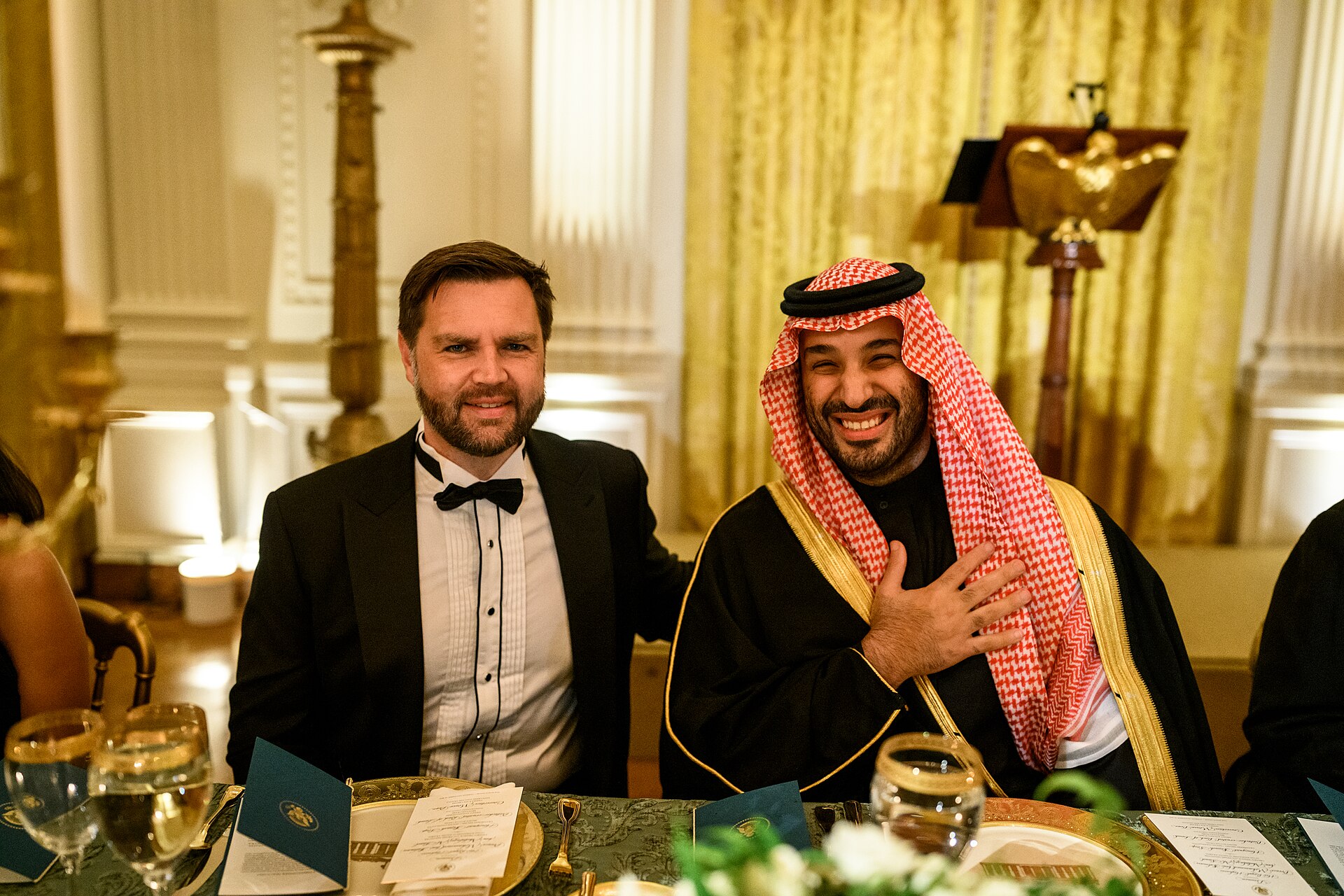
It was at this stage, the report says, that the Saudi crown prince stepped in. Two people familiar with the matter told Reuters that Mohammed bin Salman intervened this summer and persuaded the Trump administration not to press the Venezuela issue further. Reuters did not describe how the intervention was made or what was said, and Saudi Arabia did not respond to a request for comment.
Venezuela is producing well below its last quota. The country pumped about 1.15 million bpd in September, according to OPEC figures cited by Reuters, and state oil company PDVSA plans to reach 1.5 million bpd by the end of 2027. OPEC last set Venezuela a quota in 2017–2018, when its target was around 2 million bpd. Venezuela is currently exempt from OPEC+ output quotas.
Iraq takes its capacity dispute to the November 29 meeting
Iraq’s case is the more immediate one for the producer group. Iraq wants its future allowance calculated on a production capacity of 6 million bpd, Oilprice reported on November 27. A third-party agency contracted by OPEC+ has put Iraq’s capacity at 4.9 million bpd, and the International Energy Agency estimates Iraq’s sustainable capacity at 4.87 million bpd, Oilprice said in a November 24 report.
The two sides also disagree on what Iraq is already pumping. Iraq reported October production of 4.888 million bpd, above its quota, while OPEC’s independent secondary sources put the figure at 4.491 million bpd, according to Oilprice.
| Measure | Million bpd | Source |
|---|---|---|
| Current OPEC+ quota | 4.431 | Oilprice, Nov 24 and 27 |
| Capacity Baghdad wants recognised | 6.0 | Oilprice, Nov 27 |
| Capacity per OPEC+ third-party assessor | 4.9 | Oilprice, Nov 27 |
| Sustainable capacity per IEA | 4.87 | Oilprice, Nov 24 |
| October output, Iraq’s own figure | 4.888 | Oilprice, Nov 24 |
| October output, OPEC secondary sources | 4.491 | Oilprice, Nov 24 |
| Crude exports (Oil Ministry) | 3.6 | Asharq Al-Awsat/INA, Nov 26 |
Iraq threatened earlier this year to leave OPEC if it did not receive a satisfactory allocation, then withdrew the warning, according to Oilprice. Oil Minister Basim Mohammed told the Iraqi News Agency this week that Iraq is in talks with OPEC to raise its production ceiling and is negotiating with US companies to develop oilfields, Asharq Al-Awsat reported on November 26.
The minister said Iraq’s oil exports had risen to 3.6 million bpd and that oil revenue reached $8.8 billion in October, with more than $4.5 billion more from exports of fuel oil, sulfur and naphtha. Those export volumes come while the Strait of Hormuz, Iraq’s main export route, is blocked by the war involving Iran, Al Jazeera noted.
Sunday’s meeting may not reopen the quota sheet. Three sources told Reuters that OPEC+ members have in principle agreed to leave production quotas unchanged for the first quarter of 2027, according to Oilprice. No official decision has been announced. On November 1, the seven core members, Saudi Arabia, Russia, Iraq, Kuwait, Kazakhstan, Algeria and Oman, kept December output at September 2026 required levels, according to OPEC.
The State Department’s response and the silence from producers
The State Department disputed the central claim on Iraq, saying its conversations with Baghdad concerned infrastructure, production and transport of energy rather than OPEC membership. On Venezuela, it limited its comment to the disbursement review process and the statement that an exit had not been raised by high-level officials.
No producer government has spoken on the record. Representatives for OPEC and for the governments of Venezuela, Iraq and Saudi Arabia did not respond to Reuters’ requests for comment. The reported MBS intervention is so far the only Saudi position on the matter, and it comes from unnamed sources rather than from the Saudi government.
The Iraqi oil ministry’s stance is visible in its actions rather than statements on the Reuters report. Its push to stay in OPEC and bargain for a higher ceiling is described both by Reuters’ sources and in Basim Mohammed’s comments to INA.
“The Department receives disbursement requests from the interim Venezuelan government and reviews the requests, including against a list of approved and prohibited uses of the foreign Government Deposit Funds.”US State Department statement to Reuters
What does OPEC fragmentation mean for Saudi Arabia?
The following section is analysis by House of Saud. Reuters reported the US aim as freeing Iraq and Venezuela from quota limits. It did not report any US objective concerning Saudi revenues, and none is attributed here.
Saudi Arabia carries the largest quota in the group. OPEC+ kept Saudi Arabia’s November target at 10.5 million bpd, according to Enerdata, and the kingdom’s finance ministry now expects a 2026 budget deficit of 245 billion riyals ($65 billion; 4.9% of GDP), against a budgeted 165 billion riyals, according to the Arab Gulf States Institute in Washington and Argaam. The September pre-budget statement forecast a 2027 deficit of 191 billion riyals ($51 billion; 3.6% of GDP).
The same statement forecast real GDP contracting 3.6% in 2026 before growing 12.8% in 2027, per Reuters via Zawya. Both forecasts predate the November Houthi attacks on Saudi refineries and the latest tanker incidents in the Strait of Hormuz.
A producer leaving the quota system would be free to add barrels without matching cuts, and the group would lose a member’s share of the restraint that supports prices. Iraq’s own claimed capacity of 6 million bpd sits about 1.57 million bpd above its current quota, by House of Saud’s calculation from the Oilprice figures. The UAE took that route in April, announcing its exit from OPEC and OPEC+ effective May 1, 2026, Khaleej Times reported.
Reuters’ sources limited the crown prince’s intervention to Venezuela. The report does not say Saudi Arabia intervened on Iraq, and Saudi officials have not addressed the report, including at the foreign minister’s G7 meetings in Paris.
Related coverage: Trump on US funding for the Iran war, and Iranian claims about the US naval blockade.
Background: OPEC departures since 2019
OPEC was founded by Saudi Arabia, Iraq, Iran, Kuwait and Venezuela. Before this year, three members had left: Qatar in 2019, Ecuador in 2020 and Angola in 2024. Reuters said there are no indications the US was involved in those decisions.
The UAE announced on April 28 that it would leave OPEC and OPEC+ from May 1, citing a review of its production policy and capacity, Khaleej Times reported. The remaining seven OPEC+ producers then agreed 188,000 bpd increases for June, July, August and September before holding output flat from October, according to OPEC and regional trade press.
Relations between Saudi Arabia and Iraq, both founding OPEC members, have been strained by the war. Saudi Arabia summoned Iraq’s ambassador on April 12 over attacks launched from Iraqi soil, the Korea Herald reported. On July 27, Saudi Arabia said it had intercepted drones launched from Iraq at oil facilities in the Eastern Province and Riyadh, blaming Iran-affiliated militias and urging the Iraqi government to act, according to Gulf Times. Two days later, Saudi Arabia announced precision strikes on militia targets inside Iraq in coordination with US Central Command, citing Article 51 of the UN Charter, Asharq Al-Awsat reported.
OPEC+ hired outside consultants to assess members’ production capabilities as the basis for 2027 baselines, Oilprice reported, and members still disagree on the figures ahead of Sunday’s meeting.
Frequently Asked Questions
When are OPEC membership dues normally paid?
Dues are typically paid in the first quarter of the year, according to Reuters. Reuters reported that the US prevented Venezuela from making its payment.
Could OPEC expel Venezuela over unpaid dues?
Two OPEC sources told Reuters the organisation is not planning to expel Venezuela. OPEC has no precedent for expelling a member: every departure in the group’s history—Qatar (2019), Ecuador (2020), Angola (2024) and the UAE (2026)—has been a voluntary resignation. Venezuela holds exempt status from OPEC+ output quotas, meaning its continued membership has limited practical effect on the quota framework the core seven producers manage each month.
What is behind Trump’s statement on Iraqi oil smuggling?
Baghdad treats crude sold outside state marketer SOMO as smuggling because the proceeds never reach the treasury, Al Jazeera reported. Iraq has closed two border crossings in the Kurdistan region, one with Syria and one with Iran. The Kurdistan Regional Government says the federal measures violate its constitutional rights, and the two sides are due to meet in Baghdad on December 1.
What would it mean for OPEC if Iraq left the group?
Iraq’s current quota of 4.431 million bpd is the third-largest in the core group, behind Saudi Arabia’s approximately 10.5 million bpd and Russia’s approximately 9.9 million bpd. An exit would remove those barrels from the quota framework, allowing Baghdad to produce freely without breaching any OPEC obligation. The UAE’s departure in May 2026 set a precedent: the remaining seven members maintained their monthly output framework without it. Iraq’s oil minister has signalled a preference for staying and negotiating a higher production ceiling rather than leaving the group.
Is anyone in Washington examining the Venezuelan funds?
The US Government Accountability Office opened a formal investigation in July into the administration’s handling of Venezuelan oil revenues, according to Reuters. The report did not say the investigation covers OPEC dues.
The House of Saud Daily Briefing
Saudi Arabia's news in 3 minutes, every morning. Free. See today's issue